
Escaping a Deep Triangle: The Point of No Return?


Welcome to Martial Arts Mastery, your definitive guide to the world's fighting arts!
Delve into the rich history, intricate techniques, and profound philosophies that shape martial arts across the globe. Are you ready to face the ultimate challenge? In this article, we explore Triangle choke escape techniques, revealing strategies to survive one of the most dangerous submissions in grappling. But is there a point of no return? Can a deep triangle always be escaped? Discover the answers within and unlock the secrets to surviving—and thriving—on the mats!
- Escaping the Triangle Choke: Strategies for Survival
- Understanding the Triangle Choke and Its Dangers in BJJ
- Early Triangle Choke Escape Techniques: Preventing Full Entrapment
- Advanced Triangle Choke Escape Techniques: Breaking Free from Deep Entrapment
- Drills for Mastering Triangle Choke Escapes
- Beyond Technique: Mental Fortitude and Strategic Thinking
- Advanced Concepts: Triangle Choke Counters and Transitions
- Conclusion: Mastering Triangle Choke Escapes - A Continuous Process
-
Frequently Asked Questions
- How can I recognize when I'm in a truly deep triangle choke and need to focus on escape rather than defense?
- What are the primary goals when attempting triangle choke escape techniques?
- What are some common mistakes people make when trying to escape a triangle choke?
- Is there a "one-size-fits-all" triangle choke escape technique, or does it depend on the situation?
- How important is consistent drilling and practice for mastering triangle choke escape techniques?
- Final Reflection: Breaking Free from the Hold
- Unleash Your Escape: Reclaim Your Dominance!
Escaping the Triangle Choke: Strategies for Survival
Understanding the Triangle Choke and Its Dangers in BJJ
What is a Triangle Choke? Mechanics and Anatomy
The triangle choke, or Sankaku-Jime in Japanese, is a fundamental submission hold in Brazilian Jiu-Jitsu (BJJ) and other grappling arts. It is primarily executed from the guard position, though variations exist from mount, side control, and back control. The technique relies on using the legs to form a triangle around the opponent's neck and one arm.
Specifically, one leg passes over the opponent's neck, and the other leg secures the first leg by hooking behind the knee or calf. The opponent's arm caught inside the triangle acts as a wedge, preventing blood flow to the brain by compressing the carotid arteries on both sides of the neck. The pressure is generated by tightening the legs and often pulling down on the opponent's head.
The mechanics of the triangle choke are deceptively simple but incredibly effective. By constricting the carotid arteries, the choke rapidly deprives the brain of oxygenated blood, leading to unconsciousness if not defended promptly. The angle and tightness of the leg lock are critical; a properly applied triangle creates immense pressure.
According to BJJ Fanatics surveys and competition data analysis (though exact global figures vary), the triangle choke is consistently ranked among the top 5 most effective submissions in BJJ competition, with finish rates sometimes exceeding 20% in certain divisions or rule sets when properly locked in. Understanding these mechanics is the first step in developing effective triangle choke escape techniques.
Recognizing a Tight Triangle: Identifying Key Indicators
Recognizing a tight triangle choke early is crucial for increasing the success rate of triangle choke escape techniques. Several key indicators signal that the opponent has achieved a dangerous level of control. The most obvious is the feeling of pressure building around the neck, often accompanied by a pulsing sensation in the temples as blood flow is restricted. Visually, a tight triangle typically involves the opponent's knee or calf being directly behind their other leg's knee, forming a secure lock. Their legs will be tight, often with their ankle pointed down or flexed to increase pressure.
Beyond the immediate physical sensation, other indicators include the opponent pulling down on your head or gi collar, using their hands to secure their own leg, or elevating their hips to increase the angle of the choke. A particularly bad sign is when your trapped arm is deep across their body, making it difficult to pull out.
If you notice your vision starting to narrow or feel lightheaded, you are already in significant danger and must attempt a triangle choke escape technique immediately or tap out. The earlier you recognize these signs, the more options you have for escaping the triangle choke.
Assessing Your Situation: When to Escape and When to Tap
Deciding whether to attempt a triangle choke escape technique or to tap out is a critical assessment that must happen in mere seconds. The primary factor is the perceived tightness of the choke and your physical state. If the pressure is already severe, your vision is blurring, or you feel on the verge of losing consciousness, attempting a complex escape might be too late and lead to being choked unconscious. In such cases, tapping is the safest and most responsible course of action. Remember, tapping allows you to learn and train another day.
Conversely, if the triangle is not yet fully locked, the angle is off, or you still have reasonable space around your neck and control of your posture, attempting a triangle choke escape technique is viable. Consider your position: are you stacked? Is your trapped arm deep? Do you have base?
Your assessment should weigh the risk of attempting an escape against the certainty of being submitted if you do nothing. Experienced grapplers often tap earlier in training to avoid injury, while in competition, they might push the threshold slightly, but safety should always be the priority. Effective triangle choke escape techniques are about survival, which sometimes means knowing when to concede.
Early Triangle Choke Escape Techniques: Preventing Full Entrapment
Maintaining Posture and Distance in Guard
Maintaining proper posture and distance is the absolute first line of defense against triangle choke setups from the guard. When inside an opponent's guard, keeping your back straight, head up, and arms tight to your body significantly reduces the opportunities for them to throw their leg over your shoulder. Your elbows should be inside their knees whenever possible, creating a strong frame. This posture makes it difficult for them to break you down, pull your head forward, or create the necessary angle to initiate the triangle.
Distance management is equally important. Avoid letting your head get too close to their hips without proper control. If they manage to break your posture slightly, creating distance by pushing off their hips or shins can buy you precious time. Think of posture and distance as preventative triangle choke escape techniques; they stop the attack before it even becomes a choke. Coaches often emphasize that preventing the setup is far easier than escaping a fully locked triangle, highlighting the importance of these fundamental guard passing principles.
Early Escape #1: The "Head Crush" Escape - Disrupting the Lock
One of the most effective early triangle choke escape techniques is often referred to as the "Head Crush" or "Posture Base" escape. This technique is applied as soon as the opponent throws one leg over your shoulder but before they lock the figure-four or pull your head down. The core principle is to immediately regain strong posture and drive your head directly down and forward into their chest or abdomen. This action uses your head as a wedge to prevent them from closing the space and locking the choke.
Simultaneously, you must establish a strong base by widening your stance and keeping your hands ready to post if necessary. Drive your weight forward, focusing on using your spine to resist their pull. This forward pressure makes it incredibly uncomfortable for the opponent and disrupts their ability to secure the lock and generate choking pressure. While simple, this immediate, aggressive forward drive is a high-percentage early triangle choke escape technique if applied the moment the leg goes over the shoulder.
Early Escape #2: The Arm Pummel - Regaining Arm Position
Another critical early triangle choke escape technique involves pummeling your arm out of danger. Often, as the opponent throws their leg over, one of your arms is caught inside the potential triangle. If this arm is deep across their body, it will be used as the wedge to tighten the choke. The goal of the arm pummel is to prevent your arm from getting trapped deeply or to pull it out as soon as possible.
As the opponent's leg comes over, immediately fight to keep your arm on the same side as the leg that went over outside their leg. If your arm is momentarily trapped inside but not yet secured, use your shoulder and elbow to drive forward and create space, pulling your arm back towards your body and outside their leg. This requires immediate action and strong shoulder pressure. Successfully pummeling your arm out eliminates the crucial wedge component of the triangle choke, rendering it largely ineffective as a submission and serving as a fundamental early triangle choke escape technique.
Advanced Triangle Choke Escape Techniques: Breaking Free from Deep Entrapment
The Importance of Breath Control and Composure
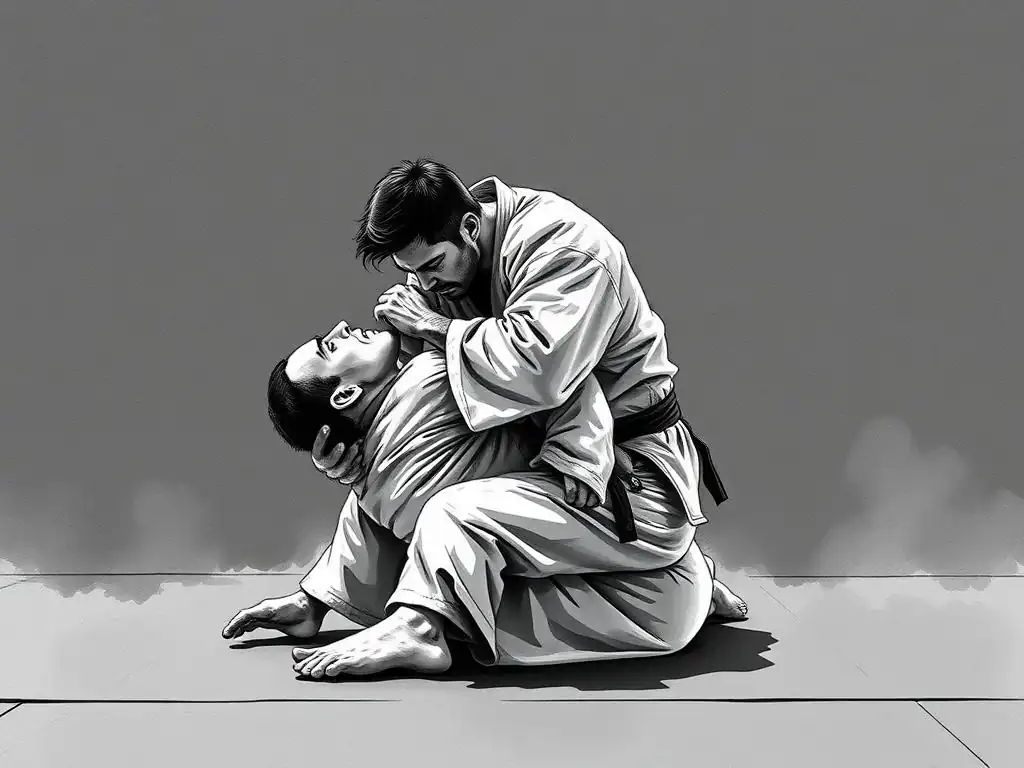
When caught in a deep triangle choke, maintaining breath control and composure is paramount for executing advanced triangle choke escape techniques. Panic is your worst enemy. A tight triangle restricts airflow, but often the initial feeling is more about restricted blood flow. Panicking causes you to tense up, waste precious oxygen, and makes rational thought difficult. Focus on slow, controlled exhalations if possible, or simply try to stay as relaxed as the neck pressure allows.
Maintaining composure allows you to analyze the situation accurately and recall the appropriate escape techniques. It gives you a few extra seconds of clear thought, which can be the difference between successfully escaping the triangle choke and tapping out. Remember that even a deep triangle can often be escaped with the correct technique and timing. Cultivating this mental resilience through training and controlled sparring is as important as learning the physical movements of triangle choke escape techniques.
Deep Triangle Escape #1: The Stack Pass Escape - Creating Space and Relieving Pressure
The stack pass escape is one of the most common and effective triangle choke escape techniques when you are already deep inside the choke, especially if your opponent is flexible or has pulled your head down low. The core principle is to drive your weight forward and stack your opponent onto their shoulders and neck, using their own flexibility and the structure of their spine to relieve pressure on your neck and create space.
Step-by-Step Breakdown of the Stack Pass Escape
- Secure the Grip: Immediately grip your opponent's pants near their knees or ankles. This gives you control over their lower body and prevents them from adjusting their hips or extending their legs to increase pressure. Some prefer gripping the belt or gi skirt.
- Drive Forward and Up: With a strong base (wide legs, good posture), drive your weight forward and slightly upwards, lifting your opponent's hips off the ground. Your goal is to stack them onto their upper back and shoulders.
- Walk Towards Their Head: While maintaining the stack, take small steps towards their head. This action further straightens their body and applies pressure to their spine and neck, making it difficult for them to maintain the leg lock or exert choking pressure.
- Create Space: As you stack and walk, use your shoulder and head to create minimal space around your neck. This might involve driving your shoulder into their hip or using your head to push slightly against their leg.
- Break the Lock: With the pressure relieved and their body stacked, work to peel their legs apart. This might involve using your hand to pry their ankle away from their knee or simply maintaining the stacking pressure until the lock breaks from discomfort or lack of leverage for them.
- Pass the Guard: Once the legs unlock, quickly transition into a guard pass, usually a knee-on-belly or side control, to secure a dominant position.
Common Mistakes and How to Avoid Them: Posture, Base, and Angle
Executing the stack pass effectively as a triangle choke escape technique requires attention to detail. A common mistake is losing your posture and rounding your back, which allows the opponent to maintain control and even sweep you. Always keep your back straight and chest up as you drive forward. Another error is having a narrow base; widen your legs to maintain balance as you stack, preventing sweeps.
The angle of your drive is also crucial. Driving straight forward without lifting their hips might not relieve enough pressure. You need to drive up as well as forward to get them stacked onto their shoulders. Furthermore, neglecting to control their legs (steps 1 and 5) allows them to adjust and re-secure the choke or transition to other attacks like armbars. Maintain control of their lower body throughout the escape attempt.
Deep Triangle Escape #2: The Kimura Trap Escape - A High-Risk, High-Reward Option
The Kimura trap escape is a more advanced triangle choke escape technique that turns the tables on the opponent by immediately attacking their arm. This option is high-risk because it requires precise timing and execution, and failure can lead to the choke being tightened or transitioning into an armbar on your trapped arm. It is typically attempted when your trapped arm is relatively straight or only slightly bent, making the Kimura grip accessible.
When to Attempt the Kimura Trap Escape
Attempt the Kimura trap escape when you are caught in a deep triangle, but your trapped arm is in a position where you can secure a Kimura grip on the opponent's arm that is across your body. This usually means your arm is not bent at a sharp angle or pinned tightly to your chest.
The opponent's focus is typically on tightening the choke, which can sometimes leave their arm vulnerable for a brief window. This escape is less about relieving neck pressure directly and more about forcing the opponent to release the choke to defend their arm, making it a unique type of triangle choke escape technique.
Precautions and Considerations: Avoiding the Armbar Counter
The primary precaution with the Kimura trap escape is the risk of being armbarred. As you attempt to isolate their arm for the Kimura, you are often extending your own trapped arm slightly, making it susceptible to an armbar counter, especially if they anticipate the move or if you fail to secure the Kimura grip immediately. You must be prepared to quickly transition or defend the armbar if the Kimura attempt fails.
Furthermore, attempting this escape requires significant strength and leverage to break the opponent's grip or control on their arm while simultaneously fighting the choke. It's a technique best practiced extensively before attempting it in live sparring or competition due to its inherent risks. Successfully applying this triangle choke escape technique requires commitment and a willingness to engage in a simultaneous submission battle.
Deep Triangle Escape #3: The Hip Bump Escape - Generating Movement for Release
The hip bump escape is another dynamic triangle choke escape technique that utilizes powerful hip movement to create space and disrupt the opponent's base. This escape is often effective when the opponent is not stacking you and you have some lateral mobility. The goal is to use a sudden, explosive hip motion to shift your weight and create an opening to pull your head or arm free.
How to Properly Execute the Hip Bump
To execute the hip bump escape from a deep triangle, first, ensure you have some space to maneuver laterally. You might need to slightly shift your weight to one side. Then, drive off the foot on the opposite side of the choke, using your hips to explosively bump upwards and sideways towards the opponent's choking leg.
As you bump, simultaneously pull your head or shoulder in the opposite direction, trying to slide it out of the choke. This is not a gentle movement; it's a sharp, powerful jolt designed to catch the opponent off guard and momentarily break the tightness of the choke.
Avoiding Common Counter Attacks During the Hip Bump
A common counter to the hip bump escape is for the opponent to sweep you to the side you are bumping towards. To avoid this, maintain a strong base with your feet and be prepared to post with your hands if you feel your balance shifting too much. Another counter is for the opponent to simply ride the bump and maintain the choke, or even transition to an armbar as you extend your body.
Successfully using this triangle choke escape technique requires excellent timing and recognizing the moment when the opponent's grip is weakest or their base is compromised. It's a high-energy escape that requires commitment.
Drills for Mastering Triangle Choke Escapes
Partner Drills for Early Triangle Defense
Consistent drilling is fundamental to mastering triangle choke escape techniques. Partner drills for early defense should focus on the initial stages of the triangle setup. One partner practices initiating the triangle (throwing the leg over, pulling the head) at varying speeds, while the other partner immediately reacts with preventative measures like maintaining posture, driving forward ("Head Crush"), or pummeling the arm. These drills should be performed with low resistance initially, focusing purely on correct muscle memory and timing.
A typical drill might involve the attacker starting in closed guard. The defender works on maintaining posture. As soon as the attacker attempts to break posture or throw a leg over, the defender reacts instantly. This drill can be done from both knees and standing in guard, as the dynamics change slightly. Repetition is key; performing these reactions hundreds of times builds the instinct necessary for effective early triangle choke escape techniques under pressure.
Solo Drills for Building Core Strength and Flexibility
While partner work is essential, solo drills can significantly enhance the physical attributes needed for triangle choke escape techniques. Core strength is vital for maintaining posture and executing powerful movements like the stack pass or hip bump. Exercises like planks, crunches, and Russian twists can build this strength. Flexibility, particularly in the hips and shoulders, can make it easier to pummel your arm out or adjust your body position when caught.
Yoga poses focusing on hip opening (like pigeon pose or lizard pose) and shoulder mobility exercises can improve the range of motion needed for effective escapes. Practicing bridging and shrimping movements solo also builds the foundational body mechanics used in many triangle choke escape techniques, such as creating space and shifting weight. Dedicating time to these solo exercises complements partner training and improves your overall resilience against submissions.
Sparring Scenarios: Implementing Escape Techniques Under Pressure
The ultimate test and practice ground for triangle choke escape techniques is live sparring. However, it's beneficial to start with specific sparring scenarios. Begin with positional sparring where one partner starts in a dominant guard position and the other's goal is solely to survive triangle attempts and practice escapes, not necessarily to pass the guard. This allows focus on the escape techniques without the added pressure of offensive goals.
As comfort and proficiency increase, integrate triangle escape practice into regular sparring. Pay attention to when your partners typically attempt triangles and practice your early defense. When caught deep, remain calm and attempt the appropriate deep triangle choke escape techniques you've drilled. Analyze what worked and what didn't after each round. Sparring under increasing levels of resistance is crucial for translating drilled techniques into effective actions in a dynamic environment.
Beyond Technique: Mental Fortitude and Strategic Thinking

Mental Preparation: Visualizing Successful Escapes
Beyond the physical mechanics, mental preparation plays a significant role in the success of triangle choke escape techniques. Visualizing yourself successfully escaping a triangle choke can build confidence and reinforce the steps of the techniques in your mind. Spend time off the mats imagining the scenario: feeling the pressure, identifying the indicators, and calmly executing the chosen escape strategy. This mental rehearsal can make the physical execution feel more natural when the situation arises in sparring.
Visualization also helps manage the panic response. By mentally walking through the steps of staying calm, assessing the situation, and initiating the escape, you train your brain to follow that sequence under stress. This proactive mental approach is a powerful, often overlooked, aspect of mastering triangle choke escape techniques and overall submission defense.
Understanding Your Opponent's Game: Recognizing Common Setups
Strategic thinking involves understanding your opponent's tendencies and recognizing common triangle choke setups. Does your training partner or opponent favor setting up the triangle from closed guard, open guard, or perhaps a specific sweep attempt? Do they rely on breaking your posture first, or do they jump into it? By observing their game, you can anticipate the attack and deploy your early triangle choke escape techniques more effectively.
Knowing their typical setups allows you to be proactive rather than reactive. For example, if you know someone loves the triangle from closed guard when you try to stand, you can adjust your standing posture or guard break strategy to deny that specific entry point. This strategic awareness, combined with solid triangle choke escape techniques, significantly increases your chances of survival.
Strategic Considerations: Knowing Your Limits and Tapping Early
A crucial element of strategic thinking in BJJ is knowing your limits and being willing to tap early. While mastering triangle choke escape techniques is important, there will be times when the choke is simply too deep, too tight, or you are too exhausted to escape. Ego should never override safety. Tapping out is not a failure; it's a strategic decision to prevent injury and allow for future training.
In competition, the stakes are higher, but the principle remains. Assess the likelihood of escape versus the risk of unconsciousness or injury. Many experienced competitors tap quickly to deep submissions from skilled opponents they know are likely to finish. Incorporating this strategic assessment into your training, practicing tapping early when appropriate, is as vital as practicing the physical triangle choke escape techniques themselves.
Advanced Concepts: Triangle Choke Counters and Transitions
Turning Defense into Offense: Counter Attacks from Escape Attempts
Advanced grapplers often look to turn defense into offense, and triangle choke escape techniques can sometimes transition into counter attacks. For instance, during a stack pass escape, if the opponent stubbornly holds the triangle, you might be in a position to attack their arm with a straight armbar or even transition to a leg attack if they expose their legs trying to maintain the choke.
Similarly, failed attempts at escapes can sometimes open up opportunities. If an opponent overcommits to defending your stack pass, they might expose their back. Recognizing these transitional opportunities during the chaos of an escape attempt is a hallmark of advanced BJJ. Successfully executing triangle choke escape techniques and immediately following up with a counter-attack requires timing, awareness, and practice.
Transitioning to Other Submissions: Exploiting Weaknesses
Beyond direct counter-attacks, successful triangle choke escape techniques can lead to transitions into other submission opportunities. For example, if you successfully stack pass and end up in side control or knee-on-belly, the opponent might expose their neck for a gi choke, or their arms for an armbar as they try to recover guard.
The act of defending and escaping a submission often puts the opponent in a vulnerable state as they adjust or recover. A skilled grappler will recognize these moments and transition smoothly into their own attacks. Mastering triangle choke escape techniques is not just about survival; it's also about creating opportunities to attack.
The Omoplata Counter: A Submission Opportunity
One specific and powerful counter-attack stemming from triangle defense is the omoplata. If the opponent attempts a triangle and you prevent your arm from going too deep, you can often use your body weight and hip movement to transition into an omoplata on the arm they are using to form the triangle. This requires specific timing and body mechanics.
The omoplata counter often occurs when the opponent's triangle is slightly loose or if they attempt it from a position where you can easily shift your weight and hip out. It's a submission hold that attacks the shoulder joint using your legs and body weight. Learning this transition adds a potent offensive dimension to your triangle choke escape techniques, turning a defensive situation into a potential submission victory.
Conclusion: Mastering Triangle Choke Escapes - A Continuous Process
The Importance of Consistent Training and Analysis
Mastering triangle choke escape techniques is not a one-time achievement but a continuous process requiring consistent training and analysis. The dynamics of the triangle choke, like all BJJ techniques, evolve as practitioners find new setups and defenses. Regular drilling, positional sparring, and live rolling are essential to keep your triangle escape techniques sharp and adaptable.
Analyzing your performance after sparring or competition is crucial. When you get caught in a triangle, reflect on where the setup began, what indicators you missed, and why your escape attempt failed. Was it a technical flaw, lack of strength, poor timing, or panic? Use this analysis to refine your training focus. Dedicated practice, perhaps spending 10-15 minutes of each training session specifically on triangle defense drills, will significantly improve your ability to survive this common submission.
Applying Triangle Choke Escape Techniques in Competition
Applying triangle choke escape techniques effectively in competition requires the ability to perform under pressure. The intensity, fatigue, and adrenaline of competition can make techniques feel different than in the gym. This is why realistic sparring scenarios and mental preparation are so important. In competition, recognizing the choke early and reacting instantly is even more critical, as opponents are often faster and tighter than training partners.
Successful competitors who are known for their defense against the triangle have usually spent countless hours drilling and sparring. They trust their instincts and their well-honed triangle choke escape techniques. While the goal is always to avoid getting caught in the first place, having reliable escape options provides a crucial safety net and can prevent losses, allowing you to continue fighting.
Resources for Further BJJ Skill Development
Improving triangle choke escape techniques, and BJJ skills in general, benefits from utilizing available resources. Beyond regular mat time with qualified instructors, consider studying instructional materials focusing on guard passing and submission defense. Many high-level practitioners share their insights on specific escape mechanics and common problems.
- Study instructional videos on guard passing principles.
- Review videos of high-level competition, specifically observing how competitors defend and escape triangle chokes.
- Discuss specific escape scenarios and challenges with your coach and training partners.
- Keep a training journal to track progress and identify areas needing improvement regarding triangle choke escape techniques.
Ultimately, becoming proficient at triangle choke escape techniques is a journey that involves physical training, mental preparation, and strategic understanding. By dedicating time to these aspects, you can significantly improve your survival rate against one of BJJ's most potent submissions.
Frequently Asked Questions
How can I recognize when I'm in a truly deep triangle choke and need to focus on escape rather than defense?
A deep triangle choke means the blood flow is severely restricted. You'll feel significant pressure and potentially experience vision changes or lightheadedness. Knowing this point allows you to shift your strategy.
What are the primary goals when attempting triangle choke escape techniques?
The main goals are to relieve the pressure on your carotid arteries and create space to breathe. This involves breaking the lock and improving your position.
What are some common mistakes people make when trying to escape a triangle choke?
Often, people panic and waste energy on ineffective struggles. They might also fail to address the controlling leg of the attacker, which is crucial for escape.
Is there a "one-size-fits-all" triangle choke escape technique, or does it depend on the situation?
No, escape techniques vary depending on the angle and depth of the choke, as well as the relative size and strength of both parties. You must adapt.
How important is consistent drilling and practice for mastering triangle choke escape techniques?
Repetitive drilling is essential. It builds the muscle memory and reflexes needed to execute the escape effectively under pressure, and saves your life.
Final Reflection: Breaking Free from the Hold
The journey through the intricacies of triangle choke escape techniques reveals more than just physical maneuvers; it highlights the power of strategic thinking under pressure. In a world increasingly defined by complex challenges and seemingly inescapable situations, the lessons learned on the mat resonate far beyond the confines of a grappling match.
The ability to remain calm, analyze the situation, and execute a well-rehearsed escape is a skill that transcends the sport. It's a metaphor for navigating life's obstacles, reminding us that even in the tightest of binds, there's always a path to freedom. The best fighter is never angry.
- Miyamoto Musashi. This quote encapsulates the essence of effective escape: a clear mind, focused on the solution, not overwhelmed by the threat.
Now, consider how you can apply these principles in your own life. Are you facing a "triangle choke" of your own – a situation that feels inescapable? Remember the techniques discussed, the importance of leverage, and the power of a well-timed movement. Find your escape route, trust in your training, and break free from the hold. The point of no return is never truly reached until you stop searching for a way out.
Unleash Your Escape: Reclaim Your Dominance!
Thank you for exploring the intricacies of escaping the deep triangle choke. You've now armed yourself with the knowledge to recognize, anticipate, and counter this dangerous submission. Ready to put your newfound understanding into action?
- Hit the mats: Immediately drill the escape techniques outlined in this article.: Muscle memory is your best friend in a real-time scenario.
- Share this knowledge:Help your training partners improve their defenses by sharing this article.
- Experiment and adapt: Try applying these principles to other submissions you encounter in your training.
What innovative variations of these escapes can you discover and share with the community?