
Guillotine from Guard: Sweeping and Submitting in One Motion

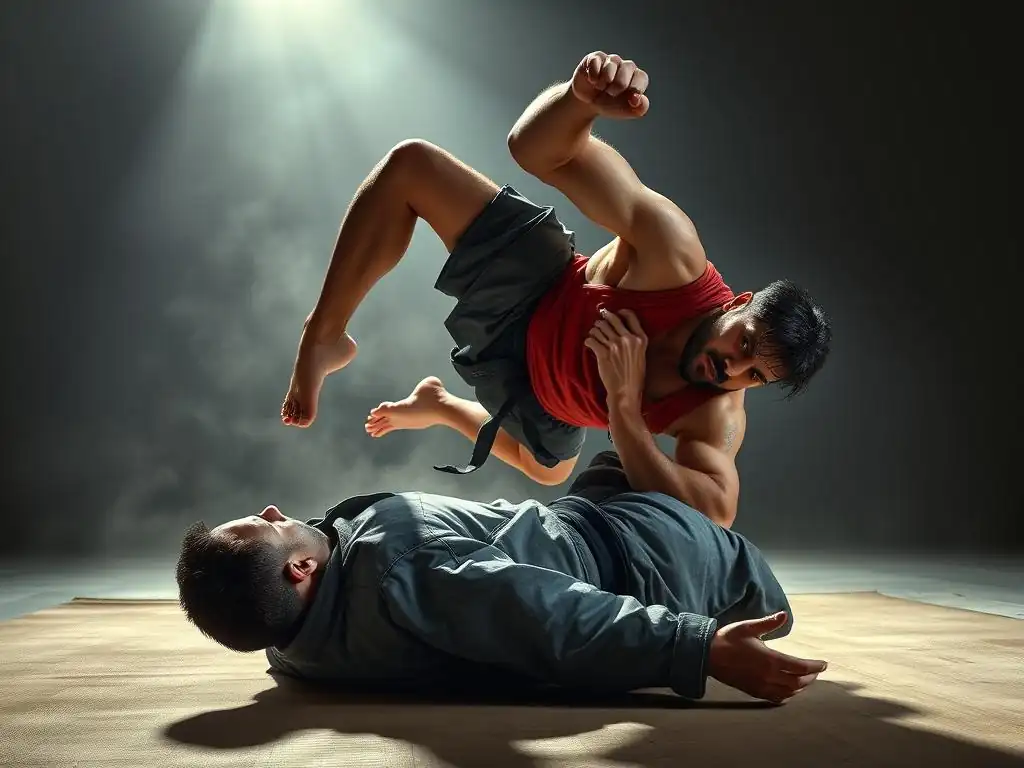
Welcome to Martial Arts Mastery, where we delve deep into the world's diverse combat traditions. Ever wondered how a seemingly vulnerable position can transform into a powerful offensive maneuver? Prepare to unlock the secrets of the Guillotine sweep submission technique. This article explores not just the technique itself, but its strategic application within the broader context of martial arts, offering a powerful blend of sweeping and submission that you won't want to miss. Read on to discover how to add this game-changing move to your arsenal...
- Guillotine Sweep from Guard: Sweeping and Submitting in One Motion
- Mastering the Guillotine Sweep Submission Technique from Guard in BJJ
- Setting Up the Guillotine Sweep: Technique Breakdown
- Executing the Guillotine Sweep for Submission
- Advanced Guillotine Sweep Variations and Setups
- Troubleshooting Common Guillotine Sweep Problems
- Drills and Training Exercises for the Guillotine Sweep
- The Guillotine Choke: A Powerful BJJ Submission
-
Frequently Asked Questions
- What is the Guillotine Sweep submission technique?
- From what position is the Guillotine Sweep typically initiated?
- What are the key elements for a successful Guillotine Sweep?
- What makes the Guillotine Sweep an effective technique?
- What are some common mistakes to avoid when performing the Guillotine Sweep?
- Final Reflection: Mastering the Flow State
- Unleash Your Guillotine Game!
Guillotine Sweep from Guard: Sweeping and Submitting in One Motion
Mastering the Guillotine Sweep Submission Technique from Guard in BJJ
Brazilian Jiu-Jitsu, or BJJ, is renowned for its intricate ground fighting techniques, emphasizing leverage and strategy over brute force. Among the myriad submissions, the guillotine choke stands out as a formidable weapon, often applied from various positions. However, combining this potent choke with a sweep from the guard position creates a particularly devastating attack: the guillotine sweep submission technique.
This dynamic maneuver allows a practitioner to transition directly from a defensive or neutral guard position into an offensive submission, bypassing the need to achieve a dominant top position first. It's a high-percentage attack when executed correctly, catching many opponents off guard and leading to quick finishes.
This article delves into the mechanics, setups, variations, and training methods necessary to effectively utilize the guillotine sweep submission technique from the guard in BJJ. We will explore the foundational principles of the guillotine choke itself, the strategic advantages of linking it with a sweep, and provide detailed breakdowns of how to set up and execute this powerful attack.
From establishing the initial grip to transitioning smoothly from the sweep to tightening the submission, mastering this technique can significantly enhance your offensive capabilities from the guard. It's a technique that requires precision in grip, timing in execution, and an understanding of how to break your opponent's balance.
Understanding the Fundamentals of the Guillotine Choke in Brazilian Jiu-Jitsu
The guillotine choke is a fundamental blood choke in Brazilian Jiu-Jitsu, targeting the carotid arteries on the sides of the neck. It is typically applied by wrapping an arm around the opponent's neck from the front, with the neck resting in the crook of the elbow. The practitioner then grips their own wrist or forearm with the opposite hand, creating a powerful squeeze.
This constricts blood flow to the brain, leading to a rapid loss of consciousness if not defended. The effectiveness of the guillotine stems from its ability to be applied quickly, often from transitionary positions or when an opponent is attempting to pass the guard or shoot for a takedown. While seemingly simple, mastering the nuances of angle, grip depth, and body positioning is crucial for finishing the choke effectively.
Historically, variations of the guillotine choke exist in many martial arts, but its refinement and prevalence in ground fighting, particularly in BJJ and MMA, are significant. In BJJ competition, the guillotine is a common submission, with statistics from major tournaments showing it as one of the frequently attempted and successful chokes, especially in the lower weight classes and against opponents who favor wrestling or aggressive guard passing.
For instance, analysis of IBJJF tournaments often shows guillotines accounting for a notable percentage of submissions from guard or standing exchanges, perhaps in the range of 5-10% of all submissions depending on the division and ruleset, though precise, universally tracked figures are hard to pin down without specific event data. Its accessibility and speed make it a constant threat whenever an opponent exposes their neck.
Why Combine the Guillotine Choke with a Sweep?
Combining the guillotine choke with a sweep from the guard offers a unique strategic advantage in BJJ. When an opponent is caught in a guillotine choke, their primary instinct is often to defend the choke itself – pulling their head out, posturing up, or turning their body to relieve pressure. This defensive reaction often compromises their base and balance, making them highly susceptible to a sweep.
By initiating a sweep simultaneously or immediately after securing the choke, the practitioner leverages the opponent's defensive posture against them. Instead of having to fight against a well-balanced opponent to execute a sweep, you are sweeping someone whose focus and physical alignment are dedicated to escaping a life-threatening submission, significantly increasing the sweep's success rate.
Furthermore, the guillotine sweep submission technique provides a direct path to victory. Unlike traditional sweeps from guard which often require transitioning to a dominant top position (like side control or mount) before attempting a submission, the guillotine sweep is the submission attempt. As the opponent is swept, the leverage on the neck often increases, tightening the choke as they fall.
This can lead to a submission finish even before fully establishing a top position or immediately upon landing. This efficiency makes it a high-percentage attack, particularly effective in situations where securing a stable top position might be difficult or against opponents who are skilled at recovering guard or scrambling. It turns a potentially stalled guard situation into an immediate and decisive offensive action.
Setting Up the Guillotine Sweep: Technique Breakdown
Setting up the guillotine sweep submission technique requires precision and timing. It begins from a strong guard position, transitions through securing the choke, and culminates in unbalancing the opponent just before the sweep. Each phase is critical for the technique's success.
Establishing a Strong Guard Position for the Guillotine Setup
A strong guard position is the foundation for launching any effective attack, including the guillotine sweep. From guard, you control the distance and angle relative to your opponent. Positions like closed guard, half guard, or butterfly guard can all serve as launching pads, but the key is maintaining control and preventing your opponent from establishing a dominant posture or pass.
In closed guard, keeping your knees pinched and hips active prevents posture and creates opportunities when they try to sit up or open your guard. From butterfly guard, the hooks provide leverage for off-balancing. A common scenario for the guillotine sweep is when the opponent is attempting to pass the guard, particularly with a knee cut pass or a double-under pass, as these attempts often expose the neck and commit their weight forward.
Maintaining an active guard involves using grips (on sleeves, collars, or wrists) and leg positioning to control your opponent's limbs and posture. For the guillotine setup, you often want to encourage or wait for your opponent to lean forward slightly or attempt a pass that brings their head within reach. This might involve breaking their posture down with collar ties or sleeve grips, or simply waiting for them to initiate a movement.
Your guard should be active enough to prevent them from settling into a comfortable passing position but not so open that they can easily escape or shut down your options. The ability to transition between different guard types fluidly can also open up more opportunities for the guillotine sweep submission technique.
Gripping and Securing the Guillotine Choke Grip
Securing a tight and effective guillotine grip is the next crucial step in the guillotine sweep submission technique. As your opponent's head becomes accessible, often when they are leaning forward or attempting a pass, you need to quickly transition your arm around their neck. The depth of the grip is critical: the opponent's neck should ideally be deep in the crook of your elbow, with your forearm running across their throat area (specifically targeting the carotid arteries on the sides, not the windpipe).
Your hand then clasps your other wrist or forearm, creating the primary squeezing mechanism. A common grip is the "palm-to-palm" grip, where one hand grips the other palm, or the "S-grip," where the fingers interlock.
The non-choking arm plays a vital role as well. It can help control the opponent's posture, prevent them from pulling their head out, or assist in setting up the sweep. For instance, from closed guard, your legs can help keep their posture broken while you secure the grip. From butterfly guard, your hooks are essential for the subsequent sweep.
The grip must be secured quickly and tightly before the opponent has a chance to defend effectively. Practicing securing this grip rapidly from various guard positions is essential. The goal is to get the choking arm deep under the neck, ensuring that the pressure is applied effectively against the carotid arteries as the choke is tightened.
Unbalancing Your Opponent: The Key to the Guillotine Sweep
Unbalancing your opponent is the critical precursor to executing the sweep portion of the guillotine sweep submission technique. Once the guillotine grip is secured, your opponent's natural reaction will be to defend the choke, which often involves shifting their weight, posturing up, or trying to turn. These defensive movements inherently compromise their base.
Your job is to exploit this instability. From closed guard, you might use your legs to push one of their legs away or hip escape to the side, forcing them to base out or fall. From butterfly guard, your hooks are used to elevate and disrupt their balance.
The timing of this unbalancing act is key. It should happen concurrently with or immediately after securing the choke grip, before they fully establish their defense. By pulling their head down with the choke grip while simultaneously using your legs or body to push or pull their base out from under them, you create immense directional pressure.
This pressure makes it very difficult for them to maintain their balance, forcing them to fall in the direction of the sweep. The goal is to make them light on their base, making the subsequent sweeping motion much easier and more effective. This phase transforms the technique from a simple choke attempt into a dynamic sweep-to-submission attack.
Executing the Guillotine Sweep for Submission
With the setup complete and the opponent unbalanced, the execution phase of the guillotine sweep submission technique begins. This involves the coordinated movement of your body and legs to complete the sweep and immediately transition to tightening the choke for the finish.
The Mechanics of the Guillotine Sweep: Step-by-Step Guide
Executing the guillotine sweep involves a specific sequence of actions. Assuming a setup from closed guard where you've secured the grip and hip escaped to one side:
- Secure the Grip: Ensure a deep, tight guillotine grip with your choking arm around the neck and hands clasped.
- Unbalance and Angle: Use your legs (e.g., pushing off the mat or using your guard hooks) and hip escape to create an angle and disrupt their balance, often towards the side opposite your hip escape.
- Sweeping Motion: As they lose balance, use your legs and core to drive through the sweep. If in closed guard, you might push off the mat with one foot while pulling with your legs and arms. If in butterfly guard, lift and push with your hooks. The goal is to roll them over your body or to the side.
- Follow Through: As they fall, maintain your grip and follow them to the ground, aiming to land in a dominant position like side control or mount, or simply alongside them, maintaining pressure.
- Immediate Tightening: Do not release the choke grip during or after the sweep. As you land, immediately adjust your position to maximize the pressure on the neck.
This sequence must flow seamlessly. The power of the guillotine sweep submission technique lies in the continuity of the movement from guard control to choke setup, unbalancing, and the final sweep and finish. Any hesitation in the process can allow the opponent time to recover their balance or defend the choke.
Maintaining Control During the Sweep: Preventing Escape
Maintaining control throughout the sweep is paramount to ensure the guillotine sweep submission technique is successful and the opponent cannot escape. As you initiate the sweep, your grip on the neck is the primary control point, but your body positioning is also crucial. You must stay connected to your opponent, preventing them from scrambling away or posturing out of the choke as they fall. If sweeping from closed guard, keeping your legs locked until the last moment can help control their hips and prevent them from basing out effectively.
As you land on the ground after the sweep, maintain a tight connection. Avoid landing in a position where they can easily slip their head out or roll away. Landing in side control or a similar close position allows you to use your body weight and position to reinforce the choke.
Your non-choking arm can help pin their shoulder or hip, further limiting their movement. The key is to transition immediately from the sweeping motion to solid ground control while simultaneously preparing to tighten the choke. This phase requires body awareness and the ability to adjust on the fly as you and your opponent move towards the ground.
Transitioning from Sweep to Submission: Tightening the Guillotine
The transition from completing the sweep to fully tightening the guillotine for submission is the final step of the guillotine sweep submission technique. As you land, immediately adjust your body and grip to apply maximum pressure. This often involves:
- Adjusting Grip: Ensure your choking arm is deep under the neck and your hands are clasped securely (palm-to-palm or S-grip).
- Body Position: Position yourself to use your body weight to enhance the choke. For instance, from side control, you can drive your shoulder into their back or chest while pulling up on the neck. From a position alongside them, you might arch your back and extend your legs slightly.
- Head Position: Keep your head close to theirs, often tucked near their shoulder or back. This prevents them from creating space and helps maintain the angle of the choke.
- The Finish: The actual tightening involves pulling your hands upwards towards your chest while simultaneously driving your shoulder down into their neck (if possible) and arching your back. The pressure should be directed to compress the sides of the neck.
The goal is to apply consistent, increasing pressure until the opponent taps or loses consciousness. This requires squeezing with your arms and using leverage from your body position. It's a coordinated effort of pulling with the arms and pushing/arching with the body. Mastering this transition ensures that the effort of the sweep is rewarded with a decisive submission.
Advanced Guillotine Sweep Variations and Setups
The basic guillotine sweep submission technique can be adapted and launched from various guard positions and even used as a counter-attack. Exploring these variations adds layers to your BJJ game.
Guillotine Sweep from Butterfly Guard
The guillotine sweep from butterfly guard is a potent variation that leverages the power of butterfly hooks. This setup often occurs when an opponent is kneeling or standing in your butterfly guard. As they attempt to pass or establish a dominant grip, they may lean forward, exposing their neck. You secure the guillotine grip as described previously. With the grip locked, you use your butterfly hooks to elevate and disrupt their base. A common execution involves lifting them slightly with the hooks while simultaneously pulling their head down with the choke grip and hip escaping to one side.
As they are elevated and off-balance, you drive off the mat with your non-hooking leg (if kneeling) or use a powerful sweep motion with your hooks and upper body to bring them crashing down. The sweep often involves rolling them over your thigh or sweeping them directly to the side. The key is the coordinated action of the hooks providing the lift/sweep power and the choke grip controlling their head and posture. This variation is particularly effective against opponents who are aggressive passers or those who engage closely in the butterfly guard.
Guillotine Sweep from Closed Guard
The closed guard guillotine sweep is perhaps the most classic iteration of this technique. It often arises when an opponent attempts to posture up from your closed guard or tries to initiate a pass that brings their head forward, such as a standing pass or a knee slice attempt where they haven't established proper head control. From closed guard, you secure the guillotine grip as their neck becomes available. Your legs are locked around their waist, controlling their posture.
To execute the sweep, you typically hip escape strongly to the side of your choking arm (or the opposite side, depending on the specific variation and opponent reaction). As you hip escape and create an angle, you use your locked legs to unbalance them, often by pushing their far leg or hip away. Simultaneously, you pull down on their head with the choke grip.
The combination of the hip escape, leg pressure, and pulling on the head causes them to lose balance and fall to the side. You then follow them down, maintaining the grip, and transition to tightening the choke from the ground. This variation relies heavily on hip movement and leg control from the closed guard.
Utilizing the Guillotine Sweep as a Counter to the Knee Cut Pass
The guillotine sweep submission technique is an excellent counter-attack, particularly against aggressive guard passing attempts like the knee cut pass. When an opponent attempts a knee cut pass, they often drive their knee through your guard while their head is relatively low and within reach, especially if they are trying to secure an underhook or cross-face. This forward pressure and head position create a prime opportunity for the guillotine.
As the opponent initiates the knee cut, you quickly secure the guillotine grip around their neck. Since their weight is already committed forward and to one side for the pass, they are highly vulnerable to being unhinged. With the grip secured, you use your legs (often your bottom leg which is being cut against) to prevent their pass and disrupt their balance further.
Simultaneously, you pull their head down with the choke grip and often bridge or push off the mat with your free foot to amplify the sweeping motion. The opponent's momentum from the pass attempt is used against them, often resulting in a quick sweep and immediate pressure on the choke. This counter requires quick reflexes and timing but is a high-percentage attack against a common guard pass.
Troubleshooting Common Guillotine Sweep Problems
Like any technique, the guillotine sweep submission technique presents challenges. Understanding common problems and their solutions is key to increasing your success rate.
Opponent Defending the Sweep: Adjustments and Counters
A common problem is the opponent successfully defending the sweep portion, perhaps by basing out effectively with their hands or legs, or driving their weight back into you. If the sweep is stalled, simply holding the guillotine grip might not be enough to finish, as they are stable and focused on escaping the choke. In this scenario, you need to adjust or transition. One adjustment is to change the angle of your sweep or use stronger leg drive. If they base out to one side, switch your sweeping direction if possible, or attack their base on the other side.
If the sweep is completely shut down, you must transition. Holding the guillotine can exhaust your arms and give the opponent time to set up their own attacks. A common transition from a failed guillotine sweep is to abandon the sweep and focus solely on finishing the choke from the current position (e.g., pulling guard if standing, or finishing from half guard if they ended up there).
Alternatively, you might transition to a different sweep or submission attempt that is opened up by their defensive posture against the guillotine. For example, if they posture up strongly, you might switch to an omoplata or triangle setup from guard, leveraging their upright position.
Maintaining a Tight Guillotine Grip: Preventing Escape
Another frequent issue with the guillotine sweep submission technique is the opponent defending the choke itself, often by pulling their head out, turning their chin into the choke, or creating space. Maintaining a tight grip throughout the movement is crucial. The most common defense is for the opponent to yank their head upwards or sideways. To counter this, ensure your grip is as deep as possible from the outset, with their neck snug in your elbow crook. Your hands should be locked securely (palm-to-palm or S-grip).
Using your body positioning to maintain pressure is also vital. Keep your head close to theirs and use your chest or shoulder to block their head from escaping. As you sweep, continue to pull upwards with your arms and drive your shoulder down.
If they turn their chin in, adjust your grip slightly to target the carotid arteries more effectively, often by slightly rotating your wrist or pulling the head further to the side. Sometimes, if the grip isn't perfect, finishing the choke requires significant squeezing power, but proper positioning and depth are always preferable to relying solely on strength. Consistent practice securing and maintaining the grip under resistance is key.
Dealing with a Strong Posture: Breaking Down Resistance
Some opponents maintain a very strong posture, making it difficult to secure a deep guillotine grip or execute the sweep. If an opponent is sitting back on their heels with an upright posture in your guard, attempting a guillotine sweep immediately might be low percentage. You first need to break their posture down. This can be achieved using collar ties, sleeve grips, or leg attacks from guard. Pulling their head down with collar grips, using spider guard hooks to disrupt their base, or attacking their legs can force them to react and expose their neck or compromise their balance.
Once their posture is broken, even slightly, the opportunity for the guillotine sweep submission technique emerges. For example, if you pull their head down and they try to posture back up, that moment of upward movement can expose the neck. If they base out wide to maintain posture, their base is compromised in another way, making them vulnerable to sweeps once the choke is secured.
Patience is required against opponents with strong posture; you must first create the opening before attempting the technique. Do not force the guillotine sweep against an opponent with perfect posture, as it is unlikely to succeed and may put you in a disadvantageous position.
Drills and Training Exercises for the Guillotine Sweep
Effective mastery of the guillotine sweep submission technique requires dedicated practice. Incorporating specific drills into your training routine can help refine each component of the technique.
Repetition Drills for Perfecting the Guillotine Sweep Technique
Repetition is key to developing muscle memory and fluidity in the guillotine sweep submission technique. Partner drills focusing on specific phases can be highly effective.
- Grip Acquisition Drill: With a partner in your guard (e.g., closed guard or kneeling butterfly), practice quickly securing the deep guillotine grip as they simulate different reactions (leaning forward, attempting a specific pass entry). Focus solely on getting the arm deep and locking the hands securely. Perform 10-15 repetitions on each side.
- Sweep Motion Drill: With a partner resisting minimally in the guillotine grip from guard, practice the sweeping motion (hip escape, leg drive, body roll) without necessarily finishing the choke. Focus on the coordination of your body to off-balance and sweep the partner. Perform 10-15 repetitions.
- Full Technique Flow Drill: Combine the grip acquisition, unbalancing, sweep, and transition to tightening. Start from a guard position, have your partner provide a specific opening (like leaning forward), execute the entire guillotine sweep submission technique flow slowly and with control, stopping just before full submission pressure. Perform 5-10 repetitions on each side, gradually increasing speed and resistance.
These drills isolate components or link them together, allowing for focused improvement. For instance, dedicating 5-10 minutes at the beginning of a training session solely to these types of repetition drills can significantly improve the speed and accuracy of your guillotine sweep.
Sparring Scenarios: Applying the Guillotine Sweep Under Pressure
Applying the guillotine sweep submission technique in live sparring is essential for developing timing and execution under pressure. However, attempting it randomly in free rolling can be frustrating if the setup isn't there. Instead, focus on specific sparring scenarios designed to create opportunities for the technique.
- Guillotine Sweep Specific Round: Dedicate rounds where the goal is explicitly to attempt the guillotine sweep. Start from guard and actively look for or create the necessary openings (opponent leaning forward, attempting a specific pass). Your partner can offer moderate resistance, allowing you to work through the technique.
- Positional Sparring (Guard): Engage in positional sparring starting from your preferred guard position (closed, butterfly, etc.). Your goal is to maintain guard and look for opportunities to apply the guillotine sweep as the opponent attempts to pass or improve their position. This simulates a more realistic BJJ context.
- Transition Sparring: Start from a standing position and practice pulling guard or defending takedown attempts. The guillotine is very common during takedown defense. Practice transitioning from a failed takedown defense (e.g., opponent shoots for a double leg) directly into a standing or seated guillotine attempt, potentially leading to a sweep as you pull guard or they fall.
These scenarios provide a controlled environment to practice the guillotine sweep submission technique against varying levels of resistance, helping you understand the timing and necessary adjustments when things don't go perfectly.
Partner Drills: Developing Timing and Coordination
Effective partner drills are crucial for the guillotine sweep submission technique, as it requires precise timing and coordination between your movements and your partner's reactions.
- Reaction Drill: Your partner adopts a guard passing posture (e.g., kneeling slightly forward). You secure the guillotine grip. Your partner then reacts by trying to posture up or pull their head out. You practice immediately initiating the sweep motion in response to their reaction. This helps refine the timing of the sweep initiation.
- Off-Balancing Drill: With the guillotine grip secured, your partner tries to maintain a stable base. You practice using your legs and hip movement to break their balance without completing the sweep. Your partner gives feedback on where they feel most unstable. This isolates the crucial unbalancing phase.
- Flow Roll (Guillotine Focus): Engage in very light, cooperative rolling where both partners are aware that one is working on the guillotine sweep. The partner receiving the technique offers just enough resistance to make it realistic but allows the technique to be executed. This helps refine the flow and coordination of the entire sequence from setup to transition.
Spending 10-15 minutes per training session on these types of cooperative partner drills can significantly improve your ability to execute the guillotine sweep submission technique smoothly and effectively under pressure, making it a reliable part of your BJJ arsenal.
The Guillotine Choke: A Powerful BJJ Submission
While this article focuses on the sweep variation, it's important to understand the guillotine choke's broader significance and power in BJJ and self-defense.
Advantages of the Guillotine Choke in a Real Fight Scenario
In a real-world self-defense scenario, the guillotine choke offers several distinct advantages. Firstly, it can be applied rapidly from a standing position or during a takedown attempt. This means you don't necessarily need to take the fight to the ground or establish a dominant position to finish. If an attacker attempts to tackle or rush you, securing a standing guillotine can neutralize the threat instantly, often leading to a quick submission or forcing them to disengage. This speed and accessibility make it a highly practical self-defense technique.
Secondly, the guillotine choke is applied from the front, which can be advantageous in a chaotic self-defense situation. Unlike rear naked chokes which require getting behind the opponent, the guillotine can be applied face-to-face. While this position carries its own risks (like strikes), securing the choke immediately controls the opponent's head and upper body, limiting their ability to strike effectively.
It's also a powerful deterrent; feeling the constriction of a blood choke can quickly de-escalate a physical confrontation. The guillotine sweep submission technique specifically adds the ability to take an opponent down and finish simultaneously, which is incredibly efficient if the fight does end up on the ground.
Integrating the Guillotine Choke into Your BJJ Game
Successfully integrating the guillotine choke, including the guillotine sweep submission technique, into your BJJ game requires understanding its setups and practicing its application from various positions. It shouldn't be seen as only a sweep setup but also as a standalone submission from standing, guard, or even side control (e.g., the arm-in guillotine). Developing a repertoire of setups increases its utility.
Consider adding specific guillotine training rounds to your sparring, focusing on recognizing opportunities from takedown defense, guard passing attempts, or transitions. Work on securing the grip quickly and deeply. Learn variations like the arm-in guillotine, which catches opponents defending the traditional neck-only version. The guillotine pairs well with techniques that force the opponent to lower their head or commit their weight forward, such as snap downs from standing or certain guard retention movements. By actively drilling and seeking out opportunities for the guillotine and its sweep variation, you can make it a high-percentage attack in your arsenal.
Ethical Considerations and Responsible Training of the Guillotine Choke
Training the guillotine choke, like all submission techniques, requires a high degree of responsibility and ethical consideration. Blood chokes like the guillotine can render a person unconscious rapidly, often within 5-10 seconds if applied correctly. Therefore, it is absolutely critical to practice this technique with trusted partners and under the supervision of qualified instructors.
Students must learn to apply the pressure slowly and incrementally during training and recognize the signs of an impending tap or loss of consciousness. Similarly, partners must be vigilant and tap early when caught in a choke, even if they feel they can escape. There is no benefit to "toughing it out" in training and risking injury or unconsciousness. Safe training protocols, including clear communication and immediate release upon a tap, are non-negotiable when practicing the guillotine sweep submission technique or any other choke. The goal of training is improvement and safety, not winning in the gym.
Frequently Asked Questions
What is the Guillotine Sweep submission technique?
The Guillotine Sweep is a grappling technique where you use a guillotine choke attempt from the guard to sweep your opponent into a more dominant position, often leading to a successful submission. It combines a sweep and a submission in one fluid motion.
From what position is the Guillotine Sweep typically initiated?
The Guillotine Sweep is most commonly initiated from the closed guard position. This allows the practitioner to control their opponent and set up the initial guillotine choke grip for the sweep.
What are the key elements for a successful Guillotine Sweep?
Key elements include a strong guillotine grip, proper hip movement to generate the sweep, and maintaining control of your opponent's posture to prevent them from escaping the submission and sweep.
What makes the Guillotine Sweep an effective technique?
The Guillotine Sweep is effective because it combines a submission threat with a positional advancement. This forces the opponent to react, making them vulnerable to either the choke or the sweep.
What are some common mistakes to avoid when performing the Guillotine Sweep?
Common mistakes include a weak grip, not controlling the opponent's posture, and failing to commit to the sweep, allowing the opponent to regain their balance and posture.
Final Reflection: Mastering the Flow State
The journey from guard to guillotine, as explored in this article, is more than just a grappling technique; it's a microcosm of life itself. The seamless transition, the calculated risk, and the ultimate submission mirror the challenges and triumphs we face daily. This technique, when mastered, embodies a flow state where intuition and execution become one, a principle applicable far beyond the mats.
The beauty of the guillotine sweep submission technique lies not just in its effectiveness, but in its elegance and efficiency. This pursuit of efficiency, of maximizing impact with minimal effort, resonates deeply with the desire to optimize our own lives. Simplicity is the ultimate sophistication.
- Leonardo da Vinci. This quote encapsulates the essence of the technique, and the broader pursuit of mastery in any field. The guillotine sweep, like any art form, demands dedication, practice, and a willingness to refine one's approach continuously.
Now, consider the lessons learned here, not just as a grappler, but as an individual. How can you apply the principles of seamless transition, calculated risk, and unwavering focus to your own endeavors? Embrace the flow state, cultivate your intuition, and strive for efficiency in all that you do. The path to mastery, whether on the mats or in life, begins with a single step, a single sweep, a single submission. Go forth and find yours.
Unleash Your Guillotine Game!
Thanks for diving into the world of guillotine chokes from the guard! We hope you’ve gained some new insights into sweeping and submitting in a single, fluid motion. Now it's time to put that knowledge into action.
Here are a few ways to sharpen your guillotine game:
- Drill the sweep-guillotine transition at least 10 times per training session for the next week. Focus on speed and precision!
- Share this article with a training partner and challenge each other to land the guillotine during your next sparring session.
- Record yourself performing the technique and analyze your form for areas of improvement. Sometimes a fresh perspective makes all the difference.
What's the sneakiest setup you've ever used to land a surprise guillotine? Share your secrets in the comments below!