
Controlling the Battlefield: Distance Management for Muay Thai Strikes and Clinch

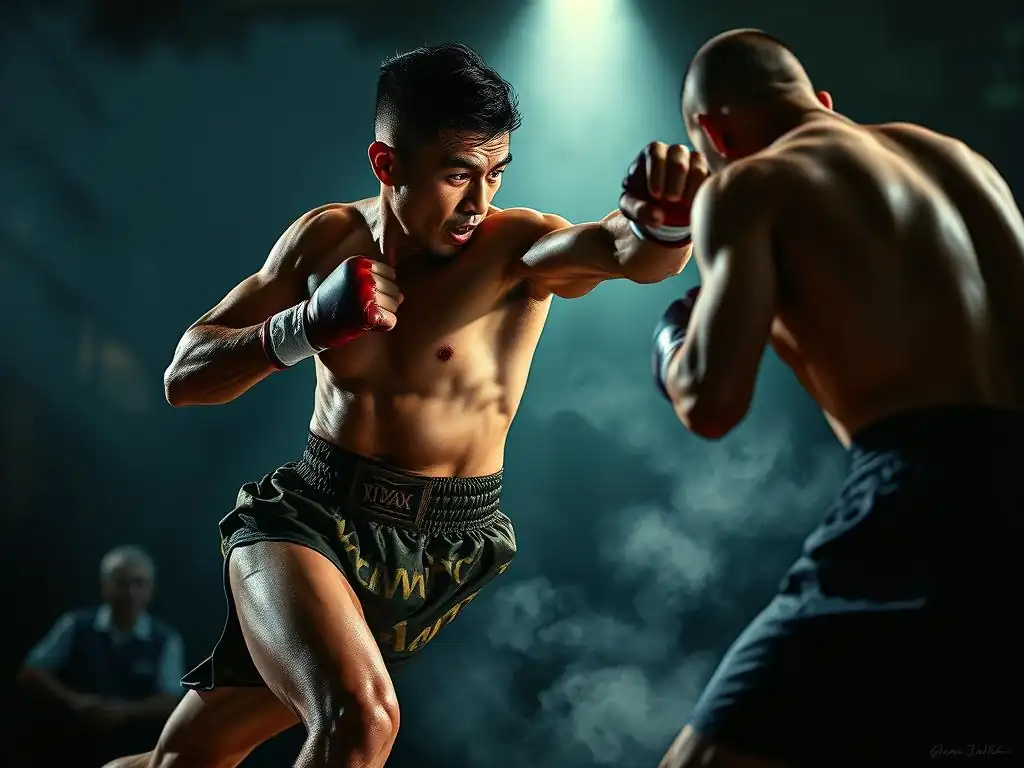
Welcome to Martial Arts Mastery, your gateway to unlocking the secrets of combat! Delve into the dynamic world of martial arts, from ancient philosophies to cutting-edge techniques. Are you ready to dominate the ring? This article focuses on Muay Thai distance management techniques, a critical skill for controlling the flow of battle. Discover how to dictate the range, unleash devastating strikes, and seamlessly transition into the clinch. Intrigued? Read on to master the art of controlling the battlefield!
- Mastering Muay Thai Distance: An Introduction to Range Control
- Muay Thai Striking Range Techniques: Weapons and Tactics
- Clinch Control: Dominating the Close-Range Game
- Defensive Distance Management: Avoiding Strikes and Counters
- Combining Striking and Clinch: Seamless Transitions
- Advanced Muay Thai Distance Strategies: Adapting to Different Opponents
- Drills and Training for Improved Distance Management in Muay Thai
- Common Mistakes in Muay Thai Distance Control and How to Avoid Them
- The Art of Muay Thai Range: Beyond Physical Techniques
-
Frequently Asked Questions
- What is the primary goal of distance management in Muay Thai?
- Which Muay Thai techniques are most effective at long range?
- How does distance management influence clinch entries in Muay Thai?
- What are some common mistakes beginners make regarding distance in Muay Thai?
- How can I improve my ability to judge distance in Muay Thai?
- Final Reflection: Mastering the Art of Range
- Unleash Your Inner Striking Master!
Mastering Muay Thai Distance: An Introduction to Range Control
The Importance of Distance Control in Muay Thai Fighting
Effective Muay Thai distance management techniques are arguably the most critical skill for success in the ring. It dictates whether your strikes land with power, whether you can defend incoming attacks, and whether you can effectively enter or exit the clinch. Without proper control over the space between you and your opponent, even the most powerful techniques can be rendered ineffective or leave you vulnerable to counters. Mastering this aspect allows a fighter to dictate the pace and location of the fight, forcing the opponent into uncomfortable ranges while maintaining advantageous positions for oneself.
In a typical professional Muay Thai bout, fighters are constantly adjusting their distance, sometimes multiple times within seconds. Consider the transition from a long-range teep to a mid-range low kick, and then quickly closing the distance to enter the clinch. Each phase requires precise footwork and understanding of the optimal range for the chosen technique. A fighter who misjudges the distance for a powerful roundhouse kick, for example, might hit air or be too close, losing power and exposing their balance. Conversely, perfect distance ensures maximum force generation and recoil control, minimizing risk while maximizing impact.
Understanding the Muay Thai Stance for Optimal Range
The traditional Muay Thai stance provides a stable yet mobile base essential for executing effective Muay Thai distance management techniques. Typically, a fighter stands with feet roughly shoulder-width apart or slightly wider, with the lead foot pointed slightly inward and the rear foot angled out. Weight is distributed evenly or slightly favoring the rear leg for mobility and power generation. This balanced posture allows for quick forward and backward movements (pendulum steps, shuffle steps) needed to manage distance, as well as lateral movement to create angles.
The height of the stance is also crucial. A slightly higher guard and more upright posture compared to some boxing stances allows for easier defense against kicks and knees, while still facilitating powerful strikes and clinch entry. The ability to quickly shift weight and move the feet is paramount. For instance, a small step back ( retreating step) can evade an incoming punch, while a quick step forward ( advancing step) can close the gap for an elbow strike. The stance is not static; it's a dynamic platform from which all distance adjustments and techniques are launched.
Muay Thai Striking Range Techniques: Weapons and Tactics
Long Range: Teep Kicks and Long Punches for Distance Keeping
Long range in Muay Thai is typically defined as the distance where only the longest weapons, like the teep kick (front push kick) or long straight punches, can effectively reach the opponent. This range is crucial for controlling the fight's rhythm, preventing the opponent from closing the distance easily, and setting up subsequent attacks. The teep is the quintessential long-range weapon, used to push the opponent away, disrupt their balance, or gauge distance. A well-timed teep to the solar plexus can instantly create space and halt an opponent's forward momentum.
Straight punches, particularly the jab, are also vital at long range. While not typically fight-ending blows in Muay Thai, they serve as excellent range finders and irritants. A consistent jab can keep an opponent honest, set up other strikes, or momentarily distract them while you adjust your range. For instance, a fighter might use a probing jab to see how their opponent reacts before stepping in with a roundhouse kick. Maintaining long range requires constant footwork vigilance, using small adjustments to stay just outside the opponent's effective striking range while keeping them within yours for your preferred long weapons.
Mid-Range: Utilizing Roundhouse Kicks and Knee Strikes
Mid-range is where the majority of powerful Muay Thai strikes occur, particularly the devastating roundhouse kick and standing knee strikes. This distance is often described as being close enough to land kicks without excessive stepping, but far enough to avoid immediate clinch engagement unless initiated. A typical mid-range engagement might involve fighters exchanging low kicks, body kicks, or high kicks, often interspersed with punches. Effective Muay Thai distance management techniques at this range involve understanding how much space is needed for optimal kick power – generally requiring enough room for the hip to turn fully into the strike.
Knee strikes are also powerful mid-range tools, often thrown as the distance slightly closes or in anticipation of a clinch. A stepping knee to the body can be highly effective when an opponent is moving forward. Mastery of this range involves not just delivering strikes but also defending them. Checking kicks (raising the shin to block incoming kicks) is a primary mid-range defensive technique that relies heavily on judging the opponent's kicking distance accurately. Fighters constantly step in and out of this range, using feints and footwork to create openings or retreat safely.
Close Range: Elbows and Short Punches in the Pocket
Close range, often referred to as "the pocket," is where the shortest, most immediate weapons in Muay Thai come into play: elbows and short punches. This range is characterized by minimal space between fighters, making powerful, short-arc strikes particularly effective. Elbows, thrown horizontally, diagonally, or vertically, are incredibly dangerous at this distance, capable of causing fight-ending cuts. Short, sharp punches like hooks and uppercuts also find their power in this tight space, where there isn't room for full extension.
Operating effectively in the pocket demands exceptional head movement, guard, and balance. Since there's little room to retreat, defense relies more on blocking, parrying, and slipping. The goal of close-range fighting is often to land damaging strikes or transition into the clinch. A fighter might deliberately close the distance after landing a mid-range kick, stepping into the pocket to unleash a series of short elbows before attempting to secure a clinch grip. Mastering this range is vital for fighters who prefer aggressive, inside fighting or need to navigate past an opponent's longer weapons.
Clinch Control: Dominating the Close-Range Game
Entering the Clinch: Techniques for Closing the Distance Safely
Entering the clinch is a specific aspect of Muay Thai distance management techniques focused on closing the final gap from striking range into grappling range without absorbing significant damage. This transition is often initiated after landing a strike (like a body kick or punch combination) that momentarily occupies the opponent, or by using fakes and feints to distract them. Common entry techniques involve stepping forward while simultaneously raising the guard high or using an arm shield to protect against immediate counters like uppercuts or short hooks.
Speed and timing are paramount during clinch entry. A common mistake is attempting to clinch from too far away, giving the opponent ample time to defend or counter. Successful entries often involve a slight head movement or level change to avoid incoming strikes as you step in. For example, a fighter might throw a feint low kick, then immediately step forward and dip slightly while reaching for the opponent's neck or arms. The objective is to secure dominant hand positioning as you close the distance, preventing the opponent from establishing their own control immediately.
Muay Thai Clinch Positioning: Establishing Control
Once in the clinch, establishing dominant positioning is the core of effective control. This involves securing grips that allow you to control the opponent's posture, head, and body, limiting their movement and setting up strikes or throws. The most common dominant position is the double collar tie, where both hands are wrapped around the back of the opponent's neck, pulling their head down. Other important grips include the single collar tie, arm ties, and body locks. The goal is to break the opponent's posture, making them unable to generate power for strikes and vulnerable to knees and elbows.
Maintaining this control requires constant pressure and intelligent weight distribution. By keeping your weight "heavy" on the opponent, particularly through your grips and forward lean (while maintaining your own balance), you tire them out and make it difficult for them to break free or improve their position. For example, pulling down sharply on the neck in a double collar tie can buckle an opponent's knees.
Effective positioning also involves using your legs and hips to off-balance the opponent, setting them up for sweeps or preventing them from advancing. This intricate dance of weight and pressure is central to clinch mastery.
Knee Strikes and Elbows from the Clinch: Maximizing Damage
The primary offensive weapons from a dominant clinch position are knee strikes and elbows. With the opponent's posture controlled and their ability to evade compromised, you can deliver powerful and repetitive strikes. Knee strikes can target the legs, body (ribs, solar plexus), or even the head (if the opponent is pulled down low enough). These strikes are generated by driving the hips forward while pulling the opponent into the knee, maximizing impact. A fighter in a strong double collar tie can often land multiple consecutive knees to the body before the opponent can effectively defend.
Elbows from the clinch are typically used when the distance is even tighter, often when the opponent is pulled in very close or when transitioning out of a clinch exchange. Short, sharp elbow strikes to the head or face can cause significant damage and cuts, potentially stopping the fight.
While knees are often used to score points and wear down the opponent, elbows are frequently employed when looking for a knockout or TKO via cuts. Mastering the transition from securing a grip to delivering a powerful knee or elbow requires drilling the specific mechanics of driving the hip and pulling the opponent simultaneously.
Defensive Distance Management: Avoiding Strikes and Counters
Reading Your Opponent's Movements and Intentions
Effective defensive Muay Thai distance management techniques begin with the ability to read your opponent. This involves observing their habits, tells, and preferred ranges. Does your opponent always take a small step forward before throwing a roundhouse kick? Do they drop their hands slightly before attempting a clinch entry? By recognizing these patterns, you can anticipate their attacks and make timely distance adjustments to evade or counter. Reading intentions is a skill honed through countless hours of sparring and watching fights.
Beyond specific tells, general observation of an opponent's posture, weight distribution, and eye line can provide clues. Are they loading weight onto their rear leg, indicating a potential power strike? Are they looking down, perhaps setting up a low kick or a clinch entry? Being able to interpret these subtle cues allows a fighter to initiate their defensive movement before the opponent's strike reaches full power, making evasion or blocking significantly easier and more effective. This proactive defense is far more energy-efficient and safer than reacting solely after a strike is launched.
Footwork Drills for Evading Attacks and Maintaining Distance
Footwork is the foundation of all Muay Thai distance management techniques. Various drills are used to develop the agility and control necessary to evade attacks and maintain optimal range. The pendulum step (rocking back and forth) helps maintain readiness and allows for quick forward or backward movement. The shuffle step (sliding feet without crossing) is used for larger distance adjustments, either advancing or retreating. Lateral movements, like stepping off-line, are crucial for creating angles and getting out of the path of linear attacks like teeps or straight punches.
Specific evasion drills might involve a partner throwing slow strikes, with the focus solely on using footwork to avoid being hit without moving excessively or losing balance. For example, practicing retreating just enough to make a kick fall short, or stepping slightly to the side to avoid a punch. Another drill involves maintaining a specific distance from a partner who is trying to close or create space, forcing constant small adjustments. Consistent footwork training builds the muscle memory required for instinctive distance control under pressure.
Blocking and Parrying Techniques: Protecting Your Range
While evasion uses footwork to avoid a strike entirely, blocking and parrying are defensive techniques used when the distance is too close for complete evasion or as a primary defense. Blocking involves using parts of the body (shins, forearms, gloves) to absorb or deflect the impact of a strike. Checking kicks with the shin is a prime example of a mid-range blocking technique essential for protecting your legs and maintaining your ability to stand and move effectively at that distance.
Parrying involves using a hand or arm to redirect the force of an incoming strike, typically punches or teeps, causing them to miss or lose power. This often involves a sharp, outward motion. Effective parrying can also set up immediate counter-attacks, as the opponent is momentarily off-balance or has their guard compromised. Both blocking and parrying rely on accurate distance judgment – knowing when a strike will land if left undefended is key to timing the block or parry correctly. These techniques protect your position and prevent the opponent from freely closing or managing the distance with their offense.
Combining Striking and Clinch: Seamless Transitions
From Long Range to Clinch: Closing the Gap Effectively
Transitioning from long-range striking to the clinch requires a deliberate strategy for closing distance safely and effectively. This isn't just about stepping forward; it involves using strikes or feints to cover your entry. A common method is to throw a significant strike, like a hard low kick or a body kick, which forces the opponent to react and momentarily shifts their focus. As they are dealing with the kick, you simultaneously take a large step or two forward, aiming to secure your initial clinch grip before they recover.
Another approach is to use a combination of punches, ending with a final punch (like a hook or uppercut) that brings you into close proximity, immediately followed by securing the clinch. The noise and visual distraction of the punches can mask your intention to close the distance. Mastering this transition is a key component of effective Muay Thai distance management techniques, allowing fighters to dictate when the fight moves from open space to the tight confines of the clinch, where different skills dominate.
From Clinch to Striking Range: Creating Separation and Space
Equally important is the ability to disengage from the clinch and return to striking range safely. Simply letting go can leave you vulnerable to immediate strikes as the opponent regains their posture. Effective separation often involves creating space through physical force or tactical movement. Pushing away from the opponent using your arms or shoulders is a direct method, requiring strength and timing. This push creates just enough space for you to quickly step back and establish your striking distance.
Alternatively, a fighter might use a slight off-balancing movement or a quick knee strike to create separation. As the opponent reacts to the knee, you can use that moment to pivot or step back out of range. Sometimes, the referee will break the clinch, which also forces a return to striking distance, but relying on the referee is not a viable strategy. Mastering the transition out allows you to avoid prolonged clinch exchanges if that's not your strength, or to create space to land powerful strikes as the opponent recovers from the clinch.
Using Feints to Manipulate Distance and Openings
Feints are invaluable tools for manipulating distance and creating openings in Muay Thai. A feint is a deceptive movement or partial execution of a technique designed to elicit a reaction from the opponent without committing fully. For example, a fighter might lift their leg as if to throw a teep, causing the opponent to instinctively step back or raise their guard. This reaction creates space that can then be exploited with a different technique, or confirms that the opponent is susceptible to that feint at that distance.
Feints can be used at any range. A feint jab at long range can cause an opponent to flinch, allowing you to step in for a low kick. A feint body kick at mid-range might cause them to lower their guard, opening up the head for a punch or high kick.
Even small feints within the pocket, like a shoulder twitch or a slight shift in weight, can cause an opponent to react defensively, creating a split-second opportunity for an elbow. Effective feinting is a sophisticated aspect of Muay Thai distance management techniques, relying on timing, subtlety, and reading the opponent's reactions.
Advanced Muay Thai Distance Strategies: Adapting to Different Opponents
Fighting Taller Opponents: Closing the Distance and Working Inside
Fighting a taller opponent presents unique challenges in Muay Thai distance management. Their longer reach means their effective striking range extends further than yours. The primary strategy often involves minimizing the time spent at their optimal long range and finding ways to safely close the distance to work in your preferred mid-range or, more commonly, close range and the clinch. This requires aggressive, well-timed entries.
Techniques include using fakes and feints to draw reactions, utilizing head movement and a high guard while stepping in, and attacking the legs or body to slow them down and make them less mobile. Once inside, the focus shifts to preventing them from extending their long limbs, often by securing grips in the clinch or staying very close in the pocket. Fighters like Nong-O Gaiyanghadao, despite often facing taller opponents, excel at timing their entries and dominating the inside game, demonstrating effective Muay Thai distance management techniques against reach disadvantages.
Fighting Shorter Opponents: Maintaining Range and Utilizing Long Weapons
Conversely, fighting a shorter opponent means you possess the reach advantage. The strategy here often revolves around maintaining your optimal long and mid-range distance, preventing the shorter opponent from closing the gap where their shorter-range power strikes (like hooks or elbows) and clinch game are most effective. This involves constant use of your longest weapons – teeps, long jabs, and straight punches – to keep them at bay and frustrate their attempts to get inside.
Footwork is critical for maintaining this distance. Using retreat steps and lateral movement to pivot away from their advances is key. You want to punish their attempts to close distance with well-timed teeps or knees. While you have the reach advantage for striking, you must be wary of them diving into the clinch. Effective Muay Thai distance management techniques against shorter opponents mean using your length to score points and wear them down from the outside, only engaging in close range on your terms or when necessary.
Adapting Your Strategy Based on Opponent's Style and Strengths
True mastery of Muay Thai distance management techniques lies in the ability to adapt your strategy based on the individual opponent's style and strengths. Is your opponent a strong kicker? You might focus on closing the distance quickly after their kicks or using footwork to stay outside their kicking range. Are they a powerful puncher? You might prioritize long-range control with teeps and jabs or focus on getting immediately into the clinch to neutralize their hands.
If an opponent excels in the clinch, you might work harder to maintain striking distance and use push kicks to keep them away. If they are weak in the clinch, you might actively seek to enter it. Analyzing an opponent's previous fights or observing them during the first round allows a fighter to identify these tendencies and adjust their distance management plan accordingly. This dynamic adaptation, shifting ranges and techniques based on the live feedback of the fight, separates good fighters from great ones.
Drills and Training for Improved Distance Management in Muay Thai
Shadow Boxing for Footwork and Range Awareness
Shadow boxing is a fundamental training tool for developing Muay Thai distance management techniques. It allows fighters to practice movement patterns, strike combinations, and defensive footwork without the impact of pads or a partner. Dedicate specific rounds of shadow boxing solely to focusing on distance. Practice moving in and out, simulating attacks and defenses at different ranges.
For example, one round might focus on staying at long range, constantly using teeps and jabs while retreating from imaginary attacks. Another round could focus on closing distance rapidly after a feint and practicing clinch entries. Shadow boxing allows for repetition of footwork patterns like the pendulum step, shuffle step, and lateral pivots, building the muscle memory required for instinctive distance adjustments during sparring or fighting. Visualizing an opponent and their reactions is key to making this drill effective for range control.
Pad Work Drills: Focusing on Distance and Timing
Pad work is essential for applying Muay Thai distance management techniques with power and timing. Pad holders can simulate an opponent's movement and reactions, forcing the fighter to adjust their distance before delivering strikes. Drills can be designed specifically around range transitions. For instance, a pad holder might stand at long range, requiring the fighter to use footwork to close the distance for a punch combination, then immediately step back out to avoid a simulated counter-attack.
Another effective drill involves the pad holder moving forwards and backwards, forcing the fighter to constantly adjust their distance to land specific strikes – landing a kick only when the pad holder is at mid-range, or an elbow only when they are close. Pad work with a focus on timing and distance, rather than just power, helps fighters understand the spatial requirements for each technique and how to maintain balance while moving and striking. This translates directly to improved performance in live situations.
Sparring: Applying Distance Management Techniques in a Live Setting
Sparring is the ultimate test and training ground for applying Muay Thai distance management techniques. It provides a live, unpredictable environment where fighters must constantly read their opponent and make real-time adjustments. During sparring, focus specifically on your range control. Are you letting your opponent dictate the distance? Are you able to enter and exit the clinch effectively? Are you maintaining the correct distance for your chosen strikes?
Light sparring sessions can be dedicated purely to distance management, with less emphasis on power. Partners can work on specific scenarios, like one fighter trying to stay on the outside while the other tries to get inside. Analyzing sparring footage can also reveal habits or mistakes in distance control that need correction. Sparring provides the crucial experience of feeling an opponent's movement and reactions, which cannot be fully replicated in drills or shadow boxing, making it indispensable for mastering range.
Common Mistakes in Muay Thai Distance Control and How to Avoid Them
Overextending Punches and Kicks: Maintaining Balance and Recovery
One of the most common errors in Muay Thai distance management techniques is overextending strikes. This happens when a fighter throws a punch or kick from too far away, reaching excessively to try and make contact. Overextension compromises balance, reduces power, and leaves the fighter vulnerable. When you overextend a punch, your weight is too far forward, making it easy for an opponent to counter or push you off balance. Similarly, overextending a kick means you often lean too far back or forward, hindering your ability to recover quickly.
To avoid this, focus on using footwork to close the necessary distance before throwing the strike, rather than trying to cover the distance with the strike itself. Practice throwing techniques with proper form in shadow boxing and on pads, paying attention to where your weight and balance are at the end of the movement. Ensure you are within optimal range for the technique before committing, allowing for quick recovery and readiness for follow-up actions or defense.
Neglecting Footwork: Staying Mobile and Agile
Another significant mistake is neglecting active footwork, becoming flat-footed or static. Effective Muay Thai distance management techniques rely entirely on constant, intelligent movement. A fighter who stands still is an easy target and cannot make timely adjustments to evade attacks or create openings. Static positions make it hard to generate power for strikes and difficult to defend against an opponent who is actively managing distance.
To combat this, make footwork a central part of every training session. Incorporate movement drills into your warm-ups. In shadow boxing and pad work, consciously focus on stepping and pivoting. During sparring, remind yourself to stay light on your feet and make small, continuous adjustments. Develop the habit of always being ready to move, whether forward, backward, or laterally. This constant readiness is key to maintaining control over the fight's distance.
Failing to Adapt: Adjusting Your Strategy Based on the Fight
A final common error is failing to adapt your distance management strategy during the fight. What works against one opponent or in one round may not work against another or as the fight progresses. If your opponent is effectively shutting down your attempts to fight at long range, continuing to try the same approach is detrimental. If they are consistently winning the clinch battle, attempting to clinch repeatedly without adjustment will lead to frustration and lost points.
Continuously observe your opponent's reactions and the success (or failure) of your own techniques. If your long-range teeps aren't landing, try closing the distance for punches or kicks. If they are countering your clinch entries, use footwork to keep the fight at striking distance. Be willing to change your plan mid-fight. This requires mental flexibility and a deep understanding of how different techniques and ranges interact. Practice sparring with different partners who have varied styles to develop this adaptability.
The Art of Muay Thai Range: Beyond Physical Techniques
Mental Focus and Awareness in Distance Control
Beyond the physical execution of footwork and techniques, mental focus and awareness are paramount in mastering Muay Thai distance management techniques. This involves maintaining constant awareness of your own position relative to your opponent, the boundaries of the ring, and the time remaining in the round. It's about being present in the moment and actively processing the visual cues your opponent is providing.
A lapse in concentration can lead to a misjudgment of distance, resulting in missing a strike, getting hit cleanly, or being caught in an unfavorable position. Developing this mental aspect involves training your focus during drills and sparring, practicing staying calm under pressure, and actively observing opponents. It's not just about doing the techniques, but thinking about distance in real-time and making conscious decisions about where you need to be.
Analyzing Saenchai's Distance and Timing
Analyzing the fighting style of legendary fighters like Saenchai provides invaluable insight into advanced Muay Thai distance management techniques. Saenchai, despite often being smaller than his opponents, is a master of controlling range. He utilizes an incredible array of footwork, including the cartwheel kick (a technique that involves closing distance rapidly while attacking) and dynamic pivots, to constantly shift the distance and create angles.
Saenchai's timing is impeccable; he knows precisely when to step in, when to step out, and when to initiate a technique based on the opponent's movement. He uses feints constantly to draw reactions and manipulate the opponent's position, creating openings that seem to appear out of nowhere. Watching his fights with a focus on his footwork, his entries and exits from range, and how he uses feints can offer deep lessons in the subtle art of controlling the battlefield. His ability to seamlessly transition between ranges, often within a single exchange, exemplifies the highest level of distance mastery.
Conclusion: The Key to Victory is Mastering Muay Thai Distance Management
Mastering Muay Thai distance management techniques is not merely one skill among many; it is the foundational element that underpins all other aspects of the sport. It dictates the effectiveness of your strikes, the solidity of your defense, and your ability to control the fight's narrative. From the long-range control offered by the teep, through the powerful exchanges of mid-range kicks and knees, to the brutal effectiveness of close-range elbows and the strategic battle of the clinch, every technique's success is tied to executing it from the correct distance.
Developing this mastery requires dedicated training across all ranges, constant practice of footwork, keen observation of opponents, and the mental discipline to stay focused on your position in the ring. It is a skill that evolves with experience, requiring continuous adaptation and refinement. Ultimately, a fighter who can consistently control the distance in Muay Thai holds a significant advantage, able to impose their game plan while neutralizing their opponent's strengths. The art of controlling range is, truly, the art of controlling the fight itself.
Frequently Asked Questions
What is the primary goal of distance management in Muay Thai?
The primary goal is to control the range at which you engage, allowing you to maximize your offensive capabilities while minimizing your opponent's opportunities.
Which Muay Thai techniques are most effective at long range?
Long-range techniques like the teep (push kick) and long roundhouse kicks are crucial for maintaining distance and disrupting your opponent's approach. They allow you to control the pace and dictate the fight.
How does distance management influence clinch entries in Muay Thai?
Effective distance management is essential for setting up clinch entries. By controlling the range, you can close the gap strategically, catching your opponent off guard and transitioning smoothly into the clinch.
What are some common mistakes beginners make regarding distance in Muay Thai?
Beginners often stay too close, making themselves vulnerable to strikes, or remain too far, hindering their ability to attack. Consistent practice and sparring are key to correcting these errors.
How can I improve my ability to judge distance in Muay Thai?
Focus on shadow boxing, pad work, and sparring, specifically practicing footwork drills and reaction drills. This will sharpen your awareness and improve your spatial judgment in a fight.
Final Reflection: Mastering the Art of Range
The principles of distance management, so crucial in Muay Thai, extend far beyond the ring. The ability to control space and timing, to dictate the terms of engagement, is a skill applicable to every facet of life. Just as a Nak Muay uses footwork and feints to create openings, we too can learn to navigate complex situations with precision and foresight, minimizing risk and maximizing opportunity.
This exploration of Muay Thai distance management has not only deepened my appreciation for the sport's strategic depth, but also highlighted the universal importance of awareness and adaptability. Understanding how to control the space around us, both physically and metaphorically, is a lifelong pursuit that yields immense rewards. The supreme art of war is to subdue the enemy without fighting.
- Sun Tzu, a sentiment that resonates deeply with the calculated approach to distance found in Muay Thai.
Now, consider how you manage your own "battlefield." Are you proactively creating space for growth and opportunity, or are you reacting to the pressures around you? Embrace the lessons of Muay Thai distance management. Cultivate your awareness, refine your timing, and learn to dictate the terms of your own engagement. The power to control your range, in all its forms, lies within you.
Unleash Your Inner Striking Master!
Thank you for exploring the art of distance management in Muay Thai with us! We hope you've gained valuable insights to elevate your striking and clinch game. Now, it's time to put that knowledge into action and truly master the battlefield.
Ready to level up your Muay Thai skills? Here's how:
- Immediately incorporate these distance drills into your next training session. Focus on transitioning smoothly between long, medium, and close ranges, anticipating your opponent's movements.
- Share this article with your training partners to spark discussion and improve your collective understanding of spacing and timing. Let's build a stronger training environment together!
- Experiment with unorthodox angles and footwork patterns in your shadow boxing to disrupt your opponent's rhythm and create unexpected openings.
What specific distance management technique are you most excited to try in your next sparring session?