
Shaolin Temple: Unveiling 1,500 Years of Martial History

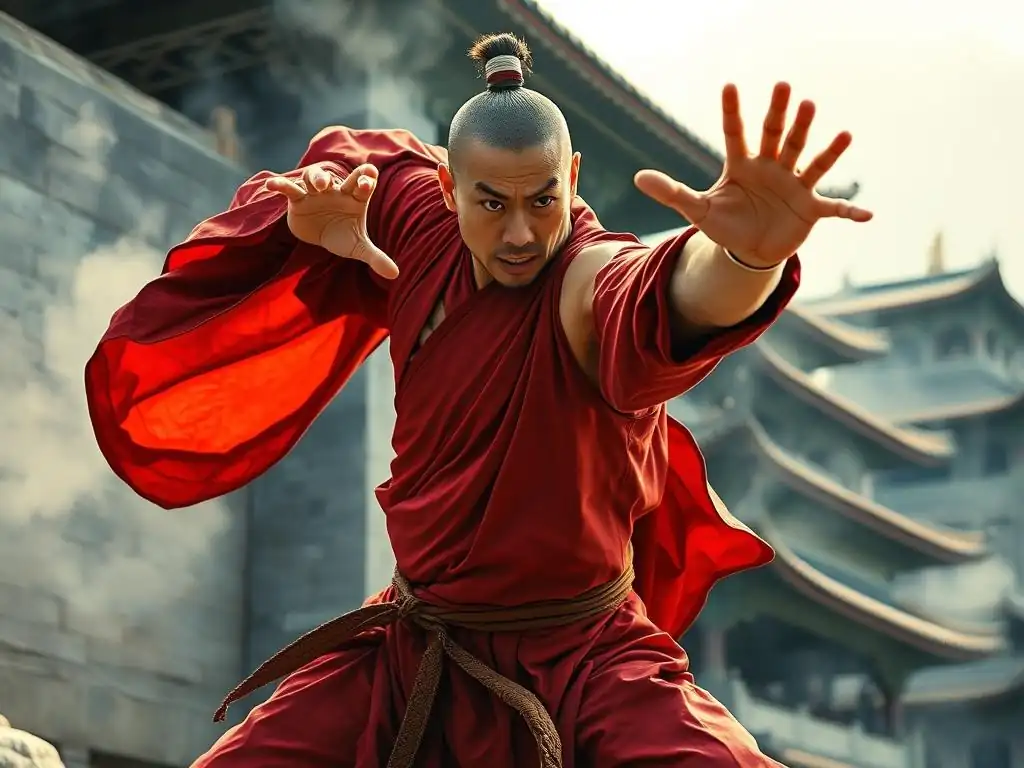
Welcome to Martial Arts Mastery, your ultimate resource for exploring the rich tapestry of martial traditions worldwide.
Delve into a world where discipline meets artistry, and history forges legends. Ever wondered how a seemingly peaceful monastery became a cradle of unparalleled combat prowess? Prepare to be captivated as we unravel the secrets behind the Shaolin Temple's martial history, a 1,500-year saga of skill, resilience, and spiritual dedication. This is just the beginning – the journey into the heart of Shaolin Kung Fu starts now... Are you ready to uncover the ancient techniques and philosophies that have shaped generations of warriors?
- Introduction to Shaolin Temple's Martial Arts Legacy
- The Origins of Shaolin Kung Fu: Tracing the Roots
- Key Styles and Disciplines within Shaolin Kung Fu
- The Shaolin Monk: Training, Philosophy, and Lifestyle
- Shaolin Temple's Influence on Global Martial Arts
- Shaolin Temple Today: Preservation and Modernization
- Shaolin Martial Arts: A Living Legacy
-
Frequently Asked Questions
- What is the significance of the Shaolin Temple in martial arts history?
- What are some of the key martial arts disciplines associated with the Shaolin Temple?
- How did the Shaolin Temple contribute to the philosophical underpinnings of martial arts?
- What are some practical self-defense strategies derived from Shaolin Temple martial arts?
- Where can I find more information about the Shaolin Temple's martial history?
- Final Reflection: The Enduring Legacy of Shaolin
- Embrace the Shaolin Legacy: Begin Your Journey Now!
Introduction to Shaolin Temple's Martial Arts Legacy
The Significance of Shaolin Temple in Martial Arts History
The Shaolin Temple, nestled in the Song Mountains of China's Henan province, stands as a monumental pillar in the vast landscape of martial arts history. Often referred to as the "birthplace of Zen Buddhism" and the "cradle of Kung Fu," its significance stems from a unique fusion of Chan Buddhist philosophy and rigorous martial training that evolved over more than fifteen centuries.
This blend created a distinct system of combat and spiritual discipline that has influenced countless martial arts styles worldwide. The temple's historical records and legends provide a rich tapestry detailing the development of sophisticated fighting techniques alongside a profound ethical code, making the Shaolin Temple martial history a cornerstone for understanding the evolution of East Asian martial arts.
Beyond its role as a training ground, the Shaolin Temple became a symbol of resilience and martial prowess throughout Chinese history. Monks from Shaolin were called upon by various dynasties to participate in military campaigns, demonstrating their martial skills in real combat scenarios. Historical accounts, such as those from the Tang Dynasty (618-907 AD), document instances where Shaolin monks aided the imperial army, notably in the suppression of rebel forces.
These events solidified the temple's reputation not just as a spiritual sanctuary, but as a potent military force, deeply embedding its martial legacy within the broader narrative of Chinese history. This integration of spiritual practice and martial application is what defines the unique Shaolin Temple martial history.
Shaolin Kung Fu: History, Styles, and Philosophy
Shaolin Kung Fu, or Shaolin Wushu, is not a single style but a collective term for the diverse martial arts systems developed within the Shaolin Monastery. Its history is intertwined with the temple's own, evolving through centuries of practice, conflict, and philosophical refinement. The core philosophy is deeply rooted in Chan (Zen) Buddhism, emphasizing mindfulness, discipline, perseverance, and the interconnectedness of mind and body. Training is viewed not merely as physical conditioning or combat preparation but as a path to enlightenment and self-mastery. This philosophical depth distinguishes Shaolin martial arts from purely combat-focused systems.
The styles within Shaolin Kung Fu are numerous and varied, encompassing empty-hand forms, weapon techniques, and specialized skills like qigong and conditioning exercises. Historical records and modern practice point to hundreds of distinct forms and techniques developed over the temple's long history.
While the exact number and classification have shifted over time, prominent styles include the Five Animals (Dragon, Tiger, Leopard, Snake, Crane), various staff forms (like the famous Shaolin Cudgel), and foundational exercises such as the Eighteen Lohan Hands. Understanding the history, styles, and philosophy of Shaolin Kung Fu is essential to appreciating the full scope of Shaolin Temple martial history.
The Origins of Shaolin Kung Fu: Tracing the Roots
The Bodhidharma Legend and the Creation of Shaolin Kung Fu
One of the most enduring legends surrounding the origins of Shaolin Kung Fu involves the Indian monk Bodhidharma (Da Mo in Chinese). According to tradition, Bodhidharma arrived at the Shaolin Temple around the 6th century AD. He found the monks physically weak and unable to withstand long hours of meditation.
To improve their health and stamina, he is said to have introduced a series of exercises, detailed in two texts: the Yi Jin Jing (Muscle/Tendon Changing Classic) and the Xi Sui Jing (Marrow Washing Classic). While modern historical scholarship suggests these texts were likely composed later, the legend of Bodhidharma remains a powerful narrative within Shaolin Temple martial history, symbolizing the introduction of physical training as a complement to spiritual practice.
This legend, though possibly more symbolic than strictly historical, highlights a crucial point: the early Shaolin monks recognized the necessity of physical discipline for spiritual pursuits. Whether Bodhidharma himself taught martial techniques or simply strength and conditioning exercises that later evolved into combat forms, his story underscores the fundamental connection between physical vitality and spiritual development within the Shaolin tradition. The Bodhidharma legend serves as a foundational myth explaining the integrated nature of Chan Buddhism and martial arts that defines Shaolin Temple martial history.
Early Influences on Shaolin Martial Arts Development
Before and alongside the Bodhidharma legend, the Shaolin Temple was situated in a region with existing martial traditions. China had a long history of warfare and various folk martial arts practices existed. It is highly probable that the early martial practices at Shaolin were influenced by these indigenous Chinese fighting methods. Guarding the temple and traveling through often-dangerous areas necessitated self-defense skills, leading the monks to adapt and develop techniques based on their environment and interactions.
Furthermore, the strategic location of the Shaolin Temple meant it was often affected by regional conflicts and political instability. Monks likely learned from soldiers, bandits, and travelers, incorporating effective techniques into their own evolving system. Early historical records from the Tang Dynasty indicate the monks were already skilled fighters, participating in military actions. This suggests that a martial tradition was developing at Shaolin well before the widespread popularization of the Bodhidharma legend, drawing from a mix of self-preservation needs, local practices, and potentially military techniques, all contributing to the rich tapestry of Shaolin Temple martial history.
The Evolution of Shaolin Fighting Techniques Through the Dynasties
The evolution of Shaolin fighting techniques is a complex process spanning over a millennium, shaped by the changing needs of the temple, political climates, and interactions with various martial arts styles. During the Tang Dynasty (7th-10th centuries), the Shaolin monks gained significant fame for their martial prowess, particularly their staff fighting. Historical accounts describe their participation in battles, contributing to the Tang Emperor Li Shimin's rise to power. This period saw the formalization of some combat techniques and their application in real-world scenarios, cementing the temple's reputation as a martial center.
Throughout subsequent dynasties, including the Song (10th-13th centuries), Yuan (13th-14th centuries), Ming (14th-17th centuries), and Qing (17th-20th centuries), Shaolin Kung Fu continued to evolve. New forms were developed, existing ones refined, and techniques were adapted based on practical combat experience and the introduction of new weapons. The Ming Dynasty is often cited as a golden age for Shaolin martial arts, with numerous masters contributing to its development and writing treatises on its techniques. During the Qing Dynasty, facing suppression attempts, the martial arts tradition persisted, often practiced in secrecy, further adding layers to the intricate Shaolin Temple martial history.
Key Styles and Disciplines within Shaolin Kung Fu
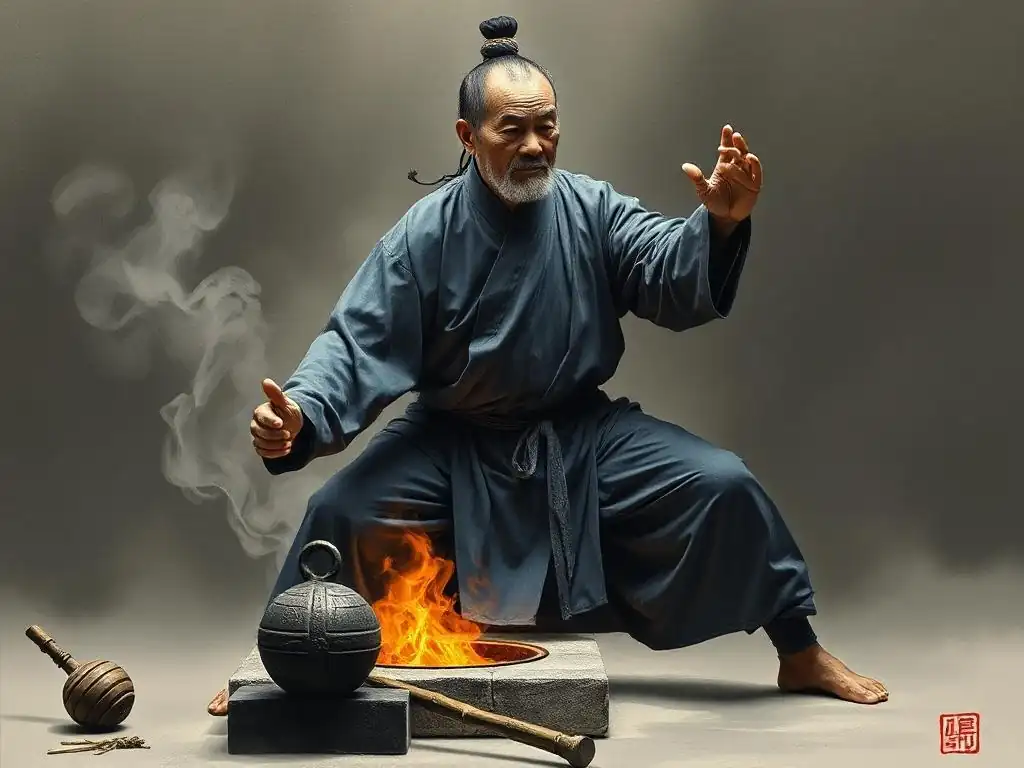
Exploring the Five Animals Style in Shaolin Martial Arts
The Five Animals style (Wuxing Quan) is perhaps one of the most iconic and widely recognized aspects of Shaolin Kung Fu. It involves imitating the movements, tactics, and spirit of five animals: the Dragon, Tiger, Leopard, Snake, and Crane. Each animal represents a different aspect of combat and training. The Tiger focuses on bone strengthening and powerful, straightforward attacks.
The Crane emphasizes sinew strengthening, balance, and evasive movements. The Leopard builds speed and explosive power. The Snake trains qi and flexibility, focusing on vital point strikes. The Dragon cultivates spirit (shen) and combines elements of all animals, representing adaptability and internal power.
Training in the Five Animals style involves learning specific forms (sequences of movements) for each animal, as well as applying their principles in combat. For example, a Tiger form might feature powerful punches and stomps, while a Crane form would involve light footwork and wing-like blocks. The goal is not just mimicry but internalizing the essence of each animal's fighting spirit and physical attributes to create a versatile and effective martial artist. This system is a fundamental component of traditional Shaolin Temple martial history and training.
The 18 Lohan Hands: A Foundation of Shaolin Combat
The Eighteen Lohan Hands (Shiba Luohan Shou) is considered a foundational set of exercises within Shaolin Kung Fu, often cited as one of the earliest forms developed at the temple. While its exact origins are debated, it is traditionally linked to Bodhidharma and is seen as a precursor or essential component to later, more complex forms. The Lohan, or Arhats, are enlightened disciples of the Buddha, and the movements are said to embody their calm yet powerful disposition.
The 18 Lohan Hands comprises a sequence of movements focusing on stretching, strengthening, and coordinating the body while cultivating internal energy (qi). The techniques include strikes, blocks, and joint manipulations, but the primary emphasis is on building a strong physical and energetic foundation. It is practiced for both health and martial application, serving as a vital exercise for improving flexibility, balance, and internal power. Mastering the 18 Lohan Hands is considered crucial preparation for learning more advanced Shaolin techniques and is a significant element in the practical history of Shaolin martial arts training.
Shaolin Weapon Techniques: Staff Mastery
While Shaolin Kung Fu is famous for its empty-hand forms, weapon training has always been an integral part of its curriculum, and the staff (Gun) is arguably the most renowned Shaolin weapon. The Shaolin Cudgel (Shaolin Gun) techniques are legendary, celebrated for their speed, power, and versatility.
Historical records from the Tang Dynasty specifically mention the Shaolin monks' exceptional skill with the staff during military engagements. The staff was a practical weapon for monks, as it was not considered a weapon of war like a sword or spear, aligning better with their spiritual principles while still being highly effective for defense.
Shaolin staff forms are characterized by fluid movements, powerful strikes, and dynamic changes in direction. Techniques include thrusting, sweeping, blocking, and striking with various parts of the staff. Mastery requires significant strength, coordination, and speed. Beyond the staff, Shaolin monks also traditionally trained with other weapons like the spear, broadsword, straight sword, and various exotic implements. However, the staff holds a special place in Shaolin Temple martial history, symbolizing the monks' early military contributions and their ingenuity in adapting simple tools for complex combat.
The Shaolin Monk: Training, Philosophy, and Lifestyle
Rigorous Training Regimen of Shaolin Monks
The training regimen of a Shaolin monk is historically known for its intensity and discipline, designed to forge both physical prowess and mental fortitude. Traditionally, training began at a very young age, often before dawn, and continued throughout the day with short breaks for meals and religious duties. The physical training included demanding exercises for strength, flexibility, speed, and endurance, such as running, jumping, climbing, and various conditioning drills. Practice of forms, both empty-hand and weapon-based, occupied significant time, requiring countless repetitions to achieve mastery.
Beyond physical conditioning and form practice, training also encompassed sparring, iron body conditioning (toughening the body to withstand blows), qigong (energy cultivation exercises), and meditation. The focus was holistic, aiming to develop a strong, resilient body and a calm, focused mind. While the exact schedule varied throughout history and between individuals, the core principle of relentless, disciplined practice remained constant. Accounts from various periods in Shaolin Temple martial history describe monks undergoing years, even decades, of this rigorous training before achieving high levels of skill.
Chan Buddhism and the Philosophical Underpinnings of Shaolin Martial Arts
Chan Buddhism is the spiritual heart of the Shaolin Temple, and its philosophy deeply permeates every aspect of Shaolin martial arts. The practice of Kung Fu is not separate from spiritual development but is seen as a vehicle for achieving enlightenment. Key Chan concepts integrated into martial arts include mindfulness, meditation, discipline, perseverance, and the understanding of impermanence. Training is a form of active meditation, requiring complete focus on the present moment and the movements being performed.
The philosophical goal is self-mastery – controlling one's thoughts, emotions, and physical actions, not merely defeating an opponent. Violence is viewed as a last resort, used only for self-defense or the defense of others. The strength gained through training is intended to serve spiritual purposes, fostering inner peace and compassion. This integration of Chan philosophy provides a unique ethical and spiritual dimension to Shaolin Kung Fu, distinguishing it from purely secular combat systems and forming the essential philosophical core of Shaolin Temple martial history.
The Daily Life and Disciplines within the Shaolin Monastery
Life within the Shaolin Monastery is governed by a strict schedule and set of disciplines that blend spiritual practice, martial training, and daily chores. Monks typically rise early, often before sunrise, for morning prayers and meditation. The day includes dedicated periods for martial arts training, religious study, communal meals, and work necessary for the upkeep of the monastery, such as cleaning, gardening, or administrative tasks. The emphasis is on communal living, humility, and service.
Adherence to monastic vows, which vary depending on the level of ordination, guides daily conduct. These typically include vows related to celibacy, diet (often vegetarian), non-violence (used defensively), and abstaining from intoxicants. The disciplined lifestyle is designed to minimize distractions and cultivate focus, essential for both spiritual progress and the demanding nature of martial arts training. This structured daily routine, combining spiritual observance with rigorous physical and mental training, has been a constant throughout much of Shaolin Temple martial history.
Shaolin Temple's Influence on Global Martial Arts
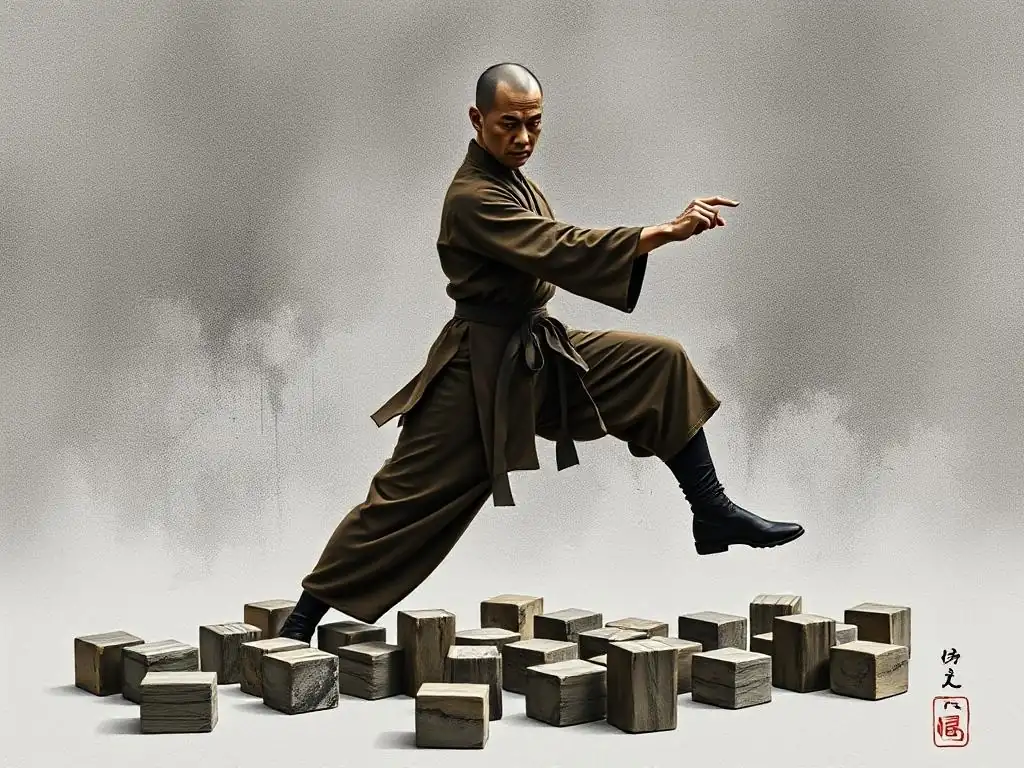
The Spread of Shaolin Techniques Across Asia
The influence of Shaolin martial arts extended far beyond the walls of the temple and the borders of China, significantly impacting martial arts development across Asia. Over centuries, monks traveled, merchants and travelers passed through, and disciples left the temple, carrying Shaolin techniques and principles with them. Historical evidence suggests Shaolin methods influenced various Chinese martial arts styles that later developed, providing a common root or inspiration for many Northern and Southern Kung Fu systems.
Beyond China, Shaolin's influence can be traced in the martial arts of neighboring countries. While direct historical proof is sometimes scarce or debated, similarities in forms, techniques, and philosophical underpinnings suggest connections to arts in Japan (e.g., Okinawan Karate's potential links to Southern Chinese styles influenced by Shaolin), Korea, and Southeast Asia.
Legends and historical accounts describe Chinese masters, some possibly with Shaolin connections, traveling to these regions and sharing their knowledge. This dissemination of techniques and ideas played a crucial role in shaping the broader landscape of East Asian martial arts, underscoring the global reach of Shaolin Temple martial history.
Shaolin Kung Fu in Modern Martial Arts and Popular Culture
In the 20th and 21st centuries, Shaolin Kung Fu experienced a surge in global popularity, largely due to its portrayal in film and television. Iconic movies like "Shaolin Temple" (1982) starring Jet Li introduced the art to millions worldwide, showcasing its acrobatic movements, powerful techniques, and spiritual depth. This exposure sparked significant interest outside of Asia, leading to the establishment of Shaolin cultural centers and training schools in numerous countries.
While cinematic depictions often exaggerate or simplify the reality of Shaolin training, they have undoubtedly served as a powerful catalyst for global awareness. This popularization has led to increased tourism to the temple and a growing number of international students seeking to learn authentic Shaolin Kung Fu. The image of the Shaolin monk, with their shaved heads and distinctive robes, has become a universally recognized symbol of martial arts excellence and spiritual discipline, showcasing the enduring impact of Shaolin Temple martial history on modern culture.
Impact of Shaolin Martial Arts on Mixed Martial Arts
The direct impact of traditional Shaolin Kung Fu on modern competitive Mixed Martial Arts (MMA) is less pronounced than its influence on traditional Asian martial arts, but elements and practitioners have found their way into the sport. While the traditional forms-based training differs significantly from the sparring-centric approach of MMA, the underlying principles of physical conditioning, mental discipline, and explosive power are highly relevant. Some fighters with backgrounds in Sanda (Chinese kickboxing, which has historical ties to traditional Kung Fu) or other Kung Fu styles have competed in MMA, demonstrating the effectiveness of certain techniques derived from these traditions.
Moreover, the emphasis on rigorous physical conditioning, flexibility, and body hardening in Shaolin training aligns with the demands of MMA. While specific Shaolin forms are not typically performed in the octagon, the athleticism and resilience cultivated through such training can provide a strong foundation.
The philosophical emphasis on mental fortitude and discipline also resonates with the mindset required for high-level competition. Thus, while not a direct pipeline, the historical legacy and training methodologies of Shaolin Kung Fu offer valuable insights and contribute indirectly to the diverse skill sets seen in modern MMA, reflecting another facet of Shaolin Temple martial history in the contemporary world.
Shaolin Temple Today: Preservation and Modernization
Shaolin Temple's Role in Preserving Traditional Kung Fu
Today, the Shaolin Temple plays a crucial role in preserving the rich tradition of Shaolin Kung Fu. After periods of decline and even destruction throughout history, particularly during the 20th century, the temple has undergone significant restoration and revitalization. The current abbots and monks are dedicated to maintaining the historical training methods, forms, and philosophical teachings that constitute authentic Shaolin martial arts. They continue to practice the traditional empty-hand and weapon forms, conditioning exercises, and qigong.
The temple serves as a central hub for the study and practice of traditional Shaolin Kung Fu. Monks train rigorously, following regimens similar in principle to those of their historical predecessors, albeit adapted to the modern context. Efforts are made to document and categorize the vast number of forms and techniques that have been developed over centuries, ensuring that this invaluable knowledge is not lost. This commitment to historical fidelity is paramount to preserving the integrity of Shaolin Temple martial history for future generations.
The Modernization of Shaolin Training and Techniques
While dedicated to preserving tradition, the Shaolin Temple has also embraced aspects of modernization to adapt to the contemporary world and disseminate its teachings more widely. This includes integrating modern sports science principles into training, utilizing improved facilities, and developing structured curricula for both monastic and lay practitioners. The traditional, often informal, transmission of knowledge is supplemented by more systematic teaching methods to accommodate a larger and more diverse student body.
Furthermore, the temple has engaged in developing performance-oriented Wushu routines based on traditional forms for demonstrations and competitions. These routines often emphasize athleticism and visual spectacle, differing somewhat from the practical, combat-focused training of historical periods. This modernization allows Shaolin Kung Fu to be presented on global stages, reaching wider audiences, though it sometimes sparks debate about the balance between performance and traditional martial application. This duality of preservation and modernization marks the current phase of Shaolin Temple martial history.
Shaolin Temple's Outreach Programs and Global Presence
The Shaolin Temple has established a significant global presence through various outreach programs. Official Shaolin cultural centers and schools have been opened in numerous countries across Europe, North America, Asia, and Australia. These centers are often run by disciples who have trained at the main temple and are authorized to teach authentic Shaolin Kung Fu and culture. This expansion allows people worldwide to learn directly from practitioners linked to the source.
The temple also organizes and participates in international tours, performing martial arts demonstrations and cultural exchanges. These events not only showcase the incredible skills of the monks but also promote Chinese culture and the philosophy of Chan Buddhism. By establishing a network of centers and actively engaging with the global community, the Shaolin Temple is ensuring that its rich martial history and traditions continue to thrive and inspire people across the world in the 21st century.
Shaolin Martial Arts: A Living Legacy
The Enduring Appeal of Shaolin Kung Fu
The enduring appeal of Shaolin Kung Fu lies in its unique combination of rigorous physical training, profound philosophical depth, and rich historical narrative. It offers more than just combat skills; it presents a path to self-improvement, discipline, and spiritual understanding. In a fast-paced modern world, the principles of mindfulness, perseverance, and balance inherent in Shaolin practice resonate deeply with many seeking a holistic approach to health and well-being.
The mystique surrounding the temple and its monks, fueled by centuries of legends and modern media, continues to capture the imagination. People are drawn to the idea of mastering one's body and mind through dedicated practice, much like the monks of old. This blend of physical challenge, mental discipline, and spiritual aspiration ensures that Shaolin Kung Fu remains relevant and attractive to practitioners and enthusiasts worldwide, cementing its status as a living legacy of Shaolin Temple martial history.
Resources for Learning About Shaolin Martial History
For those interested in delving deeper into Shaolin Temple martial history, numerous resources are available, ranging from historical texts and academic studies to modern books, documentaries, and online platforms. While original historical documents can be challenging to access and interpret, translations and scholarly analyses provide valuable insights into the temple's martial development through different dynasties.
Many books written by martial arts historians and practitioners offer detailed accounts of Shaolin forms, techniques, and historical events. Documentaries and educational videos provide visual demonstrations and interviews with masters. Furthermore, official Shaolin cultural centers and websites often provide information about the temple's history and philosophy. Engaging with these resources offers a comprehensive understanding of the evolution and significance of Shaolin martial arts.
The Future of Shaolin Martial Arts Traditions
The future of Shaolin martial arts traditions appears robust, marked by continued efforts in preservation, adaptation, and global dissemination. The Shaolin Temple itself remains the central authority, safeguarding the core teachings and practices. Simultaneously, the global network of cultural centers and the increasing number of international practitioners suggest a vibrant future where Shaolin Kung Fu continues to spread and evolve outside its historical homeland.
Challenges remain, such as balancing commercial interests with traditional authenticity, ensuring the quality of teaching outside the main temple, and adapting practices for modern lifestyles while retaining their essence. However, the strong foundation of a 1,500-year history, coupled with a willingness to engage with the modern world, positions Shaolin martial arts traditions to remain a significant force in the global martial arts landscape for centuries to come, continuing to build upon the rich tapestry of Shaolin Temple martial history.
Frequently Asked Questions
What is the significance of the Shaolin Temple in martial arts history?
The Shaolin Temple is considered the birthplace of Zen Buddhism and Shaolin Kung Fu. Its 1,500-year history is deeply interwoven with the development of martial arts. It serves as a symbol of martial arts heritage.
What are some of the key martial arts disciplines associated with the Shaolin Temple?
Shaolin Kung Fu is the most well-known, encompassing various styles. It includes striking, grappling, and weapon-based techniques. The Temple also promotes the study of Qi Gong.
How did the Shaolin Temple contribute to the philosophical underpinnings of martial arts?
The Temple integrated Zen Buddhist principles like mindfulness and discipline into training. This fostered a holistic approach to martial arts development. The integration of philosophy is key to its effectiveness.
What are some practical self-defense strategies derived from Shaolin Temple martial arts?
Shaolin Kung Fu emphasizes direct and effective techniques. These include powerful strikes, joint locks, and throws. The strategies are designed for real-world applications.
Where can I find more information about the Shaolin Temple's martial history?
Websites like MartialArtsMastery.org offer historical overviews, training techniques, and profiles of legendary practitioners. These resources can provide a deeper understanding of the subject.
Final Reflection: The Enduring Legacy of Shaolin
The journey through 1,500 years of Shaolin Temple's martial history reveals more than just fighting techniques; it unveils a profound philosophy of discipline, resilience, and spiritual growth. This enduring legacy resonates powerfully today, offering a timeless blueprint for navigating the complexities of modern life with strength and inner peace. The principles forged in the crucible of Shaolin are not confined to the dojo but extend to every facet of human endeavor, reminding us that true mastery lies in the harmonious cultivation of mind, body, and spirit.
The Shaolin Temple's influence transcends mere martial arts; it has shaped cultural perceptions of strength, discipline, and the pursuit of enlightenment. Witnessing the dedication and perseverance of generations of Shaolin monks inspires a deep respect for the power of human potential and the transformative effect of unwavering commitment. The best fighter is never angry.
This simple yet profound statement encapsulates the essence of Shaolin philosophy, emphasizing that true strength lies not in aggression but in self-control and inner harmony. This philosophy continues to inspire individuals worldwide to seek balance and cultivate inner peace amidst the chaos of modern life.
As we conclude this exploration of Shaolin Temple's martial history, I invite you to reflect on the lessons learned and consider how you might integrate them into your own life. Embrace the spirit of discipline, cultivate inner strength, and strive for balance in all that you do. Let the enduring legacy of Shaolin inspire you to unlock your own potential and embark on a journey of lifelong learning and self-discovery. The path of the warrior is not about conquering others, but about conquering oneself.
Embrace the Shaolin Legacy: Begin Your Journey Now!
Thank you for diving into the rich history of the Shaolin Temple! We hope you've gained a new appreciation for its incredible martial arts heritage. Now, it's time to channel that inspiration into action.
- Visit a local martial arts school and inquire about Shaolin-inspired training to begin your own martial journey.
- Share this article with friends and family interested in martial arts or Chinese history, sparking their curiosity too.
- Explore the "Martial Arts Mastery" forum to discuss the lasting impact of the Shaolin Temple with fellow enthusiasts.
Which aspect of Shaolin history resonated most with you and how will you integrate it into your training or daily life?