
Creating Your Personalized Muay Thai Conditioning Plan


Welcome to Martial Arts Mastery, your gateway to the world's most compelling fighting traditions. Ever wondered how Muay Thai fighters achieve their legendary stamina and power? Dive into "Creating Your Personalized Muay Thai Conditioning Plan" and unlock the secrets to building a foundation for success, even as a beginner. Discover how to tailor your training and embark on a journey towards martial arts excellence. Let's begin!
- Building a Comprehensive Muay Thai Conditioning Plan
- Introduction to Muay Thai Conditioning
- Assessing Your Baseline Fitness for Muay Thai
-
Designing Your Personalized Muay Thai Conditioning Plan
- Step 1: Defining Your Muay Thai Goals
- Step 2: Incorporating Strength Training for Muay Thai
- Step 3: Developing Cardiovascular Endurance for Muay Thai
- Step 4: Enhancing Flexibility and Mobility for Muay Thai
- Step 5: Implementing Muay Thai-Specific Conditioning Drills
- Step 6: Prioritizing Rest and Recovery
- Sample Muay Thai Conditioning Plan
- Advanced Muay Thai Conditioning Techniques
- Injury Prevention in Muay Thai Conditioning
- Tracking Progress and Adapting Your Muay Thai Conditioning
- Conclusion: Achieving Muay Thai Success Through Proper Conditioning.
-
Frequently Asked Questions
- ### What is the most important aspect of a Muay Thai conditioning plan for beginners?
- ### How often should a beginner train their Muay Thai conditioning each week?
- ### What types of exercises should be included in a Muay Thai conditioning plan for beginners?
- ### How long should each Muay Thai conditioning session last for a beginner?
- ### What are some common mistakes beginners make when creating a Muay Thai conditioning plan?
- Final Reflection: Forging Your Fighting Foundation
- Ignite Your Inner Warrior: Forge Your Muay Thai Destiny!
Building a Comprehensive Muay Thai Conditioning Plan
Introduction to Muay Thai Conditioning
Why Conditioning is Essential for Muay Thai Performance
Conditioning forms the bedrock of success in Muay Thai, often referred to as the "Art of Eight Limbs." Unlike many other martial arts, Muay Thai demands an exceptional blend of aerobic and anaerobic fitness, explosive power, and muscular endurance across the entire body.
A well-developed Muay Thai conditioning plan is not merely about physical toughness; it directly impacts a practitioner's ability to maintain technique under fatigue, absorb and deliver strikes effectively, control the clinch, and recover between intense rounds. Without adequate conditioning, even the most technically proficient fighter will struggle to perform optimally, especially as the fight progresses into later rounds.
The physical toll of a Muay Thai bout or even a rigorous training session is immense. Repeated powerful kicks, punches, knees, and elbows, combined with demanding clinch exchanges, tax the cardiovascular system and musculature intensely. A strong conditioning base allows practitioners, particularly Muay Thai conditioning plan beginners, to sustain high-output efforts, manage lactic acid buildup, and reduce the risk of injury associated with fatigue. It's the difference between executing crisp combinations in the third round versus simply trying to survive.
Understanding the Physical Demands of Muay Thai
Muay Thai imposes unique and multifaceted physical demands on the body. Fights and sparring sessions involve bursts of high-intensity activity (striking, clinching) punctuated by brief periods of relative rest or lower intensity movement. This requires significant anaerobic capacity alongside a robust aerobic engine for recovery and sustained output. Kicking power necessitates strong hips, core, and legs, while punching and clinching demand upper body strength and endurance, particularly in the shoulders and arms. The repetitive nature of strikes like leg kicks also requires specific muscular resilience.
Furthermore, the clinch game in Muay Thai adds a significant isometric and dynamic strength component, taxing the neck, shoulders, arms, and core in ways distinct from boxing. The ability to absorb impact, check kicks, and maintain balance under pressure highlights the need for overall structural strength and resilience. A comprehensive Muay Thai conditioning plan must therefore address these specific demands, incorporating exercises that build power for strikes, endurance for rounds, strength for clinching, and resilience for impact.
Common Pitfalls in Muay Thai Conditioning and How to Avoid Them
Many beginners, and even some experienced practitioners, fall into common traps when designing their Muay Thai conditioning plan. One frequent pitfall is focusing too narrowly on just one aspect, such as purely cardiovascular work like long-distance running, while neglecting strength, power, or sport-specific endurance. While running is beneficial, it doesn't replicate the stop-and-go, explosive nature of a Muay Thai round or the muscular demands of clinching and striking. Another error is inconsistency; sporadic training yields minimal results. A dedicated Muay Thai conditioning plan requires disciplined adherence over time.
Overtraining is another significant risk, especially for eager Muay Thai conditioning plan beginners. Pushing too hard without adequate rest leads to diminished performance, increased injury risk, and burnout. It's crucial to balance intensity with recovery. Neglecting flexibility and mobility is also detrimental, limiting range of motion for techniques like high kicks and increasing susceptibility to muscle strains. Avoiding these pitfalls requires a balanced, progressive, and consistent approach that addresses all facets of physical fitness relevant to Muay Thai.
Assessing Your Baseline Fitness for Muay Thai
The Importance of Initial Assessment
Before diving into designing a Muay Thai conditioning plan, establishing a baseline of your current fitness level is paramount. This initial assessment provides a realistic starting point, helps in setting appropriate goals, and allows you to track progress effectively over time. Without understanding your current strengths and weaknesses, a conditioning plan can be either too easy (leading to slow progress) or too difficult (increasing injury risk and demotivation). For Muay Thai conditioning plan beginners, this step is particularly important as it helps identify areas needing the most focus.
An honest assessment reveals where you stand in terms of cardiovascular endurance, muscular strength and endurance, power, flexibility, and agility – all critical components for Muay Thai. For instance, you might have decent running endurance but lack the explosive power needed for powerful kicks or the muscular endurance required for repetitive clinch work. Identifying these specific deficiencies allows you to tailor your Muay Thai conditioning plan to target those areas effectively, ensuring a more efficient and productive training journey.
Key Fitness Components: Strength, Endurance, Speed, Agility
Muay Thai demands a harmonious development of several key fitness components. Strength is essential for generating power in strikes, controlling opponents in the clinch, and maintaining structural integrity. This includes maximal strength for explosive movements and strength endurance for sustained effort. Endurance, both aerobic and anaerobic, is crucial for lasting multiple rounds, recovering quickly between bursts of activity, and maintaining performance despite fatigue. Aerobic capacity supports recovery, while anaerobic capacity fuels the high-intensity exchanges.
Speed and Agility are vital for movement, evading strikes, landing combinations quickly, and reacting to an opponent's actions. Speed refers to the ability to move limbs or the body quickly, while agility involves changing direction rapidly and efficiently. Additionally, flexibility and mobility are necessary for executing techniques with full range of motion and preventing injuries. A complete Muay Thai conditioning plan must incorporate training methods that develop all these components in an integrated manner, reflecting the multifaceted nature of the sport.
Self-Assessment Tests for Muay Thai Readiness
Several simple self-assessment tests can help Muay Thai conditioning plan beginners gauge their current fitness levels across key components. These tests provide quantifiable data to inform your training plan. For example, you could test your cardiovascular endurance with a timed 1-mile run or by seeing how long you can maintain a moderate intensity on a jump rope. Muscular endurance can be assessed with bodyweight exercises like push-ups, squats, or planks, counting how many repetitions you can perform or how long you can hold a position with good form.
Power can be estimated with tests like a standing broad jump or vertical jump. Flexibility can be checked with basic stretches like a sit-and-reach test or assessing hip and shoulder mobility. Agility can be tested using simple cone drills or shuttle runs. Recording your results for these tests provides a valuable benchmark. Re-testing periodically (e.g., every 4-6 weeks) allows you to objectively measure progress and make necessary adjustments to your Muay Thai conditioning plan.
Testing Upper and Lower Body Strength and Power
Assessing strength and power for Muay Thai can involve bodyweight exercises or resistance training if equipment is available. For upper body strength and endurance relevant to punches and clinching, try the maximum number of push-ups you can perform in one minute or the maximum number of pull-ups/inverted rows. For explosive upper body power, medicine ball throws (chest pass, overhead throw) can provide an estimate. Note the distance or number of reps.
Lower body strength and power are critical for kicks, knees, and movement. Test your squat endurance by seeing how many bodyweight squats you can do with good form before fatigue sets in, or time how long you can hold a wall sit. For explosive lower body power, measure your standing broad jump distance or vertical jump height. Record these numbers to establish your baseline. For instance, a beginner might aim for 20-30 push-ups or a broad jump of 1.5 meters.
Evaluating Cardiovascular and Muscular Endurance
Cardiovascular endurance is fundamental for lasting rounds. A simple test is to run for 12 minutes and see the distance covered (Cooper test variation) or time how long it takes you to run 1.5 miles. Alternatively, time how long you can jump rope continuously without tripping. Muscular endurance, particularly relevant for repetitive strikes and clinching, can be assessed using exercises like maximum burpees in one minute, holding a plank for time, or performing air squats for a set duration (e.g., 2 minutes) and counting reps.
For a more Muay Thai-specific feel, try performing 3-minute rounds of shadow boxing or heavy bag work at a moderate intensity and note how your technique and output diminish over the round. Can you maintain a consistent pace and power level for the full 3 minutes? How quickly do you recover during a 1-minute rest period? These observations, combined with objective test results, paint a clear picture of your current endurance levels as you begin your Muay Thai conditioning plan.
Assessing Flexibility, Agility, and Reaction Time
Flexibility is crucial for executing techniques like high kicks and avoiding injuries. Assess hip flexibility with tests like the seated hip external rotation or checking your range of motion in a lunge. Shoulder mobility is important for punches and clinching; test this by seeing how far you can reach behind your back with opposite hands (shoulder dislocation test variation) or overhead arm range. A simple sit-and-reach test measures hamstring and lower back flexibility. Note any significant tightness or limitations.
Agility, the ability to change direction quickly, can be tested with drills like the pro-agility shuttle run (5-10-5 drill) or a simple T-test. Time how long it takes you to complete the pattern. Reaction time can be informally assessed through partner drills (like catching a falling stick) or using online reaction time tests, although sport-specific reaction time is best developed through sparring and drills. These assessments help identify areas where dedicated flexibility or agility work is needed within your Muay Thai conditioning plan.
Designing Your Personalized Muay Thai Conditioning Plan
Step 1: Defining Your Muay Thai Goals
The first critical step in creating your Muay Thai conditioning plan is clearly defining your goals. What do you hope to achieve with your Muay Thai training? Are you focused purely on fitness and learning the art for self-defense? Do you aspire to compete in amateur or professional fights? Are you aiming to improve specific areas, such as increasing your kicking power, improving your clinch endurance, or simply being able to complete a full class without excessive fatigue? Your goals will dictate the intensity, volume, and specific exercises included in your plan.
For Muay Thai conditioning plan beginners, common goals might include being able to spar for multiple rounds comfortably, improving overall strength for techniques, or increasing cardiovascular capacity to keep up with class intensity. Setting clear, personal goals provides direction and motivation. Write them down and refer to them regularly to stay focused.
Setting SMART Goals for Muay Thai Training
To make your goals effective, ensure they are SMART: Specific, Measurable, Achievable, Relevant, and Time-bound. Instead of a vague goal like "get better conditioning for Muay Thai," make it specific: "Improve my ability to maintain technique during three 3-minute rounds of sparring." Make it measurable: "Increase my continuous jump rope time from 3 minutes to 5 minutes within the next month." Ensure it's achievable given your current fitness and time constraints, relevant to your Muay Thai aspirations, and set a realistic deadline.
For a Muay Thai conditioning plan beginner, a SMART goal might be: "Increase my maximum number of push-ups from 15 to 25 within the next 6 weeks" (Specific, Measurable, Achievable, Relevant to striking power/endurance, Time-bound). Or, "Be able to complete a 60-minute beginner Muay Thai class feeling energetic in the last 15 minutes within 8 weeks." Setting SMART goals provides clear targets and makes tracking progress simpler.
Short-Term vs. Long-Term Conditioning Objectives
Your Muay Thai conditioning plan should include both short-term and long-term objectives. Short-term goals are typically achievable within weeks or a few months and serve as stepping stones. Examples include improving your mile run time by 30 seconds in 4 weeks or adding 5 kg to your squat max in 6 weeks. These provide immediate targets and build momentum.
Long-term objectives are larger goals that may take many months or even years to achieve. These could be competing in your first amateur fight within a year, developing the endurance to spar competitively for five 3-minute rounds, or significantly increasing your overall power output. Your short-term goals should logically contribute to your long-term aspirations. For Muay Thai conditioning plan beginners, initial short-term goals might focus on building a foundational level of general fitness before targeting more sport-specific long-term objectives.
Step 2: Incorporating Strength Training for Muay Thai
Strength training is a vital, often underestimated, component of a comprehensive Muay Thai conditioning plan. It's not just about building big muscles; it's about developing functional strength that translates directly to generating power in strikes, controlling opponents in the clinch, and improving resilience against impact. Strong legs, hips, and core are essential for powerful kicks and knees. A strong upper back and shoulders are crucial for clinching and punching power, while a strong core connects the entire body for efficient movement and force transfer.
For Muay Thai conditioning plan beginners, starting with bodyweight exercises is an excellent way to build a foundation. Progressing to resistance training with weights allows for targeted strength development. Focus on compound movements that work multiple muscle groups simultaneously, mimicking the integrated movements used in Muay Thai. Aim for a balance of strength and strength endurance, training in rep ranges appropriate for each goal.
Essential Strength Exercises for Muay Thai
A well-rounded strength program for Muay Thai should include exercises targeting the key muscle groups used in the sport. Essential lower body exercises include squats (back squats, front squats, goblet squats), lunges, and deadlifts (conventional or Romanian deadlifts) to build leg, hip, and posterior chain strength for kicks and movement. For upper body, focus on push-ups, overhead presses, and rows (barbell rows, dumbbell rows, pull-ups) to develop punching and clinching strength.
Core strength is paramount for connecting upper and lower body power and stabilizing the spine during strikes and clinches. Include exercises like planks (various variations), Russian twists, and leg raises. Neck strengthening exercises are also important for absorbing impact and clinch defense. Incorporating these fundamental movements builds the functional strength base required for effective Muay Thai performance.
Sample Strength Training Routine for Muay Thai
Here is a sample strength training routine suitable for Muay Thai conditioning plan beginners, focusing on compound movements. This could be performed 2-3 times per week on non-Muay Thai training days, with adequate rest between sessions (at least 48 hours).
- Warm-up: 5-10 minutes of dynamic stretching and light cardio (e.g., arm circles, leg swings, jogging in place).
- Workout:
- Back Squats: 3 sets of 8-12 repetitions
- Romanian Deadlifts: 3 sets of 10-15 repetitions
- Push-ups (or Incline Push-ups if needed): 3 sets to near failure (aim for 10+ reps)
- Dumbbell Rows: 3 sets of 10-15 repetitions per arm
- Overhead Press (Dumbbell or Barbell): 3 sets of 8-12 repetitions
- Plank: 3 sets, hold for 30-60 seconds
- Russian Twists (with or without weight): 3 sets of 15-20 repetitions per side
- Cool-down: 5-10 minutes of static stretching.
Remember to focus on proper form over lifting heavy weights, especially when starting. As you get stronger, you can gradually increase the weight or repetitions, or progress to more challenging exercise variations.
Bodyweight Training for Muay Thai Strength and Endurance
Bodyweight training is highly effective for Muay Thai conditioning plan beginners as it requires no equipment and builds functional strength and endurance simultaneously. Exercises like squats, lunges, push-ups, pull-ups (if a bar is available, or inverted rows using a sturdy table/bar), and planks are excellent for building a foundational level of strength relevant to Muay Thai movements. High-repetition bodyweight exercises also contribute significantly to muscular endurance, crucial for throwing multiple strikes and maintaining intensity throughout a round.
Circuit training using bodyweight exercises can simulate the demands of a round. For example, perform 60 seconds of squats, immediately followed by 60 seconds of push-ups, 60 seconds of lunges (alternating legs), and 60 seconds of planks, with a 60-second rest period before repeating for 3-5 rounds. This type of training improves both strength endurance and cardiovascular fitness, making it ideal for a beginner's Muay Thai conditioning plan.
Step 3: Developing Cardiovascular Endurance for Muay Thai
Cardiovascular endurance is arguably the most critical component of a Muay Thai conditioning plan. Without the ability to sustain effort and recover quickly, all the strength and technique in the world won't help you last multiple rounds. Muay Thai demands both aerobic capacity (for recovery and sustained low-to-moderate intensity work) and anaerobic capacity (for the explosive bursts of striking and clinching). Your conditioning plan must address both.
For Muay Thai conditioning plan beginners, building a solid aerobic base is usually the first step. This can involve steady-state cardio like running, cycling, or swimming. As your fitness improves, incorporate more high-intensity interval training (HIIT) to mimic the intermittent nature of a Muay Thai round and improve your anaerobic threshold and recovery rate.
Effective Cardio Exercises for Muay Thai
Several cardio exercises are highly effective for improving Muay Thai conditioning. Running is a classic, building overall aerobic capacity and leg endurance. Vary your runs with sprints, hills, or interval training to mimic round-like intensity. Jump rope is exceptionally popular in combat sports for a reason; it improves cardiovascular fitness, coordination, footwork, and calf endurance. Aim to jump rope for the duration of a round (e.g., 3 minutes), working towards multiple rounds with short rests.
Cycling or using an elliptical trainer can be good low-impact options for building cardio, particularly useful for active recovery or if managing lower body impact. Swimming offers a full-body workout with minimal joint stress. Incorporating a mix of steady-state cardio and interval training provides a well-rounded approach to developing the necessary endurance for Muay Thai.
High-Intensity Interval Training (HIIT) for Muay Thai
HIIT is particularly well-suited for replicating the demands of Muay Thai rounds. It involves short bursts of maximum or near-maximum effort followed by brief recovery periods. This type of training significantly improves anaerobic capacity, VO2 max, and the ability to recover quickly between intense efforts – all crucial for a fighter. Examples include sprinting intervals (e.g., sprint 30 seconds, rest 60 seconds, repeat), or interval training on a bike or rowing machine.
A Muay Thai-specific HIIT approach can involve round-based drills. For instance, perform 3 minutes of intense activity (e.g., heavy bag work, pad work, or a circuit of burpees, squat jumps, and mountain climbers) followed by 1 minute of rest, repeating for 3-5 rounds. This directly mimics the work-rest ratio of a fight round and is highly effective for improving sport-specific endurance for Muay Thai conditioning plan beginners.
Integrating Running, Jump Rope, and Cycling into Your Plan
A balanced Muay Thai conditioning plan for beginners should integrate different cardio modalities. You might designate certain days for longer, steady-state runs (e.g., 20-30 minutes at a moderate pace) to build aerobic base. On other days, incorporate jump rope sessions, gradually increasing the number and duration of rounds. HIIT sessions, using sprints, cycling intervals, or round-based drills, can be included 1-2 times per week, ensuring adequate rest days follow.
For example, a weekly plan might include:
- Monday: Muay Thai technique/sparring + Strength Training
- Tuesday: Steady-state run (30 mins) + Flexibility/Mobility
- Wednesday: Muay Thai technique/drills + Jump Rope Intervals (5 x 3 min rounds)
- Thursday: Rest or Active Recovery (light cycling)
- Friday: Muay Thai technique/sparring + HIIT (e.g., Sprint intervals or Bag work intervals)
- Saturday: Strength Training
- Sunday: Rest
This structure provides variety and addresses different aspects of cardiovascular fitness needed for Muay Thai.
Step 4: Enhancing Flexibility and Mobility for Muay Thai

Flexibility and mobility are often overlooked but are critical components of a complete Muay Thai conditioning plan. Good flexibility allows for a greater range of motion, which is essential for executing techniques like high kicks, powerful teeps, and evasive maneuvers effectively and without strain. Mobility, which involves the ability to move a joint through its full range of motion actively, is equally important for dynamic movements and injury prevention.
Poor flexibility and mobility can restrict technique, reduce power output, and significantly increase the risk of muscle strains, joint issues, and other injuries common in martial arts. Dedicating time to stretching and mobility work helps maintain healthy joints, improves posture, and enhances overall movement efficiency, making you a more fluid and resilient Muay Thai practitioner.
Dynamic Stretching for Muay Thai Warm-ups
Dynamic stretching involves controlled movements through a full range of motion and is ideal for preparing the body for activity. It increases blood flow to muscles, improves mobility, and activates the nervous system. Dynamic stretches should be performed before every Muay Thai training session or conditioning workout.
Examples of dynamic stretches beneficial for Muay Thai include:
- Leg swings (forward/backward and side-to-side) to open up hips for kicks.
- Arm circles (forward and backward) and shoulder rotations for punching and clinching.
- Torso twists to improve rotational mobility for strikes.
- Walking lunges with a twist.
- High knees and butt kicks.
- Carioca or grapevines for lateral movement.
Perform 10-15 repetitions of each movement, focusing on controlled, smooth motion. This prepares your joints and muscles for the dynamic demands of Muay Thai.
Static Stretching for Muay Thai Cool-downs
Static stretching involves holding a stretch in a challenging but comfortable position for a period, typically 20-30 seconds. It is best performed after training during the cool-down phase when muscles are warm. Static stretching helps to improve overall flexibility and can aid in muscle recovery by promoting relaxation and potentially reducing post-exercise soreness.
Focus on stretches that target the major muscle groups used in Muay Thai:
- Hamstring stretches (seated or standing).
- Quad stretches (standing or lying).
- Hip flexor stretches (kneeling lunge).
- Calf stretches (against a wall).
- Chest and shoulder stretches (doorway stretch).
- Triceps and biceps stretches.
Hold each stretch for 20-30 seconds, breathing deeply and relaxing into the stretch. Avoid bouncing. Regular static stretching can help maintain or improve the range of motion gained from training and dynamic warm-ups.
Improving Shoulder and Hip Mobility for Muay Thai
Shoulder and hip mobility are particularly crucial for effective and injury-free Muay Thai. Restricted hip mobility can limit kicking height and power, reduce range of motion in the clinch, and contribute to lower back pain. Poor shoulder mobility can affect punching power, clinching effectiveness, and increase the risk of shoulder injuries.
Specific exercises to improve hip mobility include 90/90 stretches, pigeon pose (from yoga), and hip circles. For shoulder mobility, exercises with a broomstick or resistance band like shoulder dislocations (pass-throughs), external and internal rotations, and overhead stretches are beneficial. Incorporate these mobility drills into your warm-ups, cool-downs, or dedicate short sessions (10-15 minutes) on rest days to address these areas. Consistent work on mobility is a key part of a long-term Muay Thai conditioning plan.
Step 5: Implementing Muay Thai-Specific Conditioning Drills
While general fitness is important, a truly effective Muay Thai conditioning plan for beginners must include drills that mimic the specific movements and energy systems used in the sport. These drills help translate general strength and endurance into functional Muay Thai performance. They also improve technique under fatigue, which is a critical skill.
Muay Thai-specific drills build explosive power for strikes, develop muscular endurance for repetitive actions (like kicking or clinching), and improve the ability to maintain technique when tired. They bridge the gap between general physical preparation and sport-specific readiness, making your conditioning directly applicable to the ring or sparring session.
Shadow Muay Thai for Technique and Stamina
Shadow Muay Thai (often called shadow boxing, but including kicks, knees, and elbows) is an excellent drill for both technique and conditioning. It allows you to practice movements at full speed without impact, focusing on fluidity, balance, and form. Performing shadow Muay Thai for the duration of a round (e.g., 3 minutes) with round-like intensity is a fantastic way to build sport-specific stamina.
Focus on throwing combinations, moving your feet, checking imaginary kicks, and practicing clinch entries and exits. Vary the intensity within the round, simulating bursts of activity followed by brief recovery periods, just like in a real fight. Doing multiple rounds of shadow Muay Thai with short rest periods (e.g., 1 minute) is a simple yet highly effective conditioning tool for Muay Thai conditioning plan beginners.
Heavy Bag Drills for Power and Endurance
Working the heavy bag is a staple of Muay Thai training and a powerful conditioning tool. It allows you to practice techniques with power and resistance. Heavy bag rounds build explosive power, muscular endurance, and cardiovascular fitness simultaneously. Focus on throwing full-power strikes and combinations for the duration of the round.
Structure heavy bag work into rounds (e.g., 3 minutes of work, 1 minute of rest). Vary the focus of each round: one round might emphasize speed and volume, another power shots, and another combinations incorporating all eight limbs. For conditioning, maintain a high work rate throughout the round. Aim to complete several rounds, progressively increasing the number as your endurance improves. Heavy bag work is essential for translating general conditioning into fight-specific performance.
Speed Bag Drills for Hand-Eye Coordination and Rhythm
While the speed bag is traditionally associated more with Western boxing, it can still be a valuable addition to a Muay Thai conditioning plan for beginners. It primarily works on hand speed, coordination, and rhythm, while also providing a light cardiovascular workout and improving shoulder endurance. While Muay Thai utilizes more kicks, knees, and elbows, sharp hands are still crucial, and the speed bag helps develop these attributes.
Spend 2-3 minute rounds on the speed bag, focusing on maintaining a consistent rhythm and developing smooth hand movements. It can be a good warm-up for upper body striking or a cool-down activity. While not as central as heavy bag work or pad work, incorporating speed bag drills adds variety and contributes to overall hand speed and coordination, beneficial for punching in Muay Thai.
Step 6: Prioritizing Rest and Recovery
Training is only one part of the equation; rest and recovery are equally, if not more, important for muscle repair, energy replenishment, and preventing overtraining. Without adequate recovery, your body cannot adapt to the training stimulus, leading to plateaus, fatigue, and increased injury risk. A smart Muay Thai conditioning plan for beginners builds in dedicated rest days and prioritizes recovery strategies.
Listen to your body. If you're feeling excessively sore, fatigued, or notice a drop in performance, it might be a sign you need more rest. Recovery isn't just about physical rest; it also involves mental rejuvenation. Ensure your plan includes sufficient downtime to allow both your body and mind to recover from the demands of training.
The Role of Sleep in Muay Thai Recovery
Sleep is perhaps the single most critical component of recovery. During deep sleep, your body repairs muscle tissue, synthesizes hormones essential for growth and recovery, and consolidates learning (including new techniques). For athletes, especially those engaged in demanding training like Muay Thai, aiming for 7-9 hours of quality sleep per night is crucial.
Chronic sleep deprivation impairs recovery, reduces performance, increases cortisol levels (which can hinder muscle growth and increase fat storage), and negatively impacts reaction time, focus, and motivation. Prioritize sleep as a non-negotiable part of your Muay Thai conditioning plan. Establish a consistent sleep schedule and create a relaxing bedtime routine to improve sleep quality.
Nutrition for Muay Thai: Fueling Performance
Proper nutrition provides the necessary fuel and building blocks for training, recovery, and performance. A balanced diet rich in complex carbohydrates, lean proteins, and healthy fats is essential. Carbohydrates provide energy for training, while protein is crucial for muscle repair and growth. Healthy fats support hormone production and overall health.
Hydration is also key. Dehydration significantly impairs performance, reduces endurance, and increases injury risk. Drink plenty of water throughout the day, especially before, during, and after training. For beginners creating a Muay Thai conditioning plan, focus on whole, unprocessed foods. Consume adequate protein (e.g., 1.2-1.7 grams per kilogram of body weight) to support muscle recovery and consume carbohydrates around training sessions for energy.
Active Recovery Strategies
Active recovery involves light, low-intensity activity performed on rest days or after strenuous workouts. It can help increase blood flow, reduce muscle soreness, and promote mobility without adding significant stress to the body. Examples include light jogging, cycling at a low intensity, swimming, foam rolling, or gentle stretching and mobility work.
Incorporating active recovery sessions (e.g., 20-30 minutes) into your Muay Thai conditioning plan can aid in removing metabolic waste products from muscles and keeping your body moving. It can also be a good opportunity to work on flexibility or mobility in a relaxed state. Listen to your body and choose activities that feel restorative rather than depleting.
Sample Muay Thai Conditioning Plan
Weekly Training Schedule
Here is a sample weekly schedule for a Muay Thai conditioning plan beginner. This is a template and should be adjusted based on individual fitness levels, recovery capacity, and access to training facilities.
- Monday: Muay Thai Class/Drills (focus on technique) + Strength Training (Full Body)
- Tuesday: Cardiovascular Conditioning (Steady-state run 30 mins or Jump Rope 8 x 3 min rounds) + Flexibility/Mobility (Static stretching, Hip/Shoulder mobility drills)
- Wednesday: Muay Thai Class/Drills (focus on technique/light sparring) + Muay Thai Specific Conditioning (Heavy bag intervals 5 x 3 min rounds)
- Thursday: Rest or Active Recovery (Light cycling or swimming 20-30 mins, Foam rolling)
- Friday: Muay Thai Class/Drills (focus on technique/sparring) + Strength Training (Lower Body/Core focus)
- Saturday: High-Intensity Conditioning (Sprint intervals or Bodyweight circuit HIIT) + Flexibility/Mobility
- Sunday: Complete Rest
This schedule balances Muay Thai technical training with dedicated conditioning sessions, incorporating strength, cardio, and flexibility.
Detailed Exercise Breakdown [Example Week 1]
For the first week of a Muay Thai conditioning plan beginners might follow the sample schedule above with specific exercises and initial volumes:
- Monday (Strength): Back Squats (3x8), Push-ups (3x max reps), Dumbbell Rows (3x12), Plank (3x30 sec).
- Tuesday (Cardio/Flex): Run 30 mins at a conversational pace. Static stretches: Hamstring, Quad, Hip Flexor, Calf (hold 30 sec each, 2 sets). Mobility: Hip circles (10 each way/leg), Arm circles (15 each way).
- Wednesday (Bag): Heavy Bag: 3 min rounds, 1 min rest, 5 rounds. Focus on continuous movement and throwing combinations.
- Thursday (Rest/Active): 30 mins light cycling. Foam roll legs, back, and shoulders.
- Friday (Strength): Lunges (3x10/leg), Romanian Deadlifts (3x12), Overhead Press (3x10), Russian Twists (3x15/side).
- Saturday (HIIT): Bodyweight Circuit: Burpees (60 sec), Squat Jumps (60 sec), Mountain Climbers (60 sec). Rest 60 sec. Repeat 4 times.
- Sunday: Rest.
This example provides a clear structure for a beginner's first week, focusing on building a base. Volumes and intensities would increase gradually in subsequent weeks.
Adjusting the Plan Based on Progress
A personalized Muay Thai conditioning plan is not static; it must evolve as you get fitter. Regularly review your progress based on your initial assessments and how you feel during training. Are you hitting your SMART goals? Are the conditioning sessions feeling easier? Are you recovering well? If sessions feel too easy, it's time to increase the challenge – perhaps by adding more rounds, increasing the duration of work intervals, reducing rest times, adding resistance to strength exercises, or increasing the intensity of cardio.
Conversely, if you feel consistently fatigued, notice a drop in performance, experience persistent soreness, or have difficulty sleeping, you may be doing too much. In this case, reduce the volume or intensity, add an extra rest day, or focus more on recovery strategies like sleep and nutrition. Pay attention to signs of overtraining, such as decreased motivation, irritability, or increased susceptibility to illness. Periodically re-testing your baseline fitness (e.g., every 6-8 weeks) provides objective data to guide these adjustments.
Advanced Muay Thai Conditioning Techniques
As you progress beyond the beginner stage, you can incorporate more advanced conditioning techniques to continue challenging your body and improving performance. These methods build upon the foundational strength, endurance, and power developed in the initial phase of your Muay Thai conditioning plan.
Plyometrics for Explosive Power
Plyometrics are exercises that involve rapid stretching and contracting of muscles to generate explosive power. They are highly effective for improving the power behind strikes (kicks, knees, punches) and the explosiveness needed for clinch entries or evasive movements. Examples include jump squats, box jumps, plyometric push-ups, and medicine ball slams.
Incorporate plyometrics 1-2 times per week after a thorough warm-up, focusing on quality and explosiveness rather than high volume. For example, 3 sets of 5-8 repetitions of box jumps or medicine ball slams. Proper form is crucial to prevent injury, so start with lower heights/weights and progress gradually. Plyometrics are a powerful tool for taking your Muay Thai conditioning plan to the next level.
Speed and Agility Ladder Drills
Speed and agility ladder drills improve footwork, coordination, and the ability to change direction quickly – essential attributes for movement, defense, and setting up strikes in Muay Thai. These drills train the nervous system to react faster and improve proprioception (awareness of your body in space).
Examples include variations of footwork patterns like the Ickey Shuffle, in-and-outs, or lateral stepping through the ladder. Perform these drills for short, intense bursts (e.g., 15-30 seconds) with adequate rest between sets. Integrating ladder drills 1-2 times per week can significantly enhance your movement and reaction speed within your Muay Thai conditioning plan.
Medicine Ball Training for Core Strength and Power
Medicine ball training is excellent for developing rotational core strength and power, which is vital for generating force in punches and kicks. Exercises like medicine ball twists, throws (chest pass, overhead, rotational throws against a wall), and slams engage the core, hips, and upper body in dynamic, explosive movements that mimic striking actions.
Incorporate medicine ball drills into your strength or conditioning sessions 1-2 times per week. For power development, use heavier balls and lower repetitions (e.g., 3 sets of 6-10 explosive throws). For endurance, use lighter balls and higher repetitions or incorporate them into circuits. Medicine ball training adds a functional, explosive element to your Muay Thai conditioning plan.
Injury Prevention in Muay Thai Conditioning
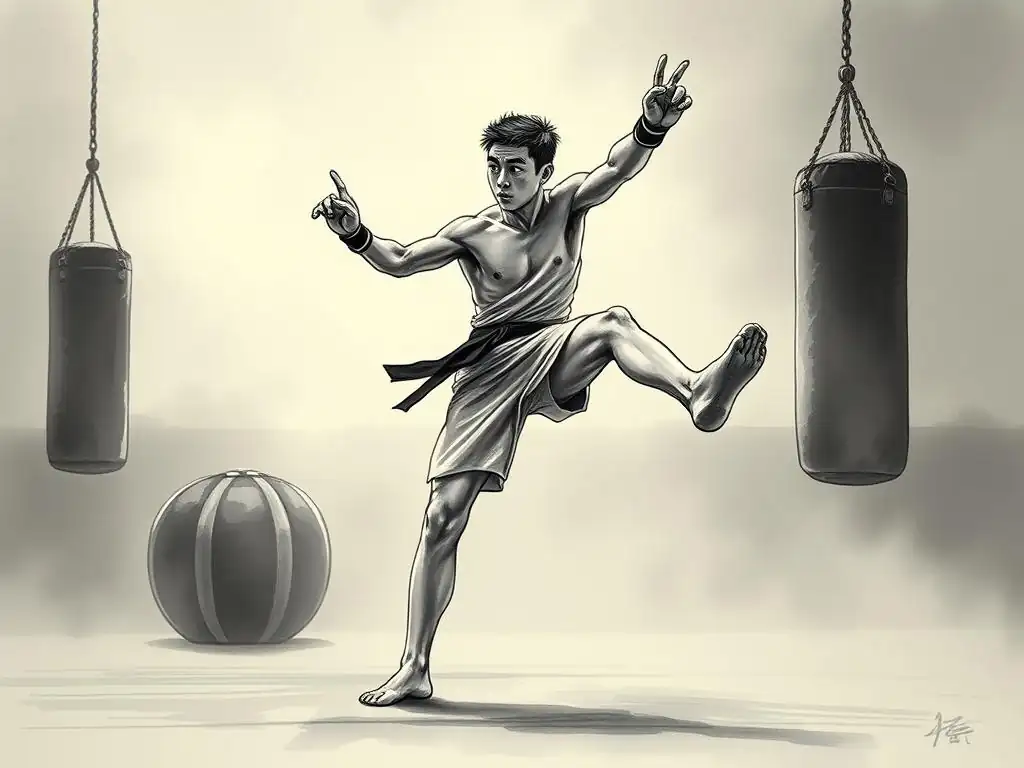
Injury prevention is a critical, non-negotiable aspect of any effective Muay Thai conditioning plan, especially for beginners. Pushing your body to its limits increases the risk of strains, sprains, and overuse injuries if not managed carefully. Proactive steps to prevent injuries allow for consistent training and long-term progress in Muay Thai.
Common Muay Thai Injuries and Prevention Strategies
Some common injuries in Muay Thai include sprained ankles, knee pain, shin bruising (from kicking), shoulder issues (from punching/clinching), wrist injuries, and muscle strains (especially hamstrings, quads, and groin). Prevention strategies include proper warm-ups and cool-downs, consistent flexibility and mobility work, using appropriate protective gear (shin guards, mouthguard, gloves), listening to your body and taking rest when needed, gradually increasing training intensity and volume, and focusing on correct technique during drills and sparring.
Shin conditioning, while often discussed, should be approached cautiously by beginners. Gradual exposure through light kicking on the bag and pads is safer than forceful methods. Strength training helps build resilience in joints and muscles. For example, strengthening the muscles around the knee and ankle can help prevent sprains. Proper lifting technique during strength training prevents weightlifting-related injuries.
Proper Warm-up and Cool-down Protocols
As mentioned earlier, a thorough warm-up (5-10 minutes of light cardio followed by dynamic stretching) is essential before every training session – whether it's technique, sparring, strength, or conditioning. A warm-up prepares your muscles and joints for the demands ahead, increasing blood flow and reducing stiffness. Skipping the warm-up significantly increases injury risk.
Similarly, a cool-down (5-10 minutes of light activity followed by static stretching) after training helps the body transition back to a resting state, promotes flexibility, and can aid in recovery. While static stretching after a warm-up can potentially reduce power output, it is beneficial post-workout for improving range of motion. Make warm-ups and cool-downs non-negotiable parts of your Muay Thai conditioning plan.
Recognizing and Addressing Overtraining
Overtraining occurs when the volume or intensity of training exceeds the body's ability to recover. Signs of overtraining include persistent fatigue, decreased performance (strength, speed, endurance), increased resting heart rate, difficulty sleeping, loss of appetite, increased irritability or moodiness, recurrent illness, and chronic muscle soreness or minor injuries that don't seem to heal.
If you suspect you are overtraining, the most important step is to reduce training volume or intensity immediately. This might mean taking a few extra rest days, doing only light technique work, or skipping a conditioning session. Prioritize sleep, nutrition, and hydration. It's better to take a few days of reduced training or complete rest than to push through and risk a more serious injury or burnout that sidelines you for weeks or months. Listen to your body and adjust your Muay Thai conditioning plan accordingly.
Tracking Progress and Adapting Your Muay Thai Conditioning
Consistently tracking your progress is vital for staying motivated and making informed decisions about your Muay Thai conditioning plan. It allows you to see what's working, identify areas that need more attention, and make necessary adjustments to continue progressing towards your goals.
Monitoring Key Performance Indicators
Regularly monitor key performance indicators (KPIs) related to your conditioning goals. These could include:
- Cardio: Timed runs (e.g., 1.5 miles), continuous jump rope time, heart rate recovery after rounds.
- Strength: Number of push-ups/pull-ups, weight lifted in key exercises (squats, deadlifts), plank hold time.
- Power: Broad jump distance, vertical jump height, medicine ball throw distance.
- Muay Thai Specific: Number of rounds you can maintain intensity on the bag, ability to maintain technique during sparring rounds, recovery time between rounds.
Keep a training log to record your workouts, including exercises performed, sets, reps, weights, duration, and how you felt (energy levels, soreness). This data provides objective evidence of your progress and helps you identify patterns.
Adjusting Training Based on Results and Feedback
Use the data from your progress tracking and feedback from your body (and potentially your coach) to make adjustments to your Muay Thai conditioning plan. If your push-up numbers aren't improving, perhaps you need to increase the frequency or volume of push-up training or incorporate variations. If your cardio isn't improving, you might need to increase the intensity or duration of your cardio sessions.
Conversely, if you're hitting all your numbers but feel constantly exhausted, it might be a sign you need more recovery time or that your nutrition/sleep needs attention. Don't be afraid to modify your plan. Training is not linear; there will be periods of rapid progress and periods where you need to maintain or even slightly reduce intensity to allow for recovery or focus on technique. Your plan should be flexible and responsive.
Seeking Professional Guidance
While you can design a foundational Muay Thai conditioning plan as a beginner, seeking guidance from qualified professionals can significantly enhance your results and safety. A Muay Thai instructor can provide feedback on how your conditioning impacts your technique and performance in the ring. A certified strength and conditioning coach with experience in combat sports can help design a safe and effective strength and conditioning program tailored to your specific needs and goals.
A sports nutritionist can provide personalized dietary advice to fuel your training and recovery. Consulting with these experts can help you avoid common mistakes, optimize your training approach, and ensure your conditioning plan aligns perfectly with your Muay Thai aspirations. For Muay Thai conditioning plan beginners, professional guidance can provide a strong start and build good habits.
Conclusion: Achieving Muay Thai Success Through Proper Conditioning.
Building a comprehensive and personalized Muay Thai conditioning plan is a fundamental step towards achieving success in the art of eight limbs. It requires more than just showing up to class; it involves a dedicated, structured approach to developing the specific physical attributes necessary to thrive in the ring or simply improve your personal practice. From understanding the unique demands of Muay Thai and honestly assessing your baseline fitness to designing a plan that incorporates strength, cardiovascular endurance, flexibility, and sport-specific drills, every component plays a vital role.
For Muay Thai conditioning plan beginners, the journey starts with building a solid foundation, setting realistic goals, and prioritizing consistency and recovery. By tracking progress, listening to your body, and being willing to adapt your plan, you can continuously improve your physical readiness. Remember that conditioning is not separate from your Muay Thai training but an integral part of it, enhancing your technique, power, resilience, and overall performance. Embrace the process, train smart, recover effectively, and you will unlock your full potential in Muay Thai.
Frequently Asked Questions
### What is the most important aspect of a Muay Thai conditioning plan for beginners?
The most important aspect is building a strong foundation in basic fitness. This includes cardiovascular endurance, muscular strength, and flexibility to prevent injuries and improve performance.
### How often should a beginner train their Muay Thai conditioning each week?
Beginners should aim for 3-4 training sessions per week, allowing for adequate rest and recovery. Consistency is key for developing a solid base before increasing intensity or frequency.
### What types of exercises should be included in a Muay Thai conditioning plan for beginners?
A beginner's plan should include cardio exercises like running or jumping rope, bodyweight strength training such as push-ups and squats, and flexibility exercises like stretching.
### How long should each Muay Thai conditioning session last for a beginner?
Each session should last approximately 45-60 minutes, focusing on proper form and technique rather than pushing to exhaustion. Gradual progression is crucial for avoiding overtraining.
### What are some common mistakes beginners make when creating a Muay Thai conditioning plan?
Common mistakes include overtraining too quickly, neglecting proper warm-up and cool-down routines, and not focusing on fundamental movements before attempting advanced techniques.
Final Reflection: Forging Your Fighting Foundation
The journey of crafting a personalized Muay Thai conditioning plan is more than just sets and reps; it's about understanding your body, your goals, and the art of eight limbs itself. In a world saturated with generic fitness advice, the ability to tailor your training, especially as a beginner, is paramount to not only achieving physical prowess but also preventing injury and fostering a sustainable passion for the sport.
The impact of a well-structured, individualized Muay Thai conditioning plan extends far beyond the ring. It cultivates discipline, resilience, and a deeper understanding of your own capabilities. These qualities permeate all aspects of life, transforming you into a more focused and determined individual. The journey of a thousand miles begins with a single step.
This ancient proverb resonates deeply with the process of building your Muay Thai foundation, reminding us that consistent effort, even in small increments, leads to remarkable progress.
Now, armed with the knowledge and tools to create your own Muay Thai conditioning plan, I urge you to embrace the challenge. Don't be afraid to experiment, to listen to your body, and to adapt your training as you evolve. Your journey to becoming a stronger, more skilled Nak Muay begins now. What will you build?
Ignite Your Inner Warrior: Forge Your Muay Thai Destiny!
Thank you for exploring the path to peak physical condition for Muay Thai. Now that you're armed with insights, it's time to translate knowledge into powerful action. Your journey to becoming a true martial artist accelerates now!
Here's how to take the next step:
- Craft your unique 12-week Muay Thai conditioning plan, starting with a realistic assessment of your current fitness level and goals.
- Dive deeper into the world of recovery! Experiment with different active recovery techniques like foam rolling or yoga to see which best helps your body rebound.
- Share your conditioning goals and plan with a training partner. Their support and accountability can be a game-changer!
What's the first modification you'll make to your current training regimen to better align with a Muay Thai-specific conditioning approach?