
Noto: More Than Just Sheathing – The Spirit of Completion in Iaido

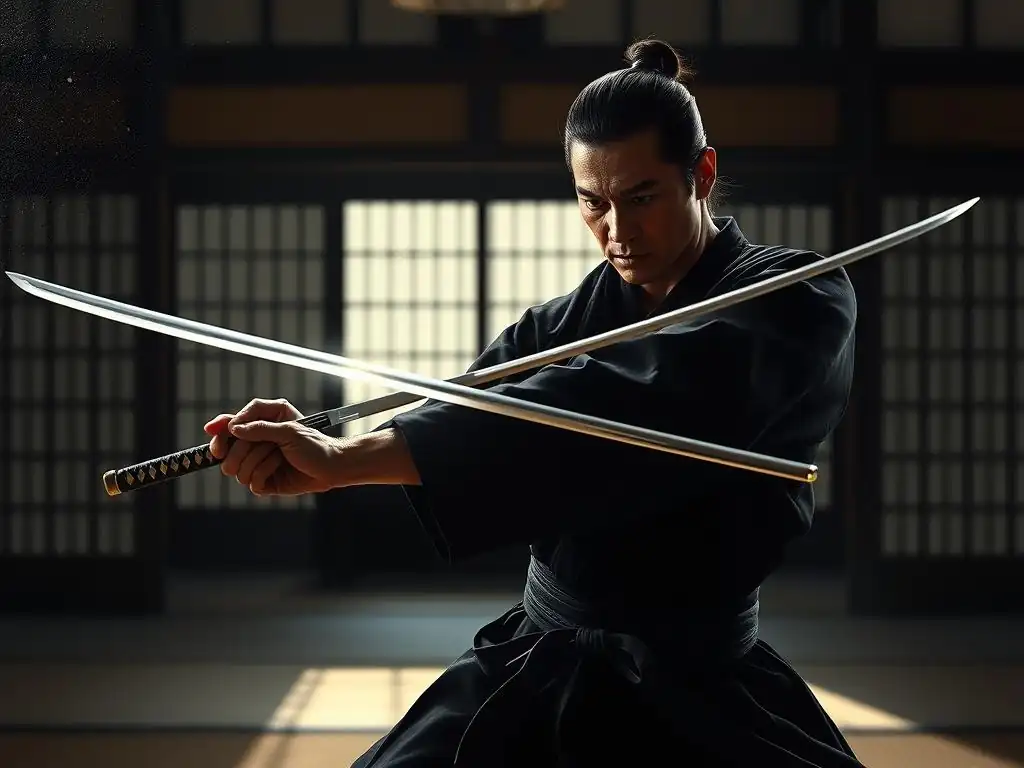
Welcome to Martial Arts Mastery, your gateway to the world's fighting arts. Delve into the profound depths of tradition and technique, beginning with a discipline that embodies both: Iaido. Discover the intricate beauty and deadly precision behind the Iaido sword cutting technique, and how the seemingly simple act of Noto (sheathing) reveals a deeper understanding of completion and spiritual discipline. Are you ready to unsheathe the secrets?
- Introduction to Noto in Iaido: Beyond the Physical Act
- Understanding the Mechanics of Noto: A Detailed Breakdown
- Noto as a Reflection of Zanshin: Maintaining Awareness
- The Spiritual Dimension of Noto: Completing the Circle
- Noto Variations Across Different Iaido Styles (Ryuha)
- Drills and Exercises to Improve Your Noto Technique
- The Importance of a Well-Maintained Sword for Effective Noto
- Noto in Iaido Kata: Contextual Understanding
- Mastering Noto: A Lifelong Pursuit
-
Frequently Asked Questions
- What is Noto in the context of Iaido sword cutting technique?
- How does Noto relate to the Iaido philosophy?
- Why is Noto considered important beyond the practical aspect of returning the sword to the saya (scabbard)?
- What are some key elements to consider when practicing Noto to improve Iaido sword cutting technique?
- How can mastering Noto enhance one's overall skill in Iaido?
- Final Reflection: Embracing the Spirit of Completion
- Embrace the Blade: Start Your Iaido Journey Now!
Introduction to Noto in Iaido: Beyond the Physical Act
The Significance of Noto in Iaido Practice
In Iaido, the art of drawing the sword, Noto refers to the act of returning the sword to its scabbard ( saya). While seemingly a simple action, Noto is considered a crucial and complex part of every kata (form). It is far more than just putting the sword away; it embodies the principle of completing the technique and maintaining awareness until the very end.
Mastery of Noto signifies a practitioner's understanding of the entire flow of movement and the mental state required throughout the form, including the preceding Iaido sword cutting technique. It is the final physical expression of the practitioner's intent and control.
The significance of Noto is often underestimated by beginners who might focus solely on the initial draw ( nukitsuke) or the primary cut ( kiritsuke). However, instructors consistently emphasize Noto's importance, dedicating substantial training time to its nuances. A poorly executed Noto can indicate a lapse in concentration, a lack of physical control, or a misunderstanding of the technique's underlying principles. It acts as a litmus test for the practitioner's state of mind and body after the dynamic phase of the kata, including the powerful Iaido sword cutting technique has concluded.
Iaido Sword Cutting Technique and the Importance of Noto
The quality of the preceding Iaido sword cutting technique has a direct impact on the execution of Noto. A strong, accurate cut, performed with proper body mechanics and intent, sets the stage for a smooth and controlled return of the blade to the saya. Conversely, a hesitant or off-balance cut can make the subsequent Noto awkward and potentially dangerous. The transition from the completion of the cut and chiburi (shaking blood from the blade) to the initiation of Noto must be seamless, demonstrating continuous control and awareness.
Furthermore, the practice of Noto itself refines the entire Iaido sword cutting technique. By understanding the requirements for a smooth sheathing – such as maintaining precise blade angle and control – practitioners gain deeper insight into how the sword should be handled throughout the kata, including the initial draw and the cut. The focus on precision and awareness during Noto reinforces these same qualities needed for effective and safe Iaido sword cutting techniques. It creates a feedback loop where perfecting the end stage improves the preparatory and execution stages.
Understanding the Mechanics of Noto: A Detailed Breakdown
Proper Grip and Posture During Noto
Executing a proper Noto begins with maintaining the correct grip ( tsuka) and posture. After the final cut and chiburi, the grip often shifts slightly compared to the primary cutting grip. Typically, the left hand, holding the saya, guides the sword's tip towards the scabbard opening.
The right hand, holding the tsuka, must maintain a relaxed yet firm grip, allowing for precise control of the blade's angle. The wrist should not be locked, permitting subtle adjustments as the tip finds the saya mouth ( koiguchi). The posture remains upright and balanced, with the core engaged, ensuring stability throughout the movement.
Specific details regarding grip can vary slightly between ryuha (schools). For instance, some styles might emphasize a more forward placement of the left hand on the saya than others. However, the fundamental principle remains constant: the left hand acts as the guide, bringing the koiguchi to the sword tip, while the right hand controls the sword's angle and movement. The body's posture supports this action, preventing leaning or shifting weight in a way that compromises balance or control, which is essential even after the dynamic Iaido sword cutting technique.
The Smooth Transition from Cutting to Sheathing
The transition from the completion of the Iaido sword cutting technique and chiburi into Noto is a critical phase. It should not be an abrupt stop followed by a separate action, but rather a fluid continuation of the movement. After chiburi, the blade is typically brought close to the body, often aligned with the center line, before seeking the koiguchi. This path is deliberate, minimizing unnecessary movement and maintaining control. The left hand, holding the saya, moves to meet the sword tip, not the other way around.
The timing and coordination between the hands and the body are paramount for a smooth transition. As the tip of the sword enters the koiguchi, the right hand begins the action of sliding the blade into the saya. This process requires sensitivity – feeling the blade as it enters and ensuring it is not scraping the inside of the saya ( saya-uchi or saya-ate). The speed should be controlled, neither rushed nor overly slow, reflecting the maintained awareness and calm after the intense Iaido sword cutting technique.
Avoiding Common Mistakes in Noto Technique
Several common mistakes can hinder effective Noto. One frequent error is rushing the process, often due to a lapse in zanshin (lingering awareness) after the Iaido sword cutting technique. This can lead to the sword missing the koiguchi or scraping the inside of the saya. Another mistake is failing to bring the saya to the sword tip; instead, practitioners might try to force the sword into a stationary saya, which is inefficient and can damage the sword or saya.
- Common Noto Errors:
- Rushing the movement after chiburi.
- Failing to guide the sword tip into the koiguchi with the left hand/saya.
- Scraping the inside of the saya ( saya-ate).
- Losing balance or posture during the action.
- Losing mental focus ( zanshin).
Correcting these mistakes requires diligent practice, focusing on precision, control, and maintaining mental presence throughout the entire kata, including the final Noto. Instructors often provide specific feedback on the angle of the blade relative to the koiguchi and the coordination between the hands, highlighting that even after mastering the Iaido sword cutting technique, the kata is not complete until Noto is perfectly executed.
Noto as a Reflection of Zanshin: Maintaining Awareness
What is Zanshin? Linking it to Noto's Execution
Zanshin translates roughly to "remaining mind" or "lingering awareness." In martial arts, it signifies a state of continuous alertness and readiness, even after a technique has been completed. It is the awareness that the situation may not be over and that further action might be required. In Iaido, zanshin is maintained from the moment the practitioner bows in until they bow out. It is particularly crucial after the dynamic phases of the kata, including the Iaido sword cutting technique.
Noto is a direct physical manifestation of zanshin. While the primary threat addressed by the Iaido sword cutting technique has theoretically been neutralized, the practitioner does not relax their guard. The careful, controlled action of sheathing the sword demonstrates that the mind is still present, observing the surroundings and prepared for any unforeseen circumstances. A sloppy or hurried Noto indicates a lapse in zanshin, suggesting the practitioner has mentally "checked out" before the kata is truly finished.
Preserving Focus After Sword Cutting
Maintaining focus after the Iaido sword cutting technique and chiburi is essential for a correct Noto. The physical intensity of the cut can sometimes lead practitioners to exhale and relax prematurely. However, zanshin requires sustaining that focused energy and awareness. This means keeping the eyes engaged, the body poised, and the mind alert while the hands execute the precise movements of Noto.
The process of guiding the sword tip into the koiguchi demands significant concentration. Practitioners must feel the subtle contact and guide the blade smoothly without looking down excessively, which would break their visual zanshin on the environment. This preserved focus ensures not only the physical safety of sheathing a sharp blade but also reinforces the mental discipline that is a core principle of Iaido and all effective Iaido sword cutting techniques.
Noto as a Manifestation of Mental Discipline
Beyond physical technique, Noto is a powerful exercise in mental discipline. It requires patience, precision, and the ability to maintain composure even when the most dramatic part of the kata (the cut) is over. The repetitive practice of Noto instills a deep sense of control and mindfulness. It teaches the practitioner to complete every task thoroughly and attentively, regardless of how routine it may seem.
Mastering Noto cultivates virtues like perseverance and attention to detail. It highlights that true mastery in Iaido is not just about the power or speed of the Iaido sword cutting technique, but about the complete, mindful execution of the entire form, from the initial intention to the final return of the sword to the saya. Noto is the physical embodiment of the principle that the "end" is just as important as the "beginning" or the "middle" of any action.
The Spiritual Dimension of Noto: Completing the Circle
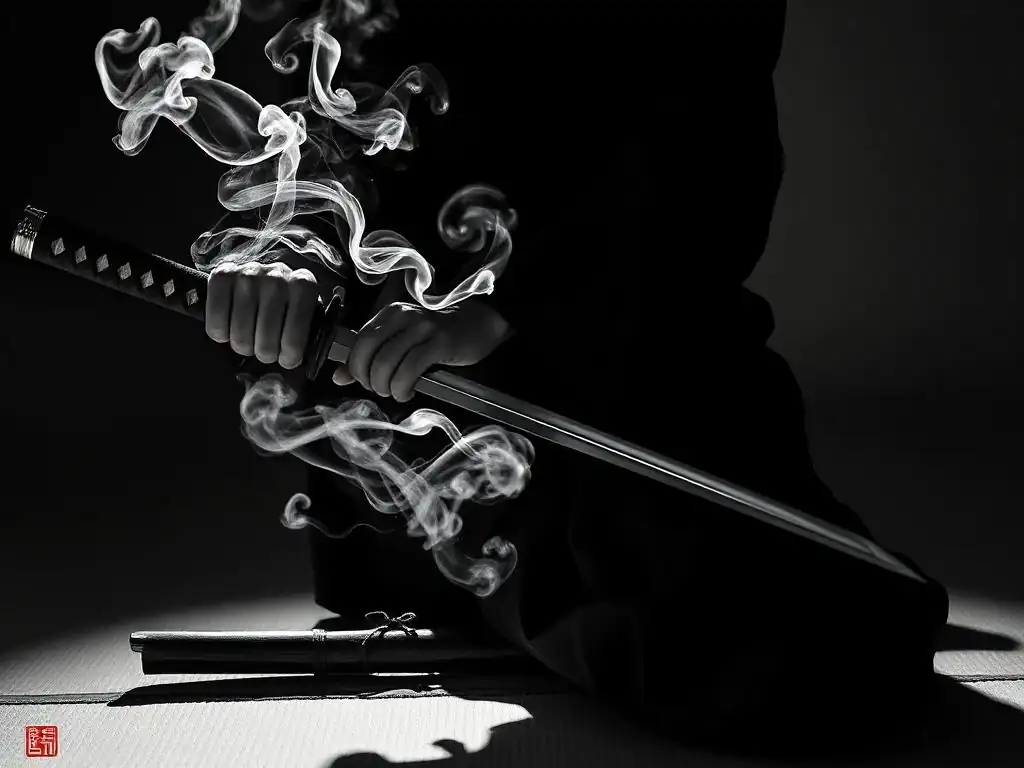
Noto and the Concept of "Ki-Musubi" (Energy Connection)
The spiritual dimension of Noto is often discussed in terms of Ki-Musubi, which can be interpreted as the connection or binding of energy. In the context of Iaido, it refers to the harmonious flow of energy throughout the kata, connecting the practitioner's spirit, mind, and body with the sword and the surrounding environment. Noto represents the final act of bringing this energy back into a state of rest within the saya.
After the explosive energy of the Iaido sword cutting technique, the controlled and deliberate action of Noto serves to gather and settle the dispersed energy. It's like completing an energetic circuit. The sword, which was an extension of the practitioner's will and energy during the cut, is respectfully returned to its resting place, symbolizing the completion of the focused intent and the return to a state of calm readiness. This binding of energy through Noto is crucial for the spiritual integrity of the practice.
The Connection Between Noto and Mindfulness in Iaido
Mindfulness, the practice of being fully present and aware of the current moment, is deeply intertwined with Noto. As discussed with zanshin, Noto demands complete attention. This focused awareness on the physical sensations of the hands, the angle of the blade, and the feeling of the tip entering the koiguchi cultivates a state of deep mindfulness.
This state of mindfulness during Noto extends beyond the physical act. It encourages practitioners to reflect on the preceding movements, including the Iaido sword cutting technique, and the overall intention of the kata. It's a moment of quiet contemplation and integration, where the physical action facilitates a mental and spiritual settling. This mindful completion is a form of active meditation, grounding the practitioner after the dynamic movements.
Finding Harmony and Balance Through Perfecting Noto
Perfecting Noto is a path towards finding harmony and balance within one's Iaido practice and potentially within oneself. The smooth, controlled sheathing of the sword reflects a state of inner calm and physical equilibrium. A Noto that is rushed, clumsy, or forceful indicates a lack of harmony, either physically (poor coordination) or mentally (lack of zanshin).
Striving for perfection in Noto encourages patience and persistence, qualities that lead to greater balance in training. It teaches that strength (as expressed in the Iaido sword cutting technique) must be balanced with control and grace (as expressed in Noto). This pursuit of harmonious completion through Noto is a lifelong journey, contributing significantly to the practitioner's overall development in Iaido.
Noto Variations Across Different Iaido Styles (Ryuha)
Muso Shinden-ryu Noto Technique: Key Characteristics
Muso Shinden-ryu is one of the most widely practiced Iaido styles. Its Noto technique, while adhering to the core principles of control and awareness, often features specific characteristics. A common emphasis in Muso Shinden-ryu is the deliberate bringing of the koiguchi to the sword tip with the left hand, often with a clear, almost two-stage motion: first bringing the saya up, then guiding the opening to meet the blade. The angle of the blade relative to the saya is carefully controlled, often kept relatively flat against the body initially before the tip finds the opening.
The sheathing process in Muso Shinden-ryu is typically performed with a controlled, steady speed. There is a strong focus on avoiding saya-ate (hitting the scabbard). For instance, in many kata, after chiburi, the blade is brought near the left side of the body, and the left hand adjusts the saya to receive the tip. The emphasis is on precision and a calm, settled feeling as the sword is returned, a direct reflection of the zanshin maintained after the Iaido sword cutting technique.
Muso Jikiden Eishin-ryu Noto Technique: Unique Aspects
Muso Jikiden Eishin-ryu is another prominent Iaido ryuha with a long history. While sharing fundamental principles with Muso Shinden-ryu, its approach to Noto can have unique aspects depending on the lineage and specific kata. Some interpretations might emphasize a slightly different angle of the sword or a more fluid, continuous motion from chiburi into Noto, with less of a distinct pause or two-stage feel compared to some Muso Shinden-ryu interpretations.
In certain lineages or kata, the left hand might initiate the guiding movement slightly earlier or use a different path to bring the koiguchi to the blade. The overall speed might also vary, with some interpretations favoring a faster, yet still controlled, sheathing that closely follows the rhythm of the preceding movements, including the Iaido sword cutting technique. Despite these variations, the core principles of safety, precision, and maintaining zanshin remain central to Muso Jikiden Eishin-ryu Noto.
Comparing and Contrasting Noto Styles: A Comparative Analysis
While specific Noto techniques vary between ryuha like Muso Shinden-ryu and Muso Jikiden Eishin-ryu, and even within different lineages of the same ryuha, the underlying objectives are consistent: safe, controlled, and mindful sheathing that demonstrates zanshin. The differences often lie in the subtle details of body mechanics, the precise path of the sword and saya, and the timing relative to breathing and the overall kata rhythm.
- Key Comparison Points for Noto Styles:
- Path of the sword and saya.
- Relative timing and speed.
- Specific hand positions on the saya.
- Emphasis on certain aspects like two-stage vs. continuous motion.
Understanding these variations highlights that while the fundamental Iaido sword cutting technique and its subsequent actions share common principles, their expression can differ based on the historical development and technical focus of each school. Studying these differences enriches a practitioner's understanding of the depth and breadth of Iaido.
Drills and Exercises to Improve Your Noto Technique
Solo Practice Drills for Noto Precision
Improving Noto precision requires dedicated solo practice. A fundamental drill involves repeatedly practicing the transition from chiburi to Noto, focusing solely on the mechanics. Stand in a stable posture, perform a simulated chiburi, and then slowly and deliberately bring the sword to the saya, guiding the tip into the koiguchi. Repeat this motion dozens of times, focusing on maintaining the correct blade angle and feeling the smooth entry.
Another effective solo drill is practicing Noto with eyes closed (after ensuring safety and familiarity with the space). This heightens the practitioner's tactile sense, forcing them to rely on feel rather than sight to guide the blade. It helps develop the sensitivity needed to avoid saya-ate and ensure a smooth entry. Focusing purely on the physical sensation of the sword against the koiguchi and sliding into the saya improves muscle memory and control, directly benefiting the overall control needed for Iaido sword cutting techniques.
Partner Drills for Developing Noto Awareness
While Noto is primarily a solo action, partner drills can help develop awareness and provide feedback. One drill involves a partner standing a safe distance away, observing the practitioner's Noto and providing feedback on posture, balance, and technique. The partner can point out instances of saya-ate that the practitioner might not fully feel or notice.
Another drill, performed with extreme caution and preferably under instructor supervision, involves a partner holding the saya while the practitioner performs the Noto. This allows the partner to feel the sword's entry and provide feedback on the force and angle used, helping the practitioner understand how their action feels from the saya's perspective. This type of drill emphasizes the connection and communication required, even in this seemingly solitary action following the completion of the Iaido sword cutting technique.
Integrating Noto Practice into Your Regular Iaido Training
To truly master Noto, it must be integrated into every practice session, not treated as an afterthought. This means performing Noto mindfully at the end of every kata, whether practicing full forms or just specific sections. During practice, set aside specific time blocks dedicated solely to Noto repetition. For example, spend 10-15 minutes of each session focusing only on the transition from chiburi to Noto, repeating the motion slowly and focusing on precision.
- Integrating Noto Practice:
- Perform Noto mindfully at the end of every kata.
- Dedicate specific time slots in practice for Noto drills.
- Focus on the feeling and sound of the blade entering the saya.
- Seek feedback from instructors on your Noto technique.
- Practice Noto from different stances and after various Iaido sword cutting techniques as they appear in kata.
By making Noto a central focus of training, practitioners develop the necessary muscle memory, control, and mental discipline to execute it flawlessly, thereby completing the circle of the Iaido technique, from the initial draw through the Iaido sword cutting technique to the final sheathing.
The Importance of a Well-Maintained Sword for Effective Noto
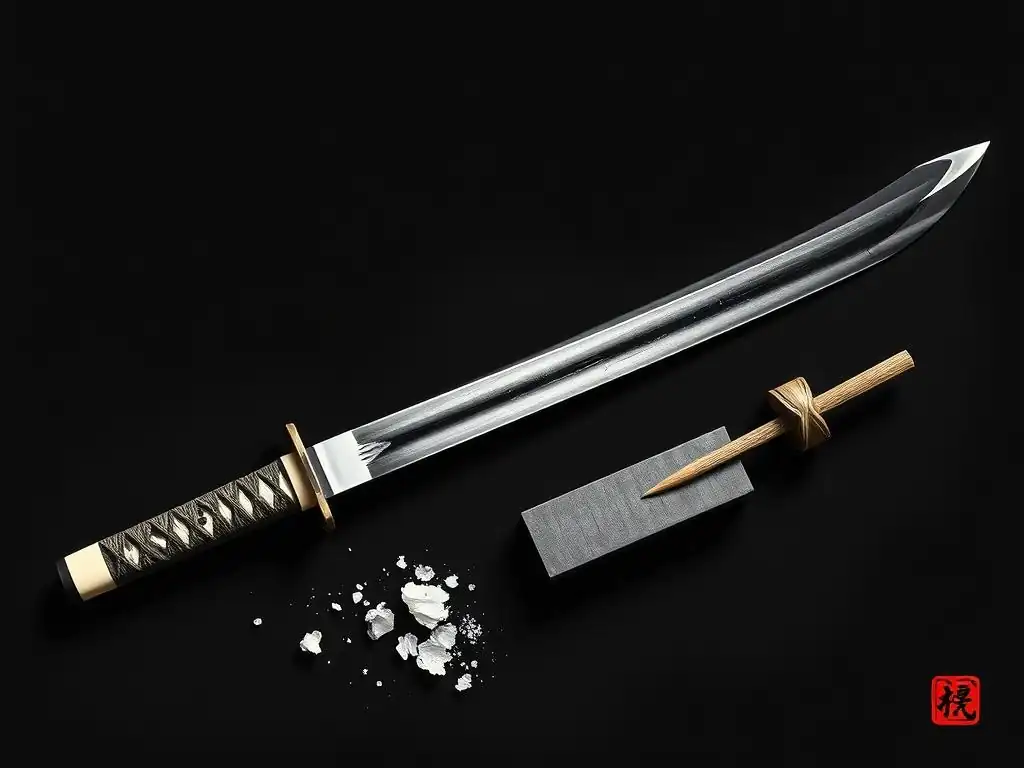
Maintaining Your Sword: A Crucial Aspect of Iaido
Proper sword maintenance is not merely about preserving the tool; it is an integral part of Iaido practice that directly impacts technique, including Noto. A well-maintained sword is safe, functional, and responsive. This involves regular cleaning after every use to remove moisture and oils, preventing rust. Oiling the blade with specialized sword oil ( choji) is essential for protection. The saya also requires care, ensuring the inside is clean and free of debris that could scratch the blade or impede Noto.
Neglecting maintenance can lead to rust, nicks, or a buildup of residue, all of which can make Noto difficult and dangerous. A blade that doesn't slide smoothly into the saya can cause resistance, forcing the practitioner to use excessive strength, which compromises control and technique. Therefore, the discipline of maintaining one's sword is intertwined with the discipline of practicing Iaido, ensuring the tool supports the execution of techniques like the Iaido sword cutting technique and Noto.
The Impact of Blade Condition on Noto Performance
The condition of the sword blade has a significant impact on Noto performance. A clean, smooth blade will slide effortlessly into a well-maintained saya. Any imperfection on the blade surface – even minor rust spots or scratches – can create friction, making the sheathing action rough or sticky. This disrupts the smooth flow that is essential for effective Noto and can lead to hesitation or loss of control.
Consider a blade with a slight warp or a damaged tip. Sheathing such a blade becomes significantly more challenging and risky. The practitioner must compensate for the blade's condition, which distracts from the technical requirements of Noto and the maintenance of zanshin. The sensitivity required for a good Noto – feeling the blade's passage into the saya – is lost when the blade's condition is poor. A blade in optimal condition facilitates the precise control needed for both the Iaido sword cutting technique and the subsequent Noto.
Choosing the Right Sword for Your Iaido Practice
Choosing an appropriate sword ( iaito for practice, shinken for advanced practitioners) is also vital. The sword should be the correct length and weight for the practitioner's height and build, allowing for balanced handling throughout the kata, including the dynamic Iaido sword cutting technique and the controlled Noto. The saya should fit the blade snugly but not too tightly, allowing for smooth drawing and sheathing.
A poorly balanced or ill-fitting sword can make Noto unnecessarily difficult. For instance, a sword that is too heavy at the tip can make it harder to control the blade's angle during sheathing, increasing the risk of saya-ate. Conversely, a saya that is too loose might not provide the necessary feedback for guiding the blade effectively. Investing in or properly maintaining a quality sword suited to one's practice is an investment in the quality of one's Iaido sword cutting technique and, crucially, one's Noto.
Noto in Iaido Kata: Contextual Understanding
Analyzing Noto within Specific Iaido Kata Examples
Analyzing Noto within the context of specific kata reveals how it adapts to different scenarios. For example, in a kata where the final cut is performed from a standing position, the Noto might involve bringing the saya up to meet the sword at waist level. In a kata ending from seiza (kneeling), the Noto requires bringing the sword down to the saya held near the knee or hip, depending on the specific ryuha and kata.
Consider the kata "Mae" from Muso Shinden-ryu. After drawing and performing an overhead cut ( kirioroshi), the practitioner performs chiburi and then brings the blade to the left side for Noto. The specific angle and path are dictated by the preceding movements and the need to maintain zanshin in that specific context. The Noto here is not just a standalone action but the natural conclusion of the energy and movement initiated by the Iaido sword cutting technique performed from seiza.
How Noto Contributes to the Overall Flow of Kata
Noto is the final act that brings closure to the energy and movement of a kata. It contributes significantly to the overall flow by providing a controlled deceleration and return to a state of readiness. Without a proper Noto, the kata feels incomplete and abrupt. The smooth transition from the dynamic phase (draw, cut, chiburi) to the calm, controlled phase of sheathing is what gives a kata its integrity and rhythm.
The speed and character of Noto should match the overall feeling of the kata. A powerful, decisive kata might be followed by a Noto that, while controlled, retains a certain firmness. A more subtle or defensive kata might conclude with a Noto that is particularly quiet and deliberate. The Noto acts as a cadence, signaling the completion of the specific scenario addressed by the Iaido sword cutting technique and other movements within the form.
The Role of Noto in Demonstrating Mastery of Iaido Techniques
Mastering Noto is a clear indicator of a practitioner's overall mastery of Iaido techniques. It requires not only physical precision and control but also a deep understanding of zanshin and the spiritual principles of the art. An advanced practitioner performs Noto with apparent ease and fluidity, yet with palpable presence and control. There is no fumbling, no scraping, and no lapse in awareness.
Judges in Iaido competitions often pay close attention to Noto, recognizing it as a crucial element that reflects the practitioner's level of control, mindfulness, and understanding of the kata's completion. A perfect Iaido sword cutting technique followed by a clumsy Noto reveals a lack of complete mastery. Conversely, a precise Noto elevates the entire performance, demonstrating that the practitioner remains fully engaged and controlled until the very end. It is the final brushstroke on the canvas of the kata.
Mastering Noto: A Lifelong Pursuit
The Continuous Journey of Refining Your Technique
Mastering Noto is not a destination but a continuous journey of refinement. Even experienced practitioners continue to work on their Noto, seeking greater smoothness, precision, and depth of understanding. As physical control improves and the understanding of zanshin deepens, the Noto evolves. What felt challenging initially becomes more natural, allowing focus to shift to subtle nuances like the feeling of the blade inside the saya or the perfect synchronization with breath.
Refining Noto involves constant self-assessment and attention to feedback. It means practicing the basic mechanics repeatedly, incorporating Noto drills into every training session, and observing experienced practitioners. It is about paying attention to the smallest details – the angle of the wrist, the tension in the shoulders, the balance of the body – all of which contribute to a perfect Noto following the execution of the Iaido sword cutting technique.
Seeking Guidance from Experienced Instructors
Guidance from experienced instructors is invaluable in the pursuit of Noto mastery. Instructors can identify subtle flaws in technique that a practitioner might not notice themselves. They can provide specific corrections regarding hand placement, body alignment, timing, and the critical angle of the blade entering the saya. Their feedback, often based on years of observing and performing Noto, is essential for breaking through plateaus in training.
Instructors also teach the deeper principles behind Noto, explaining its connection to zanshin, Ki-Musubi, and the overall philosophy of Iaido. They can demonstrate variations in Noto technique specific to the ryuha and explain the rationale behind them. Learning from a seasoned sensei ensures that the practitioner is not just mimicking the physical form but understanding the underlying principles that make Noto such a significant part of Iaido and its Iaido sword cutting techniques.
Embracing the Essence of Completion in Iaido Through Noto
Ultimately, mastering Noto means embracing the essence of completion in Iaido. It is the understanding that every action, from the initial intention to the final return to stillness, is important and deserves full attention and effort. Noto teaches patience, humility (as it often reveals lingering imperfections), and a deep respect for the sword and the art itself.
By focusing on Noto, practitioners cultivate a holistic approach to Iaido. They learn that the power of the Iaido sword cutting technique is only fully realized when it is followed by the controlled grace of sheathing the blade. Noto is the final bow, the closing chapter, symbolizing the return to peace and readiness after action. Embracing this principle of complete action through dedicated Noto practice is a fundamental step on the path to true mastery in Iaido.
Frequently Asked Questions
What is Noto in the context of Iaido sword cutting technique?
Noto is more than just sheathing the sword. It embodies the spirit of completion and is a crucial part of the entire Iaido movement. It’s not just a physical action but a mindful return to readiness.
How does Noto relate to the Iaido philosophy?
Noto embodies the Iaido philosophy of Zanshin, or remaining aware and vigilant even after the cut. It represents the completion of the technique and a return to a state of preparedness.
Why is Noto considered important beyond the practical aspect of returning the sword to the saya (scabbard)?
While practically it returns the sword, its importance lies in cultivating mental focus and control. It reinforces a state of alert readiness after the simulated battle, crucial for self-defense.
What are some key elements to consider when practicing Noto to improve Iaido sword cutting technique?
Focus on smooth, controlled movements, maintaining awareness of your surroundings. The angle and precision of the sword returning to the saya are vital for safety and optimal efficiency.
How can mastering Noto enhance one's overall skill in Iaido?
Mastering Noto enhances your overall awareness, improves body control, and reinforces the mental discipline that is essential to Iaido sword cutting technique and the art as a whole.
Final Reflection: Embracing the Spirit of Completion
The journey through Iaido, as explored in this article, reveals that Noto – the sheathing of the sword – is far more than a mere concluding action. It represents the culmination of focus, precision, and the spirit of completion that permeates every aspect of this martial art. In a world often obsessed with beginnings and immediate results, the profound significance of Noto serves as a potent reminder of the importance of finishing what we start, and doing so with intention and grace.
The influence of Iaido, and particularly the philosophy embodied in Noto, extends beyond the dojo. It teaches us the value of mindful closure in all endeavors, from personal relationships to professional projects. This concept resonates deeply in a society that often prioritizes speed over substance. The way of the warrior is resolute acceptance of death.
- Miyamoto Musashi. This quote, while seemingly stark, underscores the commitment to completion and acceptance that is central to Iaido and, by extension, to a fulfilling life.
As you reflect on the principles of Iaido and the significance of Noto, consider how you approach completion in your own life. Are you truly present in the final moments of your endeavors? Do you embrace the opportunity to refine and perfect, even when the task seems finished? Let the spirit of Noto inspire you to approach every ending with intention, grace, and a deep appreciation for the journey that has brought you to this point.
Embrace the Blade: Start Your Iaido Journey Now!
Thank you for exploring the profound dedication and artistry behind Iaido with us. We hope you've gained a deeper appreciation for this unique martial art and the spirit of Noto. Now, it's time to translate that inspiration into action!
Here are a few ways you can further connect with the world of Iaido:
- Find a local Iaido dojo and attend an introductory class. Experiencing Iaido firsthand is the most powerful way to understand its essence.
- Delve deeper into the philosophy of Noto by exploring related concepts like Zanshin (remaining awareness) and their applications in daily life.
- Share this article with a friend or fellow martial arts enthusiast and spark a conversation about the importance of precision and mindfulness in practice.
Ready to draw your own blade and begin the path of Iaido?