
Echoes of War: How Ancient Conflicts Shaped Muay Thai's Brutal Efficacy

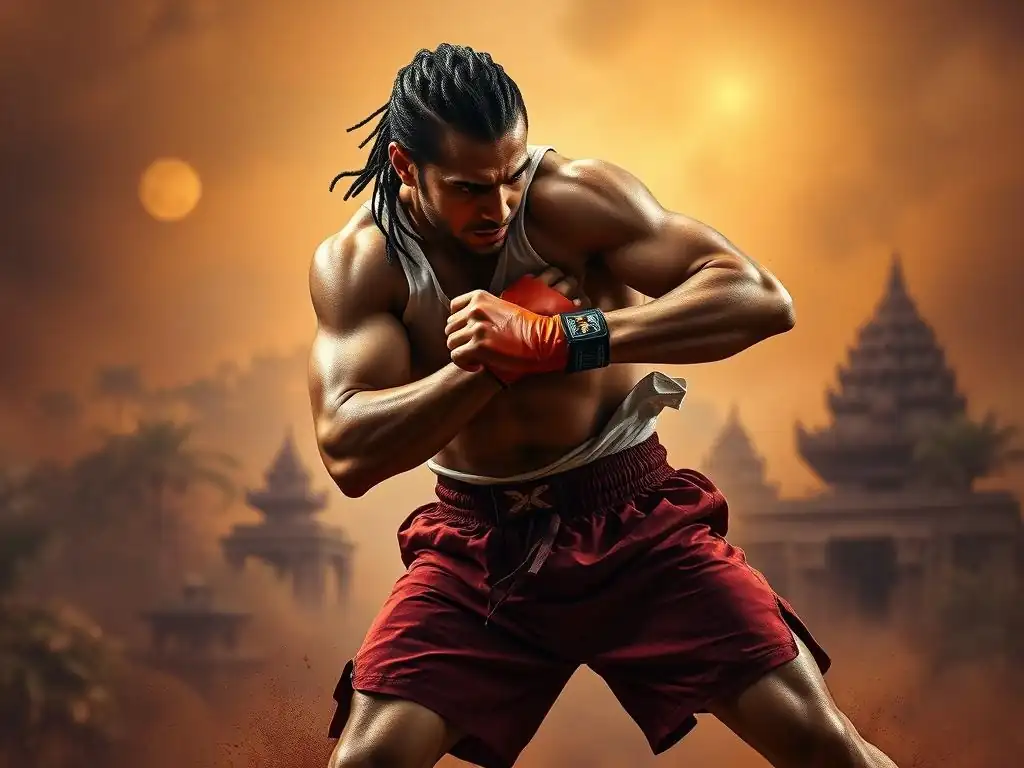
Welcome to Martial Arts Mastery, where we delve into the rich tapestry of combat traditions worldwide. Ever wondered how ancient battlefields forged the devastating power of Muay Thai? Echoes of War: How Ancient Conflicts Shaped Muay Thai's Brutal Efficacy uncovers the secrets behind this art's legendary effectiveness, revealing the historical combat tactics that transformed it into the "Art of Eight Limbs." Prepare to explore the brutal origins and strategic evolution of Muay Thai, and discover how history shaped its devastating techniques. Read on to unlock the secrets of this captivating martial art!
- Muay Thai's Roots: Tracing the Historical Combat Origins
- From Battlefield to Ring: The Evolution of Muay Thai Combat
- Key Historical Conflicts That Shaped Muay Thai's Development
- Muay Thai Historical Combat Tactics: Techniques Forged in War
- Muay Thai's Brutality: A Direct Result of its Wartime Origins
- Legendary Muay Thai Warriors and Their Contributions to Combat Efficacy
- The Legacy of Ancient Warfare in Modern Muay Thai
- Muay Thai: More Than a Sport, a Living Testament to Ancient Siamese Warfare
-
Frequently Asked Questions
- How did historical conflicts influence the development of Muay Thai?
- What are some examples of Muay Thai techniques rooted in historical combat?
- How did the training methods for Muay Thai reflect its origins in warfare?
- Did specific historical events or periods have a greater impact on Muay Thai's evolution?
- How does understanding Muay Thai's historical context enhance modern training?
- Final Reflection: Forged in the Crucible of Conflict
- Unleash Your Inner Warrior: Embrace the Muay Thai Spirit!
Muay Thai's Roots: Tracing the Historical Combat Origins
The Ancient Warfare Landscape of Siam and the Birth of Muay Thai
The origins of Muay Thai are deeply intertwined with the constant state of conflict that characterized the historical landscape of Siam (modern-day Thailand). Situated strategically in Southeast Asia, Siam frequently faced invasions and engaged in territorial disputes with neighboring kingdoms, particularly the Burmese and Khmer empires.
This perpetual need for defense and offense necessitated the development of highly effective hand-to-hand combat systems for its soldiers. While precise historical records from these early periods are scarce, legend and oral traditions suggest that a basic form of unarmed combat, known as Muay Boran (ancient boxing), began to take shape within the Siamese military as a crucial part of soldier training, equipping them with vital survival skills when weapons were lost or broken in the chaos of battle.
Life in ancient Siam was often harsh, and military service was a fundamental aspect of society. Every able-bodied man was expected to be ready to defend his village, kingdom, or king. This societal structure placed a high value on martial prowess.
Training in Muay Boran was not just a military exercise; it was a life skill passed down through generations, adapted from practical battlefield experience. The techniques developed were not for sport or display but for brutal efficiency, designed to quickly incapacitate or kill an opponent in the often-desperate conditions of ancient warfare. This practical, no-nonsense approach to combat laid the foundational principles for what would eventually evolve into modern Muay Thai historical combat tactics.
Early Siamese Military Tactics and Their Influence on Muay Thai Techniques
Early Siamese military tactics relied heavily on combined arms, utilizing elephants, cavalry, and infantry. Within the infantry, soldiers were trained in various weapons, including swords ( Dab), spears ( Hok), and polearms. However, hand-to-hand combat was considered a vital last resort. The fighting style developed for soldiers emphasized using the body as a complete weapon system – striking with fists, feet, elbows, and knees, and utilizing grappling techniques to control or throw an opponent. This holistic approach mirrored the chaotic nature of battlefield encounters, where fighting could quickly devolve into close-quarters struggles.
The influence of these early military tactics is evident in the core techniques of Muay Thai. The emphasis on powerful strikes with shins (like kicking a tree trunk, a common training method) reflects the need to inflict maximum damage quickly, akin to breaking enemy ranks. The development of devastating elbow and knee strikes stemmed from fighting in tight formations or grappling range, where longer weapons were ineffective.
Furthermore, the strategic use of the clinch, a signature element of Muay Thai, can be traced back to military grappling techniques used to control an enemy soldier, disrupt their balance, or set them up for a finishing strike or throw. These Muay Thai historical combat tactics were forged in the crucible of war, prioritizing effectiveness over elegance.
From Battlefield to Ring: The Evolution of Muay Thai Combat
The Transition from Military Drills to Organized Muay Thai Bouts
Over centuries, as warfare tactics evolved and the need for constant large-scale military engagement lessened within Siam, the practical combat system of Muay Boran began a gradual transformation. While it remained a component of military training, it also started to permeate civilian life. Villagers would often settle disputes or test their skills through informal bouts, often fought with minimal rules and no protective gear. These local challenges served as a bridge, slowly moving the art form away from being purely military drills towards a more formalized, albeit still very dangerous, public spectacle.
The transition gained momentum during periods of relative peace. Kings and noblemen became patrons of the sport, organizing contests and even participating themselves. This royal patronage elevated the status of Muay Thai and encouraged the development of regional styles and techniques.
Fights began to take place in designated areas, sometimes marked by a simple rope boundary, and rudimentary rules started to emerge, primarily focused on preventing death during the bout, though severe injury remained common. This period marked a significant step in the evolution of Muay Thai historical combat tactics, preserving their effectiveness while adapting them for a different context.
Analyzing the Adaptation of Ancient Siamese Fighting Methods for Sport
Adapting ancient Siamese fighting methods, designed for battlefield survival and lethality, into a sporting context required significant modifications. The most crucial change was the introduction of rules aimed at controlling the level of harm. While the core strikes with fists, feet, elbows, and knees remained, techniques like joint locks, throws that could break limbs, and strikes to vulnerable areas (eyes, throat, groin) became restricted or disallowed. The addition of protective gear, such as hand wraps and later gloves (introduced in the early 20th century), further modified the impact of strikes.
Despite these adaptations for sport, the fundamental principles of Muay Thai historical combat tactics – maximum power, efficiency, and the use of the entire body as a weapon – were largely preserved. The clinch, while adapted for scoring and control within the ring, retained its roots in military grappling. The emphasis on conditioning the body to withstand and deliver powerful strikes, particularly the shins, remained a cornerstone. The sporting evolution refined techniques, making them more precise and repeatable, but the underlying brutality and effectiveness born from its wartime origins continued to define the art.
Key Historical Conflicts That Shaped Muay Thai's Development
The Burmese-Siamese Wars: A Crucible for Muay Thai's Efficacy
Perhaps the most significant historical conflicts that shaped Muay Thai were the protracted and often brutal wars between the Siamese and Burmese kingdoms, spanning several centuries from the 16th to the 19th century. These conflicts were not just border skirmishes but large-scale invasions and counter-invasions that threatened the very existence of the Siamese state. Siamese soldiers, including the king's elite guards, relied heavily on their martial skills, including Muay Boran, to defend their territory and engage the enemy in close combat. These wars provided a constant testing ground for combat techniques.
The intensity and frequency of the Burmese-Siamese Wars meant that only the most effective and survivable fighting methods endured. Techniques that proved impractical or ineffective on the battlefield were discarded, while those that delivered decisive results were honed and passed down. This constant cycle of warfare and combat application acted as a brutal filter, ensuring that the Muay Thai historical combat tactics that survived were those that offered the highest chance of success and survival in a life-or-death situation. The art evolved rapidly under this immense pressure, becoming increasingly efficient and devastating.
The Impact of Constant Warfare on Muay Thai's Evolution as a Practical Combat System
Constant warfare had a profound and lasting impact on Muay Thai's evolution, solidifying its identity as a practical and ruthless combat system. Unlike martial arts that might develop in periods of prolonged peace, Muay Boran's development was driven by immediate necessity. Soldiers needed techniques that worked instantly and decisively against a determined enemy. This emphasis on practicality led to the development of powerful, direct strikes designed to break bones, incapacitate, or kill. There was little room for ornate or complex movements; efficiency was paramount.
The need for resilience and the ability to fight while injured also became ingrained in the training. Soldiers had to be able to absorb blows and continue fighting. This led to the development of rigorous conditioning methods still seen in modern Muay Thai training, such as conditioning the shins by striking hard objects. The psychological aspect of fighting under extreme stress also contributed to the art's focus on mental fortitude and aggression. The Muay Thai historical combat tactics forged in this environment were not just physical techniques but also a mindset geared towards survival and victory at all costs.
The Role of Muay Thai in Defending Siam Against Invaders
Muay Thai played a vital role in the defense of Siam throughout its history, becoming synonymous with Siamese resilience and fighting spirit. Accounts from various conflicts describe Siamese soldiers and even civilians using their unarmed combat skills to repel invaders. While weaponry was primary, the ability to fight effectively without weapons provided a critical advantage in skirmishes, ambushes, and when lines broke in larger battles. This practical application in defense further cemented the importance and development of Muay Boran.
One of the most famous historical accounts illustrating this role is the legend of Nai Khanom Tom, a Siamese boxer captured by the Burmese in 1767. According to the story, he was given a chance to earn his freedom by fighting Burmese champions.
He defeated ten opponents consecutively using his Muay Boran skills, showcasing the art's effectiveness and inspiring his people. While the historical details are debated, the legend highlights the perception of Muay Thai as a powerful tool for defense and a symbol of Siamese strength, reinforcing the legacy of Muay Thai historical combat tactics as a means of protection.
Muay Thai Historical Combat Tactics: Techniques Forged in War
Weapon Integration in Early Muay Thai: The Use of Krabi-Krabong Influences
While modern Muay Thai is primarily known as an unarmed combat sport, its historical roots are closely linked to weapon-based fighting, particularly the Siamese martial art of Krabi-Krabong (sword and staff fighting). In ancient Siam, soldiers were typically trained in both armed and unarmed combat concurrently. Many of the footwork patterns, body movements, and even some striking principles found in early Muay Boran share similarities with Krabi-Krabong, suggesting a shared lineage or mutual influence.
For instance, the strategic use of angles and evasive footwork in Muay Thai can be seen as adaptations of movements used to avoid weapon strikes or create openings in Krabi-Krabong. Some sources suggest that certain hand strikes and blocks in Muay Boran were developed to counter or disarm an opponent wielding a blade if a soldier lost their weapon.
The integration wasn't about using weapons in a Muay Thai fight, but rather developing the unarmed art alongside and informed by weapon combat, creating a comprehensive system for the Siamese warrior. This blend of armed and unarmed training contributed significantly to the practicality of Muay Thai historical combat tactics.
Close-Quarters Combat and the Emphasis on Elbows and Knees in Ancient Warfare
Ancient battlefields were often chaotic, dense environments where fighting frequently devolved into close-quarters melees. In such situations, long-range weapons became less effective, and soldiers needed devastating options up close. This necessity drove the emphasis on powerful elbow and knee strikes in Muay Boran. Elbows and knees are incredibly hard, bony protrusions capable of inflicting severe trauma at very short range, perfect for fighting in tight formations or when grappling with an opponent.
These strikes were not just offensive tools; they could also be used defensively to break holds or create space. The sheer power generated by twisting the body into an elbow strike or driving a knee upwards made them ideal for quickly incapacitating an enemy soldier in the heat of battle. The development and refinement of these brutal, close-range techniques are a direct consequence of the demands of ancient Siamese warfare, making them a hallmark of Muay Thai historical combat tactics.
The Clinch: A Tactic Refined Through Centuries of Battlefield Experience
The clinch, known as Plaa Jum or Chap Ko in Thai, is a signature aspect of Muay Thai and one of its most effective Muay Thai historical combat tactics. Its roots are undeniably in battlefield grappling. In ancient combat, controlling an opponent was crucial, whether to prevent them from using their weapon effectively, to set them up for a finishing strike, or to throw them to the ground where they were vulnerable. The clinch provided a means to achieve this control in close quarters.
Over centuries of battlefield application, the clinch evolved from simple grappling to a sophisticated system of control, leverage, and striking opportunities. Soldiers learned to use their body weight to wear down opponents, to control posture to land devastating knee and elbow strikes, and to execute trips and throws. This constant refinement in real combat scenarios made the Muay Thai clinch an incredibly versatile and effective tool, essential for survival and victory on the ancient battlefield and a defining feature of the art today.
Muay Thai's Brutality: A Direct Result of its Wartime Origins
Examining the Ruthless Efficiency of Muay Thai's Striking Techniques
The striking techniques in Muay Thai are renowned for their power and efficiency, a direct legacy of their wartime origins. Unlike some martial arts that prioritize flow or aesthetics, Muay Boran, and subsequently Muay Thai, developed techniques designed to inflict maximum damage with minimal wasted movement. The force generated in a Muay Thai round kick, often described as like being hit by a baseball bat, is a prime example of this focus on delivering devastating power.
Every strike – the straight punch, the hook, the uppercut, the various elbow and knee strikes, and especially the powerful round kick – was honed for its ability to quickly neutralize an opponent. There was no time for elaborate setups or fancy movements on the battlefield; strikes needed to be direct, powerful, and effective. This ruthless efficiency is a core characteristic of Muay Thai historical combat tactics, reflecting their original purpose: survival and victory in life-or-death situations.
How Survival Instincts Influenced the Development of Muay Thai's Offensive and Defensive Strategies
Survival instincts were the ultimate driving force behind the development of Muay Thai historical combat tactics. On the battlefield, the primary goal was to stay alive and defeat the enemy. This led to a focus on both powerful offense and robust defense. Techniques were developed not just to hit hard, but also to block, evade, and absorb blows effectively. The emphasis on conditioning the body to withstand impact (like shins and abdomen) is a direct result of the need for soldiers to be resilient.
Offensively, the techniques were designed to exploit vulnerabilities and end the fight quickly. Defensively, the reliance on strong blocks (like the shin block against kicks) and the ability to absorb punishment while continuing to fight were crucial survival skills. The clinch itself can be seen as a defensive tactic, used to tie up a dangerous opponent. Every aspect of ancient Muay Boran was influenced by the raw, primal need to survive the brutal realities of warfare, shaping the aggressive and resilient nature of Muay Thai.
Legendary Muay Thai Warriors and Their Contributions to Combat Efficacy
Nai Khanom Tom: A Case Study in Muay Thai's Battlefield Application
While the story of Nai Khanom Tom is steeped in legend, it serves as a powerful illustration of the perceived effectiveness of Muay Boran in a combat-like scenario, even if not a literal battlefield. The narrative describes him, a captive Siamese soldier/boxer, using his unarmed skills to defeat a series of armed or similarly skilled opponents from the enemy side. The emphasis is on his technique, power, and endurance – qualities essential for a warrior.
His legendary feat, commemorated annually in Thailand, highlights the belief that a highly skilled Muay Boran practitioner possessed the capability to overcome multiple adversaries using their body as a weapon. It underscores the historical perception of Muay Thai as a formidable and practical fighting system, capable of turning the tide even in seemingly insurmountable situations. The story reinforces the legacy of Muay Thai historical combat tactics as a source of national pride and martial prowess.
The Importance of Strength, Conditioning, and Mental Fortitude in Ancient Muay Thai Combat
Ancient Muay Boran combat, designed for warfare, demanded exceptional physical and mental attributes from its practitioners. Strength was necessary to deliver powerful strikes and control opponents in the clinch. Conditioning was vital for enduring the rigors of battle, absorbing blows, and maintaining stamina throughout prolonged engagements. Training regimens involved physically demanding exercises, body hardening, and repetitive practice of techniques to build explosive power and resilience.
Beyond the physical, mental fortitude was paramount. Soldiers needed to be fearless, aggressive, and able to perform under extreme pressure and fear. The ability to remain calm and focused in the chaos of battle, to push through pain and exhaustion, was as important as any physical technique. This emphasis on developing both the body and the mind reflects the holistic nature of ancient Siamese warrior training and remains a core component of modern Muay Thai, preserving the essence of its Muay Thai historical combat tactics.
The Legacy of Ancient Warfare in Modern Muay Thai
Preserving the Essence of Muay Thai's Historical Combat Tactics in Contemporary Training
Despite its evolution into a global sport, modern Muay Thai training consciously preserves many of the core principles and techniques derived from its Muay Thai historical combat tactics. Techniques like the powerful round kick, devastating elbow and knee strikes, and the strategic clinch remain central. While the context is now a governed sporting event rather than a battlefield, the emphasis on power, efficiency, and conditioning reflects the art's violent origins.
Contemporary training methods, such as hitting heavy bags, pad work, and sparring, are designed to build the same attributes that were crucial for ancient warriors: striking power, physical endurance, and mental toughness. Even the Wai Kru Ram Muay, the ritual dance performed before a fight, often includes movements that mimic battlefield actions, serving as a symbolic link to the art's military past. The legacy of ancient warfare is not just remembered; it is actively embodied in the practice of modern Muay Thai.
The Enduring Influence of Siamese Military Traditions on Muay Thai Culture
The influence of Siamese military traditions extends beyond just techniques and conditioning; it is deeply embedded in Muay Thai culture. The respect shown to trainers (Kru), the emphasis on discipline and hierarchy within camps, and the concept of fighting for honor and country all echo the values of the ancient Siamese military. The art is seen not just as a sport but as a cultural heritage, a link to the bravery and resilience of past generations who used it to defend their kingdom.
Events and ceremonies often pay homage to historical figures and battles, reinforcing the connection to the art's martial past. The spirit of the warrior, forged in centuries of conflict, remains a central theme in Muay Thai, shaping the mindset of fighters and enthusiasts alike. This enduring influence ensures that the Muay Thai historical combat tactics are understood not just as fighting methods but as a vital part of Thai national identity and history.
Muay Thai: More Than a Sport, a Living Testament to Ancient Siamese Warfare
Understanding the Deep Historical Roots of Muay Thai's Ferocity and Effectiveness
To truly understand the ferocity and effectiveness of Muay Thai, one must appreciate its deep historical roots in ancient Siamese warfare. The art was not created for entertainment or philosophy initially; it was a survival tool. Every strike, every movement, was developed and tested in the brutal reality of combat against determined enemies. This origin story explains why Muay Thai is often referred to as the "Art of Eight Limbs" – utilizing fists, elbows, knees, and shins as weapons – because soldiers needed every available tool to gain an advantage.
The intensity of the training, the emphasis on conditioning, and the focus on inflicting maximum damage quickly are all direct consequences of this heritage. The historical context provides the rationale behind the art's seemingly brutal nature; it is a system designed for war. Recognizing this history is key to understanding the spirit and effectiveness of Muay Thai historical combat tactics.
Conclusion: Muay Thai as a Cultural and Martial Art Embodiment of Siamese Resilience
Muay Thai stands as a powerful and living testament to the ancient Siamese warfare that shaped its development. From its origins as Muay Boran, a vital component of military training, through centuries of conflict against invaders, the art evolved into a system of brutal efficiency and resilience. The Burmese-Siamese Wars, in particular, served as a crucible, refining Muay Thai historical combat tactics into the potent force seen today.
While modern Muay Thai is primarily known as a competitive sport, its core techniques, training methodologies, and cultural values remain deeply rooted in its history as a battlefield art. It embodies the strength, discipline, and fighting spirit of the Siamese people, who relied on these tactics to defend their kingdom. Muay Thai is more than just a sport; it is a martial art that carries the echoes of ancient conflicts, a cultural embodiment of Siamese resilience forged in the fires of war.
Frequently Asked Questions
How did historical conflicts influence the development of Muay Thai?
Ancient conflicts directly shaped Muay Thai's development, forging its brutal efficacy by necessitating practical combat techniques for survival on the battlefield. These techniques were honed through real-world application.
What are some examples of Muay Thai techniques rooted in historical combat?
Many Muay Thai techniques, like clinching and elbow strikes, originated from the need for close-quarters combat during wars. These tactics were vital when weapons were lost or broken, providing a last line of defense.
How did the training methods for Muay Thai reflect its origins in warfare?
Training methods emphasized physical endurance and mental fortitude, mimicking the demands of prolonged battles. Sparring and conditioning were designed to prepare fighters for the harsh realities of war.
Did specific historical events or periods have a greater impact on Muay Thai's evolution?
The constant warfare between Siamese kingdoms and neighboring countries significantly impacted Muay Thai. These conflicts demanded a highly effective fighting system, leading to its refinement and evolution.
How does understanding Muay Thai's historical context enhance modern training?
Understanding the historical context provides a deeper appreciation for the purpose and effectiveness of Muay Thai techniques. It allows practitioners to connect with the martial art's heritage and train with greater intent.
Final Reflection: Forged in the Crucible of Conflict
The exploration of Muay Thai's historical combat tactics reveals that its brutal efficacy is not merely a product of sport, but a direct inheritance from ancient conflicts. This legacy of survival, etched in every strike and clinch, continues to resonate within the modern ring, transforming each fight into a testament to the resilience and adaptability of the Thai people. The echoes of past battles, the strategic imperatives born from necessity, are undeniably present, shaping the very essence of what Muay Thai is today.
The influence of these historical combat tactics extends far beyond the ring, shaping the cultural identity and national pride of Thailand. Witnessing the dedication and discipline of Muay Thai practitioners, one cannot help but feel a profound respect for the traditions they uphold, traditions forged in the fires of adversity. To know your enemy, you must become your enemy.
This ancient wisdom, so deeply embedded in the strategic thinking of Muay Thai, speaks volumes about the relentless pursuit of understanding and mastery that defines this martial art.
Now, as you reflect on the echoes of war that resonate within Muay Thai, consider the lessons it offers about resilience, adaptation, and the enduring power of the human spirit. How can you apply these principles to your own challenges, transforming adversity into opportunity and forging your own path to strength and self-discovery? Embrace the spirit of the warrior, not in aggression, but in unwavering determination and the relentless pursuit of excellence.
Unleash Your Inner Warrior: Embrace the Muay Thai Spirit!
Thank you for diving deep into the history of Muay Thai and discovering how its ancient roots have forged its unparalleled effectiveness. Now, it's time to translate that knowledge into action!
- Start building your own foundation: Research local Muay Thai gyms and consider signing up for an introductory class. Feel the art, understand the discipline!:
- Share this article with fellow martial arts enthusiasts to spark a conversation about the impact of historical influences.
- Explore documentaries or books that delve further into the cultural origins of combat sports.
What element of Muay Thai's history inspires you the most, and how can you incorporate that spirit into your training?