
The Critical Role of Stances (Ma Bo, Ding Ji Ma) in Choy Li Fut's Range Effectiveness

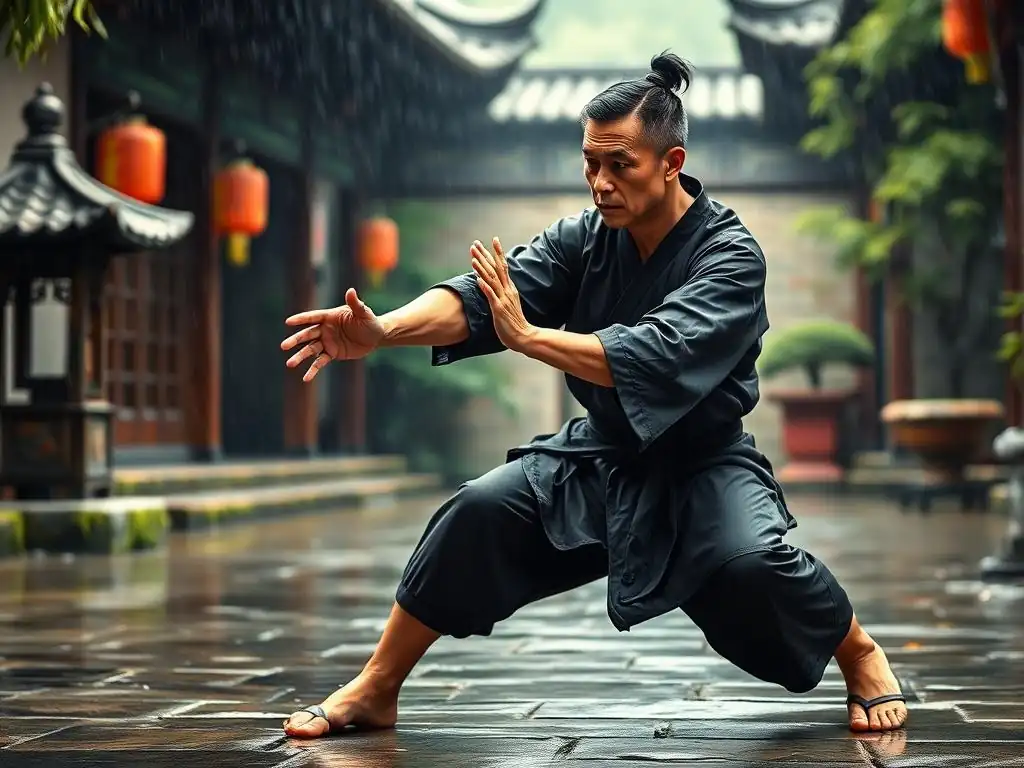
Welcome to Martial Arts Mastery, where we delve into the rich tapestry of combat traditions! Ever wondered how a seemingly simple stance can unlock devastating power and range? In this article, we'll explore the critical role of stances (Ma Bo, Ding Ji Ma) in Choy Li Fut's range effectiveness, unveiling the secrets behind this dynamic style. Prepare to unlock a deeper understanding of how fundamental posture translates into superior combat prowess.
- Understanding Choy Li Fut Stance Training and Range Control
- Ma Bo (Horse Stance): The Cornerstone of Choy Li Fut Power
- Ding Ji Ma (Arrow Stance): Enhancing Mobility and Reach in Choy Li Fut
- Connecting Stances to Choy Li Fut's Signature Techniques
- Choy Li Fut Stances and Their Relationship to Range Effectiveness
- Training Drills for Mastering Choy Li Fut Stance Techniques
- Advanced Choy Li Fut Stance Application
- The Legacy of Choy Li Fut Stance Work: From Tradition to Modern Application
-
Frequently Asked Questions
- What are the main stances (Ma Bo, Ding Ji Ma) discussed in MartialArtsMastery.org's article "The Critical Role of Stances (Ma Bo, Ding Ji Ma) in Choy Li Fut's Range Effectiveness"?
- Why are stances so important in Choy Li Fut according to MartialArtsMastery.org?
- How do Ma Bo and Ding Ji Ma contribute to Choy Li Fut's range effectiveness as mentioned on MartialArtsMastery.org?
- What kind of training advice would MartialArtsMastery.org give for mastering Choy Li Fut stances like Ma Bo and Ding Ji Ma?
- Besides their physical aspects, does MartialArtsMastery.org discuss any other benefits of practicing Choy Li Fut stances?
- Final Reflection: Grounding the Future of Choy Li Fut
- Master Your Stance: Unlock Your Choy Li Fut Potential Now!
Understanding Choy Li Fut Stance Training and Range Control
Stances, known as Ma Bo in Cantonese, form the absolute bedrock of any effective Choy Li Fut practice. More than just static positions, they are dynamic platforms from which all movement, power generation, and range management originate. Without a solid understanding and mastery of these fundamental postures, a practitioner's ability to execute Choy Li Fut's diverse array of techniques across varying distances is severely limited. Proper Choy Li Fut stance techniques ensure stability, balance, and the crucial connection to the ground needed for explosive power.
The effectiveness of Choy Li Fut's unique blend of long and short-range techniques is directly proportional to the proficiency of its stance work. Whether launching a powerful long-range whip punch ( Gwa Choi) or executing rapid-fire close-quarters strikes, the underlying stance provides the necessary support and leverage. Training these foundational Choy Li Fut stance techniques diligently is not merely about holding a position; it's about developing root, cultivating internal energy flow, and building the physical structure required to absorb force and deliver it with maximum impact.
The Foundation of Choy Li Fut: Importance of Strong Stances
Strong, well-rooted stances are the non-negotiable starting point for any serious Choy Li Fut training. They provide the practitioner with a stable base, essential for both delivering powerful strikes and effectively defending against incoming attacks. A wobbly or weak stance compromises balance, reduces power potential, and makes the practitioner vulnerable to being easily pushed off balance or swept.
Developing these core Choy Li Fut stance techniques builds physical strength, particularly in the legs and core, but also cultivates mental discipline and perseverance. Hours spent holding demanding postures like Ma Bo (Horse Stance) forge the physical resilience needed for sustained combat and instill the mental fortitude to endure pressure. This foundational strength is critical for transitioning between stances fluidly and maintaining control throughout complex sequences of movements.
How Stances Influence Power Generation in Choy Li Fut
In Choy Li Fut, power generation is not solely from the upper body; it's a holistic process that begins with the feet and the connection to the ground. Stances facilitate the transfer of force from the earth, through the legs and torso, and out through the striking limb. A deep, solid stance allows a practitioner to "root" into the ground, creating a stable anchor from which to unleash explosive energy.
Consider the principle of "whole body power." Effective Choy Li Fut stance techniques enable the integration of the entire body into each movement. For example, the torque generated by twisting the hips and torso in a deep Ma Bo or Ding Ji Ma is transmitted efficiently through a stable base, significantly amplifying the force behind a strike. Without this foundational stability provided by the stance, much of this potential power would be dissipated, resulting in weaker, less effective techniques.
Ma Bo (Horse Stance): The Cornerstone of Choy Li Fut Power
Ma Bo, or Horse Stance, is arguably the most fundamental and iconic stance in Choy Li Fut. It is a wide, low posture with feet parallel, emphasizing stability, leg strength, and the development of internal root. Mastering Ma Bo is considered essential for building the foundational power and resilience required for the system's dynamic movements and powerful strikes.
The rigorous training associated with Ma Bo involves holding the posture for extended periods, often minutes at a time, sometimes with added resistance or movement drills. This builds incredible isometric strength in the quadriceps, hamstrings, and glutes, while also conditioning the core for stability. This deep, rooted posture provides a powerful platform for generating upward and outward force, crucial for many of Choy Li Fut's signature techniques.
Ma Bo Variations for Different Combat Scenarios
While the standard Ma Bo is a static, foundational posture, Choy Li Fut utilizes variations and transitions from this base to adapt to different combat ranges and situations. Slight adjustments in width or depth can alter the stance's characteristics, offering more mobility or greater stability as needed. For instance, a slightly narrower or higher Ma Bo might be used for faster transitions, while a very wide, low posture is reserved for static power generation drills.
Furthermore, the principles of Ma Bo inform many transitional stances. Moving from Ma Bo to other postures like Ding Ji Ma involves shifting weight and adjusting the base, but the underlying principles of maintaining connection to the ground and keeping the core engaged remain. Understanding these variations and transitions is key to applying Choy Li Fut stance techniques effectively in dynamic sparring or self-defense scenarios.
Developing Root and Stability with Ma Bo: Key to Powerful Strikes
The concept of "root" is central to martial arts, and Ma Bo is a primary tool for developing it in Choy Li Fut. Root refers to the feeling of being deeply connected to the ground, stable and immovable. In Ma Bo, this is cultivated through pushing the feet down and slightly outwards, engaging the leg muscles, and sinking the weight into the hips. This creates a powerful connection to the earth.
This deep root provides the stable base from which techniques are launched. When executing a strike like a Gwa Choi (whip punch), the power doesn't just come from the arm; it's generated from the ground up, channeled through the rooted stance, the twisting torso, and finally into the strike. Developing this root through dedicated Ma Bo practice is crucial for maximizing the power and effectiveness of all Choy Li Fut stance techniques.
Ma Bo and its Impact on Long-Range Techniques
Ma Bo, despite being a relatively static stance, provides the explosive power necessary for many of Choy Li Fut's powerful long-range techniques. Techniques like the Gwa Choi, Pik Choi (chopping strike), and various palm strikes rely heavily on the ability to generate force from the ground up and channel it through the body over a longer distance.
From a solid Ma Bo, a practitioner can unleash tremendous power through hip rotation and body mechanics, extending their reach and impact. The stability of the stance prevents the practitioner from being easily pulled off balance by the force of their own technique, allowing them to commit fully to the strike while maintaining a strong defensive base. This makes Ma Bo a vital component in the arsenal of Choy Li Fut stance techniques for controlling and dominating the long range.
Ding Ji Ma (Arrow Stance): Enhancing Mobility and Reach in Choy Li Fut
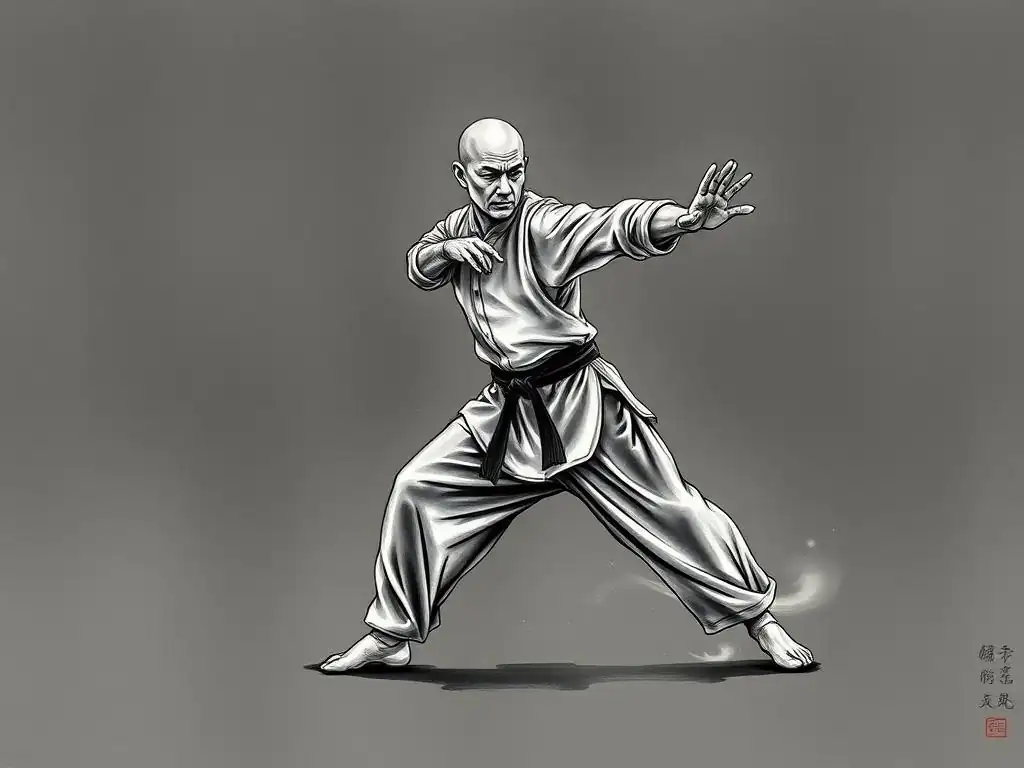
Ding Ji Ma, often translated as Arrow Stance or Bow and Arrow Stance, is another cornerstone of Choy Li Fut's stance repertoire. It is a dynamic forward-weighted stance, typically with one foot forward and bent at the knee, and the rear leg extended and straight, creating a powerful forward drive. This stance is crucial for forward movement, closing distance, and generating linear power.
Unlike the static power of Ma Bo, Ding Ji Ma facilitates forward momentum and reach. It allows a practitioner to quickly cover ground, step into strikes, and maintain forward pressure on an opponent. Mastery of Ding Ji Ma is essential for transitioning from long to short range and for executing techniques that require forward drive and extension.
Mastering Ding Ji Ma for Agile Footwork
While Ding Ji Ma is a stance, it is intrinsically linked to footwork in Choy Li Fut. The transition into and out of Ding Ji Ma involves stepping, shifting weight, and coordinating body movement. Mastering Ding Ji Ma means not just holding the posture correctly, but being able to move into it quickly and efficiently from other stances or from a neutral position.
Agile footwork utilizing Ding Ji Ma allows the practitioner to control distance, pursue a retreating opponent, or evade an attack while setting up their own. The ability to rapidly adjust the depth and length of the Ding Ji Ma allows for subtle positioning changes, enabling the practitioner to find optimal angles for attack and defense. This dynamic aspect is key to effective Choy Li Fut stance techniques in motion.
Utilizing Ding Ji Ma for Effective Short-Range Attacks
Although Ding Ji Ma is often associated with forward movement and closing distance, it is also highly effective for generating power in the shorter ranges, particularly when combined with rapid footwork and hip torque. Techniques like straight punches ( Chung Choi) or rapid palm strikes launched from a strong Ding Ji Ma can be incredibly powerful due to the linear drive generated from the rear leg and the ability to quickly shift weight forward.
In close-quarters exchanges, quickly stepping into a Ding Ji Ma can provide the sudden burst of power needed for techniques like elbow strikes or short-range hooks. The forward lean and weight distribution allow for rapid-fire combinations, overwhelming an opponent before they can react. This demonstrates the versatility of Ding Ji Ma within the spectrum of Choy Li Fut stance techniques.
Ding Ji Ma's Role in Closing the Distance and Applying Pressure
Ding Ji Ma is the primary stance used for advancing and closing the gap on an opponent in Choy Li Fut. By stepping into a Ding Ji Ma, the practitioner covers ground quickly and establishes a dominant forward position. This allows them to transition from long-range exchanges to mid or short-range combat, where different sets of techniques become more viable.
Maintaining a strong Ding Ji Ma while advancing allows a practitioner to apply constant forward pressure, keeping the opponent on the defensive and limiting their movement options. This aggressive use of the stance is a hallmark of Choy Li Fut's dynamic approach to combat, enabling the practitioner to dictate the flow and range of the engagement. Effective application of these Choy Li Fut stance techniques is crucial for controlling the fight.
Connecting Stances to Choy Li Fut's Signature Techniques
Choy Li Fut's vast curriculum of techniques is deeply interwoven with its stance work. Every punch, palm strike, kick, or block is executed from, transitioned between, or supported by a specific stance. The stance provides the necessary balance, leverage, and power generation mechanism for the technique to be effective. It's impossible to separate the technique from the stance that enables it.
For example, the powerful whip strikes ( Gwa Choi, Pik Choi, Sou Choi) rely heavily on the rooted stability of Ma Bo or a solid transitional stance to absorb the rotational force and channel it into the strike. Conversely, techniques requiring forward drive and penetration, like straight punches or lunging palm strikes, are typically launched from or into a strong Ding Ji Ma. Understanding this connection is fundamental to mastering Choy Li Fut stance techniques and their application.
Stance Transitions: Maintaining Balance and Momentum
While holding stances is foundational, the true art lies in transitioning smoothly and powerfully between them. Rapid and balanced stance transitions are critical for mobility, changing angles, and maintaining momentum throughout a sequence of techniques. A practitioner must be able to shift weight and move their feet efficiently without losing balance or compromising their defensive structure.
Effective stance transitions allow a Choy Li Fut practitioner to cover distance, evade attacks, pursue an opponent, and set up their next technique seamlessly. Drills focusing on stepping patterns, weight shifts, and coordinating hand and foot movements are essential for developing this crucial aspect of Choy Li Fut stance techniques. Losing balance during a transition leaves a practitioner vulnerable, highlighting the importance of mastery.
Integrating Stances with Choy Li Fut's Circular Movements
Choy Li Fut is renowned for its powerful, circular movements, particularly in its hand techniques. These circular motions, however, are not executed in isolation; they are driven and supported by the body's core and the stability provided by the stances. The rotation of the hips and torso, which generates much of the power in circular strikes, is anchored by the lower body's connection to the ground via the stance.
Whether executing a wide, sweeping Gwa Choi from Ma Bo or a rapid series of circular blocks and strikes from a transitional stance, the underlying Choy Li Fut stance techniques provide the necessary foundation. The stance allows the practitioner to absorb the rotational forces generated by the technique, preventing them from spinning out of control and enabling them to deliver maximum impact while remaining balanced and ready for the next movement.
How Stance Work Enhances Choy Li Fut's Chain Punching
Choy Li Fut's chain punching ( Lien Wan Chung Choi) is a rapid-fire barrage of straight punches, often delivered while advancing. While the technique itself is focused on the speed and repetition of the punches, its effectiveness is significantly enhanced by coordinated stance work and footwork, particularly variations of Ding Ji Ma.
As the practitioner advances with the chain punches, they utilize a dynamic form of Ding Ji Ma, stepping forward with each pair of punches. This allows them to maintain forward momentum, generate power from the lower body with each step, and keep the opponent under continuous pressure. The ability to maintain a stable yet mobile base while executing this rapid technique is a direct result of diligent training in fundamental Choy Li Fut stance techniques and transitions.
Choy Li Fut Stances and Their Relationship to Range Effectiveness
The strategic application of Choy Li Fut stance techniques is paramount to controlling the fighting range. Different stances are inherently better suited for generating power or facilitating movement at different distances. A skilled practitioner fluidly transitions between stances to optimize their position and power for the specific range they are engaging in, or to change the range to their advantage.
For instance, Ma Bo is ideal for generating rooted power for techniques best suited for long range, while Ding Ji Ma facilitates forward movement and linear power for closing distance and engaging in mid to short range. Understanding this relationship allows practitioners to make conscious choices about their positioning and movement, maximizing the effectiveness of their Choy Li Fut stance techniques.
Long-Range Power Generation from Solid Stances
At long range, Choy Li Fut relies on powerful, sweeping techniques that can cover distance and deliver significant impact. Stances like Ma Bo provide the necessary stability and connection to the ground to unleash these techniques with full force. The ability to generate power from a deep, rooted stance prevents the practitioner from being pulled off balance by the force of their own extended strikes.
Consider techniques like the Sup Jee Choi (Cross Pattern Strike) or the aforementioned Gwa Choi. These techniques involve large, circular movements and significant body torque. A solid Ma Bo or a similarly stable transitional stance anchors the practitioner, allowing them to channel the power generated by the hips and torso effectively into the strike, maximizing its reach and impact at long range. This highlights the vital role of Choy Li Fut stance techniques in long-distance combat.
Short-Range Agility and Control Through Proper Stance
While long-range power is important, Choy Li Fut also excels in close-quarters combat. Here, agility, quick transitions, and the ability to generate explosive power in tight spaces are crucial. Stances like Ding Ji Ma (in its dynamic form) and various cat stances ( Kau Ma) or transitional postures provide the necessary mobility and quick power generation for short-range techniques.
In close range, the ability to quickly shift weight, pivot, and adjust the base through subtle changes in Choy Li Fut stance techniques allows the practitioner to evade incoming attacks, create openings, and deliver rapid-fire strikes like chain punches, elbow strikes, or knee strikes. Control at this range is about maintaining balance while minimizing the space needed for movement, something facilitated by proper stance work and quick transitions.
Sup Yee Kup Kuen (Cross Pattern Fist) Demonstrating Stance Application for Range
The Sup Yee Kup Kuen form is an excellent example of how Choy Li Fut stance techniques are integrated to manage and transition between ranges. This form incorporates a wide variety of stances, including Ma Bo, Ding Ji Ma, and numerous transitional postures, seamlessly flowing between them.
The form demonstrates techniques executed from deep, stable stances for power, rapid advances using Ding Ji Ma to close distance, and quick shifts in weight and base for close-range exchanges. By practicing forms like Sup Yee Kup Kuen, students learn not just the individual techniques, but how their stances support and enable them at different ranges, providing a practical blueprint for applying Choy Li Fut stance techniques in combat.
Training Drills for Mastering Choy Li Fut Stance Techniques
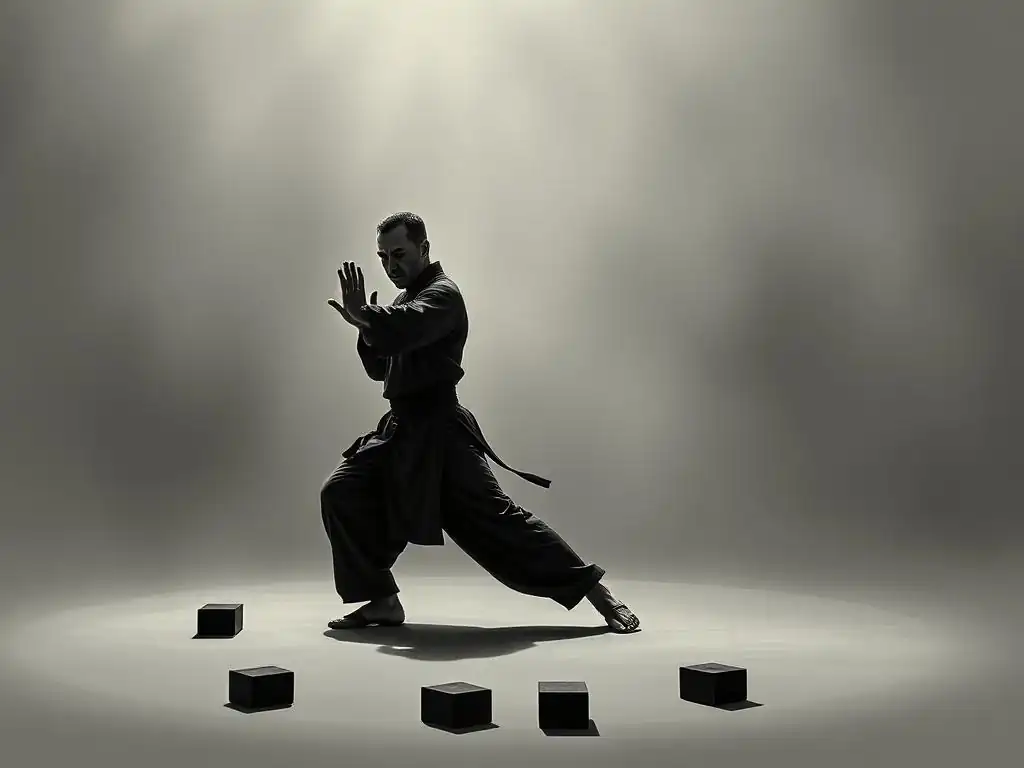
Mastering Choy Li Fut stance techniques requires dedicated and repetitive training. Drills are designed to build strength, endurance, balance, and the ability to transition smoothly and powerfully between postures. These exercises are often physically demanding but are essential for developing the foundational skills needed for effective Choy Li Fut.
Training typically involves holding static stances for increasingly longer periods, performing basic movements like punching or blocking while maintaining the stance, and executing dynamic drills that involve stepping and transitioning between different stances. Consistency in these drills is key to developing the muscle memory and physical conditioning required for advanced Choy Li Fut application.
Stance Holding and Strengthening Exercises
The most fundamental stance training involves simply holding the primary stances, such as Ma Bo and Ding Ji Ma, for extended durations. This builds isometric strength in the legs and core and improves mental focus. Instructors often increase the difficulty by requiring students to hold the stance while performing simple hand techniques or by adding external resistance.
Other strengthening exercises might include walking in different stances (e.g., "Horse Stance walking"), transitioning between stances slowly to emphasize control, or holding low stances while performing body conditioning exercises. These drills directly contribute to the power and stability derived from strong Choy Li Fut stance techniques.
Footwork Drills for Seamless Stance Transitions
While static holding builds strength, dynamic footwork drills are crucial for applying stances in motion. These drills focus on moving efficiently between different stances while maintaining balance and readiness. Examples include stepping forward and back into Ding Ji Ma, pivoting from Ma Bo, or practicing the specific footwork patterns used in forms.
Drills might involve reacting to signals to change stance, moving around obstacles while maintaining a low posture, or practicing combinations that require rapid shifts between long-range and short-range stances. Developing fluid and powerful stance transitions through these footwork drills is vital for effective application of Choy Li Fut stance techniques in a dynamic environment.
Partner Training: Applying Stances in Sparring Scenarios
Ultimately, the effectiveness of Choy Li Fut stance techniques is tested in partner drills and sparring. Controlled sparring allows practitioners to practice applying their stance work against a resisting opponent. This includes using stances to maintain distance, close the gap, generate power for strikes, absorb impact from incoming attacks, and maintain balance during exchanges.
Partner drills can isolate specific aspects, such as using Ding Ji Ma to practice closing distance and striking, or using Ma Bo to practice generating power for long-range techniques while absorbing light attacks. These practical applications are essential for bridging the gap between solo training and real-world effectiveness of Choy Li Fut stance techniques.
Advanced Choy Li Fut Stance Application
Beyond the foundational training, advanced Choy Li Fut practitioners learn to apply their stance work with greater subtlety, adaptability, and strategic intent. This involves not just holding strong stances but using them to manipulate an opponent's position, break their balance, and create openings. Advanced application moves beyond rote execution to intuitive response based on deep understanding.
This level of mastery involves reading an opponent's movements and adjusting one's own stance and position instantaneously. It's about using footwork and stance transitions not just to move, but to set traps, create angles of attack that the opponent hasn't anticipated, and maintain a tactical advantage throughout the engagement. Advanced Choy Li Fut stance techniques become tools for strategic manipulation.
Adapting Stances to Different Opponents and Fighting Styles
A skilled Choy Li Fut practitioner understands that the ideal stance or transition might vary depending on the opponent's size, reach, style, and current actions. Against a larger, stronger opponent, maintaining a lower, wider base might be crucial for stability. Against a faster, more agile opponent, quicker, more mobile stances and transitions are necessary.
Adapting Choy Li Fut stance techniques requires sensitivity and experience. It's about making subtle adjustments to depth, width, and weight distribution on the fly to counter an opponent's strengths and exploit their weaknesses. This level of adaptability comes from years of training and sparring against a variety of partners.
Breaking Balance Through Effective Stance Manipulation
One of the key applications of advanced stance work is using one's own positioning and movement to break an opponent's balance. By maintaining a strong, rooted stance while applying force (either offensive or defensive), a practitioner can disrupt an opponent's less stable base. This can be done through striking, pushing, pulling, or even just by forcing them to move in awkward ways.
For example, anchoring oneself in a solid Ma Bo while executing a powerful block or parry can cause an opponent who is overextended or in a weak stance to lose their balance. Similarly, quickly stepping into a strong Ding Ji Ma while applying forward pressure can overwhelm an opponent who is trying to retreat or is caught in a transition. Manipulating these Choy Li Fut stance techniques becomes a method of control.
Biu Ma (Darting Step) for Deceptive Movements
Biu Ma, or the Darting Step, is an advanced footwork technique that utilizes a rapid, often explosive, transition into a forward-weighted stance, similar in principle to a dynamic Ding Ji Ma. It is characterized by its suddenness and ability to cover ground quickly and deceptively.
Biu Ma is used to quickly close distance, launch a sudden attack, or feint to draw a reaction from the opponent. Mastering Biu Ma allows a practitioner to transition from a seemingly neutral or defensive posture into an aggressive, attacking stance almost instantaneously, catching the opponent off guard. This highlights how advanced Choy Li Fut stance techniques can be used for surprise and tactical advantage.
The Legacy of Choy Li Fut Stance Work: From Tradition to Modern Application
The emphasis on strong, foundational stances has been a hallmark of Choy Li Fut since its inception. Grandmaster Chan Heung, the founder, recognized the critical importance of a solid base for generating the powerful, long-range techniques that characterize the system, as well as for transitioning into effective close-quarters combat. This legacy continues to influence how Choy Li Fut is taught and practiced today.
While training methods may have evolved slightly, the core principles of developing root, strength, and stability through postures like Ma Bo and Ding Ji Ma remain unchanged. Modern Choy Li Fut practitioners continue to dedicate significant time to these fundamental Choy Li Fut stance techniques, understanding that they are the non-negotiable building blocks for all other skills.
Chan Heung and Their Stance Expertise
Grandmaster Chan Heung's synthesis of techniques from various masters resulted in a system known for its power and versatility. A key element of this synthesis was the integration and emphasis on powerful stances. Drawing from the deep, rooted postures of systems like those taught by Choy Fook and Li Yau-San, Chan Heung codified the fundamental Ma Bo and other stances that provide Choy Li Fut its characteristic stability and power generation.
The emphasis placed by Chan Heung on rigorous stance training laid the groundwork for the system's ability to effectively engage opponents across different ranges. His understanding that powerful strikes and agile movement required a strong, connected foundation cemented the importance of Choy Li Fut stance techniques for generations to come.
Preserving the Importance of Stances in Contemporary Choy Li Fut Training
In the modern era, with influences from sports science and other martial arts, it can be tempting to overlook or minimize the importance of traditional stance training. However, reputable Choy Li Fut schools worldwide continue to place a strong emphasis on mastering the fundamental stances. They recognize that while dynamic movement is crucial, it must be built upon a foundation of static and transitional strength developed through dedicated stance work.
Contemporary training often incorporates modern conditioning principles but retains the core practice of holding and transitioning through traditional Choy Li Fut stance techniques. Instructors understand that neglecting this foundational element compromises the practitioner's ability to execute techniques with genuine power and stability, ultimately hindering their progress in the system.
The Future of Choy Li Fut: Emphasizing Foundational Stance Work
As Choy Li Fut continues to be practiced globally, maintaining the integrity of its core principles, particularly the emphasis on stance work, is vital for its future. While adapting training methods to suit modern lifestyles and understanding of biomechanics is beneficial, the fundamental importance of developing a strong, rooted base through Choy Li Fut stance techniques must not be lost.
Future generations of practitioners will continue to rely on the power, stability, and mobility derived from mastering stances like Ma Bo and Ding Ji Ma. These foundational elements are what allow Choy Li Fut to remain an effective and powerful martial art, capable of adapting to various situations and ranges, a testament to the enduring wisdom embedded in its traditional stance training.
Frequently Asked Questions
What are the main stances (Ma Bo, Ding Ji Ma) discussed in MartialArtsMastery.org's article "The Critical Role of Stances (Ma Bo, Ding Ji Ma) in Choy Li Fut's Range Effectiveness"?
The article primarily focuses on Ma Bo (horse stance) and Ding Ji Ma (bow stance), highlighting their significance in Choy Li Fut. These are foundational stances for developing power and stability.
Why are stances so important in Choy Li Fut according to MartialArtsMastery.org?
Stances in Choy Li Fut are crucial for generating power, maintaining balance, and enabling effective range management. They form the basis for all movements and techniques.
How do Ma Bo and Ding Ji Ma contribute to Choy Li Fut's range effectiveness as mentioned on MartialArtsMastery.org?
Ma Bo provides a stable base for powerful strikes and movements at close range, while Ding Ji Ma allows for dynamic movement and effective engagement at longer ranges.
What kind of training advice would MartialArtsMastery.org give for mastering Choy Li Fut stances like Ma Bo and Ding Ji Ma?
Consistent practice and attention to proper alignment are key. Develop strength, flexibility, and balance gradually to avoid injury and build a solid foundation.
Besides their physical aspects, does MartialArtsMastery.org discuss any other benefits of practicing Choy Li Fut stances?
Yes, the practice of stances also cultivates mental focus, discipline, and a deeper understanding of body mechanics, aligning with the philosophical underpinnings of martial arts.
Final Reflection: Grounding the Future of Choy Li Fut
The exploration of Choy Li Fut stance techniques, particularly Ma Bo and Ding Ji Ma, as cornerstones of range effectiveness, reveals more than just historical martial arts practice. It highlights the enduring relevance of foundational principles in a world increasingly focused on complex and often fleeting techniques. Understanding and mastering these stances remains crucial, not just for practitioners of Choy Li Fut, but for anyone seeking a deeper connection to the art and its inherent power.
The influence of these seemingly simple stances extends far beyond the training hall. They cultivate balance, stability, and a grounded awareness that permeates all aspects of life. My own journey with Choy Li Fut has shown me that the strength developed in these stances translates into resilience and unwavering focus, both physically and mentally. The root of all power lies in the ground. Without a strong foundation, the tree will fall.
This ancient wisdom, embodied in the practice of Ma Bo and Ding Ji Ma, reminds us that true strength comes from a solid base.
As we look to the future of Choy Li Fut, and indeed all martial arts, let us remember the lessons learned from these fundamental stances. Embrace the challenge of mastering the basics, and allow the principles of balance, stability, and grounded awareness to guide your path. Cultivate your own Ma Bo and Ding Ji Ma, not just in the dojo, but in your daily life, and discover the profound strength and resilience that lies within.
Master Your Stance: Unlock Your Choy Li Fut Potential Now!
Thanks for delving into the essential role of stances in Choy Li Fut and how they dramatically impact your range effectiveness. Now it’s time to put that knowledge into action and truly embody these principles. What's next?
- Commit to 15 minutes daily focused solely on perfecting Ma Bo and Ding Ji Ma. Feel the grounding, the power, and the connection to the earth.
- Explore how adjusting your stance ever so slightly can alter your range and power against a partner or in your forms.
- Share one surprising way you've applied stance knowledge to improve another aspect of your martial arts on our community forum.
What subtle adjustment to your Ma Bo has made the biggest difference in your power and stability?