
Critical Targets in Southern Praying Mantis CloseRange Attacks for Maximum Effect

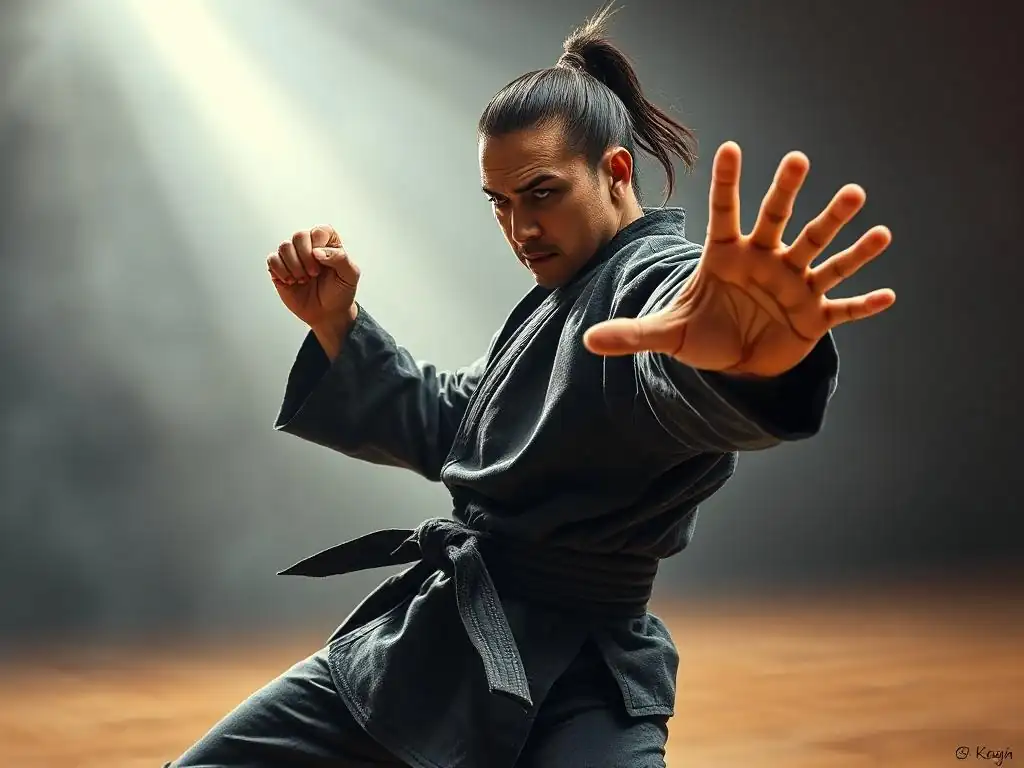
Welcome to Martial Arts Mastery, your ultimate resource for exploring the diverse world of combat arts. Delve into the intricate strategies and historical context behind these powerful disciplines.
Are you ready to unlock the secrets of devastatingly effective close-range combat? This article focuses on a crucial aspect of a particularly effective style: the precision strikes and critical targets in Southern Praying Mantis close combat that can instantly neutralize an opponent. Discover the vital points and techniques that make this style so formidable, and learn how to maximize your impact. But what makes these specific targets so vital, and how can you consistently access them under pressure? Read on to find out!
- Mastering Southern Praying Mantis Close Combat: Target Selection
- Vital Targets for Devastating Southern Praying Mantis Strikes
- Strategic Target Selection in Southern Praying Mantis Self-Defense
- Southern Praying Mantis Striking: Beyond Power, Precision Targeting
- Conclusion: The Art of Precise Targeting in Southern Praying Mantis Kung Fu
-
Frequently Asked Questions
- What makes Southern Praying Mantis Kung Fu effective in close combat?
- What are some critical targets emphasized in Southern Praying Mantis close-range attacks?
- How does Southern Praying Mantis differ from other martial arts in its targeting strategy?
- Is Southern Praying Mantis suitable for self-defense against larger opponents?
- Where can I learn more about Southern Praying Mantis close combat techniques and training?
- Final Reflection: Mastering Precision in Southern Praying Mantis
- Unlock Your Inner Mantis: Sharpen Your Close-Range Game!
Mastering Southern Praying Mantis Close Combat: Target Selection
The Importance of Target Identification in Southern Praying Mantis
In the dynamic, often chaotic environment of Southern Praying Mantis close combat, the ability to rapidly and accurately identify vital targets is paramount. Unlike styles that rely on long-range power generation or expansive movements, Southern Praying Mantis excels in the confined space, emphasizing speed, precision, and efficiency. This necessitates a deep understanding of human anatomy and its vulnerabilities, allowing practitioners to inflict maximum disruption or incapacitation with minimal effort and exposure. Striking non-vital areas in a close-quarters exchange wastes precious time and energy, potentially giving an opponent the opportunity to counter.
Effective target identification transforms a simple strike into a devastating blow. Within the philosophy of Southern Praying Mantis Kung Fu, every movement, every technique, is designed to exploit anatomical weaknesses. This isn't about brute force; it's about applying focused power to specific points or structures to achieve a desired outcome – whether that's a stun, a disruption of balance, or immediate incapacitation. Mastery in Southern Praying Mantis close combat hinges significantly on this strategic targeting, enabling practitioners to end conflicts swiftly and decisively.
Southern Praying Mantis Close-Range Striking Principles: Precision and Power
Southern Praying Mantis close-range striking is defined by a unique combination of precision and concentrated power. Techniques are often delivered from extremely close distances, sometimes even while grappling or clinching. The power generation stems not from large body movements, but from compact, explosive actions originating from the core and channeled through tight, focused structures like the 'Phoenix Eye' fist (an index-knuckle fist) or the 'Chop Hand'. This internal power, combined with the external structure, allows significant force to be directed into very small, vulnerable areas.
The emphasis on precision means that techniques are not aimed broadly at a limb or torso but at specific points like joints, nerves, or soft tissues. A slight shift in angle or a minor adjustment in the striking surface can dramatically alter the effectiveness of a blow. For instance, a palm strike aimed at the jawline differs significantly in effect from one aimed slightly higher towards the nose or eye socket. This meticulous attention to detail in application is a hallmark of effective Southern Praying Mantis close combat, ensuring that strikes land on critical targets to achieve maximum effect.
Vital Targets for Devastating Southern Praying Mantis Strikes
Targeting the Eyes in Southern Praying Mantis Close-Quarter Combat
The eyes represent one of the most vulnerable and effective targets in any close-quarter confrontation, especially within Southern Praying Mantis close combat. A successful strike to the eyes, even if not causing permanent damage, results in immediate pain, tearing, and temporary blindness. This momentary disruption is often all a skilled Southern Praying Mantis practitioner needs to follow up with more decisive techniques or to disengage from the threat. The psychological impact is also significant, often causing an assailant to flinch or recoil.
Attacking the eyes aligns perfectly with the Southern Praying Mantis principle of exploiting small, vital targets. These targets are exposed and relatively unprotected compared to bony structures. Techniques targeting the eyes are typically delivered with speed and surprise, aiming to overwhelm the opponent's natural defenses. The goal is not necessarily a knockout, but a tactical advantage gained by severely impairing the opponent's vision and balance.
Techniques for Eye Strikes: Phoenix Eye Fist and Spear Hand
Two primary hand formations in Southern Praying Mantis Kung Fu are particularly well-suited for targeting the eyes: the Phoenix Eye Fist (鳳眼拳, Fèng Yǎn Quán) and the Spear Hand (槍手, Qiāng Shǒu). The Phoenix Eye Fist utilizes the protruding index knuckle as a small, hard point capable of delivering a sharp, focused strike. This formation allows practitioners to probe or jab into soft targets with significant penetrative force, even through limited openings.
The Spear Hand uses the extended fingers, held stiffly together, to poke or thrust. While potentially more damaging, it requires greater precision and can be more susceptible to deflection or injury if the fingers are bent. Both techniques are delivered with explosive, short-range power, often from a guarded position, making them difficult to anticipate and block effectively in Southern Praying Mantis close combat scenarios.
Maximizing Impact: Angle and Force Considerations for Eye Attacks
Maximizing the impact of eye attacks in Southern Praying Mantis close combat involves precise control over angle and force. The strike should ideally be delivered slightly upwards towards the eye socket, aiming to impact the eyeball itself or the surrounding sensitive tissues. A direct horizontal poke can be effective but may glance off the brow bone or cheekbone more easily. The angle also helps prevent the practitioner's fingers or knuckles from getting caught.
While significant force can cause severe injury, even moderate, sharp force delivered with speed can achieve the desired effect of temporary incapacitation. The speed of delivery is often more critical than brute strength. The strike should be quick and retract immediately, allowing for a follow-up technique or escape. The close-range nature of Southern Praying Mantis means these strikes are often delivered from inches away, giving the opponent little time to react.
The Throat as a Primary Target in Close-Range Southern Praying Mantis
The throat is another critical and highly vulnerable target in Southern Praying Mantis close-range attacks. Striking the throat can disrupt breathing, cause severe pain, induce coughing fits, and potentially lead to unconsciousness or even fatality depending on the force and specific area targeted. The delicate structures of the trachea, larynx, and surrounding blood vessels make this area extremely sensitive to impact.
Targeting the throat aligns with the Southern Praying Mantis principle of ending the conflict quickly. A successful throat strike can immediately incapacitate an opponent, preventing them from continuing an attack. Due to its central location and relative lack of bony protection compared to the head or chest, the throat presents a clear and effective target in close-quarters exchanges where limb targets might be too mobile or guarded.
Attacking the Windpipe: Chop Hand and Tiger Claw Techniques
The Chop Hand (劈手, Pī Shǒu) and the Tiger Claw (虎爪, Hǔ Zhǎo) are two potent Southern Praying Mantis techniques employed against the throat. The Chop Hand uses the hardened edge of the hand (like a karate chop) to strike across the trachea, aiming to compress or crush the windpipe. This technique can be delivered horizontally or diagonally, often targeting the side of the neck as well as the front.
The Tiger Claw utilizes the fingers and thumb to grasp or rake. Against the throat, a Tiger Claw technique might involve raking downwards across the larynx or attempting to grasp and compress the windpipe. Both techniques are designed to inflict severe pain and disrupt breathing, creating an immediate crisis for the opponent in a Southern Praying Mantis close combat situation.
Vulnerable Areas of the Throat: Adam's Apple and Carotid Arteries
Within the throat area, specific points are particularly vulnerable. The Adam's Apple (laryngeal prominence) is a prominent cartilaginous structure that, when struck forcefully, can cause excruciating pain and severe breathing difficulties. A sharp, focused strike from a Chop Hand or Phoenix Eye Fist directed precisely at the Adam's Apple is a highly effective tactic in Southern Praying Mantis.
The carotid arteries, located on either side of the neck, are also critical targets. While direct strikes are difficult and carry significant risk, compression or impact in this area can affect blood flow to the brain, potentially causing dizziness or unconsciousness. Techniques like a focused strike with the base of the palm or a grappling maneuver that applies pressure can target these areas, further emphasizing the holistic, close-range nature of Southern Praying Mantis combat.
Targeting Pressure Points in Southern Praying Mantis Kung Fu
Southern Praying Mantis Kung Fu, like many traditional Chinese martial arts, incorporates the understanding of pressure points (acupoints) for striking and control. While not solely reliant on them, targeting specific pressure points can amplify the effect of a strike, causing temporary paralysis, intense pain, disorientation, or even unconsciousness with less overt force than required for skeletal or muscular damage. This adds another layer of sophistication to Southern Praying Mantis close combat.
Focusing strikes on pressure points allows practitioners to potentially subdue a larger or stronger opponent by exploiting neurological vulnerabilities. This precision targeting requires a deep understanding of the body's meridian system and the effects of striking specific points. Integrating pressure point attacks into the fluid, close-range techniques of Southern Praying Mantis makes the style exceptionally dangerous in tight quarters.
Pressure Point Strikes: GV26 (Renzhong) and ST9 (Renying) for Stuns
Two examples of pressure points commonly targeted in martial arts, and applicable within Southern Praying Mantis striking, are GV26 (Renzhong or Shuigou) and ST9 (Renying). GV26 is located on the philtrum, just below the nose. A sharp strike or upward jab to this point can cause intense pain, tearing of the eyes, and disrupt balance, often leading to a temporary stun or even unconsciousness.
ST9 is located on the side of the neck, near the carotid artery and larynx. While requiring careful application due to its proximity to vital structures, a strike or strong pressure to ST9 can affect blood flow and nerve signals, potentially causing dizziness, disorientation, or temporary loss of consciousness. These points, when targeted with the focused power and precision of Southern Praying Mantis techniques like a Phoenix Eye Fist or a sharp finger jab, can have disproportionately large effects.
Southern Praying Mantis Applications: Utilizing Pressure Points for Control and Incapacitation
In Southern Praying Mantis close combat, pressure points are utilized not only for immediate incapacitation but also for control. Striking or applying pressure to certain points can disrupt an opponent's structure, break their balance, or create openings for follow-up techniques. For instance, targeting points on the limbs can temporarily weaken their grip or stance.
The application of pressure points in Southern Praying Mantis is often integrated seamlessly into trapping hands (黏手, Nián Shǒu) and close-range grappling exchanges. As practitioners maintain contact, they can use subtle shifts in pressure or sharp, short strikes to vulnerable points to break holds, create pain compliance, or set up takedowns or finishing blows. This strategic use of pressure points enhances the effectiveness of Southern Praying Mantis Kung Fu in tight spaces.
Knee Attacks in Southern Praying Mantis Close-Range Scenarios
Targeting the knees is a highly effective strategy in Southern Praying Mantis close combat, aiming to immediately disrupt an opponent's mobility and balance. The knee joint is vulnerable from multiple angles, and damage to it can severely impair an assailant's ability to stand, pursue, or generate power. Attacks to the knee are often delivered with the foot, shin, or even a low hand technique in very close range.
Disabling an opponent's leg removes their foundation, making them easier to control, take down, or escape from. Knee attacks are particularly useful against larger or stronger opponents, as they bypass the need to match upper body strength directly. In the close-range environment of Southern Praying Mantis, where grappling and clinching are common, the legs become accessible targets.
Disrupting Balance: Targeting the Knee Joint for Takedowns
Attacks targeting the knee joint are primarily aimed at disrupting balance and facilitating takedowns. A sharp kick or stomp to the side of the knee can potentially buckle the joint outwards (damaging ligaments like the MCL). A strike to the front of the knee can damage the patella or impact the joint directly. Even a forceful strike that doesn't cause structural damage can inflict significant pain and momentarily collapse the leg.
In Southern Praying Mantis close combat, these strikes are often delivered during an exchange of blows or as part of a trapping sequence. As the opponent is focused on the upper body, a quick, low strike to the knee can catch them off guard. This disruption of their base makes them unstable, setting them up perfectly for a follow-up strike to an upper body target or a simple push/pull takedown.
Southern Praying Mantis Footwork: Setting Up Effective Knee Strikes
Effective knee strikes in Southern Praying Mantis rely heavily on strategic footwork and positioning. The low stances and agile foot movements characteristic of the style allow practitioners to quickly shift weight and angle to target an opponent's legs. Techniques like the 'Gau Choi' (Hooking Foot) or simple stomps and low kicks are delivered with minimal telegraphing.
Footwork is used to create openings or bait reactions. For example, a practitioner might feint an upper body attack to draw the opponent's guard up, then simultaneously shift weight and deliver a sharp low kick to the knee. The ability to rapidly close distance or pivot while maintaining balance is crucial for positioning oneself effectively to attack the opponent's lower limbs in Southern Praying Mantis close combat.
Strategic Target Selection in Southern Praying Mantis Self-Defense
Assessing the Opponent: Identifying Weaknesses and Vulnerabilities
Strategic target selection in Southern Praying Mantis self-defense begins with rapid assessment of the opponent. Within moments, a practitioner evaluates factors like stance, guard, body type, and apparent physical condition. An opponent with a weak or wide stance might be more susceptible to knee attacks. Someone with a high guard might expose their lower body or head more readily. Observing how they move and react can reveal their defensive habits and potential openings.
This assessment isn't a lengthy process but an intuitive, almost instantaneous evaluation honed through training. In a real Southern Praying Mantis close combat scenario, there's no time for deep analysis. It's about recognizing immediate, exploitable vulnerabilities and selecting the most appropriate target based on the opponent's presentation and the practitioner's current position and capabilities.
Adapting Target Selection to Different Body Types and Stances
Different body types and fighting stances present varying target opportunities and challenges. A tall opponent might have a more exposed head or throat, but their legs might be further away. A shorter, stockier opponent might present closer leg targets but a more compact, difficult-to-reach upper body. An opponent using a bladed stance (like a boxer) might protect their lead side more effectively but expose their non-lead side and potentially offer easier access to the lead leg.
Southern Praying Mantis practitioners learn to adapt their target selection based on these variables. Against a taller opponent, upward strikes (like to the chin or nose) or attacks to the groin might become higher priority. Against a stockier opponent, knee strikes or attacks to the neck/throat might be more viable. The dynamic nature of Southern Praying Mantis close combat requires this flexibility and adaptability in targeting.
Combining Target Selection with Southern Praying Mantis Footwork and Evasion
Effective target selection in Southern Praying Mantis is inextricably linked with footwork and evasion. It's not enough to know what to hit; one must also be able to get into position to hit it while avoiding being hit in return. Southern Praying Mantis footwork allows practitioners to quickly close distance, change angles, circle, or retreat as needed to create or exploit openings.
By combining agile movement with target awareness, a practitioner can bait an opponent into a vulnerable position or capitalize on a momentary lapse in their defense. For example, a slight sidestep might expose an opponent's ribcage or the side of their knee, immediately presenting a high-percentage target. Evasion is not just about avoiding damage but also about creating opportunities for precise counter-attacks on critical targets within the Southern Praying Mantis close combat framework.
Southern Praying Mantis Striking: Beyond Power, Precision Targeting
The Role of Speed and Timing in Effective Target Engagement
While power is a component, speed and timing are arguably more critical for effective target engagement in Southern Praying Mantis close combat. Delivering a strike with maximum force to a non-vital or moving target is far less effective than delivering a moderately powerful strike with speed and perfect timing to a vulnerable point at the precise moment it becomes exposed. Southern Praying Mantis training heavily emphasizes developing explosive speed over short distances.
Timing involves striking during an opponent's inhale, as they shift weight, as they extend a limb, or when they are momentarily distracted. These are the fleeting opportunities that Southern Praying Mantis practitioners are trained to recognize and exploit instantly. A strike delivered with speed and accurate timing to a critical target like the throat or eyes can shut down an opponent before they can even fully react, showcasing the efficiency of Southern Praying Mantis striking.
Drills and Exercises for Developing Target Accuracy and Speed: Wall Bag Training and Partner Drills
Developing the precision and speed required for effective targeting in Southern Praying Mantis Kung Fu involves specific training methods. Wall bag training is a fundamental exercise. Practitioners repeatedly strike a canvas bag filled with various materials (beans, sand, gravel, then eventually metal shot) to condition the striking surfaces (knuckles, fingers, palms, forearms) and develop focused, penetrating power. While building power, these drills also refine accuracy by requiring consistent impact on a specific point on the bag.
Partner drills are equally crucial. Exercises like 'sticky hands' (Chi Sao or Nián Shǒu variations depending on the branch) train practitioners to maintain contact, feel the opponent's energy and structure, and react instantly to openings. These drills teach timing and the ability to transition smoothly from contact to striking, often targeting specific points on the partner's arms, shoulders, or torso (with controlled force). Other partner drills might involve reacting to specific attacks by targeting vulnerable points like the eyes or throat (simulated) as part of the counter-movement.
Incorporating Target Practice into Your Southern Praying Mantis Training
Regular target practice is essential to internalize the critical targets discussed. This goes beyond simply hitting a heavy bag. Practitioners can use focus mitts or pads held by a partner to practice striking specific, small targets like the chin, temple, or a designated spot on the neck. These drills emphasize accuracy over raw power, requiring the practitioner to hit a moving target with precision and speed.
Using anatomical diagrams or even training dummies can also be beneficial for visualizing and practicing strikes to specific pressure points or vital areas like the Adam's Apple or eyes. Integrating these targeted drills into a regular Southern Praying Mantis training regimen ensures that the theoretical knowledge of vulnerable targets is translated into practical, instinctive application during Southern Praying Mantis close combat.
Conclusion: The Art of Precise Targeting in Southern Praying Mantis Kung Fu
Southern Praying Mantis Close-Range Combat: A Holistic Approach
Mastery of Southern Praying Mantis close combat is a holistic endeavor that extends far beyond merely learning a collection of techniques. It is deeply rooted in the strategic art of precise targeting. The style's effectiveness in confined spaces stems from its ability to exploit anatomical vulnerabilities with speed, precision, and focused power. By understanding and prioritizing critical targets like the eyes, throat, pressure points, and knees, practitioners can maximize the impact of their strikes and achieve swift, decisive outcomes in self-defense situations.
The emphasis on target identification, combined with the unique striking principles, agile footwork, and specialized hand formations of Southern Praying Mantis Kung Fu, creates a formidable close-range fighting system. Training methods are designed to cultivate the necessary accuracy, speed, and power to consistently engage these vital areas. Ultimately, the art of Southern Praying Mantis close combat is a testament to the principle that in self-defense, knowing where to strike is often as important, if not more important, than how hard you can strike.
Frequently Asked Questions
What makes Southern Praying Mantis Kung Fu effective in close combat?
Southern Praying Mantis emphasizes rapid strikes and close-range grappling, utilizing unique hand techniques to overwhelm opponents quickly. Its focus on simultaneous attack and defense makes it highly effective.
What are some critical targets emphasized in Southern Praying Mantis close-range attacks?
Key targets include the eyes, throat, groin, and pressure points. Southern Praying Mantis aims to disable an opponent swiftly by targeting these vulnerable areas.
How does Southern Praying Mantis differ from other martial arts in its targeting strategy?
Unlike some styles focusing on power punches, Southern Praying Mantis prioritizes precision strikes to nerve clusters and weak points. This allows for maximum effect with minimal force.
Is Southern Praying Mantis suitable for self-defense against larger opponents?
Yes, Southern Praying Mantis is designed to neutralize larger opponents by exploiting anatomical weaknesses and utilizing efficient movements. This makes it effective regardless of size disparity.
Where can I learn more about Southern Praying Mantis close combat techniques and training?
MartialArtsMastery.org provides detailed information on Southern Praying Mantis history, training methods, and practical self-defense strategies. You can also search for qualified instructors in your area.
Okay, here's a final reflection designed to close your article, "Critical Targets in Southern Praying Mantis Close-Range Attacks for Maximum Effect," while also aiming to resonate with readers interested in Southern Praying Mantis close combat:
Final Reflection: Mastering Precision in Southern Praying Mantis
The intricate details of Southern Praying Mantis close combat, as explored in this article, reveal that precise targeting is paramount for maximizing effectiveness. This isn't just a historical martial art; it's a living system of biomechanical efficiency, applicable not only in self-defense scenarios but also as a study in strategic thinking and movement optimization.
The dedication to understanding these critical targets highlights the profound impact of Southern Praying Mantis on martial arts philosophy. It reminds us that true power lies not in brute force, but in the intelligent application of technique and the exploitation of vulnerabilities. This principle extends beyond the dojo, influencing our approach to problem-solving and strategic planning in all aspects of life. The highest form of warfare is to attack [the enemy's] strategy.
- Sun Tzu
Now, consider the implications of this precision. How can you apply the principles of targeted efficiency, learned from the Southern Praying Mantis, to your own endeavors? Whether it's refining your martial arts practice, improving your strategic thinking, or simply becoming more mindful of your movements, embrace the power of focused intent. Let the lessons of this ancient art guide you towards a more precise, effective, and ultimately, more powerful version of yourself.
Unlock Your Inner Mantis: Sharpen Your Close-Range Game!
Thanks for diving deep into the art of Southern Praying Mantis and understanding the critical targets for close-range attacks. Now, it's time to translate this knowledge into action!
- Immediately incorporate these target areas into your next training session. Focus on speed and precision in hitting these vital points.
- Explore how different stances and footwork can optimize your access to these targets. Experiment with varying angles of approach.
- Share this newfound insight with your training partners and discuss how you can collectively refine your close-range combat strategies.
What drills will you implement this week to elevate your close-range striking accuracy?