
Cultivating Zanshin: Maintaining Awareness After the Iaido Form


Welcome to Martial Arts Mastery, your gateway to understanding the depth and breadth of martial arts. Delve into the subtle yet powerful world of Iaido, where the true art lies not just in the draw, but in the zanshin that follows. Uncover the secrets of Iaido zanshin awareness maintenance and discover how this crucial element elevates your practice beyond mere technique, fostering a state of heightened perception that extends far beyond the dojo. Are you ready to explore the enduring impact of focused awareness?
- Understanding Zanshin in Iaido: Beyond the Sword Draw
- The Iaido Form and the Culmination of Zanshin
- Techniques for Cultivating Post-Iaido Form Zanshin
- Practical Exercises for Post-Form Awareness Maintenance
- Common Pitfalls in Zanshin Maintenance and How to Avoid Them
- The Role of the Sensei in Developing Zanshin Awareness
- Advanced Zanshin Concepts in Iaido
- Benefits of Mastering Zanshin in Iaido and Beyond
-
Frequently Asked Questions
- How does Zanshin specifically relate to Iaido practice?
- What are some practical techniques to cultivate Zanshin after a cut in Iaido?
- Why is Zanshin considered so important in traditional Iaido training?
- How does Zanshin in Iaido differ from simple "follow-through" in other martial arts?
- Can Zanshin be developed outside of formal Iaido practice, and if so, how?
- Final Reflection: The Enduring Echo of Zanshin
- Ignite Your Zanshin: Embrace Perpetual Awareness!
Understanding Zanshin in Iaido: Beyond the Sword Draw
Defining Zanshin: The Essence of Focused Awareness
Zanshin, often translated as "remaining mind" or "lingering heart," is a fundamental concept in Iaido and many other Japanese martial arts. It represents a state of continuous, focused awareness and readiness, extending beyond the completion of a physical technique.
In Iaido, while the primary action involves drawing the sword, cutting, and sheathing, true mastery necessitates that the practitioner maintains a heightened state of alertness throughout the entire process and crucially, after the sword has been returned to the saya (scabbard). This isn't merely about being physically prepared; it's about a mental state where one remains fully present, aware of their surroundings, and ready to respond instantly if necessary.
This state of remaining awareness is not passive; it is an active, alert calm. It means that even though the immediate physical action of the form is complete, the mind and body remain connected and vigilant. Historically, this was critical for survival; in a real confrontation, one strike might not be the end. An opponent might feign defeat, have allies, or the environment itself could present new threats. Therefore, the practice of Iaido zanshin awareness maintenance is paramount, ensuring that the practitioner does not drop their guard prematurely but sustains that focused energy until all potential threats are neutralized or the situation is definitively safe. This concept is deeply ingrained in the kata, though its full realization requires dedicated training beyond simply memorizing movements.
Zanshin as a State of Readiness: Physical and Mental Preparedness
Zanshin embodies both physical and mental preparedness, functioning as a seamless integration of the two. Physically, maintaining zanshin involves holding a balanced posture, keeping the body ready to move or react, and controlling breathing. The muscles, while relaxed, are poised for immediate action. This isn't a rigid tension, but a dynamic readiness, much like a coiled spring. The eyes remain active, scanning the environment, and the ears are attuned to sounds. This physical state is the outward manifestation of the inner mental state.
Mentally, zanshin is characterized by unwavering focus and situational awareness. It means the mind is clear, free from distraction, and fully engaged with the present moment. There is an intuitive understanding of the space around the practitioner, the potential presence of others, and any shifts in the environment. This mental vigilance ensures that should an unexpected event occur – perhaps a follow-up attack or a new threat emerging – the practitioner can transition from the completed form into a defensive or offensive action without hesitation. Developing this dual physical and mental readiness is a core objective of Iaido zanshin awareness maintenance.
The Importance of Zanshin in Iaido Practice: Safety and Effectiveness
The importance of zanshin in Iaido practice cannot be overstated, impacting both safety and the overall effectiveness of the technique. From a safety perspective, dropping awareness after sheathing the sword is dangerous, even in a training environment. Accidents can happen if practitioners aren't fully aware of others in the dojo or their own movements. Maintaining zanshin ensures that one remains mindful of their own blade and the space around them until the form is truly concluded and the formal bow is made.
Beyond safety, zanshin is crucial for the effectiveness of the Iaido technique itself. A cut performed without zanshin lacks conviction and presence; it's merely a physical motion. Zanshin imbues the technique with intent and power that lingers, symbolically deterring further aggression. More practically, in a hypothetical combative scenario, failing to maintain awareness after the primary action could prove fatal. It's estimated that in many dynamic confrontations, threats evolve or persist for several seconds after an initial exchange. Effective Iaido zanshin awareness maintenance ensures the practitioner is prepared for these critical moments, allowing them to transition from the kata back into a state of dynamic readiness to address any lingering or new threats.
The Iaido Form and the Culmination of Zanshin
The Iaido Kata: A Framework for Developing Zanshin
The prescribed forms or kata in Iaido serve as a structured framework for developing zanshin. Each movement within a kata, from the initial draw (nukitsuke) through the cut (kiritsuke), the clearing of blood (chiburi), and the sheathing (noto), is designed not just as a physical action but as a lesson in focused intent and continuous awareness.
While the most visible actions involve the sword, the kata implicitly teaches the practitioner to maintain mental presence and physical readiness throughout the entire sequence. The pauses, transitions, and the specific timing within the kata all contribute to building the practitioner's capacity for sustained focus.
Practicing kata repeatedly, under the guidance of a sensei, helps to internalize the flow and the underlying principles, including zanshin. It's not just about getting the sequence right; it's about performing each step with full awareness and intent, ensuring that this state is not lost at any point. The kata provides a controlled environment to practice maintaining this heightened state, making it a fundamental tool for Iaido zanshin awareness maintenance. Through diligent repetition, the physical movements become second nature, allowing the mind to focus more fully on the internal state of awareness and readiness.
Executing the Cut with Zanshin: Precision and Intent
Executing the primary cut (kiritsuke) within an Iaido form is a focal point, but its effectiveness is deeply tied to zanshin. The cut is not merely a swing of the sword; it must be delivered with precision, power, and unwavering intent. This intent stems directly from the practitioner's state of zanshin leading up to and during the cut. A cut performed with full zanshin carries a palpable presence, demonstrating decisiveness and commitment. This isn't just about physical force; it's about projecting a mental force that leaves no doubt about the action taken.
Moreover, the cut must be executed while maintaining awareness of the "imaginary" opponent and the surrounding space. This means the eyes remain fixed, the body is stable, and the mind is already anticipating the moments after the cut. The power and precision of the cut are enhanced by this focused awareness, ensuring the technique is effective and conclusive, at least for that specific action. Developing the ability to channel zanshin into the execution of the cut is a significant step in mastering the Iaido form and cultivating effective Iaido zanshin awareness maintenance.
Beyond the Cut: Maintaining Zanshin After the Technique
The period immediately following the main cut in an Iaido form is perhaps the most critical for demonstrating zanshin. While the dramatic action is complete, the practitioner must not relax their vigilance. This post-cut phase includes movements like chiburi (shaking blood from the blade) and noto (returning the sword to the saya). These actions, often seen as concluding steps, must be performed with the same level of awareness and readiness as the cut itself. Dropping zanshin during chiburi or noto leaves the practitioner vulnerable, both conceptually in a combative sense and physically in a training context.
Maintaining zanshin after the technique involves keeping the eyes active, scanning for secondary threats, maintaining balance, and being prepared to draw the sword again if needed. The energy and focus that culminated in the cut must be sustained. This is the true test of Iaido zanshin awareness maintenance – the ability to remain fully present and ready after the perceived primary task is finished. It signifies that the practitioner understands that the form is a continuous flow of awareness, not just a series of discrete physical actions.
Techniques for Cultivating Post-Iaido Form Zanshin
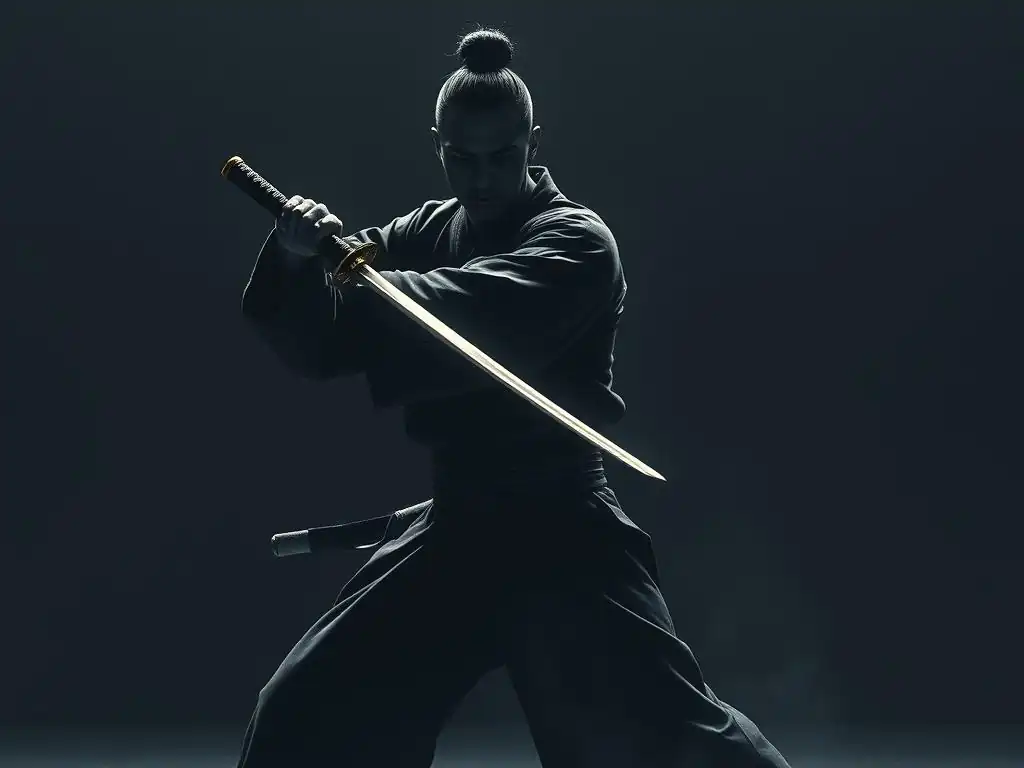
Visual Awareness Drills: Maintaining Peripheral Vision
Cultivating visual awareness is a cornerstone of Iaido zanshin awareness maintenance, especially in the moments after completing the physical actions of a form. While focusing intently on the "opponent" during the cut is necessary, the practitioner must quickly re-expand their visual field to encompass their surroundings after the technique. Visual awareness drills focus on developing the ability to maintain a soft gaze that allows for both central focus and expansive peripheral vision simultaneously.
One common method involves fixing the gaze on a point ahead (representing the initial opponent's position) while consciously trying to perceive objects or movements in the periphery without directly looking at them. Practitioners might practice scanning the room after sheathing, quickly but smoothly moving their eyes to assess different zones. This training helps prevent tunnel vision and ensures that even as the sword is being sheathed, the practitioner remains visually connected to the entire environment, ready to spot unexpected movements or threats from the side or rear.
Auditory Acuity Training: Enhancing Awareness of Surroundings
Beyond visual cues, auditory acuity training is vital for comprehensive Iaido zanshin awareness maintenance. In a real-world scenario, sounds can provide critical warnings of approaching threats or changes in the environment. Even in the quiet of a dojo, being attuned to sounds helps maintain focus and awareness. Training involves consciously listening to the ambient sounds during and after a form – the rustle of clothing, footsteps, breathing, or sounds from outside the training area.
Practitioners can integrate simple auditory drills into their practice. For instance, while performing noto, they might try to identify distinct sounds occurring in different parts of the dojo. This trains the mind to process auditory information alongside visual and kinesthetic input, building a richer, multi-sensory awareness. Developing this heightened sense of hearing contributes significantly to the practitioner's ability to remain fully present and responsive even after the physical technique is complete.
Kinesthetic Awareness Exercises: Body Positioning and Balance
Kinesthetic awareness, the sense of the position and movement of one's own body, is fundamental to Iaido zanshin awareness maintenance. After the dynamic actions of drawing and cutting, maintaining balance and a stable, ready posture is crucial. Kinesthetic awareness exercises help practitioners become acutely aware of their body's alignment, weight distribution, and readiness to move at any given moment, even during static postures like kneeling (seiza) or standing after sheathing.
These exercises might involve practicing kata movements in slow motion, paying close attention to muscle tension, joint position, and balance throughout the sequence, especially during transitions and the final posture. Blindfolded practice (under strict supervision for safety) can also enhance reliance on kinesthetic feedback. By refining this internal sense, the practitioner ensures that their physical state after the form is one of controlled readiness, supporting the mental state of zanshin and allowing for immediate reaction if required.
Mindfulness Meditation for Iaido Practitioners: Centering the Mind
Mindfulness meditation is a powerful tool for cultivating the mental discipline required for Iaido zanshin awareness maintenance. The core of zanshin is a focused, present mind, and meditation practices directly train this ability. Regular meditation helps practitioners quiet internal chatter, reduce distractions, and develop the capacity for sustained, non-judgmental awareness of their thoughts, feelings, and sensory input.
Integrating short periods of mindfulness meditation before or after Iaido practice can significantly enhance a practitioner's ability to maintain zanshin. Focusing on breath, body sensations, or sounds during meditation translates directly to the ability to remain centered and aware during and after the physical demands of the kata. This mental centering is essential for preventing the mind from wandering or becoming complacent once the main action of the form is complete, ensuring that zanshin persists.
Practical Exercises for Post-Form Awareness Maintenance
The "Scanning Drill": Rapidly Assessing the Environment
The "Scanning Drill" is a practical exercise specifically designed to enhance Iaido zanshin awareness maintenance immediately after completing a form. After performing a kata and sheathing the sword, instead of simply relaxing or bowing, the practitioner remains in a state of readiness. They then rapidly and systematically scan their immediate environment – front, sides, and rear – using their eyes while maintaining a stable posture.
This drill can be done individually or with partners. With partners, the partners might stand in different positions around the practitioner, and the practitioner's task is to quickly but subtly register their presence during the post-form scan. This trains the eyes and mind to efficiently gather information from the surroundings in the critical moments after a technique, reinforcing the habit of sustained vigilance beyond the physical action.
The "Responding Drill": Reacting to Simulated Threats
The "Responding Drill" takes post-form awareness a step further by incorporating a reactive element, directly applying Iaido zanshin awareness maintenance to potential scenarios. After completing an Iaido form and maintaining zanshin, a training partner (or the sensei) provides a pre-arranged signal or simulated, non-physical "threat" (e.g., a sudden movement, a verbal cue). The practitioner's task is to react appropriately and immediately from their post-form state of readiness.
This might involve shifting posture, drawing the sword again (in a controlled, safe manner, often stopping short of a full cut), or moving to a different position. The key is that the response must be fluid and immediate, demonstrating that the zanshin maintained after the form was not passive but an active state of preparedness for further action. This drill helps bridge the gap between performing the kata and applying the principles of zanshin in a dynamic context.
Common Pitfalls in Zanshin Maintenance and How to Avoid Them
Losing Focus After the Cut: Recognizing and Correcting Lapses
One of the most common pitfalls in Iaido zanshin awareness maintenance is the tendency to lose focus immediately after the main cut. The intense concentration required for the cut can lead to a relaxation of the mind and body once that primary action is complete. Practitioners might visibly sag, let their gaze drop, or allow their minds to wander during chiburi or noto. This lapse in focus is a clear indicator of insufficient zanshin.
Recognizing these lapses is the first step. Sensei often provide feedback on this specific point, pointing out when a student's energy drops. Correcting it involves consciously extending the period of intense focus through the entire kata and beyond. Visualization techniques, where the practitioner imagines the opponent still present and the environment still potentially hostile until the very end of the form (and even the bow), can help sustain mental energy. Deliberately slowing down the post-cut movements can also allow the practitioner to focus on maintaining awareness throughout each step, preventing the premature release of tension and focus.
Overconfidence and Complacency: Maintaining Humility and Vigilance
Overconfidence, often stemming from successful execution of the physical technique, can be a significant barrier to effective Iaido zanshin awareness maintenance. A practitioner might feel they have "finished" the task after a strong cut and become complacent, assuming no further threat exists. This hubris directly contradicts the principle of zanshin, which assumes a state of continuous potential danger.
Avoiding this pitfall requires cultivating humility and a mindset of perpetual vigilance. Understanding that martial arts mastery is a continuous journey, not a destination, helps maintain a student's perspective. Sensei play a crucial role here, emphasizing that even the most skilled practitioner must maintain awareness. Reflecting on the historical context of Iaido, where survival depended on constant readiness, reinforces the importance of humility and vigilance, counteracting any tendency towards complacency after a seemingly successful technique.
Environmental Distractions: Training for Focused Attention
Environmental distractions, whether sounds, movements of others in the dojo, or internal thoughts unrelated to the practice, can easily disrupt Iaido zanshin awareness maintenance. While Iaido practice aims for a state of deep focus, the ability to maintain that focus amidst potential distractions is a crucial aspect of zanshin. Allowing external stimuli to break concentration after the form is a clear failure in awareness maintenance.
Training for focused attention involves consciously practicing in environments with controlled levels of distraction. Starting in a quiet space is essential, but gradually, practitioners can learn to filter out irrelevant stimuli. Techniques like focusing solely on the sounds of one's own breathing or the rustle of one's own gi during the kata can help build this filtering ability. As mentioned earlier, mindfulness meditation also directly trains the capacity to maintain focus despite the presence of distracting thoughts or external noise, strengthening the mental resilience needed for sustained zanshin awareness.
The Role of the Sensei in Developing Zanshin Awareness
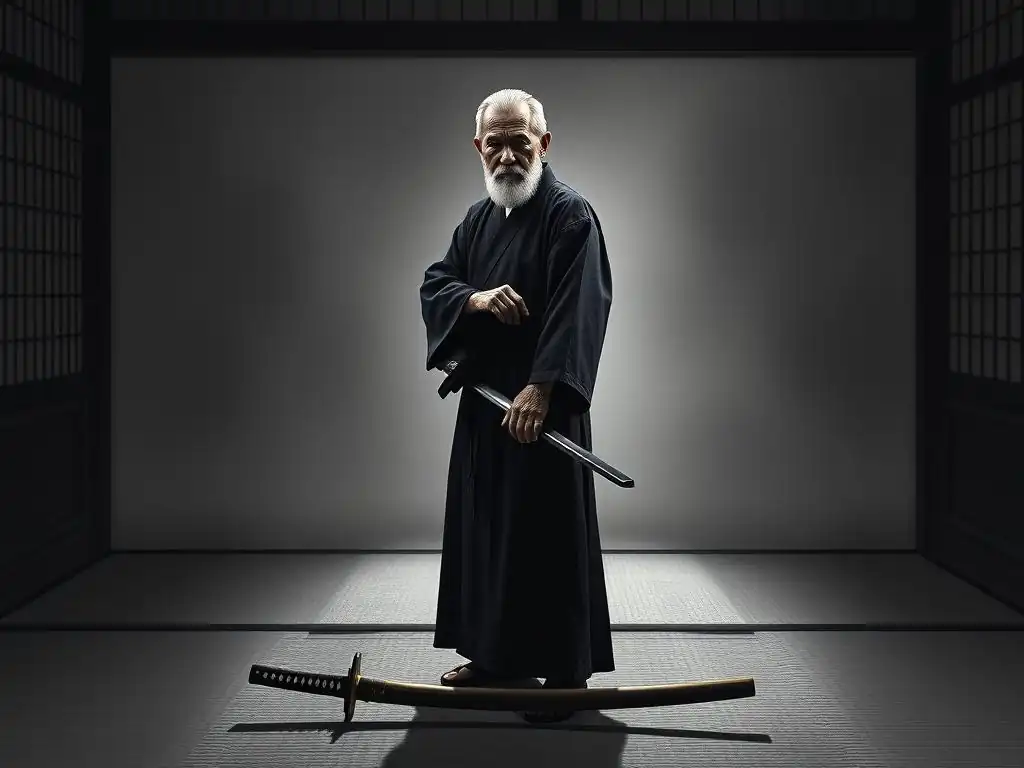
Guidance and Correction: Refining Technique and Awareness
The sensei's role is paramount in helping students develop Iaido zanshin awareness maintenance. They provide essential guidance and correction, not just on the physical execution of the kata but specifically on the internal state of zanshin. A skilled sensei can observe subtle cues – a drop in the eyes, a sagging shoulder, a hurried noto – that indicate a lapse in awareness after the cut.
Through verbal instruction, demonstrations, and hands-on adjustments, the sensei helps students understand where and when their zanshin is faltering. They can provide specific feedback, such as "Maintain your gaze," "Don't rush the noto, stay present," or "Feel the space around you." This personalized correction is vital, as developing zanshin is often an internal process that students may struggle to monitor themselves. The sensei acts as an external mirror, reflecting the student's state of awareness back to them and guiding them towards improvement.
Instilling the Importance of Zanshin: Fostering a Mindset of Readiness
Beyond technical correction, the sensei is responsible for instilling the philosophical and practical importance of zanshin, fostering a mindset of readiness that extends beyond the dojo. They teach that zanshin is not just an optional addition to the kata but its very soul. By explaining the combative context, the historical significance, and the deeper principles behind zanshin, the sensei motivates students to prioritize this aspect of their training.
This involves sharing stories, explaining the meaning behind specific movements in relation to continuous awareness, and emphasizing that effective Iaido zanshin awareness maintenance is the mark of a truly advanced practitioner. They cultivate an atmosphere in the dojo where zanshin is respected and actively pursued, making it clear that the practice isn't complete until awareness is fully maintained through the final bow.
Demonstrating Zanshin in Action: Leading by Example
Perhaps the most powerful way a sensei teaches zanshin is by demonstrating it themselves. Watching an experienced sensei perform kata is often the clearest illustration of what sustained zanshin looks and feels like. Their presence, focus, and continuous awareness throughout the form and long after the sword is sheathed serve as a living example for students.
The sensei's ability to maintain a state of calm, alert readiness even when not actively performing a technique also reinforces the concept. Students learn by observing not just the movements but the underlying state of mind and body. This consistent demonstration of high-level Iaido zanshin awareness maintenance provides students with a tangible goal and inspires them to pursue the deeper aspects of Iaido practice beyond mere physical execution.
Advanced Zanshin Concepts in Iaido
Anticipating an Opponent's Action: Preemptive Awareness
At advanced levels, Iaido zanshin awareness maintenance evolves from simply reacting to maintaining a state of preemptive awareness. This involves developing an intuitive sense of potential threats and being able to anticipate an opponent's likely actions before they fully manifest. It's not psychic ability, but rather a highly refined ability to read subtle cues, understand timing, and perceive the dynamics of a situation based on extensive experience and heightened awareness.
This advanced state allows the practitioner to position themselves optimally, adjust their timing, or even subtly influence the situation through their own presence and readiness. It means that the zanshin maintained after the initial technique isn't just about being ready for a follow-up; it's about having already considered the most probable follow-ups and being mentally and physically positioned to address them with minimal delay. It's a proactive rather than purely reactive state of awareness.
Projecting Intent: Influencing the Environment Through Zanshin
An even more subtle and advanced concept is the idea of projecting intent through zanshin, effectively influencing the environment and potential adversaries. When a practitioner maintains a powerful, unwavering state of zanshin, their presence can be felt. This projected intent can be intimidating or dissuasive, potentially preventing a follow-up attack from occurring at all. It's the idea that the mere state of readiness can be a form of defense.
This isn't about aggression, but about an undeniable presence born of complete focus and readiness. In a hypothetical confrontation, an opponent might hesitate to press an attack against someone who clearly demonstrates this level of sustained Iaido zanshin awareness maintenance. This concept highlights that zanshin is not just an internal state but can have external effects, demonstrating the profound connection between mind, body, and environment in martial arts.
Zanshin as a Continuous State of Being: Integrating it into all Aspects of Life
The ultimate level of zanshin mastery is when it ceases to be something practiced only in the dojo and becomes a continuous state of being, integrated into all aspects of life. This means maintaining a state of calm, focused awareness, presence, and readiness in everyday activities – at work, at home, during conversations, or while navigating public spaces.
This integration means being fully present in the moment, attentive to surroundings, and ready to respond appropriately to any situation, whether it requires physical action, mental agility, or emotional intelligence. Achieving this level means Iaido zanshin awareness maintenance has transcended the specific martial art and become a way of living, enhancing focus, safety, and effectiveness in every endeavor. It is the embodiment of the martial arts principle that training is not separate from life, but a path to living more fully and consciously.
Benefits of Mastering Zanshin in Iaido and Beyond
Enhanced Self-Awareness: Understanding Your Own Strengths and Weaknesses
Mastering Iaido zanshin awareness maintenance leads to significantly enhanced self-awareness. The practice requires constant introspection and attention to one's own physical and mental state. Practitioners become acutely aware of where their focus lapses, when they become tense, or when their mind starts to wander. This process of self-observation during training translates into a better understanding of personal habits, limitations, and strengths.
This heightened self-awareness extends beyond the dojo. Understanding how your mind and body react under pressure or during routine tasks allows for better self-regulation and performance. Recognizing when you are losing focus in a meeting, becoming impatient in a queue, or feeling physically stressed enables you to take corrective action. This deep understanding of oneself is a profound benefit derived from the disciplined pursuit of zanshin.
Improved Focus and Concentration: Increasing Productivity and Efficiency
The core training in maintaining zanshin directly improves general focus and concentration. The ability to sustain intense mental and physical awareness for extended periods, as required in Iaido kata and drills, builds mental stamina. This improved capacity for focused attention is highly transferable to other areas of life, leading to increased productivity and efficiency.
Whether studying, working on a complex project, or engaging in detailed tasks, the ability to maintain concentration without easily being distracted is invaluable. Practitioners who have trained diligently in Iaido zanshin awareness maintenance find it easier to stay on task, absorb information, and perform detailed work with greater accuracy. Reports from practitioners often cite improved performance in academic or professional settings directly linked to their martial arts training in focus and awareness.
Increased Resilience: Adapting to Challenging Situations
Finally, the cultivation of zanshin fosters increased resilience. Zanshin is fundamentally about maintaining a state of readiness and presence even when faced with uncertainty or potential threat. This mental and physical preparedness translates into an increased ability to handle unexpected challenges and adapt to difficult situations in life.
By training the mind to remain calm and alert under pressure, practitioners develop emotional and mental resilience. They are less likely to be overwhelmed by sudden problems and more able to assess situations clearly and respond effectively. The confidence gained from knowing you can maintain awareness and readiness, even after completing a demanding task, builds inner strength. This enhanced resilience, a direct outcome of dedicated Iaido zanshin awareness maintenance, empowers individuals to navigate life's complexities with greater composure and capability.
Frequently Asked Questions
How does Zanshin specifically relate to Iaido practice?
Zanshin in Iaido is not just about physical readiness, but also a mental and spiritual connection to the form even after the cut. It ensures complete control and awareness even after the technique is executed. This is about maintaining preparedness for any follow up if necessary.
What are some practical techniques to cultivate Zanshin after a cut in Iaido?
Focus on maintaining proper posture and breathing, keeping your eyes on the imagined opponent, and remaining mentally alert and ready to react. Avoid relaxing or dropping your guard immediately after the cut.
Why is Zanshin considered so important in traditional Iaido training?
It reflects a deeper understanding of the martial art, moving beyond mere physical technique. Zanshin embodies a state of constant vigilance and readiness, essential for effective self-defense and embodying the spirit of Iaido.
How does Zanshin in Iaido differ from simple "follow-through" in other martial arts?
While follow-through emphasizes physical momentum, Zanshin encompasses a broader mental and spiritual state. It's about maintaining awareness of the entire environment and potential threats after the technique is complete, not just extending the physical movement.
Can Zanshin be developed outside of formal Iaido practice, and if so, how?
Yes, mindfulness practices like meditation can help cultivate a heightened state of awareness. Focusing on your surroundings, maintaining alertness in everyday situations, and practicing mindful movement can contribute to developing Zanshin.
Okay, here's a final reflection designed to fit your article "Cultivating Zanshin: Maintaining Awareness After the Iaido Form," optimized for the keyword "Iaido zanshin awareness maintenance," and following the structure you provided:
Final Reflection: The Enduring Echo of Zanshin
The journey through Iaido, culminating in the precise execution of a form, is only half the battle. True mastery lies in the unwavering awareness, the Zanshin, that persists even after the sword is sheathed. This isn't just about martial arts; it's about carrying that heightened state of presence into every facet of our lives, transforming mundane moments into opportunities for mindful engagement.
The profound impact of Zanshin extends far beyond the dojo. It teaches us to be fully present, to anticipate, and to react with clarity and intention, qualities desperately needed in our increasingly distracted world. The real fight begins after the sword is put away.
This ancient wisdom reminds us that the discipline cultivated in Iaido is meant to permeate our entire being, shaping our interactions and decisions long after the practice session ends.
Now, consider how you can cultivate your own Zanshin. How can you maintain that heightened awareness, that unwavering focus, not just after a physical form, but after every task, every conversation, every interaction? Embrace the enduring echo of Zanshin, and let it guide you towards a life lived with greater intention, presence, and unwavering awareness.
Ignite Your Zanshin: Embrace Perpetual Awareness!
Thank you for delving into the art of Zanshin and its vital role in Iaido. We hope this article has illuminated the path toward heightened awareness. Now, let's translate theory into practice and truly embody Zanshin in your daily life.
- Deepen your practice by actively maintaining awareness for 30 seconds after every Iaido form. Feel the lingering energy and presence.
- Share your Zanshin insights with fellow practitioners in your dojo or online forums to spark collaborative growth.
- Challenge yourself: Throughout the day, identify three moments where you can consciously apply Zanshin to improve your focus and reaction.
How will you actively cultivate Zanshin beyond the dojo and into your daily routine?