
Defensive Boxing: The Art of Not Getting Hit – Its Historical Masters and Evolution


Welcome to Martial Arts Mastery, your ultimate resource for exploring the rich tapestry of martial arts from every corner of the world. Delve into the fascinating evolution of combat, from ancient philosophies to modern techniques. Are you ready to discover the secrets behind Defensive Boxing? This article unveils the historical masters and strategic nuances that have shaped the art of not getting hit, offering a compelling journey through its evolution. Prepare to be intrigued, informed, and inspired to learn more about this essential skill...
- Introduction to Defensive Boxing: A Historical Overview
- The Evolution of Defensive Boxing Techniques
- Historical Masters of Defensive Boxing
- Key Defensive Boxing Techniques and Strategies
- The Influence of Defensive Boxing on Modern Boxing Styles
- Training and Drills for Defensive Boxing Mastery
- The Future of Defensive Boxing
- Conclusion: The Enduring Legacy of Defensive Boxing
-
Frequently Asked Questions
- How has the history of defensive boxing shaped modern techniques?
- What are some key defensive boxing techniques and their historical origins?
- Who are some legendary masters of defensive boxing, and what made them so effective?
- How does defensive boxing incorporate elements of other martial arts?
- What are the practical self-defense applications of learning defensive boxing techniques?
- Final Reflection: The Enduring Legacy of Evasion
- Hone Your Defense: Become Unhittable!
Introduction to Defensive Boxing: A Historical Overview
What is Defensive Boxing? Principles and Fundamentals
Defensive boxing is fundamentally the art of avoiding incoming strikes while maintaining the ability to counter or control the fight. It goes beyond simple blocking; it encompasses a complex interplay of footwork, head movement, blocking, parrying, and strategic positioning. The core principle is self-preservation – minimizing the damage taken to maximize one's ability to execute offensive strategies and maintain stamina throughout a bout. Effective defensive boxing techniques allow a fighter to dictate the pace, frustrate opponents, and create openings for their own attacks.
This discipline requires constant vigilance, anticipation, and precise execution. Mastery involves not just reacting to punches, but understanding an opponent's tendencies, predicting their movements, and positioning oneself to neutralize threats before they land. The history of defensive boxing techniques shows a continuous evolution, adapting to rule changes, training methodologies, and the emergence of new offensive styles. It is a crucial component of a well-rounded fighter's arsenal, often separating good boxers from great ones.
The Importance of Defensive Skills in Boxing History
Throughout the history of boxing, defensive skills have been paramount for success and longevity in the sport. While knockout power often captures headlines, a fighter's ability to avoid punishment is what allows them to compete at the highest levels for extended careers. Legendary fighters like Willie Pep, known for reportedly winning a round without throwing a single punch purely through evasion, highlight how dominant defense can be. The development and refinement of defensive boxing techniques history are intertwined with the evolution of the sport itself.
A strong defense provides a strategic advantage, enabling a fighter to wear down an aggressive opponent who expends energy throwing punches that don't land. It reduces the risk of debilitating injuries and cumulative brain trauma, issues that have become increasingly significant in modern sports science. Studying the history of defensive boxing techniques reveals how different eras produced unique defensive strategies, from the rudimentary parries of bare-knuckle days to the sophisticated footwork and upper-body movement seen in contemporary boxing, underscoring defense's consistent importance.
The Evolution of Defensive Boxing Techniques
Early Boxing Styles and Limited Defense
In the earliest forms of boxing, particularly the bare-knuckle era that dominated until the late 19th century, defensive boxing techniques were relatively rudimentary. Fighters often relied on toughness, brute force, and limited parrying or blocking with open hands.
The Marquess of Queensberry Rules, introduced in 1867 and widely adopted by the 1880s, mandated gloves, rounds, and a referee, significantly changing the sport and paving the way for more sophisticated techniques. Before gloves provided some padding, absorbing punches directly was highly damaging, but the lack of refined footwork and strategic movement meant evasive defensive boxing techniques history was in its infancy.
The focus in these early days was often on standing toe-to-toe and trading blows. While some fighters showed natural agility, systematic training in complex defensive maneuvers like slipping or bobbing and weaving was less common than focusing on striking power and endurance. The transition to gloved boxing and the introduction of timed rounds encouraged fighters to conserve energy and think more strategically, laying the groundwork for the development of the more nuanced defensive boxing techniques history would later see.
The Rise of Scientific Boxing and Strategic Evasion
The late 19th and early 20th centuries saw the emergence of "scientific boxing," a style that emphasized skill, strategy, and technique over sheer brawling. Figures like "Gentleman" Jim Corbett, who defeated the formidable John L. Sullivan in 1892 using superior movement and technique, were pioneers of this era. This period marked a significant leap in defensive boxing techniques history, with greater emphasis placed on footwork, ring generalship, and upper-body movement to avoid punches rather than just block them.
Fighters began to systematically train in slipping, rolling, and using angles to evade attacks. The development of pads and specific training drills allowed for the refinement of these skills. This strategic approach to defense not only protected the fighter but also created opportunities for counter-attacks as opponents missed. The scientific boxing movement fundamentally changed the perception of defense from a passive necessity to an active, integral part of offensive strategy, influencing the trajectory of defensive boxing techniques history profoundly.
Modern Defensive Boxing: Innovation and Adaptation
Modern defensive boxing represents a synthesis of historical techniques adapted for the contemporary landscape of the sport, characterized by faster, stronger athletes and advanced training methods. While fundamental techniques like slipping, rolling, and footwork remain core components, modern fighters incorporate sophisticated ring intelligence, adaptive strategies based on real-time analysis, and specialized conditioning. The shoulder roll, famously utilized by fighters like Floyd Mayweather Jr., is a prime example of a technique refined to near perfection in the modern era, allowing punches to harmlessly slide off the shoulder or arm.
Furthermore, modern defensive boxing heavily relies on analyzing opponents through extensive video study, allowing fighters and trainers to anticipate patterns and tailor defensive strategies. The use of analytics to track punch statistics and effectiveness also informs tactical decisions. While the foundational defensive boxing techniques history established are still taught, modern application is characterized by higher precision, greater strategic depth, and continuous adaptation to evolving offensive styles and training science.
Historical Masters of Defensive Boxing

Early Pioneers of Evasive Boxing: Jem Belcher
Jem Belcher, active in the late 18th and early 19th centuries, is often cited as one of the earliest proponents of evasive tactics in bare-knuckle boxing. Before the formalization of rules and techniques, Belcher stood out for his speed, agility, and ability to avoid the wild swings of his opponents. While the defensive boxing techniques history of this era was rudimentary compared to today, Belcher's emphasis on movement and not just standing and trading blows marked him as an innovator.
His style was a precursor to the later development of scientific boxing. Belcher's ability to evade and counter with speed allowed him to defeat larger, stronger opponents. Though detailed records and technical descriptions from his time are scarce, accounts highlight his quickness and ability to "dance" around opponents, suggesting an early understanding of the value of movement in defense, a concept fundamental to the entire defensive boxing techniques history.
The Golden Age of Boxing: Defensive Legends
The "Golden Age" of boxing, broadly spanning the mid-20th century, produced several legendary defensive fighters who elevated the art form. Willie Pep, nicknamed "Will o' the Wisp," is perhaps the most famous, renowned for his unparalleled ability to avoid punches. His career record of 229 wins and only 11 losses over 26 years is a testament to his defensive mastery; he reportedly won a round against Jackie Graves in 1946 without throwing a single punch, relying solely on evasion.
Another icon was Muhammad Ali, whose "float like a butterfly, sting like a bee" philosophy epitomized dynamic defense. Ali's incredible footwork, speed, and reflexes allowed him to dance away from opponents' power shots, often frustrating them into making mistakes. His rope-a-dope strategy against George Foreman in 1974, while seemingly absorbing blows, was a calculated defensive tactic designed to exhaust a powerful puncher, showcasing a unique application of defensive principles and contributing significantly to defensive boxing techniques history.
Modern Defensive Boxing Icons: Floyd Mayweather Jr.
Floyd Mayweather Jr. is arguably the most prominent defensive specialist of the modern era, finishing his professional career with an undefeated record of 50-0. His success was built upon an exceptional mastery of defensive boxing techniques history adapted to contemporary boxing. Mayweather's signature technique is the shoulder roll, a variation of the shell defense where the lead shoulder is rolled to deflect punches, allowing him to minimize head trauma while staying in range to counter.
Mayweather's footwork, ring generalship, and timing were also world-class, enabling him to control distance and pace against elite opponents across multiple weight classes. Statistics often highlighted his remarkable ability to evade punches; some reports indicated opponents landed significantly fewer punches against him compared to the divisional average. His career serves as a modern case study demonstrating that superior defense can be the ultimate foundation for an undefeated legacy in the challenging world of professional boxing.
Key Defensive Boxing Techniques and Strategies
Footwork Fundamentals for Defensive Maneuvering
Effective footwork is the cornerstone of defensive boxing, enabling a fighter to control distance, create angles, and evade incoming attacks. It's not just about moving away; it's about strategic movement that positions the fighter advantageously. Mastering footwork allows a boxer to stay out of range of an opponent's power while remaining close enough to launch quick counter-attacks. The development of sophisticated footwork is a critical chapter in defensive boxing techniques history.
Proper defensive footwork involves staying balanced, keeping the feet relatively close to the ground, and moving smoothly in any direction. It requires constant adjustments based on the opponent's position and movements. Good footwork conserves energy compared to relying solely on upper-body movement for defense and is essential for setting up every other defensive and offensive action in the ring.
Lateral Movement and Angling
Lateral movement, moving side-to-side rather than just forward and backward, is vital for defensive boxing. It allows a fighter to pivot off the line of attack, making them a difficult target, and to create angles that disrupt the opponent's balance and positioning. By moving laterally, a boxer can force their opponent to reset, creating opportunities for counter-punches or allowing the defensive fighter to escape danger.
Ring Generalship and Positioning
Ring generalship involves intelligently using the entire boxing ring to one's advantage. A defensively minded fighter uses the ring to maintain optimal distance, avoid being trapped in corners or against the ropes, and force the opponent into disadvantageous positions. This strategic positioning is a high-level defensive skill that relies heavily on anticipating the opponent's movements and cutting off escape routes while keeping one's own open.
Blocking and Parrying Techniques
Blocking and parrying are fundamental defensive boxing techniques involving using the hands, arms, or shoulders to stop or deflect incoming punches. While not as flashy as evasion, they are essential, especially when evasion isn't possible due to positioning or surprise. Effective blocking minimizes the impact of a punch, while parrying actively redirects it, often creating openings for counters.
These techniques require discipline and practice to execute correctly, ensuring hands and arms are in the right position without creating large openings elsewhere. The evolution of these techniques is a significant part of defensive boxing techniques history, adapting as gloves and punch power increased.
High Guard and Shell Defense
The high guard involves holding the hands high to protect the head, often with forearms protecting the sides of the head and temples. The shell defense, a variation, involves tucking the chin and using the lead shoulder and arm to block or deflect punches to the head and body, often seen in fighters like Floyd Mayweather Jr. These guards offer solid protection against direct hits.
Slip and Roll Techniques
Slipping involves moving the head slightly to either side of an incoming straight punch, letting the punch pass harmlessly by the ear. Rolling (or bobbing and weaving) involves bending at the knees and waist to move the head underneath a hook or overhand punch. These are dynamic evasion techniques that require excellent timing and body control.
Clinching as a Defensive Tactic
Clinching, the act of tying up an opponent at close range, is often used defensively to neutralize an opponent's offense, recover from being hurt, or simply buy time to think and regain composure. While sometimes seen as negative, skillful clinching is a legitimate and effective defensive tactic. It requires strength, technique, and understanding of the rules to avoid penalties.
Using the clinch effectively involves getting inside the opponent's punching range and securing their arms or body to prevent them from hitting with power. It's a way to interrupt an opponent's rhythm and prevent them from landing follow-up shots after an initial successful attack.
Controlling the Clinch
Effective defensive clinching involves controlling the opponent's arms and posture, leaning on them to tire them out, or using leverage to prevent them from punching. It's about being active within the clinch to ensure the referee doesn't break it too quickly if the fighter needs more time, or to position for an advantageous break.
Using the Clinch to Recover
When a fighter is hurt or stunned by a punch, clinching is a primary defensive reaction. By immediately tying up the opponent, the hurt fighter prevents follow-up shots that could lead to a knockout, giving them precious seconds to clear their head and recover before the referee separates them.
Head Movement and Evasion
Dynamic head movement is a defining characteristic of skilled defensive boxers. It involves continuously moving the head to make it a moving target, harder for the opponent to hit cleanly. This includes slipping, rolling, bobbing, and weaving, as well as subtle shifts and feints. Mastering head movement is crucial for avoiding headshots, which are often the most damaging.
Effective head movement isn't random; it's coordinated with footwork and timed with the opponent's punches. It requires excellent reflexes and anticipation. The integration of head movement into training became more systematic with the rise of scientific boxing, marking a key development in defensive boxing techniques history.
Slipping Punches Effectively
Slipping involves a small, precise movement of the head to one side to avoid a straight punch. It requires reading the opponent's shoulders and hips to anticipate the punch's direction and timing the head movement precisely as the punch is thrown. Successful slips put the fighter in an excellent position to counter.
Bobbing and Weaving Techniques
Bobbing involves quickly dropping the head by bending at the knees and waist, usually to duck under hooks or wide punches. Weaving is a lateral movement, shifting the head from side to side, often in a U-shape, to evade hooks or overhands. These movements are often used in combination to navigate through flurries of punches.
The Influence of Defensive Boxing on Modern Boxing Styles
Impact on Counter-Punching Strategies
Defensive boxing is intrinsically linked to counter-punching. By forcing an opponent to miss, a defensive fighter creates openings while the opponent is momentarily off-balance or recovering. Many of the most effective counter-punchers in history were also defensive masters, using their ability to avoid shots to set up their own precise and impactful attacks. The emphasis on defense as a setup for offense is a major thread in the tapestry of defensive boxing techniques history.
Modern counter-punchers like Canelo Álvarez often rely on sophisticated defense – be it head movement, blocking, or footwork – to invite opponents to commit, then exploit the resulting vulnerability. This style demands patience, timing, and an exceptional understanding of distance and rhythm, proving that defense is not merely about survival but is a potent offensive tool.
The Role of Defense in Championship Boxing
In championship boxing, where opponents are highly skilled and powerful, defense becomes even more critical. Champions often possess exceptional defensive skills that allow them to withstand the best opponents, manage rounds effectively, and maintain performance over 12 rounds. The ability to avoid punishment is often the difference between winning a close decision and suffering a knockout.
Many long-reigning champions, from Joe Louis to Bernard Hopkins, incorporated strong defensive elements into their styles, enabling them to compete at an elite level for extended periods. Their mastery of defensive boxing techniques history allowed them to minimize wear and tear, adapt to various opponents, and consistently execute game plans under pressure.
Defensive Boxing in Different Weight Classes
While the fundamental defensive boxing techniques history describes apply across all weight classes, their application varies. In lighter weight classes (flyweight to lightweight), where speed and volume are high, defense often emphasizes rapid head movement, footwork, and quick slips and rolls to avoid fast combinations. The pace demands constant, agile evasion.
In heavier weight classes (middleweight to heavyweight), where power is more significant, defense might involve more reliance on blocking, parrying, and using size and positioning to tie up opponents in a clinch. While evasion is still used, the sheer force of punches means blocking and absorbing shots effectively, or preventing them entirely through controlling distance and clinching, becomes paramount.
Training and Drills for Defensive Boxing Mastery
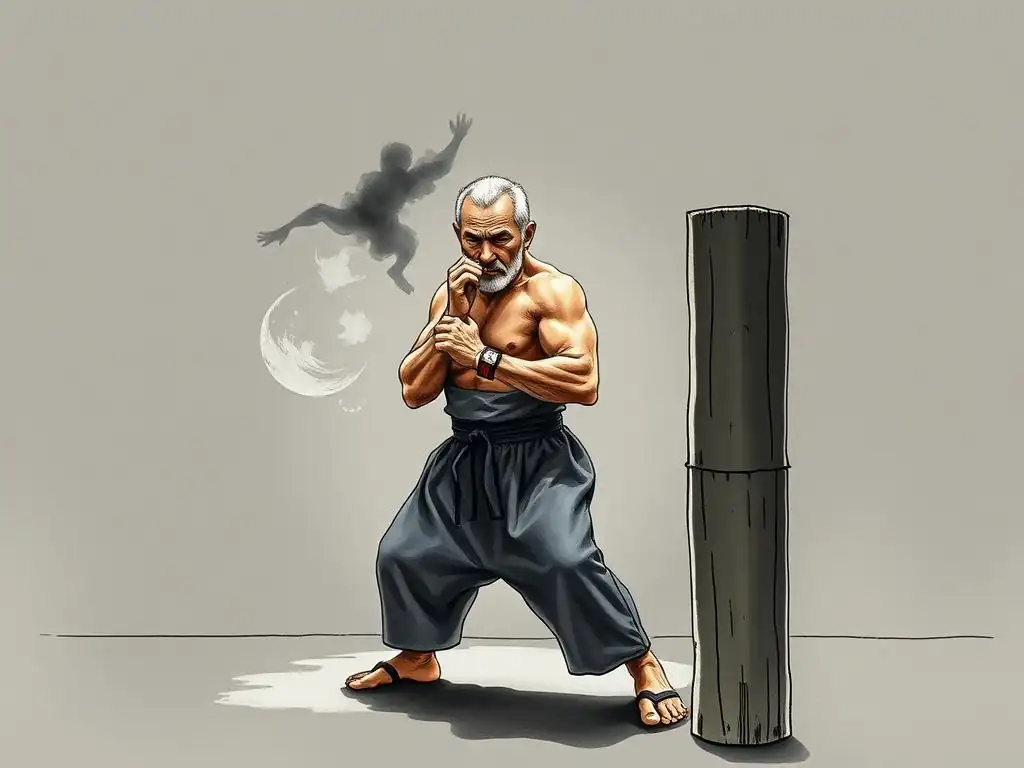
Shadow Boxing for Developing Footwork and Movement
Shadow boxing is a foundational drill for developing defensive boxing techniques. Practicing movements without an opponent allows a fighter to focus purely on form, balance, and fluidity. By visualizing an opponent and reacting to imaginary attacks, boxers can refine their footwork, practice slipping and rolling sequences, and work on maintaining defensive posture while moving around the ring.
Dedicated defensive shadow boxing rounds involve focusing specifically on avoiding punches, cutting angles, and using the ring. This helps build muscle memory for evasive actions and improves spatial awareness. It's a crucial exercise for integrating different defensive movements smoothly, laying the groundwork for executing defensive boxing techniques history has shown to be effective.
Partner Drills for Blocking and Parrying
Partner drills are essential for practicing blocking and parrying techniques against actual, albeit controlled, incoming punches. Drills where one partner throws specific punches slowly or moderately, and the other practices blocking with gloves, parrying with hands, or using the shoulder roll, build timing and accuracy. These drills simulate real exchanges and help fighters learn to judge distance and speed.
Specific partner drills can focus on defending against combinations, practicing shell defense against body shots, or parrying jabs to create counter opportunities. Repetition in these controlled scenarios is key to making blocking and parrying instinctive reactions under pressure, vital skills passed down through defensive boxing techniques history.
Sparring Strategies for Implementing Defensive Techniques
Sparring is the closest simulation of a real fight and is critical for learning to apply defensive boxing techniques under pressure. In sparring, fighters can practice ring generalship, timing slips and rolls against live opponents, and using the clinch defensively. It's an opportunity to test which defensive strategies work best against different styles and speeds.
Sparring with a defensive focus involves prioritizing avoiding punches over landing them, concentrating on not getting hit while looking for safe counter-opportunities. This helps fighters develop confidence in their defense and learn to remain calm and strategic even when punches are coming at them. It's the ultimate test and refinement ground for all defensive boxing techniques history has developed.
The Future of Defensive Boxing
Emerging Trends in Defensive Strategies
The future of defensive boxing will likely see further integration of sports science, analytics, and technology. Wearable technology could potentially provide real-time feedback on movement efficiency and reaction times, helping fighters optimize their defensive mechanics. Video analysis will become even more sophisticated, allowing for granular study of opponent tendencies and the development of hyper-specific defensive game plans.
Furthermore, training methodologies may continue to evolve, incorporating principles from other disciplines focused on movement and evasion. There might be a greater emphasis on developing proprioception and balance to enhance subtle defensive adjustments. These advancements will build upon the rich foundation of defensive boxing techniques history, pushing the boundaries of what's possible in ring defense.
The Continued Importance of Defense in Boxing Evolution
Despite the ever-increasing focus on power and aggression in modern boxing, the fundamental importance of defense remains unchanged. As athletes get stronger and faster, the ability to avoid their attacks becomes even more crucial for survival and success. Defense is not a static art; it must continuously adapt to new offensive techniques and training methods.
The legacy of defensive boxing techniques history ensures that future generations of fighters will continue to prioritize learning how to not get hit. Whether through classic footwork, modern shoulder rolls, or yet-to-be-developed methods, defense will always be the bedrock upon which long and successful careers are built in the demanding sport of boxing.
Conclusion: The Enduring Legacy of Defensive Boxing
The Art of Avoiding the Blow: A Timeless Skill
The art of avoiding the blow is a timeless skill in boxing, perhaps the most fundamental aspect of self-preservation within the sport. From the rudimentary evasions of the bare-knuckle era to the sophisticated systems employed by modern champions, the goal remains the same: minimize damage while maximizing strategic advantage. The history of defensive boxing techniques is a narrative of continuous refinement and adaptation, proving that while offensive styles may capture attention, defense is the foundation of longevity and mastery.
Understanding the evolution of defensive boxing techniques history provides valuable insight into the strategic depth of the sport. It highlights how innovation in defense has often dictated the direction of offensive development, creating a perpetual cycle of challenge and response in the ring. This enduring emphasis on not getting hit underscores defense's status as an essential, rather than secondary, component of boxing.
Mastering Defensive Boxing: A Path to Longevity and Success
Mastering defensive boxing is not merely about survival; it is a direct path to greater success and longevity in the sport. Fighters with exceptional defense are harder to hit cleanly, suffer less wear and tear, and are better equipped to implement their game plans over multiple rounds and years. They frustrate opponents, create openings for counters, and often win rounds through ring generalship and effective evasion.
The lessons from defensive boxing techniques history teach us that champions are often those who prioritize not being hit as much as hitting their opponent. By studying the masters and diligently practicing the techniques, boxers can build a robust defense that serves as the cornerstone of a successful and enduring career, embodying the true art of the sweet science.
Frequently Asked Questions
How has the history of defensive boxing shaped modern techniques?
Defensive boxing's history, from bare-knuckle brawls to gloved bouts, has significantly shaped modern techniques. It's a continuous evolution, with early defensive methods informing contemporary strategies and tactics focused on minimizing damage and maximizing counter-attacking opportunities.
What are some key defensive boxing techniques and their historical origins?
Key techniques include the slip, bob and weave, parry, and block. These originated from necessity in early boxing, where fighters needed to avoid blows without gloves. They were refined over time into complex maneuvers used today.
Who are some legendary masters of defensive boxing, and what made them so effective?
Masters like Willie Pep and James Toney excelled through exceptional footwork, anticipation, and ring generalship. Their effectiveness came from a deep understanding of distance management, timing, and the ability to make opponents miss, making them vulnerable.
How does defensive boxing incorporate elements of other martial arts?
While primarily focused on punches, defensive boxing borrows from other arts. Concepts like footwork and spatial awareness can be traced to various martial arts traditions, enhancing a boxer's ability to evade and control the fight.
What are the practical self-defense applications of learning defensive boxing techniques?
Defensive boxing offers valuable self-defense skills. The ability to avoid strikes, maintain distance, and control an encounter is crucial in real-world situations, providing a foundation for effective protection and escape.
Final Reflection: The Enduring Legacy of Evasion
The techniques and masters explored throughout this article demonstrate that defensive boxing is more than just avoiding punches; it's a strategic art form that has shaped the very history of the sport. From the early pioneers to the modern masters, the ability to slip, weave, and parry has consistently proven to be the key to longevity and success in the ring, a truth that resonates even more profoundly in today's power-punching era.
The influence of defensive boxing extends far beyond the squared circle. It teaches us the value of patience, adaptability, and calculated risk, lessons applicable to navigating the challenges of everyday life. The ability to anticipate, react, and avoid unnecessary conflict is a skill that transcends physical combat. The best defense is not to be there.
– This simple, yet profound statement encapsulates the essence of defensive boxing and its broader implications for how we approach challenges and protect ourselves in all aspects of life.
As we conclude this journey through the history of defensive boxing techniques, I invite you to consider how these principles of evasion and strategic positioning can be applied to your own life. Embrace the art of anticipation, cultivate the skill of adaptability, and remember that sometimes, the greatest victory lies not in the punch you throw, but in the punch you skillfully avoid. Let the legacy of these defensive masters inspire you to navigate life's challenges with grace, resilience, and a unwavering commitment to protecting your own well-being.
Hone Your Defense: Become Unhittable!
Thanks for diving into the world of defensive boxing! We hope you've gained some valuable insights into the techniques and historical masters who shaped this crucial aspect of the sweet science. Now it’s time to put that knowledge to work and elevate your game.
- Master the fundamentals of head movement and footwork. Dedicate your next three training sessions solely to perfecting these essential skills.
- Share this article with your fellow boxing enthusiasts and spark a discussion about your favorite defensive techniques.
- Research a lesser-known defensive boxing legend and unveil their unique contribution to the sport.
What defensive tactic are you most excited to incorporate into your training regime this week?