
Jack Broughton's Rules: The Dawn of Order in Pugilism's Chaos

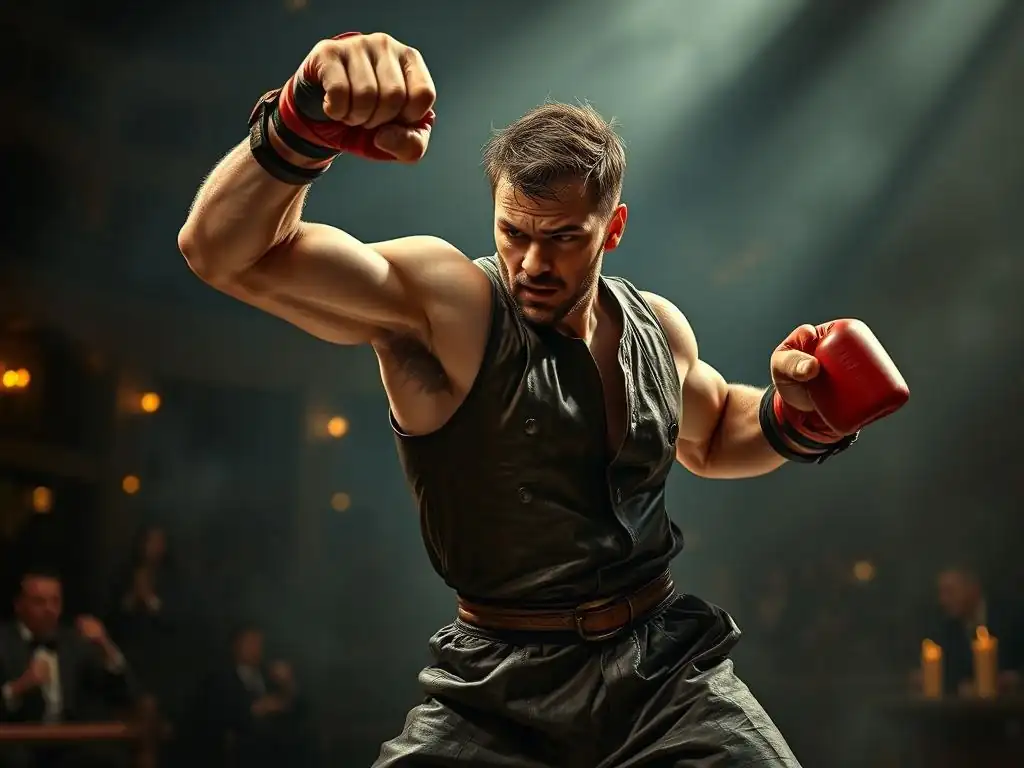
Welcome to Martial Arts Mastery, your gateway to understanding the profound world of combat disciplines! Ever wondered how bare-knuckle brawling evolved from chaotic street fights to a codified sport? Delve into the fascinating origins and history of pugilism rules as we explore the groundbreaking impact of Jack Broughton's revolutionary framework. Prepare to uncover the surprising details that shaped the future of fighting – and left a legacy that resonates even today. Curious to learn more?
Pugilism Before Broughton: A Lawless Era
Before the advent of Jack Broughton's rules in 1743, the world of bare-knuckle pugilism was largely unregulated and often brutal. Bouts were fought until one participant was unable to continue, which frequently resulted in severe injury or even death. There were no formal rounds, no time limits, and virtually no restrictions on what a fighter could do, beyond a general understanding against biting and eye-gouging, though even these were not strictly enforced.
The spectacle often involved prolonged, exhausting exchanges where clinching, throwing, and hitting on the ground were common practices, making it a test of raw endurance and toughness rather than refined skill. Understanding the state of pugilism rules history origins before Broughton highlights the desperate need for structure.
This chaotic environment meant that outcomes were highly unpredictable, dictated more by sheer resilience and brute force than technique. Fighters might be down for several minutes, only to be dragged back to the center of the ring by their seconds to continue the fight. The lack of clear rules also made betting, a significant part of the sport's appeal, fraught with ambiguity and disputes.
Spectators often encroached on the fighting space, adding to the confusion and danger. The absence of a codified system underscored the primitive nature of early pugilism, setting the stage for the fundamental changes Broughton would introduce to the pugilism rules history origins narrative.
Broughton's Rules: A Turning Point in Boxing
Jack Broughton's introduction of his set of rules in 1743 marked a pivotal moment in the history of pugilism. These rules, while simple by modern standards, provided the first written code for boxing matches, bringing a degree of order and structure to the previously anarchic sport.
For the first time, there was a clear definition of when a round ended (when a fighter was knocked down) and a specified time limit for a fighter to recover before the next round began (30 seconds). This single innovation fundamentally changed the nature of the contest, shifting it away from an endurance marathon towards a series of distinct exchanges with recovery periods.
The implementation of Broughton's rules began to professionalize pugilism, establishing a framework that protected fighters to some extent and made the sport more palatable and predictable for spectators and bettors. By introducing concepts like the "throw" ending a round and the recovery period, the rules subtly encouraged fighters to focus on striking and tactical positioning rather than simply wrestling and grinding down opponents. This initial set of pugilism rules history origins laid the groundwork for all subsequent regulations in bare-knuckle boxing and eventually influenced the development of modern boxing rules.
- What are Jack Broughton's Rules, and why are they significant?
- How did Broughton's Rules differ from previous boxing practices?
- What were the origins and historical context of Broughton's Rules?
- Did Broughton's Rules completely eliminate the violence and danger of pugilism?
- How did Broughton's Rules influence the development of modern boxing?
Jack Broughton: From Champion to Code-Maker
Broughton: The Boxer and Innovator
Jack Broughton (c. 1703-1789) was not just a rule-maker; he was one of the most dominant bare-knuckle fighters of his era, often considered the first true champion of England in pugilism. He honed his skills in a time when fighting was brutal and unregulated, becoming renowned for his technique and power.
His most famous victory came in 1741 against George Taylor, a formidable opponent he defeated to solidify his reputation as the best. Broughton's personal experience in these grueling, often dangerous bouts undoubtedly informed his understanding of the sport's deficiencies and the urgent need for regulation, directly contributing to his efforts to establish the first formal pugilism rules history origins.
Beyond his fighting career, Broughton was an astute businessman and innovator. He opened a boxing academy in London, believed to be the first of its kind, where he taught the art of pugilism. It was here, likely influenced by his own experiences and the desire to create a safer, more structured environment for training and competition, that he codified his famous rules.
His vision extended beyond just winning fights; he sought to elevate pugilism from a chaotic street brawl into a more respectable, albeit still rough, sport. His dual role as both a leading practitioner and the author of the foundational pugilism rules history origins makes his contribution uniquely significant.
Pugilism in 18th-century England was a popular, though often controversial, spectator sport that attracted a diverse crowd, from the working class to the aristocracy. Matches were often held in open fields or purpose-built amphitheaters like the one Broughton himself established. Betting was rampant and integral to the sport's economy, with large sums wagered on the outcomes. This social context is crucial for understanding the development of pugilism rules history origins; the need for rules was partly driven by the desire to standardize the sport for betting purposes and to manage the large, sometimes unruly crowds.
Despite its popularity, bare-knuckle boxing faced criticism for its violence and association with gambling and disorder. The sport operated in a legal grey area, often tolerated but occasionally suppressed by authorities. Figures like Broughton, by attempting to introduce rules and structure, were also implicitly trying to gain greater legitimacy for pugilism. The social scene provided the audience and the economic incentive, while the inherent dangers and lack of structure highlighted the necessity for figures like Broughton to step forward and impose some form of order on the burgeoning pugilism rules history origins.
Broughton's Rules: A Detailed Look
Rule 1: Starting the Bout
Broughton's first rule addressed how a fight began and, crucially, how a round ended. It stated that a round commenced when the two fighters met in the center of the stage or ring. A round concluded when one fighter was knocked down, fell down, or was thrown to the ground.
At this point, the standing fighter was required to retreat to his corner. This was a radical departure from earlier practices where fighting could continue even with one man down. This rule is fundamental to understanding the pugilism rules history origins, as it introduced the concept of distinct rounds with breaks.
This clear definition of a round's end immediately impacted the flow and strategy of a fight. Instead of continuous action, the fight became segmented. This pause allowed fighters a brief respite and also gave their seconds an opportunity to offer advice or assistance, though the extent of assistance was later addressed by other rules. This simple rule created a rhythm for the bout and provided a clear signal for both fighters and spectators, bringing a much-needed element of clarity to the pugilism rules history origins.
Rule 2: The 30-Second Knockdown Rule
Following Rule 1, Rule 2 stipulated what happened after a knockdown. It declared that if a fighter was knocked down, he had 30 seconds to "come to the Scratch." The "Scratch" was a line drawn in the center of the ring. If the fighter could not return to the Scratch within 30 seconds, attended by his second, he was deemed defeated. This was the first formal count-out rule in pugilism history.
This rule was a significant step towards fighter safety, preventing prolonged, one-sided beatings of an incapacitated opponent. It also introduced a dramatic element to the fight, with the tension building as a fighter struggled to beat the count. The 30-second rule became a cornerstone of bare-knuckle boxing regulations for over a century and is a direct ancestor of the modern 10-count rule in boxing, illustrating a key development in pugilism rules history origins.
Rule 3: Aiding a Fighter Between Rounds
Rule 3 addressed the role of a fighter's seconds. It stated that during the 30-second interval after a knockdown, only the fighter's second was allowed to enter the ring to assist him. No one else was permitted to touch or interfere with the fighter or his second. This rule aimed to prevent outside interference and ensure that assistance was limited to the designated support person.
This regulation helped maintain order within the ring area during the crucial recovery period. By restricting access, it reduced the potential for brawls involving spectators or other individuals associated with the fighters. It also formalized the role of the second, making them an essential part of the fighter's corner team. This detail provides insight into the developing structure and professionalism within pugilism rules history origins.
Rule 4: No Low Blows

Broughton's fourth rule prohibited hitting a fighter "when he is down," as covered by Rule 1, and also explicitly forbade hitting below the waist. This was one of the first attempts to introduce fouls into the sport, aiming to prevent particularly vulnerable and potentially debilitating attacks. While enforcement might have been challenging in practice, the inclusion of this rule signaled an intention to move away from total lawlessness.
This rule was a crucial step in defining prohibited actions within the ring. By outlawing strikes to the groin area, it aimed to protect fighters from severe injury. This type of specific prohibition was rare in the informal codes of earlier pugilism rules history origins, demonstrating a growing awareness of fighter welfare, even in a sport as rough as bare-knuckle boxing.
Rule 5: Handling Interference
Rule 5 dealt with situations where a fighter's second or other associates interfered with the opponent during the match. It stated that if a fighter's second or anyone else from his party entered the ring or interfered with the opposing fighter while the round was in progress, the fighter whose party caused the interference would lose the bout. This was a strong deterrent against outside intervention.
This rule was vital for maintaining the integrity of the contest. It placed responsibility on the fighters and their teams to ensure fair play and prevent disruptive behavior from their supporters. In a sport where passionate spectators and seconds were often close to the action, this rule was essential for preserving order and ensuring that the outcome was decided by the fighters themselves, a significant step in the evolution of pugilism rules history origins.
Rule 6: Spectator Boundaries
The final rule in Broughton's code addressed the issue of spectator encroachment. It required that a space be kept clear around the ring or stage to prevent the crowd from interfering with the fight or the fighters. This rule acknowledged the practical problems caused by large, enthusiastic, and often unruly audiences surrounding the fighting area.
Enforcing spectator boundaries was important for both safety and fairness. It ensured that fighters had adequate space to move and that the fight was not disrupted by the crowd getting too close. This rule highlights the logistical challenges of organizing public boxing matches in the 18th century and Broughton's attempt to create a more controlled environment for the sport, contributing to the practical aspects of pugilism rules history origins.
The Impact of Broughton's Rules: From Chaos to Order
Reduced Injuries: A Move Towards Safety
One of the most significant impacts of Broughton's rules was the potential for reducing severe injuries compared to the pre-rule era. The implementation of the knockdown rule (Rule 1) and the subsequent 30-second recovery period (Rule 2) meant that fights were no longer continuous, potentially endless battles. When a fighter was clearly incapacitated and on the ground, the round ended, and they were given time to recover. This prevented opponents from continuing to strike a defenseless fighter, which was a common occurrence in the earlier, lawless period of pugilism.
While still a dangerous sport by modern standards, the structured breaks and the defined end to a round when a fighter was down offered a layer of protection that simply did not exist before. The prohibition of low blows (Rule 4), although perhaps not always strictly enforced, also demonstrated a nascent concern for preventing particularly harmful strikes. These early attempts at safety regulations are a key part of understanding pugilism rules history origins and their gradual move towards prioritizing fighter welfare.
Skill and Strategy: Elevating the Sport
Broughton's rules, particularly the clear definition of rounds and the recovery time, subtly yet significantly changed the strategic demands of pugilism. With breaks between rounds, fighters could recover, receive advice from their seconds, and plan their approach for the next exchange. This shifted the focus from simply outlasting an opponent through sheer toughness in a continuous brawl to managing energy, employing tactics, and capitalizing on opportunities within distinct periods of action. The ability to knock an opponent down became a clear objective, leading to more emphasis on striking technique rather than just wrestling or tiring an opponent out.
The rules also encouraged a more active fight within the round, as fighters knew that a knockdown would provide a break. This contrasted with prolonged clinching or wrestling that didn't necessarily lead to a clear conclusion in the earlier era. By providing structure, Broughton's code allowed for the development and application of more refined boxing skills and strategies, moving the sport away from pure brawling towards something more akin to a competitive athletic contest, influencing the trajectory of pugilism rules history origins.
Regulation: Laying the Foundation for Modern Rules
Perhaps the most enduring impact of Broughton's rules was their role in establishing the concept of a codified rule set for combat sports. Before 1743, pugilism operated on informal customs, shared understandings, and ad-hoc agreements. Broughton's code provided the first written framework, creating a precedent for formal regulation. This act of writing down rules was revolutionary for its time and context within pugilism rules history origins.
Broughton's rules served as the foundational document upon which all subsequent bare-knuckle boxing codes were built. They introduced core concepts like rounds, recovery periods, and prohibited actions that would be refined and expanded upon in later rule sets, such as the London Prize Ring Rules. This initial step towards formal regulation was crucial for the sport's evolution, providing a template for structure and governance that would eventually lead to the highly regulated sport of modern boxing.
Broughton's Rules Compared to Earlier Pugilism
From Customs to Written Laws
The most fundamental difference between Broughton's rules and the practices that preceded them lies in the transition from informal customs to written, codified laws. Before 1743, the conduct of a fight was largely dictated by tradition, mutual agreement between the fighters or their promoters, and the discretion of the referee (if one was present). There was no universally accepted set of rules that all fighters adhered to, leading to inconsistencies and disputes. This lack of standardization is a key characteristic of the earliest pugilism rules history origins.
Broughton's code changed this by providing a clear, published document outlining the conditions for starting, conducting, and ending a bout, as well as defining fouls and responsibilities. This shift from fluid, unwritten customs to a fixed, accessible set of rules provided a basis for greater fairness, predictability, and legitimacy. It allowed for better enforcement and served as a reference point for settling disagreements, marking a definitive turning point in the formalization of pugilism rules history origins.
The Legacy of Broughton's Rules: Influencing Future Codes
The London Prize Ring Rules: A Direct Descendant
Broughton's rules remained the standard for bare-knuckle pugilism for over a century, but as the sport evolved, the need for more comprehensive regulations became apparent. In 1838, a new code known as the London Prize Ring Rules was drafted, largely based on Broughton's original framework but expanding upon it significantly. These rules further refined concepts like the "fall" ending a round, provided more specific definitions of fouls (like wrestling holds), and introduced a more detailed process for managing the fight and the ring.
The London Prize Ring Rules retained Broughton's core concept of the knockdown and the 30-second recovery but added nuances regarding what constituted a fair fall and how fighters should be brought to the scratch. They also included regulations about the size of the ring and the role of officials. This evolution demonstrates the direct lineage from Broughton's pioneering work to the later standards of bare-knuckle boxing, highlighting his foundational contribution to pugilism rules history origins.
From Broughton to the Marquess of Queensberry Rules
While the London Prize Ring Rules represented an evolution within bare-knuckle boxing, the most significant development influenced by Broughton's legacy was the introduction of the Marquess of Queensberry Rules in 1867. These rules fundamentally transformed the sport by mandating the use of padded gloves, introducing three-minute rounds with one-minute rests, and prohibiting wrestling and grappling entirely. While a radical departure in many respects, the Queensberry Rules built upon the concept of a codified rule set for boxing established by Broughton.
The idea of defined rounds with rest periods, clear victory conditions (knockout or points), and specific prohibitions on certain actions can be traced back to the principles first outlined by Broughton. The Queensberry Rules essentially modernized and refined these concepts for a new era of gloved boxing. Thus, Jack Broughton's initial effort to bring order to chaos through written rules is a crucial part of the lineage leading to the modern sport of boxing and is indispensable for understanding pugilism rules history origins.
Conclusion: Broughton's Enduring Contribution
Broughton's Rules: A Cornerstone of Modern Boxing
Jack Broughton's rules, established in 1743, represent a monumental achievement in the history of combat sports. They were the first written regulations for bare-knuckle pugilism, transforming it from a largely lawless and often fatal activity into a sport, albeit a still dangerous one, with a degree of structure and fairness. His innovations, such as the concept of rounds ending with a knockdown and a timed recovery period, were revolutionary and laid the essential groundwork for future rule sets.
The principles embedded in Broughton's code – defining the parameters of the contest, introducing elements of safety, and establishing a framework for fair play – became the bedrock upon which subsequent rules, including the influential London Prize Ring Rules and ultimately the Marquess of Queensberry Rules, were built. His foresight in codifying the sport provided the necessary order that allowed pugilism to evolve and eventually transition into modern boxing. His rules are undeniably a cornerstone in the complex edifice of pugilism rules history origins.
Understanding Boxing's Historical Rules
Studying the history of boxing rules, starting with pioneers like Jack Broughton, offers invaluable insight into the sport's evolution and its cultural context. Understanding the primitive state of pugilism rules history origins before Broughton highlights the significant progress made in fighter safety and the development of technique and strategy. It reveals how the sport gradually moved away from pure survival towards a contest of skill governed by increasingly sophisticated regulations.
Exploring these historical codes helps enthusiasts appreciate the journey boxing took from chaotic brawls to a highly regulated global sport. It underscores the importance of rules in shaping athletic competition and protecting participants. For anyone interested in the roots of boxing or the broader history of martial arts and combat sports, a grasp of Jack Broughton's pivotal contribution to pugilism rules history origins is absolutely essential.
Frequently Asked Questions
What are Jack Broughton's Rules, and why are they significant?
Jack Broughton's Rules were a set of boxing regulations introduced in 1743, marking a significant shift from the unregulated brutality of early pugilism. They aimed to reduce injuries and fatalities in the ring.
How did Broughton's Rules differ from previous boxing practices?
Previously, boxing lacked any formal structure. Broughton's Rules introduced concepts like a 30-second knockdown rule and a ban on hitting a fallen opponent, adding a degree of fair play and safety.
What were the origins and historical context of Broughton's Rules?
Broughton, a famous pugilist himself, developed these rules after a particularly tragic fight resulted in a death. This led to a public outcry and the need for formalized regulations.
Did Broughton's Rules completely eliminate the violence and danger of pugilism?
No, while Broughton's Rules mitigated some risks, pugilism remained a brutal and dangerous sport. They were a first step towards modern boxing regulations, not a complete solution.
How did Broughton's Rules influence the development of modern boxing?
Broughton's Rules laid the foundation for future boxing codes, such as the London Prize Ring Rules and eventually the Marquess of Queensberry Rules. They established the principle of codified rules and helped shape the evolution of the sport.
Final Reflection: From Chaos to Code: The Enduring Legacy of Broughton's Rules
The journey through the history and origins of pugilism rules reveals a profound truth: order is not inherent, but rather a deliberate creation. Broughton's Rules, born from the brutal chaos of bare-knuckle fighting, stand as a testament to humanity's capacity to impose structure and fairness, even in the most primal of arenas. Their impact resonates today, reminding us that even seemingly ungovernable domains can be shaped by thoughtful regulation.
The influence of Broughton's Rules extends far beyond the boxing ring. They represent a pivotal moment in the evolution of sportsmanship and the codification of conduct, a legacy that continues to shape our understanding of fair play and the pursuit of excellence. As the great philosopher Seneca once said: Every new beginning comes from some other beginning's end.
This quote perfectly encapsulates Broughton's Rules; they were the end of unchecked brutality and the beginning of a more structured and ultimately safer sport.
Now, consider the implications of this historical journey. How can you apply the principles of order and fairness, as exemplified by Broughton's Rules, to your own life and endeavors? Embrace the challenge of creating structure where it is lacking, and remember that even the most chaotic situations can be transformed through thoughtful regulation and a commitment to fair play. Let the legacy of Broughton's Rules inspire you to be a force for order and progress in your own world.
Embrace the Legacy: Champion the Art of Fair Play!
Thank you for delving into the origins of codified boxing and the enduring impact of Jack Broughton's Rules. You've now gained insight into a pivotal moment that shaped combat sports forever. What's next?
Here's how you can keep the spirit of Broughton alive:
- Re-evaluate your training: Incorporate principles of fair play and respect for your opponent into every session, focusing on technique and control.
- Explore historical resources on bare-knuckle boxing and early martial arts to understand the evolution of safety standards.
- Share this article and its lessons with your fellow martial artists – help spread the message of ethical combat.
What modern martial arts practices do you think still echo the principles established by Broughton's Rules? Share your thoughts in the comments below!