
Developing Cranelike Agility and Balance: Training Secrets for Hung Gar

Welcome to Martial Arts Mastery!
Dive deep into the world of combat and self-discovery. Are you ready to unlock the secrets of Hung Gar? This article explores the often-overlooked yet crucial element of crane agility balance within this powerful system. Discover how mastering these techniques can elevate your Hung Gar practice and enhance your overall martial arts prowess. What are the drills that truly make a difference? Let's begin your journey to unparalleled balance and fluid movement!
- Introduction to Hung Gar's Crane Style: Agility and Balance Defined
- Foundational Principles for Hung Gar Crane Agility and Balance
- Hung Gar Crane Form Techniques: Mastering Agility and Balance
- Specific Exercises for Enhancing Hung Gar Crane Agility
- Balance Training Equipment and Tools for Hung Gar Practitioners
- Mental Focus and Visualization for Hung Gar Crane Agility
- Integrating Crane Agility and Balance into Your Overall Hung Gar Training
- The Importance of Consistent Practice for Hung Gar Crane Mastery
- Advanced Hung Gar Crane Techniques: Beyond the Basics
- Conclusion: Embracing the Crane's Agility and Balance in Hung Gar Kung Fu
-
Frequently Asked Questions
- How crucial are agility and balance to the Hung Gar style?
- What specific training methods are used to develop cranelike agility in Hung Gar?
- How does the crane form in Hung Gar contribute to improving balance?
- Are there any specific exercises outside of Hung Gar forms that can improve balance for practitioners?
- What is the relationship between mental focus and achieving the desired agility and balance in Hung Gar?
- Final Reflection: Embracing the Crane's Grace
- Unlock Your Hung Gar Potential!
Introduction to Hung Gar's Crane Style: Agility and Balance Defined
The Significance of Crane Movements in Hung Gar Kung Fu
The crane style within Hung Gar Kung Fu, often referred to as Hok Paai (鶴派), holds profound significance, representing one of the two core animal systems alongside the tiger. While the tiger embodies raw power and aggressive stances, the crane emphasizes grace, evasion, and precision. The crane's movements are characterized by lightness, swift changes in direction, and striking from distance, contrasting sharply with the tiger's close-quarters combat.
This duality provides Hung Gar practitioners with a comprehensive martial vocabulary, enabling them to adapt to various combat situations. The focus on the crane's agility and balance is not merely aesthetic; it is a practical application of biomechanics and strategic positioning.
Historically, the integration of animal styles into Southern Chinese martial arts like Hung Gar is attributed to figures like Jee Sin Sim See (至善禪師) from the Southern Shaolin Temple. The crane style, in particular, is said to have been refined by legendary masters such as Wong Fei Hung (黃飛鴻), who integrated techniques from his mother, Mok Ging Lan (莫桂蘭), a master of the Mok Gar style, known for its long-range techniques and evasive footwork.
This historical lineage underscores the importance of cultivating crane-like agility and balance as fundamental components of true Hung Gar mastery, allowing practitioners to control distance and strike vulnerable points with speed and precision.
Understanding the Interplay of Agility and Balance in Crane Techniques
Agility and balance are inextricably linked in Hung Gar's crane techniques; one cannot exist effectively without the other. Balance provides the stable platform from which agile movements can be launched and recovered. Without solid balance, attempts at rapid shifts in weight, quick evasions, or swift strikes become clumsy and expose the practitioner to counter-attack.
Conversely, agility allows the practitioner to utilize their balance dynamically, moving efficiently and unpredictably. The crane style uses this interplay to its advantage, employing techniques like single-leg stances (金雞獨立 - Golden Rooster Stands on One Leg) and rapid footwork (如影隨形步法 - Shadowing Footwork) that demand exceptional control over one's center of gravity while simultaneously executing swift actions.
The emphasis on Hung Gar crane agility balance training prepares practitioners for dynamic scenarios where maintaining equilibrium under pressure is paramount. Consider the "Crane Beak" strike (鶴嘴 - Hok Tsui), a rapid, piercing attack often delivered while shifting weight or stepping. Executing this effectively requires not only the speed and coordination of agility but also the unwavering balance to maintain form and power despite the dynamic movement.
Training focuses on developing proprioception – the body's awareness of its position in space – which is vital for both balance and agile responses. This deep connection ensures that crane movements are not just fast, but controlled, powerful, and rooted, even when appearing light and evasive.
Foundational Principles for Hung Gar Crane Agility and Balance
Strong Stances: The Bedrock of Balance in Hung Gar
In Hung Gar, the saying "馬是根基" (Ma Si Gun Gei) translates to "Stances are the foundation," highlighting their paramount importance, especially for developing balance. While the crane style emphasizes lightness and mobility compared to the tiger's deep, rooted stances like Si Ping Ma (四平馬 - Four Level Stance), even crane techniques originate from or transition through strong, albeit often higher, stances.
Stances like Diu Ma (吊馬 - Hanging Stance) or Gim Si Ma (劍指馬 - Sword Finger Stance) require precise weight distribution and muscular engagement to maintain stability on a smaller base of support. Mastering these stances builds the fundamental balance required for the more dynamic movements of the crane.
Training typically involves holding these stances for extended periods, gradually increasing duration. For example, a beginner might hold a basic Diu Ma for 30 seconds, while an advanced practitioner aims for several minutes or even incorporates subtle movements or strikes from the stance without losing equilibrium. This static training develops the intrinsic muscles around the ankles, knees, and hips, improving stability.
Furthermore, the transitions between stances are crucial. Practicing smooth, controlled shifts from one stance to another, such as moving from a Siu Lim Tao (小練頭 - Little Idea) stance to a Gim Si Ma, refines the dynamic balance needed for agile footwork. This foundational stance work is the essential starting point for cultivating robust Hung Gar crane agility balance.
Developing Core Strength for Enhanced Agility in Hung Gar
A strong core is indispensable for achieving high levels of Hung Gar crane agility and balance. The core muscles (abdominals, obliques, lower back, and hips) act as the central stabilizing unit of the body. They connect the upper and lower limbs, allowing for efficient transfer of power and control during movement.
In crane techniques, which often involve rapid shifts in weight, single-leg movements, and complex body coordination, a weak core compromises both stability and the ability to execute techniques with speed and precision. A strong core provides the necessary stability to maintain balance even when the body is off-center or rapidly changing direction.
Specific exercises targeting the core are integrated into Hung Gar training. These can include traditional movements like waist rotations (扭腰 - Nau Yiu), leg raises, and planks, sometimes incorporated within form practice itself. For instance, executing the "Crane Head" block (鶴頂 - Hok Ding) while simultaneously shifting weight requires significant core engagement to maintain balance and generate power.
Modern training might supplement traditional methods with exercises like medicine ball twists or stability ball work to further enhance core strength and stability specifically for dynamic movements. Developing this internal power source is critical for unlocking the full potential of Hung Gar crane agility balance.
Flexibility Training for Fluid Crane Movements
Flexibility is a cornerstone for executing the fluid, expansive movements characteristic of the crane style in Hung Gar. Crane techniques often involve extended postures, high kicks (though less frequent than in other styles, leg dexterity is still important), and wide-ranging blocks or strikes that require significant range of motion in the joints, particularly the hips, shoulders, and spine. Lack of flexibility restricts movement, leading to stiff, awkward techniques that lack the natural grace and efficiency of the crane. It also increases the risk of injury, hindering consistent training necessary for developing Hung Gar crane agility balance.
Training incorporates a variety of stretching techniques, both static and dynamic. Traditional Hung Gar warm-ups include exercises like leg swings (踢腿 - Tik Tui) and arm circles, which improve joint mobility. Static stretches, held for 30 seconds or more, target key muscle groups like hamstrings, quadriceps, and hip flexors to increase overall range of motion.
Dynamic stretching, which involves moving the body through a range of motion, is often performed as part of the warm-up to prepare the muscles and joints for the demands of training. Improving flexibility allows for larger, more relaxed movements, which translates directly into enhanced agility and the ability to maintain balance in extended or unusual positions.
Hung Gar Crane Form Techniques: Mastering Agility and Balance
Analyzing Key Crane Form Sequences for Balance Development
Several forms within the Hung Gar system prominently feature crane techniques and are crucial for developing advanced balance. Siu Lim Tao, the foundational form, introduces basic stances and principles, including elements that lay the groundwork for balance. However, forms like Fu Hok Seung Ying Kuen (虎鶴雙形拳 - Tiger Crane Double Pattern Fist) and Sup Ying Kuen (十形拳 - Ten Form Fist) contain sequences specifically designed to challenge and improve balance.
For example, in Fu Hok Seung Ying, sequences involving single-leg stances held for extended periods, often combined with hand techniques, directly train proprioception and static balance. The transitions between these stances, such as shifting from a stable horse stance to a precarious crane stance, build dynamic balance.
Analyzing these sequences involves breaking down each movement: the precise placement of the feet, the distribution of weight, the alignment of the body, and the coordination of hand techniques with footwork. Consider the "Crane Spreads Wings" (白鶴展翅 - Baak Hok Jin Chi) sequence, which involves extending the arms while balancing on one leg. Practicing this requires immense control over the core and supporting leg.
By practicing these forms slowly initially, focusing purely on balance and posture, practitioners can identify and correct imbalances. As balance improves, the speed and power can be increased, transforming the technique from a static pose into a dynamic display of Hung Gar crane agility balance.
Drills for Improving Agility in Hung Gar's Crane Techniques
Drills are essential for taking the theoretical movements from forms and developing practical agility. While forms provide the blueprint, drills build speed, responsiveness, and coordination. One effective drill for crane agility is practicing rapid changes in direction while maintaining a low center of gravity. This can involve stepping patterns like the "three-star step" (三星步 - Saam Sing Bou), executing them quickly forward, backward, and laterally. Another drill focuses on evasive footwork: practicing sidestepping, circling, and retreating rapidly while keeping the body aligned and ready to strike or defend.
Specific drills for crane techniques might involve practicing rapid "pecking" strikes (鶴嘴 - Hok Tsui) while simultaneously shifting weight from one leg to the other, mimicking the crane's lightning-fast head movements. Practicing the "Crane Wing" block (鶴翼 - Hok Yik) with speed and fluidity, requiring swift arm movements coordinated with subtle shifts in stance, also enhances agility.
A simple yet effective drill is practicing single-leg hops or small leaps while maintaining balance upon landing, preparing the legs for the dynamic balance needed in agile movements. Consistent repetition of these drills, focusing on speed without sacrificing form or balance, is key to developing true Hung Gar crane agility balance.
Practical Application of Crane Agility and Balance in Sparring
The ultimate test of Hung Gar crane agility balance lies in its practical application during sparring or self-defense scenarios. In a dynamic, unpredictable environment, the ability to move swiftly, evade attacks, and maintain balance under pressure is critical. Crane techniques, with their emphasis on distance management and evasive footwork, are particularly effective for controlling the engagement range. A practitioner with good crane agility can quickly step out of the line of attack, circle an opponent, or close distance rapidly to deliver a precise strike.
Maintaining balance during sparring is crucial for both offense and defense. If balance is lost while attacking, the strike loses power and leaves the practitioner vulnerable. If balance is lost while defending, it becomes difficult to block, evade, or counter effectively.
Crane-based sparring drills might involve practicing evading incoming attacks using quick side-steps or retreats, immediately followed by a counter-strike delivered from a stable base. Practicing fighting from a single-leg stance (carefully and under supervision) or incorporating rapid weight shifts while delivering techniques helps translate form practice into applicable skill, demonstrating the real-world value of developing Hung Gar crane agility balance.
Specific Exercises for Enhancing Hung Gar Crane Agility
Single-Leg Stance Training: Building Unwavering Balance
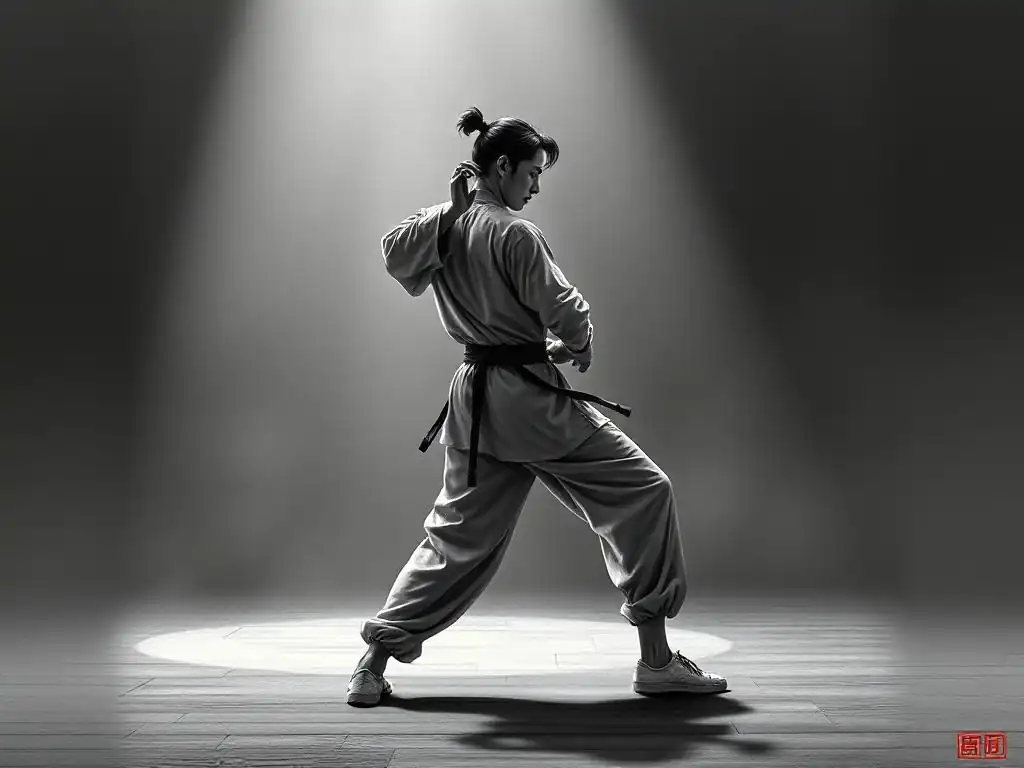
Single-leg stance training is fundamental for developing the core balance required for many Hung Gar crane techniques. The most iconic is the Golden Rooster Stands on One Leg (金雞獨立 - Gam Gai Duk Lap). This exercise involves standing on one leg, raising the other knee towards the chest, and holding the posture for an extended period. Initially, practitioners may struggle to maintain balance for even a few seconds, but with consistent practice, stability improves dramatically. The focus should be on keeping the standing leg slightly bent (not locked out), engaging the core, and maintaining a steady gaze.
Progressions for single-leg stance training include increasing the hold time (aiming for 1-2 minutes per leg), closing the eyes (which significantly increases the challenge by removing visual cues for balance), or performing simple hand techniques or gentle arm movements while maintaining the stance. Another variation is balancing on the ball of the foot or even the toes of the standing leg, mimicking the delicate perch of a crane. Consistent daily practice, even for just a few minutes on each leg, builds the intrinsic strength and proprioception necessary for the unwavering balance characteristic of advanced Hung Gar crane agility balance.
Footwork Drills: Cultivating Nimble Agility in Hung Gar
Nimble footwork is the engine of agility in Hung Gar, particularly in the crane style. Drills focus on developing speed, precision, and coordination in moving the feet. The basic "three-star step" (三星步 - Saam Sing Bou), involving triangular movements, is a core drill.
Practitioners practice stepping forward, backward, and sideways rapidly, focusing on keeping the steps small, controlled, and close to the ground to maintain stability and allow for quick changes in direction. Another crucial drill is practicing the "cat stance step" (貓步 - Maau Bou), where one foot is placed lightly on the ground, ready to shift weight or move quickly.
More advanced footwork drills specific to the crane style might involve practicing rapid retreats followed by explosive forward steps, mimicking the crane's strategy of evading and then counter-attacking. Practicing circular footwork (繞圈步 - Yiu Kyun Bou) while maintaining a stable upper body is also vital for circling opponents or changing angles. Incorporating feints and deceptive movements into footwork drills helps develop the unpredictability needed for effective crane agility. Consistent, focused practice of these footwork patterns, emphasizing speed, lightness, and control, is essential for cultivating the nimble agility that defines Hung Gar crane agility balance.
Agility Ladder Exercises for Crane-Inspired Movement
While not traditionally part of Hung Gar training, agility ladders can be highly effective modern tools for enhancing the footwork patterns and coordination needed for crane agility. The ladder provides a visual structure for practicing precise foot placement and quick steps. Basic drills like "in-and-out" steps, "Ickey Shuffle," and lateral shuffles performed through the ladder squares translate well to developing the quick, controlled foot movements used in crane techniques. These drills improve foot speed, coordination, and the ability to react quickly.
More specific crane-inspired agility ladder drills could involve practicing single-leg hops through the ladder, mimicking the Golden Rooster stance movement while in motion. Another variation is practicing rapid transitions between different foot placements within the squares, simulating the swift weight shifts of crane footwork. For instance, stepping into a square with one foot and immediately pushing off into a cat stance with the other foot in the next square.
Incorporating hand techniques or upper body movements while performing these ladder drills further integrates the coordination needed for true Hung Gar crane agility balance. Using an agility ladder for 10-15 minutes several times a week can significantly boost reactive speed and foot control.
Balance Training Equipment and Tools for Hung Gar Practitioners
Using Balance Boards to Improve Crane Stability
Balance boards are excellent tools for enhancing the static and dynamic balance crucial for Hung Gar crane agility balance. These boards, which typically have an unstable base (like a dome or roller), force the user to constantly make micro-adjustments to maintain equilibrium. Practicing basic stances like Gim Si Ma or even a slightly higher Si Ping Ma on a balance board significantly increases the challenge, engaging the stabilizing muscles more intensely than practicing on a stable floor. This builds the proprioceptive awareness needed for better control.
More advanced exercises on a balance board can include practicing single-leg stances. Initially, practitioners may need to hold onto something for support, gradually decreasing reliance until they can balance unsupported. As balance improves, simple Hung Gar hand techniques can be performed while standing on the board, adding a layer of complexity and simulating the need to maintain balance while executing movements. Spending just 5-10 minutes daily on a balance board can lead to noticeable improvements in stability, directly benefiting the execution of crane techniques.
Incorporating Wobble Cushions for Advanced Balance Training
Wobble cushions, also known as balance discs, offer a less challenging but still effective way to train balance, particularly useful for beginners or for incorporating into more dynamic drills. These inflatable cushions create an unstable surface when placed on the floor or a chair. Standing on a wobble cushion requires constant small adjustments, strengthening the ankles, knees, and core muscles. Practicing basic Hung Gar stances on a wobble cushion is a good starting point.
For advanced training, wobble cushions can be integrated into footwork drills. For example, placing several cushions in a line and stepping from one to another, or practicing quick lateral steps onto and off a cushion. Performing simple forms or sequences (like a short section of Fu Hok Seung Ying Kuen) while standing on a wobble cushion increases the demand on balance and core stability. While perhaps not as unstable as some balance boards, wobble cushions provide a portable and versatile tool for consistently challenging and improving the delicate balance required for Hung Gar crane agility balance.
The Role of Weighted Vests in Agility and Balance Enhancement
While seemingly counter-intuitive, incorporating weighted vests into specific training drills can paradoxically enhance agility and balance. The added weight increases the load on the muscles responsible for maintaining posture and balance, forcing them to work harder. When the vest is removed, the body feels lighter and movements can feel faster and more effortless. This effect, known as post-activation potentiation, can improve explosive power and speed, contributing to agility.
Using a weighted vest (starting with a low weight, e.g., 5-10% of body weight) during balance drills like single-leg stances increases the difficulty, forcing greater engagement of stabilizing muscles. Practicing footwork drills with a weighted vest can improve speed and endurance. However, it is crucial to use weighted vests cautiously and only after developing a solid foundation of strength and technique to avoid injury.
They should be used for short durations during specific drills, not for entire training sessions or sparring. Judicious use of a weighted vest can be an advanced method to push the boundaries of Hung Gar crane agility balance.
Mental Focus and Visualization for Hung Gar Crane Agility
Developing Mindfulness for Precise Movements
Mental focus and mindfulness are as critical as physical training for mastering Hung Gar crane agility balance. The crane style demands a high level of precision in movement, from the subtle weight shifts in stances to the exact trajectory of a strike. Mindfulness, the practice of being fully present and aware of one's body and surroundings, allows the practitioner to execute techniques with greater accuracy and control. It helps in feeling the subtle shifts in balance, identifying tension, and making instant corrections.
During training, practicing mindfulness means paying close attention to the sensations in the feet, legs, and core while holding a stance or executing a movement. Noticing how weight is distributed, feeling the engagement of specific muscles, and being aware of posture helps refine technique. In dynamic movements, mindfulness allows for quicker reactions and smoother transitions. By cultivating a state of focused awareness, practitioners can achieve a higher degree of control over their bodies, which is essential for the delicate and precise nature of Hung Gar crane agility balance.
Visualization Techniques for Perfecting Crane Form
Visualization is a powerful tool for enhancing skill acquisition and performance in martial arts, including Hung Gar crane agility balance. Mentally rehearsing techniques and forms can improve muscle memory, coordination, and spatial awareness even without physical movement. For crane techniques, visualization involves vividly imagining oneself performing the movements with perfect form, balance, and agility. This includes picturing the precise footwork, the alignment of the body in single-leg stances, and the fluid execution of strikes and blocks.
Practitioners can visualize entire forms like Fu Hok Seung Ying Kuen, focusing on the transitions between stances and the maintenance of balance during dynamic sequences. They can also visualize specific challenging techniques, such as holding the Golden Rooster stance effortlessly or executing a rapid evasive step followed by a precise counter. Regularly spending time visualizing perfect execution reinforces the correct patterns in the brain, making physical practice more effective and accelerating the development of Hung Gar crane agility balance.
Overcoming Mental Barriers to Achieving Agility and Balance
Mental barriers, such as fear of falling, self-doubt, or frustration with slow progress, can significantly impede the development of Hung Gar crane agility balance. Fear of losing balance can lead to stiff, hesitant movements, which are the opposite of the relaxed fluidity required for crane techniques. Self-doubt can prevent practitioners from attempting challenging drills or pushing their limits. Recognizing and addressing these mental obstacles is crucial for progress.
Strategies for overcoming mental barriers include setting small, achievable goals to build confidence, practicing in a safe environment (e.g., near a wall or with a partner for support), and reframing challenges as opportunities for growth rather than failures. Focusing on the process of improvement rather than solely on the outcome can help manage frustration. Techniques like deep breathing and positive self-talk can also help maintain composure and focus during challenging balance exercises. By addressing these mental aspects, practitioners can unlock their full potential for developing Hung Gar crane agility balance.
Integrating Crane Agility and Balance into Your Overall Hung Gar Training
Combining Crane Techniques with Other Hung Gar Styles
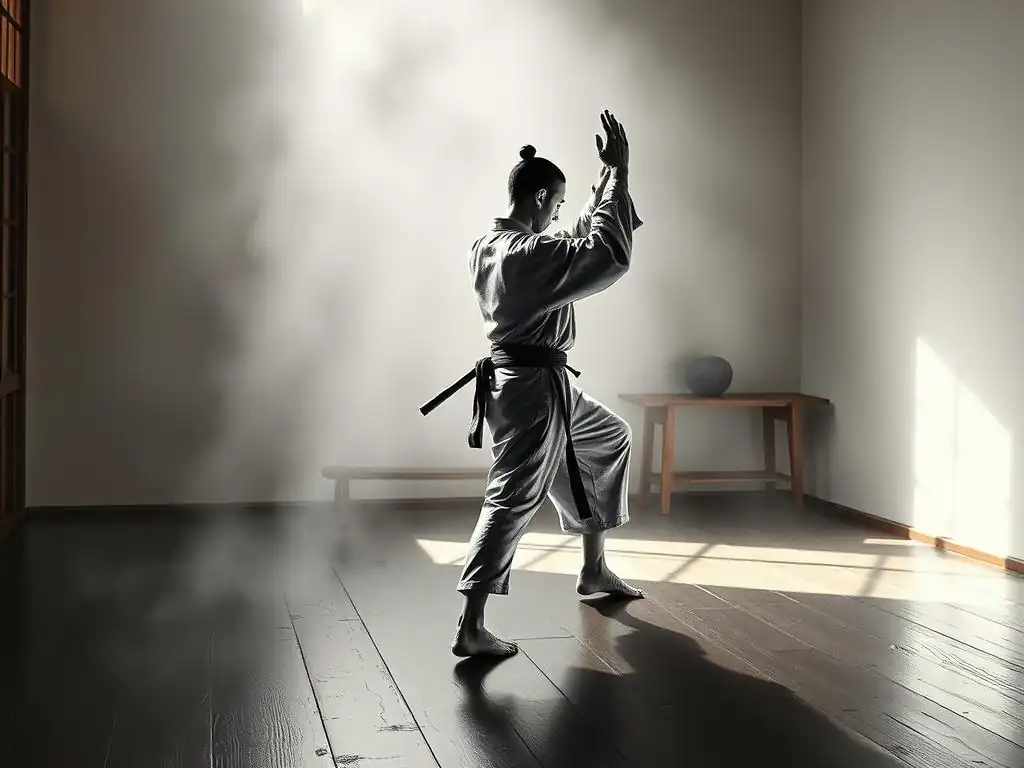
True mastery in Hung Gar lies in the seamless integration of its various components, including the crane style, tiger style, and the five elements (Ng Hang - 五行). While focusing on crane agility and balance is important, these qualities must be applicable within the broader context of Hung Gar combat. This means practicing transitioning between crane techniques and those from other styles. For instance, moving from a light, evasive crane step directly into a powerful, rooted tiger stance for a devastating strike.
Training should include drills that specifically combine elements from different styles. Practice blocking an incoming attack with a solid tiger forearm block (虎臂 - Fu Bei) and immediately following with a rapid crane beak strike (鶴嘴 - Hok Tsui) delivered while shifting weight. Or, using crane-like footwork to evade and create distance, then closing in with aggressive tiger footwork to enter close range. This integration ensures that the crane agility and balance developed are not isolated skills but enhance the overall effectiveness and versatility of the practitioner's Hung Gar Kung Fu.
Creating a Personalized Training Plan for Optimal Agility and Balance
An effective training plan for developing Hung Gar crane agility balance must be personalized to the individual's current skill level, goals, and available time. There is no one-size-fits-all approach. A beginner might focus heavily on foundational stance work and basic single-leg balance exercises, dedicating perhaps 60-70% of their crane-focused training time to these areas. An intermediate practitioner might spend more time on dynamic balance drills, footwork patterns, and integrating crane movements into simple combinations, perhaps 40-50% of their time.
An advanced practitioner might focus on complex form sequences, sparring application drills, and using advanced tools like weighted vests or challenging balance boards, dedicating a smaller percentage (e.g., 20-30%) to basic balance work as maintenance. The plan should also incorporate flexibility and core strength training consistently. Regularly reviewing progress (e.g., every 1-3 months) and adjusting the plan based on strengths and weaknesses is crucial for optimal development of Hung Gar crane agility balance.
Avoiding Common Mistakes in Crane Agility and Balance Training
Several common mistakes can hinder progress when training for Hung Gar crane agility balance. One major error is rushing through movements, sacrificing form and control for speed. This develops bad habits and does not build true balance or precise agility. Another mistake is neglecting foundational stance training, trying to perform advanced single-leg techniques before the basic two-leg stances are stable. This is like building a house on sand.
Ignoring flexibility and core strength training is also a common pitfall, as these are essential supporting pillars for both agility and balance. Furthermore, practitioners sometimes train only the physical aspects and neglect the mental focus and mindfulness required. Finally, inconsistent practice is perhaps the most common mistake; developing high levels of agility and balance requires regular, dedicated effort over time. Avoiding these errors and focusing on quality over quantity will significantly accelerate the development of Hung Gar crane agility balance.
The Importance of Consistent Practice for Hung Gar Crane Mastery
Establishing a Regular Training Schedule for Agility and Balance
Consistency is the single most important factor in achieving mastery in any martial art, and especially so for developing the nuanced skills of Hung Gar crane agility balance. Infrequent, sporadic training sessions yield minimal results. The neuromuscular pathways responsible for balance and coordination are built and strengthened through repeated, regular stimulation. Even short, focused daily sessions (e.g., 15-30 minutes) are far more effective than one long session per week.
Establishing a regular training schedule means dedicating specific times each day or week solely to working on agility and balance drills, stances, and relevant form sections. For example, a practitioner might commit to 20 minutes every morning focusing on single-leg stances and basic footwork, and then incorporate more dynamic drills or form practice during longer evening sessions. Treating these training times as non-negotiable appointments helps build the habit and ensures steady progress towards developing advanced Hung Gar crane agility balance.
Monitoring Progress and Adjusting Your Training Regimen
Effective training is not static; it evolves based on progress and identified areas for improvement. Monitoring progress is crucial for staying motivated and ensuring the training regimen remains challenging and relevant. This can involve simple metrics like the duration one can hold a single-leg stance unsupported (e.g., tracking improvement from 15 seconds to 60 seconds over a month) or the number of repetitions of a footwork drill performed accurately within a set time.
Based on this monitoring, the training regimen should be adjusted. If progress in static balance is slow, perhaps more time is needed on balance boards or longer stance holds. If dynamic agility feels lacking, more focus on footwork drills and rapid transitions is necessary. Identifying weak points allows for targeted adjustments to the training plan, ensuring that effort is directed where it will yield the greatest results in developing Hung Gar crane agility balance. Seeking feedback from an instructor is also a vital part of this process.
Seeking Guidance from Experienced Hung Gar Instructors
While solo practice is essential, the guidance of an experienced Hung Gar instructor is invaluable for developing true crane agility and balance. An instructor can provide personalized feedback on posture, alignment, weight distribution, and technique execution that is difficult to self-correct. They can spot subtle errors in stances or movements that compromise balance or efficiency. For instance, an instructor can immediately tell if a practitioner's weight is slightly off-center in a Diu Ma stance, even if the practitioner feels stable.
Instructors can also introduce nuances in technique, provide specific drills tailored to individual needs, and ensure that practitioners are practicing safely, especially with more challenging exercises or equipment. They can offer insights into the practical application of crane techniques in sparring and self-defense, bridging the gap between form and function. Learning directly from someone who has spent years cultivating their own Hung Gar crane agility balance provides shortcuts, prevents the development of bad habits, and ensures a deeper understanding of the principles at play.
Advanced Hung Gar Crane Techniques: Beyond the Basics
Exploring Complex Crane Form Variations
Once the foundational principles and basic techniques of Hung Gar crane agility balance are solid, practitioners can explore more complex form variations. While forms like Fu Hok Seung Ying Kuen contain core crane movements, some lineages or individual masters may have preserved or developed more specialized crane forms. These forms often feature longer sequences of single-leg stances, more intricate footwork patterns, and a wider array of hand techniques delivered from challenging positions.
Studying these advanced forms, such as those potentially found in lineages emphasizing the "White Crane" (白鶴 - Baak Hok) aspect, requires a high level of existing agility and balance. They push the limits of coordination, requiring the practitioner to maintain stability while executing rapid, complex movements. Learning these forms typically requires direct instruction from a master familiar with that specific lineage's curriculum. Mastering these complex variations demonstrates a high level of Hung Gar crane agility balance.
Mastering Advanced Agility Drills
Advanced agility drills build upon the basic footwork and movement patterns, increasing speed, complexity, and responsiveness. This might involve practicing drills that require reacting to external cues (like a partner's movement or a shouted command), simulating the unpredictable nature of combat. For example, a drill might involve moving randomly around a space using crane-like footwork and instantly transitioning into a specific stance or technique upon hearing a signal.
Another advanced drill involves practicing sequences of evasive movements (e.g., multiple rapid side-steps or retreats) immediately followed by explosive forward movements and strikes, performed at high speed while maintaining perfect form and balance. Incorporating plyometric elements, such as controlled single-leg jumps or hops followed by immediate stabilization in a stance, can also enhance explosive agility. These drills require significant physical conditioning and a high degree of control, pushing the practitioner's Hung Gar crane agility balance to higher levels.
Applying Crane Agility and Balance in Self-Defense Scenarios
The ultimate goal of any martial arts training is effective self-defense. Applying Hung Gar crane agility balance in real-world scenarios requires the ability to utilize these skills instinctively under pressure. This involves scenario-based training, where practitioners react to simulated attacks using their crane-based skills. For example, practicing evading a grab or a push using rapid side-steps or retreats, immediately creating distance and preparing for a counter-attack from a stable crane stance.
Crane techniques are particularly useful for dealing with larger or stronger opponents, as they emphasize evasion and striking vulnerable points from a distance rather than meeting force with force. Practicing maintaining balance when being pushed or pulled, or executing techniques while on slightly uneven ground, simulates real-world conditions. Advanced application involves seamlessly integrating crane agility and balance with tiger power and other Hung Gar elements to create a fluid, adaptable, and effective self-defense system.
Conclusion: Embracing the Crane's Agility and Balance in Hung Gar Kung Fu
The Lasting Benefits of Crane Training for Overall Martial Arts Prowess
Embracing the crane's agility and balance in Hung Gar Kung Fu offers lasting benefits that extend far beyond mastering specific crane techniques. The rigorous training in balance improves proprioception, core strength, and stability, which are fundamental for all martial arts movements, regardless of style. Enhanced agility translates into better footwork, faster reaction times, and the ability to move efficiently and evade attacks in any combat situation. These qualities are transferable and improve performance across the entire Hung Gar system and potentially other physical activities.
Furthermore, the mental discipline cultivated through the precise and focused nature of crane training – mindfulness, visualization, and overcoming mental barriers – builds resilience and concentration. This mental fortitude is invaluable not only in martial arts but in all aspects of life. Developing Hung Gar crane agility balance fosters a deeper understanding of body mechanics, movement efficiency, and strategic positioning, leading to a more complete and effective martial artist.
Continuing Your Journey Towards Hung Gar Crane Mastery
The journey towards mastering Hung Gar crane agility balance is continuous. There is always room for improvement, refinement, and deeper understanding. Consistent, dedicated practice is paramount, focusing on both the physical execution of techniques and the underlying principles of balance and movement. Regularly reviewing and adjusting training based on progress and seeking guidance from experienced instructors are essential steps on this path.
By integrating crane techniques with other Hung Gar styles, creating a personalized training plan, and avoiding common pitfalls, practitioners can steadily advance their skills. Exploring advanced forms and drills pushes the boundaries of what is possible, while applying these skills in practical scenarios validates their effectiveness. The pursuit of Hung Gar crane agility balance is a lifelong endeavor that rewards patience, perseverance, and a commitment to the principles of grace, precision, and unwavering stability.
Frequently Asked Questions
How crucial are agility and balance to the Hung Gar style?
Agility and balance are absolutely fundamental to Hung Gar. They allow practitioners to effectively use stances, movements, and techniques, enhancing both offense and defense. Without them, the power and efficiency of Hung Gar is severely diminished.
What specific training methods are used to develop cranelike agility in Hung Gar?
Hung Gar employs various drills like stance transitions, footwork patterns, and specific forms mimicking crane movements. These drills enhance body awareness and coordination, crucial for developing cranelike agility.
How does the crane form in Hung Gar contribute to improving balance?
The crane form emphasizes single-leg stances and controlled movements, directly challenging and improving balance. It requires a strong core and focused concentration, contributing to overall stability.
Are there any specific exercises outside of Hung Gar forms that can improve balance for practitioners?
Yes, supplementary exercises such as yoga, Pilates, and proprioceptive training can significantly enhance balance. These activities strengthen supporting muscles and improve neuromuscular coordination, complementing Hung Gar training.
What is the relationship between mental focus and achieving the desired agility and balance in Hung Gar?
Mental focus is essential for achieving cranelike agility and balance. A clear and present mind allows for precise movements and adjustments, preventing errors and maximizing efficiency and control.
Final Reflection: Embracing the Crane's Grace
The principles of Hung Gar, particularly its emphasis on crane-like agility and balance, resonate deeply even in our modern, fast-paced world. While seemingly confined to the martial arts dojo, the lessons learned in cultivating this specific form of movement translate into a broader understanding of resilience, adaptability, and focused intention – qualities essential for navigating the complexities of contemporary life.
The pursuit of crane agility in Hung Gar is more than just physical training; it's a journey of self-discovery and mindful movement. This dedication to balance, both physical and mental, has profoundly influenced my own understanding of well-being and the importance of finding equilibrium amidst chaos. The crane stands with one leg, not because it has no other, but because it has chosen to.
This ancient wisdom reminds us that true strength lies not just in power, but in the conscious choice of where to place our focus and how to maintain our poise.
Now, as you reflect on the principles of Hung Gar's crane form, consider how you can cultivate your own inner balance and agility. Embrace the challenges that life presents as opportunities to refine your focus, strengthen your resolve, and move with the grace and precision of the crane. Let the spirit of Hung Gar guide you towards a more balanced, resilient, and ultimately, more fulfilling life.
Unlock Your Hung Gar Potential!
Thank you for diving into the world of Hung Gar with us! We hope you've gained valuable insights into developing craning agility and balance. Now, it's time to put that knowledge into action and elevate your training.
Here are a few steps you can take:
- Commit to implementing the single-leg balancing drills into your daily routine for at least 15 minutes. Feel the difference in your stability!
- Explore historical texts on Hung Gar to deepen your understanding of its origins and principles. Uncover hidden techniques!
- Share this article with your fellow martial arts enthusiasts and discuss your experiences in adapting these techniques. Collaboration amplifies progress!
Which balancing drill are you most excited to incorporate into your practice, and how do you plan to track your progress?