
Developing Your Tan Sao and Bong Sao with the Wooden Dummy


Welcome to Martial Arts Mastery!
Delve into the intricate world of martial arts where history, technique, and philosophy converge. Ever wondered how to truly master the Tan Sao and Bong Sao? Our in-depth exploration of the Tan Sao Bong Sao Dummy will unlock new levels of precision and power in your Wing Chun training. Prepare to refine your movements and discover the secrets held within the wooden dummy – a journey into mastery awaits!
- Introduction to Tan Sao, Bong Sao, and the Wing Chun Wooden Dummy
- Mastering Tan Sao on the Wooden Dummy: A Step-by-Step Guide
- Enhancing Bong Sao Skills Using the Wing Chun Dummy
- Integrating Tan Sao and Bong Sao in Wooden Dummy Forms
- Common Mistakes and Corrections in Tan Sao and Bong Sao Dummy Training
- Advanced Training Methods for Tan Sao and Bong Sao on the Dummy
- The Benefits of Consistent Tan Sao and Bong Sao Dummy Practice
- Conclusion: The Wooden Dummy as an Indispensable Tool for Tan Sao and Bong Sao Mastery
-
Frequently Asked Questions
- What are Tan Sao and Bong Sao in the context of martial arts?
- Why is the wooden dummy (Muk Yan Jong) important for practicing Tan Sao and Bong Sao?
- How does practicing on the wooden dummy improve the effectiveness of Tan Sao?
- Can I learn Tan Sao and Bong Sao effectively without a wooden dummy?
- What are some common mistakes to avoid when practicing Tan Sao and Bong Sao on the wooden dummy?
- Final Reflection: Embracing Structure and Flow in Wing Chun
- Master Your Tan Sao: Your Journey Starts Now!
Introduction to Tan Sao, Bong Sao, and the Wing Chun Wooden Dummy
Understanding the Importance of Tan Sao and Bong Sao in Wing Chun Kung Fu
Tan Sao (接收手 - Receiving Hand) and Bong Sao (膀手 - Wing Hand) are fundamental techniques within the Wing Chun Kung Fu system, forming a core part of its defensive and offensive strategies. Tan Sao is typically used as a deflecting or controlling hand, directing incoming force away from the centerline while maintaining structure and forward intent. It embodies the principle of yielding and redirecting, often applied against straight or slightly angled attacks targeting the upper gates. Mastery of Tan Sao requires a relaxed but connected structure, ensuring that force is dissipated effectively without collapsing one's own guard.
Bong Sao, on the other hand, is a dynamic, outwardly spiraling block or deflection, often used against attacks aimed at the middle or upper gates. It's characterized by the elbow leading the movement, creating a "wing" shape with the forearm. While often perceived as a passive block, a well-executed Bong Sao maintains tension and structure, allowing for immediate counter-attack or transition into other techniques.
Both Tan Sao and Bong Sao are not static positions but fluid movements, designed to disrupt the opponent's structure and timing while preserving one's own balance and centerline protection. Their effectiveness lies in their simultaneous defense and preparation for offense.
The Muk Yan Jong: A Key Tool for Wing Chun Development
The Muk Yan Jong, or Wing Chun Wooden Dummy, is an iconic training apparatus considered indispensable for developing practical application of Wing Chun principles. It is not merely a static target but simulates a dynamic opponent with limbs positioned to represent common attack angles and defensive structures. Training with the Tan Sao Bong Sao dummy allows practitioners to refine their structure, timing, distance, and sensitivity in a way that air practice or partner drills alone cannot replicate.
The dummy's springy arms and leg provide feedback on the practitioner's force, angle, and connection. By interacting with the dummy's fixed yet yielding points, students learn to maintain their centerline, generate power from a stable stance, and transition smoothly between techniques like Tan Sao and Bong Sao. Consistent Tan Sao Bong Sao dummy training helps internalize the complex coordination required for real-world application, building muscle memory and structural integrity essential for effective Wing Chun.
Mastering Tan Sao on the Wooden Dummy: A Step-by-Step Guide
Correct Stance and Body Structure for Tan Sao on the Dummy
Training Tan Sao on the wooden dummy begins with establishing the correct stance and body structure. The most common stance used is the Yee Gee Kim Yeung Ma (二字拑羊馬 - Character Two Goat Clamping Stance), positioned at an appropriate distance from the dummy – typically such that the practitioner's fingertips can just touch the dummy's upper arms when their arms are extended.
The knees should be slightly bent and driven inwards, the tailbone tucked, and the weight distributed evenly or slightly forward, maintaining a stable and rooted base. The torso should be relaxed but upright, with the shoulders dropped and elbows pointed down, preparing the hands to move efficiently.
Crucially, when executing Tan Sao against a dummy arm, the structure must be maintained from the ground up. The force from the dummy arm should be absorbed and redirected through the practitioner's structure, down through the legs and into the floor, rather than being met with muscular tension in the arm or shoulder. The Tan Sao elbow should remain relatively low and close to the body, typically forming an angle of approximately 30-45 degrees relative to the torso, ensuring the technique is rooted and connected to the core structure, not just an isolated arm movement.
Drilling Basic Tan Sao Movements on the Muk Yan Jong
Basic Tan Sao drilling on the Muk Yan Jong involves repetitive practice against the dummy's upper arms. A fundamental drill is the simple deflection: positioning oneself in front of the dummy, using a Tan Sao to deflect one of the upper arms as if it were an incoming strike, and then returning to a neutral position or transitioning to another technique. This is practiced on both sides, focusing purely on the correct structure, angle, and relaxation of the Tan Sao. The goal is to develop the feeling of "receiving" the force without resisting it directly.
A common progression involves stepping drills. For example, stepping forward with a simultaneous Tan Sao on the dummy's arm, or stepping to the side while executing the technique. These drills teach coordination between footwork and hand technique, essential for applying Tan Sao in motion.
Repetition is key; a practitioner might spend several minutes, perhaps 5-10 minutes per session, solely on perfecting the basic Tan Sao movement against the dummy's resistance, ensuring the elbow stays correctly positioned and the structure doesn't collapse under pressure. This foundational practice on the Tan Sao Bong Sao dummy builds the necessary muscle memory and structural integrity.
Advanced Tan Sao Techniques and Applications on the Dummy
Incorporating Footwork with Tan Sao Drills
Advanced Tan Sao training on the wooden dummy heavily integrates footwork, moving beyond static deflections. Drills involve executing Tan Sao while stepping forwards (Jeung Ma), backwards (Tui Ma), or sideways (Waang Ma). For instance, a drill might involve stepping forward with a right Tan Sao against the dummy's left arm, then shifting weight and stepping back with a left Tan Sao against the dummy's right arm. This develops the ability to maintain balance and structure while moving, essential for closing distance or evading strikes in a dynamic situation.
Another advanced application involves combining Tan Sao with simultaneous stepping and potentially striking movements simulated against the dummy. For example, executing a Tan Sao against one arm while simultaneously stepping and delivering a simulated punch (straight punch or vertical fist) with the other hand towards the dummy's body. This trains coordination, timing, and the principle of simultaneous defense and offense. Practicing these movements on the Tan Sao Bong Sao dummy provides realistic resistance and feedback on how movement affects structure and power generation.
Using the Dummy to Refine Tan Sao Sensitivity
The wooden dummy is excellent for refining sensitivity, also known as "listening force" or Ting Jin. By maintaining contact with the dummy's arms during drills, practitioners learn to feel the pressure and direction of force exerted by the dummy (simulating an opponent). This allows them to adjust their Tan Sao angle and structure instantaneously without relying solely on visual cues. A drill might involve placing a Tan Sao on a dummy arm and practicing subtle shifts in pressure or angle, feeling how the dummy's arm responds.
This sensitivity training extends to learning how to "borrow" or "follow" the dummy's force. Instead of just deflecting, the practitioner learns to move with the dummy's arm slightly, maintaining contact and control, much like in Chi Sao (Sticky Hands). This refined sensitivity, honed through extensive practice on the Tan Sao Bong Sao dummy, is crucial for feeling an opponent's intentions and transitions in live sparring or self-defense situations, allowing for fluid and appropriate responses.
Enhancing Bong Sao Skills Using the Wing Chun Dummy
Proper Bong Sao Form and Alignment on the Dummy
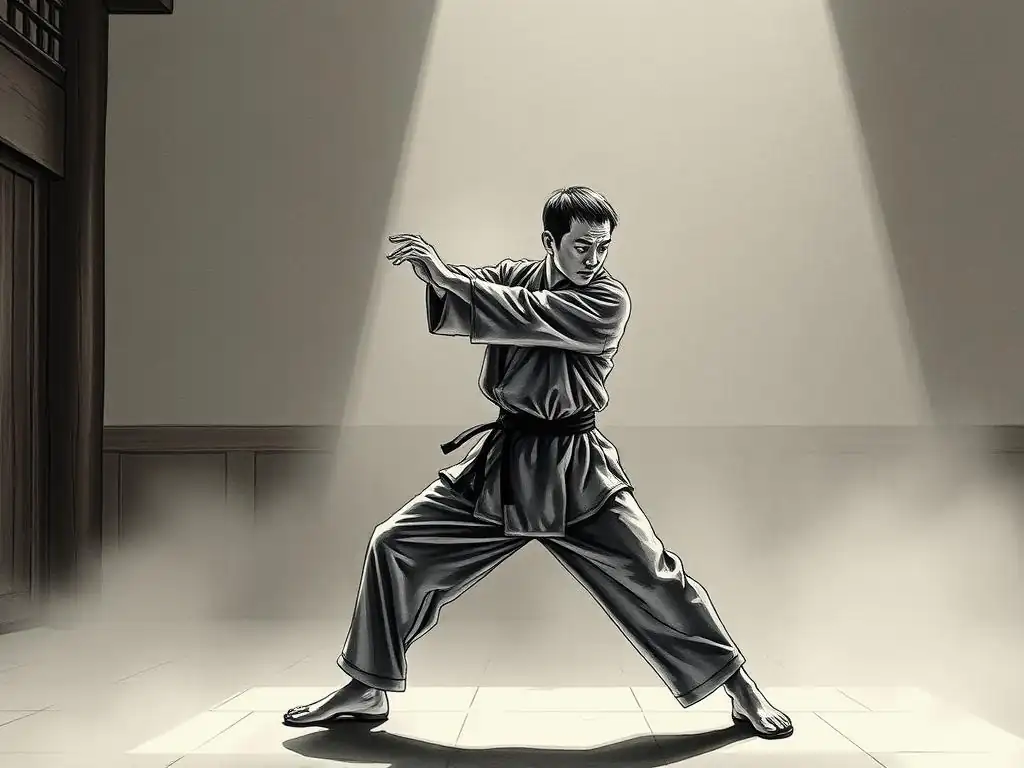
Developing effective Bong Sao on the Wing Chun dummy starts with understanding its unique form and alignment. The Bong Sao is characterized by the elbow leading the movement upwards and outwards, creating a strong, rounded structure with the forearm.
When practicing on the dummy, the practitioner positions themselves such that the dummy's arm meets their forearm at a specific point, typically about one-third of the way up from the wrist, creating an angle that directs force outwards and downwards. The elbow should be slightly in front of the body, not tucked tightly against the ribs, allowing for mobility and structural integrity.
Maintaining proper alignment is paramount. The structure of the Bong Sao should feel connected from the hand, up the forearm, through the elbow, and rooted into the body's core and stance. There should be a subtle tension or "spring" in the structure, allowing it to absorb and redirect force without collapsing. Practicing the basic Bong Sao motion against the dummy's arms repeatedly helps solidify this form and alignment, providing immediate feedback if the structure is weak or the angle is incorrect, as the dummy arm will either push through or cause the practitioner's balance to be compromised.
Bong Sao Drills for Power and Accuracy on the Muk Yan Jong
Power and accuracy in Bong Sao are developed through specific drills on the Muk Yan Jong. One foundational drill involves stepping into a Bong Sao against a dummy arm, focusing on generating power from the ground up and delivering it through the Bong Sao structure. This isn't about brute muscular force but about coordinated body mechanics. The step, hip rotation (minimal in Wing Chun but present), and arm movement should synchronize to create a solid, "rooted" Bong Sao capable of disrupting an opponent's attack.
Accuracy drills involve targeting specific points on the dummy's arms or body with the Bong Sao. While primarily a defensive technique, a well-timed and structured Bong Sao can also be used to disrupt an opponent's balance or structure. Practicing Bong Sao transitions and angles against different dummy limbs helps refine the accuracy of the technique under pressure. For instance, transitioning from a defensive Bong Sao to a controlling action while maintaining contact with the dummy limb, focusing on precise placement and angle.
Developing Bong Sao Reflexes and Timing with the Dummy
Combining Bong Sao with Other Wing Chun Techniques on the Dummy
Developing Bong Sao reflexes and timing is crucial, and the dummy facilitates this by providing a consistent, albeit static, opponent. Drills that combine Bong Sao with other Wing Chun techniques are key. For example, practicing a scenario where a dummy arm simulates an attack, triggering a Bong Sao response, immediately followed by a counter-attack like a straight punch (simulated against the dummy's body) or a Pak Sao (slapping hand) on the dummy's other arm. This trains the seamless transition between defense and offense.
Another effective drill involves using Bong Sao to clear a dummy arm and immediately following up with a different technique, such as a Lap Sao (pulling hand) or a Jut Sao (jerking hand) on the same or other dummy arm. These combinations, practiced repetitively on the Bong Sao dummy, help condition the practitioner's reflexes to respond to incoming pressure with appropriate Wing Chun sequences, improving timing and coordination between hands and body.
Strengthening the Bong Sao Structure for Defense and Offense
Consistent practice of Bong Sao on the wooden dummy significantly strengthens the technique's structure, making it more robust for both defense and potential offensive applications. The resistance provided by the dummy arms forces the practitioner to maintain correct alignment and skeletal structure, preventing reliance on muscular strength alone. Over time, this builds resilience in the forearm, elbow, and shoulder, enabling the Bong Sao to withstand greater force without collapsing.
Furthermore, training Bong Sao against the dummy helps develop the internal connection necessary for generating "short power" through the technique. By focusing on rooting the movement through the stance and core, the Bong Sao becomes more than just an arm block; it becomes a whole-body action capable of absorbing or redirecting substantial force. This structural integrity, honed on the Tan Sao Bong Sao dummy, is vital for the Bong Sao's effectiveness in deflecting powerful strikes and creating openings.
Integrating Tan Sao and Bong Sao in Wooden Dummy Forms
Understanding the Role of Tan Sao and Bong Sao in Section Two
The Wing Chun Wooden Dummy form (Muk Yan Jong Fat) is a sequence of movements designed to teach the application of Wing Chun principles against a simulated opponent. Tan Sao and Bong Sao feature prominently throughout the form, particularly in Section Two, which focuses heavily on upper gate techniques and defensive structures against frontal attacks. Within this section, Tan Sao is used to deflect incoming high or middle line attacks, often setting up subsequent movements or counter-attacks. Bong Sao is utilized similarly, often appearing as a response to a perceived attack against the chest or shoulder line.
The form teaches specific transitions and combinations involving these techniques. For instance, a sequence might involve a Tan Sao followed by a Gaan Sao (cutting hand) or a Bong Sao transitioning into a Lop Sao (grabbing hand). Practicing these sequences on the wooden dummy helps the practitioner understand the intended application and flow of Tan Sao and Bong Sao within the broader Wing Chun system, providing context that isolated drills might lack. Learning the form on the Tan Sao Bong Sao dummy is crucial for internalizing these complex interactions.
Drills to Improve the Transition Between Tan Sao and Bong Sao
Smooth and rapid transitions between Tan Sao and Bong Sao are essential for fluidity in combat. The wooden dummy provides an excellent platform for drilling these transitions. A specific drill involves continuously switching between Tan Sao and Bong Sao against the same dummy arm. For example, performing a right Tan Sao, then transitioning immediately into a right Bong Sao, then back to Tan Sao, and so on, repeating the cycle for several minutes. This drill focuses on minimizing wasted movement and maintaining structural integrity during the changeover.
Another drill involves transitioning between Tan Sao and Bong Sao on different dummy arms, simulating responses to alternating attacks. For instance, executing a right Tan Sao on the dummy's left arm, then quickly transitioning to a left Bong Sao on the dummy's right arm. This requires coordination of both hands and potentially subtle shifts in body weight or position. These dynamic transition drills on the Tan Sao Bong Sao dummy build responsiveness and adaptability.
Applying Tan Sao and Bong Sao Principles in Sparring After Dummy Training
The ultimate goal of Tan Sao and Bong Sao dummy training is to apply these skills effectively in sparring (Chi Sao or free sparring) and self-defense. The dummy practice translates by instilling correct structure, timing, and sensitivity. In Chi Sao, the sensitivity developed against the dummy's arms allows practitioners to "feel" their partner's force and intention, enabling them to apply Tan Sao or Bong Sao reflexively to redirect or control. The structural integrity built against the dummy's resistance helps prevent being easily pushed off balance.
In free sparring, the muscle memory from countless repetitions on the Tan Sao Bong Sao dummy allows the practitioner to deploy Tan Sao and Bong Sao rapidly and accurately against incoming strikes. The timing drills help ensure the techniques are applied at the optimal moment – neither too early nor too late. While a human opponent is unpredictable, the foundational skills and principles ingrained by the dummy provide a solid framework for defensive and offensive actions involving these core Wing Chun techniques.
Common Mistakes and Corrections in Tan Sao and Bong Sao Dummy Training
Avoiding Common Errors in Tan Sao Form and Execution
Several common mistakes can hinder effective Tan Sao development on the wooden dummy. One frequent error is raising the elbow too high, which disconnects the Tan Sao from the body's structure and makes it weak and easily bypassed. Another is using excessive muscular tension, which stiffens the arm and prevents the necessary yielding and redirecting action; the Tan Sao should be relaxed yet connected. Collapsing the wrist or allowing the forearm to bend inwards are also errors that compromise structure.
Corrections involve focusing on the core principles: keep the elbow down and slightly forward, maintain a straight line from the elbow to the fingertips (or slightly bent wrist for comfort, but not collapsed), and focus on directing force through the arm and into the body/ground, rather than meeting force head-on. Regular feedback, whether from a Sifu, fellow students, or self-analysis using video, is crucial. Consciously practicing the Tan Sao Bong Sao dummy drills slowly, emphasizing correct form over speed, helps internalize the proper mechanics before adding intensity.
Correcting Bong Sao Alignment and Structural Weaknesses
Common errors in Bong Sao on the wooden dummy include allowing the elbow to drop too low or tuck too close to the body, which reduces its range of motion and structural integrity. Conversely, extending the Bong Sao too far out makes it vulnerable and easily pushed aside. Using only arm strength instead of body structure is another weakness, leading to a weak, floppy, or easily overwhelmed Bong Sao. Failing to maintain a slight outward tension or "spring" in the Bong Sao also makes it ineffective.
To correct these issues, focus on maintaining the correct Bong Sao "wing" shape with the elbow leading and slightly forward. Ensure the connection from the forearm back to the shoulder and core is solid. Practice feeling the structure against the dummy's resistance – if the dummy arm pushes through easily or causes you to lose balance, the structure is likely weak. Drills focusing solely on holding the Bong Sao position against gentle dummy pressure can help build the necessary structural strength and alignment, reinforcing the proper form on the Tan Sao Bong Sao dummy.
Maximizing the Benefits of Dummy Training for Improved Skill
To maximize the benefits of Tan Sao and Bong Sao dummy training, consistency and mindful practice are key. Short, frequent training sessions (e.g., 15-30 minutes daily) are often more effective than long, infrequent ones. Each repetition should be performed with attention to detail – focusing on structure, relaxation, timing, and the feeling of connection to the dummy. Avoid simply going through the motions at high speed without awareness.
Varying the pace and intensity of drills can also enhance learning. Practice slowly to refine form and structure, then increase speed to develop timing and reflexes. Incorporate different sections of the dummy form and specific drills targeting known weaknesses in your Tan Sao or Bong Sao. Regularly reflecting on your practice and seeking guidance helps identify areas for improvement, ensuring that your time on the Tan Sao Bong Sao dummy leads to tangible skill development.
Advanced Training Methods for Tan Sao and Bong Sao on the Dummy
Using Resistance Training to Enhance Tan Sao and Bong Sao Power
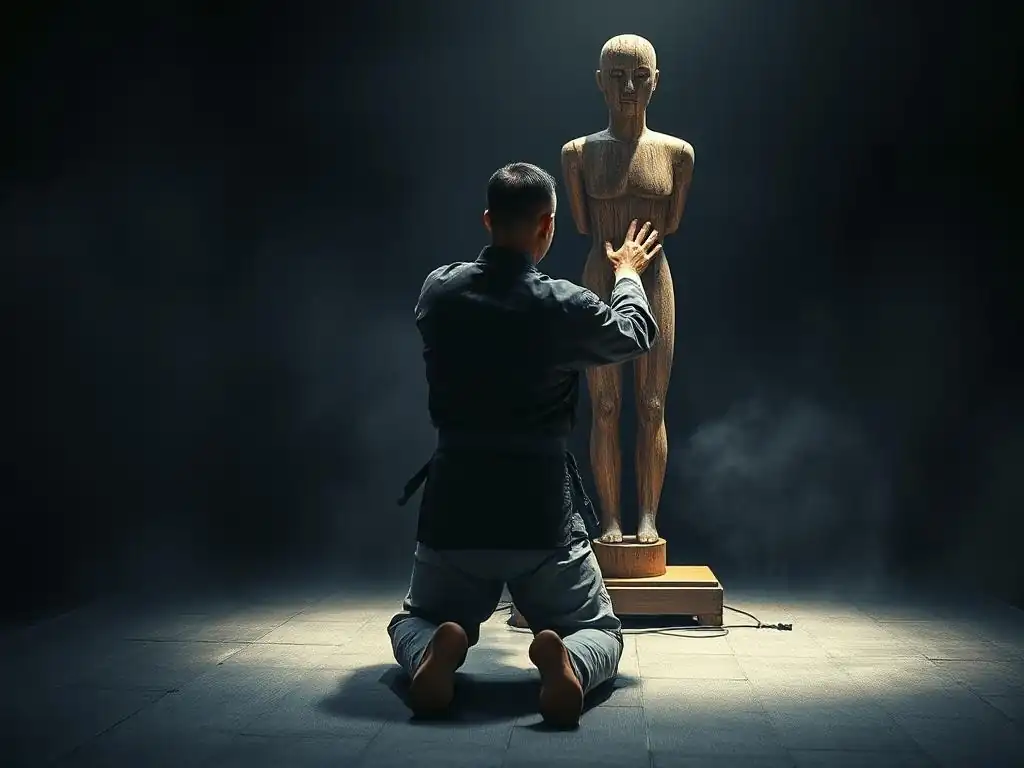
While Wing Chun emphasizes structure and redirection over brute force, developing a degree of power and resilience in techniques like Tan Sao and Bong Sao is important. Advanced dummy training incorporates methods to increase resistance. One way is to use a dummy with stronger or tighter springs, which provides more challenging feedback. Alternatively, a training partner can apply additional controlled pressure to the dummy arm you are working on (though this requires careful coordination to avoid injury to the dummy or partner).
Another method involves isometric holds. For instance, holding a Tan Sao or Bong Sao structure against the dummy's arm for a sustained period (e.g., 30 seconds to a minute), focusing on maintaining perfect form and rooting the structure through the body. This builds structural endurance and the ability to withstand prolonged pressure. These resistance methods, applied judiciously during Tan Sao Bong Sao dummy practice, can enhance the robustness of the techniques.
Developing Chi Sao Sensitivity Through Dummy Drills
The wooden dummy is an excellent tool for pre-Chi Sao sensitivity training. Drills that involve maintaining continuous contact with the dummy's arms, feeling the subtle pressures and angles, directly translate to Chi Sao skills. For example, placing both hands on two dummy arms and practicing yielding, flowing, and maintaining contact as if engaged in a slow, cooperative Chi Sao drill. The practitioner focuses on feeling the "energy" or pressure from the dummy and responding reflexively with appropriate techniques like Tan Sao, Bong Sao, or others.
Specific dummy sections that involve continuous hand contact and transitions, such as elements from Section Two or Four of the form, are particularly valuable for this sensitivity work. By practicing these movements on the Tan Sao Bong Sao dummy, the practitioner develops the tactile awareness and reflexive responses necessary to "listen" to an opponent's force in Chi Sao and real applications.
The "Sticky Hands" Drill for Refining Tan Sao and Bong Sao Coordination
A specific advanced drill on the wooden dummy that mirrors Chi Sao is sometimes referred to as a "sticky hands" drill on the dummy. It involves placing one hand as a Tan Sao or Bong Sao against a dummy arm and the other hand in a supportive or ready position (like Fook Sao - controlling hand - or Wu Sao - guarding hand) against the same or another dummy arm. The practitioner then practices flowing between variations of Tan Sao and Bong Sao, maintaining constant contact with the dummy's arms, feeling the angles and pressures.
This drill emphasizes coordinated movement between both hands and the body. It helps refine the timing and coordination required to use Tan Sao and Bong Sao not just as isolated blocks but as integrated components of a continuous flow of defense and offense. Practicing this "sticky" feeling against the static yet resistant limbs of the Tan Sao Bong Sao dummy builds the foundation for the dynamic, unpredictable nature of human Chi Sao.
The Benefits of Consistent Tan Sao and Bong Sao Dummy Practice
Increased Power and Efficiency in Wing Chun Techniques
Consistent training of Tan Sao and Bong Sao on the wooden dummy leads to increased power and efficiency. Power in Wing Chun isn't just muscular; it comes from proper structure, body unity, and timing. The dummy helps refine the connection between your stance, core, and hand movements, allowing you to generate force from the ground up. Practicing against the dummy's resistance teaches you to use skeletal alignment and body weight effectively, making your Tan Sao and Bong Sao movements more robust and less reliant on isolated arm strength.
Efficiency is gained by eliminating unnecessary movements and tension. The dummy provides immediate feedback; if your movement is inefficient or your structure is weak, the dummy arm will feel heavy, awkward, or push you off balance. Through repetition, you learn to find the most direct and structurally sound path for your techniques, making your Tan Sao and Bong Sao faster, stronger, and less fatiguing to execute, crucial benefits from regular Tan Sao Bong Sao dummy sessions.
Improved Structure and Balance
Perhaps one of the most significant benefits of training Tan Sao and Bong Sao on the wooden dummy is the dramatic improvement in structure and balance. The dummy forces you to maintain a stable stance and proper body alignment while dealing with external force. Practicing techniques like Tan Sao and Bong Sao against the dummy's arms highlights any weaknesses in your structure – a collapsing elbow, a leaning posture, or an unstable stance.
By constantly correcting these issues during practice, you build a stronger, more resilient structure. The dummy also helps develop better balance, as executing techniques and transitions against its resistance requires a well-rooted and centered stance. Over time, this translates into a more stable base in sparring and self-defense, making you harder to unbalance and more effective in generating power from any position, a direct result of dedicated Tan Sao Bong Sao dummy work.
Enhanced Sensitivity and Reflexes
Dummy training is invaluable for developing tactile sensitivity and refining reflexes for Tan Sao and Bong Sao. By maintaining contact with the dummy's arms, you learn to feel the subtle changes in pressure, direction, and angle. This "listening" skill allows you to react instinctively to incoming force without needing to see it clearly or consciously analyze it. The dummy provides a safe environment to develop this proprioceptive awareness.
Repetitive drills on the dummy, especially those involving transitions and combinations, condition your reflexes. Your body learns to respond automatically with the appropriate Tan Sao or Bong Sao technique based on the tactile input from the dummy limb. This enhanced sensitivity and speed of reaction, honed through extensive practice on the Tan Sao Bong Sao dummy, are critical for the spontaneous and fluid application of Wing Chun techniques in real combat situations.
Conclusion: The Wooden Dummy as an Indispensable Tool for Tan Sao and Bong Sao Mastery
The Wing Chun Wooden Dummy, or Muk Yan Jong, stands as an indispensable tool in the journey towards mastering Tan Sao and Bong Sao. It offers a unique training environment that bridges the gap between solo practice and partner work, providing consistent resistance and feedback crucial for developing practical skills. Through dedicated Tan Sao Bong Sao dummy training, practitioners can profoundly deepen their understanding and execution of these foundational techniques.
From refining basic structure and alignment to developing advanced sensitivity, timing, and combinations, the dummy challenges and shapes the practitioner in ways that no other training method can entirely replicate. The benefits gained – increased power, improved structure and balance, and enhanced sensitivity and reflexes – are directly applicable to Chi Sao, sparring, and real-world self-defense scenarios. Consistent, mindful practice on the Tan Sao Bong Sao dummy is not just supplementary; it is integral to achieving a high level of proficiency in Tan Sao, Bong Sao, and the Wing Chun system as a whole.
Frequently Asked Questions
What are Tan Sao and Bong Sao in the context of martial arts?
Tan Sao and Bong Sao are key hand techniques in Wing Chun Kung Fu. Tan Sao is a palm-upward blocking technique, while Bong Sao is a wing arm block used for deflecting attacks.
Why is the wooden dummy (Muk Yan Jong) important for practicing Tan Sao and Bong Sao?
The wooden dummy provides a realistic training environment to develop the proper structure and angles for Tan Sao and Bong Sao. It helps practitioners refine their technique and build power.
How does practicing on the wooden dummy improve the effectiveness of Tan Sao?
Working with the dummy helps develop the correct angle and structure for Tan Sao, ensuring it effectively deflects force. It also builds the necessary muscle memory for quick and efficient execution.
Can I learn Tan Sao and Bong Sao effectively without a wooden dummy?
While possible, it's difficult to achieve the same level of structural understanding and power generation without the dummy. Partner drills can help, but the dummy offers unique resistance and feedback.
What are some common mistakes to avoid when practicing Tan Sao and Bong Sao on the wooden dummy?
Avoid relying solely on arm strength rather than utilizing the whole body. Also, ensure your structure is aligned to effectively absorb and redirect force, and don't neglect footwork and stance.
Final Reflection: Embracing Structure and Flow in Wing Chun
The journey through the Tan Sao and Bong Sao, guided by the wooden dummy, isn't merely about mastering techniques; it's about cultivating a deeper understanding of structure and flow within Wing Chun. The dummy, a silent but demanding teacher, forces us to confront our weaknesses and refine our movements, ultimately leading to a more efficient and powerful expression of the art.
This pursuit of precision and fluidity has profoundly shaped the martial arts landscape, influencing not only Wing Chun practitioners but also those seeking a more nuanced approach to self-defense. The constant refinement and adaptation required by the Tan Sao and Bong Sao on the dummy mirrors the ever-changing nature of real-world confrontations, demanding a flexible and responsive mindset. Adapt what is useful, reject what is useless, and add what is specifically your own.
- Bruce Lee, a philosophy deeply resonant with the continuous learning process embodied by the wooden dummy.
Now, as you step away from the dummy and back into the world, consider how the principles of structure, flow, and adaptability you've honed can be applied beyond the martial arts. Let the lessons learned in the pursuit of the perfect Tan Sao and Bong Sao inform your approach to challenges, fostering resilience, precision, and a constant striving for improvement in all aspects of your life.
Master Your Tan Sao: Your Journey Starts Now!
Thank you for diving deep into the intricacies of Tan Sao and Bong Sao with us! You've unlocked valuable insights into refining your Wing Chun technique using the wooden dummy. Now, let's put that knowledge into action!
- Commit to 15 minutes of daily practice focusing solely on Tan Sao and Bong Sao drills on the wooden dummy. Feel the connection and refine your structure.
- Experiment with incorporating these techniques into your sparring sessions, observing how they adapt in a dynamic environment.
- Share your training progress or challenges in the comments below. Help us and others to become masters!
What subtle adjustments did you discover that amplified your Tan Sao effectiveness?