
Sanchin Kata: The Unyielding Heart of GojuRyu Karate Explained

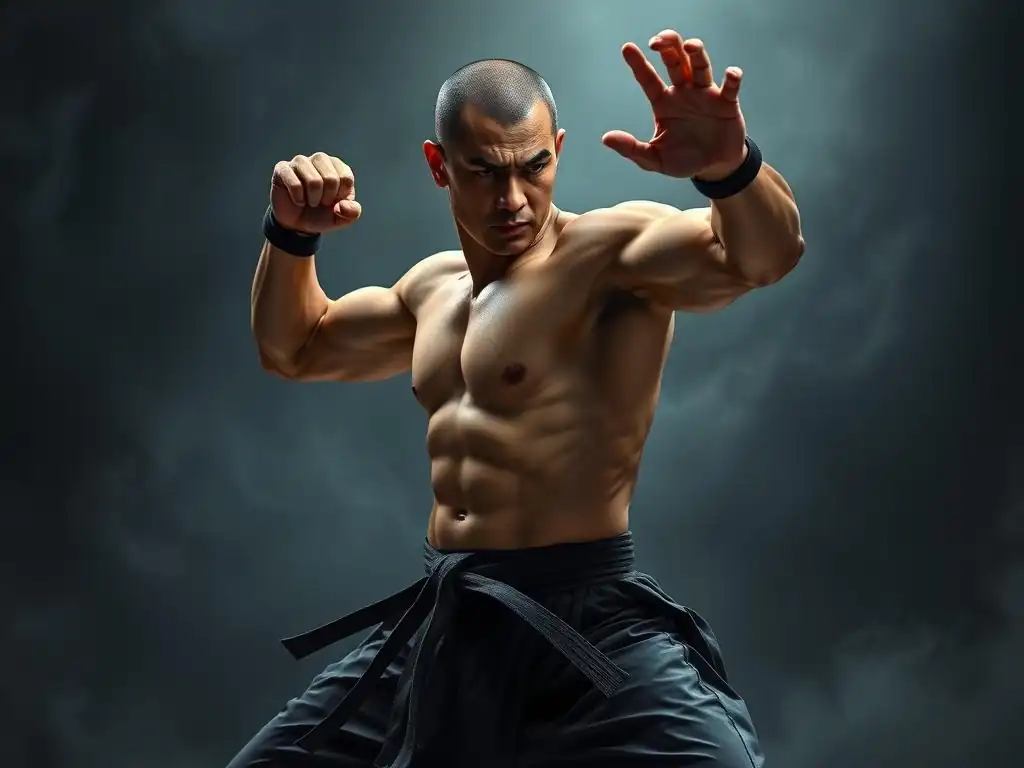
Welcome to Martial Arts Mastery, where we delve into the profound depths of combat traditions worldwide. Ever wondered how a single form could encapsulate the very essence of a martial art? Prepare to unlock the secrets of Sanchin Kata, the cornerstone of GojuRyu Karate. But is it just a form? Or is it something far more powerful? Join us as we explore its history, mechanics, and the unyielding spirit it cultivates, and discover why it's considered the very heart of GojuRyu.
- Introduction to Sanchin Kata in Goju-Ryu Karate
- Deconstructing the Sanchin Kata: A Detailed Examination
- Sanchin Kata Performance: Key Elements and Considerations
- The Benefits of Practicing Sanchin Kata for Goju-Ryu Practitioners
- Sanchin Kata Variations and Interpretations in Goju-Ryu
- Advanced Sanchin Kata Training Methods and Drills
- Sanchin Kata and Self-Defense Applications
- Conclusion: Mastering Sanchin Kata for Goju-Ryu Excellence
-
Frequently Asked Questions
- What is Sanchin Kata, and why is it considered so important in GojuRyu Karate?
- What are the key physical elements emphasized during the practice of Sanchin Kata?
- How does Sanchin Kata contribute to the philosophical understanding of GojuRyu Karate?
- What are some common mistakes beginners make when learning Sanchin Kata, and how can they be avoided?
- Beyond self-defense, what are some of the other benefits of regularly practicing Sanchin Kata?
- Final Reflection: Embracing the Unyielding Spirit
- Embrace the Strength Within: Begin Your Sanchin Journey!
Introduction to Sanchin Kata in Goju-Ryu Karate
What is Sanchin Kata and Why is it Important in Goju-Ryu?
Sanchin Kata, often translated as "Three Battles" or "Three Conflicts," is a foundational kata in Goju-Ryu Karate, central to its physical and philosophical training. It is one of the oldest forms in the Goju-Ryu system, with roots tracing back centuries, potentially to Fujian Province in Southern China. The "three battles" are commonly interpreted as the battles against the body, mind, and spirit, or against breathing, posture, and technique.
Unlike many other kata that focus on dynamic movement and varied techniques, Sanchin emphasizes rooted stances, isometric tension, and controlled breathing, making it seem deceptively simple yet profoundly challenging. Mastery of this Sanchin Kata GojuRyu Karate is considered essential for developing the core strength, stability, and internal power characteristic of the style.
The importance of Sanchin within Goju-Ryu cannot be overstated. It is not merely a sequence of movements but a comprehensive training method designed to unify mind, body, and breath. Practitioners learn to generate power from their center (tanden), maintain unwavering stability against external force, and cultivate intense focus.
Many senior Goju-Ryu instructors believe that without a deep understanding and diligent practice of Sanchin, a student cannot truly grasp the essence of the style or effectively perform its more complex techniques and kata. It serves as the bedrock upon which all other training is built, conditioning the body and mind for the rigors of martial practice and practical self-defense.
The Historical Significance of Sanchin in Goju-Ryu's Lineage
The lineage of Sanchin Kata is deeply intertwined with the history of Goju-Ryu Karate itself. The form is believed to have been brought to Okinawa from Fuzhou, China, by Kanryo Higaonna in the late 19th century. Higaonna Sensei, the founder of Naha-te (the precursor to Goju-Ryu), spent approximately 15 years studying martial arts in China, where he trained under masters like Ryu Ryu Ko.
Sanchin was one of the core forms he learned and subsequently taught upon his return to Okinawa. This original Sanchin likely had open hands and perhaps slightly different movements compared to the closed-fist version commonly seen today.
Chojun Miyagi, Higaonna's most prominent student and the founder of Goju-Ryu, further refined and standardized the Sanchin Kata. He modified the hand postures to closed fists, which he felt better suited the Okinawan context and the development of forearm conditioning (kote kitae).
Miyagi Sensei considered Sanchin and Tensho Kata (another foundational form focusing on soft, circular movements) to be the two pillars of Goju-Ryu, representing the "Go" (hard) and "Ju" (soft) principles. The widespread teaching of Sanchin by Miyagi Sensei and his successors solidified its position as the absolute cornerstone of the Sanchin Kata GojuRyu Karate curriculum globally, influencing generations of practitioners.
Deconstructing the Sanchin Kata: A Detailed Examination
Stance and Footwork in Sanchin Kata: The Foundation of Power
The stance employed throughout Sanchin Kata is known as Sanchin Dachi. This stance is characterized by a narrow, pigeon-toed posture with feet slightly angled inward, typically about shoulder-width apart but with the front foot angled further inward. The knees are bent and pushed inward, creating tension that locks the lower body into a stable, rooted position.
The weight distribution is generally balanced, though some interpretations may place slightly more weight forward or back. The key is to create a solid connection to the ground, feeling "heavy" and immovable. This rootedness is not static; it's a dynamic tension that allows power to be generated from the ground up, through the core, and expressed through the techniques.
The footwork in Sanchin Kata, while seemingly simple, is crucial for maintaining continuous stability and generating power. The primary movement is a shuffling step known as Tsugi Ashi. When moving forward, the back foot slides up to meet the front foot, then the front foot steps forward into a new Sanchin Dachi.
When moving backward, the front foot slides back to meet the back foot, then the back foot steps backward. This shuffling ensures that one foot is always in contact with the ground, maintaining the practitioner's rooted connection and balance. The footwork is executed deliberately and heavily, reinforcing the grounded nature of the stance and preparing the body for generating impactful techniques from a stable base, which is fundamental to effective Sanchin Kata GojuRyu Karate practice.
Breathing Technique in Sanchin: Ibuki and its Role
Breathing is perhaps the most distinctive and vital element of Sanchin Kata practice. The primary breathing method used is Ibuki, a form of controlled, forceful, and audible exhalation coupled with deep inhalation. The inhalation is typically slow and deep, drawing air into the lower abdomen (tanden).
The exhalation is a powerful, controlled expulsion of air through slightly pursed lips, often accompanied by muscular tension throughout the body. This exhalation is not a simple sigh; it's a focused release of breath that coincides with muscular contraction, generating internal pressure and power. This coordinated breathing and tension is crucial for developing the internal strength (kime) and body conditioning (kitae) that Sanchin is known for.
The role of Ibuki extends beyond simply managing oxygen intake. It is a method for focusing energy, stabilizing the core, and conditioning the internal organs. The pressure generated during forceful exhalation with muscular contraction is believed to strengthen the diaphragm and abdominal muscles, improving stability and the ability to absorb impact.
Furthermore, the rhythmic, controlled nature of Ibuki breathing helps to calm the mind and improve focus, making the practice a form of moving meditation. Mastering the timing and coordination of Ibuki with the movements and tension shifts in Sanchin is a lifelong pursuit, unlocking deeper levels of power and body control within Sanchin Kata GojuRyu Karate.
Body Conditioning and Hardening (Kitae) Through Sanchin
A significant benefit and purpose of Sanchin Kata is intense body conditioning, known as Kitae. The isometric tension held throughout the form, combined with the specific breathing technique (Ibuki), works to strengthen muscles, tendons, and ligaments from the ground up. The constant engagement of the legs, core, and arms during the slow, deliberate movements builds remarkable static and dynamic strength. Practitioners often describe feeling a powerful internal heat build during practice, a result of the intense muscular effort and controlled breathing. This conditioning is foundational, making the body resilient and capable of both delivering powerful strikes and withstanding impact.
Beyond general strength building, Sanchin specifically targets areas vital for self-defense. The Sanchin Dachi strengthens the legs and hips, crucial for generating power and maintaining balance. The isometric tension in the arms and chest builds defensive structure, preparing the body to block or absorb strikes. Historically, Sanchin practice often included a partner applying controlled strikes (uchidame) to the practitioner's arms and torso during the kata to test and further develop their body's resilience and ability to absorb impact while maintaining structure. This aspect of Sanchin Kata GojuRyu Karate training directly translates to improved defensive capabilities and overall physical toughness.
Sanchin Kata Performance: Key Elements and Considerations
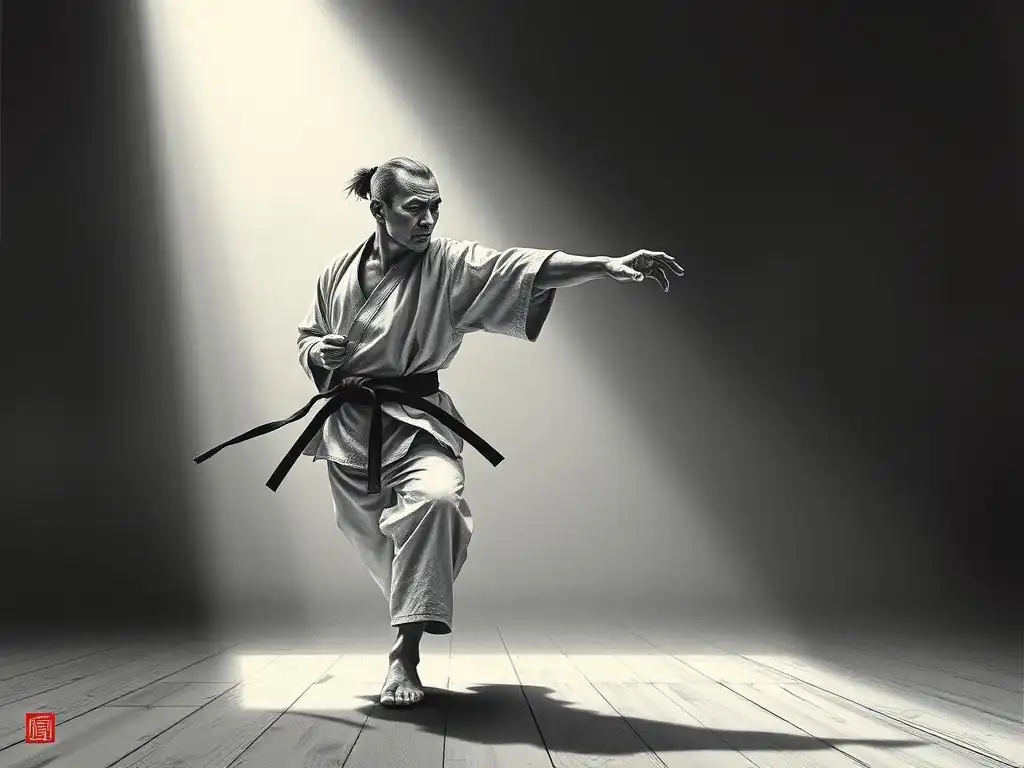
Understanding the Correct Form and Posture in Sanchin Kata
Executing Sanchin Kata correctly requires meticulous attention to form and posture. The Sanchin Dachi must be maintained throughout, with the feet angled inward, knees bent and pressed together, and hips tucked forward. The spine should be erect, but not rigid, with the shoulders relaxed and pulled slightly back.
The hands, held in closed fists (in the modern Goju-Ryu version), are positioned at the sides of the body, with the elbows slightly bent and pulled in. The forearms and fists are held with tension, ready to execute techniques. The head should be held straight, gaze focused forward, maintaining a sense of alertness and presence.
Every transition between movements, such as the slow, deliberate rising of the hands or the execution of a punch (though punches in Sanchin are more about internal connection than external speed), must maintain this integrated body structure. The tension is not uniform; it shifts and focuses with each movement and breath, creating a wave-like quality of power.
A common error is allowing the knees to drift outward or the hips to tilt, which breaks the connection to the ground and diminishes the rootedness of the stance. Correct form ensures that the principles of Sanchin—rootedness, integrated tension, and focused energy—are fully embodied and developed through the practice of Sanchin Kata GojuRyu Karate.
The Importance of Tension and Relaxation (Gekitetsu) in Sanchin
Sanchin Kata is often misunderstood as a form performed with constant, maximum tension. In reality, the effectiveness of Sanchin lies in the dynamic interplay between tension (Go) and controlled relaxation (Ju), a concept sometimes referred to as Gekitetsu. While there is significant isometric tension held throughout the body, particularly during the Ibuki exhalation and specific movements, this tension is not rigid or exhaustive. It is a focused, integrated tension that allows for stability and power generation. The brief moments of controlled relaxation, often during inhalation or transitions, are just as crucial.
This strategic use of tension and relaxation allows the practitioner to generate bursts of power (kime) and maintain stamina. Holding maximum tension continuously would be counterproductive, leading to fatigue and rigidity. Instead, the body learns to engage and release tension efficiently, like a coiled spring. For example, the tension held in the core and legs provides the stable base, while the tension in the arms focuses the energy for a block or strike. Understanding and mastering this subtle balance between Go and Ju is key to unlocking the deeper benefits and practical application of Sanchin Kata GojuRyu Karate.
Common Mistakes to Avoid When Practicing Sanchin Kata
Practitioners, especially beginners, often make several common mistakes when learning Sanchin Kata. One of the most frequent is failing to maintain the correct Sanchin Dachi posture consistently throughout the form. This includes allowing the knees to splay outwards, the feet to lose their inward angle, or the hips to tilt. Another common error is improper breathing; either holding the breath, exhaling too quickly and loosely, or inhaling too shallowly. The Ibuki breath must be deep, controlled, and coordinated with the movements and tension.
Furthermore, many practitioners struggle with the concept of integrated tension, either being too rigid throughout the entire kata or not applying sufficient tension where needed. The tension should be focused and dynamic, not static. Lack of focus is also a significant impediment; Sanchin requires intense concentration on posture, breathing, and internal feeling.
Finally, rushing through the movements or performing them without the characteristic "heavy" quality defeats the purpose of the kata, which is about building internal strength and rootedness, not speed. Avoiding these pitfalls through diligent practice under a qualified instructor is essential for benefiting from Sanchin Kata GojuRyu Karate.
The Benefits of Practicing Sanchin Kata for Goju-Ryu Practitioners
Developing Core Strength and Stability with Sanchin
One of the most immediate and noticeable benefits of consistent Sanchin Kata practice is the significant development of core strength and stability. The Sanchin Dachi, combined with the isometric tension and Ibuki breathing, forces deep engagement of the abdominal muscles, lower back, and diaphragm. This creates a powerful, integrated core that serves as the central engine for all body movements. Practitioners report feeling a solid, stable center, making them less susceptible to being pushed off balance.
This enhanced core strength directly translates to improved performance in all other areas of Goju-Ryu training. Stronger core muscles provide a stable base for delivering more powerful punches and kicks, improve posture in other stances, and increase resilience against impact. For instance, a well-developed core allows a practitioner to absorb a moderate push or strike to the torso without being significantly moved. The constant internal bracing developed through Sanchin is fundamental for generating the characteristic "whip" of power in Goju-Ryu techniques, making it indispensable for effective Sanchin Kata GojuRyu Karate.
Enhancing Body Awareness and Coordination through Sanchin
Sanchin Kata is a powerful tool for cultivating profound body awareness, also known as Kinesthetic sense. The slow, deliberate movements and the requirement to maintain specific postures and tension levels force practitioners to become acutely aware of how their body is positioned, how tension is distributed, and how their breath affects their physical state. This internal focus helps develop a deep connection between the mind and body, allowing for finer control over muscular engagement and movement.
The coordination required to synchronize the Ibuki breath with muscular tension shifts and slow movements also enhances overall body coordination. Practitioners learn to move their body as a unified unit, generating power from the ground up through an integrated kinetic chain. This improved body awareness and coordination are invaluable, not only in martial arts but also in daily life, improving posture, balance, and efficiency of movement. Mastering the subtle nuances of Sanchin Kata GojuRyu Karate leads to a sophisticated understanding and control of one's own physical structure.
Mental Discipline and Focus Cultivated by Sanchin Practice
Beyond the physical benefits, Sanchin Kata is a rigorous exercise in mental discipline and focus. The repetitive nature, the physical discomfort of maintaining tension, and the demand for precise execution require intense concentration. The mind must remain present, focused on the breath, posture, and internal feeling, resisting distraction and the urge to relax prematurely. This sustained mental effort strengthens willpower and the ability to concentrate under duress.
The practice becomes a form of moving meditation, calming the mind while simultaneously energizing the body. The rhythmic Ibuki breathing helps to quiet internal chatter and bring the focus inward. Over time, this mental training translates into improved focus and composure in other challenging situations, both within and outside the dojo. The discipline cultivated through consistent Sanchin Kata GojuRyu Karate practice builds mental fortitude and resilience, making it a holistic training method for mind, body, and spirit.
Sanchin Kata Variations and Interpretations in Goju-Ryu
Differences Between Sanchin Kata Versions: Miyagi Chojun's and Higa Seiko's Sanchin
While Chojun Miyagi standardized Sanchin for Goju-Ryu, variations exist among different lineages, reflecting the interpretations and emphasis of his senior students. The most commonly taught version globally is based on Miyagi Sensei's refined form with closed fists. However, some traditions stemming from other students of Kanryo Higaonna or even Chojun Miyagi maintain slightly different interpretations. For example, the Sanchin practiced in some lineages of Shorei-ryu (a style closely related to Naha-te) might retain open hands or exhibit subtle differences in timing or posture.
Even within Goju-Ryu itself, minor variations can be observed. Higa Seiko, a prominent student of Chojun Miyagi, taught a version of Sanchin that, while fundamentally similar, might have subtle differences in the angle of the feet, the degree of knee bend, or the timing of the breath and tension compared to the Sanchin taught by other students like Meitoku Yagi or Seikichi Toguchi. These variations are not necessarily contradictory but reflect the natural evolution and individual emphasis within a martial tradition, showcasing the living nature of Sanchin Kata GojuRyu Karate.
The Evolution of Sanchin Kata within Goju-Ryu Karate
The evolution of Sanchin Kata within Goju-Ryu illustrates the dynamic nature of martial arts transmission. Beginning with Kanryo Higaonna's likely open-handed version learned in China, the form was adapted and refined by Chojun Miyagi, who introduced closed fists and standardized the movements and breathing for his developing Goju-Ryu system. This standardization was crucial for establishing Goju-Ryu as a distinct and recognized style.
Since Miyagi Sensei's time, while the core structure and principles of Sanchin have remained remarkably consistent across mainstream Goju-Ryu lineages, subtle differences in performance details have emerged. These variations are influenced by individual instructors' understanding, emphasis on certain aspects (e.g., more emphasis on speed vs. tension, different interpretations of applications), and the specific training methodologies passed down within their dojos. This ongoing, albeit slow, evolution ensures that the practice of Sanchin Kata GojuRyu Karate remains relevant and deeply explored by each generation of practitioners.
Advanced Sanchin Kata Training Methods and Drills
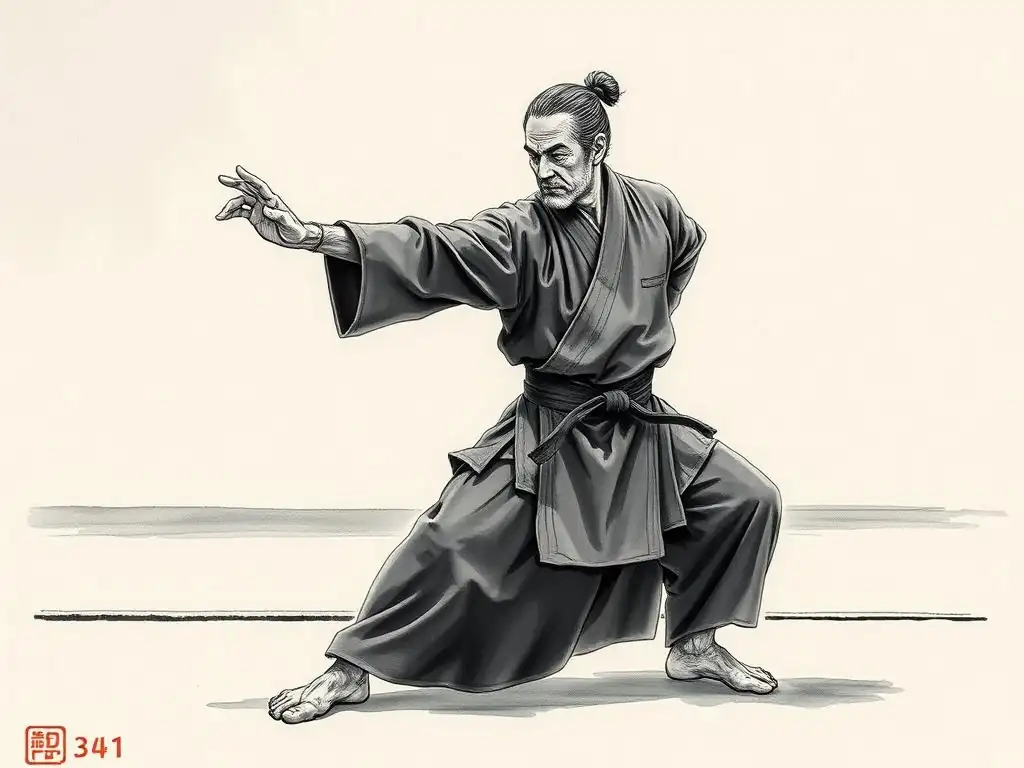
Partner Drills for Sanchin Kata: Enhancing Application
Advanced Sanchin training often incorporates partner drills to test and enhance the practitioner's structural stability, rootedness, and ability to generate power under resistance. A common drill involves a partner applying controlled pressure or strikes (uchidame) to the practitioner's arms, shoulders, or torso while they perform the kata or hold a specific posture within it. The goal is for the practitioner to absorb the impact without being moved, maintaining their structure and rooted connection to the ground. This drill directly tests the internal bracing and body conditioning developed through solo practice.
Another partner drill focuses on testing the practitioner's balance and stability in Sanchin Dachi. The partner might attempt to gently push or pull the practitioner from various angles, requiring them to maintain their rooted stance through subtle muscular adjustments and core engagement. These drills are not sparring; they are specifically designed to provide external feedback on the effectiveness of the internal principles being cultivated in Sanchin Kata GojuRyu Karate, bridging the gap between form and application.
Utilizing Makiwara and Other Tools to Enhance Sanchin's Effectiveness
Traditional training tools are frequently used in conjunction with Sanchin Kata practice to further develop body conditioning and power generation. The Makiwara, a padded striking post, is a prime example. While not explicitly part of the Sanchin kata sequence itself, striking the Makiwara after performing Sanchin allows practitioners to apply the principles of rootedness, core engagement, and integrated power developed in the kata to a live target. The feedback from the Makiwara helps refine the body mechanics for delivering impactful strikes originating from the stable Sanchin base.
Other tools, such as weighted garments or resistance bands, might be incorporated into Sanchin practice to increase the physical challenge and further build strength and stamina. Some dojos also use traditional Okinawan training equipment like Chi Ishi (weighted levers) or Nigiri Game (heavy jars) to build grip strength, forearm conditioning, and overall body power, all of which complement the physical development fostered by Sanchin. These tools serve to externalize and test the internal qualities cultivated through dedicated Sanchin Kata GojuRyu Karate training.
Sanchin Kata and Self-Defense Applications
Translating Sanchin's Principles into Practical Self-Defense Techniques
While Sanchin Kata does not resemble a typical self-defense scenario with dynamic movements and varied techniques, its underlying principles are profoundly applicable to practical self-defense. The rooted stability developed in Sanchin Dachi provides an unshakable base from which to deliver powerful strikes or resist being moved. The integrated body tension and core strength enable the generation of explosive power (kime) in punches, blocks, and grappling techniques. For instance, a punch delivered with the core engagement and grounded power cultivated in Sanchin will be significantly more impactful than one thrown without that foundation.
Furthermore, the body conditioning (kitae) developed through Sanchin practice makes the practitioner more resilient to physical impact, whether from a strike or a fall. The ability to maintain structure and absorb force is critical in a confrontation. The focused, calm mind cultivated through Ibuki breathing and mental discipline helps the practitioner remain composed under pressure, enabling clearer thinking and more effective responses in a stressful self-defense situation. The principles of Sanchin Kata GojuRyu Karate provide the fundamental physical and mental attributes necessary for effective self-protection.
The Role of Sanchin in Developing a Strong Defense
Sanchin Kata plays a crucial role in developing a strong, integrated defense. The Sanchin Dachi itself is a highly stable defensive posture, difficult to unbalance. The isometric tension held throughout the body creates a natural armor, making the practitioner's structure more resistant to being broken by strikes or grabs. The conditioned forearms and torso are better able to absorb or deflect incoming attacks.
Beyond physical resilience, Sanchin teaches the body to naturally brace and root under pressure. This innate ability to tighten the structure upon impact, without conscious thought, is a vital defensive mechanism. The coordinated power generation also means that defensive blocks can be executed with significant force, potentially neutralizing an attack or creating an opening for a counter. Essentially, Sanchin builds the physical "container" – a strong, stable, and resilient body – that is essential for executing both offensive and defensive techniques effectively in Sanchin Kata GojuRyu Karate.
Conclusion: Mastering Sanchin Kata for Goju-Ryu Excellence
The Enduring Legacy of Sanchin Kata in Goju-Ryu Karate
Sanchin Kata stands as a testament to the depth and richness of Goju-Ryu Karate's heritage. Passed down through generations of masters, it remains the unyielding heart of the style, embodying its core principles of hard and soft, tension and relaxation, internal strength and external application.
Its continued practice across diverse lineages underscores its fundamental importance not just as a historical artifact, but as a living, breathing methodology for developing martial power and personal character. The legacy of Sanchin Kata GojuRyu Karate is preserved and propagated through the dedicated efforts of practitioners worldwide who commit to its challenging yet rewarding path.
Its influence extends beyond physical technique, shaping the practitioner's approach to training, fostering patience, perseverance, and introspection. As long as Goju-Ryu is practiced, Sanchin will likely remain its essential foundation, challenging students to look inward, build an unbreakable core, and unify their physical and mental selves. Its enduring presence is a powerful reminder that true martial mastery begins not with complex techniques, but with the cultivation of a strong, stable, and focused internal state.
Continuing the Journey of Sanchin Kata Mastery
Mastering Sanchin Kata is not a destination but a lifelong journey. Each practice session offers new insights into the body's mechanics, the power of breath, and the discipline of the mind. Even seasoned practitioners continue to refine their Sanchin, discovering deeper layers of understanding and application. The subtle nuances of timing, tension, and breath coordination provide endless opportunities for improvement.
For any serious student of Goju-Ryu, consistent and mindful Sanchin practice is non-negotiable. It is the key that unlocks the door to the style's deeper teachings and more advanced techniques. By committing to the disciplined study of this foundational form, practitioners not only honor the tradition of Sanchin Kata GojuRyu Karate but also embark on a profound path of self-discovery and physical and mental development that extends far beyond the dojo. The journey of Sanchin mastery is the journey of mastering oneself.
Frequently Asked Questions
What is Sanchin Kata, and why is it considered so important in GojuRyu Karate?
Sanchin Kata is a fundamental form in GojuRyu Karate. It's crucial for developing core strength, proper breathing, and internal power, acting as the foundation for more advanced techniques.
What are the key physical elements emphasized during the practice of Sanchin Kata?
The practice focuses on isometric tension, controlled breathing (Ibuki), and maintaining a stable stance. These elements cultivate a strong and resilient body.
How does Sanchin Kata contribute to the philosophical understanding of GojuRyu Karate?
It emphasizes internal strength over external display, teaching practitioners to cultivate mental fortitude and unwavering focus. The Kata embodies the GojuRyu principle of Go-Ju, or hard-soft.
What are some common mistakes beginners make when learning Sanchin Kata, and how can they be avoided?
Common mistakes include improper breathing, insufficient tension, and incorrect stance. These can be avoided by focusing on precise instruction and consistent practice under a qualified instructor.
Beyond self-defense, what are some of the other benefits of regularly practicing Sanchin Kata?
Regular practice promotes improved posture, increased body awareness, and enhanced mental discipline. It also helps cultivate inner peace and a sense of well-being.
Final Reflection: Embracing the Unyielding Spirit
The essence of Sanchin Kata, as explored throughout this article, transcends mere physical exercise; it is a profound journey of self-discovery and discipline. Its enduring relevance lies in its ability to cultivate resilience and unwavering focus, qualities desperately needed in our increasingly complex and demanding world. The principles of Sanchin, emphasizing breath control, structural integrity, and mental fortitude, offer a powerful antidote to the stresses and distractions that plague modern life.
The impact of Sanchin Kata extends far beyond the dojo. It instills a deep understanding of one's own limitations and the potential for overcoming them, fostering a sense of inner peace and unwavering determination. This transformative power is perhaps best captured by the words of Chojun Miyagi, the founder of Goju-Ryu: The ultimate aim of Karate lies not in victory nor defeat, but in the perfection of the character of its participants.
As you reflect on the principles and practices of Sanchin Kata, consider how its lessons can be applied to your own life. Embrace the challenge of cultivating inner strength, unwavering focus, and a spirit that remains unyielding in the face of adversity. Let the spirit of Sanchin guide you towards a path of self-improvement, resilience, and ultimately, a more fulfilling and meaningful existence.
Embrace the Strength Within: Begin Your Sanchin Journey!
Thank you for exploring the depths of Sanchin Kata with us. We hope you've gained a deeper appreciation for its power and principles. Now, it's time to integrate this ancient wisdom into your practice and life.
Here are a few ways to continue your journey:
- Commit to mastering the foundational stances: Spend just 15 minutes each day focusing on perfect execution of Sanchin's footwork and body alignment. This consistent practice will build a solid foundation for all your martial arts endeavors.
- Explore Goju-Ryu at a local Dojo: Visit a Goju-Ryu Karate school in your area. Learning from an instructor can help refine your technique and provide invaluable feedback.
- Share Your Insights: Discuss what you've learned about Sanchin with your training partners or on martial arts forums. Teaching others reinforces your own understanding.
What tangible changes will you make to your martial arts practice this week based on what you've learned about Sanchin Kata?