
The Energetics of Baguazhang Palms: Moving Beyond Physical Shape to Internal Power

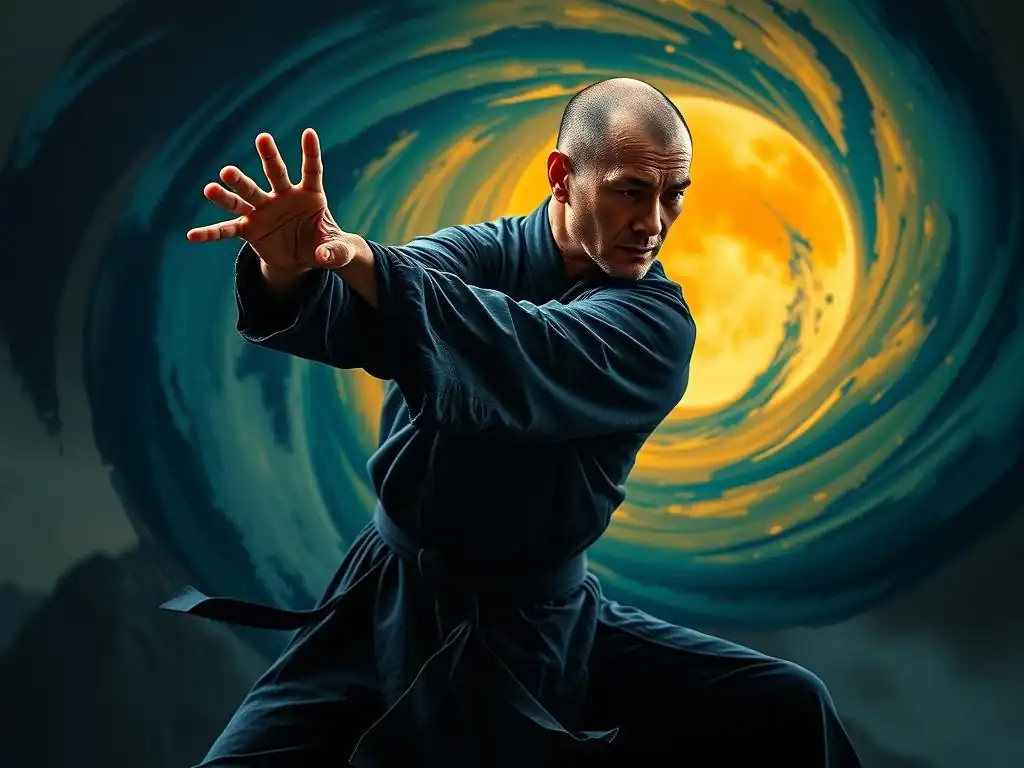
Welcome to Martial Arts Mastery, your portal to the world's fighting arts. Here, we delve deep into the history, techniques, and philosophies that make each discipline unique. Prepare to unlock the secrets of a powerful and often misunderstood art form. This month, we explore Baguazhang, specifically examining its Baguazhang internal power techniques. Discover how to move beyond the physical form and cultivate the internal strength that defines this circular and dynamic style. Are you ready to unlock the potential within?
- Introduction: Understanding the Energetic Core of Baguazhang
- The Three Treasures and Baguazhang Energetics
- Baguazhang Palm Techniques and Internal Energy Development
- Circle Walking and the Cultivation of Internal Power (Nei Jin)
- Baguazhang Breathing Techniques for Enhanced Energy Flow
- The Role of Yi (Intention) in Baguazhang Energetics
- Common Mistakes in Developing Baguazhang Internal Power
- Advanced Baguazhang Internal Power Training Methods
- Integrating Baguazhang Energetics into Self-Defense
- Conclusion: Embracing the Energetic Dimension of Baguazhang
-
Frequently Asked Questions
- What is the main focus of Baguazhang internal power techniques?
- How does Baguazhang's circular movement contribute to internal power development?
- What role does meditation play in developing Baguazhang's internal power?
- Are Baguazhang's internal power techniques only for experienced martial artists?
- What are some key differences between Baguazhang's internal power and external strength training?
- Final Reflection: Cultivating the Inner Landscape
- Unlock Your Inner Power: Begin Your Baguazhang Journey Now!
Introduction: Understanding the Energetic Core of Baguazhang
Beyond Form: The Deeper Meaning of Baguazhang's Circular Movements
While the outward appearance of Baguazhang is often characterized by its distinctive circle walking and intricate palm changes, its true power lies far beneath the surface – within its sophisticated system of cultivating and directing internal energy. Practitioners understand that merely mimicking the physical shapes of the forms is insufficient for developing genuine martial skill.
The circular paths and spiraling movements are not arbitrary; they are designed to facilitate the smooth and continuous flow of Qi (vital energy) throughout the body, harmonizing it with the practitioner's Jing (essence) and guiding it with Shen (spirit). This internal cultivation is the engine driving the apparent external agility and power.
The emphasis on continuous, flowing motion is a key principle in unlocking Baguazhang's internal power techniques. Unlike martial arts that might rely on linear, explosive force generated primarily from muscle, Baguazhang seeks to unify the entire body's structure and energy. The constant turning and shifting inherent in circle walking and palm changes build a unique kind of structural integrity and dynamic balance.
It's estimated that a dedicated practitioner might spend thousands of hours simply walking the circle before mastering even the basic palm changes, illustrating the foundational importance of this internal conditioning over mere external choreography. This relentless focus on integrated movement builds the capacity to generate force from the core, extending it seamlessly through the limbs.
Harnessing Internal Power: The Key to Effective Baguazhang Techniques
Harnessing internal power, often referred to as Nei Jin (internal strength) in Chinese martial arts, is the ultimate goal for serious Baguazhang practitioners. This is not brute muscular strength but a coordinated, integrated force that arises from the connection of mind, body, and breath. Effective Baguazhang internal power techniques allow a practitioner to generate significant force with minimal apparent effort, manipulate an opponent's balance, and absorb or redirect incoming force. This power is characterized by its fluidity, penetrative quality, and ability to manifest explosively or subtly as needed.
Developing this internal power is a gradual process that involves dedicated training in specific methodologies beyond just learning forms. It requires cultivating heightened body awareness, learning precise breathing techniques, and developing focused intent ( Yi).
Masters are often described as being able to issue force that seems to emanate from their center, capable of delivering powerful strikes or throws from seemingly disadvantageous positions. For instance, a small shift in weight combined with a focused release of Qi through a palm strike can generate significantly more impact than a purely muscular strike of the same velocity, often described as having a "shocking" quality that affects an opponent's internal structure.
The Three Treasures and Baguazhang Energetics
Jing (Essence): Foundation of Internal Power in Baguazhang
Jing, often translated as "essence," is considered the foundational energy of the body, akin to its vital reserves or constitutional strength. It is the most dense form of energy and is associated with physical structure, bone density, reproductive health, and overall vitality. In the context of Baguazhang internal power techniques, preserving and strengthening Jing is crucial because it provides the raw material from which Qi and Shen can be cultivated. Depleted Jing leads to weakness, fatigue, and an inability to progress significantly in internal martial arts training.
Traditional Baguazhang training methods implicitly work to conserve and build Jing. Practices like slow, deliberate circle walking and controlled movements minimize unnecessary strain on the physical body while building resilience. Proper rest, nutrition, and avoiding excessive depletion of energy (through overwork, stress, or unhealthy habits) are also considered part of the training. While quantifiable data on Jing is elusive in a Western scientific sense, practitioners report increased stamina, faster recovery times, and a general sense of robust health as training progresses, indicating a strengthening of this foundational energy.
Qi (Energy): Cultivating and Directing Qi Through Palm Changes
Qi, or vital energy, is the dynamic force that flows throughout the body, animating it and connecting the Jing to the Shen. In Baguazhang, the cultivation and precise direction of Qi are central to developing internal power techniques. The intricate palm changes and body movements are specifically designed to open energy pathways (meridians) and promote the smooth circulation of Qi. Stagnant or weak Qi results in stiff, disconnected movements and a lack of penetrative power.
The various palm changes in Baguazhang serve as sophisticated methods for manipulating Qi. For example, the twisting and spiraling motions are said to "wring" the energy out of the limbs and channel it towards the center, the Dan Tian (elixir field), before releasing it through the extremities. Imagine the body acting like a coiled spring or a twisted towel; the release of tension generates force.
A dedicated practitioner might spend months refining a single palm change, focusing not just on the external path of the hands but on the internal feeling of Qi moving, expanding, and contracting in coordination with breath and structure. This focus on internal sensation distinguishes true Baguazhang internal power techniques from mere physical exercises.
Shen (Spirit): Intent and Focus in Baguazhang Energetic Expression
Shen, often translated as "spirit" or "mind-spirit," is the most subtle form of energy, representing consciousness, awareness, and focused intent ( Yi). Shen is considered the commander of Qi; where the mind goes, the Qi follows. In Baguazhang, the cultivation of Shen is paramount for directing internal power effectively, both in training and application. Without focused intent, even abundant Qi remains undirected and ineffective.
Developing Shen involves cultivating a calm, clear, and focused mind. Meditation practices, mindful movement during circle walking, and concentrating on the energetic connections within the body all contribute to strengthening Shen. During practice, the practitioner uses Yi to guide the Qi through the movements, visualizing the energy flowing to the hands or feet, connecting with the ground, and integrating the entire structure.
In application, a strong Shen allows for instantaneous reactions, precise timing, and the ability to sense an opponent's intentions and energy – a crucial aspect of applying Baguazhang internal power techniques effectively in combat. A master's presence is often described as palpable, a manifestation of highly cultivated Shen.
Baguazhang Palm Techniques and Internal Energy Development
Single Palm Change: Channeling Qi for Offensive and Defensive Applications
The Single Palm Change ( Dan Huan Zhang) is arguably the most fundamental and important technique in Baguazhang, serving as the gateway to understanding its energetic principles. It involves walking the circle and, at a designated point, smoothly transitioning from one direction to the other while executing a specific palm strike or block. This seemingly simple transition is, internally, a complex process of shifting weight, aligning the spine, coordinating the hips and shoulders, and channeling Qi.
Mastering the Single Palm Change is essential for developing Baguazhang internal power techniques because it teaches the practitioner how to integrate whole-body movement with energy flow. As the body turns and the palms change position, the practitioner focuses on maintaining a continuous flow of Qi from the Dan Tian, through the torso, and out through the hands.
This technique trains the ability to issue force from the center while the body is in motion, a core characteristic of Baguazhang. It forms the basis for both offensive actions (like striking or pushing) and defensive applications (like deflecting or yielding), emphasizing that offense and defense are two sides of the same continuous energetic flow.
Double Palm Change: Integrating Yin and Yang Energy
The Double Palm Change ( Shuang Huan Zhang) builds upon the principles of the Single Palm Change by introducing a more complex interaction between the hands and arms, often representing the integration of Yin and Yang energies. While one hand might be performing a yielding or deflecting action ( Yin), the other simultaneously prepares for or executes a striking or controlling action ( Yang). This requires a sophisticated level of internal coordination and control over Qi flow.
This technique further refines the practitioner's ability to manage multiple energetic dynamics simultaneously. It teaches how to maintain structural integrity and Qi flow while engaging both sides of the body in complementary or opposing actions. The spiraling movements involved in the Double Palm Change are particularly effective for developing the characteristic "silk reeling" energy ( Chan Si Jin) common in many internal arts, which is crucial for generating wave-like, penetrating Baguazhang internal power techniques. Mastery of this change allows for seamless transitions between yielding and issuing force, making the practitioner highly adaptable in combat.
Lion Palm: Generating Explosive Power from the Dan Tian
The Lion Palm ( Shi Zi Zhang) is one of the Eight Mother Palms or Sixty-Four Palms of Baguazhang, renowned for its potential to generate explosive, penetrating power. While specific forms vary by lineage, the underlying principle involves rooting deeply, coiling the body's structure, and releasing energy in a unified, powerful strike. This technique exemplifies how Baguazhang internal power techniques can be applied for devastating effect.
Generating power in the Lion Palm relies heavily on coordinating the breath, focus ( Yi), and the release of Qi from the Dan Tian. The body coils like a spring during the preparatory phase, drawing energy inward and downward, rooting deeply.
The strike itself is not a simple push or punch but a complex release of integrated body force, propelled by the expansion of the Dan Tian and guided by intent. This technique trains the ability to consolidate Qi and Jing at the center and release it explosively through the palm, capable of impacting an opponent deeply, potentially disrupting their internal structure or balance.
Circle Walking and the Cultivation of Internal Power (Nei Jin)
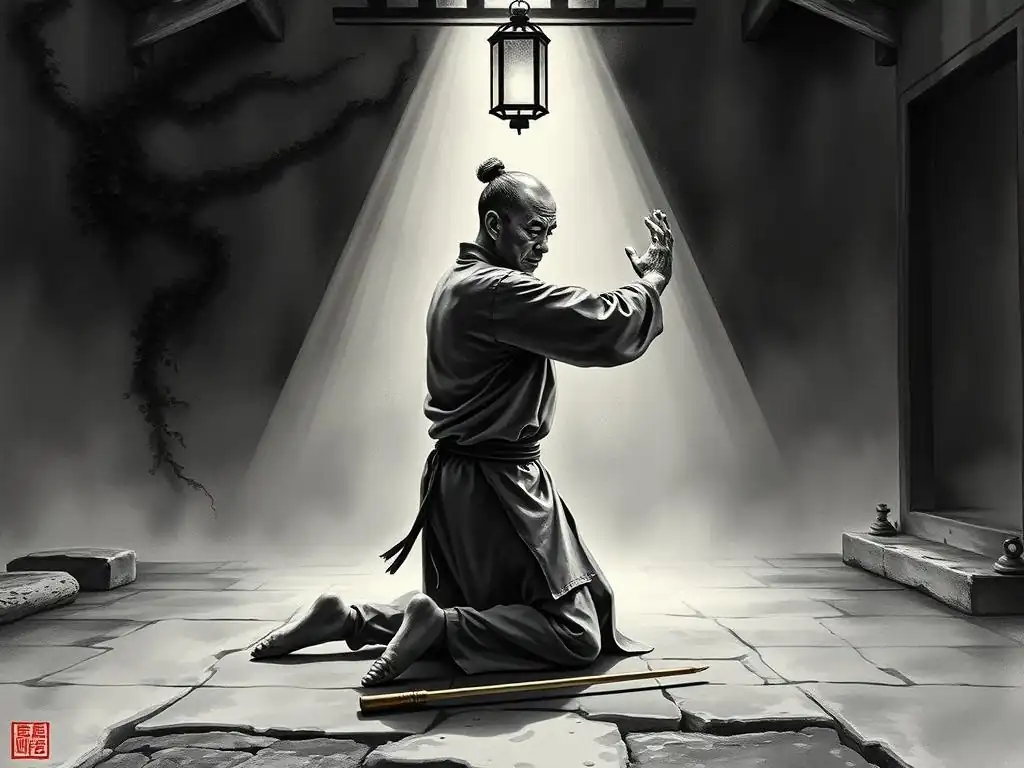
The Importance of Circle Walking for Qi Circulation
Circle walking ( Zou Zhang) is the defining practice of Baguazhang and is far more than just a way to move around. It is a fundamental method for cultivating and circulating Qi, building root, and developing the unique body mechanics required for Baguazhang internal power techniques. The constant turning, shifting weight, and maintaining specific hand and body postures while walking in a circle create a dynamic internal environment that encourages energy flow.
The continuous, spiraling motion of circle walking helps to open joints, relax muscles, and stimulate the flow of Qi through the meridians. Practitioners often describe feeling a warmth or tingling sensation in their limbs and torso as their Qi circulation improves. This consistent, low-impact exercise over extended periods builds endurance and strengthens the legs and core in a way that directly supports the generation of internal power. It's estimated that experienced practitioners can walk the circle for hours, maintaining focus and proper structure, demonstrating the profound conditioning effect on both the physical body and the energetic system.
Connecting the Microcosmic Orbit Through Circle Walking
Advanced circle walking practice is often linked to the concept of cultivating the Microcosmic Orbit ( Xiao Zhou Tian), a key energetic pathway in Qigong and internal martial arts. This orbit involves the circulation of Qi up the spine through the Governing Vessel and down the front of the body through the Conception Vessel. While not always explicitly taught as a separate meditation, the coordinated movement, breathing, and focused intent during circle walking naturally facilitate the connection and strengthening of this vital energy loop.
As the practitioner walks, the subtle undulations of the spine and the coordinated movement of the limbs are said to massage and stimulate the acupuncture points along these two meridians. Focusing the mind on the flow of Qi along this pathway while maintaining proper posture and relaxed breathing enhances the practice. Strengthening the Microcosmic Orbit through circle walking helps consolidate Qi in the Dan Tian and improves overall energy distribution, providing a more stable and potent base for executing Baguazhang internal power techniques.
Developing Rooting and Grounding for Powerful Palm Strikes
Circle walking is instrumental in developing the practitioner's "root" – the ability to connect firmly with the ground and channel energy from the earth up through the body. A strong root is absolutely essential for generating powerful Baguazhang internal power techniques, particularly strikes and throws. Without a stable connection to the ground, any force generated by the body will be weak and easily disrupted.
The constant shifting of weight and balancing required during circle walking naturally strengthens the legs and feet and develops a deep awareness of the connection to the earth. The practitioner learns to sink their weight, relax their hips and knees, and feel the subtle shifts in pressure through their soles.
This grounding allows the practitioner to effectively utilize the leverage provided by the earth, channeling force from the ground up through the legs, torso, and out through the palm. It's this rooted connection that allows Baguazhang practitioners to generate force that can feel like it's coming from the earth itself.
Baguazhang Breathing Techniques for Enhanced Energy Flow
Abdominal Breathing: Filling the Dan Tian with Qi
Proper breathing is a cornerstone of all internal martial arts, and Baguazhang is no exception. The primary method taught is abdominal breathing ( Fu Xi), also known as diaphragmatic breathing. This involves inhaling deeply, allowing the abdomen to expand as the diaphragm lowers, and exhaling slowly, letting the abdomen gently contract. This method contrasts with shallow chest breathing, which is less efficient and can lead to tension.
Abdominal breathing is crucial for cultivating Baguazhang internal power techniques because it directly relates to the Dan Tian. The deep, relaxed movement of the diaphragm massages the internal organs and encourages the accumulation and storage of Qi in the lower Dan Tian, located roughly two inches below the navel. Consistent abdominal breathing during circle walking and form practice helps to fill the Dan Tian, building a reservoir of vital energy that can then be directed and expressed through the movements and techniques. It also promotes a state of relaxation and calm focus, essential for coordinating mind and body.
Reverse Breathing: Enhancing Internal Power Generation
While abdominal breathing is foundational, some advanced Baguazhang lineages also incorporate reverse breathing ( Ni Xi). In this method, the abdomen contracts slightly on the inhale and expands on the exhale. This technique is more advanced and is typically used to generate explosive power or Fa Jin (issuing force). It creates a different kind of internal pressure and energy dynamic compared to abdominal breathing.
Reverse breathing is employed in Baguazhang internal power techniques to gather and release Qi more powerfully and quickly. The contraction on the inhale is said to help draw Qi upwards and inwards, consolidating it, while the expansion on the exhale helps to propel the Qi outwards with force. This method requires precise coordination with physical movement and intent and is often practiced in conjunction with specific striking techniques or power generation exercises. It's a powerful tool for Fa Jin but requires careful practice under guidance to avoid creating internal tension.
Coordinating Breath with Palm Changes for Maximum Impact
The true art of Baguazhang breathing lies in its seamless coordination with the physical movements and palm changes. Breath is not merely an afterthought; it is an integral part of the technique, guiding and powering the expression of internal energy. Inhales often correspond with gathering, yielding, or preparing movements, while exhales are typically linked to issuing force, striking, or expanding outwards.
Synchronizing the breath with Baguazhang internal power techniques ensures that the flow of Qi is smooth, powerful, and uninterrupted. For example, during a powerful palm strike, the practitioner would typically exhale sharply as the force is released, using the breath to drive the Qi through the limb and into the target. Conversely, when yielding or absorbing, a relaxed inhale helps the body become yielding and receptive. This conscious coordination of breath, movement, and intent is what transforms physical technique into dynamic internal power.
The Role of Yi (Intention) in Baguazhang Energetics
Directing Qi with Focused Intent
Yi, or focused intention, is perhaps the most subtle yet powerful element in developing Baguazhang internal power techniques. As mentioned earlier, Shen (mind-spirit) directs Qi, and Yi is the active tool of Shen. It is not simply thinking about the movement but a deep, focused internal awareness and direction of energy. Where the Yi goes, the Qi follows.
In practice, this means that during circle walking or executing palm changes, the practitioner isn't just moving their body; they are using their mind to guide the flow of Qi. They might visualize the energy sinking to their feet to root, flowing up their spine, expanding outwards through their palms, or wrapping around an imaginary opponent.
This mental direction is not forceful but relaxed and continuous. Cultivating this focused Yi is what allows Baguazhang internal power techniques to be expressed with precision and penetrating quality, making the difference between a mere push and a strike that disrupts an opponent's balance from the inside out.
Developing Sensitivity and Awareness Through Mindful Practice
Cultivating Yi also involves developing a heightened sense of internal and external awareness – sensitivity. This means becoming acutely aware of the subtle energetic flows within one's own body (proprioception, feeling the Qi move) and developing sensitivity to the energy and intentions of others (in partner work or self-defense). Mindful practice is the key to developing this sensitivity.
During Baguazhang internal power techniques training, practitioners are encouraged to pay close attention to the internal sensations associated with movement and breathing. Feeling the weight shift, the body coil and uncoil, the breath deepen, and the Qi flow helps to refine the connection between Yi and Qi.
In partner drills like Push Hands ( Tui Shou) or Sensing Hands ( An Shou), this sensitivity is tested and developed further, learning to feel an opponent's structure, intention, and force, and respond instantly using integrated body mechanics and directed Qi. This intuitive response, guided by Yi, is far faster than conscious thought.
Integrating Mind, Body, and Spirit for Complete Baguazhang Mastery
Ultimately, the development of Baguazhang internal power techniques is about the integration of mind ( Shen/ Yi), body ( Jing), and energy ( Qi). These three treasures are not separate entities but interdependent aspects of a single system. True mastery involves harmonizing them so they function as a unified whole. The physical movements (body) are the vehicle, the energy (Qi) is the power, and the mind (Shen/Yi) is the driver and guide.
This integration is achieved through consistent, dedicated practice that addresses all aspects: the physical conditioning of circle walking and forms (Jing/Body), the energetic cultivation through breathing and conscious energy work (Qi), and the mental discipline of focused intent and awareness (Shen/Yi). When these three are harmonized, the practitioner can manifest genuine Baguazhang internal power techniques, characterized by effortless power, fluid movement, and deep internal connection. This holistic approach is what makes Baguazhang a profound path of self-cultivation as well as a potent martial art.
Common Mistakes in Developing Baguazhang Internal Power
Focusing Solely on Physical Form
One of the most common pitfalls for new practitioners attempting to learn Baguazhang internal power techniques is focusing exclusively on the external shapes and sequences of the movements. They might meticulously copy the hand positions, footwork patterns, and body turns without understanding or cultivating the underlying energetic and structural principles. This leads to movements that look superficially correct but lack internal substance and power.
Treating Baguazhang like an external martial art, where speed and muscular force are paramount, completely misses the point of internal power development. Without attention to rooting, body alignment, relaxation, breathing, and intent, the forms become empty choreography. A practitioner focused only on form might perform a beautiful set of palm changes but be easily disrupted or lack penetrative force when attempting to apply the techniques, demonstrating the deficiency in their Baguazhang internal power techniques.
Neglecting Breathing and Meditation Practices
Another significant mistake is underestimating or neglecting the importance of breathing exercises and meditative practices. Many practitioners focus heavily on the physical movements but spend little to no time on dedicated breath work (like abdominal or reverse breathing) or cultivating a calm, focused mind through standing meditation ( Zhan Zhuang) or seated meditation.
Ignoring these practices severely limits the practitioner's ability to cultivate Qi, fill the Dan Tian, and direct energy effectively. Without proper breathing, the energy flow remains shallow and disconnected. Without mental discipline and focus ( Yi), the Qi lacks a guide. Developing Baguazhang internal power techniques requires consistent effort in these less physically dynamic, but equally crucial, areas. Practitioners who skip these steps will find their progress plateauing, unable to access deeper levels of internal strength and energetic control.
Lack of Proper Guidance and Correction
Attempting to learn Baguazhang internal power techniques solely from books, videos, or without a qualified instructor is a recipe for developing bad habits and hindering progress. Internal martial arts are subtle and rely heavily on correct internal feeling and alignment, which are difficult to grasp without experienced guidance. An instructor can provide crucial feedback and corrections that a solo practitioner would miss.
An experienced Baguazhang teacher can identify incorrect body mechanics, tension points, shallow breathing, or lack of proper intent that impede internal power development. They can offer personalized corrections and guidance tailored to the student's specific challenges. For example, an instructor might notice a student holding tension in their shoulders during a palm change, preventing Qi from flowing smoothly. Without that external observation and correction, the student might continue practicing incorrectly for years, limiting their ability to generate genuine Baguazhang internal power techniques.
Advanced Baguazhang Internal Power Training Methods
Zhan Zhuang (Standing Post) for Building Root and Qi
Zhan Zhuang, or Standing Post meditation, is a widely practiced method in internal martial arts and is invaluable for building the foundation of Baguazhang internal power techniques. It involves standing in specific postures for extended periods, focusing on relaxation, proper alignment, sinking the weight, and cultivating Qi in the Dan Tian.
While seemingly simple, Zhan Zhuang is physically and mentally demanding. It systematically breaks down tension, strengthens the legs and core, and teaches the body how to maintain structural integrity while relaxed. More importantly, it is a potent method for accumulating Qi in the Dan Tian and developing a strong, connected root. Practicing Zhan Zhuang for just 15-30 minutes daily can significantly enhance a practitioner's ability to generate and sustain internal power during circle walking and palm changes, providing the energetic reservoir needed for advanced Baguazhang internal power techniques.
Silk Reeling Exercises for Developing Spiraling Energy
Silk Reeling ( Chan Si Gong) exercises are a set of movements characterized by continuous, spiraling, and coiling actions that are fundamental to developing the unique energetic quality of many internal arts, including Baguazhang. These exercises systematically train the body to move in integrated, wave-like patterns, generating force from the core and propagating it smoothly through the limbs.
These exercises specifically cultivate the spiraling energy ( Chan Si Jin) that is crucial for the coiling and uncoiling actions found in Baguazhang palm changes. They teach the practitioner how to coordinate the rotation of the hips, waist, and shoulders with the movements of the arms and legs, ensuring that the entire body moves as a unified unit. Mastering Silk Reeling significantly enhances the fluidity, power, and penetrative quality of Baguazhang internal power techniques, allowing force to travel through complex angles and trajectories.
Push Hands for Refining Sensitivity and Application
Push Hands ( Tui Shou) or Sensing Hands ( An Shou) are partner training methods that are indispensable for developing sensitivity ( Ting Jin - listening energy) and learning how to apply Baguazhang internal power techniques in a dynamic, interactive context. These drills involve two practitioners maintaining contact and gently pushing, yielding, and sensing each other's force and intention.
Through Push Hands, practitioners learn to feel an opponent's center of gravity, detect their incoming force, and respond appropriately using yielding, redirecting, or issuing force based on Baguazhang principles. It provides a safe environment to test the integration of root, body structure, Qi flow, and Yi. Regularly practicing Push Hands refines a practitioner's ability to apply their cultivated Baguazhang internal power techniques spontaneously and effectively against a resisting opponent, transitioning from solo practice to practical application.
Integrating Baguazhang Energetics into Self-Defense
Using Internal Power for Effective Striking and Grappling
Integrating Baguazhang internal power techniques transforms simple strikes and grappling actions into highly effective self-defense tools. Internal power provides the ability to deliver force that is not just impactful externally but also disruptive internally. Strikes powered by Nei Jin can penetrate defenses, affect an opponent's balance, and cause deeper physical disruption than purely muscular strikes.
In striking, Baguazhang's spiraling body mechanics and rooted power allow for strikes that can come from unexpected angles and deliver force that "shocks" the target. For example, a simple palm strike, when infused with Nei Jin generated from the Dan Tian and channeled through the spiraling structure, can feel like a wave of energy passing through the target, potentially causing internal discomfort or loss of breath, far beyond the visible impact.
In grappling or close-quarters situations, Baguazhang internal power techniques allow practitioners to maintain their structure while disrupting an opponent's, using subtle shifts in weight, leverage, and directed Qi to unbalance or control them without relying on brute strength.
Developing Sensitivity to an Opponent's Energy
A key outcome of developing Baguazhang internal power techniques is the cultivation of heightened sensitivity to an opponent's energy, structure, and intention. This sensitivity, developed through practices like Push Hands and mindful movement, allows a practitioner to "listen" to their opponent's body and anticipate their actions.
This energetic sensitivity means that rather than reacting to a physical attack after it has fully manifested, the Baguazhang practitioner can sense the subtle preparatory movements or shifts in tension that precede an action. This allows for a preemptive or simultaneous response, yielding to incoming force while simultaneously redirecting it or launching a counter. This intuitive, energetic reading of the opponent is a hallmark of advanced Baguazhang internal power techniques applied in self-defense, enabling the practitioner to flow with or against an opponent's force with minimal effort.
Applying Baguazhang Principles in Real-World Scenarios
Applying Baguazhang principles and internal power techniques in real-world self-defense scenarios requires adaptability, rootedness, and the ability to maintain internal calm amidst external chaos. Baguazhang's constant movement and circular footwork are inherently suited for navigating dynamic situations, allowing the practitioner to evade direct confrontation while seeking advantageous angles.
The core principles – yielding, redirecting, issuing force from the center, maintaining connection to the ground, and using focused intent – remain constant. In a real-world situation, the practitioner relies on their cultivated internal power to generate force when needed, use their sensitivity to manage distance and angle, and employ the unique body mechanics of Baguazhang to disrupt an attacker's balance or structure.
While specific "techniques" might look different than in the training hall, the underlying Baguazhang internal power techniques and principles are what guide the effective response. For example, a simple sidestep combined with a rooted palm strike powered by Nei Jin can be a highly effective self-defense action.
Conclusion: Embracing the Energetic Dimension of Baguazhang
The Ongoing Journey of Internal Power Cultivation
Embarking on the path of Baguazhang internal power techniques is a lifelong journey of self-discovery and continuous refinement. Unlike martial arts that might have a defined endpoint of physical techniques, the cultivation of internal power is a process with ever-deepening layers. As the practitioner's understanding of Jing, Qi, Shen, and Yi grows, their ability to integrate these elements and express genuine Nei Jin evolves.
There is no shortcut to developing profound Baguazhang internal power techniques. It requires patience, discipline, and consistent practice across all facets: circle walking, palm changes, breathing, standing meditation, and partner work. The progress is often subtle initially, a gradual unfolding of internal awareness and connection. However, over years of dedicated training, the transformation becomes evident in the practitioner's effortless movement, rooted stability, and the palpable quality of their internal power.
Resources for Further Study of Baguazhang Energetics
For those interested in delving deeper into the energetic aspects of Baguazhang and its internal power techniques, there are various resources available, though finding authentic materials requires discernment.
- Traditional texts on Baguazhang theory, often passed down within specific lineages, contain valuable insights into the philosophical and energetic underpinnings.
- Books and articles by reputable masters who have dedicated decades to the practice can offer guidance on training methods and principles.
- Videos demonstrating forms, exercises, and applications from recognized schools can provide visual examples, but should be used in conjunction with theoretical study and practical guidance.
- Seminars and workshops led by experienced instructors offer opportunities for intensive learning and direct correction.
It is important to approach these resources with a critical mind and understand that theoretical knowledge must be paired with consistent physical and energetic practice to yield results in developing Baguazhang internal power techniques.
Finding a Qualified Instructor to Guide Your Training
While theoretical study and personal practice are important, the most critical factor in successfully developing Baguazhang internal power techniques is finding a qualified and experienced instructor. Baguazhang is an oral and physical tradition; many of its nuances, particularly regarding internal energy, cannot be learned from written materials alone.
A good instructor provides not only the correct form but also the crucial understanding of the internal principles, the feeling of the energy, and personalized corrections necessary to guide the practitioner past common errors and plateaus. They serve as a living example of the art's principles and can transmit the subtle aspects of Nei Jin through direct guidance and practice. Investing time in finding a reputable Baguazhang teacher from a legitimate lineage is the most effective way to unlock the profound potential of Baguazhang internal power techniques.
Frequently Asked Questions
What is the main focus of Baguazhang internal power techniques?
Baguazhang internal power techniques focus on cultivating and utilizing qi, or internal energy, for enhanced power and effectiveness beyond mere physical strength. It's about transforming movement into a flowing expression of force.
How does Baguazhang's circular movement contribute to internal power development?
The circular stepping and spiraling movements in Baguazhang generate torque and momentum, which are then channeled into strikes. This approach cultivates internal strength by engaging the entire body.
What role does meditation play in developing Baguazhang's internal power?
Meditation, particularly Nei Gong, is crucial for cultivating qi awareness and flow. It helps practitioners connect with their internal energy, enhancing control and focus during movements.
Are Baguazhang's internal power techniques only for experienced martial artists?
While advanced techniques require a solid foundation, beginners can start with basic exercises to develop qi awareness and body alignment. Focus on foundational principles before complex movements.
What are some key differences between Baguazhang's internal power and external strength training?
Internal power training emphasizes cultivating qi circulation and body mechanics to generate force from within. External strength focuses on muscle development and physical power, often without the same emphasis on internal energy.
Final Reflection: Cultivating the Inner Landscape
The journey through Baguazhang's palms reveals more than just physical forms; it unveils a profound understanding of internal power as a dynamic, energetic flow. This exploration, far from being a historical exercise, resonates deeply today as individuals seek holistic approaches to well-being, stress reduction, and enhanced physical capabilities, moving beyond mere surface-level fitness.
The emphasis on internal energy cultivation in Baguazhang has profoundly shaped my understanding of movement and its potential. It's a reminder that true strength isn't just about muscular force, but about harnessing the subtle energies within. The body is a garden, the will is its gardener.
This ancient wisdom, though not directly from Baguazhang, perfectly encapsulates the ongoing influence of this art – a continuous cultivation of the self, both physically and energetically.
Now, as you step away from this exploration of Baguazhang's internal power techniques, I invite you to consider how you can apply these principles to your own life. Can you find moments to connect with your inner energy, to move with intention and awareness, and to cultivate a deeper understanding of your own potential? The power lies within you; embrace the journey of self-discovery and unlock the boundless possibilities that await.
Unlock Your Inner Power: Begin Your Baguazhang Journey Now!
Thank you for exploring the energetics of Baguazhang palms with us! We hope this article has illuminated the path toward cultivating internal power beyond just physical form. Now, it's time to translate this knowledge into action and deepen your understanding.
Here are some ways to continue your Baguazhang adventure:
- Commit to a Daily Practice: Dedicate at least 15 minutes each day to practice the core palm techniques discussed, focusing on the energetic principles. This consistent effort will transform your understanding from intellectual to embodied.
- Explore supplementary resources: Delve into videos showcasing high-level practitioners embodying these energetic principles. Watch how they move; how they breathe; and how they focus their intent.
- Share your insights! Connect with other martial artists online and share your experiences implementing these energetic principles in your Baguazhang practice. Perhaps consider sharing your experiences and thoughts in the comment section!
What's one energetic principle from the article that you're most eager to integrate into your daily Baguazhang practice, and how do you plan to achieve it?