
Escape and Evasion: The First Line of Defense in Eskrima Knife Encounters


Welcome to Martial Arts Mastery, your gateway to the rich and diverse world of combat. Delve into the history, philosophy, and practical application of martial arts disciplines from across the globe.
Are you prepared to face the ultimate challenge? In this article, we dissect the often-overlooked yet critical skill of survival in close-quarters combat. Discover the core principles and essential Eskrima knife escape techniques that could save your life. Ready to unlock the secrets of evasion and turn the tables on your attacker?
- Understanding the Primacy of Evasion in Eskrima Knife Defense
-
Frequently Asked Questions
- What is the primary focus of Eskrima knife escape techniques?
- Why is escape emphasized over direct confrontation in Eskrima knife defense?
- What are some key principles that underpin Eskrima knife escape training?
- Does Eskrima knife escape training involve learning disarming techniques?
- How does Eskrima's philosophy of self-defense relate to knife escape strategies?
- Final Reflection: Mastering the Art of Evasion
- Unlock Your Inner Defender: Embrace Eskrima's Edge!
Understanding the Primacy of Evasion in Eskrima Knife Defense
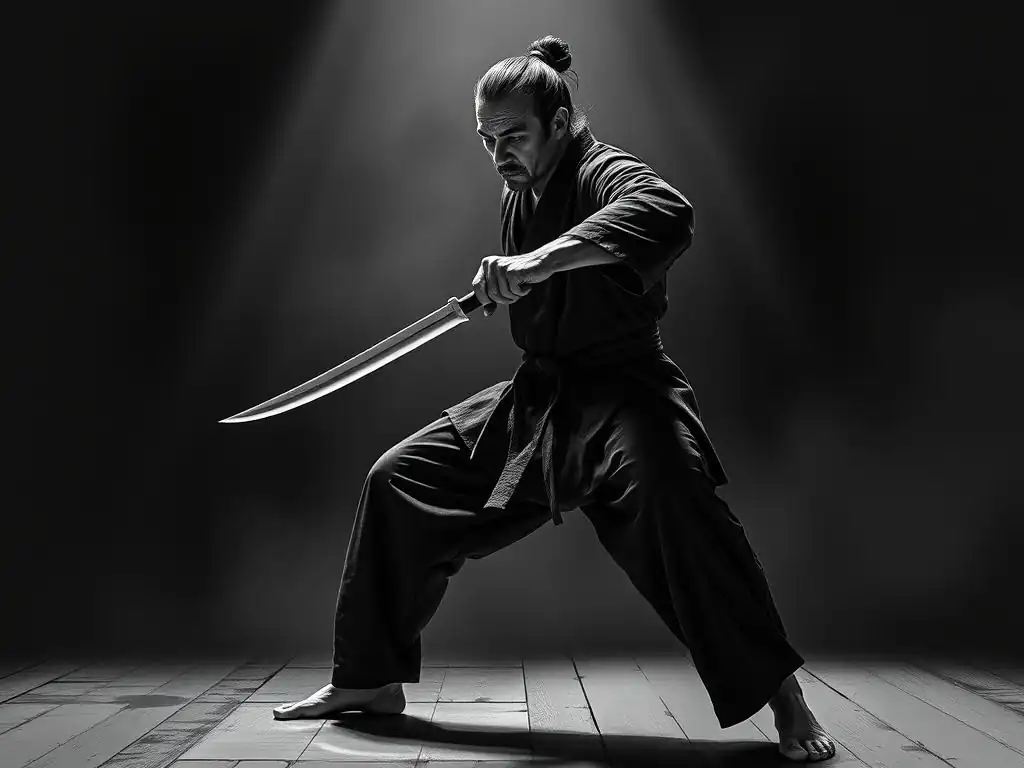
Why Evasion Precedes Engagement in Eskrima Knife Fighting
In the dangerous realm of knife encounters, the primary objective in Eskrima is not to stop the blade but to avoid being cut or stabbed. A knife attack is characterized by its speed and lethality; a trained individual can deliver multiple thrusts or slashes in mere seconds. According to some analyses of real-world knife attacks, an assailant can often land 3-5 hits within 1-2 seconds at close range.
Given these stark realities, absorbing even one significant cut or thrust can be life-threatening due to potential damage to vital organs, major arteries, or severe blood loss. Therefore, effective Eskrima knife escape techniques prioritize creating distance and breaking the line of attack before attempting any form of engagement or control.
This emphasis on evasion is rooted in the practical understanding that even the most skilled martial artist is vulnerable to a sharp edge. Unlike blunt force, which can often be absorbed or deflected with minimal injury, a knife's cutting and piercing capabilities mean that even glancing blows can cause significant wounds, degrading one's ability to defend effectively.
The philosophy behind Eskrima knife defense techniques dictates that survival hinges on not being there when the blade arrives. This makes mastering Eskrima knife escape techniques the foundational layer of defense, providing the crucial seconds needed to assess the situation, create opportunities, or ultimately disengage safely.
The Limitations of Direct Blocking Against a Knife Attack
Directly blocking a knife attack with one's limbs or even a stick is inherently risky and generally discouraged as a primary defense in Eskrima. While some techniques involve deflections or checks, outright static blocking against a determined thrust or slash is fraught with peril.
The edge of a knife is designed to cut through material, and human flesh, bone, and muscle are no exception. Attempting to absorb the full force of a knife attack with an arm, for instance, is highly likely to result in a severe laceration or puncture wound, compromising the defender's ability to continue the defense and potentially leading to rapid incapacitation from injury and blood loss.
Furthermore, a knife is a relatively small weapon, making it difficult to reliably track and block every movement in a high-stress situation. A skilled attacker can employ feints, changes in angle, and rapid combinations, easily bypassing a static block.
Even if a block is successful in momentarily stopping the blade, it often leaves the defender in extremely close proximity to the attacker, vulnerable to follow-up attacks or transitions to grappling. This underscores why Eskrima knife escape techniques, which focus on dynamic movement and angle changes, are far more effective and safer than attempting to directly confront and absorb the force of a knife attack.
Frequently Asked Questions
What is the primary focus of Eskrima knife escape techniques?
The primary focus is on immediate threat neutralization and creating an opportunity to disengage safely from the attacker. It's about surviving the initial assault.
Why is escape emphasized over direct confrontation in Eskrima knife defense?
Eskrima emphasizes escape because knife fights are incredibly dangerous. Avoiding a prolonged engagement significantly increases your chances of survival.
What are some key principles that underpin Eskrima knife escape training?
Key principles include awareness of surroundings, distance management, and rapid, decisive movements to break the attack.
Does Eskrima knife escape training involve learning disarming techniques?
While some disarming might be incorporated, the main focus is creating space. Disarming is secondary to immediate escape and evasion tactics.
How does Eskrima's philosophy of self-defense relate to knife escape strategies?
Eskrima's self-defense philosophy prioritizes preservation of life. Knife escape strategies align by emphasizing avoiding unnecessary risk and prioritizing survival.
Final Reflection: Mastering the Art of Evasion
The techniques discussed throughout this article, focusing on Eskrima knife escape techniques, are not merely historical curiosities or theoretical exercises. They represent a vital, living tradition, a crucial first line of defense in a world where threats, unfortunately, can materialize unexpectedly. Understanding and practicing these evasive maneuvers is about more than just self-preservation; it's about cultivating a mindset of awareness and preparedness, empowering individuals to navigate potentially dangerous situations with confidence and skill.
This exploration of Eskrima's escape and evasion principles has profoundly influenced my understanding of self-defense, highlighting the importance of proactive avoidance over reactive confrontation. It's a reminder that true mastery lies not just in offensive capabilities, but in the ability to intelligently and gracefully sidestep danger. As the legendary Bruce Lee wisely stated: The best fight is the one you avoid.
This philosophy resonates deeply with the core tenets of Eskrima, emphasizing fluidity, adaptability, and the strategic use of space to neutralize threats before they escalate.
Now, I urge you to consider how these principles of escape and evasion can be applied beyond the realm of physical self-defense. Reflect on the "knives" that appear in your own life – the stressors, the conflicts, the negative influences that threaten your well-being. Can you adopt a more proactive approach, anticipating and evading these challenges before they inflict harm? Embrace the spirit of Eskrima, cultivate your awareness, and develop your own personal "escape techniques" to navigate life's complexities with grace, resilience, and unwavering self-preservation.
Unlock Your Inner Defender: Embrace Eskrima's Edge!
Thank you for exploring the vital role of escape and evasion in Eskrima knife encounters. We hope you've gained valuable insights into prioritizing safety and tactical movement. Now, let's put that knowledge into action.
- Prioritize your safety: Enroll in a local Eskrima class to refine your footwork and evasive maneuvers.: This is the most important step to becoming truly proficient.
- Deepen your understanding: Research renowned Eskrima masters and their unique approaches to defense against edged weapons. Expand your knowledge and your options!
- Share this article with fellow martial artists to spark discussions on effective self-defense strategies.
How will you integrate these evasion principles into your current training regimen, and what specific drills will you use to sharpen your reflexes?