
Empty Hand Entries for Knife Attacks: Closing the Gap in Arnis


Welcome to Martial Arts Mastery, where we delve into the depths of combat knowledge. Ever wondered how to bridge the gap between empty-hand defense and the razor's edge? Today, we unravel the secrets of Arnis knife attack entries, exploring how this dynamic Filipino martial art offers practical solutions for close-quarters combat. Prepare to sharpen your understanding and discover effective strategies for neutralizing threats.
- Introduction to Arnis Knife Defense: Empty Hand Entries
- Understanding Knife Attacks in Arnis: Threat Assessment and Dynamics
- Core Principles of Empty Hand Entries Against Knife Attacks
- Arnis Empty Hand Entry Techniques: A Step-by-Step Guide
- Drills and Training Methods for Mastering Empty Hand Entries in Arnis
- Common Mistakes to Avoid When Practicing Empty Hand Knife Defenses
- Advanced Concepts in Arnis Empty Hand Knife Defense
- The Importance of Awareness and De-escalation in Knife Encounters
- Conclusion: Mastering Arnis Knife Attack Entries for Self-Defense
-
Frequently Asked Questions
- What is an "Arnis knife attack entry" and why is it important?
- How does Arnis training prepare someone for knife defense?
- What are some common risks associated with attempting an empty-hand entry against a knife attack?
- Does prior martial arts experience affect someone's ability to learn Arnis knife defense?
- Is it possible to master Arnis knife defense without a partner?
- Final Reflection: Embracing the Flow of Defense
- Unleash Your Inner Arnis Master Now!
Introduction to Arnis Knife Defense: Empty Hand Entries
The Importance of Empty Hand Entries in Arnis Knife Defense
In the dynamic and often chaotic environment of a knife attack, the ability to quickly and effectively close the distance from a position of relative safety to one where control can be established is paramount. This critical phase is known as the "entry." In Arnis, a martial art renowned for its weapon-based techniques, empty hand entries are not merely a last resort but a fundamental component of a complete self-defense system.
They represent the bridge between recognizing a threat and executing techniques to neutralize it, often under extreme pressure. Without proficient empty hand entries, even the most sophisticated disarms or control techniques remain theoretical, as the practitioner must first survive the initial assault and gain proximity.
The emphasis on empty hand techniques within Arnis, despite its weapon focus, stems from the understanding that one may find themselves unarmed against a knife-wielding assailant. Therefore, training in empty hand Arnis knife attack entries is vital. These entries are designed to disrupt the attacker's motion, protect vital areas during the approach, and position the defender advantageously for follow-up actions. They require a deep understanding of timing, distance management, and body mechanics, honed through rigorous practice. Mastery of these initial movements is often the deciding factor in the success or failure of the entire defensive sequence.
Bridging the Gap: From Distance to Control in Knife Engagements
The gap between the initial encounter distance and the grappling/control range is arguably the most dangerous phase in a knife confrontation. A knife attacker can cover surprising distance quickly – often cited approximations suggest an attacker can close 21 feet in roughly 1.5 to 2 seconds. This leaves minimal time for reaction and requires immediate, decisive action.
Arnis empty hand entries are specifically designed to navigate this perilous zone. They involve strategic movement, simultaneous defense and movement forward, and the exploitation of angles to minimize exposure to the blade while closing the distance. The goal is to transition from a passive reaction to an active interception.
Effectively bridging this gap using Arnis knife attack entries involves not just speed, but intelligence. It's about entering at an angle that takes you off the line of attack, using your limbs to check or deflect the incoming weapon, and establishing contact points that allow you to control the attacker's structure and weapon-bearing limb.
For instance, an entry might involve a quick step off-line combined with a simultaneous forearm check against the attacker's arm, immediately followed by gaining control of the wrist or elbow. This transition from distance to control is the core function of these entries, turning a potentially fatal distance into an opportunity for defense and resolution.
Understanding Knife Attacks in Arnis: Threat Assessment and Dynamics
Identifying Common Knife Attack Patterns in Arnis
Arnis training often categorizes knife attacks into a structured system, frequently based on angles of attack. While variations exist across different Arnis systems, a common framework involves angles that simulate slashes and thrusts towards vital areas. For example, a basic set might include a downward slash to the head (Angle 1), a horizontal slash to the neck or ribs (Angles 2 and 3), a thrust to the torso (Angle 4), and an upward thrust (Angle 5). More comprehensive systems expand upon this, detailing attacks to the legs, arms, and other targets, potentially listing 12 or more distinct angles.
Understanding these common patterns is crucial for developing effective Arnis knife attack entries. Practitioners learn to recognize the tell-tale signs of an impending attack based on the attacker's body language, grip on the knife, and initial movement. By studying these predictable patterns, defenders can anticipate the trajectory of the blade and select the most appropriate entry technique to intercept or evade it. Training involves not just defending against pre-defined angles but also adapting to less structured, more chaotic "street" attacks, using the fundamental principles derived from studying the common patterns.
Assessing Risk and Closing the Distance Safely
Assessing the immediate risk posed by a knife-wielding individual is the first step in any defensive scenario. This involves quickly evaluating factors such as the attacker's intent, distance, environment, and the type of knife. A determined attacker at close range in a confined space presents a significantly higher risk than a hesitant individual at a greater distance outdoors. This rapid assessment informs the decision-making process: is evasion possible, or is an immediate defensive action, such as an Arnis empty hand entry, necessary?
Closing the distance safely against a knife requires careful consideration of angles and timing. Simply rushing in is incredibly dangerous. Safe entry involves moving off the line of attack while simultaneously advancing.
This could mean stepping diagonally forward or laterally to the side as you initiate your defensive action. The timing must be precise – entering too early might expose you to an unexpected attack, while entering too late means you're likely already within the lethal range of the blade. Arnis training emphasizes drilling entries from various distances and angles to develop the intuitive timing and footwork needed to bridge the gap while minimizing exposure.
Core Principles of Empty Hand Entries Against Knife Attacks
Angle of Attack: Deflection and Evasion Strategies
The principle of managing the angle of attack is fundamental in Arnis knife defense, particularly for empty hand entries. Instead of meeting force head-on, Arnis teaches redirecting or evading the attack by moving off the line of force.
If an attacker comes with a straight thrust, moving directly back might delay impact but doesn't neutralize the threat; moving slightly offline to the left or right, while simultaneously closing, takes you out of the blade's path and positions you for a counter. This off-line movement is often combined with a simultaneous defense, such as a block or check, reinforcing the principle of integrated offense and defense.
Deflection and evasion strategies are intertwined within Arnis empty hand entries. Deflection uses a part of your body (forearm, hand, shoulder) to redirect the incoming blade slightly, altering its trajectory just enough to allow you to pass safely as you close the distance. Evasion involves footwork and body mechanics to physically move out of the blade's path. A successful entry often combines both: a quick step off-line (evasion) while using an arm to guide or push the attacker's weapon arm away (deflection). Mastering these angles is crucial for executing effective Arnis knife attack entries without sustaining injury.
Footwork and Body Positioning for Effective Entries
Effective footwork is the engine driving successful Arnis empty hand entries. It dictates your speed, angle of approach, and ability to maintain balance while under threat. Common footwork patterns include the "passing step" (stepping forward with one foot followed by the other), the "placing step" (bringing the back foot up to meet the front), and various shuffling or pivoting movements. The key is to move quickly and efficiently, minimizing the time spent in the direct line of attack and ensuring you land in a stable position from which to execute follow-up techniques.
Body positioning complements footwork. As you enter, your body should ideally be angled relative to the attacker, presenting a smaller target profile. Your lead shoulder might be forward, or you might turn slightly sideways. Simultaneously, your body should be structured and balanced, ready to absorb force or redirect it. Maintaining a low center of gravity and keeping your weight balanced over your feet allows for rapid changes in direction or the ability to resist being pushed off balance by the attacker. Proper body positioning ensures that your Arnis empty hand entries are not only fast but also structurally sound.
Hand and Arm Defenses: Blocking and Redirecting Knife Attacks
Hand and arm defenses are the primary tools used to interact with the attacker's weapon arm during Arnis empty hand entries. These are not static blocks designed to stop the blade head-on, which is incredibly risky due to the knife's cutting ability. Instead, they are dynamic checks, deflections, or guides aimed at controlling the attacker's limb and redirecting the weapon's energy. Techniques like the "live hand" principle, where the non-blocking hand is actively used for checking, trapping, or manipulating, are integral.
Common hand and arm defenses include using the forearm to meet the attacker's arm just above the wrist or elbow, pushing it slightly off course as you move in. Another involves using an open palm check or a quick tap/guide to redirect the weapon-bearing hand during its motion. The goal is always to create a pathway for your body to enter safely while simultaneously beginning to gain control over the attacker's limb. These defenses are typically executed with speed and precision, integrating seamlessly with the footwork and body positioning to form a cohesive empty hand entry in Arnis.
Arnis Empty Hand Entry Techniques: A Step-by-Step Guide
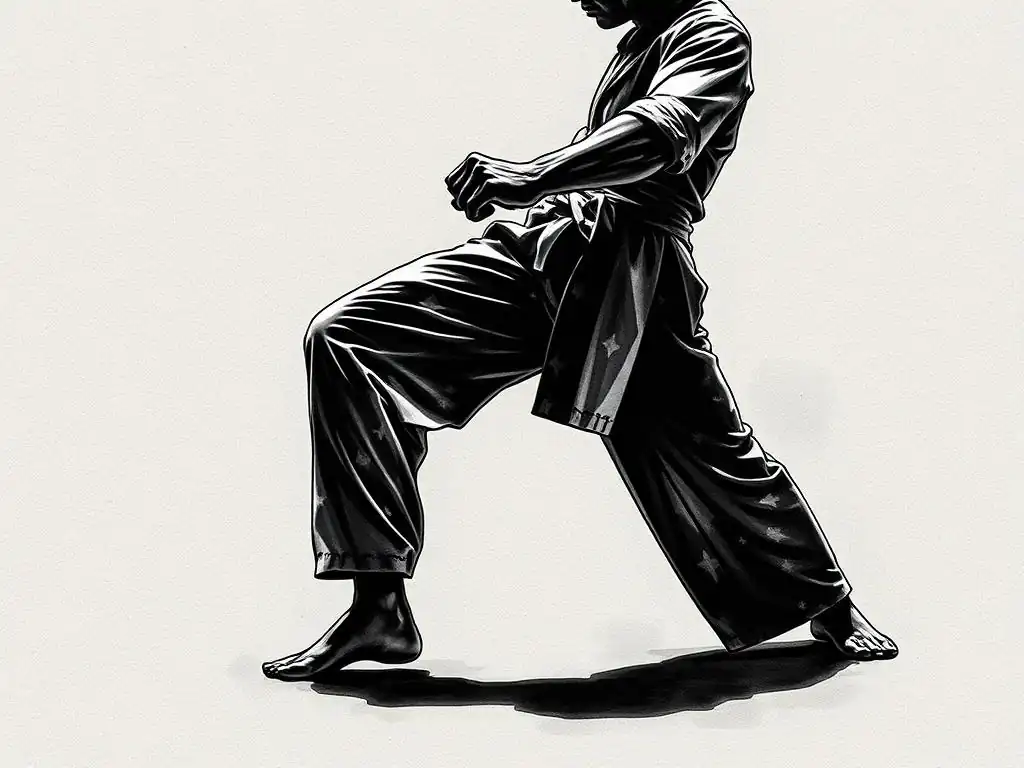
Technique 1: Inside Sweep and Arm Control
This technique is often used against an incoming slash or thrust from the attacker's dominant side (e.g., a right-handed attacker attacking with their right hand).
- Initial Evasion/Angle: As the attack comes, take a quick diagonal step inside the attacker's weapon-bearing arm (e.g., step forward-left against a right-hand attack). This takes you off the direct line of attack.
- Simultaneous Check/Sweep: As you step, extend your lead arm (e.g., left arm) to perform an inside sweep or check on the attacker's weapon arm, just above the elbow or on the forearm. The goal is to guide the arm across their body or slightly away from you.
- Close the Gap: Continue your forward movement, closing the distance rapidly to jam the attacker's arm and body. Your other hand (e.g., right hand) can move to secure control of the attacker's wrist or hand.
- Establish Control: With your lead arm checking the upper arm and your trail hand securing the wrist, you have established dominant control over the weapon-bearing limb, preventing further strikes. From here, follow-ups like disarms or takedowns can be applied.
Training for this Arnis knife attack entry involves starting slowly with a partner, focusing on the timing of the step and the sweep, then increasing speed and intensity. Initially, use a training knife or padded stick.
Technique 2: Outside Deflection to Wrist Lock
Effective against slashes or thrusts, this entry utilizes an outside angle.
- Initial Evasion/Angle: As the attack comes, take a quick diagonal step outside the attacker's weapon-bearing arm (e.g., step forward-right against a right-hand attack). This moves you outside the arc of the blade.
- Simultaneous Deflection: Use your lead arm (e.g., right arm) to perform an outside deflection on the attacker's weapon arm, pushing it away from you and slightly past their body. Use the forearm or the blade of the hand.
- Close the Gap & Secure Wrist: Continue your forward movement, closing the distance. Your other hand (e.g., left hand) immediately moves to secure the attacker's wrist from the outside.
- Apply Wrist Lock: With the wrist secured, step deeper or adjust your position to apply pressure for a wrist lock (like a gooseneck or palma down lock) while maintaining control with your lead arm or shoulder. This can lead to a disarm or takedown.
Practicing this Arnis knife attack entry requires precise timing between the step, deflection, and grabbing the wrist. Partner drills simulating different attack angles are essential to refine the movement and transition into the control phase.
Technique 3: Low Line Entry to Leg Sweep
This technique targets the attacker's lower body to disrupt their base, often used against high or middle line attacks where a low entry is safer.
- Initial Evasion/Angle & Level Change: As a high or middle attack comes, quickly change levels by bending your knees and taking a diagonal step off-line and slightly towards the attacker's side (e.g., stepping forward-left against a right-hand high slash, aiming low).
- Low Check/Control: Use your arms (perhaps a cross-body check with one arm, supported by the other) to protect your head/neck as you move under the line of attack, aiming to get close to the attacker's legs.
- Secure Leg & Execute Sweep: As you close the distance at this low level, position yourself beside the attacker's leg (e.g., their front leg). Use your bodyweight and structure to secure their leg (e.g., hook it with your arm or leg).
- Complete the Sweep: Drive forward or sweep the secured leg, using your leverage to take the attacker off balance and bring them to the ground, facilitating a disarm or escape.
This Arnis empty hand entry is higher risk due to the level change but can be highly effective if executed correctly. Drills must focus on speed, level change, and maintaining balance while moving low. It's crucial to practice the transition from the low entry to securing the leg and executing the sweep smoothly.
Drills and Training Methods for Mastering Empty Hand Entries in Arnis
Solo Drills for Developing Footwork and Hand Speed
Solo drills are foundational for building the muscle memory, speed, and precision required for Arnis empty hand entries. Practitioners can practice footwork patterns – stepping off-line, forward-diagonal steps, pivots – repeatedly, focusing on speed and balance. Shadow boxing against imaginary knife angles helps integrate hand defenses (checks, deflections) with the footwork. Using a stationary target, like a post or a marked wall, allows for practicing the point of entry and the initial hand contact with precision.
A simple solo drill involves standing in guard stance and reacting to verbal cues ("Angle 1! ", "Thrust!") by executing the appropriate footwork and hand defense for the corresponding empty hand entry. This builds rapid recognition and reaction time. Another involves moving around the training area, practicing entries from different starting positions and angles, ensuring proficiency regardless of the initial setup. Repetition in solo practice builds the automatic response necessary under stress.
Partner Drills for Realistic Knife Attack Scenarios
Partner drills elevate the training of Arnis knife attack entries from theoretical movement to practical application. Initially, drills are performed slowly with a compliant partner using a training knife (rubber or plastic). The partner executes specific angles, and the defender practices the entry, stopping just short of full contact or completion of the follow-up. This allows focus on timing, distance, and correct body mechanics without the pressure of speed or force.
As proficiency increases, drills become more dynamic. The partner might use varying speeds, angles, or even slightly unpredictable movements. Drills can include:
- Entry Specific: Partner throws Angle 1, defender practices Inside Sweep Entry. Repeat.
- Random Attack: Partner throws random angles, defender reacts with the appropriate entry.
- Flow Drills: After a successful entry, the defender transitions into a pre-determined control or disarm sequence, and the partner offers light resistance.
Safety is paramount; protective gear (eye protection, thick clothing) and clear communication are essential when practicing Arnis knife attack entries with a partner, especially as speed increases.
Integrating Empty Hand Entries into Sparring and Flow Drills
Integrating empty hand entries into sparring and flow drills adds a layer of realism and adaptability. "Flow drills" in Arnis often involve continuous, dynamic movement where partners exchange attacks and defenses, mimicking the unpredictable nature of combat. Introducing empty hand knife defenses into these flows requires reacting to a partner's (simulated) knife attack mid-exchange, forcing the practitioner to transition from weapon-based or empty-hand techniques to knife defense entries under pressure.
Light sparring, using padded training knives and appropriate protective gear, allows practitioners to test their Arnis empty hand entries against a resisting, unpredictable opponent. This isn't full-force combat but rather a controlled environment to practice applying techniques under stress, assessing distance in real-time, and adapting entries based on the partner's reactions. Sparring helps reveal weaknesses in timing, footwork, or execution that might not be apparent in static drills, pushing the practitioner towards a more intuitive and effective application of Arnis knife attack entries.
Common Mistakes to Avoid When Practicing Empty Hand Knife Defenses
Overextending and Losing Balance
A frequent error when attempting Arnis empty hand entries is overextending during the initial movement or defense. This can manifest as reaching too far with a hand defense, stepping too wide, or leaning too much. Overextension compromises balance, making the defender vulnerable to follow-up attacks, shoves, or counter-movements by the attacker. It also slows down the ability to transition into the next phase of the technique (control, disarm, etc. ).
Maintaining a strong, balanced structure is critical. This means keeping your weight centered, your base stable, and your movements efficient. When practicing Arnis knife attack entries, focus on controlled, precise steps that allow you to recover quickly and maintain mobility. Avoid committing your entire bodyweight or balance to a single defensive action; the entry should be fluid and transitional, not a rigid block followed by a pause.
Telegraphing Movements and Losing the Element of Surprise
Telegraphing refers to making obvious preliminary movements that signal your intended action. In a knife defense scenario, this could be tensing up excessively, making large preparatory movements before stepping, or having a predictable rhythm to your defense. Telegraphing gives the attacker valuable seconds to react, adjust their attack, or counter your entry attempt. Speed and the element of surprise are key advantages for the defender.
To avoid telegraphing your Arnis empty hand entries, practice moving naturally and explosively. Focus on initiating the movement and defense simultaneously – your step and your hand defense should start together, rather than one preceding the other noticeably. Training reaction drills where you respond instantly to a stimulus (like a partner's attack) helps eliminate hesitation and unnecessary preparatory movements, making your empty hand entries faster and less predictable.
Underestimating the Speed and Power of a Knife Attack
Perhaps the most dangerous mistake is underestimating the sheer speed, cutting power, and psychological impact of a real knife attack. A knife is not a stick; it cuts on contact with minimal force. An attacker can inflict multiple serious wounds in seconds. Treating a training knife like a harmless prop or practicing at speeds that don't reflect reality can build a false sense of security.
Effective Arnis knife attack entries must be practiced with a keen awareness of the threat. While safety in training is paramount, understanding the lethality of the weapon is crucial for developing the appropriate urgency, decisiveness, and respect for distance and angles. Training drills should gradually increase in speed to approximate realistic attack dynamics, and practitioners should study real-world incidents (from a safe, analytical distance) to understand the brutal efficiency of knife violence. This respect for the weapon drives the need for flawless technique and rapid execution.
Advanced Concepts in Arnis Empty Hand Knife Defense

Incorporating Disarms and Control Techniques
Once an empty hand entry successfully closes the gap and gains initial control of the attacker's weapon arm, the next phase involves incorporating disarms or more comprehensive control techniques. An entry is rarely an end in itself; it's a transition. Advanced Arnis training integrates the entry seamlessly with various methods to separate the attacker from the knife or completely neutralize their ability to attack.
Examples include using joint locks (like gooseneck, palma down, or elbow locks) applied to the controlled limb to force the attacker to release the weapon due to pain or leverage. Trapping techniques, where the weapon hand is pinned against the attacker's own body or the defender's, are also crucial follow-ups.
Advanced drills focus on the smooth, instantaneous transition from the initial check/control of the entry into the disarming or controlling action, often combining multiple steps like controlling the wrist, applying a lock, and simultaneously stripping the weapon away. Mastering these transitions is key to a complete empty hand defense sequence in Arnis.
Utilizing Joint Locks and Pressure Points for Immobilization
Beyond simple disarms, advanced Arnis empty hand defense against knives utilizes joint locks and pressure points for pain compliance and complete immobilization. Once control of the weapon arm is established via an entry, applying focused pressure to vulnerable joints (wrist, elbow, shoulder) or nerve points can quickly incapacitate the attacker or force them into a position where they cannot resist a disarm or takedown.
For instance, after an inside sweep entry controlling the upper arm and wrist, applying a sharp twist to the wrist while bending it back can induce significant pain, causing the attacker to drop the knife. Similarly, leveraging against the elbow joint can hyperextend or break it.
While the use of pressure points is more nuanced and less universally effective under high stress, targeting points on the forearm or hand can disrupt the attacker's grip or cause involuntary reactions. Advanced training explores these options as extensions of the initial Arnis knife attack entries, providing multiple pathways to resolution after gaining control.
Adapting Empty Hand Entries to Different Attack Angles and Weapon Types
True mastery in Arnis empty hand knife defense lies in the ability to adapt techniques to dynamic, unpredictable scenarios. This includes adapting the core empty hand entries to attacks coming from angles not explicitly drilled or against different types of knives (e.g., a long Bowie knife vs. a small folding knife). While foundational entries are often taught against standard angles, advanced practitioners learn to recognize the underlying principles (moving off-line, controlling the weapon limb) and apply them flexibly.
Adapting to varying attack angles involves understanding how to modify footwork and hand defenses based on the weapon's trajectory and the attacker's body mechanics. For example, an entry effective against a downward slash might need modification for an upward thrust. Furthermore, adapting to different weapon types requires understanding how the knife's size and shape affect the attacker's reach and potential targets. Advanced Arnis knife attack entries are not static forms but dynamic applications of principles, constantly adjusted based on the evolving situation, demonstrating a high level of understanding and responsiveness.
The Importance of Awareness and De-escalation in Knife Encounters
Recognizing Pre-Attack Indicators and Avoiding Confrontation
The most effective knife defense begins long before physical contact. Recognizing pre-attack indicators is a crucial first line of defense taught in Arnis. These indicators can be physical (changes in posture, clenching fists, target glancing), verbal (threatening language, slurred speech), or environmental (isolating the victim, positioning for an ambush). Developing heightened situational awareness allows an individual to spot these warning signs early.
By recognizing these indicators, one gains precious time – time to assess the threat, time to create distance, time to formulate a plan. Avoiding confrontation is always the safest outcome in a potential knife attack scenario. This might mean changing your path, crossing the street, leaving a volatile situation, or simply being aware of your surroundings and avoiding dangerous areas. Arnis training emphasizes that self-defense is not just about fighting but about not having to fight through awareness and avoidance.
Using Verbal De-escalation Techniques to Diffuse Tension
In situations where avoidance isn't possible, verbal de-escalation can be a critical tool before physical techniques like Arnis empty hand entries become necessary. The goal is to calm the situation, reduce the attacker's aggression, and potentially create an opportunity to escape. Techniques include maintaining a calm, non-threatening posture, speaking in a clear, even tone, active listening, acknowledging the attacker's feelings (without necessarily agreeing with their demands), and offering solutions (if safe and appropriate).
While verbal de-escalation is not always effective against a determined assailant, it can work in situations fueled by anger, fear, or misunderstanding. It buys time and information and demonstrates to potential witnesses (or legal authorities later) that you attempted to resolve the situation peacefully. Integrating verbal strategies alongside physical Arnis knife attack entries provides a more complete, ethical, and potentially safer approach to managing violent encounters.
Knowing When to Disengage and Escape
A core principle of self-defense, strongly aligned with the practical nature of Arnis, is knowing when to disengage and escape. The primary goal in a knife encounter is survival, not winning a fight or proving a point. If an opportunity arises to safely break contact and escape to a secure location, it should be taken immediately. A successful empty hand entry or disarm should ideally lead to creating distance and getting away, not engaging in further combat.
This means that even after executing effective Arnis empty hand entries and potentially disarming the attacker, the defender must assess the situation. Is the attacker incapacitated? Are there other threats? Is there a clear escape route? Training should include scenarios where the goal is explicitly to disengage after neutralizing the immediate threat. The ability to transition from defense to escape is a vital component of practical self-preservation in any violent encounter, especially one involving a weapon as dangerous as a knife.
Conclusion: Mastering Arnis Knife Attack Entries for Self-Defense
The Ongoing Journey of Skill Development in Arnis
Mastering Arnis knife attack entries is not a destination but an ongoing journey of continuous learning and refinement. Proficiency requires thousands of repetitions, constant drilling with partners, and dedicated study of the underlying principles. The dynamic nature of knife encounters means practitioners must remain adaptable, always seeking to improve their timing, speed, precision, and understanding of human anatomy and psychology under stress.
This journey involves revisiting fundamentals, practicing both solo and partner drills regularly, and seeking instruction from experienced practitioners. It also involves maintaining physical fitness – speed, agility, and strength are crucial for executing these techniques effectively. The dedication to consistent practice is what transforms theoretical knowledge of Arnis empty hand entries into practical, reliable self-defense skills that can be called upon instinctively when needed most.
The Importance of Ethical and Responsible Training
Training in techniques as potentially dangerous as Arnis empty hand knife defense carries a significant ethical responsibility. Practitioners must understand that these skills are for self-preservation against lethal threats only. Training should always be conducted in a safe, controlled environment with proper supervision and safety gear. The use of training knives requires strict adherence to safety protocols to prevent accidental injury.
Furthermore, the knowledge gained should instill a greater appreciation for the severity of violence and the importance of de-escalation and avoidance. Responsible training emphasizes control, restraint (once the threat is neutralized), and the legal and moral implications of using force, especially lethal force. Ultimately, the goal of training Arnis knife attack entries is to empower individuals with the ability to defend themselves, while simultaneously instilling the wisdom and discipline to use these skills only as a last resort, ethically and responsibly.
Frequently Asked Questions
What is an "Arnis knife attack entry" and why is it important?
An Arnis knife attack entry refers to empty-hand techniques used to close the distance and control an opponent wielding a knife. It's important for self-defense when a weapon isn't immediately available.
How does Arnis training prepare someone for knife defense?
Arnis emphasizes weapon-based fighting, but also incorporates empty-hand methods for disarming and control. This includes techniques to block, parry, and counter knife attacks effectively.
What are some common risks associated with attempting an empty-hand entry against a knife attack?
Significant risks include serious injury or death due to the knife. Improper technique or misjudging distance can lead to severe cuts and stabs.
Does prior martial arts experience affect someone's ability to learn Arnis knife defense?
Yes, experience in other martial arts, especially those involving striking and grappling, can provide a foundation for learning Arnis knife defense techniques. However, it's crucial to adapt to the specific movements and principles of Arnis.
Is it possible to master Arnis knife defense without a partner?
While solo practice is beneficial for memorizing movements, it's impossible to truly master knife defense without a partner. Partner drills are essential for developing timing, distance control, and realistic reactions under pressure.
Final Reflection: Embracing the Flow of Defense
The exploration of empty hand entries against knife attacks within the context of Arnis highlights a crucial, often overlooked, aspect of self-defense. Bridging the gap between traditional techniques and the brutal reality of edged weapon encounters is not merely an academic exercise; it's a matter of survival in an increasingly unpredictable world. By understanding and practicing these entries, we empower ourselves to move beyond rigid forms and adapt to the chaotic nature of real-world threats.
The influence of Arnis, and its emphasis on flowing movement and weapon mastery, extends far beyond the dojo. It instills a mindset of adaptability and resourcefulness, qualities that are invaluable in navigating the challenges of life, both physical and mental. This exploration of knife defense entries underscores the importance of continuous learning and evolution within martial arts. The best weapon is the one you know how to use.
This sentiment, often echoed within the Arnis community, reminds us that knowledge and skill, honed through diligent practice, are our greatest assets.
Now, as you close this article, consider the implications of these techniques for your own training and personal safety. How can you integrate the principles of empty hand entries into your existing martial arts practice? How can you cultivate a mindset of adaptability and awareness in your daily life? The journey of self-improvement is a continuous one. Embrace the flow, stay vigilant, and empower yourself to meet any challenge with confidence and skill.
Unleash Your Inner Arnis Master Now!
Thank you for exploring the dynamic world of Arnis and its critical applications for empty hand defense against knife attacks. We hope this article has armed you with valuable insights and strategies. Now, it's time to put that knowledge into action!
- Prioritize this: Immediately begin practicing the key empty hand entries against knife attacks outlined in this article, starting with slow, controlled movements with a training partner.
- Share this knowledge! Forward this article to fellow martial artists who could benefit from these techniques and spark a discussion within your training group.
- Experiment with integrating these entries into your existing Arnis forms or sparring sessions to discover personalized applications and adapt them to your unique style.
What specific drill from this article are you most excited to incorporate into your Arnis training this week, and how will you measure your progress?