
Evading and Countering: Advanced Footwork in Shaolin Long Fist

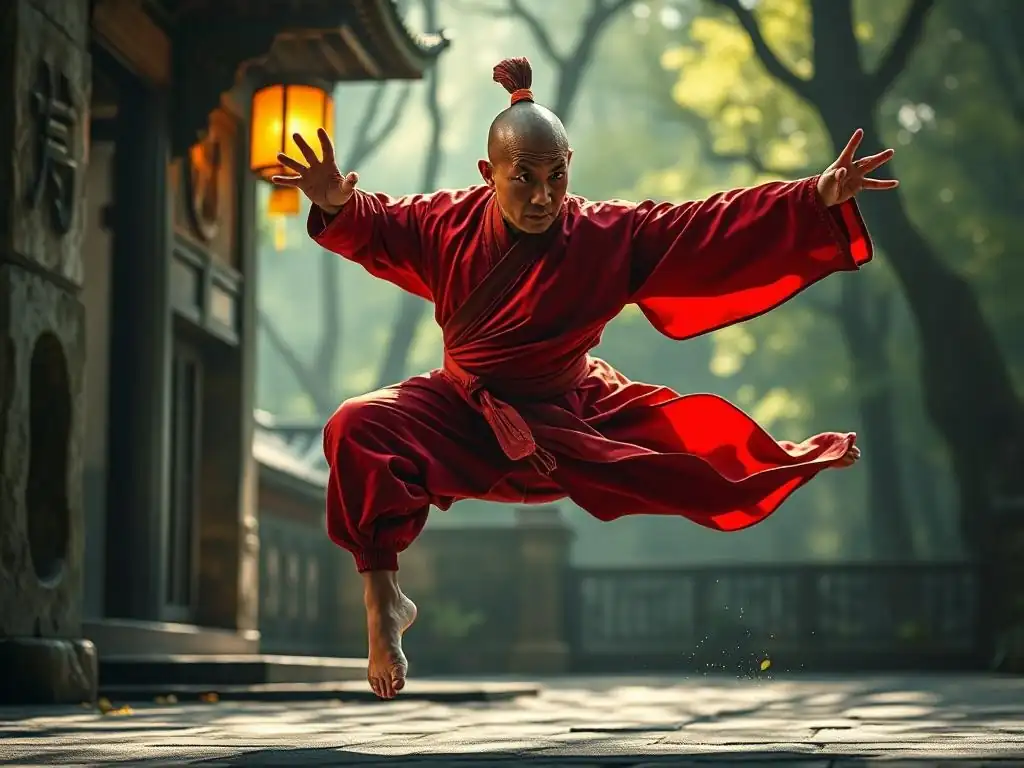
Welcome to Martial Arts Mastery, your gateway to the world's fighting traditions! Delve into the rich tapestry of martial arts, from their philosophical roots to practical applications. Are you ready to unlock the secrets of dynamic movement and strategic positioning? In this article, we'll journey into the heart of Shaolin Long Fist footwork techniques, exploring the advanced maneuvers that transform evasion into a powerful counter-offensive. Discover how to move with purpose and precision – and prepare to be amazed by the agility and effectiveness of this ancient art. Intrigued? Keep reading to master the dance of combat!
- Introduction to Shaolin Long Fist Footwork and Evasion
- Foundational Footwork Drills for Long Fist Kung Fu
- Advanced Evading Techniques in Shaolin Long Fist
- Countering with Footwork in Shaolin Long Fist
- Connecting Evasion and Countering: Seamless Transitions
- Common Mistakes and How to Correct Them in Long Fist Footwork Training
- The Role of Footwork in Shaolin Long Fist Forms (Tao Lu)
- Developing Your Own Shaolin Long Fist Footwork Style
- Conclusion: The Indispensable Nature of Advanced Footwork in Shaolin Long Fist
-
Frequently Asked Questions
- What is the primary focus of Shaolin Long Fist footwork techniques?
- How does Shaolin Long Fist footwork differ from other martial arts styles?
- What are some key benefits of mastering advanced footwork in Shaolin Long Fist?
- Are Shaolin Long Fist footwork techniques purely offensive, or do they have defensive applications?
- What are some essential drills for developing Shaolin Long Fist footwork skills?
- Final Reflection: The Dance of Evasion and Power
- Master the Dance: Elevate Your Long Fist Today!
Introduction to Shaolin Long Fist Footwork and Evasion
The Importance of Footwork in Shaolin Long Fist Kung Fu
Footwork is not merely a supplementary element in Shaolin Long Fist; it is the very foundation upon which all techniques are built. In this dynamic style, characterized by its emphasis on long-range movements, powerful strikes, and expansive forms, the ability to move efficiently and effectively dictates success. Proper Shaolin Long Fist footwork techniques enable practitioners to control distance, generate power, maintain balance, and position themselves advantageously against an opponent. Without strong footwork, even the most potent hand or leg techniques become ineffective and vulnerable.
The development of sophisticated footwork is critical for both offensive and defensive capabilities. It allows a practitioner to close distance rapidly for an attack, evade incoming blows with minimal energy expenditure, or reposition to counter from an unexpected angle. Mastery of Long Fist footwork techniques is a lifelong pursuit, constantly refined through rigorous training, understanding the principles of movement, and applying them in varied scenarios. It's the silent engine that drives the entire system, ensuring that every movement, from a simple step to a complex combination, is grounded, powerful, and purposeful.
Shaolin Long Fist: A Style Defined by Range and Movement
Shaolin Long Fist (Chang Quan) is renowned for its extended techniques, emphasizing strikes and kicks delivered from a relatively long range. This characteristic necessitates a profound reliance on fluid and agile movement. Unlike styles that favor close-quarters combat or grappling, Long Fist fighters constantly manage the space between themselves and their opponent, using footwork to dictate the engagement distance. The expansive nature of its forms (Tao Lu) reflects this, with large stances and sweeping movements that train the body to cover ground quickly and powerfully.
The inherent design of Shaolin Long Fist footwork techniques is centered around mobility. Techniques often involve advancing, retreating, circling, or shifting rapidly to enter or exit range, create openings, or avoid attacks. This constant state of flux makes effective footwork paramount. A practitioner's ability to swiftly change direction, accelerate, or decelerate without losing balance directly impacts their capacity to execute Long Fist's signature long-range attacks and evasive maneuvers effectively. The style teaches practitioners to 'fight from the outside,' and this strategic positioning is achieved almost entirely through superior footwork.
Overview of Advanced Footwork Concepts: Evading and Countering
Advanced Shaolin Long Fist footwork techniques move beyond basic stance transitions and linear movements. They delve into the strategic application of movement for complex tactical goals, specifically focusing on evasion and countering. Evasion involves using footwork to avoid an incoming attack while maintaining balance and positioning for subsequent action. It's not just stepping away; it's stepping to a place that nullifies the opponent's attack and ideally sets up a counter-opportunity.
Countering with footwork involves using movement not just to evade, but to simultaneously or immediately follow up with an offensive technique. This requires seamless integration of stepping, shifting, and striking/kicking. Advanced concepts include understanding timing, rhythm, and the opponent's intentions to execute movements like intercepting steps, circling around an attack, or using angled retreats that transition into powerful counters. Mastering these Shaolin Long Fist footwork techniques allows practitioners to turn defense into offense fluidly, making them elusive targets who can strike effectively from unexpected angles.
Foundational Footwork Drills for Long Fist Kung Fu
Mastering Basic Stances and Transitions
Before advanced Shaolin Long Fist footwork techniques can be learned, a solid foundation in basic stances and transitions is essential. Core stances like Gong Bu (Bow Stance), Ma Bu (Horse Stance), Pu Bu (Crouching Stance), and Xu Bu (Empty Stance) are fundamental. Each stance has specific weight distribution and structural integrity designed for power generation, stability, or mobility. Mastering the correct alignment and weight distribution within each stance is the first step.
The next crucial element is practicing smooth, efficient transitions between these stances. Drills often involve moving from Gong Bu to Ma Bu, Xu Bu to Gong Bu, or shifting weight within a stance. These transitions must be practiced repeatedly until they are fluid and stable, without bobbing up and down excessively or losing balance.
A common drill involves stepping forward into Gong Bu, shifting weight back into Xu Bu, then stepping back into Gong Bu, repeating on both sides. This builds the muscle memory and balance necessary for the more complex Shaolin Long Fist footwork techniques used in evasion and countering.
Developing Agility and Speed Through Footwork Exercises
Agility and speed are paramount for effective Shaolin Long Fist footwork techniques. Drills focused on rapid changes of direction and quick steps are vital. Ladder drills, cone drills, and simple line drills help improve foot speed and coordination. For example, practicing stepping quickly in and out along a straight line, or performing rapid side-to-side shuffles, builds the fast twitch muscle fibers needed for explosive movement.
Another effective method is practicing shadow boxing with an emphasis solely on footwork. Moving around an imaginary opponent, constantly changing angles and distances, helps develop spatial awareness and the ability to react quickly. Incorporating short sprints and quick stops into training also enhances the ability to accelerate and decelerate rapidly, which is crucial for closing distance or evading attacks in Shaolin Long Fist footwork. These exercises, performed consistently, significantly boost the practitioner's overall mobility and responsiveness.
Strengthening Footwork for Stability and Power Generation
Strong Shaolin Long Fist footwork techniques require not just speed and agility, but also significant lower body strength and stability. The power generated in Long Fist strikes and kicks originates from the ground, transferring through the legs and hips. Stances like Ma Bu and Pu Bu, held for extended periods, build isometric strength. Dynamic exercises like squats, lunges, and calf raises strengthen the muscles used in stepping and shifting weight.
Specific Shaolin Long Fist footwork drills also contribute to strength and stability. Practicing low stance walking (moving while maintaining a deep Gong Bu or Ma Bu) builds endurance and power in the legs. Executing explosive jumps or leaps, common in some Long Fist forms, develops the power needed for dynamic advancements. Regular training that combines static stance holding with dynamic movement exercises ensures that the legs are not only fast and agile but also strong enough to support powerful techniques and maintain balance under pressure, forming the bedrock of effective Shaolin Long Fist footwork techniques.
Advanced Evading Techniques in Shaolin Long Fist
Understanding Angles of Attack and Evasion Strategies
Advanced evasion in Shaolin Long Fist footwork techniques is not random movement; it's a strategic response based on understanding an opponent's angles of attack. Attacks typically come from linear (straight punches, front kicks), diagonal (hooks, round kicks), or sometimes circular paths. Effective evasion involves moving off the line of attack, ideally to an angle where the opponent is momentarily off-balance or exposed. For instance, evading a straight punch might involve a slight angle step to the side, while avoiding a round kick might require a larger circular step away from the arc of the kick.
Analyzing the opponent's stance and movement patterns helps predict likely attack angles. A practitioner should study how their opponent shifts weight, where their power base is, and the typical trajectories of their techniques. By anticipating the angle of attack, the Shaolin Long Fist practitioner can pre-emptively initiate an evasive footwork pattern that moves them into a safe zone while simultaneously preparing for a counter. This involves reading the opponent's intentions and initiating movement often fractionally before the attack fully commits, using subtle shifts and steps.
Utilizing Body Shifting and Evasive Footwork Patterns
Evasion in Shaolin Long Fist footwork techniques heavily relies on the coordinated use of body shifting and specific footwork patterns. Body shifting (Yun Shen) involves changing the body's position or orientation without necessarily taking a full step, using waist and hip rotation to redirect momentum or make a target smaller. Combined with footwork, this creates a highly elusive movement. For example, a slight shift of the torso combined with a small angle step can make a linear attack pass harmlessly by.
Specific evasive footwork patterns include diagonal retreats, side steps, and circular movements. A diagonal retreat might involve stepping back and to the side simultaneously, moving the body off the center line while increasing distance. A side step (Ce Bu) quickly moves the entire body laterally. Circular steps (Yuan Quan Bu) are used to move around an opponent's attack, changing the angle of engagement drastically. These patterns are practiced extensively in drills, often reacting to simulated attacks, ensuring the practitioner can execute them instinctively under pressure as part of their Shaolin Long Fist footwork techniques.
The Art of "Following Step" (Sui Bu) for Evasion
The "Following Step" or Sui Bu (随步) is a fundamental yet advanced Shaolin Long Fist footwork technique crucial for both evasion and closing distance. In the context of evasion, Sui Bu involves the rear foot following the lead foot as it moves, maintaining a relatively consistent distance between the feet. When evading, the lead foot initiates the movement off the line of attack (e.g., stepping to the side or diagonally back), and the rear foot quickly slides or steps to catch up, preventing the stance from becoming overextended or narrow.
This technique allows for rapid, fluid movement over short distances while maintaining balance and readiness to counter. Unlike a full step where weight is transferred and the rear foot passes the lead, Sui Bu keeps the feet in a dynamic relationship, allowing for quick changes of direction or immediate transitions into offensive actions. For instance, evading a kick with a side-stepping Sui Bu keeps the practitioner grounded and stable, ready to launch a hand technique as soon as the evasion is complete. Mastering this subtle yet powerful Shaolin Long Fist footwork technique is key to seamless transitions.
Circling Step Evasion: Description and Application
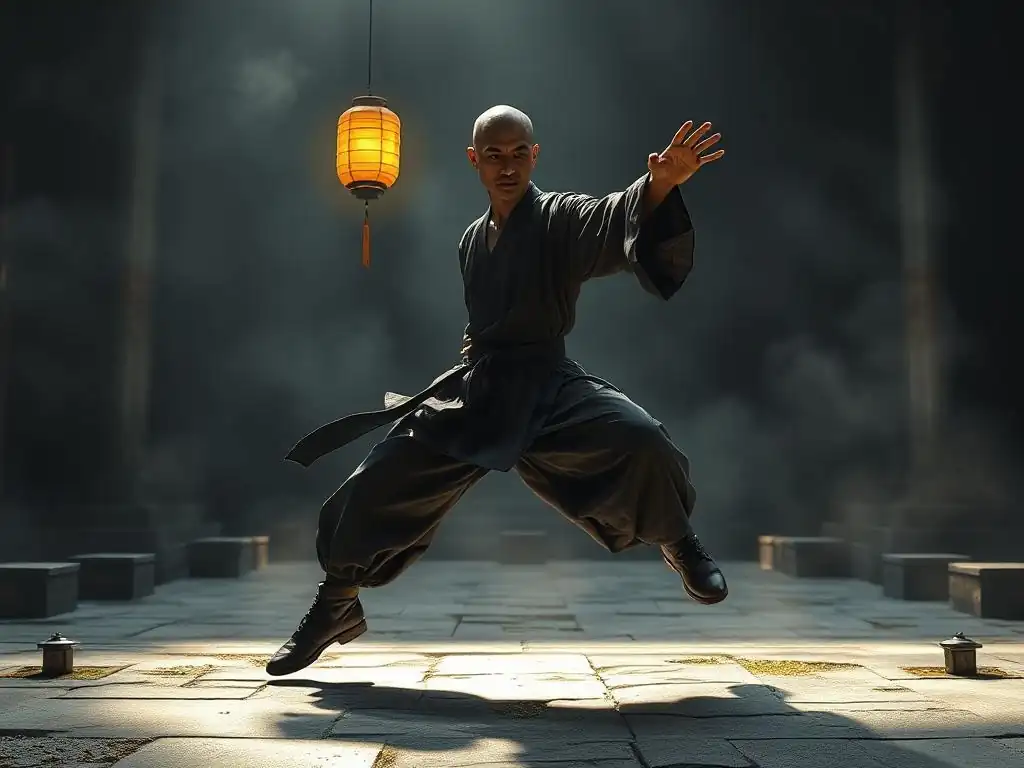
Circling Step Evasion, or Yuan Zhuan Bu (圆转步), is a powerful Shaolin Long Fist footwork technique used to evade attacks by moving in a circular path around the opponent. This is particularly effective against linear attacks or against opponents who are less agile in changing direction. The technique involves using a series of small, connected steps to move in an arc, pivoting around an imaginary point or the opponent's center.
For example, if an opponent throws a straight punch, a Shaolin Long Fist practitioner might use a circling step, moving their lead foot outwards and around the opponent's attacking side, followed by the rear foot. This movement takes the practitioner off the line of attack, often ending up at an angle to the opponent's flank or even behind them.
This not only evades the strike but also creates an excellent opening for a counter-attack to the opponent's exposed side or back. The speed and radius of the circle depend on the attack and the desired counter position, making it a highly adaptable Shaolin Long Fist footwork technique.
Angled Retreat: Description and Application
The Angled Retreat is a crucial Shaolin Long Fist footwork technique for creating distance while simultaneously preparing for a counter. Instead of simply stepping straight back, which can leave a practitioner vulnerable or lead to being cornered, the angled retreat involves stepping back and diagonally off the opponent's line of attack. This movement increases the distance, reducing the effectiveness of the opponent's subsequent techniques, while positioning the practitioner at an angle that disrupts the opponent's balance or alignment.
For instance, facing a combination attack, a practitioner might execute an angled retreat stepping back and to their left (the opponent's right). This slight angle makes it harder for the opponent to continue a linear attack effectively and puts the practitioner in a position where they can potentially counter with a kick or a long-range strike as the opponent overextends or tries to adjust their position. This Shaolin Long Fist footwork technique is vital for managing distance and resetting the engagement on favorable terms, embodying the style's principle of fighting from the outside.
Countering with Footwork in Shaolin Long Fist
Integrating Footwork with Strikes and Kicks
In Shaolin Long Fist, countering is rarely a static action; it almost always involves simultaneous or immediately preceding/following footwork. The power of a counter-strike or kick is significantly amplified when integrated with forward momentum generated by a step, or stabilized by proper positioning gained through footwork. Effective Shaolin Long Fist footwork techniques allow the practitioner to close distance, shift weight, and align their body for maximum power generation precisely at the moment the counter is delivered.
Consider a straight punch counter. Stepping forward with the lead foot as the punch is thrown adds body weight and momentum, dramatically increasing the strike's force. Similarly, a powerful side kick requires stepping or shifting the body to align the hips and driving leg correctly. The footwork doesn't just get you into position; it's an integral part of the power chain. Drills specifically focus on timing these integrated movements, ensuring that the Shaolin Long Fist footwork and the technique land together or in rapid, seamless succession.
The "Intercepting Step" (Jie Bu) for Offensive Maneuvers
The "Intercepting Step" or Jie Bu (截步) is a dynamic Shaolin Long Fist footwork technique used to cut off an opponent's advance or intercept their attack with your own offensive maneuver. This is a more aggressive form of countering, often involving stepping forward or diagonally into the opponent's space as they are moving or initiating an attack. It requires excellent timing, judgment of distance, and confidence.
Jie Bu is frequently used to step into range and deliver a simultaneous strike, disrupting the opponent's intended action before it can fully develop. For example, as an opponent steps forward to punch, a Shaolin Long Fist practitioner might use a Jie Bu to step forward and slightly to the side, delivering a punch or block-strike combination that intercepts the opponent's movement and attack simultaneously. This Shaolin Long Fist footwork technique is a hallmark of aggressive countering, turning defensive situations into immediate offensive opportunities.
Creating Openings Through Footwork Manipulation
Advanced Shaolin Long Fist footwork techniques can actively create openings in an opponent's defense, rather than just reacting to existing ones. This involves using feints, probing steps, or strategic positioning to elicit a reaction from the opponent, which in turn creates a temporary vulnerability. For example, a quick forward step that stops short might bait the opponent into a defensive reaction (like raising their guard or stepping back), momentarily shifting their weight and opening a target.
Another method involves using circular or angled footwork to constantly change the attack angle, forcing the opponent to repeatedly adjust their guard or stance. This constant pressure and need to readjust can lead to momentary gaps in their defense, which the Shaolin Long Fist practitioner is poised to exploit with a swift counter. Manipulating distance and angle through skilled Shaolin Long Fist footwork is a sophisticated tactic for controlling the rhythm and flow of an exchange and manufacturing opportunities.
Forward Step Punch: Description and Application
The Forward Step Punch is a fundamental yet powerful Shaolin Long Fist footwork technique used for closing distance and delivering a forceful linear strike. It involves stepping forward with the lead foot (typically the same side as the striking hand) simultaneously with the execution of a punch, such as a straight punch (Zhi Quan). The step adds forward momentum and body weight to the punch, significantly increasing its impact force.
This technique is applied when seeking to bridge a short distance gap and strike directly. For instance, if an opponent is just outside punching range, a quick Forward Step Punch allows the practitioner to enter range and deliver a powerful blow in one integrated movement. The timing is crucial: the foot lands just as the punch reaches its target, ensuring maximum power transfer. It's a core component of many Shaolin Long Fist footwork sequences and is practiced extensively for speed, power, and coordination.
Sidestep Sweep: Description and Application
The Sidestep Sweep is an advanced Shaolin Long Fist footwork technique that combines lateral movement with a leg sweep, often used as a counter or to disrupt an opponent's balance. It involves stepping quickly to the side of the opponent's leg (often the lead leg) while simultaneously executing a low sweep or kick to their ankle or shin. This is particularly effective against opponents in stable forward stances like Gong Bu or when they are transferring weight forward to attack.
Using a quick side step (Ce Bu), the practitioner moves off the line of attack and positions themselves beside the opponent's leg. From this angle, a low, powerful sweep is delivered, aiming to take the opponent off their feet or severely disrupt their base. The Shaolin Long Fist footwork ensures the practitioner is out of immediate danger from upper body attacks while the sweep targets the opponent's foundation. This technique requires precise timing and distance management, making it a sophisticated application of Shaolin Long Fist footwork for countering and unbalancing.
Connecting Evasion and Countering: Seamless Transitions
Drills for Practicing Evasion-to-Countering Transitions
Seamlessly transitioning from evasion to countering is a hallmark of advanced Shaolin Long Fist footwork techniques. Drills are essential for developing this fluid capability. One common drill involves a partner throwing a slow, committed attack (e.g., a straight punch). The practitioner practices evading using an angled retreat or a side step, immediately followed by a pre-determined counter-attack (e.g., a step-in punch or a circular palm strike).
- Drill 1: Partner throws straight punch. Practitioner performs Angled Retreat (back & left), immediately follows with a Right Straight Punch.
- Drill 2: Partner throws front kick. Practitioner performs Circling Step (around the outside of the kick), immediately follows with a Left Hook or Side Kick.
- Drill 3: Partner steps forward aggressively. Practitioner performs Sui Bu side step evasion, immediately follows with a Chop or Ridge Hand strike.
These drills start slowly, focusing on correct Shaolin Long Fist footwork patterns and body mechanics, then gradually increase speed and complexity, incorporating varied attacks and counter sequences. The goal is to make the evasion and counter feel like one continuous motion.
Footwork Strategies for Controlling Distance and Initiative
Advanced Shaolin Long Fist footwork techniques are strategically employed to control the distance and seize the initiative in an exchange. By skillfully using steps like Jin Bu (Advancing Step), Tui Bu (Retreating Step), Ce Bu (Side Step), and Yuan Zhuan Bu (Circling Step), practitioners can dictate whether the fight is close, medium, or long range, favoring the Long Fist style's strengths. Rapid advances can pressure an opponent, forcing them to react defensively, while timely retreats can draw an opponent in, creating opportunities for interception.
Maintaining the initiative involves using footwork to constantly pose a threat or force the opponent to move defensively. Feinting with the feet, shifting weight to suggest an attack, or using probing steps can keep the opponent guessing. If the opponent attacks, effective evasion and immediate countering footwork regain the initiative. The practitioner uses their Shaolin Long Fist footwork not just to move, but to strategically manipulate the fighting space and psychological tempo of the engagement, always seeking to be one step ahead.
Applying Advanced Footwork in Sparring Scenarios
Applying advanced Shaolin Long Fist footwork techniques in sparring is the ultimate test of mastery. In a live scenario, the unpredictable nature of an opponent requires instantaneous decision-making and adaptation. Practitioners must learn to recognize attack patterns and openings on the fly and execute the appropriate evasive or countering footwork instinctively. This moves beyond pre-arranged drills to spontaneous application.
Sparring allows practitioners to experience the real-world effectiveness (or ineffectiveness) of their Shaolin Long Fist footwork techniques under pressure. They learn how opponents react to different steps, how to maintain balance when hit or when encountering resistance, and how to adjust their movement based on the opponent's speed, power, and style. Regular sparring, with a focus specifically on footwork application and strategy, is crucial for integrating these complex skills into practical, usable combat ability. It highlights the importance of dynamic balance and the ability to recover quickly from off-balance positions.
Common Mistakes and How to Correct Them in Long Fist Footwork Training

Avoiding Telegraphing Movements
A common mistake in Shaolin Long Fist footwork techniques is telegraphing intentions. This means making preparatory movements that alert the opponent to an upcoming step or technique. For example, a large wind-up before stepping forward, or a noticeable shift of weight that clearly indicates the direction of movement, gives the opponent valuable seconds to react. Effective footwork should be subtle, economical, and explosive.
Correcting telegraphing involves focusing on minimizing unnecessary preliminary movements. Practice executing steps and shifts from a relaxed, balanced stance, initiating the movement smoothly from the core rather than the limbs. Drills can involve having a partner watch for tells and provide immediate feedback. Recording oneself training can also reveal unconscious habits that give away intentions. Mastering this aspect is vital for surprising opponents and making your Shaolin Long Fist footwork techniques truly deceptive.
Maintaining Balance and Coordination
Poor balance and coordination are significant hindrances to effective Shaolin Long Fist footwork techniques. Losing balance during a step or transition makes a practitioner vulnerable and prevents them from generating power or executing follow-up techniques. Common issues include overreaching with steps, failing to keep the body's center of gravity over the base of support, or poor synchronization between upper and lower body movement.
Improving balance requires dedicated training. Stance training, especially holding low stances for extended periods, builds leg strength and stability. Practicing transitions slowly and deliberately, focusing on smooth weight transfer, helps coordination. Incorporating exercises like single-leg squats or balance board work can also enhance proprioception and core strength, which are essential for maintaining balance during dynamic Shaolin Long Fist footwork. Coordination drills that link hand and foot movements are also crucial.
Developing Footwork Awareness and Responsiveness
Many practitioners perform footwork drills mechanically without developing true awareness of why they are moving or how their movement affects the tactical situation. Responsiveness, the ability to react instantly and appropriately to an opponent's actions, relies on this awareness. A common mistake is executing pre-planned footwork regardless of the opponent's actual movement, leading to being out of position.
Developing footwork awareness involves practicing drills with a focus on reactive timing. Instead of simply stepping on command, react to a partner's movement or a visual cue. Sparring is invaluable here, forcing real-time decision-making. Analyzing forms with a focus on the tactical purpose of each step also deepens understanding. Responsiveness improves with constant practice, refining the ability to read the opponent and select the most effective Shaolin Long Fist footwork technique in a fraction of a second.
The Role of Footwork in Shaolin Long Fist Forms (Tao Lu)
Analyzing Footwork Applications in Specific Forms
Shaolin Long Fist forms, or Tao Lu (套路), are repositories of the style's techniques and principles, and this includes a vast curriculum of Shaolin Long Fist footwork techniques. Analyzing specific forms reveals how footwork is integrated with strikes, blocks, and stances in practical sequences. For example, the form "Shi Zi Tang" (十子趟 - Ten Way Form) is known for its extensive and varied footwork, demonstrating linear advances and retreats, side steps, and transitions through multiple stances, often chained together rapidly.
Examining forms like "Hua Quan" (花拳 - Flower Fist) or "Pao Quan" (炮拳 - Cannon Fist) shows how dynamic steps like jumping steps ( Tiao Bu) and crossing steps ( Cha Bu) are used to cover distance explosively or change direction abruptly. Analyzing the transitions between techniques within a form highlights how footwork is used to generate power, maintain balance during complex movements, and set up subsequent actions. Each form provides a syllabus for understanding the tactical applications of different Shaolin Long Fist footwork techniques.
Understanding the Practicality of Footwork Sequences
While forms are choreographed sequences, the Shaolin Long Fist footwork techniques within them are highly practical. Each step, shift, and transition is designed to achieve a specific tactical goal: closing distance for an attack, evading a potential threat, repositioning for a counter, or generating maximum power. The sequences demonstrate how different footwork patterns can be chained together to handle common combat scenarios.
For instance, a sequence might show an angled retreat followed by a side step and a powerful kick. This isn't just aesthetic; it's a practical demonstration of evading a potential attack (angled retreat), gaining a better angle on the opponent (side step), and then launching a powerful counter (kick) from a stable base. By understanding the why behind the footwork in forms, practitioners can extract these practical applications and learn to apply them in sparring and self-defense, recognizing the forms as a library of effective Shaolin Long Fist footwork techniques.
Integrating Form Practice with Footwork Training
Integrating form practice with dedicated footwork training is essential for developing advanced Shaolin Long Fist footwork techniques. Simply running through forms provides some footwork practice, but focused drills isolate and refine specific movements. Practitioners should practice the footwork patterns from forms independently, focusing on speed, balance, and precision, before integrating them back into the full sequence.
For example, if a form contains a complex circling step transition, practice that specific circling step repeatedly as a standalone drill, focusing on maintaining a low center of gravity and smooth weight transfer. Then, incorporate it back into the form, ensuring the same quality of movement. This dual approach—practicing footwork in isolation and within the context of forms—builds both technical proficiency and a deeper understanding of how Shaolin Long Fist footwork techniques function within the style's complete system.
Developing Your Own Shaolin Long Fist Footwork Style
Adapting Footwork Techniques to Your Body Type
While Shaolin Long Fist footwork techniques provide a structured framework, true mastery involves adapting these principles to one's own unique body type and attributes. A taller practitioner with longer limbs might naturally favor larger steps and greater range, while a shorter, more compact individual might excel at quicker, smaller steps and rapid changes of direction. Understanding your physical strengths and limitations is key.
Experimentation within the established principles is encouraged. For example, while the forms provide standard lengths for stances and steps, a practitioner should find the stance width and step length that provide optimal balance and power generation for them. This doesn't mean abandoning the core techniques, but rather refining their execution to suit individual biomechanics. This personal adaptation ensures that the Shaolin Long Fist footwork techniques are not just performed correctly, but performed effectively by the individual.
Incorporating Footwork into Your Personal Training Regimen
Consistent, focused training is the only path to developing advanced Shaolin Long Fist footwork techniques. Footwork should not be an afterthought but a central component of every training session. This includes dedicated time for basic stance work, transition drills, agility exercises, and practicing the specific evasive and countering footwork patterns discussed.
A sample regimen might include:
- 15 minutes: Stance holding and basic linear transitions.
- 10 minutes: Agility drills (ladder, cones, line drills).
- 20 minutes: Practicing specific evasive and countering footwork patterns (e.g., Angled Retreat, Jie Bu, Sui Bu) with a partner or solo.
- 15 minutes: Analyzing and practicing footwork sequences from forms.
- Regular sparring with a focus on live footwork application.
This structured approach ensures that all facets of Shaolin Long Fist footwork techniques are continuously developed, building speed, strength, balance, and responsiveness over time.
The Path to Mastery: Continuous Refinement of Footwork Skills
Mastery of Shaolin Long Fist footwork techniques is not a destination but a continuous journey of refinement. Even advanced practitioners constantly work on improving their speed, precision, balance, and strategic understanding of movement. There is always a nuance to perfect, a transition to smooth out, or a strategic application to deepen. This ongoing process is what separates good footwork from truly exceptional footwork.
Refinement involves seeking feedback from experienced instructors, analyzing one's own movement (perhaps through video), and constantly experimenting with subtle variations in timing, angle, and weight distribution during practice and sparring. It's about making the footwork not just correct, but effortless, intuitive, and perfectly integrated with every other aspect of the Long Fist system. The pursuit of this level of seamless execution defines the path to mastery in Shaolin Long Fist footwork.
Conclusion: The Indispensable Nature of Advanced Footwork in Shaolin Long Fist
Advanced Shaolin Long Fist footwork techniques are truly indispensable for effective practice and application of the style. From foundational stance work and agile transitions to sophisticated evasive maneuvers like the Circling Step and strategic counters utilizing the Intercepting Step, footwork provides the framework for all action. It dictates distance, generates power, ensures stability, and creates opportunities.
Mastering these techniques requires dedicated training, a deep understanding of the principles of movement, and constant refinement. By integrating footwork training with form practice, sparring, and personal physical conditioning, practitioners can develop the speed, balance, and responsiveness needed to utilize Long Fist's powerful strikes and kicks effectively. Ultimately, superior Shaolin Long Fist footwork is the silent engine that drives the entire system, enabling practitioners to move with grace, power, and tactical intelligence in any situation.
Frequently Asked Questions
What is the primary focus of Shaolin Long Fist footwork techniques?
The primary focus is on evasion and counter-attacking, using dynamic movement to create openings. It emphasizes agility and speed for both offensive and defensive maneuvers.
How does Shaolin Long Fist footwork differ from other martial arts styles?
Shaolin Long Fist footwork is distinguished by its long-range movements and emphasis on circular stepping patterns, unlike more linear or grounded styles. This allows for quick entry and exit from combat range.
What are some key benefits of mastering advanced footwork in Shaolin Long Fist?
Mastering advanced footwork provides superior mobility, improved balance, and enhanced ability to control the distance between you and your opponent. This leads to greater overall fighting effectiveness.
Are Shaolin Long Fist footwork techniques purely offensive, or do they have defensive applications?
While it has offensive applications, footwork is fundamentally defensive as it creates opportunities for attacks. It's about avoiding damage while simultaneously positioning oneself for a counter-attack.
What are some essential drills for developing Shaolin Long Fist footwork skills?
Essential drills include practicing basic stepping patterns, shuffling movements, and pivot turns to improve speed, agility, and coordination. These drills build a solid foundation for more advanced techniques.
Final Reflection: The Dance of Evasion and Power
The exploration of Shaolin Long Fist footwork techniques reveals more than just a set of movements; it unveils a philosophy of harmonious power and strategic evasion applicable far beyond the training hall. In a world demanding agility and adaptability, understanding these principles offers a tangible advantage, enabling us to navigate challenges with grace and strength.
The enduring legacy of Shaolin Long Fist lies not just in its fighting prowess, but in its cultivation of mindfulness and discipline. This connection between physical practice and mental fortitude resonates deeply, reminding us that true strength comes from within. The best fighter is never angry,
as the old masters say, highlighting the importance of composure and strategic thinking, qualities essential not only in combat but in everyday life.
Now, consider how the principles of evasion and countering, honed through Shaolin Long Fist footwork, can inform your own approach to life's challenges. Embrace the dance of adaptation, cultivate inner stillness, and remember that true power lies not just in force, but in the wisdom to avoid unnecessary conflict and the skill to respond effectively when necessary. Let the spirit of Shaolin Long Fist guide you towards a path of balance, resilience, and unwavering strength.
Master the Dance: Elevate Your Long Fist Today!
Thanks for diving into the intricacies of Shaolin Long Fist footwork! We hope you've gained a deeper appreciation for the art and are inspired to enhance your practice. Now, let's translate that knowledge into action:
- Commit to 15 minutes of focused footwork drills daily. Consistency is key to embedding these movements into your muscle memory.
- Share your favorite footwork technique with a training partner and explore its applications together. Collaborative learning accelerates improvement!
- Record yourself practicing the footwork patterns and analyze your movements for areas of improvement. This will help enhance your self-awareness.
Ready to unleash the potential of your footwork and dominate the dance?