
Feeling the Flow: The Intuitive Aspect of Executing Irimi Nage

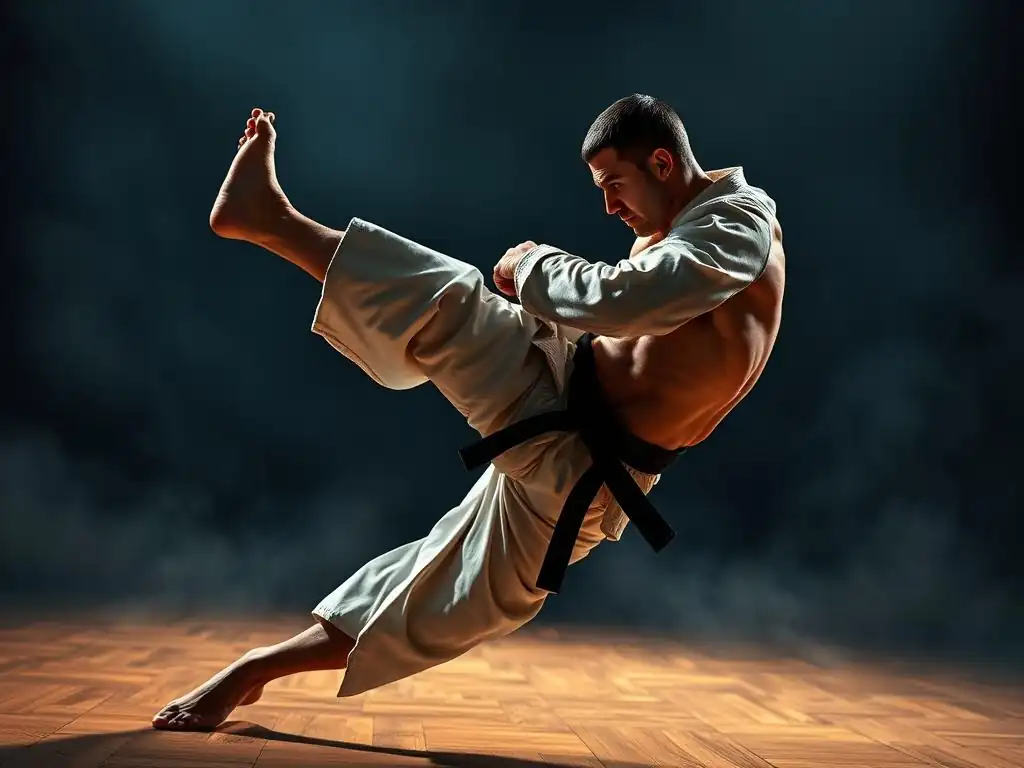
Welcome to Martial Arts Mastery, where the ancient traditions of combat meet modern understanding. Are you ready to unlock the secrets within seemingly effortless movement? This article delves into the captivating world of Irimi nage, exploring the intuitive movement technique that transforms defense into a fluid, almost pre-emptive strike. Prepare to explore the deeper principles that underpin this advanced Aikido skill, and discover how you can begin to cultivate the inherent sensitivity required to truly feel the flow. Intrigued? Let's begin...
- Understanding Irimi Nage: Beyond Mechanics to Intuitive Movement
- The Limitations of Purely Mechanical Irimi Nage Execution
- Cultivating the Intuitive Irimi Nage: Developing Flow and Adaptability
- Drills and Exercises for Enhancing Intuitive Irimi Nage
- The Significance of Mind-Body Connection in Irimi Nage
- Common Pitfalls and How to Overcome Them in Intuitive Irimi Nage
- The Benefits of an Intuitive Approach to Irimi Nage
- Irimi Nage Intuitive Movement Technique: Achieving Martial Arts Mastery
-
Frequently Asked Questions
- What is Irimi Nage, and where does it originate?
- What does "intuitive movement" mean in the context of Irimi Nage?
- How can I develop the intuitive aspect of Irimi Nage?
- What are the benefits of mastering the intuitive aspect of Irimi Nage?
- Are there specific drills or exercises recommended to enhance intuition for Irimi Nage?
- Final Reflection: Embracing the Unconscious Flow of Irimi Nage
- Unlock Your Irimi Nage Potential!
Understanding Irimi Nage: Beyond Mechanics to Intuitive Movement
Irimi Nage in Aikido: A Fundamental Technique
Irimi Nage, often translated as "entering throw," stands as one of the core techniques within the Aikido syllabus. It embodies the principle of irimi (entering) and tenkan (turning), crucial to redirecting an attacker's force. At its heart, Irimi Nage involves stepping into the attacker's space, blending with their movement, and leading them off-balance before executing a throw or control. Mastery of this technique is considered essential for progressing through the ranks, often being introduced early in a student's training journey, typically within the first few months of consistent practice, and refined over years.
Initially, learning Irimi Nage involves understanding specific footwork patterns, hand placements, and body angles. Students spend countless hours drilling the basic form against various attacks like shomen uchi (frontal strike) or tsuki (thrust). This foundational stage is heavily mechanical, focusing on repetition to build muscle memory and spatial awareness. However, the true power of Irimi Nage emerges when the practitioner moves beyond rigid steps and begins to execute the technique with flow and adaptability, embodying the essence of the Irimi nage intuitive movement technique.
The Role of Intuition in Mastering Aikido Techniques
Intuition in martial arts is the ability to react effectively and spontaneously to a situation without conscious reasoning. It's the culmination of extensive training, experience, and a deep understanding of principles that allows the body and mind to respond almost automatically. In Aikido, where the goal is often to harmonize with and redirect force rather than meet it head-on, this intuitive capacity is paramount. It allows a practitioner to perceive subtle shifts in an attacker's energy, balance, and intent and respond instantly with the appropriate movement.
Developing intuition transforms technique from a series of learned steps into a dynamic, adaptive response. While a beginner might take a noticeable fraction of a second to process an attack and recall the correct Irimi Nage sequence, an experienced practitioner operating intuitively can blend, lead, and throw in a seamless motion that appears almost effortless. This difference in reaction time and fluidity, often measured in milliseconds in high-pressure situations, can be the deciding factor in a real-world application, highlighting the importance of cultivating the Irimi nage intuitive movement technique.
Defining Intuitive Movement in Martial Arts
Intuitive movement in martial arts is characterized by spontaneity, adaptability, and efficiency, often described as "flow." It's the state where the practitioner's body moves correctly without the need for deliberate thought or planning. This isn't random action but a highly refined response built upon a vast database of physical experience and ingrained principles. Think of an experienced musician improvising – they aren't consciously thinking about each note, but drawing upon years of practice and understanding of musical structure.
In the context of Irimi Nage, intuitive movement means being able to adjust your entry angle, timing, and leading arm based on the attacker's precise attack, balance, and resistance in the moment, rather than sticking rigidly to a pre-planned sequence. It involves reading the situation with your entire body, not just your eyes. This capability is often observed in practitioners who have dedicated thousands of hours to practice, moving beyond the conscious processing stage to a state where the technique happens through them, embodying the goal of achieving a genuine Irimi nage intuitive movement technique.
The Limitations of Purely Mechanical Irimi Nage Execution
Over-Reliance on Form: The Stiff Irimi Nage
When a practitioner focuses solely on the mechanical steps of Irimi Nage – "step here, pivot there, place hand like this" – the result is often a stiff, predictable, and ultimately ineffective technique. This over-reliance on form means the practitioner is executing a choreography rather than responding to a dynamic interaction. Such a mechanical approach lacks the fluidity and adaptability necessary to deal with an attacker who isn't moving exactly as expected. The technique becomes brittle, easily disrupted by unexpected resistance, a slightly different angle of attack, or a change in the attacker's speed.
A stiff Irimi Nage is often characterized by a lack of kuzushi (breaking balance) that truly disrupts the attacker. The practitioner might go through the motions, but the attacker remains grounded and strong, making the throw difficult or impossible. This isn't a failure of understanding the steps, but a failure to integrate the principles of blending and leading force, which requires a more intuitive, responsive approach. The practitioner might technically perform 100% of the steps correctly but achieve only 10% of the desired effect because they are not adapting to the living, breathing partner (uke).
Recognizing the Absence of Flow in Your Technique
Identifying a lack of flow in your Irimi Nage involves observing several indicators. A primary sign is feeling like you are forcing the technique or wrestling with your partner (uke). If the movement feels disjointed, hesitant, or requires excessive physical strength, it suggests you are not blending effectively. Another sign is consistently encountering strong resistance from uke; in an effective Irimi Nage, the resistance should be minimal as you are leading their energy. Watch for moments where you pause, mentally searching for the next step, or where your uke can easily recover their balance during the execution.
Comparing your movement to more experienced practitioners can also highlight the absence of flow. Their Irimi Nage often appears seamless, almost as if uke is effortlessly guided into the throw. This isn't magic, but the result of intuitive timing and subtle adjustments made in real-time. If your technique feels like a series of distinct actions rather than a single, continuous motion, you are likely operating too mechanically, hindering the development of your Irimi nage intuitive movement technique.
Why Memorization Alone Fails in Real-World Scenarios
Real-world self-defense situations are inherently unpredictable. Attackers rarely move in the precise, cooperative manner of a training partner following a script. They might be faster, slower, stronger, attack from an unexpected angle, or react violently. Relying solely on memorized steps for Irimi Nage in such a scenario is like trying to navigate a complex city with only a map of one specific street. You know the steps for that street, but you're lost the moment you need to deviate.
Memorization builds a foundation, but it doesn't provide the adaptability needed for spontaneity. If an attacker resists in an unexpected way, a practitioner relying purely on memory might freeze or try to force the memorized technique, which is often counterproductive. Intuition, however, allows for split-second adjustments – shifting your weight slightly, changing your angle of entry, or modifying the throw's direction based on the attacker's live reaction. This dynamic responsiveness is the hallmark of an effective Irimi nage intuitive movement technique and is impossible with pure memorization.
Cultivating the Intuitive Irimi Nage: Developing Flow and Adaptability
Connecting with Your Center: The Key to Unlocking Intuition
Connecting with your physical and energetic center, known as hara in Japanese martial arts (roughly located in the lower abdomen), is fundamental to developing intuitive movement. Operating from the hara provides stability, power, and a deep sense of groundedness. When your movement originates from your center, it becomes more unified and less reliant on isolated limb strength. This centeredness allows you to remain calm and present, which is essential for perceiving and responding intuitively.
Training to move from the hara involves exercises that emphasize core stability, proper posture, and coordinated body movement. Practices like fune kogi undo (rowing exercise) or simple standing meditations that focus awareness on the lower abdomen help cultivate this connection. As you become more rooted and your movements become more integrated, your ability to react spontaneously and effectively in techniques like Irimi Nage increases. This centered awareness is a prerequisite for the kind of sensitivity required for the Irimi nage intuitive movement technique.
Developing Awareness of Uke's Energy and Intent
Developing sensitivity to your partner's (uke's) energy and intent is crucial for intuitive Irimi Nage. This goes beyond simply seeing their attack; it involves feeling their weight distribution, direction of force, tension levels, and even their underlying intention. This sensitivity allows you to predict their movements subtly and blend with their force at the optimal moment. It's like learning to dance with your partner rather than trying to force them through a routine.
Exercises for developing this awareness include slow-motion practice, where you focus intensely on feeling how uke's movement affects your own balance and structure. Aiki-jo (staff) and aiki-ken (sword) practice can also enhance sensitivity, as the weapons act as extensions of your body, making subtle changes in pressure and direction more apparent. Over time, this heightened awareness allows you to execute the Irimi nage intuitive movement technique by responding to the flow of the interaction, not just the initial attack.
The Importance of Relaxation and Letting Go of Tension
Tension is the enemy of flow and intuition. When the body and mind are tense, movement becomes rigid, reaction time slows, and sensitivity decreases. Holding tension blocks the natural flow of energy and makes it difficult to blend harmoniously with an attacker's force. For Irimi Nage, excess tension in the shoulders, arms, or legs prevents smooth entry and leading, often resulting in a struggle. Learning to relax, even under pressure, is vital for accessing intuitive responses.
Cultivating relaxation involves conscious effort during practice. Regularly check your body for unnecessary tension and actively release it. Breathing exercises, particularly focusing on deep exhalations from the hara, can help promote relaxation. The goal isn't limpness, but a state of dynamic relaxation – ready to move instantly but free from holding. This allows your body to respond freely based on the situation, enabling the fluid execution characteristic of the Irimi nage intuitive movement technique.
Drills and Exercises for Enhancing Intuitive Irimi Nage
Body Awareness Drills: Grounding and Balance
Developing strong body awareness is foundational for intuitive movement. Drills that focus on grounding and balance help you understand your own structure and how it interacts with the ground.
- Standing Meditation (Zazen or similar): Spend 5-10 minutes daily simply standing, focusing on your posture, weight distribution, and the connection through your feet to the floor. Notice subtle shifts in balance.
- Single Leg Stance: Practice standing on one leg for increasing durations, paying attention to the small muscular adjustments required to maintain balance.
- Walking Practice: Walk slowly, deliberately feeling the transfer of weight from one foot to the other.
- Tai Chi Forms (simplified): Engaging in slow, deliberate movements helps cultivate awareness of how movement originates from the center and flows through the limbs.
These drills, even for a short time each day, enhance your proprioception – your body's awareness of its position in space. This heightened internal awareness is critical for making the split-second adjustments needed for an intuitive Irimi nage intuitive movement technique.
Sensitivity Training: Feeling Uke's Movement
Sensitivity training helps you learn to "read" your partner's energy.
- Static Contact Drills: Stand facing a partner, lightly touching palms or forearms. Have one person initiate very slow, subtle pushes or pulls, and the other person responds without resisting, simply maintaining connection and balance.
- Aiki Age (Rising Practice): A partner gently pushes down on your outstretched arm while you maintain connection and subtly redirect their force upwards, focusing on using your core and structure, not just arm strength.
- Morote Dori Kokyu Ho: While a partner grips both your wrists, practice releasing their grip using whole-body movement and breath, focusing on finding moments of weakness in their structure or timing.
These exercises train your tactile and kinesthetic senses to perceive force and intention, essential for blending effectively in Irimi Nage and executing the Irimi nage intuitive movement technique responsively.
Dynamic Irimi Nage Practice: Adapting to Unpredictable Attacks
Moving beyond fixed forms is key to developing adaptability.
- Varying Attack Speed/Angle: Have uke attack with shomen uchi but vary the speed (slow, medium, fast) and angle slightly. Your task is to execute Irimi Nage, adapting your timing and entry each time.
- Random Attacks: Have uke choose from a small set of attacks (e.g., shomen uchi, tsuki, kata dori) at random. You must identify the attack instantly and respond with the appropriate Irimi Nage variation or another suitable technique if Irimi Nage isn't the best fit.
- Continuous Attack: Uke throws a series of attacks (e.g., alternating shomen uchi). You must continuously blend and execute Irimi Nage or other techniques without pausing, developing fluid transitions.
These dynamic drills force you to react and adapt, moving away from conscious planning towards spontaneous response, which is the core of the Irimi nage intuitive movement technique.
Partnered Kuzushi Awareness Drill: Responding to Imbalance
This drill focuses specifically on recognizing and utilizing the moment of off-balance (kuzushi).
- Partner A stands relaxed.
- Partner B applies very subtle pushes or pulls to Partner A's structure, attempting to create small moments of imbalance without causing them to step.
- Partner A focuses on feeling these shifts in balance and responding with minimal effort to recover stability.
- Reverse roles.
- Progress to Partner B creating slightly larger imbalances, and Partner A responding with a small step or rotation that could lead into a technique like Irimi Nage, without actually executing the throw.
This trains your body to recognize and react to the subtle cues of imbalance in your partner, which is the critical window for applying effective Irimi Nage intuitively.
Solo Tenkan and Entry Drill: Refining Movement and Timing
Even solo practice can enhance intuitive movement by refining fundamental body mechanics.
- Continuous Tenkan: Practice stepping and turning ( tenkan) smoothly and continuously, focusing on maintaining balance and moving from your center. Vary the speed.
- Entry Footwork Practice: Practice the specific entry steps for Irimi Nage ( irimi) against an imaginary partner, focusing on covering distance efficiently and maintaining a stable posture.
- Combining Tenkan and Entry: Practice sequences that combine entry and turning, visualizing an attack and your seamless response. Focus on the feeling of flow and connection between the movements.
Refining these core movements solo builds the underlying physical vocabulary that your intuition can draw upon during dynamic practice of the Irimi nage intuitive movement technique.
The Significance of Mind-Body Connection in Irimi Nage
Developing Zanshin: Maintaining Awareness and Readiness
Zanshin, often translated as "remaining spirit" or "alertness," is a state of continuous, relaxed awareness. It means being fully present in the moment, aware of your surroundings, your partner, and yourself, even after a technique is completed. In the context of Irimi Nage, Zanshin isn't just about being ready for the initial attack, but maintaining awareness throughout the technique and immediately after, in case of additional threats or uke's recovery.
Cultivating Zanshin involves training your attention span and peripheral awareness. During practice, consciously try to expand your awareness beyond the immediate interaction with your partner to include the rest of the dojo. After executing an Irimi Nage, don't mentally check out; remain alert and ready for the next potential action. This sustained state of awareness allows your intuitive responses to be available at all times, not just at the moment of initial contact, reinforcing the continuous nature of the Irimi nage intuitive movement technique.
Mushin (No-Mind): Reacting Spontaneously and Effectively
Mushin is a state of "no-mind," or mental clarity free from conscious thought, judgment, or fear. It is the state where intuitive action flows unimpeded. In Mushin, the practitioner doesn't think "Now I will do Irimi Nage"; rather, the body simply responds appropriately and instantly to the situation based on deep training. This state is characterized by a lack of hesitation and a complete focus on the present moment.
Achieving Mushin is not about emptying the mind completely but about freeing it from the clutter of analytical thought and emotional interference during action. It is cultivated through intense, repetitive training that allows techniques to become ingrained, combined with meditative practices that quiet the internal monologue. When executing Irimi Nage from a state of Mushin, the technique becomes a natural, spontaneous expression of the principles of blending and leading, demonstrating a high level of Irimi nage intuitive movement technique.
Integrating Mind-Body Training for Enhanced Irimi Nage
True mastery of Irimi Nage, particularly the intuitive aspect, requires the seamless integration of physical technique and mental state. Training should therefore address both simultaneously. Physical drills build the body's capability and memory, while mind-training practices (like Zanshin and cultivating Mushin) ensure the mind is receptive and reactive.
Integrating mind-body training means bringing a conscious awareness to your physical practice. During Irimi Nage drills, pay attention not just to your steps and hand positions, but also to your breathing, your level of tension, and your mental state. Are you overthinking? Are you tense? Actively work on relaxing and clearing your mind while executing the technique. Conversely, bring the principles of centeredness and awareness cultivated in meditation into your physical movements. This holistic approach accelerates the development of a truly intuitive and effective Irimi nage intuitive movement technique.
Common Pitfalls and How to Overcome Them in Intuitive Irimi Nage
Hesitation and Overthinking: Breaking the Cycle
One of the most common obstacles to intuitive movement is hesitation, often caused by overthinking. The moment you pause to consciously analyze the situation and decide on the "correct" Irimi Nage variation, you lose the critical window of opportunity to blend and lead effectively. This internal debate disrupts the flow and makes the technique appear clumsy or forced. Recognizing this cycle is the first step to overcoming it.
To break the cycle, focus on reducing the cognitive load during practice. Start with slower, deliberate practice where you can think, but gradually increase speed and intensity, forcing yourself to react more quickly. Embrace repetition to build a stronger physical foundation that doesn't require conscious thought. Mindfulness practices can also help train your mind to stay present and react without getting caught in analytical loops, allowing the Irimi nage intuitive movement technique to emerge naturally.
Fear of Failure: Embracing Mistakes as Learning Opportunities
Fear of making mistakes or looking awkward can significantly inhibit the willingness to let go and move intuitively. Students might stick rigidly to the basic, mechanical form of Irimi Nage because it feels "safe," even if it's ineffective, rather than experimenting with subtle adjustments that could lead to flow. This fear stems from a focus on performance rather than learning.
Shift your perspective to view practice as an experiment. Every interaction with a partner, especially when an Irimi Nage doesn't work as expected, is a valuable piece of data. What happened? Where was the tension? Where was the timing off? Analyzing failures objectively, without self-criticism, allows you to learn and adapt. Embrace the awkwardness that comes with trying new things and letting go of rigid control; it's a necessary part of developing the adaptability required for a truly intuitive Irimi nage intuitive movement technique.
Maintaining Humility and a Beginner's Mind
As practitioners gain experience, there's a risk of becoming complacent or believing they "know" Irimi Nage. This can close them off to further learning and refinement, particularly the subtle nuances of intuitive execution. Maintaining humility and a "beginner's mind" ( shoshin) is crucial for continuous growth. A beginner's mind is open, eager to learn, and free from preconceptions.
Approach each practice session with curiosity, regardless of your rank or years of experience. Be open to feedback from instructors and partners. Continuously question your own movement and understanding. This mindset prevents stagnation and keeps you receptive to the subtle lessons that lead to deeper intuitive understanding. Even after years of practice, there are always new layers to uncover in the Irimi nage intuitive movement technique.
The Benefits of an Intuitive Approach to Irimi Nage
Increased Speed and Efficiency
An intuitive Irimi Nage is significantly faster and more efficient than a purely mechanical one. Because the practitioner is reacting spontaneously based on ingrained principles rather than processing steps consciously, the time lag between perceiving the attack and executing the response is dramatically reduced. The movement is also more direct and economical, free from unnecessary tension or wasted motion.
This efficiency means less energy is expended, allowing the practitioner to perform Irimi Nage effectively multiple times or against multiple attackers. It also increases the likelihood of success, as the technique is applied during the optimal window of opportunity created by the attacker's movement or imbalance. Achieving the Irimi nage intuitive movement technique directly correlates with improved practical application.
Enhanced Adaptability and Responsiveness
Perhaps the greatest benefit of an intuitive approach is enhanced adaptability. When you are not bound by a rigid sequence, you can fluidly adjust your Irimi Nage based on the attacker's size, speed, strength, resistance, and the environment. If the initial entry is blocked, intuition allows you to instantly modify the angle or transition to a different technique without conscious thought.
This responsiveness makes your Aikido far more versatile and effective in unpredictable situations. It allows you to truly blend with and lead the attacker's energy, turning their force against them in myriad ways, rather than trying to impose a fixed technique onto a dynamic interaction. The hallmark of a high-level Irimi nage intuitive movement technique is its seamless adaptation to the specific context of the interaction.
Deeper Understanding of Aikido Principles
Cultivating intuitive Irimi Nage leads to a deeper, more embodied understanding of fundamental Aikido principles such as blending ( aiki), leading ( kokyu), and entering ( irimi). These principles move from abstract concepts to lived experience. You don't just understand blending intellectually; you feel it happen as you intuitively merge with your partner's movement.
This deeper understanding transcends individual techniques and informs your entire Aikido practice. The lessons learned in developing intuitive Irimi Nage – about timing, distance, connection, and reading energy – are applicable to all other throws, joint locks, and pins. It moves you closer to understanding the art not just as a collection of techniques, but as a unified system of harmonious movement and conflict resolution, embodying the spirit of the Irimi nage intuitive movement technique within the broader art.
Irimi Nage Intuitive Movement Technique: Achieving Martial Arts Mastery
Integrating Intuition into Your Overall Aikido Practice
Developing the Irimi nage intuitive movement technique is not an isolated goal but a stepping stone towards integrating intuition into your entire Aikido practice. The principles and training methods used to cultivate intuitive Irimi Nage – centeredness, sensitivity, relaxation, dynamic practice, mind-body connection – are applicable to all techniques. As you become more intuitive in one area, that capacity spills over into others.
Consciously work on bringing the feeling of flow and spontaneous response you develop in Irimi Nage to other techniques like Kokyu Nage, Kotegaeshi, or Shiho Nage. Seek to find the underlying intuitive principle connecting different movements. This holistic integration transforms your Aikido from a repertoire of moves into a dynamic, responsive art form, moving you closer to genuine martial arts mastery.
The Path to Continuous Improvement and Refinement
Mastery in martial arts is a continuous journey, not a destination. The Irimi nage intuitive movement technique is not something you achieve and then stop working on; it requires ongoing refinement. As you gain more experience and encounter different partners and situations, your intuitive capacity will deepen and become more nuanced.
Commit to consistent practice, seek out opportunities to train with a variety of partners, and remain open to learning from every interaction. The subtle adjustments, the instantaneous recognition of opportunity, the effortless blend – these are refined over years of dedicated effort. Embrace the process of continuous improvement, knowing that there are always deeper levels of intuitive understanding to explore.
The Value of Intuition in Aikido's Art of Harmonious Resolution
Ultimately, the intuitive aspect of Irimi Nage aligns perfectly with Aikido's philosophy of harmonious resolution. Intuitive movement allows you to respond to conflict with fluidity and adaptability, seeking to redirect and neutralize aggression with minimal harm, rather than meeting force with opposing force. It embodies the principle of aiki – harmonizing energy – at its most profound level.
By developing the Irimi nage intuitive movement technique, you are not just becoming more effective in a specific throw; you are internalizing the core principles that allow you to resolve conflict dynamically and non-violently. This intuitive capacity extends beyond the dojo, influencing how you navigate challenges and interactions in daily life, making intuition a powerful tool for both martial arts mastery and personal growth within the art of harmonious resolution.
Frequently Asked Questions
What is Irimi Nage, and where does it originate?
Irimi Nage is a projection technique often found in Aikido. It involves entering and blending with an opponent's attack to unbalance and throw them. It's deeply rooted in Japanese martial arts principles.
What does "intuitive movement" mean in the context of Irimi Nage?
"Intuitive movement" refers to the ability to execute Irimi Nage without conscious thought or planning. It relies on deeply ingrained reflexes and a sense of flow, reacting naturally to an opponent's actions.
How can I develop the intuitive aspect of Irimi Nage?
Developing intuition requires consistent practice, focusing on body awareness and sensitivity to an opponent's energy. Repetition and randori (free practice) are key to building this skill.
What are the benefits of mastering the intuitive aspect of Irimi Nage?
Mastering intuition leads to faster and more effective execution of the technique. It allows for seamless adaptation to changing circumstances and a deeper understanding of movement principles.
Are there specific drills or exercises recommended to enhance intuition for Irimi Nage?
Yes, drills that focus on sensitivity to kuzushi (off-balancing) and responding to variations in attack are useful. Also, partnered exercises where you react spontaneously to different attacks can help develop intuition.
Final Reflection: Embracing the Unconscious Flow of Irimi Nage
The preceding exploration of Irimi Nage has hopefully illuminated more than just a technique; it has touched upon the very essence of intuitive movement and the profound connection between mind and body. In a world often dominated by rigid structures and calculated actions, recognizing the power of instinct and allowing oneself to be guided by the flow state becomes increasingly vital, not just in martial arts, but in all aspects of life.
This journey into the intuitive aspect of Irimi Nage has underscored the importance of trusting our innate capabilities and letting go of conscious control to unlock true potential. The ability to seamlessly blend with an opponent's energy, to anticipate their movements without deliberate thought, speaks to a deeper understanding of connection and responsiveness. As Bruce Lee so eloquently stated: Be like water making its way through cracks. Do not be assertive, but adjust to the object, and you shall find a way around or through it. If nothing within you stays rigid, outward things will disclose themselves.
Now, as you step back onto the mat, or perhaps even into the challenges of your daily life, I invite you to reflect on the principles we've discussed. Can you identify areas where you might be overthinking, where you might be hindering your own flow? Dare to relinquish control, to trust your instincts, and to embrace the unconscious wisdom that resides within. Allow the spirit of Irimi Nage, the dance of intuitive movement, to guide you toward a more fluid, responsive, and ultimately, more fulfilling existence.
Unlock Your Irimi Nage Potential!
Thanks for diving into the intuitive side of Irimi Nage! We hope you've gained a fresh perspective on this powerful technique and its deeper connection to flow. Now, let's put this knowledge into action and elevate your practice.
- Step onto the mat and actively explore how subtle shifts in your body awareness can unlock a smoother, more intuitive Irimi Nage. Focus on feeling, not just doing.
- Delve deeper! Research a martial art other than your own that emphasizes flow and see how its principles might inform your Irimi Nage.
- Share your "aha!" moment. In the comments below, describe one small adjustment you made to your Irimi Nage based on what you read.
Ready to truly feel the flow in your Irimi Nage?