
The "Do" in Kendo: Exploring the Meaning of the 'Way' in Modern Swordsmanship

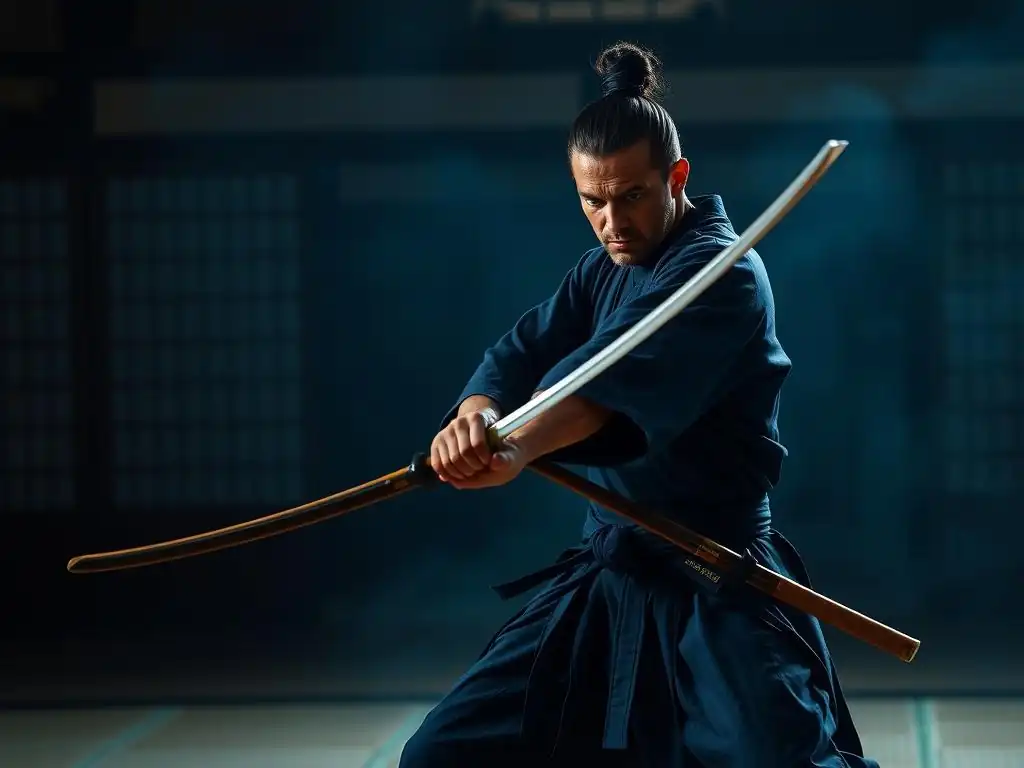
Welcome to Martial Arts Mastery, where the ancient traditions of combat meet modern understanding. Ever wondered about the true meaning behind the 'Do' in Kendo, the 'Way' that guides its practitioners? This exploration of Kendo philosophy, meaning, and practice delves deep into the principles that shape this dynamic swordsmanship. Prepare to uncover the profound connection between mind, body, and spirit, and discover how the 'Way' transcends mere technique. Read on to unlock the secrets of Kendo.
- Cultivating the Mind: Exploring the Meaning of 'Shin' in Aikido
- Understanding Aikido Philosophy: The Essence of 'Shin'
- Aikido's Mental Discipline: Bridging Philosophy and Technique
- The Historical Context and Evolution of Aikido's Mental Philosophy
- The Practice of Aikido: Embodiment of 'Shin'
- Aikido's Mental Principles: Practical Applications Beyond the Dojo
- Aikido: More Than Just a Physical Art
-
Frequently Asked Questions
- What is the core philosophy behind Kendo?
- How does Kendo practice differ from other martial arts in its philosophical approach?
- What is the significance of "Ki-Ken-Tai-Ichi" in understanding Kendo philosophy?
- How does the historical context of Kendo influence its modern philosophical meaning?
- What are some practical ways practitioners can integrate Kendo philosophy into their daily lives?
- Final Reflection: Embracing the Path of Continuous Refinement
- Embrace the Way: Begin Your Kendo Journey Now!
Cultivating the Mind: Exploring the Meaning of 'Shin' in Aikido
Understanding Aikido Philosophy: The Essence of 'Shin'
What is 'Shin' in Aikido? A Mental and Spiritual Foundation
At the heart of Aikido lies the concept of 'Shin' (心), a term encompassing heart, mind, and spirit. Unlike martial arts focused solely on physical dominance, Aikido, as envisioned by its founder Morihei Ueshiba (O Sensei), places paramount importance on this internal dimension. 'Shin' is considered the foundation upon which all physical techniques are built and the source from which true skill and ethical conduct emerge. It represents the practitioner's inner state – their attitude, intentions, and emotional composure.
This emphasis on 'Shin' distinguishes Aikido as a 'Do' (道), a "Way" or path of self-cultivation, rather than merely a collection of fighting techniques (Jutsu). It requires practitioners to engage in deep introspection and mental discipline alongside physical training. While arts like Kendo philosophy meaning practice also explore the 'Do', Aikido's 'Shin' uniquely integrates spiritual and ethical principles directly into the execution of movement, aiming for a state of inner peace and clarity that informs every action.
Aikido as a Path to Harmony: Beyond Physical Technique
Aikido's philosophy, deeply rooted in 'Shin', guides practitioners towards achieving harmony (Wa) rather than inflicting harm. The goal is not to defeat an opponent but to neutralize aggression and restore balance, often by blending with and redirecting an attacker's energy. This approach stems directly from O Sensei's vision of a martial art that could serve as a path to universal peace and reconciliation, a stark contrast to arts solely focused on victory.
The development of a centered and compassionate 'Shin' is crucial for executing Aikido techniques effectively in this spirit of harmony. Techniques like iriminage (entering throw) or kotegaeshi (wrist twist) are not merely physical maneuvers; they are meant to control and subdue an attacker without causing unnecessary injury, reflecting the practitioner's underlying ethical 'Shin'. This pursuit of harmony is a central meaning derived from the practice of Aikido, echoing the deeper philosophical goals found in other 'Do' disciplines such as Kendo philosophy meaning practice.
The Ethical Principles of Aikido's 'Shin': Compassion and Non-Violence
'Shin' in Aikido is intrinsically linked to a strong ethical code emphasizing compassion (Jihi) and non-violence (Hi-boryoku). O Sensei believed that true martial power should be used to protect and nurture life, not destroy it. This principle guides the practitioner's actions both within the dojo and in daily life, encouraging a proactive approach to resolving conflict peacefully.
Practitioners are taught to cultivate empathy and understanding, seeking to resolve confrontations before they escalate into physical violence. The techniques themselves are designed to control and neutralize rather than maim. This ethical dimension, driven by a refined 'Shin', provides a profound meaning to the practice, positioning Aikido as a tool for personal and societal betterment. This focus on character development and ethical conduct is a shared pillar among 'Do' arts, including the ethical framework embedded within Kendo philosophy meaning practice.
Aikido's Mental Discipline: Bridging Philosophy and Technique
The Relationship Between Aikido's 'Shin' and Physical Movements
The state of one's 'Shin' directly influences the effectiveness and quality of Aikido techniques. A calm, centered, and focused mind allows the body to move naturally and powerfully. Conversely, a mind filled with fear, anger, or hesitation hinders the flow of energy and makes techniques clumsy and ineffective. Aikido training emphasizes the seamless integration of mind, body, and spirit – a concept sometimes referred to as 'Shin-Tai-Ichi' (mind and body as one).
Maintaining 'zanshin' (残心), often translated as "lingering mind" or "continuing spirit," is a critical aspect of integrating 'Shin' with technique. It refers to a state of sustained awareness and readiness, even after a technique is completed, allowing the practitioner to respond instantly to further threats. This mental discipline, cultivated through consistent training, ensures that physical movements are not just mechanically performed but are expressions of a focused and present 'Shin'. This mind-body connection is fundamental to the meaning and practice of all 'Do' arts, including the principle of 'Ki-Ken-Tai-Ichi' in Kendo philosophy meaning practice.
The Importance of 'Ki' in Aikido Practice: Cultivating Internal Energy
'Ki' (気), often understood as life force, vital energy, or intent, is another cornerstone of Aikido philosophy and practice, intimately connected to 'Shin'. O Sensei believed that a strong and clear 'Shin' allows 'Ki' to flow freely and powerfully. Aikido training includes exercises specifically designed to cultivate and project 'Ki', such as 'kokyu-ho' (breath power exercises) and 'ki-no-nagare' (flow of ki) drills.
In techniques, 'Ki' is not a mystical force but the focused energy and intent projected by the practitioner, leading the partner (uke) and making throws or pins possible with minimal physical force. The ability to effectively utilize 'Ki' is seen as a direct result of developing a calm, centered, and resolute 'Shin'. This cultivation of internal energy and intent is a vital component of the meaning and practice in many traditional Japanese martial arts, paralleling the emphasis on 'Ki' projection and integration in Kendo philosophy meaning practice.
Developing 'Mushin': Achieving a State of No-Mind in Aikido
A key goal in the mental discipline of Aikido is the attainment of 'Mushin' (無心), or "no-mind." This state is not one of unconsciousness or emptiness, but rather a state of heightened awareness and spontaneity where the mind is free from conscious thought, fear, anger, or anticipation. In 'Mushin', the body responds instinctively and effectively to an attack without hesitation or deliberation.
Developing 'Mushin' requires years of rigorous and repetitive training (keiko). Through countless repetitions of techniques and forms, the body learns to move correctly without the conscious mind interfering. This allows 'Shin' to be clear and receptive, enabling the practitioner to react purely based on intuition and ingrained skill. Achieving this state of flow is a profound aspect of the meaning and practice across the 'Do' arts, including the spontaneous, unthinking action sought in high-level Kendo philosophy meaning practice.
The Historical Context and Evolution of Aikido's Mental Philosophy
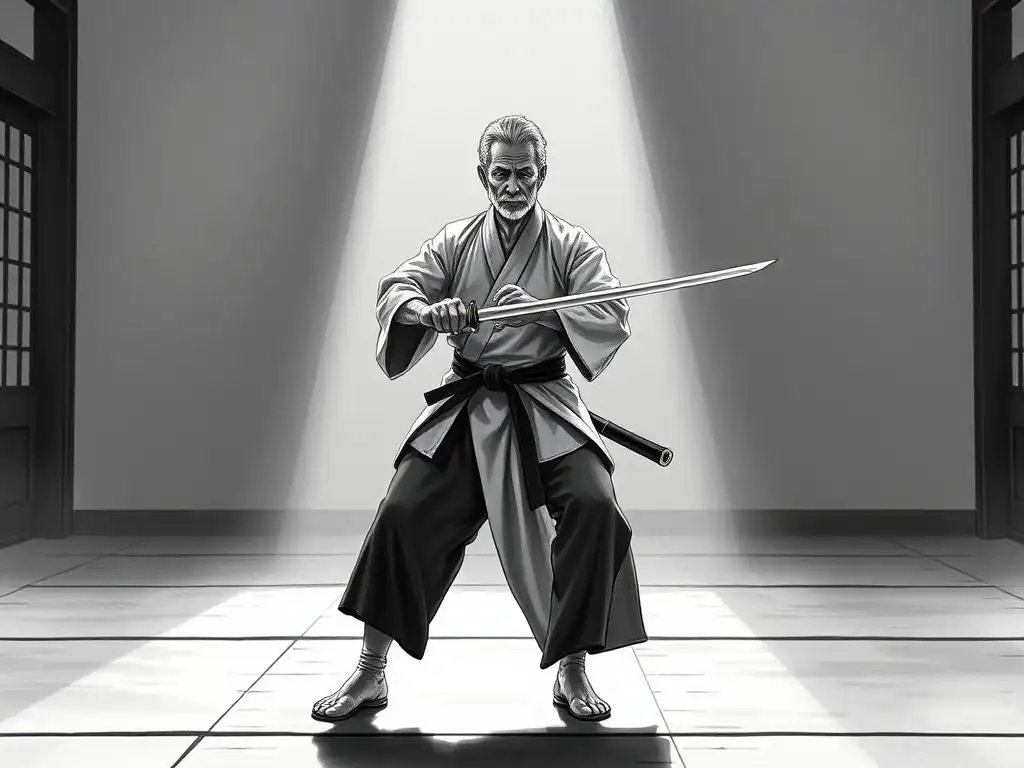
From Daito-ryu Aiki-jujutsu to Aikido: The Development of a Peaceful Martial Art
Aikido's technical roots lie primarily in Daito-ryu Aiki-jujutsu, an ancient form of jujutsu known for its sophisticated joint locks, throws, and vital point strikes. Morihei Ueshiba was a highly skilled student of Takeda Sokaku, the restorer of Daito-ryu. Initially, Ueshiba's art was a powerful, combat-effective system reflecting its Daito-ryu heritage.
However, Ueshiba underwent profound spiritual experiences and philosophical shifts throughout his life. Influenced by his deep religious beliefs and a desire to create a martial art that served peace rather than conflict, he began to move away from the combative focus of Daito-ryu.
He transformed the art into Aikido, emphasizing blending, harmony, and the development of 'Shin' as central tenets, fundamentally altering its meaning and practice from its battlefield origins to a path of spiritual cultivation. This evolution from Jutsu to 'Do' is a parallel found in the historical development of many Japanese martial ways, including the shift in Kendo philosophy meaning practice from its kenjutsu roots.
The Influence of Omoto-kyo on Aikido's 'Shin'
A significant factor in the evolution of Aikido's mental philosophy was Morihei Ueshiba's deep involvement with the Omoto-kyo religion. Founded by Deguchi Nao and led by Deguchi Onisaburo, Omoto-kyo was a syncretic faith blending Shinto, Buddhism, and other spiritual traditions, emphasizing universal harmony, spiritual cultivation, and social reform. O Sensei was a devout follower and close associate of Onisaburo for many years.
Omoto-kyo's teachings profoundly shaped Ueshiba's understanding of martial arts. He came to see his training not just as physical practice but as a spiritual discipline aimed at unifying with the divine and serving the cosmos. Concepts like 'Aiki' became interpreted not just as physical blending but as universal energy and love.
This spiritual dimension, heavily influenced by Omoto-kyo, became integral to the meaning of 'Shin' in Aikido and its unique philosophical practice. This specific religious influence is a distinguishing feature compared to the philosophical underpinnings of arts like Kendo philosophy meaning practice, which draw more heavily on Zen and Bushido.
Modern Interpretations of Aikido's Mental Philosophy and its Relevance Today
Today, Aikido is practiced globally, and its mental philosophy is interpreted in various ways. While some dojos maintain a strong emphasis on the spiritual and religious aspects as taught by O Sensei, many others focus on the psychological, ethical, and practical applications of 'Shin'. This includes stress management, conflict resolution, developing emotional intelligence, and fostering mental resilience.
Regardless of the specific interpretation, the core principles of centeredness, awareness, and the integration of mind and body remain central to modern Aikido practice. The relevance of Aikido's mental philosophy extends far beyond the dojo, offering valuable tools for navigating the complexities of modern life. This adaptability and broader application of its core principles highlight the enduring meaning derived from the practice, much like the way Kendo philosophy meaning practice is applied to personal development and ethical conduct beyond competitive sport.
The Practice of Aikido: Embodiment of 'Shin'
Mindfulness and Centeredness in Aikido: Demonstrating 'Shin'
Mindfulness and centeredness are not abstract concepts in Aikido; they are states actively cultivated and demonstrated through physical practice. Maintaining a stable physical center (hara) is directly linked to a calm and centered 'Shin'. Exercises focusing on posture, breathing (kokyu), and awareness of one's body and surroundings help train the mind to remain present and focused, even during dynamic movements or under pressure.
During practice, a practitioner with a developed 'Shin' moves with intention, grace, and stability. They are fully present in the moment, aware of their own body, their partner's movements, and the space around them. This state of mindful centeredness allows for effective blending and control, showcasing the physical embodiment of a cultivated 'Shin'. This integration of physical presence and mental state is a practical demonstration of the meaning inherent in the practice of any 'Do' art, including the focus on posture and mental focus in Kendo philosophy meaning practice.
Self-Improvement Through Aikido Training: A Journey of Mental Refinement
Aikido training is inherently a process of self-improvement and mental refinement. The physical challenges, the need for constant focus, and the interactions with partners (uke) provide numerous opportunities to confront one's ego, fear, impatience, and physical limitations. Learning to receive techniques safely, for instance, requires overcoming fear and trusting one's partner, fostering humility and resilience.
The repetitive nature of practice, the need for patience in mastering techniques, and the discipline required to attend training consistently all contribute to strengthening 'Shin'. Overcoming these internal obstacles leads to greater self-awareness, perseverance, and emotional control. This journey of mental refinement is a core aspect of the meaning derived from the practice of Aikido, paralleling the emphasis on character building and mental discipline in Kendo philosophy meaning practice.
The Role of the Sensei in Guiding Students on the Path of 'Shin'
The Sensei (teacher) plays a vital role in guiding students not only in the physical techniques but also, crucially, on the path of developing 'Shin'. A good Sensei transmits the philosophical and ethical principles of Aikido through instruction, correction, storytelling, and personal example. They help students understand that the art is more than just movement; it is a way of being.
Sensei provides feedback that addresses not just physical errors but also issues of tension, hesitation, or incorrect intent, guiding the student towards a more harmonious and effective 'Shin'. They embody the principles they teach, serving as a living example of what a cultivated 'Shin' looks like in practice and in life. This mentorship is fundamental to transmitting the deeper meaning of the practice in any traditional 'Do' discipline, akin to the role of a Sensei in imparting the full scope of Kendo philosophy meaning practice.
Aikido's Mental Principles: Practical Applications Beyond the Dojo
Applying Aikido Principles to Conflict Resolution: De-escalation and Empathy
The principles of blending, redirection, and non-resistance central to Aikido's physical techniques, rooted in 'Shin', offer powerful strategies for conflict resolution in daily life. Instead of meeting aggression with aggression, which often escalates conflict, Aikido teaches how to understand and redirect the energy of confrontation. This involves listening, seeking common ground, and finding solutions that protect all parties involved.
Cultivating empathy, a key component of 'Shin', allows practitioners to better understand the motivations and emotions behind conflict, enabling a more compassionate and effective response. Techniques learned on the mat – staying centered under pressure, maintaining composure, and reading intent – are directly applicable to navigating difficult conversations or tense situations in personal and professional settings. These practical applications highlight a significant meaning derived from the practice, extending the benefits of Aikido beyond self-defense, much like how the principles of Kendo philosophy meaning practice are applied to leadership and ethical conduct.
Developing Mental Resilience Through Aikido: Cultivating Inner Strength
The challenges inherent in Aikido training – physical discomfort, the need for discipline, learning to fall safely (ukemi), and facing skilled partners – build significant mental resilience. Practitioners learn to persevere through difficulty, manage fear, and maintain focus despite setbacks. This process strengthens 'Shin', fostering inner strength and fortitude.
The philosophical framework provided by Aikido's 'Shin' also equips practitioners with a perspective that helps them approach life's challenges with greater equanimity. Understanding the principles of harmony and non-resistance can reduce stress and anxiety when faced with adversity, encouraging a more adaptive and positive response. This cultivation of mental resilience is a valuable outcome of the practice, providing a deep meaning to the effort invested, a benefit shared with the dedicated pursuit of Kendo philosophy meaning practice.
The Enduring Legacy of 'Shin' in Aikido: Promoting Peace and Understanding
Morihei Ueshiba's vision of Aikido as a path to promote peace and understanding, centered on the cultivation of 'Shin', continues to be its enduring legacy. Practiced in dojos around the world, Aikido brings together people from diverse backgrounds, fostering mutual respect and cooperation through shared training.
The emphasis on harmony, compassion, and non-violence provides a powerful counterpoint to the prevalence of conflict in the modern world. By focusing on self-improvement and the development of a compassionate 'Shin', Aikido practitioners contribute to positive change, one individual at a time. This aspiration for a more peaceful world is a profound meaning embedded within the practice, aligning with the higher ethical goals sought in disciplines like Kendo philosophy meaning practice.
Aikido: More Than Just a Physical Art
The Spiritual Dimension of Aikido Practice: Connecting with the Universe
For many practitioners, Aikido practice extends into a spiritual dimension, a connection to something larger than oneself. Influenced by O Sensei's own spiritual journey and his connection to Omoto-kyo, this aspect involves seeing Aikido as a path to unify with universal energy, the principles of nature, or the divine. It's about moving in accordance with the natural flow of the universe.
This spiritual connection is felt in moments of effortless technique, in the sense of harmony with a training partner, or in the quiet focus of meditation and breathing exercises. It adds a layer of depth and meaning to the physical practice, transforming it from mere exercise or self-defense training into a form of moving meditation and spiritual exploration. This search for a deeper connection is a thread that runs through many 'Do' arts, including the contemplative aspects often found in Kendo philosophy meaning practice.
Striving for Harmony in Aikido: A Continuous Pursuit of 'Shin'
The pursuit of harmony (Wa) in Aikido is not a destination but a continuous journey, deeply intertwined with the development of 'Shin'. It involves striving for harmony within oneself (mind-body-spirit), harmony with one's training partner (blending and mutual learning), and ultimately, harmony with the world. This ongoing endeavor requires constant awareness, self-correction, and a commitment to the principles of Aikido.
Every class, every technique, and every interaction is an opportunity to practice and refine this pursuit of harmony, strengthening 'Shin' in the process. It's a lifelong commitment to growth and understanding. This continuous striving for improvement and harmony is the very essence of the 'Do', providing a profound meaning to the lifelong practice, a characteristic shared with the dedicated pursuit of Kendo philosophy meaning practice.
Aikido as a Path to Self-Discovery and Mental Clarity
Through the rigorous and introspective process of Aikido training, practitioners often embark on a path of self-discovery. The physical and mental challenges reveal personal habits, emotional reactions, and limitations. Learning to face these aspects of oneself with honesty and perseverance leads to greater self-awareness and acceptance.
The discipline of focusing the mind, cultivating 'Mushin', and maintaining centeredness also leads to increased mental clarity. By learning to quiet the internal chatter and react spontaneously and appropriately, practitioners develop a clearer perspective on situations both on and off the mat. This journey of self-discovery and the attainment of mental clarity are significant outcomes and a deep meaning derived from the dedicated practice of Aikido, mirroring the personal growth and insight gained through Kendo philosophy meaning practice.
Frequently Asked Questions
What is the core philosophy behind Kendo?
Kendo's core philosophy revolves around the "Do, or 'Way,'" emphasizing personal development through rigorous training. It aims to cultivate character, discipline, and respect through the practice of swordsmanship.
How does Kendo practice differ from other martial arts in its philosophical approach?
While many martial arts emphasize self-defense, Kendo places a stronger focus on self-improvement and moral development. The goal is not just to win, but to refine one's character through the pursuit of excellence.
What is the significance of "Ki-Ken-Tai-Ichi" in understanding Kendo philosophy?
"Ki-Ken-Tai-Ichi" represents the unity of spirit, sword, and body. This concept highlights the importance of mental and physical coordination in achieving effective Kendo technique and embodying its philosophy.
How does the historical context of Kendo influence its modern philosophical meaning?
Kendo's roots in samurai swordsmanship instill a sense of honor, duty, and self-sacrifice. These historical values continue to shape the modern understanding of Kendo's philosophical underpinnings and ethical code.
What are some practical ways practitioners can integrate Kendo philosophy into their daily lives?
Practitioners can apply Kendo principles by cultivating discipline, respect, and perseverance in all aspects of life. The emphasis on continuous self-improvement can extend beyond the dojo to personal and professional endeavors.
Final Reflection: Embracing the Path of Continuous Refinement
The journey through Kendo, as explored in this article, reveals that it is far more than just swordsmanship; it's a profound philosophy brought to life through rigorous practice. The enduring relevance of Kendo lies in its ability to cultivate discipline, respect, and unwavering focus in a world increasingly defined by distraction and instant gratification. Its principles, deeply rooted in the concept of "Do" – the Way – offer a timeless framework for personal growth and self-discovery that transcends the dojo walls.
The influence of Kendo extends far beyond the physical realm, shaping character and fostering a deep sense of community. My own exploration of Kendo has underscored the importance of perseverance and humility, qualities that are invaluable not only in martial arts but also in navigating the complexities of everyday life. The ultimate aim of Kendo is to mold character, to cultivate the human spirit, and to make a contribution to human culture.
This quote encapsulates the transformative power of Kendo, highlighting its potential to shape individuals into more compassionate and resilient members of society.
As you reflect on the "Do" in Kendo, consider how its principles of discipline, respect, and continuous self-improvement can be applied to your own life. Embrace the challenges that lie ahead, approach each endeavor with unwavering focus, and strive to embody the spirit of Kendo in all that you do. Let the "Way" guide you towards a path of personal growth, unwavering integrity, and lasting fulfillment.
Embrace the Way: Begin Your Kendo Journey Now!
Thank you for delving into the art of Kendo with us! We hope you've gained a deeper understanding of its principles and philosophy. Ready to put that knowledge into action?
Here are a few ways to continue your exploration:
- Find a local Kendo dojo and attend a trial class. Experience the discipline and camaraderie firsthand!
- Share this article with fellow martial arts enthusiasts and spark a discussion about the role of philosophy in their practice.
- Research the history of Kendo armor (bogu) and discover the intricate craftsmanship behind this essential protective gear.
What is the most valuable lesson you've learned from this article that you can apply to your next Kendo practice or understanding of martial arts in general?