
Reading Attacks: Anticipation and Reaction in Savate Defense


Welcome to Martial Arts Mastery, your gateway to the world's fighting traditions!
Delve into the nuanced art of Savate, where strategy meets athleticism. Are you ready to unlock the secrets of Parisian kickboxing? This exploration into Savate defense anticipation techniques will equip you with the knowledge to read your opponent, predict their moves, and react with lightning-fast precision. Discover how to transform from reactive to proactive, and elevate your Savate game beyond mere reflexes. Let's begin the journey!
- Understanding Savate Defense: The Foundation of French Kickboxing
- Decoding Opponent Intentions: Savate Defense Anticipation Techniques
- Strategic Positioning for Enhanced Savate Defense
- Practical Savate Defense Techniques: A Step-by-Step Approach
- Drills for Developing Savate Defense Anticipation and Reaction
- Mental Strategies for Effective Savate Defense
- Advanced Savate Defense Concepts
- Conclusion: Mastering Savate Defense through Anticipation and Reaction
-
Frequently Asked Questions
- What is Savate and why is defense anticipation important?
- What are some key visual cues to look for when anticipating an attack in Savate?
- How does understanding Savate history contribute to better defense anticipation?
- What role does footwork play in Savate defense anticipation techniques?
- Are there specific drills to improve Savate defense anticipation skills?
- Final Reflection: Mastering the Art of Anticipation
- Unleash Your Savate Reflexes Now!
Understanding Savate Defense: The Foundation of French Kickboxing
Savate, or French kickboxing, is a martial art characterized by its precise and elegant striking techniques, primarily using the feet and hands. While often lauded for its offensive flair, a robust Savate defense is equally critical for success and longevity in combat. Unlike some martial arts that emphasize rigid blocking, Savate defense relies heavily on mobility, evasion, and intelligent positioning, complemented by quick parries and blocks when necessary.
Mastering defense allows a practitioner not only to avoid damage but also to create openings for counter-attacks, turning defensive situations into offensive opportunities. The fundamental principle is to avoid the strike entirely or mitigate its impact through movement and timing.
Effective Savate defense is a dynamic process, not a static guard. It begins before an attack is even launched, continues through the opponent's action, and often concludes with a counter-response. This necessitates a keen awareness of distance, timing, and the opponent's intentions.
A skilled savateur can read subtle cues, predict potential attacks, and react instantaneously. This blend of foresight (anticipation) and immediate response (reaction) forms the cornerstone of a resilient defense system, enabling practitioners to navigate the complex exchanges of a Savate bout with minimal vulnerability. The emphasis is on economy of movement and intelligent application of techniques rather than brute force or absorbing blows.
The Importance of Anticipation in Savate Combat
Anticipation is perhaps the most crucial element in high-level Savate defense. It involves predicting an opponent's actions before they fully commit to a strike, significantly reducing the time needed to react.
In a sport where kicks can travel at speeds exceeding 30-40 miles per hour and punches are equally swift, relying solely on visual reaction time (typically around 200-300 milliseconds for trained individuals) is often insufficient to avoid or defend effectively against every attack. Anticipation allows a practitioner to initiate defensive movement or positioning as the attack is launched or even slightly before, effectively adding precious milliseconds to their defensive window.
Developing Savate defense anticipation techniques involves studying opponent behavior, recognizing patterns, and understanding the tactical situation. It's about moving from merely reacting to an incoming strike to predicting which strike is likely coming and when. This predictive ability is honed through extensive sparring, observation, and analytical practice.
For instance, noticing an opponent consistently shifting their weight to their rear leg might strongly suggest an impending fouetté (whip kick) from that leg. By anticipating this, the defender can begin to shift their weight, adjust distance, or prepare a parry fractionally sooner, drastically increasing the likelihood of a successful defense. This proactive approach is what elevates a good defender to an excellent one in Savate.
Reactive Defense: The Core Skill in Savate
While anticipation provides a head start, reactive defense is the essential skill that executes the necessary action once an attack is undeniably underway. This involves the rapid application of learned techniques such as parrying, blocking, slipping, or evading. Reactive defense in Savate is characterized by its speed, precision, and minimal wasted movement. A successful reactive defense is not just about stopping the attack but doing so efficiently, preserving energy and maintaining balance for subsequent actions, including counter-attacks.
Reactive defense techniques are drilled thousands of times to become instinctive reflexes. For example, the instantaneous decision to parry a chassé (side kick) to the body or slip a direct (straight punch) requires a deeply ingrained motor response. The effectiveness of reactive defense is directly tied to reaction time, but also to the appropriateness of the technique chosen for the specific attack.
A well-honed reactive ability allows a savateur to respond effectively even when an attack is unexpected or heavily disguised. This core skill ensures that even if anticipation fails or an opponent is unpredictable, the defender still possesses the physical tools to mitigate the threat, forming the final layer of Savate defense anticipation techniques and execution.
Decoding Opponent Intentions: Savate Defense Anticipation Techniques
Understanding an opponent's likely actions is a sophisticated aspect of Savate defense anticipation techniques. It involves reading their body language, movement patterns, and tendencies. High-level savateurs don't just watch the incoming limb; they observe the entire person for clues. This continuous analysis allows them to build a profile of their opponent's fighting style and anticipate their next move.
Effective decoding requires experience and focused observation during sparring and competition. Practitioners learn to recognize common attack setups and preferred techniques. For instance, some fighters favor low kicks to open opponents up, while others might rely on hand feints to set up head kicks. By identifying these preferences early in a bout, a savateur can adjust their defensive posture and strategy accordingly, improving their Savate defense anticipation techniques significantly. This process is akin to a high-speed chess match, where players try to predict several moves ahead.
Analyzing Stance and Posture for Savate Attack Prediction
An opponent's stance and posture are rich sources of information for predicting attacks. Subtle shifts in weight distribution, the angle of their shoulders, or the positioning of their feet can telegraph their intentions. For example, leaning heavily onto the front leg might indicate preparation for a quick hand attack or a front-leg kick like the coup de pied bas (low front kick).
Conversely, shifting weight back can signal preparation for a powerful rear-leg kick such as a fouetté or chassé. Observing how an opponent returns to their stance after a movement or attack also provides clues about their recovery habits and potential vulnerabilities.
Furthermore, the type of stance an opponent adopts can reveal their general strategy. A very bladed stance might suggest a preference for linear attacks and evasion, while a squarer stance could indicate readiness for lateral movement or power generation. Analyzing how they transition between stances or adjust their posture during exchanges is a key Savate defense anticipation technique. A common tell might be a slight tensing of the shoulders or a subtle rotation of the hips just before launching a kick. Learning to spot these minute adjustments through dedicated practice enhances a practitioner's ability to anticipate incoming strikes.
Reading Eye Movement and Target Selection in Savate
While less obvious than body posture, an opponent's eye movement can sometimes provide subtle hints about their intended target. Although skilled fighters are trained to use feints and misdirection, a brief glance towards a specific target area – head, body, or legs – can occasionally precede an attack aimed at that spot. Observing the opponent's gaze, combined with other physical tells, contributes to a more complete picture of their intentions and refines Savate defense anticipation techniques.
Beyond direct eye contact, observing where an opponent habitually focuses their attention during an exchange can reveal their preferred range or targets. Some fighters consistently look low, indicating a focus on leg attacks or body shots, while others keep their eyes high, suggesting head attacks are imminent. While not foolproof due to deliberate misdirection, this subtle form of reading can be a valuable addition to a defender's toolkit, especially against less experienced or predictable opponents. Integrating eye-reading with other forms of analysis enhances the overall predictive capability in Savate defense.
Recognizing Telegraphing Movements in Savate Attacks
Telegraphing refers to any movement that unnecessarily signals an impending attack, giving the opponent advance warning. Recognizing these tells is a fundamental Savate defense anticipation technique. Common forms of telegraphing include winding up a strike (e.g., drawing the hand back too far before a punch), dropping a shoulder before a kick, or taking an extra step that isn't part of the attack's natural motion. Identifying these habits in an opponent allows a defender to anticipate the attack and prepare their defense or counter-attack more effectively.
Experienced practitioners work diligently to eliminate telegraphing from their own techniques, making them harder to read. Conversely, they spend significant time in training learning to spot these tells in others. Analyzing opponent tendencies during sparring, perhaps recording sessions for later review, helps solidify the recognition of specific telegraphing movements. For instance, observing that an opponent always drops their lead hand slightly before throwing a fouetté allows the defender to anticipate that specific kick the moment they see that tell, significantly improving their Savate defense anticipation techniques against that individual.
Strategic Positioning for Enhanced Savate Defense
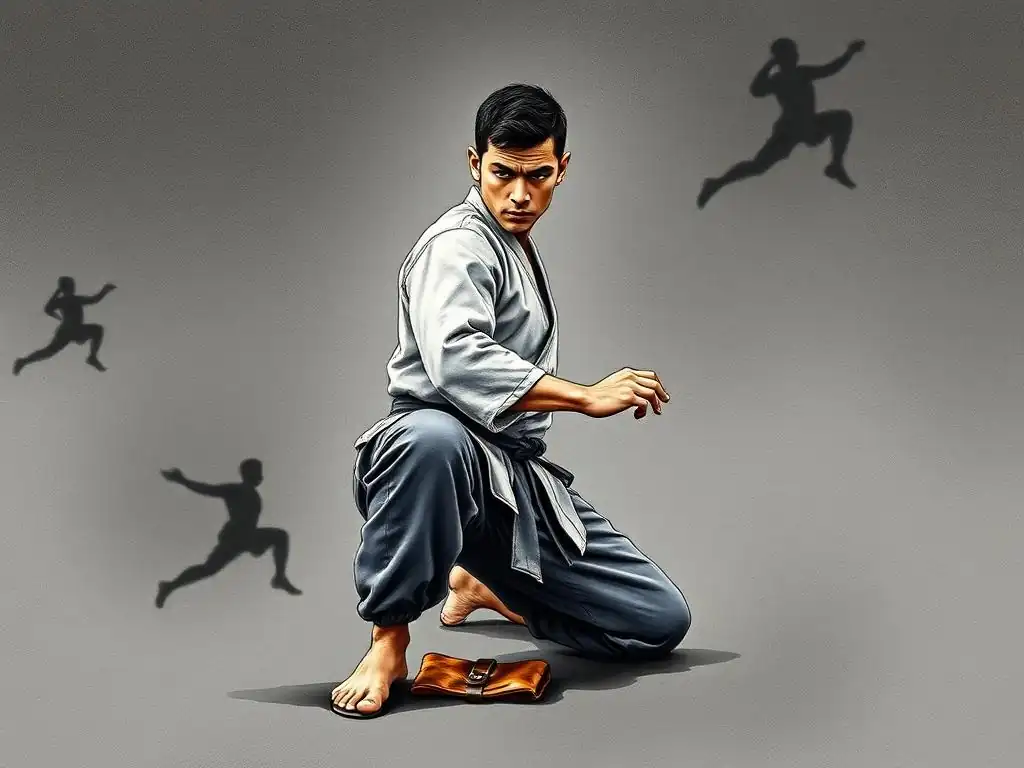
Strategic positioning is a dynamic element of Savate defense, involving the intelligent use of distance, angle, and footwork to minimize exposure to attacks and maximize defensive opportunities. It's not just about standing in one place and reacting; it's about actively controlling the engagement zone and making it difficult for the opponent to land effective strikes. Good positioning can disrupt an opponent's rhythm, force them into less advantageous angles, and buy crucial time for anticipation and reaction.
Effective positioning requires constant awareness of one's own body relative to the opponent's and the boundaries of the fighting area. It involves subtle adjustments in stance, weight distribution, and foot placement. By mastering strategic positioning, a savateur can dictate the terms of engagement, forcing the opponent to fight on their terms. This proactive approach to defense significantly reduces the number and effectiveness of incoming attacks before any physical blocking or evasion is even necessary, forming a critical layer of Savate defense anticipation techniques in action.
Maintaining Optimal Distance for Reactive Defense in Savate
Distance management is paramount in Savate defense. There are typically three main ranges: long range (primarily kicking distance), medium range (kicking and punching distance), and close range (clinching, short punches, and kicks). Maintaining optimal distance means staying at a range where the opponent's most dangerous weapons are less effective, while you are still positioned to counter or evade. For many Savate practitioners, this optimal distance is just outside the opponent's preferred kicking range, allowing time to react to incoming kicks while being close enough to step in for hand attacks or short kicks.
Continuously adjusting distance is key. Stepping back slightly as an opponent lunges forward can turn a dangerous strike into a glancing blow or a complete miss. Conversely, stepping forward or laterally can disrupt an opponent's setup for a kick, forcing them to reset or throw a less powerful strike.
Practicing drills focused solely on entering and exiting various ranges helps develop the instinctive feel for maintaining the correct distance, crucial for effective Savate defense anticipation techniques and execution. For example, staying just outside the typical range for a chassé low allows ample time to lift the leg or step back when the attack is launched.
Using Footwork to Control the Engagement Zone in Savate
Footwork is the engine of Savate defense and positioning. Savate is known for its fluid and extensive footwork, which allows practitioners to move quickly in and out of range, change angles, and pivot. Effective footwork allows a defender to evade incoming strikes without having to rely solely on blocking or parrying. By moving the entire body out of the line of attack, the defender avoids absorbing impact and remains in a balanced position to counter.
Controlling the engagement zone through footwork involves more than just moving away. It includes lateral movement to disrupt the opponent's linear attacks, circling to gain advantageous angles, and using small adjustments to maintain balance and readiness. Techniques like the pas de Savate (Savate step) allow for rapid repositioning. For example, circling away from an opponent's power side can significantly reduce the threat of their strongest kicks. Mastering these footwork patterns under pressure is vital for implementing Savate defense anticipation techniques and keeping the opponent off-balance.
Angles and Evasion: Maximizing Defensive Opportunities in Savate
Utilizing angles is a sophisticated defensive strategy in Savate. By moving diagonally or laterally relative to the opponent, a defender can make themselves a smaller target and force the opponent to adjust their attack mid-motion, reducing its power and accuracy. Moving off the center line is a primary method of evasion. Instead of stepping directly back from a punch, stepping to the side changes the angle, causing the punch to miss entirely.
Combining footwork with upper body movement allows for highly effective evasion. For example, stepping to the side while simultaneously slipping the head can evade a hand combination while setting up a counter-attack from a new angle. Practicing moving offline in response to various attacks helps develop the instinctive lateral and diagonal movement crucial for high-level Savate defense. Using angles effectively is a powerful application of Savate defense anticipation techniques, as it requires predicting the line of attack and moving off it preemptively or simultaneously.
Practical Savate Defense Techniques: A Step-by-Step Approach
While anticipation and positioning aim to prevent attacks from landing effectively, practical defensive techniques are the physical methods used to deal with strikes that cannot be fully evaded. These include parrying, blocking, slipping, and using body movement to deflect or avoid impact. Mastering these techniques is essential for a complete Savate defense system. They provide the last line of defense and are often immediately followed by counter-attacks.
These techniques must be executed with speed, precision, and minimal force, relying on correct body mechanics rather than brute strength. The goal is to redirect or absorb the force of the blow safely while maintaining balance and readiness. Integrating these physical techniques seamlessly with anticipation and strategic positioning is the mark of a skilled Savate defender.
Parrying and Blocking Common Savate Kicks
Savate kicks are powerful and varied, requiring specific defensive responses. Parrying involves deflecting a kick with the hands or forearms, while blocking typically involves absorbing the impact with a guarded limb, often the shin or forearm, depending on the target.
Defending the Chassé (Side Kick)
The chassé is a linear thrusting kick, often aimed at the body or legs. Defending it effectively requires timing and structure.
- Parry: If the chassé is aimed at the body, a common defense is to use a firm hand or forearm parry to deflect the kick offline. This requires stepping slightly to the side while extending the arm with force to push the kick away. The timing is crucial – the parry must meet the kick as it extends, not after it has fully landed.
- Block: Against a chassé to the leg ( chassé bas), a common block involves turning the hip and lifting the shin to absorb the impact. This requires strong conditioning of the shin. Another method is to step back and slightly turn, using the front leg to check the kick.
- Evasion: Stepping back and slightly to the side is a highly effective way to evade a chassé entirely, taking the target out of range.
Defending the Fouetté (Whip Kick)
The fouetté is a circular or semicircular kick, often targeting the head or body. Its speed and trajectory make it challenging to defend.
- Parry: Against a fouetté to the head or body, a high guard with forearms protecting the head and body, combined with a slight lean away, can deflect or absorb the impact. A more active parry involves using a hand to deflect the incoming shin or foot offline, requiring excellent timing and nerve.
- Block: Blocking a fouetté to the body often involves tightening the core and arms to absorb the impact, potentially taking a small step back to reduce force. A fouetté to the leg is typically checked with the shin, similar to defending a low round kick in other styles.
- Evasion: Slipping or ducking under a fouetté to the head is a highly effective evasion technique, particularly if the kick is slightly overcommitted. Stepping outside the line of the kick's arc is also effective.
Defending the Revers (Reverse Kick)
The revers is a reverse or hook kick, often aimed at the head or body, known for its deceptive angle and power.
- Parry/Block: Defending a revers to the head usually involves a high guard, using forearms to absorb or deflect the impact. Due to the circular nature, a strong, angled block or parry is needed to push the kick away from the head.
- Evasion: The most effective defense against a revers is often evasion. Stepping forward and inside the arc of the kick can neutralize it before it builds power. Alternatively, stepping back and out of range, or quickly ducking under the trajectory, are viable options depending on distance and timing. Anticipating the spin or setup for the revers is critical for successful evasion.
Evasion and Slipping Techniques in Savate
Evasion involves moving the entire body out of the path of an attack, while slipping typically refers to small, precise movements of the head or torso to avoid hand strikes. These techniques are core to the mobility-focused Savate defense.
Utilizing Body Movement to Avoid Strikes
Body movement in Savate defense involves adjusting posture, leaning, bending, or rotating the torso to make the target harder to hit or to move it out of the way entirely. For instance, a slight lean back can cause a punch to fall short, or a twist of the torso can reduce the surface area exposed to a kick. This requires flexibility and strong core control.
Integrating body movement with footwork enhances evasion. Stepping to the side while leaning back creates a much larger zone of safety than either movement alone. Practicing drills that focus on reacting to simulated strikes with various body movements helps develop this fluidity and responsiveness. The goal is to make these evasive movements second nature.
Combining Footwork and Head Movement for Effective Evasion
Effective evasion often combines footwork and head movement, particularly against hand strikes. Slipping involves moving the head slightly to the side to avoid a straight punch or ducking under a hook. When combined with footwork, such as a small step to the side or angle, this becomes a powerful defensive tool.
For example, slipping a direct (straight punch) while simultaneously stepping to the outside of the opponent's lead leg can evade the punch and put the defender in an advantageous angle for a counter-attack. Mastering head movement requires precise control and timing, often practiced extensively with focus mitts or against a partner throwing controlled punches. This combination is a sophisticated element of Savate defense anticipation techniques, as it requires predicting the line of attack and moving off it efficiently.
Counter-Attacking from a Defensive Position in Savate
Savate defense is not just about avoiding damage; it's about creating opportunities. A successful defense often leaves the opponent momentarily off-balance, out of position, or recovering from their committed attack. These moments are prime opportunities for immediate counter-attacks. This transition from defense to offense is a hallmark of skilled Savate.
Counter-attacking requires speed and decisiveness. The defender must recognize the opening created by their successful defense and launch their own strike before the opponent can recover. This often involves launching a counter while the opponent is still completing their attack or immediately after their recovery movement.
Immediate Counter-Strikes after a Block or Parry
Launching a counter-strike immediately after a block or parry is a fundamental Savate tactic. For example, after parrying a chassé to the body, a swift coup de poing direct (straight punch) to the head or body can land while the opponent is still extending or retracting their leg. Similarly, after blocking a low kick, an immediate low chassé or fouetté to the opponent's supporting leg can be highly effective.
The timing is critical – the counter must be launched in the fraction of a second that the opponent is most vulnerable. This requires the defensive technique to leave the defender in a balanced position, ready to attack instantly. Drills focusing on specific block/parry and counter combinations are essential for developing this reactive counter-attacking ability.
Setting Up Counter-Attacks with Evasive Maneuvers
Evasion, while avoiding impact, can also set up counter-attacks by putting the defender in an advantageous position. For example, stepping outside the line of an opponent's attack can create an angle from which to launch a counter that the opponent is not expecting or is poorly positioned to defend.
Slipping a punch and simultaneously stepping to the outside can set up a powerful hook or a side kick to the opponent's exposed side. Evading a kick by stepping forward and inside can create an opportunity for close-range hand techniques or a short, powerful kick like the coup de pied bas. These counter-attacks often exploit the opponent's committed motion and lack of defensive coverage in their new, off-balance position. This strategic use of evasion to create offensive opportunities is a sophisticated application of Savate defense anticipation techniques.
Drills for Developing Savate Defense Anticipation and Reaction
Developing effective Savate defense anticipation techniques and rapid reaction times requires dedicated and varied training. Drills should focus on isolating specific defensive skills, then combining them under increasing pressure. Repetition is key to making defensive responses automatic and efficient.
Training should simulate realistic combat scenarios as much as possible, starting slowly and gradually increasing speed and intensity. Incorporating elements of unpredictability in drills helps hone anticipation skills.
Reaction Time Drills for Savate Practitioners
Simple reaction time drills can form the basis of training. A partner can present different targets or signal different attacks verbally or visually, and the practitioner must execute the correct defensive response as quickly as possible. For instance, a partner might hold up one finger for a head attack, two for a body attack, and three for a leg attack, with the practitioner reacting with the appropriate block or evasion.
More advanced drills involve a partner throwing pre-determined sequences of attacks at increasing speed, forcing the practitioner to react instantly. Using a reaction ball or similar training aids can also help improve general visual reaction time and footwork speed. The goal is to reduce the lag between perceiving a threat and initiating the defensive action.
Sparring with a Focus on Defensive Awareness in Savate
Sparring is invaluable for developing Savate defense anticipation techniques and reaction under realistic conditions. However, simply sparring without a specific focus can lead to reinforcing bad habits. Defensive sparring should prioritize observation, positioning, and successful defense over landing attacks.
Partners can agree to spar with a specific focus, such as "defense only" for one person, or focusing on defending against a particular type of attack (e.g., only kicks to the body). Light sparring allows practitioners to practice reading tells and executing defensive movements without the pressure of full impact. Gradually increasing intensity helps build confidence and effectiveness under pressure. Analyzing sparring footage can also provide insights into personal telegraphing habits and opponent tendencies.
Shadow Boxing for Visualization and Anticipation of Attacks
Shadow boxing is often seen purely as an offensive exercise, but it is equally crucial for developing defense and anticipation. During shadow boxing, practitioners should visualize an opponent launching attacks and practice reacting to them. This mental rehearsal helps solidify defensive patterns and improves the ability to anticipate different types of strikes.
Visualizing specific opponents or fighting styles can make the practice more targeted. For instance, shadow boxing against an imagined opponent known for strong low kicks allows the practitioner to focus on anticipating and defending chassé bas and fouetté bas. This mental training enhances the connection between anticipating a threat and executing the correct physical response, integrating Savate defense anticipation techniques into muscle memory.
Mental Strategies for Effective Savate Defense
Beyond physical training, mental preparation plays a significant role in effective Savate defense. A calm, focused mind can process information faster, anticipate more accurately, and react more effectively than a stressed or distracted one. Mental strategies help manage fear, maintain composure, and enhance predictive abilities.
Developing a strong mental game is as important as physical conditioning. It allows a practitioner to remain analytical and strategic even in the chaos of combat, improving their overall Savate defense anticipation techniques and reactive capabilities.
Cultivating a Calm and Focused Mindset
Maintaining composure under pressure is vital. Fear or panic can lead to freezing or inefficient movements, making defense difficult. Techniques such as controlled breathing, mindfulness, and positive self-talk can help maintain a calm and focused state during sparring or competition. A calm mind is better able to observe subtle tells and make quick, rational decisions.
Focus involves shutting out distractions and concentrating solely on the opponent and the present moment. This heightened awareness allows the practitioner to pick up on cues they might otherwise miss, enhancing their Savate defense anticipation techniques. Training exercises that simulate the stress of competition can help build mental resilience.
Developing Intuition and Predictive Abilities in Savate
While conscious analysis of tells is important, experienced practitioners also develop an intuitive sense of what their opponent is likely to do. This "gut feeling" is often the result of thousands of hours of training and observation, where the brain subconsciously processes information and recognizes patterns too quickly for conscious thought.
Developing this intuition requires extensive exposure to different opponents and situations. Sparring with a variety of partners, watching high-level bouts, and constantly analyzing exchanges helps build this subconscious database of movements and tendencies. Trusting this intuition, combined with conscious analysis, refines Savate defense anticipation techniques to a high degree.
Visualizing Potential Attack Scenarios in Savate Combat
Visualization is a powerful mental tool for improving Savate defense anticipation techniques. By mentally rehearsing responding to various attack scenarios, practitioners can improve their reaction time and decision-making under pressure. This involves picturing an opponent launching different strikes and seeing oneself successfully defending against them.
Visualization can focus on specific opponents, common attack patterns, or challenging techniques. For instance, visualizing defending against a rapid fouetté combination helps prepare the mind and body for that specific threat. This mental practice reinforces learned defensive responses and builds confidence in one's ability to handle different situations.
Advanced Savate Defense Concepts
As a practitioner progresses, they encounter more sophisticated offensive tactics, requiring equally advanced defensive concepts. These involve not just reacting to attacks but actively disrupting the opponent's game plan and using their actions against them.
Advanced Savate defense goes beyond simply avoiding strikes; it involves psychological elements, strategic manipulation, and a deep understanding of combat dynamics.
Feint Recognition and Counter-Feinting
Feints are deceptive movements designed to draw a defensive reaction or mask a real attack. Recognizing feints is crucial for effective Savate defense anticipation techniques; falling for every feint wastes energy and leaves openings. Learning to distinguish between a genuine attack setup and a feint comes through experience and observing subtle differences in commitment and body language.
Counter-feinting involves using one's own feints to elicit a reaction from the opponent, revealing their defensive habits or creating an opening. For example, a defender might feint a step back to draw out a committed attack, which they are then prepared to evade or counter. This psychological layer adds complexity to the defensive game.
Disrupting the Opponent's Rhythm and Timing
Skilled attackers rely on rhythm and timing to land their strikes effectively. Disrupting this rhythm is an advanced Savate defense strategy. This can involve varying one's own tempo, using unexpected movements, or employing defensive actions that force the opponent to pause or reset.
For instance, instead of always reacting predictably, a defender might occasionally step into an opponent's attack (with caution and the right technique) to break their forward momentum, or use sudden changes in distance to frustrate their attack setup. This proactive disruption prevents the opponent from settling into a comfortable rhythm and makes their attacks more predictable, enhancing Savate defense anticipation techniques.
Adapting Defensive Strategies Based on Opponent Style
Different opponents have different styles, strengths, and weaknesses. An advanced Savate defender must be able to quickly assess an opponent's style and adapt their defensive strategy accordingly. Against a pressure fighter, maintaining distance and using lateral movement might be key. Against a counter-puncher, patience and drawing out attacks might be more effective.
Analyzing an opponent's tendencies during the initial exchanges of a bout allows the defender to tailor their Savate defense anticipation techniques and reactive strategies. This adaptability is a hallmark of high-level martial artists and is crucial for consistent defensive success against a variety of opponents.
Conclusion: Mastering Savate Defense through Anticipation and Reaction
Mastering Savate defense is a continuous journey that integrates physical techniques, strategic positioning, mental acuity, and the crucial skills of anticipation and reaction. It is a dynamic process of reading the opponent, controlling the engagement, and responding effectively to incoming threats. A strong defense is not merely a passive shield but an active component of the overall combat strategy, creating opportunities for offense.
The ability to anticipate attacks through reading tells and understanding opponent psychology, combined with the physical ability to react instantaneously with appropriate techniques, forms the bedrock of high-level Savate defense. This synergy allows practitioners to navigate the challenges of combat with grace, efficiency, and resilience.
The Path to Defensive Excellence in Savate
The path to defensive excellence in Savate requires dedication to all facets of training: rigorous physical conditioning, thousands of repetitions of defensive drills, extensive sparring with varied partners, and focused mental preparation. It involves constantly analyzing one's own performance and opponent behavior.
Key milestones on this path include developing an intuitive sense of distance and timing, the ability to recognize common tells instantly, and the physical reflexes to execute defensive techniques under pressure. Achieving defensive excellence is not about becoming invincible, but about minimizing vulnerability and maximizing opportunities in every exchange.
Continuously Refining Your Anticipation Skills in Savate
Refining Savate defense anticipation techniques is an ongoing process. It involves continuous learning, observation, and adaptation. As opponents evolve and develop new strategies, so too must the defender's ability to read and anticipate. This requires staying curious, analyzing fights, and constantly seeking to understand the nuances of combat dynamics.
Engaging in analytical sparring, reviewing footage, and discussing strategies with coaches and peers are all ways to sharpen anticipation skills. The goal is to become a human prediction engine, constantly processing information and preparing for the most likely threats, making Savate defense anticipation techniques a finely tuned art.
Frequently Asked Questions
What is Savate and why is defense anticipation important?
Savate is a French kickboxing martial art. Defense anticipation is crucial because it allows you to react more effectively and minimize damage.
What are some key visual cues to look for when anticipating an attack in Savate?
Look for subtle shifts in your opponent's weight distribution, muscle tension, and eye movement. These provide early warnings of an impending strike.
How does understanding Savate history contribute to better defense anticipation?
Knowing the common attack patterns and historical strategies of Savate can help you predict your opponent's likely moves.
What role does footwork play in Savate defense anticipation techniques?
Effective footwork allows for rapid repositioning and evasion, enabling you to avoid attacks before they land. It's crucial for creating distance and angles.
Are there specific drills to improve Savate defense anticipation skills?
Yes, practicing sparring drills with a focus on reading your opponent's movements and reacting quickly is essential. You can also practice shadow boxing focusing on anticipating attacks.
Final Reflection: Mastering the Art of Anticipation
The ability to anticipate an opponent's attack is not merely a skill, but a fundamental pillar of effective Savate defense. As we've explored the various techniques and strategies for cultivating this crucial ability, it becomes clear that mastering anticipation transcends the confines of the ring, offering valuable lessons applicable to navigating the complexities of everyday life. The principles of observation, pattern recognition, and calculated reaction, so vital in Savate, resonate deeply with the need for proactive awareness in all our endeavors.
This journey into Savate defense has underscored the profound connection between physical discipline and mental acuity. It highlights how training the body to react instinctively also sharpens the mind's ability to predict and prepare. This synergy is beautifully captured in the words of Sun Tzu: Victorious warriors win first and then go to war, while defeated warriors go to war first and then seek to win.
This quote encapsulates the essence of anticipation – preparing for the challenge before it even manifests.
Now, take a moment to consider how you can apply these principles of anticipation in your own life. Whether it's anticipating potential challenges in your career, understanding the nuances of interpersonal relationships, or simply navigating the unpredictable currents of daily life, cultivate your ability to observe, analyze, and react with intention. Embrace the spirit of Savate defense, not just as a martial art, but as a philosophy for proactive living.
Unleash Your Savate Reflexes Now!
Thanks for diving deep into the art of anticipation and reaction in Savate defense! We hope you've gained valuable insights into honing your reflexes and strategic thinking in the ring. Now, it's time to put that knowledge into action and elevate your game.
Here's how you can take your Savate skills to the next level:
- Immediately apply the techniques you've learned in your next sparring session, focusing on reading your opponent's stance and movements.
- Explore different training drills to sharpen your reaction time, such as reacting to visual or auditory cues to simulate fight scenarios.
- Share your favorite defensive techniques with fellow Savate enthusiasts on our forum and discuss how you incorporate anticipation into your training.
What specific drill will you use to enhance your anticipation skills, and how do you plan to track your progress?