
From Ti to Tode: Tracing the Evolution of Okinawa's Empty Hand

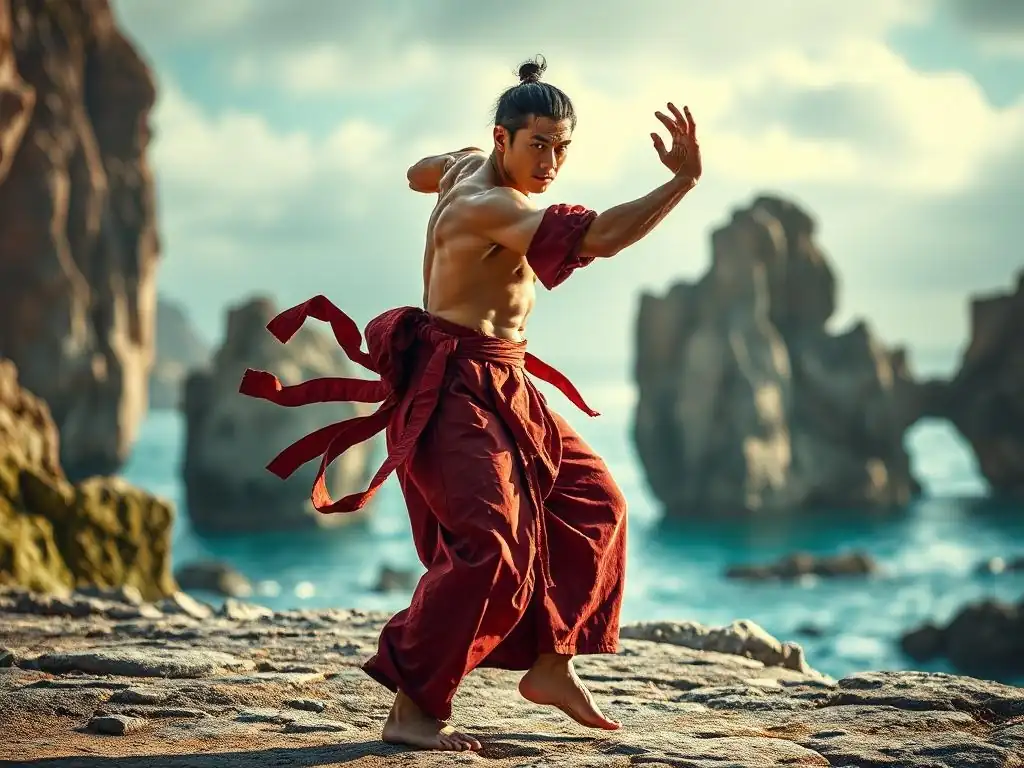
Welcome to Martial Arts Mastery, your gateway to understanding the profound world of combat arts! Ever wondered how a simple farming tool could evolve into a deadly weapon? Delve into the captivating origins of empty-hand fighting with our exploration of " Okinawa empty hand techniques," tracing their lineage from ancient roots to modern mastery. Uncover the secrets behind this powerful art and begin your journey to martial arts enlightenment.
- From Ti to Karate: Tracing the Evolution of Okinawa's Empty Hand
- The Origins of Okinawan Empty Hand Techniques: A Historical Overview
- Tode: The Tang Hand and its Chinese Connection
- The Divergence of "Ti" into Distinct Styles
- From Tode to Karate: A Transformation
- Key Figures in the Evolution of Okinawa's Empty Hand
- Okinawa Empty Hand Techniques: Core Principles and Practices
- The Legacy of Okinawa's Empty Hand in Modern Martial Arts
-
Frequently Asked Questions
- What is the significance of "Ti" in the context of Okinawan martial arts?
- How did "Tode" contribute to the development of Okinawan empty-hand techniques?
- What are some key differences between "Ti" and later forms of Karate?
- What historical factors influenced the evolution of Okinawan empty-hand techniques?
- Where can I learn more about specific Okinawan empty-hand techniques?
- Final Reflection: Embracing the Legacy of Okinawa's Empty Hand
- Unleash Your Inner Karateka: Begin Your Journey Today!
From Ti to Karate: Tracing the Evolution of Okinawa's Empty Hand
The Origins of Okinawan Empty Hand Techniques: A Historical Overview
Early Influences on Okinawa's Martial Arts
Okinawa, a chain of islands situated between Japan and mainland China, historically served as a critical trading hub. This unique geographical position meant the Ryukyu Kingdom, as it was known, was exposed to diverse cultural influences, including martial traditions from both neighboring powers. While indigenous fighting methods certainly existed, the more structured and sophisticated techniques that would eventually form the basis of Okinawa empty hand techniques were significantly shaped by external contact. Trade ships, diplomatic missions, and visiting scholars brought not just goods and ideas, but also knowledge of various fighting systems.
The earliest records pointing to formalized martial practices on the islands are somewhat sparse but suggest a blend of local methods and techniques introduced through interactions. For instance, tribute missions to China, which began as early as the 14th century, would have exposed Okinawans to Chinese martial arts. Similarly, interactions with Japanese samurai, particularly after the Shimazu clan's invasion in 1609, also played a role. This complex interplay of indigenous practices with techniques imported from China and Japan laid the groundwork for the unique evolution of Okinawa empty hand techniques.
The Development of "Ti" (Hand) in Okinawan Culture
"Ti" (手), meaning "hand" or "technique," refers to the original, indigenous fighting methods practiced in Okinawa. Before the significant influence of Chinese martial arts became widely integrated, Okinawans had developed their own practical self-defense skills born out of necessity. These early methods were likely less formalized than later styles, focusing on fundamental strikes, joint manipulations, and grappling techniques necessary for survival in a society where weapons were often restricted, particularly after the 1609 Satsuma invasion.
The development of "Ti" was deeply intertwined with the social structure and daily life of Okinawan villagers and nobility. While commoners might practice basic techniques for self-preservation, members of the peichin (local gentry) and shizoku (noble class) had more opportunity to develop and refine these skills, sometimes incorporating elements learned from Chinese visitors. This period saw the informal transmission of practical empty-hand fighting knowledge within families and small communities, forming the initial layer of what would evolve into the sophisticated Okinawa empty hand techniques known today.
Tode: The Tang Hand and its Chinese Connection
The Impact of Chinese Martial Arts on Okinawan "Ti"
The most profound external influence on the development of Okinawa empty hand techniques came from China, particularly during the Ryukyu Kingdom's period of active trade and tribute relations with the Ming and Qing dynasties. Chinese martial arts, especially those from the Fujian province, were introduced through various channels. Official envoys, shipwrecked sailors, and Chinese families who settled in Okinawa (such as the "Thirty-Six Families" from Fujian in 1392) brought with them sophisticated fighting systems.
These Chinese methods, often referred to collectively as Quanfa (拳法) or Gongfu (工夫), introduced concepts like structured forms (kata), specific stances, breathing techniques, and a deeper understanding of body mechanics and vital points. The integration of these elements into the existing Okinawan "Ti" marked a significant evolutionary leap. For example, techniques like powerful, rooted stances and complex hand movements found in many Okinawan kata can be directly traced to Chinese Quanfa. This fusion resulted in a more systematized and powerful fighting art.
Influence of Fujian White Crane Kung Fu on Okinawan Martial Arts
Among the various Chinese martial arts influencing Okinawa, Fujian White Crane Kung Fu ( Fujian Baihe Quan) stands out as particularly impactful. Located directly across the East China Sea from Okinawa, Fujian province had strong historical ties with the Ryukyu Kingdom. White Crane Kung Fu is characterized by its emphasis on close-range fighting, precise hand strikes, short, powerful movements, and the generation of internal energy ( qi).
Masters from Okinawa who traveled to China, or Chinese masters who settled in Okinawa, often had backgrounds in Fujian White Crane. Notable figures like Kanryo Higaonna, founder of Naha-te (which evolved into Goju-ryu), spent significant time in Fuzhou, Fujian, studying under masters like Ru Ru Ko (Xie Zhongxiang), who was known for his White Crane system. The soft-hard dynamics, circular movements, and specific breathing methods ( sanchin) found in styles like Goju-ryu are strong indicators of this direct lineage from Fujian White Crane, profoundly shaping Naha-te and, by extension, many modern Okinawa empty hand techniques.
The Meaning and Significance of "Tode" in Okinawan Martial Arts
The term "Tode" (唐手), pronounced Tō-de or Tō-te in Okinawan, literally means "Tang Hand," referring to the Tang Dynasty of China (although the term was used more broadly to mean "Chinese" or "foreign" during later periods). The adoption of this term signifies the explicit acknowledgement of the significant Chinese influence on Okinawan fighting arts. It distinguishes the evolved art, which incorporated sophisticated Chinese techniques, from the more basic, indigenous "Ti."
Using the term "Tode" was not just a linguistic shift; it represented a fundamental transformation in the practice and perception of Okinawa empty hand techniques. It indicated a move towards a more structured, systematic approach to training, often involving the study and practice of kata (forms) derived from or heavily influenced by Chinese originals. This era, roughly spanning the 17th to 19th centuries, saw the art develop into a distinct system, laying the critical foundation for what would later be called Karate.
The Divergence of "Ti" into Distinct Styles
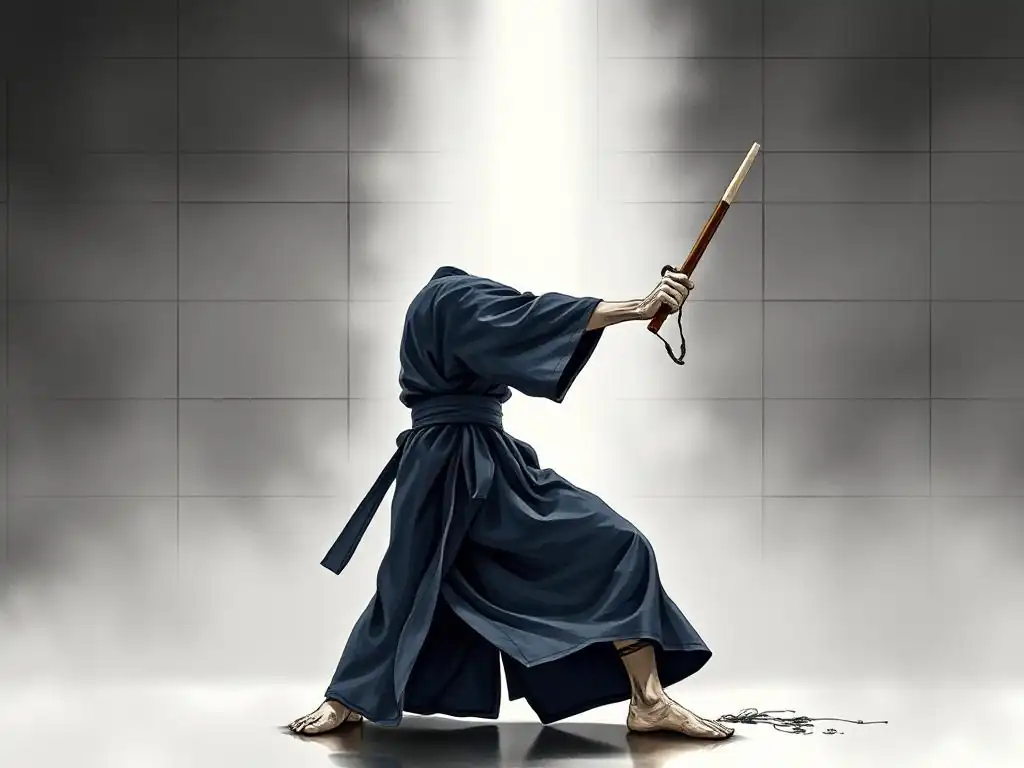
Shuri-te, Naha-te, and Tomari-te: The Three Main Branches
As "Tode" developed under the influence of Chinese methods, it did not evolve uniformly across the island. Instead, distinct regional variations emerged, primarily centered around the major population centers: Shuri, Naha, and Tomari. Shuri was the capital city, home to the King and the nobility; Naha was the primary port and commercial center; and Tomari was a smaller port village known for its fishing community.
Each of these areas developed its own characteristics based on the specific Chinese influences received, the local culture, and the preferences of influential masters. While sharing a common root in "Ti" and Chinese Quanfa, the Okinawa empty hand techniques practiced in these three areas began to diverge, leading to the informal classification of Shuri-te, Naha-te, and Tomari-te. These three branches represent the foundational streams from which most modern Okinawan karate styles originated.
Characteristics of Shuri-te, Naha-te, and Tomari-te
The three main branches of Okinawan "Ti" developed distinct characteristics reflecting their origins and influences. Shuri-te, often associated with the nobility and royal court, tended to emphasize quick, linear movements and long-range techniques, derived partly from Northern Chinese styles and possibly influenced by Japanese sword arts. It focused on fast strikes and agile footwork.
Naha-te, rooted in the bustling port city, showed a strong influence from Southern Chinese styles, particularly Fujian White Crane. It is characterized by powerful, close-range techniques, strong stances, circular movements, and emphasis on sanchin breathing and body conditioning. Tomari-te, practiced in the smaller port, is sometimes seen as a blend of the other two, incorporating elements of both fast, linear movements and rooted, powerful techniques, reflecting its position between Shuri and Naha and its unique local masters. These distinct approaches highlight the rich diversity within early Okinawa empty hand techniques.
The Role of Local Masters in Shaping Each Style
The evolution and differentiation of Shuri-te, Naha-te, and Tomari-te were heavily reliant on the individual knowledge, experience, and teaching methods of prominent local masters. These masters, often men of education or status, learned from Chinese visitors or by traveling to China, and then adapted and passed down the techniques within their communities. For example, in Shuri, figures like Sokon "Bushi" Matsumura and Anko Itosu were instrumental in systematizing and teaching Shuri-te, focusing on forms like Kushanku and Passai.
In Naha, Kanryo Higaonna's studies in Fuzhou directly shaped Naha-te, emphasizing forms like Sanchin and Seipai. In Tomari, masters such as Kosaku Matsumora and Kokan Oyadomari developed their own interpretations, incorporating elements from both Shuri and Naha lineages, seen in forms like Rohai and Wanshu. The personal interpretations and refinements by these key figures solidified the unique identities of each branch, ensuring the continuation and development of specific Okinawa empty hand techniques within their respective traditions.
From Tode to Karate: A Transformation
The Introduction of Karate to Mainland Japan
Towards the end of the 19th century and the beginning of the 20th century, Okinawan martial arts began to gain recognition beyond the island. Several Okinawan masters played a crucial role in introducing their art to mainland Japan. This period coincided with Japan's increasing nationalistic sentiment and a growing interest in physical education and martial discipline within schools.
Anko Itosu, a prominent Shuri-te master, was pivotal in introducing "Tode" into the Okinawan school system around 1901, modifying techniques for safety and physical fitness. This marked a significant step towards public dissemination. However, it was Gichin Funakoshi, a student of both Itosu and Anko Asato, who became the primary figure in bringing Okinawan empty hand techniques to mainland Japan, giving demonstrations in Tokyo in 1922 and eventually establishing a dojo there.
Gichin Funakoshi and the Standardization of Karate
Gichin Funakoshi is widely regarded as the "father of modern karate" due to his efforts in introducing and popularizing the art on mainland Japan. Drawing primarily from the Shuri-te and Tomari-te traditions he learned, Funakoshi systematized the techniques and forms, adapting them for mass instruction and aligning them with Japanese Budo (martial way) principles. He emphasized the philosophical aspects and the pursuit of character development alongside physical training.
Funakoshi's standardization included creating a curriculum suitable for schools and universities, developing basic techniques ( kihon), and structuring the kata. While his system, which he eventually named Shotokan, was based on Okinawan empty hand techniques, it evolved to suit the Japanese environment and his interpretation of the art's purpose. This standardization was crucial for its rapid spread but also led to some variations from the original Okinawan forms.
The Name Change: Shifting from "Tode" to "Karate-do"
Perhaps one of the most significant transformations during this period was the change in the art's name from "Tode" (唐手 - Tang Hand) to "Karate" (空手 - Empty Hand). While the pronunciation remained the same, the shift in the first character from "Tang" (唐) to "Empty" (空) held significant meaning. This change occurred gradually, with Gichin Funakoshi being a strong proponent of the new writing, particularly after 1933.
The reasons for this change were multifaceted. Politically, it helped the art gain acceptance in mainland Japan during a time of heightened nationalism, distancing it from its explicit Chinese origins. Philosophically, the character "Empty" (空 - kara) resonated with Zen Buddhist concepts of emptiness and detachment, aligning the physical techniques with a deeper spiritual path, leading to the full name "Karate-do" (空手道 - The Way of the Empty Hand). This renaming solidified the art's identity and facilitated its global spread as a distinct Japanese martial art, albeit one with deep roots in Okinawa empty hand techniques.
Key Figures in the Evolution of Okinawa's Empty Hand
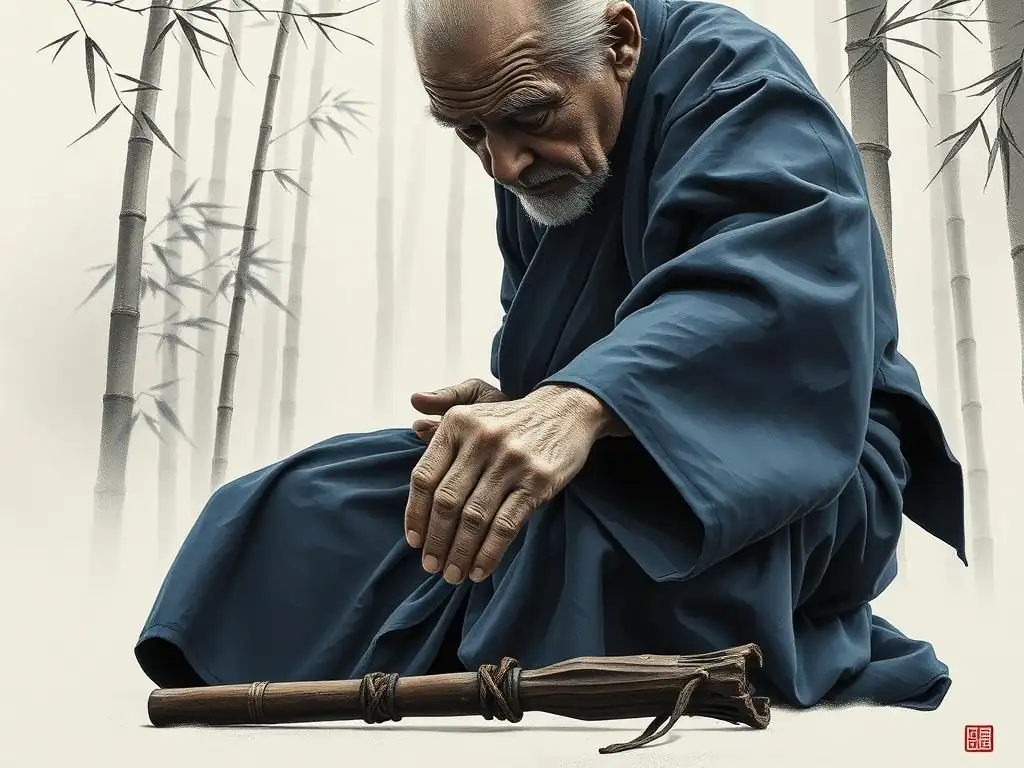
Sokon Matsumura: Bushi and Founder of Shorin-ryu
Sokon "Bushi" Matsumura (c. 1809–1899) was a pivotal figure in the history of Okinawa empty hand techniques. Serving as a bodyguard and martial arts instructor for the last three kings of the Ryukyu Kingdom, Matsumura had access to both indigenous Okinawan methods and advanced Chinese martial arts knowledge. He is credited with synthesizing various influences, including Shuri-te techniques and potentially elements from Satsuma-ryu (Japanese) and Chinese Quanfa, into a coherent system.
Matsumura's lineage and teachings formed the basis of what would later be codified as Shorin-ryu (小林流), one of the major styles of Okinawan Karate. His contributions include the refinement and transmission of key kata such as Passai Dai, Chinto, and Gojushiho. His emphasis on practical application, speed, and efficient movement left an indelible mark on the Shuri-te tradition and subsequent styles, preserving core principles of Okinawan empty hand techniques for future generations.
Kanryo Higaonna: Founder of Naha-te and Goju-ryu
Kanryo Higaonna (1853–1915) was another towering figure, primarily associated with the Naha-te tradition. Unlike Matsumura, whose primary influences were perhaps more varied, Higaonna is renowned for his extensive study in Fuzhou, China, under the aforementioned master Ru Ru Ko (Xie Zhongxiang), a master of Fujian White Crane Kung Fu. Higaonna spent several years in China, dedicating himself to mastering the intricate and powerful system taught there.
Upon his return to Okinawa, Higaonna began teaching in Naha, disseminating the techniques and kata he had learned, most notably Sanchin and Nahanchin (later Tekki). His system, characterized by its strong stances, close-range power generation, and emphasis on conditioning and breathing, formed the foundation of Naha-te. His most prominent student, Chojun Miyagi, would later formalize this system and name it Goju-ryu ("hard-soft" style), directly preserving the powerful and rooted Okinawa empty hand techniques inherited from Higaonna's Chinese studies.
Their Contributions to the Development of Okinawa empty hand techniques
Both Sokon Matsumura and Kanryo Higaonna, though representing different regional lineages (Shuri-te and Naha-te, respectively), made indispensable contributions to the evolution of Okinawa empty hand techniques. Matsumura's synthesis provided a robust framework for the Shuri-based styles, focusing on speed, linear power, and strategic distance management derived from his diverse background. His kata remain central to many modern Shorin-ryu schools.
Higaonna's direct and deep immersion in Fujian White Crane Kung Fu brought a different, yet equally vital, dimension to Okinawan martial arts. His Naha-te lineage emphasized powerful, close-quarters fighting, internal energy development, and rigorous physical conditioning, exemplified by the Sanchin form. Together, the traditions preserved and passed down by Matsumura and Higaonna represent the two major pillars of Okinawan Karate, demonstrating the rich variety and depth achieved in the development of Okinawa empty hand techniques.
Okinawa Empty Hand Techniques: Core Principles and Practices
Stances, Blocks, Punches, and Kicks in Okinawan Karate
Okinawa empty hand techniques are built upon a foundation of fundamental movements and principles. Stances ( dachi) are crucial, providing stability, balance, and the ability to generate power. Common stances include sanchin dachi (three-battle stance), zenkutsu dachi (front stance), and kiba dachi (horse stance), each serving specific purposes in defense and attack. Blocking techniques ( uke) are designed to deflect, redirect, or stop incoming attacks, utilizing various parts of the arm and hand.
Punches ( tsuki) and strikes ( uchi) form the primary offensive tools. Okinawan styles often emphasize rooted power generated from the ground up through the hips, delivered via techniques like the straight punch ( choku tsuki) or the reverse punch ( gyaku tsuki). Kicking techniques ( geri) are generally lower to the body compared to some other martial arts, focusing on practical targets like the knees, shins, or groin, such as the front kick ( mae geri) or side kick ( yoko geri). These core elements are drilled extensively to build a solid base in Okinawa empty hand techniques.
Kata: The Embodiment of Okinawan Martial Arts Knowledge
Kata are pre-arranged sequences of movements representing a fight against imaginary opponents. They are the heart of traditional Okinawa empty hand techniques, serving as moving encyclopedias of knowledge accumulated over centuries. Each kata contains a wealth of techniques, including strikes, blocks, throws, joint locks, and vital point attacks ( kyusho), embedded within its flow.
Practicing kata allows practitioners to understand principles of movement, timing, breath control, and energy generation. The bunkai (analysis) of a kata involves interpreting the practical applications of its movements, revealing the self-defense strategies encoded within. From foundational kata like Gekisai Dai Ichi (Goju-ryu) or Pinan/Heian (various styles) to advanced ones like Suparinpei or Kushanku, kata provide a structured method for preserving, transmitting, and deeply understanding the complex body mechanics and tactical wisdom of Okinawa empty hand techniques.
Kumite: Sparring and Practical Application of Techniques
While kata preserves the theoretical and historical knowledge, kumite (sparring) provides the practical application of Okinawa empty hand techniques in a dynamic, interactive setting. Kumite ranges from highly structured, pre-arranged drills ( yakusoku kumite) to more free-form sparring ( jiyu kumite). Early Okinawan training often involved kakie (pushing hands) and kote kitae (arm conditioning) as forms of practical application and physical toughening.
Modern kumite training helps students develop timing, distance management, reaction speed, and the ability to adapt techniques against a resisting opponent. It bridges the gap between the static movements of kata and the unpredictable nature of a real confrontation. Through controlled sparring, practitioners learn to effectively use the strikes, blocks, and body movements learned in kata and basic training, testing the efficacy and refining the delivery of their Okinawa empty hand techniques.
The Legacy of Okinawa's Empty Hand in Modern Martial Arts
The Global Spread of Karate and its Okinawan Roots
From its relatively isolated origins on a small island, Okinawan martial arts, under the name "Karate," have spread across the globe to become one of the most widely practiced martial arts disciplines. Following its introduction to mainland Japan in the early 20th century, Karate was further disseminated internationally by Japanese and Okinawan masters after World War II. Styles like Shotokan, Goju-ryu, Shito-ryu, and Wado-ryu gained significant popularity in North America, Europe, and beyond.
Today, millions of people worldwide practice Karate in various forms. While many modern styles have evolved and adapted, the core principles, fundamental techniques, and many kata can still be traced back to the original Okinawa empty hand techniques developed in Shuri, Naha, and Tomari. The global presence of Karate stands as a testament to the effectiveness and enduring appeal of these island-born fighting methods.
Preserving the Traditions of Okinawa Karate
Despite the global proliferation of Karate, there remains a strong movement, particularly in Okinawa itself, dedicated to preserving the original traditions and distinct characteristics of Okinawan Karate. This involves emphasizing the historical context, the specific body mechanics unique to Okinawan styles, the deep study of kata and bunkai, and the philosophical principles rooted in Okinawan culture.
Organizations like the Okinawa Traditional Karate Liaison Bureau work to promote and protect Okinawan Karate as an Intangible Cultural Heritage. Training in Okinawa often involves direct study under masters whose lineages can be traced back through figures like Itosu, Higaonna, and Matsumura. This focus on lineage, authentic teaching methods, and the complete system (including hojo undo - supplementary exercises, and kigu undo - training with traditional equipment) is vital for safeguarding the essence of true Okinawa empty hand techniques.
The Future of Okinawan Martial Arts: Maintaining Authenticity in a Globalized World
The future of Okinawan martial arts lies in balancing tradition with the realities of a globalized world. As Karate continues to be practiced worldwide, there is an ongoing challenge to maintain the authenticity and depth of the original Okinawa empty hand techniques while making the art accessible and relevant to new generations and diverse cultures. This involves clear communication between Okinawan masters and international practitioners.
Efforts to document kata, bunkai, and training methodologies are crucial. International seminars led by Okinawan instructors and exchanges between dojo are important for transmitting knowledge accurately. While competitive sport Karate (like that seen in the Olympics) represents one branch, preserving the traditional self-defense, physical conditioning, and philosophical aspects of Okinawa empty hand techniques remains a vital goal for ensuring the legacy endures with integrity.
Frequently Asked Questions
What is the significance of "Ti" in the context of Okinawan martial arts?
"Ti," often translated as hand or way of the hand, represents the early indigenous fighting methods of Okinawa. It's considered the precursor to karate.
How did "Tode" contribute to the development of Okinawan empty-hand techniques?
"Tode" (唐手), meaning Chinese hand, reflects the influence of Chinese martial arts on Okinawan fighting styles. This fusion led to the refinement and evolution of Ti.
What are some key differences between "Ti" and later forms of Karate?
"Ti" was largely unstructured and localized, varying from village to village. Later Karate forms became more standardized and incorporated specific techniques and katas.
What historical factors influenced the evolution of Okinawan empty-hand techniques?
The ban on weapons imposed by the Satsuma clan significantly impacted the development. This forced Okinawans to further develop and refine their empty-hand fighting skills for self-defense.
Where can I learn more about specific Okinawan empty-hand techniques?
MartialArtsMastery.org offers detailed resources covering various Okinawan martial arts disciplines. You can explore sections on training tips, history, and practical self-defense strategies.
Okay, here's a final reflection designed to close your article "From Ti to Tode: Tracing the Evolution of Okinawa's Empty Hand," optimized for the keyword "Okinawa empty hand techniques" and following the structure you provided:
Final Reflection: Embracing the Legacy of Okinawa's Empty Hand
The journey through the history of Okinawa empty hand techniques reveals more than just a lineage of fighting styles; it unveils a profound cultural narrative of resilience, adaptation, and the unwavering spirit of the Okinawan people. The techniques themselves, from the ancient "Ti" to the refined "Tode," are living testaments to the enduring power of human ingenuity in the face of adversity, a power that continues to resonate in martial arts schools and dojos around the world today.
This exploration of Okinawa's empty hand has not only illuminated the historical roots of these techniques but has also deepened my appreciation for their ongoing influence. The dedication and discipline required to master these arts are not merely physical; they cultivate a mental fortitude and a profound respect for tradition that are increasingly valuable in our modern world. The ultimate aim of Karate lies not in victory nor defeat, but in the perfection of the character of its participants.
- Gichin Funakoshi, the founder of Shotokan Karate. This quote encapsulates the true essence of Okinawa's empty hand, highlighting its transformative potential beyond mere self-defense.
Now, as you reflect on the rich tapestry of Okinawa empty hand techniques, consider how the principles of discipline, perseverance, and respect for tradition can be applied to your own life. Whether you are a seasoned martial artist, a curious student, or simply someone seeking inspiration, let the legacy of Okinawa's empty hand serve as a reminder that true strength lies not only in physical prowess but also in the cultivation of character and the unwavering pursuit of self-improvement.
Embrace the spirit of "Ti" and "Tode," and discover the power within yourself to overcome challenges and achieve your full potential.
Unleash Your Inner Karateka: Begin Your Journey Today!
Thank you for exploring the fascinating history of Okinawan Karate with us. We hope you’ve gained a deeper appreciation for the roots of this incredible martial art and are feeling inspired to connect with its rich legacy. Now, it's time to take action!
- Begin exploring the physical aspects of Karate and the cultural values this unique martial art shares.
- Delve deeper by researching different styles of Okinawan Karate and discovering their unique characteristics.
- Share this article with fellow martial arts enthusiasts to spark engaging discussions about the evolution of Karate.
What aspects of Okinawan Karate's history most resonate with you, and how will you incorporate that knowledge into your own practice?