
How Chan Si Jin (Silk Reeling) Directly Fuels Fajin in Chen Style

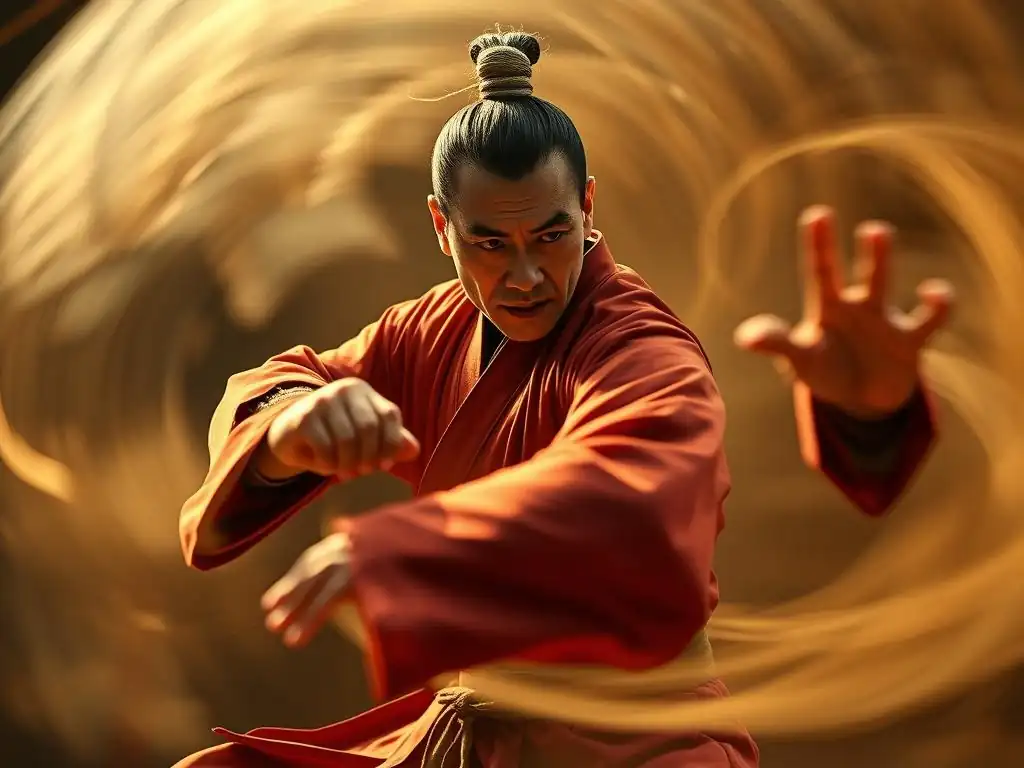
Welcome to Martial Arts Mastery, where we delve deep into the world's fighting arts! Are you ready to unlock the explosive power hidden within the graceful movements of Chen style Taijiquan? This week, we unravel the mystery of Chan Si Jin, or "Silk Reeling," and its crucial role in generating the devastating Chen style fajin technique. Prepare to discover how these seemingly gentle spirals translate into lightning-fast strikes, and perhaps more importantly, how you can begin integrating this vital principle into your own training. Intrigued? Read on to explore the secrets of internal power!
- Understanding Chen Style Taijiquan: The Foundation of Fajin
- What is Chan Si Jin (Silk Reeling Energy)?
- Fajin: Explosive Power in Chen Style Taijiquan
- The Direct Link: How Silk Reeling Powers Fajin
- Practical Applications: Silk Reeling Drills for Fajin Development
- Refining Your Technique: Common Mistakes and Corrections
- Advanced Concepts: Integrating Chan Si Jin and Fajin in Chen Style Forms
- Chen Style Fajin Technique: Beyond Silk Reeling - Grounding and Alignment
- Conclusion: Mastering Chen Style Fajin Through Silk Reeling
-
Frequently Asked Questions
- How does Chan Si Jin (Silk Reeling) relate to Fajin in Chen Style Taijiquan?
- What are the key principles of Chan Si Jin movements?
- How does practicing Chan Si Jin contribute to developing Fajin power?
- What are some common mistakes to avoid when practicing Chan Si Jin for Fajin?
- How long does it typically take to develop effective Fajin using Chan Si Jin training?
- Final Reflection: Unlocking Power Through Silk
- Ignite Your Fajin: Start Reeling Silk Today!
Understanding Chen Style Taijiquan: The Foundation of Fajin
Exploring the Core Principles of Chen Style Tai Chi
Chen Style Taijiquan is rooted in ancient Chinese philosophy and martial strategy, distinguishing itself through dynamic movements, complex spiral energy (Chan Si Jin), and explosive power releases (Fajin). Unlike some other Tai Chi styles that emphasize purely slow, gentle movements for health, Chen Style retains a strong martial component, incorporating fast bursts of energy, stamping, and intricate hand and leg techniques.
The foundational principles include maintaining a balanced and centered posture, connecting the movements through the dantian (lower abdomen), and coordinating the entire body as a single unit. Mastery of these principles is essential before one can effectively develop the sophisticated Chen style fajin technique.
A crucial element in Chen Style is the concept of 'Song' (松), meaning relaxation and looseness, particularly in the joints. This isn't limpness, but a state of supple readiness that allows energy to flow unimpeded through the body. Combined with proper alignment, 'Song' facilitates the generation and conduction of internal power.
Another key principle is the integration of Yin and Yang, seen in the alternating soft and hard, slow and fast, open and closed movements. This dynamic interplay is visible in the forms, where moments of gentle, circling motion transition abruptly into powerful, direct strikes, showcasing the potential for the Chen style fajin technique.
The Interconnectedness of Chen Style Principles
The various principles of Chen Style Taijiquan are not isolated but deeply interconnected, forming a synergistic system. Proper grounding, achieved through sinking the weight and rooting through the feet, provides the stable base necessary for generating power from the earth. This base connects upwards through the legs, torso, and arms, allowing energy to travel efficiently. Without a solid connection to the ground, any attempt at powerful movement or the application of the Chen style fajin technique will lack substance and be easily disrupted.
Furthermore, the principle of coordinating the whole body (一體) is paramount. Every movement, no as small as a finger joint or as large as a torso rotation, should be integrated. This whole-body connection is what enables the seamless flow of Chan Si Jin and the unified release of Fajin. The mind's intent (Yi) leads the Qi (vital energy), and the Qi directs the physical movement (Li). This internal chain of command ensures that the body moves as a cohesive unit, multiplying the potential power of any movement and making the sophisticated Chen style fajin technique possible.
What is Chan Si Jin (Silk Reeling Energy)?
Defining Silk Reeling Energy in Chen Style
Chan Si Jin, often translated as "Silk Reeling Energy" or "Silk Reeling Force," is a fundamental concept and practice in Chen Style Taijiquan. It describes the unique spiraling, coiling, and uncoiling movements that permeate every part of the body, from the fingers and wrists down through the elbows, shoulders, torso, hips, knees, and ankles. This energy is not merely a physical motion but represents a continuous, connected, and flowing internal force that travels through the body's fascial lines and joint structures. It's the method by which internal energy is cultivated, guided, and circulated.
The name "Silk Reeling" is an analogy derived from the process of reeling silk from a silkworm cocoon. The thread is drawn out in a continuous, smooth, and unbroken manner, requiring constant tension and control. Similarly, Chan Si Jin emphasizes movements that are continuous, smooth, even, and connected, without breaks or abrupt changes in tension (except during Fajin). This constant, subtle spiraling motion develops internal resilience, strengthens connective tissues, and teaches the body how to generate power from coordinated rotational forces, directly feeding into the Chen style fajin technique.
The Role of Spiraling Movements in Chan Si Jin
Spiraling movements are the physical manifestation of Chan Si Jin. These spirals occur simultaneously in multiple joints and segments of the body, working in coordinated opposition. For example, as one hand spirals inward, the other might spiral outward; as the torso rotates one way, the hips might counter-rotate or stabilize. This creates a complex system of tension and release that winds and unwinds through the body, much like a spring.
The spiraling action serves several critical functions. Firstly, it helps to open and loosen the joints, improving flexibility and range of motion while strengthening the surrounding tendons and ligaments. Secondly, it massages the internal organs and promotes circulation of blood and Qi. Most importantly for martial application and the Chen style fajin technique, these spiraling movements are the primary mechanism for generating and storing elastic, potential energy within the body's structure. This stored energy, built through the winding action of Silk Reeling, is then released in the explosive unwinding of Fajin.
Developing Silk Reeling Strength: Key Exercises
Developing proficiency in Chan Si Jin requires dedicated practice of specific exercises and integrating the principles into the forms. Basic Silk Reeling drills (Chan Si Gong) are foundational. These drills isolate the spiraling movements in different parts of the body, such as single-hand reeling, double-hand reeling, waist reeling, and leg reeling. A common starting point is standing post training (Zhan Zhuang) combined with subtle internal adjustments to feel the connection and subtle spiraling within stillness. Practicing specific Silk Reeling patterns helps isolate and refine the feeling of the continuous, connected internal movement.
More advanced training involves integrating Chan Si Jin into the complex sequences of the Chen Style forms (e.g., Laojia Yi Lu, Er Lu Pao Chui). Executing the forms slowly and with conscious awareness of the spiraling path of energy through every transition is vital. Push hands (Tui Shou) practice also provides crucial feedback, allowing practitioners to feel and apply Silk Reeling principles in interaction with a partner, learning to adhere, connect, and control force through spiraling movements, which are prerequisites for applying the Chen style fajin technique effectively in a dynamic situation.
Fajin: Explosive Power in Chen Style Taijiquan
Defining Fajin: The Release of Internal Power
Fajin (發勁) translates literally as "issuing force" or "releasing energy." In Chen Style Taijiquan, it refers to the sudden, explosive release of internal power that is generated from the ground, guided by the waist, and expressed through the limbs. Unlike external muscular force, Fajin is characterized by its penetrative quality and the sensation that the power originates from deep within the body, often described as being like a whip crack or a sudden electrical discharge. It is the culmination of proper grounding, body alignment, coordinated movement, and the accumulated potential energy from Chan Si Jin.
Fajin is not simply hitting hard; it is about delivering maximum force in a focused, instantaneous burst at the point of contact. This requires precise timing, relaxation immediately before the release, and then complete whole-body integration at the moment of impact. The power travels through the body like a wave, culminating in the strike. Developing the Chen style fajin technique is a primary goal for many Chen Style practitioners, representing a high level of internal skill development.
The Importance of Whole-Body Coordination in Fajin
Effective Fajin is absolutely dependent on whole-body coordination. The power does not come solely from the arm or leg. It originates from the feet pressing into the ground, travels up the legs, through the kua (inguinal crease/hip joint), is directed by the rotation of the waist and torso, and finally explodes out through the chosen limb or body part. This sequential, yet simultaneous, activation of the entire kinetic chain is what gives Fajin its unique power and penetrative quality.
Think of the body like a series of interconnected springs or segments. During the winding phase (Chan Si Jin), these segments coil and build tension. During Fajin, they simultaneously and instantaneously unwind and align, transferring energy efficiently along the chain. Any break in this connection – stiffness in a joint, misalignment, or lack of grounding – will dissipate the force and result in weak or ineffective Fajin. Mastering this seamless, unified movement is key to unlocking the full potential of the Chen style fajin technique.
Different Types of Fajin in Chen Style: Peng, Lu, Ji, An, Cai, Lie, Zhou, Kao
Chen Style Taijiquan utilizes eight primary types of force or "Jins" (勁), which can be expressed with Fajin. These are often categorized based on their direction and application:
- Peng (膨): Expanding, ward-off energy, like an inflated ball. Can be expressed explosively outwards.
- Lu (捋): Rolling back, yielding energy. Can transition into Fajin by reversing the force.
- Ji (擠): Squeezing, pressing forward energy. Often applied with two hands or forearms. Can be delivered explosively.
- An (按): Pushing down or forward energy. Can be a soft push or an explosive strike downwards or forwards.
- Cai (採): Plucking or grasping energy, used to pull or uproot. Can involve a sudden jerk.
- Lie (攎): Splitting or rending energy, often applied with opposing forces. Can be a sudden, sharp release.
- Zhou (肘): Elbow energy, using the elbow for striking. Often delivered with explosive Fajin.
- Kao (靠): Shoulder or body energy, using the torso or shoulder to strike. A powerful, close-range Fajin.
While all eight represent different ways of applying force, Peng, Ji, An, Cai, Lie, Zhou, and Kao are most commonly associated with the explosive Fajin release in the Chen style fajin technique, while Lu is more yielding but can set up a Fajin counter. Each requires the coordinated effort of the entire body and is fueled by the principles of Silk Reeling.
The Direct Link: How Silk Reeling Powers Fajin
Chan Si Jin as the Engine for Fajin Generation
Chan Si Jin is not just a preparatory exercise; it is the fundamental mechanism by which the body generates the potential energy that is subsequently released as Fajin. The continuous, spiraling movements of Silk Reeling create torque and elastic tension throughout the musculoskeletal system, particularly within the fascial lines and connective tissues. Imagine twisting a rubber band or coiling a spring – the winding action stores energy. Chan Si Jin systematically winds and coils the body's internal structure in a sophisticated, integrated manner.
This stored elastic energy, built through the intricate spiraling actions of Silk Reeling, is the 'fuel' for Fajin. Without the capacity to generate and store this internal tension through Chan Si Jin, any attempt at Fajin will rely solely on superficial muscular contraction, which lacks the penetrative power and whole-body integration characteristic of true Chen style fajin technique. Silk Reeling trains the body to act like a coiled spring, ready to release its stored energy on demand.
Storing and Releasing Energy: The Silk Reeling-Fajin Cycle
The relationship between Chan Si Jin and Fajin is a dynamic cycle of storing and releasing energy. During the expansive or 'open' phases of Chen Style forms and movements, the body unwinds slightly while maintaining internal connection, preparing for the next coiling action. During the contractive or 'closed' phases, the body coils inward through spiraling movements, building potential energy. This winding is the storage phase, directly linked to Chan Si Jin.
Fajin occurs when this stored potential energy is suddenly and completely released through a rapid, coordinated unwinding and alignment of the body's structure. The speed and power of the Fajin release are directly proportional to the efficiency and depth of the preceding Silk Reeling action. A well-executed Silk Reeling motion creates maximum elastic tension; the subsequent Fajin instantaneously releases this tension into explosive force. Thus, refining your Silk Reeling is synonymous with improving your capacity for the Chen style fajin technique.
Using Spiraling Movements to Amplify Power for Fajin
The spiraling nature of Chan Si Jin allows for the cumulative amplification of power from the ground up. As the force travels from the feet through the legs, waist, and torso, the rotational energy generated by the spiraling motion adds to the linear force. This is similar to how a screw or a drill bit multiplies the applied rotational force into linear penetration. In the context of Fajin, the coiling action loads the joints and tissues, and the sudden unwinding releases this accumulated energy.
Consider a simple punch. In an external art, it might primarily use shoulder and arm muscles. In Chen Style, the power for the Chen style fajin technique comes from the ground, travels up the leg with a slight spiral, the waist rotates sharply with a spiraling motion, and this energy is channeled through the shoulder, elbow, and wrist, which also perform subtle spiraling actions as they extend. This multi-layered spiraling generates significantly more force and penetration than linear movement alone, making the difference between a push and a true Fajin strike.
Practical Applications: Silk Reeling Drills for Fajin Development
Drill 1: Single Whip Silk Reeling for Shoulder Fajin
Single Whip is a fundamental movement in Chen Style forms and an excellent drill for developing Chan Si Jin in the arms, shoulders, and torso, which directly supports shoulder-based Chen style fajin technique. Practice isolating the spiraling motion in the lead arm. Start with the arm extended, palm facing forward. Slowly rotate the forearm internally while simultaneously rotating the shoulder and torso slightly. Then, spiral externally, feeling the movement initiate from the core and travel out through the fingertips. Maintain constant tension and smoothness.
Focus on coordinating the wrist, elbow, and shoulder spirals with the rotation of the waist. The power should feel like it's being 'reeled' out of the center. Practice this slowly, feeling the internal connection. As proficiency increases, gradually increase the speed of the spiral, culminating in a sharp, whip-like release at the end of the motion – a precursor to shoulder Fajin. The goal is to make the entire arm and body move as a single, spiraling unit.
Drill 2: Lazily Tying Coat Silk Reeling for Elbow Fajin
The movement "Lazily Tying Coat" (Lai Zha Yi) involves significant spiraling and connection through the arms and chest, making it ideal for training elbow-based Chen style fajin technique. Practice the circular, coiling movements of the arms across the body, focusing on the internal rotation and connection between the shoulders and elbows. Feel the Silk Reeling energy winding up as the arms cross and unwind as they extend or change direction.
Incorporate variations where the coiling motion is performed with increasing speed and tension, leading to a sharp, focused release of energy through the elbow. This might not be a full elbow strike initially, but the feeling of sudden, unified power transferring through the elbow joint. Pay attention to the connection between the elbow movement and the rotation of the waist; the elbow Fajin is powered by the core and the spiraling energy cultivated through the entire body via Chan Si Jin.
Drill 3: Six Sealing Four Closing Silk Reeling for Body Fajin
"Six Sealing Four Closing" (Liu Feng Si Bi) is a complex sequence involving significant whole-body coiling and compression, followed by expansion. This movement is excellent for developing body-wide Chan Si Jin and the capacity for torso or body-based Chen style fajin technique (Kao Jin). Practice the inward, 'closing' phases, focusing on the feeling of coiling and consolidating energy towards the center, using spiraling movements in the legs, waist, and arms simultaneously.
Then, practice the outward, 'sealing' or expanding phases, feeling the body unwind and release energy. To develop body Fajin, practice executing the final push or expansion with a sudden, unified burst of power originating from the feet and driven by the waist and torso rotation, fueled by the tension built during the preceding coiling. This drill emphasizes the interconnectedness of all body parts in generating a powerful, whole-body release, showcasing the sophisticated Chen style fajin technique.
Refining Your Technique: Common Mistakes and Corrections
Common Mistakes in Silk Reeling that Hinder Fajin
Several common errors in practicing Chan Si Jin can significantly impede the development of effective Chen style fajin technique. One prevalent mistake is using isolated muscular force instead of integrated whole-body movement. This results in choppy, disconnected spirals that lack the continuous, flowing quality of true Silk Reeling. Another error is failing to maintain connection to the ground; the spiraling should initiate from the feet and legs, not just the upper body.
Many practitioners also make the mistake of being too stiff or too loose. Silk Reeling requires a state of 'Song' (relaxed looseness) coupled with internal tension and connection. Being too stiff prevents the smooth flow of energy, while being too loose means there is no tension to coil and release. Finally, neglecting the role of the waist and dantian is a common pitfall; the core is the engine that drives the spiraling motion throughout the rest of the body.
Correcting Posture and Alignment for Optimal Power Transfer
Correct posture and alignment are foundational to both Chan Si Jin and Chen style fajin technique. Ensure your head is suspended from above (Bai Hui point), tuck your chin slightly, and keep your torso upright but relaxed. The shoulders should be sunk and relaxed, and the elbows dropped. The kua (hips/groin) should be open and relaxed, allowing the legs to support the structure and facilitate waist rotation.
Maintain a slight bend in the knees, ensuring they track over the feet. The feet should be firmly rooted, with the weight distributed evenly or shifting smoothly according to the movement. Proper alignment ensures that the spiraling energy generated by Silk Reeling can travel efficiently through the body without encountering blockages. It allows the ground reaction force to ascend and combine with the rotational force from the waist, creating a direct pipeline for power transfer during Fajin. Regularly checking your alignment in a mirror or with a qualified instructor is crucial.
Developing Sensitivity and Awareness in Silk Reeling
Developing sensitivity (Ting Jin - listening energy) and internal awareness is paramount for mastering Chan Si Jin and subsequently the Chen style fajin technique. This involves paying close attention to the subtle sensations within your body during practice – feeling the energy flow, the coiling and uncoiling of the joints, and the connection between different body parts. Practice slowly initially, focusing on the internal feeling rather than the external appearance of the movement.
Cultivate the ability to feel the 'thread' of Silk Reeling energy extending from your dantian out through your limbs. Learn to distinguish between muscular tension and the internal connection and elastic tension of Silk Reeling. Push hands practice is invaluable for developing this sensitivity, as it allows you to feel your partner's energy and apply your Silk Reeling principles in response, refining your ability to generate and release power at the correct time and place for effective Chen style fajin technique.
Advanced Concepts: Integrating Chan Si Jin and Fajin in Chen Style Forms
Utilizing Silk Reeling Principles Throughout the Chen Style Forms
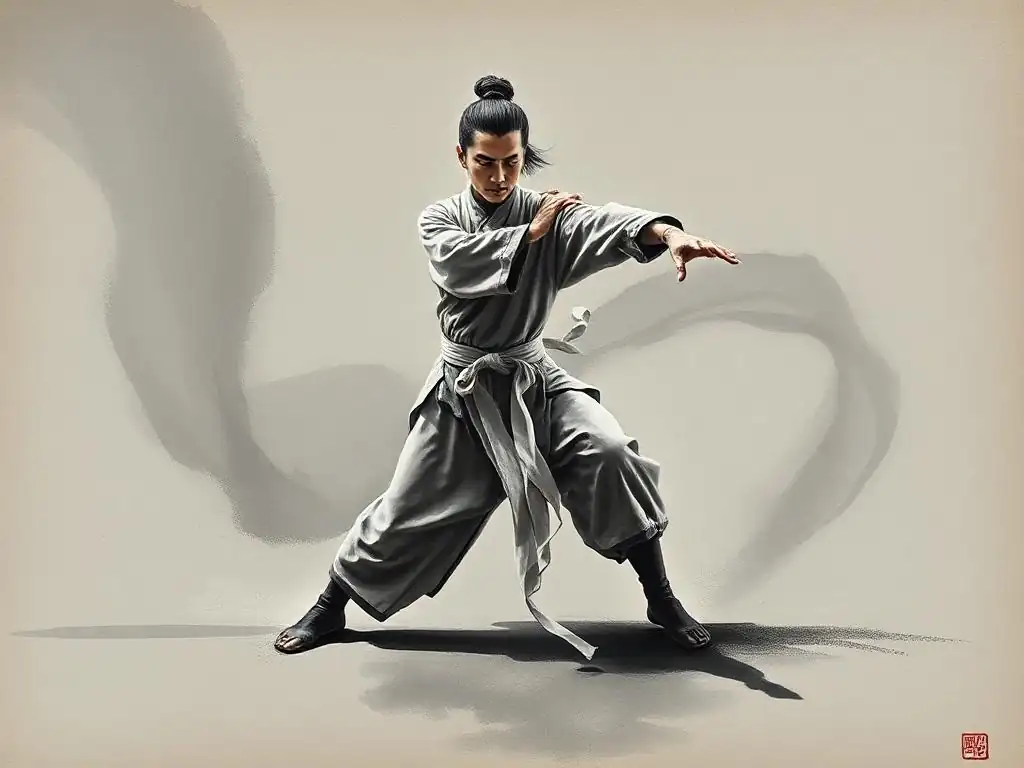
At an advanced level, Chan Si Jin is not confined to specific drills but permeates every single movement of the Chen Style forms. The forms become a continuous flow of spiraling, coiling, and unwinding actions. Every transition, every step, every hand movement embodies the principles of Silk Reeling. The practitioner constantly maintains the internal connection and subtle spiraling, even in seemingly linear movements.
Practicing the forms with this level of awareness transforms them from a sequence of postures into a dynamic, moving meditation that continuously cultivates internal energy and structural integrity. The speed of the form can vary, but the presence of Chan Si Jin should be constant, whether moving slowly or quickly. This constant internal winding and connecting provides the ever-present readiness to issue the Chen style fajin technique whenever the opportunity arises within the sequence.
Developing Fa Li (Releasing Strength) Within the Form
While Fajin is the explosive release of power, Fa Li (發力) refers to the process of developing and expressing strength or force, which includes Fajin but also encompasses continuous or sustained force application. Within the Chen Style forms, practitioners learn to integrate moments of Fa Li, including Fajin, seamlessly into the flow of movement. These bursts of power are not random but occur at specific points dictated by the martial applications inherent in the form.
Developing Fa Li within the form involves coordinating the breath with the movement, consolidating energy during the 'closing' phases, and releasing it during the 'opening' or striking phases. The body must transition instantaneously from soft and yielding to hard and explosive while maintaining structural integrity and connection. This integration of soft Silk Reeling with hard Fajin is a hallmark of advanced Chen Style practice and essential for developing the full spectrum of the Chen style fajin technique.
Integrating Mind-Intent (Yi) with Silk Reeling and Fajin
The highest level of mastery in Chen Style, particularly concerning Fajin, involves the integration of Yi (意 - mind-intent) with the physical practice of Chan Si Jin and Fajin. The mind must lead the Qi, and the Qi must lead the movement. This means that the intention to perform a spiraling action or to issue Fajin must precede the physical execution. The Yi directs the flow of energy and coordinates the body's structure for optimal power generation and release.
Without the guiding intention of the mind, the physical movements remain empty forms, lacking internal power. Cultivating Yi involves focused concentration and visualization during practice – visualizing the silk thread, feeling the energy flow, intending the power to reach its target. This mental cultivation, combined with diligent physical training in Silk Reeling and Fajin drills, is what allows the practitioner to achieve spontaneous, powerful, and precise application of the Chen style fajin technique.
Chen Style Fajin Technique: Beyond Silk Reeling - Grounding and Alignment
The Role of Grounding and Rooting in Fajin
While Chan Si Jin provides the rotational force and elastic tension, the power of Fajin is fundamentally rooted in the ground. The principle of "power comes from the heels" is crucial. When issuing Fajin, the practitioner pushes into the ground with their feet, generating a ground reaction force. This force travels up the legs, through the connected structure of the body, and combines with the spiraling energy from Chan Si Jin.
Effective grounding is not static; it involves a dynamic connection to the earth that allows for both stability and mobility. The legs act like powerful springs, absorbing and transmitting force. Without proper rooting, the body lacks a stable base, and the energy generated higher up will dissipate downwards or result in instability. Developing a deep, dynamic connection to the ground through practices like Zhan Zhuang and form training is therefore just as critical as Silk Reeling for powerful Chen style fajin technique.
The Importance of Relaxation and Song (Looseness)
Paradoxically, relaxation (Song) is absolutely essential for generating explosive Fajin. Stiffness and muscular tension block the flow of energy and prevent the body from acting as a unified, whip-like structure. True power in Tai Chi comes from the efficient transfer of energy through a relaxed, connected body. Before issuing Fajin, there is a moment of deep relaxation and sinking, allowing the body to become supple and receptive.
This relaxation is not collapse; it is a state of readiness where the joints are open and the muscles are free from unnecessary tension. This allows the elastic energy stored through Chan Si Jin to be released instantaneously and completely. Trying to muscle the Fajin will result in a weak, external force. Cultivating Song through dedicated practice, focusing on releasing tension in the shoulders, elbows, wrists, hips, and knees, is vital for unlocking the potential of the Chen style fajin technique.
Cultivating Jing (Essence) and Qi (Vital Energy) for Powerful Fajin
Beyond the physical mechanics of Chan Si Jin, grounding, and alignment, the cultivation of internal energy – Jing (精 - essence) and Qi (氣 - vital energy) – is considered essential for truly powerful Fajin. Jing is often seen as the fundamental vital essence stored in the body, while Qi is the vital energy that circulates and animates the body. Tai Chi practice, including Chan Si Jin, is believed to cultivate and refine these energies.
Through consistent, correct practice, focusing on breathwork (often integrated with movement), visualization, and maintaining a calm mind, practitioners aim to accumulate Qi in the dantian and circulate it throughout the body. This cultivated internal energy provides the substance and vitality that powers the physical structure during Fajin. While the mechanical principles are important, the internal cultivation of Qi and Jing adds a deeper dimension of power and resilience to the Chen style fajin technique.
Conclusion: Mastering Chen Style Fajin Through Silk Reeling
The Path to Explosive Power: Consistent Practice and Refinement
Mastering the Chen style fajin technique is a long-term endeavor that requires consistent, diligent practice and continuous refinement. There are no shortcuts. The path involves dedicated training in the foundational principles, deep immersion in Silk Reeling drills and forms, and specific practice of Fajin applications. It requires patience, perseverance, and a willingness to pay attention to subtle internal sensations.
Regular practice, ideally daily, is crucial. Dividing training time between fundamental exercises (like Zhan Zhuang and basic Silk Reeling drills), form practice (both slow and faster variations), and partner work (Push Hands and application drills) provides a balanced approach. Seeking guidance from a qualified instructor is invaluable, as they can provide personalized feedback and corrections essential for correcting subtle errors in alignment and movement that impede progress in developing the Chen style fajin technique.
The Benefits of Integrating Silk Reeling into Your Chen Style Training
Integrating Chan Si Jin deeply into every aspect of your Chen Style training unlocks the true potential of the art, particularly the Chen style fajin technique. Beyond just developing explosive power, mastering Silk Reeling offers numerous benefits. It improves structural integrity, strengthens connective tissues, enhances flexibility and joint health, promotes better circulation, and cultivates internal awareness and sensitivity.
By understanding and practicing how Chan Si Jin generates and guides energy, practitioners gain a profound understanding of how power is created from the ground, coiled within the body, and released in a unified burst. Silk Reeling is not just a technique; it is the fundamental operating principle of Chen Style Taijiquan that fuels its distinctive martial power and makes the sophisticated Chen style fajin technique possible. Embracing Silk Reeling is the key to unlocking the dynamic and explosive nature of this powerful martial art.
Frequently Asked Questions
How does Chan Si Jin (Silk Reeling) relate to Fajin in Chen Style Taijiquan?
Chan Si Jin, or Silk Reeling Energy, is the fundamental training method for developing the internal power needed for Fajin. It cultivates spiraling movements that generate and store energy. This energy is then released explosively as Fajin.
What are the key principles of Chan Si Jin movements?
The key principles involve constant spiraling and coiling motions throughout the body. These movements emphasize whole-body coordination and the connection between the Dantian (lower abdomen) and the limbs to generate power.
How does practicing Chan Si Jin contribute to developing Fajin power?
Chan Si Jin builds the necessary internal strength and body mechanics for Fajin. It strengthens the fascial connections and improves the body's ability to transmit power efficiently.
What are some common mistakes to avoid when practicing Chan Si Jin for Fajin?
Common mistakes include using excessive muscular tension, focusing solely on the arms, and neglecting the connection to the ground. Proper alignment and relaxation are crucial.
How long does it typically take to develop effective Fajin using Chan Si Jin training?
Developing effective Fajin through Chan Si Jin requires consistent practice and patience. The timeline varies, but it generally takes several years of dedicated training to achieve proficiency.
Final Reflection: Unlocking Power Through Silk
The exploration of Chan Si Jin, or Silk Reeling, within Chen Style Taijiquan reveals more than just a training method; it unveils a profound understanding of internal power generation. The direct link between meticulous Silk Reeling practice and the explosive release of Fajin is not merely theoretical, but a demonstrable reality that continues to shape the effectiveness of Chen Style practitioners today. This connection underscores the importance of diligent, nuanced training in achieving true mastery of this martial art.
The ripple effect of understanding this connection extends beyond the dojo. It highlights the power of focused, intentional movement in achieving seemingly impossible feats, a principle applicable to countless aspects of life. The dedication required to cultivate Fajin through Silk Reeling serves as a potent metaphor for the dedication required to achieve any significant goal. The journey of a thousand miles begins with a single step.
This ancient proverb resonates deeply with the patient, persistent practice inherent in Chen Style, reminding us that even the most formidable power is built upon consistent, mindful effort.
Now, consider the implications of this knowledge in your own life. How can you apply the principles of Silk Reeling – the focused intention, the spiraling energy, the unwavering dedication – to unlock your own potential? Embrace the challenge of consistent practice, seek the subtle connections between effort and outcome, and allow the spirit of Chen Style to guide you towards a deeper understanding of your own inner power. The potential for explosive growth lies within you; it is time to begin reeling it in.
Ignite Your Fajin: Start Reeling Silk Today!
Thank you for diving deep into the connection between Chan Si Jin and Fajin! We hope this exploration has shed light on the crucial role of silk reeling in unlocking explosive power within Chen Style Taijiquan. Now, let's put this knowledge into action.
Here are a few things you can do to further your understanding and skills:
- Prioritize silk reeling drills in your daily practice. Focus on smooth, continuous movements, cultivating the coiling energy that powers Fajin.
- Explore different Chan Si Jin variations – large circle, small circle, forward, and backward – to develop a comprehensive understanding of its principles.
- Film yourself performing a Fajin technique and analyze it frame-by-frame. Where could you incorporate more silk reeling principles to enhance your power generation?
What specific silk reeling drill are you going to focus on this week to unlock more power in your Fajin?