
Masters of Deception and Strategy in Chinese Kung Fu History

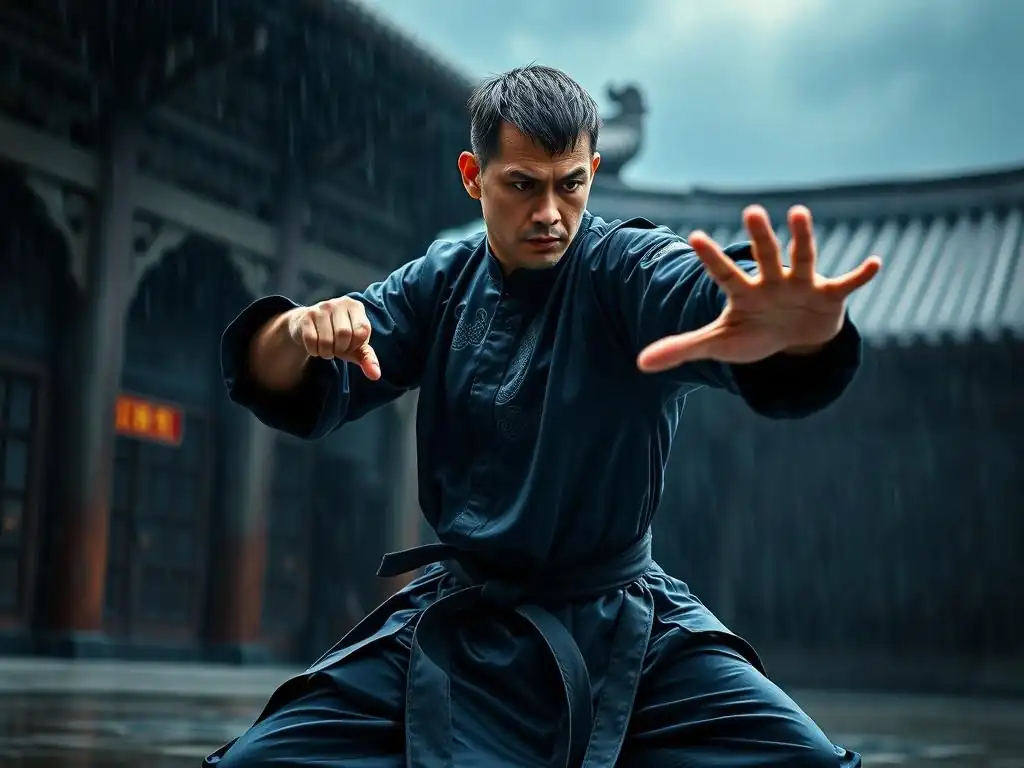
Welcome to Martial Arts Mastery, where we delve into the heart of combat traditions worldwide. Ever wondered how strategy transcends mere physical prowess? Prepare to be captivated as we explore the intricate world of Chinese Kung Fu deception strategy in our latest article. Uncover the secrets employed by legendary masters to outwit their opponents, blending philosophy with cunning in a dance of intellect and skill. Ready to unlock the hidden layers of this fascinating art? Read on and discover the power of deception in Kung Fu!
- The Art of Deception in Chinese Kung Fu: An Overview
- Legendary Kung Fu Masters Renowned for Deceptive Tactics
- Deception Tactics Across Different Kung Fu Styles
- Analyzing Key Deception Strategies in Chinese Kung Fu
- The Ethical Considerations of Deception in Martial Arts
- The Legacy of Deception in Modern Kung Fu Training
-
Frequently Asked Questions
- What is a deception strategy in the context of Chinese Kung Fu?
- How does the history of Chinese Kung Fu relate to deception strategies?
- Can you give an example of a famous Kung Fu master known for their deception strategy?
- What are some practical training tips for incorporating deception into self-defense?
- How does the philosophical aspect of Chinese Kung Fu influence the use of deception?
- Final Reflection: The Enduring Art of Kung Fu Deception
- Unveil Your Inner Strategist: Step into the Kung Fu Legacy!
The Art of Deception in Chinese Kung Fu: An Overview
Understanding the Role of Strategy and Misdirection in Kung Fu
Chinese Kung Fu is often perceived as a purely physical discipline, focusing on powerful strikes, dynamic kicks, and complex forms. However, a crucial, often understated, element is the sophisticated use of strategy and misdirection. Mastery in Chinese Kung Fu deception strategy involves more than just physical prowess; it requires a deep understanding of psychological principles, timing, and the opponent's perception. Ancient texts and historical accounts frequently highlight how masters employed clever tactics to gain an advantage, not through brute force, but through the skillful manipulation of their opponent's expectations and reactions.
The application of strategic thinking in Chinese Kung Fu deception strategy allows a practitioner to control the flow of combat. By employing feints, creating false openings, or masking their true intentions, a master can dictate the opponent's response, leading them into vulnerable positions. This emphasis on outsmarting rather than overpowering is a hallmark of many traditional Chinese martial arts styles and is a key component of an effective Chinese Kung Fu deception strategy, turning the practitioner into a tactician as much as a fighter.
Chinese Martial Arts: Beyond Brute Force - The Importance of Cunning
While physical conditioning and technical proficiency are foundational, the history of Chinese martial arts is replete with examples where cunning triumphed over sheer strength. The development of a robust Chinese Kung Fu deception strategy was essential for survival and victory, especially when facing larger or stronger adversaries. This strategic depth is what elevates Kung Fu from mere fighting to a complex art form, incorporating elements of philosophy, psychology, and physics.
Cunning in Chinese martial arts manifests in various forms, from subtle shifts in weight distribution that hide an impending strike to elaborate footwork patterns designed to mislead the opponent about the intended direction of attack. This focus on mental agility and strategic planning is deeply ingrained in the training methodologies of many traditional schools. A truly effective Chinese Kung Fu deception strategy leverages the opponent's own instincts and training against them, creating confusion and hesitation that can be exploited for decisive action.
Legendary Kung Fu Masters Renowned for Deceptive Tactics
Yue Fei: A Pioneer of Deceptive Movements in Eagle Claw Kung Fu
General Yue Fei, though primarily known as a military leader and national hero, is also credited with the development of Eagle Claw (Ying Zhao Quan), a style renowned for its seizing techniques and joint locks. Within this system, the concept of deceptive movements is paramount. Yue Fei's approach emphasized attacking unexpected targets and using seemingly simple actions to set up complex maneuvers, a foundational Chinese Kung Fu deception strategy.
His methods incorporated techniques often described as:
- "Catching the Wind Shadow Hand" - Swift and unexpected strikes, often following a feint or diversion, designed to appear from an angle or speed the opponent doesn't anticipate. These strikes might target vulnerable points like the eyes or throat, disrupting the opponent's vision or breathing to create immediate openings for grapples or joint locks.
- Utilizing seemingly weak stances to lure opponents into a false sense of security. By presenting a posture that appears vulnerable or off-balance, the practitioner invites the opponent to attack in a predictable manner. This allows the Eagle Claw practitioner to anticipate the incoming force and counter-attack with devastating seizing or locking techniques, turning the perceived weakness into a trap.
Ip Man: The Strategist of Wing Chun - Blending Power and Illusion
Grandmaster Ip Man, the iconic figure who popularized Wing Chun, exemplified the strategic application of principles to overcome larger and stronger opponents. While Wing Chun is known for its directness and efficiency, Ip Man's mastery included a sophisticated Chinese Kung Fu deception strategy centered on exploiting structural weaknesses and using rapid, overwhelming attacks to create confusion.
His strategic genius involved:
- Exploiting structural weaknesses through calculated centerline attacks. Rather than attacking limbs or attempting large, powerful movements, Ip Man focused on the opponent's vulnerable centerline – the most direct path to vital areas. Attacks might be subtly angled or initiated with minimal tell, appearing less dangerous than they are, thereby deceiving the opponent about their true intent and potential impact.
- The Use of chained punches to overwhelm and confuse opponents. Wing Chun's rapid, successive straight punches (lik Chum Kiu's "chained punches") are not just about speed; they are a form of deceptive pressure. The sheer volume and relentless nature of these attacks make it difficult for the opponent to track individual strikes or discern openings, creating a wall of force that masks the opportunity for a decisive follow-up technique, effectively disorienting them.
Chen Wangting: Unorthodox Approaches to Combat in Chen Style Taijiquan
Chen Wangting, the credited founder of Chen Style Taijiquan, introduced a martial art that, while appearing soft and flowing, contained profound martial applications and a unique Chinese Kung Fu deception strategy. His system blended principles of softness and hardness, yielding and striking, in ways that constantly kept opponents guessing about his true intentions and the origin of his power.
Chen Wangting's approach involved:
- Mastering the art of silk reeling energy (Chan Si Jin) to mislead and control the opponent's force. This spiraling, coiling movement creates a dynamic tension that can subtly redirect incoming force or draw the opponent off-balance. It's deceptive because the motion often appears gentle or preparatory, masking its true purpose of neutralization or setting up an angle of attack, thus controlling the opponent's structure without them immediately realizing it.
- Utilizing seemingly yielding movements to suddenly unleash explosive power (Fa Jin). A core deception in Taijiquan is the principle of "using softness to overcome hardness." By appearing to yield or retreat from an attack, the practitioner lures the opponent into committing their weight and force. This yielding is deceptive; it's a temporary absorption and redirection that allows the practitioner to suddenly release stored energy in a powerful, unexpected burst, often from close range and an angle the opponent didn't anticipate.
Deception Tactics Across Different Kung Fu Styles

Shaolin Kung Fu: Deception Through Fluidity and Adaptability
Shaolin Kung Fu, with its vast repertoire of techniques and animal styles, utilizes deception through its sheer fluidity and adaptability. A Shaolin practitioner might seamlessly transition between stances or animal forms, making it difficult for an opponent to predict their next move. The ability to shift tactics rapidly is a core Chinese Kung Fu deception strategy employed in many Shaolin systems.
- Drunken Fist (Zui Quan): Unpredictable movements to confuse and disorient. This style is a prime example of deception through apparent weakness and unpredictability. The practitioner mimics the movements of a drunk person, staggering, stumbling, and using seemingly uncontrolled gestures. However, these movements mask powerful strikes, unexpected angles of attack, and difficult-to-read feints, making it incredibly challenging for a sober opponent to predict or defend against. The deception lies in presenting a facade of inebriated incompetence.
Wing Chun: Using Economy of Motion to Mask Intentions
Wing Chun's emphasis on efficiency and directness can itself be a form of deception. By minimizing unnecessary movements, the practitioner reduces 'tells' or indicators of their intentions. This economy of motion makes it harder for an opponent to read the impending attack, a subtle but effective Chinese Kung Fu deception strategy.
- The "Sticky Hands" (Chi Sao) Concept and Deceptive Applications. Chi Sao training develops sensitivity and the ability to 'listen' to the opponent's energy and structure through touch. Deception in Chi Sao and its applications involves using subtle pressure changes or unexpected shifts in direction while maintaining contact. This allows the practitioner to probe for openings or create them by guiding the opponent's limbs into unfavorable positions, often without large, obvious movements, thus masking the transition from sensitivity drill to actual attack.
Tai Chi Chuan: The Yin and Yang of Deception - Redirecting and Misleading
Tai Chi Chuan embodies the principle of using softness and yielding to overcome hardness, which is inherently deceptive. The practitioner appears non-threatening, but uses their connection and sensitivity to redirect the opponent's force, turning their aggression against them. This redirection is a sophisticated Chinese Kung Fu deception strategy.
- Utilizing Softness to Overcome Hardness Through Deception. This core Tai Chi principle involves meeting an incoming force not with resistance, but with yielding and blending. By moving with the opponent's energy, the practitioner appears to be giving way, which is deceptive. In reality, they are connecting to the opponent's structure and using circular or spiraling movements to neutralize the force and simultaneously create an off-balance state or an opening for a counter-attack, often delivered with unexpected speed and power.
Analyzing Key Deception Strategies in Chinese Kung Fu
Feints and Distractions: Creating Openings for Attack
Feints and distractions are fundamental components of any Chinese Kung Fu deception strategy. A feint is a simulated attack designed to draw a reaction from the opponent, while a distraction might be a movement or sound intended to divert their attention. By eliciting a specific block or parry with a feint, the practitioner knows where the opponent's defense will be, allowing them to attack a different, now undefended, area.
For instance, a feigned high punch might cause the opponent to raise their guard, leaving their lower body open for a kick. Or a sudden, loud shout (a form of distraction) might momentarily startle the opponent, creating a brief window of opportunity. Mastery of feints involves making them look convincingly real without committing fully, conserving energy and maintaining balance for the subsequent genuine attack. This requires precise timing and understanding of human reaction patterns, making it a crucial aspect of a well-rounded Chinese Kung Fu deception strategy.
Misdirection and Evasion: Avoiding Direct Confrontation
Misdirection involves making the opponent believe an attack or movement is coming from one direction when it is actually coming from another, or that the practitioner is moving in one direction when they intend to move elsewhere. Evasion, while often seen as purely defensive, can also be deceptive by luring an opponent into overextending or committing to an attack that can then be easily countered.
An example of misdirection is using footwork that suggests a movement to the left while preparing to shift powerfully to the right, or looking intently at the opponent's upper body while planning a low sweep. Evasion techniques, such as slipping just outside the line of attack, can deceive the opponent into thinking they missed, when in fact, the evasive movement has created an advantageous angle for the martial artist to launch their counter-offensive, embodying a passive yet effective Chinese Kung Fu deception strategy.
Psychological Warfare: Gaining a Mental Edge Through Deception
Beyond physical techniques, psychological tactics play a significant role in Chinese Kung Fu deception strategy. This involves unsettling the opponent, making them doubt themselves, or causing them to act impulsively. A confident, unwavering demeanor can be deceptive, masking nervousness or fatigue. Conversely, appearing nervous or clumsy can lure a confident opponent into underestimating you.
Masters often use subtle cues – a change in breathing, a fixed gaze, or even verbal taunts – to influence the opponent's state of mind. For example, maintaining intense eye contact can be intimidating, while suddenly breaking eye contact can suggest a feint is coming, prompting a reaction. The ability to read an opponent's emotional state and exploit their fears or overconfidence is a powerful, non-physical aspect of Chinese Kung Fu deception strategy, often honed through years of sparring and observation.
The Ethical Considerations of Deception in Martial Arts

The Balance Between Skill and Integrity
The use of deception in Chinese Kung Fu raises important ethical questions. Is it honorable to trick an opponent? Traditional martial arts philosophy often emphasizes integrity, respect, and martial virtue (Wu De). The ethical use of Chinese Kung Fu deception strategy hinges on the intent behind it. When deception is used purely to gain an unfair advantage in a non-combat situation or for malicious purposes, it conflicts with the principles of martial arts.
However, within the context of self-defense or controlled sparring, deception is often viewed as a demonstration of superior skill and strategic thinking. It is seen as using intelligence to overcome a physical challenge, rather than relying solely on brute force. The balance lies in employing deceptive techniques not to humiliate or injure unnecessarily, but to neutralize a threat or prove technical mastery in a safe environment, upholding the integrity of the art while utilizing its full tactical range.
Using Deception for Self-Defense vs. Aggression
The distinction between using deception for self-defense versus aggression is crucial. In a genuine self-defense situation, where one's safety is at risk, using any effective means, including deceptive tactics, to neutralize the threat quickly and efficiently is generally considered ethically justifiable. Deception can be a way for a smaller or weaker individual to level the playing field against a larger aggressor without needing to match their strength directly.
Conversely, using deceptive techniques to initiate an attack, to bully, or to gain an unfair advantage in a competitive setting (where rules dictate fair play) would typically be seen as unethical. Traditional martial arts training instills the principle that techniques, including a sophisticated Chinese Kung Fu deception strategy, are tools for protection and self-improvement, not for initiating conflict or causing harm for malevolent reasons. The context and intent behind the use of deception define its ethical standing.
The Legacy of Deception in Modern Kung Fu Training
Incorporating Deceptive Techniques into Contemporary Practice
Modern Kung Fu training continues to incorporate deceptive techniques, recognizing their value in both self-defense and competitive sparring. While the emphasis might vary between styles, the core principles of feinting, misdirection, and psychological strategy remain relevant. Training methodologies include drills specifically designed to develop the ability to deceive and to recognize when an opponent is attempting to deceive you.
Contemporary practice might include specific exercises focused on developing convincing feints with hands or feet, drills that involve moving the opponent through subtle shifts in pressure or body positioning, and sparring scenarios where practitioners are encouraged to use misdirection. The goal is to make the application of Chinese Kung Fu deception strategy instinctive, allowing practitioners to react creatively and strategically under pressure, ensuring these ancient tactics remain vital skills for today's martial artists.
Honoring the Masters of Deception: Lessons for Today's Martial Artists
Today's martial artists honor the legacy of masters like Yue Fei, Ip Man, and Chen Wangting by studying and applying their strategic insights. Their approaches highlight that true mastery in Chinese Kung Fu deception strategy involves not just physical skill, but also mental acuity, adaptability, and a deep understanding of combat dynamics. These historical figures serve as reminders that the mind is a powerful weapon.
Lessons for contemporary practitioners include the importance of developing peripheral vision to spot subtle cues, practicing adaptability to shift strategies mid-exchange, and understanding the psychological aspects of confrontation.
- Sparring drills focusing on feinting with footwork and hand strikes are a practical way to integrate these lessons. For example, practicing a step-feint to the left followed by a rapid attack to the right, or using a light, fast hand jab to mask a powerful low kick. These drills build the reflexes and timing necessary to execute effective deceptive maneuvers in dynamic situations, carrying forward the tradition of a strategic Chinese Kung Fu deception strategy.
Frequently Asked Questions
What is a deception strategy in the context of Chinese Kung Fu?
It refers to using misleading movements, feints, and psychological tactics to gain an advantage over an opponent. The goal is to confuse and exploit their reactions.
How does the history of Chinese Kung Fu relate to deception strategies?
Historically, Kung Fu developed in environments requiring resourcefulness and adaptability. Deception became crucial for survival and overcoming stronger opponents, leading to its formal integration into many styles.
Can you give an example of a famous Kung Fu master known for their deception strategy?
Many masters utilized deception. However, figures like Bruce Lee, while known for his innovation, also emphasized adapting to the opponent's weakness, often through unpredictable movements and feints. Historical accounts often highlight the cunning strategies of Shaolin monks.
What are some practical training tips for incorporating deception into self-defense?
Focus on mastering basic techniques first, then gradually introduce feints, changes in rhythm, and deceptive footwork. Practice reading your opponent's reactions to your movements.
How does the philosophical aspect of Chinese Kung Fu influence the use of deception?
Kung Fu emphasizes understanding oneself and one's opponent. Deception, when used ethically, reflects this understanding by exploiting weaknesses to achieve a defensive or strategic goal, not simply to inflict harm.
Final Reflection: The Enduring Art of Kung Fu Deception
The intricate dance of Chinese Kung Fu deception strategy isn't merely a historical footnote; it's a living testament to the power of adaptability and mental acuity in any competitive arena. From ancient battlefields to modern-day sparring matches, the principles of misdirection, feints, and psychological warfare remain profoundly relevant, offering invaluable lessons in outmaneuvering opponents both physically and mentally.
This exploration of Kung Fu's deceptive tactics has deeply resonated with me, highlighting the importance of understanding not just the physical techniques, but also the strategic mindset behind them. The ability to anticipate an opponent's intentions, to exploit their weaknesses through calculated deception, is a skill that transcends the martial arts. The supreme art of war is to subdue the enemy without fighting.
- Sun Tzu, The Art of War. This quote encapsulates the essence of Kung Fu deception, emphasizing the power of strategic thinking and psychological manipulation over brute force.
Now, consider how these principles apply to your own life. Are you facing a challenge that requires more than just direct confrontation? Can you leverage the art of deception – not in a malicious way, but as a means of gaining a strategic advantage? Embrace the spirit of Kung Fu deception: observe, anticipate, and adapt. Let the wisdom of the masters guide you to victory, not through force, but through the artful application of strategy and intellect.
Unveil Your Inner Strategist: Step into the Kung Fu Legacy!
Thank you for exploring the cunning strategies and deceptive techniques that shaped Chinese Kung Fu history. We hope you found inspiration in the masters' ability to outwit their opponents. Now, it's time to translate that knowledge into action.
- Begin to incorporate one deceptive movement or strategy into your sparring or training this week. Even small adjustments can yield surprising results.
- Explore the historical context of these techniques. Delve into the stories of the masters who pioneered them to better understand their application and refine your own style.
- Share this article with fellow martial artists and discuss which strategies resonate most with them. Let's build a community of strategic thinkers!
Which Kung Fu strategy, discussed in the article, will you experiment with first, and why?