
Wing Chun's Wooden Dummy: Masters Who Perfected Its Use and Meaning

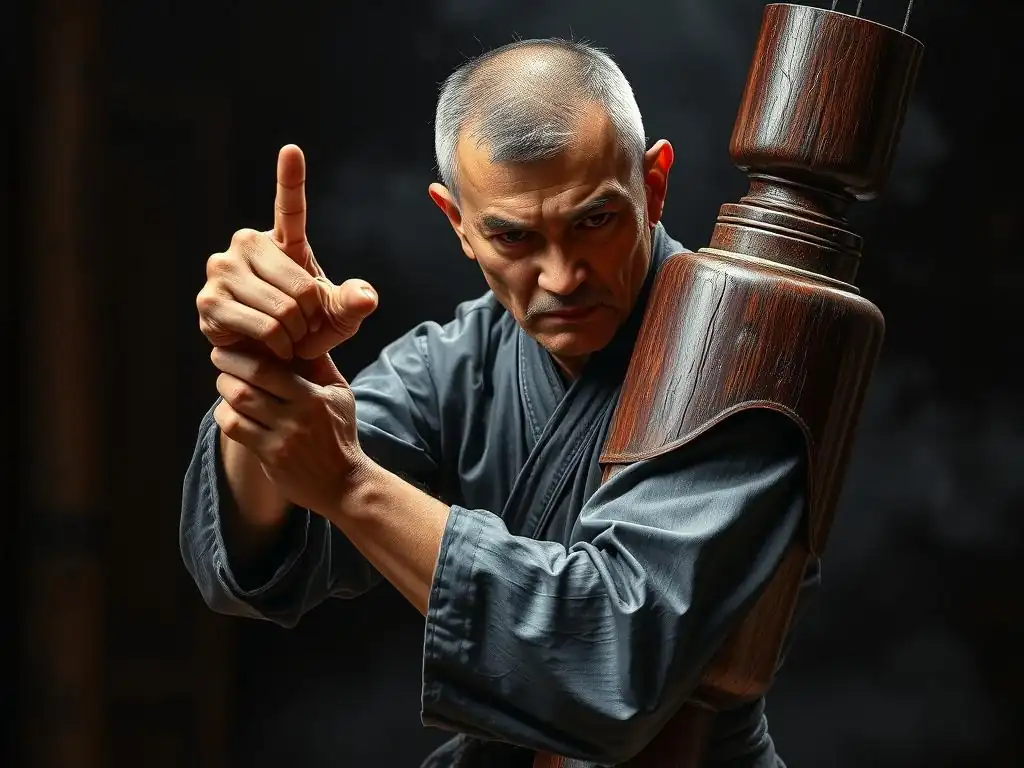
Welcome to Martial Arts Mastery, where we delve into the rich tapestry of combat traditions. Ever wondered how a simple wooden structure could hold the key to unlocking unparalleled martial skill? Today, we journey into the heart of Wing Chun, exploring the profound impact of the Wing Chun wooden dummy training. Discover the masters who transformed this seemingly inanimate object into a living testament to dedication, precision, and martial artistry. Prepare to be inspired – the secrets of the dummy await!
- Introduction to Wing Chun Wooden Dummy Training and its Legacy
- The Historical Significance of the Wing Chun Wooden Dummy
- Key Masters Who Shaped Wooden Dummy Training
- Understanding the Core Principles of Wing Chun Wooden Dummy Training
- Advanced Wing Chun Wooden Dummy Techniques and Drills
- The Meaning and Philosophy Behind Wing Chun Wooden Dummy Training
- Modern Applications of Wing Chun Wooden Dummy Training
- Preserving the Legacy of Wing Chun Wooden Dummy Training
- Conclusion: The Enduring Significance of Wing Chun's Wooden Dummy and Its Masters
-
Frequently Asked Questions
- What is the primary purpose of Wing Chun's Wooden Dummy training?
- How did legendary Wing Chun masters contribute to the wooden dummy's development?
- Why is the wooden dummy considered so important in Wing Chun training?
- What key areas of martial arts skill does wooden dummy training enhance?
- What are some common mistakes to avoid when starting wooden dummy training?
- Final Reflection: The Enduring Legacy of the Muk Yan Jong
- Unlock Your Wing Chun Potential!
Introduction to Wing Chun Wooden Dummy Training and its Legacy
The Muk Yan Jong: More Than Just a Training Tool
The Muk Yan Jong, commonly known as the Wing Chun wooden dummy, stands as one of the most iconic and indispensable training apparatuses within the martial art of Wing Chun Kung Fu. Far from being a static, lifeless object, a properly constructed and utilized wooden dummy serves as a dynamic training partner, simulating the structure, angles, and reactions of a human opponent. Its unique design, featuring three arms and a leg, is specifically calibrated to the principles and movements of Wing Chun, facilitating practice in structure, balance, power generation, and sensitivity within the system's close-range fighting framework.
Engaging in Wing Chun wooden dummy training allows practitioners to refine their techniques without needing a partner, offering consistent feedback on force, angle, and distance. The resistance provided by the wooden limbs helps develop rooting and stability, while the fixed positions of the arms and leg necessitate precise footwork and body mechanics. This rigorous solo practice is crucial for internalizing the complex coordination required in Wing Chun, preparing the student for the fluid and unpredictable nature of actual combat or sparring scenarios.
Wing Chun's Unique Approach to Close-Range Combat
Wing Chun Kung Fu distinguishes itself with its emphasis on efficient, direct, and simultaneous defense and attack within close fighting distances. Unlike systems that rely heavily on wide stances or long-range techniques, Wing Chun focuses on controlling the centerline, maintaining structure, and generating explosive power through relaxed body mechanics. The art prioritizes economy of motion, aiming to end conflict quickly and effectively by overwhelming the opponent's structure and defenses.
This unique approach is heavily supported by Wing Chun wooden dummy training. The dummy's dimensions and configuration are designed to mirror the typical structure of a human in a fighting stance, providing a realistic framework for practicing core Wing Chun principles like simultaneity (defending and attacking at the same time), centerline control, and trapping hands. Consistent training on the wooden dummy helps practitioners hardwire these principles into their muscle memory, making them instinctive reactions in close-quarters engagements.
The Historical Significance of the Wing Chun Wooden Dummy
Origins and Evolution of the Muk Yan Jong in Wing Chun
The precise origins of the Muk Yan Jong are shrouded in some mystery, as is common with many aspects of traditional martial arts history. Legend often attributes its invention to the Shaolin Temple, potentially even to the nun Ng Mui, one of the legendary Five Elders and a figure central to Wing Chun's founding narratives. While concrete historical evidence is scarce, it is widely accepted that the wooden dummy evolved over time, with different lineages potentially incorporating variations based on their specific training methodologies and interpretations of Wing Chun principles.
Over centuries, the design of the Wing Chun wooden dummy has been refined to its current standard form, typically featuring a sturdy trunk mounted on a frame, three arms positioned at different heights and angles, and a single leg. This specific configuration allows practitioners to simulate blocking, trapping, striking, and stepping techniques against a rigid structure that provides immediate feedback. The evolution reflects a growing understanding of Wing Chun's unique mechanics and the need for a specialized tool to facilitate the rigorous solo practice required for mastery.
The Wooden Dummy as a Symbol of Wing Chun Lineage
In many traditional Wing Chun schools, access to the wooden dummy was historically restricted, often considered a privilege reserved for advanced students who had demonstrated proficiency in the empty-hand forms. This practice elevated the Muk Yan Jong from a mere training tool to a symbol of progression and trust within the lineage. Mastering the wooden dummy form was seen as a significant milestone, indicating a deep understanding of the art's core principles and readiness to apply them in more complex scenarios.
Possession of a Muk Yan Jong or the knowledge of its form often denoted a certain level of authority or achievement within the Wing Chun community. Different lineages might have slight variations in the form or the dummy's construction, and learning these variations was part of inheriting the specific knowledge passed down from Sifu to student. Thus, the wooden dummy became intertwined with the identity and transmission of Wing Chun knowledge across generations.
Key Masters Who Shaped Wooden Dummy Training
Yip Man and His Refinement of Muk Yan Jong Techniques
Grandmaster Yip Man (1893-1972) is arguably the most influential figure in modern Wing Chun history, responsible for bringing the art to Hong Kong and eventually the world. His teaching methodology significantly impacted how Wing Chun wooden dummy training was standardized and disseminated. While the form existed before him, Yip Man is credited with popularizing a specific sequence of 108 movements, which became the widely recognized Muk Yan Jong form taught in his lineage.
Yip Man's refinement emphasized practicality and efficiency, ensuring that each movement on the dummy directly related to combat applications. He stressed the importance of developing proper structure, footwork, and simultaneous attack-defense. His widespread teaching in Hong Kong meant that thousands of students were exposed to this standardized Muk Yan Jong form, solidifying its place as a cornerstone of Wing Chun training globally and making Wing Chun wooden dummy training synonymous with a specific, systematic approach.
Yip Man's Innovations in Wooden Dummy Form
Yip Man's contribution wasn't just in standardizing the 108-movement form, but in how he interpreted and taught its underlying principles. He focused on training structure against resistance, developing the ability to absorb and redirect force. His students learned to use the dummy to practice entering angles, controlling the center line, and executing simultaneous techniques like Pak Sau (slapping hand) with a strike.
He also stressed the importance of footwork on the dummy, integrating steps and turns that are essential for maintaining balance and positioning against a dynamic opponent. The transitions between movements in his form are designed to mimic the flow of a real fight, allowing practitioners to develop fluid body mechanics. This systematic approach transformed Wing Chun wooden dummy training from a potentially disparate set of drills into a cohesive, progressive method for developing advanced combat skills.
Wong Shun Leung: Applying Wooden Dummy Principles in Sparring
Sifu Wong Shun Leung (1935-1997), a prominent student of Yip Man, was renowned for his extensive experience in Beimo (challenge matches) and his focus on the practical, combative application of Wing Chun. He strongly believed that training, including Wing Chun wooden dummy training, must directly translate to effectiveness in real fighting scenarios. Wong Shun Leung used the Muk Yan Jong not just for form practice, but as a tool to refine the principles he applied successfully in his numerous challenge matches.
Wong Shun Leung emphasized that the wooden dummy teaches you how to deal with an opponent's structure and limbs, providing a framework for understanding angles, pressure, and distance in live combat. He would often break down dummy techniques to show their direct relevance to sparring situations, demonstrating how principles like trapping, controlling the inside gate, and maintaining forward pressure could be honed on the dummy before being tested against a resisting partner. His pragmatic approach highlighted the Muk Yan Jong's role in building functional fighting attributes.
Wong Shun Leung's Emphasis on Realistic Application
For Wong Shun Leung, the value of Wing Chun wooden dummy training lay in its ability to simulate the challenges of a real opponent's limbs and structure. He taught students to view the dummy's arms not just as obstacles, but as representations of an opponent's guards, attacks, and attempts to control space. He stressed the importance of developing contact reflex and sensitivity through dummy practice, skills that are paramount in close-range exchanges.
He would analyze how specific dummy sections, such as dealing with two upper arms simultaneously, prepared a practitioner for scenarios like an opponent's double punch or grappling attempt. By relating each movement of the 108-form back to a practical self-defense situation or sparring principle, Wong Shun Leung ensured that his students understood the why behind their Wing Chun wooden dummy training, making their practice more focused and combatively relevant.
Chu Shong-tin: Emphasizing Structure and Relaxation on the Muk Yan Jong
Grandmaster Chu Shong-tin (1933-2014), another highly respected student of Yip Man, was celebrated for his profound understanding and application of internal power ( Nim Tao) within Wing Chun. While he excelled in all aspects of the art, his insights into generating explosive force through minimal effort and maximum relaxation earned him the moniker "The King of Nim Tao." His approach to Wing Chun wooden dummy training heavily emphasized cultivating this internal power and perfecting structural alignment.
Chu Shong-tin taught that the wooden dummy was an ideal tool for developing the correct body mechanics and mental focus required to manifest Nim Tao. He stressed practicing the form with deep relaxation, allowing the body to align naturally and efficiently transfer force. The resistance of the dummy provided immediate feedback, revealing any tension or structural weakness that hindered the smooth flow of power.
Chu Shong-tin's Focus on Yi Nim Tao and Internal Power
Chu Shong-tin's teaching on the Muk Yan Jong centered on the principle of Yi Nim Tao, the mind intention or focused thought that guides and generates internal energy. He believed that by maintaining a relaxed posture and focusing the mind, practitioners could generate significant force upon impact with the dummy, without relying on brute muscular strength. This internal power, he argued, was essential for effective Wing Chun.
Training on the wooden dummy under Chu Shong-tin involved meticulous attention to detail regarding body alignment, joint relaxation, and the feeling of force originating from the core. He would guide students to feel the springiness of the dummy's arms and leg, learning to absorb and redirect energy while maintaining their own structure. This deep focus on internal mechanics elevated Wing Chun wooden dummy training to a sophisticated method for cultivating subtle yet powerful attributes.
Understanding the Core Principles of Wing Chun Wooden Dummy Training
Structure and Alignment in Muk Yan Jong Practice
A fundamental principle of Wing Chun wooden dummy training is the development of correct body structure and alignment. The dummy forces practitioners to maintain a stable, rooted stance while executing techniques. The angles and positions of the dummy's limbs highlight the importance of keeping the elbows down, the wrists relaxed, and the body aligned to channel force efficiently. Practicing movements like Tan Sau (dispersing hand), Bong Sau (wing arm), and Fook Sau (controlling hand) against the dummy's resistance helps reinforce proper structural integrity.
Furthermore, the dummy teaches how to maintain structure while moving. The footwork sections of the form require coordinated steps and turns that keep the body centered and balanced relative to the dummy, mimicking the need to adjust position against a moving opponent. This focus on structural integrity ensures that force is generated from the ground up and channeled through a stable framework, making techniques more powerful and less susceptible to disruption.
Generating Power and Efficiency Through the Dummy
Wing Chun wooden dummy training is instrumental in teaching how to generate explosive power efficiently. The dummy's solid structure provides resistance that allows practitioners to feel the impact of their techniques and understand how force is transmitted through their body. Techniques like straight punch ( Chung Choi) or palm strike ( Jat Jeung) are practiced to develop rooting and forward pressure, learning to hit with the entire body rather than just the arm.
The dummy also helps refine the principle of using minimal effort for maximum effect. By practicing relaxation and proper alignment, practitioners learn to utilize body weight and structural integrity to generate force, rather than relying solely on muscular tension. The speed and snap of techniques like Pak Sau and Lop Sau (pulling hand) are honed on the dummy, developing the ability to execute rapid, powerful actions in succession, crucial for overwhelming an opponent in close range.
Developing Sensitivity and Reflexes with the Wooden Dummy
While the wooden dummy is a static object, proper Wing Chun wooden dummy training cultivates sensitivity and reflex development. The springiness of the dummy's arms, particularly when mounted on a traditional frame, provides a form of dynamic feedback. Practitioners learn to feel the pressure and rebound of the dummy's limbs, developing the listening energy ( Ting Jing) that is key to Chi Sau (sticky hands).
Practicing the flow of the dummy form develops automatic responses to different angles and pressures. Techniques blend seamlessly, training the body to react instinctively to the dummy's "limbs" in a way that simulates reacting to an opponent's movements. This repetitive, structured practice builds the foundation for the fluid, adaptive reflexes needed to maintain contact, control the opponent, and find openings in live interactions.
Advanced Wing Chun Wooden Dummy Techniques and Drills
Footwork and Body Mechanics on the Muk Yan Jong
Advanced Wing Chun wooden dummy training places significant emphasis on integrating precise footwork with upper body techniques. The dummy form includes specific stepping patterns, such as turning stance ( Juen Ma), advancing step ( Chung Ma), and sideways step ( Tsang Ma), which are practiced in conjunction with hand movements. This ensures that practitioners can maintain balance, generate power, and adjust their position relative to the "opponent" represented by the dummy.
Mastery of footwork on the dummy involves not just executing the steps correctly, but doing so while maintaining structural integrity and applying force. The body must move as a unified whole, with the footwork driving the hand techniques. Advanced drills might focus specifically on transitions between different footwork patterns while simultaneously defending or attacking, honing the ability to move efficiently and powerfully in any direction around the dummy.
Hand Techniques and Striking Combinations on the Wooden Dummy
The Muk Yan Jong allows for extensive practice of Wing Chun's diverse hand techniques and combinations. From fundamental blocks and deflections like Tan Sau, Bong Sau, and Fook Sau to direct strikes like Chung Choi and Jat Jeung, every technique is applied against the dummy's resistance. Advanced practitioners refine the precision, angle, and power of these techniques, ensuring they are delivered with optimal efficiency.
Combination drills on the dummy link multiple techniques together fluidly, simulating the rapid exchanges of a real fight. For example, practicing a Pak Sau followed immediately by a Chung Choi, or a Lop Sau into a strike, helps develop the seamless transition between defense and attack. The dummy's fixed structure allows for repetitive practice of these combinations, building muscle memory and the ability to execute complex sequences under pressure.
Using the Wooden Dummy to Improve Chi Sau (Sticky Hands) Skills
While Chi Sau is typically practiced with a partner, Wing Chun wooden dummy training provides a crucial foundation for developing the necessary sensitivity and structure. The feel of the dummy's spring-loaded arms against one's own techniques helps cultivate the ability to "listen" to incoming force and maintain contact. Practicing the yielding and forward pressure inherent in many dummy movements directly translates to the principles of Chi Sau.
Specific sections of the wooden dummy form simulate the feeling of being trapped or having one's structure compromised, requiring the practitioner to use Bong Sau, Tan Sau, or other techniques to recover and regain control. This develops the reactive sensitivity needed to maintain contact and control the opponent's limbs in a dynamic Chi Sau exchange. Consistent dummy practice hones the structural integrity and contact reflexes essential for effective sticky hands.
The Meaning and Philosophy Behind Wing Chun Wooden Dummy Training
Cultivating Patience, Discipline, and Perseverance
Wing Chun wooden dummy training is inherently repetitive and demanding, requiring significant patience, discipline, and perseverance. Mastering the 108-movement form takes countless hours of dedicated practice, often involving repeating sections or even individual movements thousands of times. This rigorous process builds mental fortitude alongside physical skill.
The dummy is an unforgiving teacher; errors in structure or technique are immediately apparent through awkward angles or inefficient force transfer. Learning to identify and correct these flaws requires humility and a commitment to continuous improvement. The journey of mastering the Muk Yan Jong instills a deep sense of discipline and the understanding that true skill comes from persistent, focused effort over time, embodying the martial arts spirit of unwavering dedication.
Finding the Centerline and Maintaining Balance
A core philosophical principle reinforced by Wing Chun wooden dummy training is the importance of the centerline. The dummy's configuration emphasizes attacking and defending along this crucial line, teaching practitioners to protect their own centerline while simultaneously attacking the opponent's. Every movement is oriented towards controlling this central axis.
Maintaining balance is also paramount. The dummy requires stable footwork and a rooted stance to effectively generate power and absorb resistance. Losing balance means losing structure and power. Practicing on the dummy teaches the constant interplay between movement and stability, reinforcing the need to remain centered physically and, by extension, mentally and emotionally, even when under pressure.
The Wooden Dummy as a Metaphor for Self-Improvement
Beyond its physical applications, the Wing Chun wooden dummy serves as a powerful metaphor for self-improvement. Just as the practitioner works to refine their form and technique on the dummy, they are simultaneously working on themselves – identifying weaknesses, building strengths, and developing resilience. The dummy provides honest, immediate feedback, much like life's challenges.
Overcoming the physical and mental demands of Wing Chun wooden dummy training reflects the process of overcoming internal obstacles. The dedication required mirrors the commitment needed to achieve any significant goal. Ultimately, the journey with the Muk Yan Jong is not just about mastering a set of movements, but about cultivating inner qualities – patience, discipline, humility, and perseverance – that extend far beyond the training hall.
Modern Applications of Wing Chun Wooden Dummy Training
Integrating Muk Yan Jong Principles into Contemporary Training Methods
While deeply traditional, the principles embedded in Wing Chun wooden dummy training remain highly relevant in contemporary martial arts and self-defense. Modern Wing Chun schools often integrate dummy drills into broader training programs that may include sparring, self-defense scenarios, and physical conditioning. The dummy's core benefit – providing structured resistance for practicing close-range techniques and developing body mechanics – is invaluable regardless of the specific training context.
Instructors today might use portable or wall-mounted dummies to make training more accessible in smaller spaces. They might also adapt traditional dummy drills to focus on specific attributes needed for modern applications, such as developing explosive power for short-range striking or refining trapping skills for defense against common street attacks. The fundamental mechanics learned on the dummy, such as maintaining structure under pressure and controlling angles, are universally applicable.
The Wooden Dummy as a Tool for Physical Conditioning
Beyond technical skill, Wing Chun wooden dummy training provides excellent physical conditioning. Executing the full 108-movement form requires significant stamina, coordination, and muscular endurance, particularly in the arms, shoulders, core, and legs. The dynamic footwork and transitions build agility and balance.
Regular practice against the dummy's resistance strengthens the musculoskeletal system, developing the resilient structure needed for Wing Chun. The repetitive, flowing movements improve muscular endurance, allowing practitioners to maintain intensity during prolonged exchanges. A dedicated Wing Chun wooden dummy training session can be a demanding workout, building the physical attributes necessary to effectively utilize Wing Chun techniques in a practical situation.
Analysis of Training Programs: Comparing Traditional and Modern Muk Yan Jong Approaches
Traditional Wing Chun wooden dummy training often involved extensive repetition of the entire 108-movement form, sometimes for hours daily, emphasizing perfect execution and internal feeling. This approach, while potentially leading to deep mastery, required significant time commitment and was often reserved for dedicated students.
Modern approaches may break down the dummy form into smaller, more manageable sections or focus on specific drills targeting particular skills (e.g., footwork drills, trapping combinations, striking power). Some schools might integrate dummy practice within circuit training or combine it with other conditioning exercises. While potentially sacrificing some of the deep, meditative flow of traditional practice, modern methods aim to make the benefits of Wing Chun wooden dummy training accessible to a wider range of students with varying goals and time constraints, often prioritizing functional application in contemporary scenarios.
Preserving the Legacy of Wing Chun Wooden Dummy Training
The Importance of Passing Down Traditional Knowledge
Preserving the traditional knowledge of Wing Chun wooden dummy training is crucial for maintaining the integrity and depth of the art. The specific sequence of the 108-movement form, the underlying principles, and the subtle body mechanics passed down through generations represent centuries of refinement and practical experience. Teaching this knowledge accurately ensures that future generations can access the full benefits of Muk Yan Jong practice, understanding not just the movements but the 'why' behind them.
This involves dedicated instruction from experienced teachers who understand the nuances of the form and its applications. It also requires students to approach the practice with respect for its history and a commitment to diligent effort. Passing down this legacy is not just about preserving a historical artifact, but about ensuring the continued vitality and effectiveness of Wing Chun as a martial art.
Utilizing Video Analysis for Enhanced Understanding of Muk Yan Jong Form
In the modern era, technology offers new tools for preserving and enhancing the understanding of Wing Chun wooden dummy training. Video analysis allows students to record their practice and review it critically, comparing their movements against those of experienced practitioners or instructional videos. This provides objective feedback on structure, alignment, timing, and flow.
Analyzing video can help identify subtle errors that might be missed during live practice, such as slight deviations in angle, unnecessary tension, or incorrect foot placement. This self-correction process, guided by visual evidence, can significantly accelerate learning and refinement of the Muk Yan Jong form, complementing the guidance received from a Sifu.
The Future of Wing Chun and the Muk Yan Jong
The future of Wing Chun and its iconic wooden dummy appears secure, thanks to its global spread and the dedication of practitioners worldwide. While training methods may continue to evolve with modern insights and technology, the core principles embodied by the Muk Yan Jong remain timeless. As long as Wing Chun is practiced, the need for a tool to refine structure, power, sensitivity, and close-range mechanics will persist.
The Muk Yan Jong will likely continue to be a central element of Wing Chun wooden dummy training, adapting perhaps in its construction materials or accessibility, but retaining its fundamental design and purpose. Its enduring significance lies in its ability to provide a challenging yet rewarding solo practice that builds the physical attributes and internal understanding essential for effective Wing Chun.
Conclusion: The Enduring Significance of Wing Chun's Wooden Dummy and Its Masters
Wing Chun wooden dummy training, centered around the iconic Muk Yan Jong, is far more than just going through a sequence of movements against a wooden post. It is a sophisticated training methodology that encapsulates the core principles of Wing Chun, passed down and refined by masters like Yip Man, Wong Shun Leung, and Chu Shong-tin. These influential figures not only preserved the form but also deepened the understanding of its application, whether emphasizing structural integrity, combat practicality, or internal power.
The Muk Yan Jong stands as a testament to the ingenuity of Wing Chun's development, providing a unique tool for cultivating essential attributes such as structure, power generation, sensitivity, and mental discipline. Its enduring presence in Wing Chun schools worldwide highlights its irreplaceable role in developing proficient practitioners.
The Muk Yan Jong as a Timeless Symbol of Wing Chun Mastery
The wooden dummy remains a powerful and timeless symbol of dedication and mastery in Wing Chun. Achieving proficiency on the Muk Yan Jong signifies a deep understanding of the art's mechanics and philosophy. It represents countless hours of solitary, focused effort, building the physical and mental attributes required to apply Wing Chun effectively.
For many, the Muk Yan Jong is the ultimate solo training partner, providing unwavering feedback and a constant challenge. Its continued relevance in Wing Chun wooden dummy training across the globe ensures that the principles and skills it imparts will continue to be a cornerstone of the art for generations to come, connecting modern practitioners to the legacy of the masters who perfected its use.
Frequently Asked Questions
What is the primary purpose of Wing Chun's Wooden Dummy training?
The primary purpose is to develop and refine a practitioner's Wing Chun techniques, improving body structure, power generation, and overall efficiency in close-quarters combat.
How did legendary Wing Chun masters contribute to the wooden dummy's development?
Legendary masters like Yip Man and others refined the wooden dummy form to optimize the Wing Chun system, ensuring its principles were effectively ingrained through repetitive practice and application.
Why is the wooden dummy considered so important in Wing Chun training?
The wooden dummy acts as a silent partner, allowing practitioners to practice techniques and angles that are difficult to train with a live opponent, focusing on precision and force.
What key areas of martial arts skill does wooden dummy training enhance?
Wooden dummy training enhances power generation, structural integrity, and footwork. It also improves a practitioner's ability to maintain a strong center line and adapt to different attack angles.
What are some common mistakes to avoid when starting wooden dummy training?
Common mistakes include focusing on speed over structure, neglecting proper footwork, and failing to understand the underlying principles of the Wing Chun system.
Final Reflection: The Enduring Legacy of the Muk Yan Jong
The journey through the history and mastery of the Wing Chun wooden dummy, or Muk Yan Jong, reveals more than just a training tool; it unveils a philosophy of self-discovery and relentless refinement. The Muk Yan Jong, far from being a static object, remains a dynamic partner in the pursuit of martial excellence, its principles echoing in modern training methods and martial arts philosophies worldwide. Its enduring relevance lies in its ability to cultivate precision, structure, and adaptability – qualities highly valued not only in combat but also in navigating the complexities of life itself.
The Muk Yan Jong's influence extends beyond the dojo, shaping our understanding of dedication and the pursuit of perfection. Personally, I find the dedication of the masters who dedicated their lives to understanding the dummy's nuances incredibly inspiring. It reminds us that true mastery requires unwavering commitment and a willingness to constantly learn and adapt. I fear not the man who has practiced 10,000 kicks once, but I fear the man who has practiced one kick 10,000 times.
- Bruce Lee. This quote, though not directly about the wooden dummy, perfectly encapsulates the spirit of focused practice that the Muk Yan Jong embodies.
As we conclude this exploration of Wing Chun wooden dummy training, I invite you to consider how its principles of discipline, precision, and adaptability can be applied to your own endeavors. Embrace the challenge of continuous improvement, seek out opportunities for growth, and remember that the path to mastery, like the training with the Muk Yan Jong, is a lifelong journey. Let the spirit of Wing Chun guide you towards a more focused, resilient, and ultimately, more fulfilling life.
Unlock Your Wing Chun Potential!
Thank you for exploring the powerful history and techniques surrounding the Wing Chun wooden dummy. You've gained valuable insights into how this unique tool has shaped the art and its practitioners. Now, it's time to translate that knowledge into action.
- Commit to at least 15 minutes of daily practice on your wooden dummy or visualize the techniques if you don't have one. This is your primary step toward mastering Wing Chun.
- Research and share your favorite Wing Chun master's wooden dummy form on social media, sparking discussion and learning within the community.
- Experiment with adapting a single wooden dummy technique to a sparring scenario.
What adjustments will you make to your training routine based on what you’ve learned?