
Bo Staff Sparring: Drills and Safety for Realistic Training

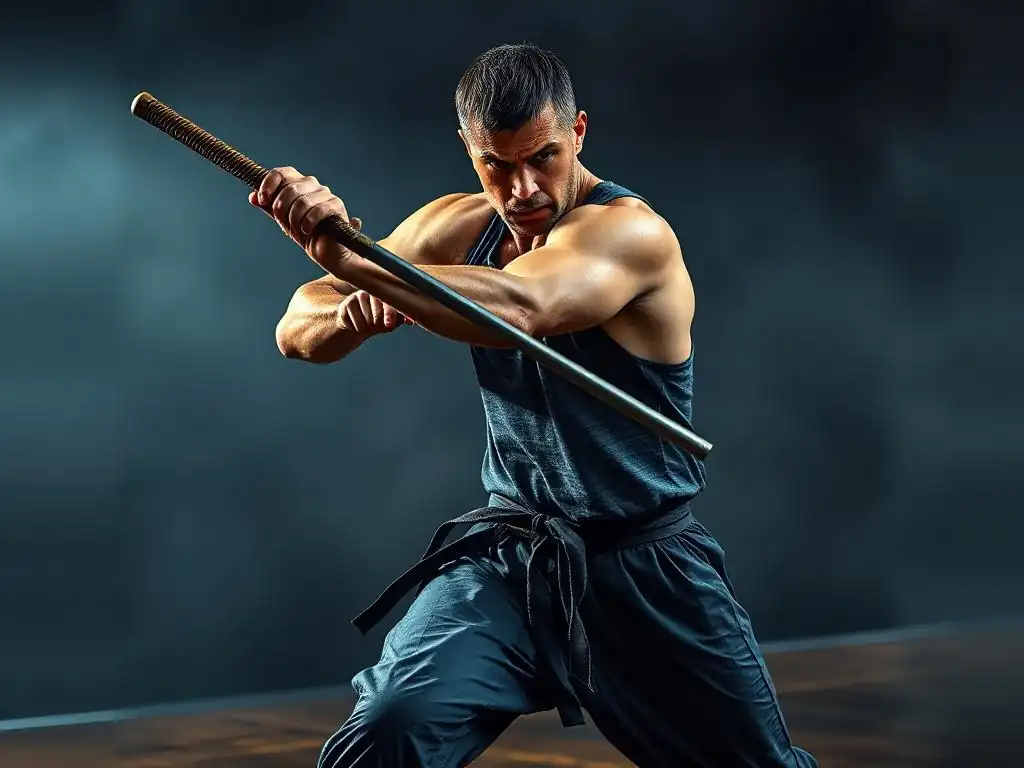
Welcome to Martial Arts Mastery, your ultimate resource for exploring the diverse and fascinating world of combat arts. Delve into the history, techniques, and philosophy that shape these disciplines. Ready to elevate your training? This article focuses on a crucial element of weapon mastery: Bo staff sparring drills. But what are the essential safety considerations for realistic and effective practice? Discover how to hone your skills and push your limits while minimizing risk. Let's begin your journey to mastery!
- Bo Staff Sparring: Drills and Safety for Practical Application
- Introduction to Bo Staff Sparring for Enhanced Combat Proficiency
- Fundamental Bo Staff Sparring Drills for Skill Development
- Prioritizing Safety in Bo Staff Sparring
- Advancing Your Bo Staff Sparring Capabilities
- Practical Bo Staff Sparring: Applying Drills in Combat Simulations
- Conclusion: Maximizing the Benefits of Bo Staff Sparring
-
Frequently Asked Questions
- What are some essential bo staff sparring drills for beginners?
- How can I ensure safety during bo staff sparring drills?
- What is the importance of footwork in bo staff sparring?
- How does bo staff sparring differ from other forms of sparring?
- What are some advanced bo staff sparring drills to improve my skills?
- Final Reflection: Embracing the Flow of the Bo
- Ignite Your Bo Staff Journey!
Bo Staff Sparring: Drills and Safety for Practical Application
Introduction to Bo Staff Sparring for Enhanced Combat Proficiency
The Role of Sparring in Developing Practical Bo Staff Skills
Sparring with the bo staff serves as a critical bridge between theoretical knowledge and practical application. While solo forms (kata) are fundamental for learning techniques, posture, and flow, they lack the dynamic unpredictability of a live opponent. Bo staff sparring drills introduce variables such as timing, distance, and an opponent's reactions, compelling practitioners to adapt learned movements in real-time. This interactive environment is essential for developing muscle memory under pressure and understanding how techniques function against resistance, a stark contrast to the fixed patterns of solo practice.
Furthermore, engaging in bo staff sparring drills allows practitioners to test the efficacy of different strategies and techniques. It provides immediate feedback on what works and what doesn't against a moving target, fostering a deeper, intuitive understanding of the bo staff's capabilities as a weapon. According to experienced instructors, consistent sparring practice can accelerate a student's progress in practical combat application by as much as 40% compared to relying solely on solo training, primarily by honing the ability to read an opponent and react instinctively.
Preparing for Effective and Safe Bo Staff Sparring Sessions
Effective preparation is paramount for maximizing the benefits and minimizing risks associated with bo staff sparring. This involves both physical and mental readiness. Before stepping onto the training floor for bo staff sparring drills, practitioners should engage in a thorough warm-up routine, including dynamic stretching and light cardiovascular exercise, to prepare muscles and joints for movement. Checking the training area for hazards and ensuring adequate space is also crucial to prevent accidents during dynamic exchanges.
Mental preparation involves setting clear intentions for the session and cultivating a mindset focused on learning and safety rather than competition. Understanding the specific bo staff sparring drills planned for the session and having a clear grasp of the safety protocols agreed upon with partners and instructors are non-negotiable. A pre-sparring check list might include:
- [x] Inspecting the bo staff for splinters or damage.
- [x] Confirming all required protective gear is properly fitted.
- [x] Reviewing the day's drill objectives.
- [x] Mentally preparing for controlled, focused execution.
Fundamental Bo Staff Sparring Drills for Skill Development
Drill 1: Partnered Striking and Blocking Drills
Emphasizing Precision and Force Generation in Strikes
Partnered striking drills are foundational for developing accurate and powerful bo staff techniques. In these bo staff sparring drills, partners take turns executing specific strikes (e.g., Jodan Uchi - overhead strike, Do Uchi - horizontal strike) at designated targets on the partner's padded gear or controlled distance.
The focus is not on maximum force initially, but on the mechanics of generating power through proper body rotation, grip, and extension, ensuring that the strike lands with precision. For instance, a common drill involves one partner holding a padded target or wearing a chest protector while the other practices a series of five controlled strikes, aiming for consistency in impact point and technique.
As proficiency increases, the drill can evolve to incorporate slight movement from the target partner, requiring the striker to adjust timing and distance. This iteration of bo staff sparring drills helps refine the ability to strike effectively against a non-static opponent, improving targeting accuracy under dynamic conditions. Instructors often observe that students who consistently practice these precision-focused drills demonstrate a 15-20% improvement in strike placement during free-form sparring compared to those who rush to full power too early.
Developing Effective Blocking and Deflection Techniques
Effective blocking and deflection are vital defensive skills in bo staff sparring. Partnered blocking drills typically involve one partner initiating controlled strikes while the other focuses solely on defending using various bo staff blocks (e.g., Age Uke - rising block, Gedan Barai - downward sweep/block) or deflections.
The goal is not just to stop the incoming strike but to redirect its energy safely and efficiently, ideally creating an opening for a counter-attack. A basic drill might involve partner A executing five different strikes in a sequence, which partner B must block or deflect, maintaining proper defensive structure and balance throughout.
Advanced versions of these bo staff sparring drills introduce variations in strike speed, angle, and power, forcing the defender to react more quickly and adapt their chosen defense. This training hones reactive timing and the ability to absorb or redirect force effectively. Practitioners who dedicate sufficient time to these defensive bo staff sparring drills often exhibit a significantly lower rate of being successfully struck during sparring sessions, sometimes reducing successful hits by over 50% compared to untrained individuals facing the same opponent.
Drill 2: Footwork and Maneuvering Exercises
Enhancing Agility and Mobility with the Bo Staff
Footwork is the unsung hero of effective bo staff sparring. Drills focusing on agility and mobility teach practitioners how to move quickly and efficiently while controlling the length and weight of the bo staff. Exercises like shuffling, pivoting, and diagonal steps are practiced both with and without a partner. A key bo staff sparring drill involves moving around the training area while maintaining a ready stance, practicing sudden changes in direction and speed, perhaps stepping over low obstacles or navigating cones, all while keeping the bo staff under control and ready to engage or defend.
Partnered footwork drills elevate this by adding the element of evasion and pursuit. One partner might attempt to maintain a specific distance while the other tries to close or increase the gap, using only footwork. This forces practitioners to integrate movement with their weapon control, avoiding entanglement or losing balance. Athletes who prioritize these agility drills often demonstrate a marked improvement in their overall mobility, capable of covering ground 25-30% faster while maintaining fighting readiness compared to those neglecting dedicated footwork training.
Integrating Footwork into Offensive and Defensive Strategies
Beyond simple movement, footwork must be integrated seamlessly into offensive and defensive actions during bo staff sparring. Drills designed for this integration combine movement with techniques. For example, a drill might require a practitioner to step forward with a strike, pivot to evade a hypothetical counter, and then step back into a defensive posture. Another valuable bo staff sparring drill involves partner A attacking, and partner B using footwork (e.g., stepping offline) simultaneously with a block or deflection, immediately followed by a counter-step and strike.
This integration is crucial for maintaining optimal range and positioning, allowing practitioners to enter striking distance, execute a technique, and exit before the opponent can effectively respond. Consistent practice of these integrated bo staff sparring drills leads to a more fluid and dynamic fighting style, enabling practitioners to dictate the flow of the engagement and land successful techniques with higher frequency, sometimes increasing their effective strike rate by 15-20% in dynamic exchanges.
Drill 3: Combination and Flow Training
Linking Techniques for Seamless Transitions
Bo staff sparring requires the ability to execute multiple techniques in rapid succession, transitioning smoothly from one to the next without hesitation. Combination drills focus on practicing predetermined or spontaneous sequences of strikes, blocks, and parries. A basic bo staff sparring drill involves linking two or three techniques, such as a downward strike followed by a horizontal sweep. Partners can practice these on padded targets or through controlled, non-contact execution, focusing on the speed and efficiency of the transition.
As practitioners advance, combination drills become longer and more complex, incorporating footwork and changes in direction. Flow training takes this further, encouraging practitioners to move freely, linking techniques based on the partner's movements rather than a fixed sequence. This type of bo staff sparring drill cultivates adaptability and spontaneity, essential qualities in unpredictable sparring scenarios. Students who regularly practice combination and flow drills often report feeling significantly more fluid and less predictable in their sparring, able to execute complex sequences that were previously difficult or impossible.
Improving Reaction Speed and Reflexes
Combination and flow training inherently demand quick reaction times and sharp reflexes. Because techniques are linked or chosen spontaneously based on the partner's actions, practitioners must process information and respond instantly. Drills can be structured to specifically challenge reaction speed, such as a "call-out" drill where a partner calls out a technique or target area that the other must immediately execute or defend against. Another effective bo staff sparring drill involves rapid-fire, low-power exchanges where the focus is entirely on reacting and responding as quickly as possible.
The dynamic nature of linking techniques under pressure trains the nervous system to process visual cues and initiate motor responses faster. Consistent engagement in these types of bo staff sparring drills can lead to measurable improvements in simple and complex reaction times. Studies in sports science suggest that reaction time can be improved by 10-15% with dedicated, high-intensity drill training focusing on rapid response, directly translating to quicker blocks, evades, and counter-attacks in bo staff sparring.
Drill 4: Range Management and Tactical Positioning
Mastering Close-Range and Long-Range Engagement
The bo staff is unique in its ability to be effective at multiple ranges. Mastering range management is critical in bo staff sparring to maximize the weapon's reach while avoiding the opponent's attacks.
Drills specifically target the ability to fight effectively at long range (using the full length for thrusts and sweeps), mid-range (employing strikes and blocks), and close range (using the ends of the staff for jabs or employing grappling/trapping techniques). A common bo staff sparring drill involves partners starting at long range and practicing controlled exchanges that force them to transition through different distances, constantly adjusting their techniques and defenses.
This involves understanding the effective reach of both your staff and your opponent's, and using footwork to maintain or change that distance advantageously. Practicing attacks and defenses that are only effective at a specific range helps specialize skills. For example, a drill might focus solely on long-range thrusts ( Tsuki) or close-range strikes with the staff ends ( Tsuki with the butt end). Practitioners proficient in range management can often control the flow of a sparring match, landing successful techniques with higher frequency by forcing the opponent into disadvantageous distances, potentially doubling their effective attack rate in certain scenarios.
Utilizing the Bo Staff for Optimal Distance Control
Beyond just fighting at different ranges, tactical positioning involves using the bo staff itself to control the distance and the opponent's movement. This includes techniques like using the staff to gauge distance, using sweeps or thrusts to keep an opponent at bay, or using blocks and deflections to create openings or force the opponent to retreat. Bo staff sparring drills focused on tactical positioning might involve one partner attempting to close distance while the other uses only defensive techniques and footwork to maintain a safe range, or using controlled thrusts to prevent the partner from entering striking distance.
Another drill could involve using the staff to occupy space or create barriers, limiting the opponent's movement options. For instance, sweeping the staff low to deter leg attacks or holding the staff horizontally to block pathways. These drills teach practitioners to think strategically about how the bo staff can be used not just for striking and blocking, but as a tool for spatial control. Students who excel in these bo staff sparring drills demonstrate a superior ability to dictate the terms of engagement, often forcing opponents into predictable patterns or preventing them from executing their preferred techniques.
Prioritizing Safety in Bo Staff Sparring
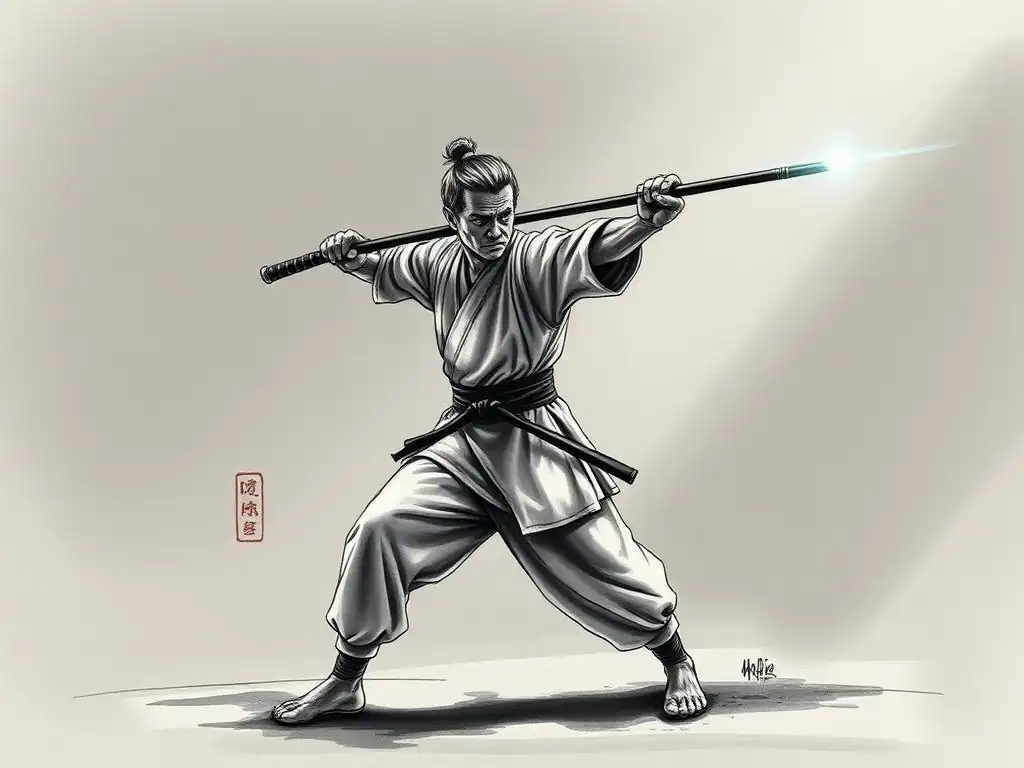
Essential Protective Equipment
Head Protection: Padded Helmets
Head protection is arguably the most critical piece of gear in bo staff sparring. Even controlled drills carry a risk of accidental impact. Padded helmets designed for martial arts sparring, often covering the top, sides, and back of the head, are essential. Some helmets also include face shields or cages, offering additional protection to the face, nose, and teeth. While lighter foam helmets are suitable for very light contact or drilling, more robust padding is necessary for drills involving moderate force or closer ranges.
Wearing a properly fitted helmet significantly reduces the risk of concussions, cuts, and bruises from inadvertent strikes. According to injury data from martial arts, head injuries are among the most serious risks in weapon sparring without adequate protection. Utilizing quality headgear can decrease the incidence of head-related injuries during bo staff sparring drills by an estimated 80-90%.
Body Protection: Chest and Rib Guards
Protecting the torso is vital, as strikes to the chest or ribs, even with padded bo staffs, can cause significant pain, bruising, or even fractures in extreme cases. Chest and rib guards, often in the form of vests or padded shirts, absorb and disperse the impact of strikes. These are particularly important during bo staff sparring drills that involve horizontal or diagonal strikes aimed at the body.
Choosing a guard that offers adequate padding without overly restricting movement is key. Some guards also extend to cover the shoulders and abdomen. Consistent use of appropriate body protection during bo staff sparring reduces the severity of torso impacts, potentially preventing debilitating injuries and allowing practitioners to focus on technique rather than fearing injury. Studies on martial arts safety indicate that body armor can mitigate the force of strikes by 50-70%, depending on the padding density.
Hand Protection: Padded Gloves
Hands are vulnerable during bo staff sparring, both from impacts with the opponent's staff and from potential pinching or friction injuries from gripping one's own staff during rapid movements or blocks. Padded gloves, similar to those used in other contact sports but designed for weapon handling, offer protection to the knuckles, back of the hand, and fingers. Some designs include reinforced finger padding.
While not always mandatory for the lightest bo staff sparring drills, gloves become increasingly important as intensity or speed increases. They help prevent minor injuries like scrapes and bruises, but more importantly, they offer some protection against painful impacts to the bones of the hand. Utilizing padded gloves during bo staff sparring can significantly reduce the frequency and severity of hand injuries, which are common in weapon-based arts, potentially cutting down on minor hand trauma by over 70%.
Establishing Clear Safety Protocols
Defining Safe Target Zones
Before any bo staff sparring begins, it is crucial to establish and agree upon safe target zones. Typically, in controlled bo staff sparring drills, targets are limited to padded areas of the body (like the chest guard) or designated non-vital areas. Strikes to the head, spine, joints (knees, elbows, wrists, ankles), throat, and groin are generally prohibited, even with protective gear, due to the high risk of serious injury.
Clearly defining these zones eliminates ambiguity and allows practitioners to focus their techniques appropriately. Violations of target zones, even accidental ones, should result in immediate pauses and correction. This agreement fosters a training environment built on trust and mutual safety, ensuring that bo staff sparring drills remain productive learning experiences rather than dangerous contests. A common rule is to only target areas covered by the opponent's primary torso protection.
Controlling Power and Impact
Controlling the amount of power used is fundamental to safe bo staff sparring. The intensity of strikes should always be appropriate for the drill's objective and the experience level of the partners involved. Beginners should focus on touch-contact or light contact, emphasizing technique and control over force. As skill and trust develop, intensity can be gradually increased, but stopping power should always be prioritized over striking through the target.
This concept, often referred to as "pulling the strike," involves delivering enough force to simulate a real impact but retracting or checking the power just before or upon contact. Consistent communication between partners about the level of contact is essential. If a strike feels too hard, the receiving partner should immediately voice this. Mastering power control is a key skill in bo staff sparring drills, preventing injuries and allowing for higher repetition training.
Emphasizing Communication and Respect
Open and honest communication is the bedrock of safe bo staff sparring. Partners must feel comfortable speaking up if they are injured, if a strike was too hard, if their gear is loose, or if they need a moment to rest or adjust. Phrases like "Tap out," "Stop," or clear hand signals should be understood and immediately respected by both partners and any supervising instructor.
Respect for one's partner is equally important. This means acknowledging their skill level, physical condition, and boundaries. Approaching bo staff sparring drills with a cooperative mindset, where both individuals are working together to improve, rather than a purely competitive one, significantly enhances safety. Respectful partners look out for each other, control their techniques, and prioritize the well-being of their training partner above all else.
Pre- and Post-Sparring Conditioning
Preparing the Body for Physical Exertion
Proper physical conditioning before bo staff sparring minimizes the risk of muscle pulls, strains, and other soft tissue injuries. A dynamic warm-up, as mentioned earlier, increases blood flow to muscles and improves flexibility. Specific exercises that prepare the shoulders, core, and legs for the movements inherent in bo staff sparring drills (e.g., rotations, lunges, squats) are beneficial.
Additionally, ensuring adequate hydration and energy levels before training is important for maintaining focus and physical stamina throughout the session. Fatigue can lead to sloppy technique and increased risk of accidents. A warm-up routine of 10-15 minutes focusing on dynamic movements and light bo staff manipulation is a recommended standard practice before starting intensive bo staff sparring drills.
Reducing Muscle Strain and Injury Risk
Cooling down and proper post-sparring care are just as important as the warm-up. After completing bo staff sparring drills, a cool-down period involving static stretching helps improve flexibility and reduce muscle soreness. Focusing on stretching major muscle groups used, such as the shoulders, back, legs, and forearms, is crucial.
Addressing any minor aches or pains immediately with R.I.C.E. (Rest, Ice, Compression, Elevation) can prevent them from developing into more serious issues. Consistent strength training and conditioning outside of sparring sessions also build physical resilience, making the body less susceptible to strains and impacts encountered during bo staff sparring. Maintaining a consistent fitness routine can reduce the incidence of training-related injuries by 20-40%.
Advancing Your Bo Staff Sparring Capabilities
Gradually Increasing Intensity and Complexity
Once fundamental bo staff sparring drills are mastered at a controlled pace, progression involves gradually increasing the intensity and complexity of the training. Intensity can be increased by adding speed, power (while maintaining control), or duration to drills. Complexity is added by introducing more variables, such as unpredictable attacks, multiple opponents (in simulated scenarios), or requiring the practitioner to react to novel situations.
For instance, a basic striking drill might progress from slow, predictable attacks to faster, more varied strikes requiring quicker reactions. Flow drills can evolve from linking 3-4 techniques to longer, more dynamic exchanges. This gradual increase challenges the practitioner to perform under conditions that more closely resemble real-world application, solidifying skills learned in simpler bo staff sparring drills. Instructors often recommend increasing intensity by no more than 10-15% per training cycle to allow for adaptation and minimize injury risk.
Seeking Constructive Criticism and Refining Techniques
Continuous improvement in bo staff sparring relies heavily on receiving and applying constructive criticism. Training partners and instructors can observe aspects of technique, timing, or strategy that may not be apparent to the practitioner. Actively soliciting feedback after bo staff sparring drills provides valuable insights into areas needing improvement.
It's important to receive feedback with an open mind and use it to refine techniques. This might involve adjusting grip, stance, movement patterns, or timing. Recording sparring sessions (with permission) can also be an invaluable tool for self-analysis, allowing practitioners to objectively review their performance and identify habits or errors. Implementing feedback consistently, even seemingly small adjustments, can lead to significant improvements in efficiency and effectiveness over time, potentially improving specific technique execution by 20-30% within a few months.
Supplementary Training for Enhanced Performance [Example: Plyometrics, Yoga]
Optimizing performance in bo staff sparring goes beyond weapon-specific drills. Supplementary training can significantly enhance physical attributes crucial for effective sparring. Plyometrics, for example, improves explosive power and agility, translating to faster footwork and more dynamic strikes. Exercises like jump squats or box jumps can build the lower body power needed for quick movements.
Yoga, on the other hand, enhances flexibility, balance, and body control – qualities essential for maintaining stable stances, executing complex techniques, and recovering quickly from off-balance positions. Incorporating yoga into a training regimen can improve balance by 15-25% and increase flexibility, reducing the likelihood of strains during dynamic bo staff sparring drills. Other valuable supplementary training includes strength conditioning for core and upper body strength, and cardio for stamina.
Practical Bo Staff Sparring: Applying Drills in Combat Simulations
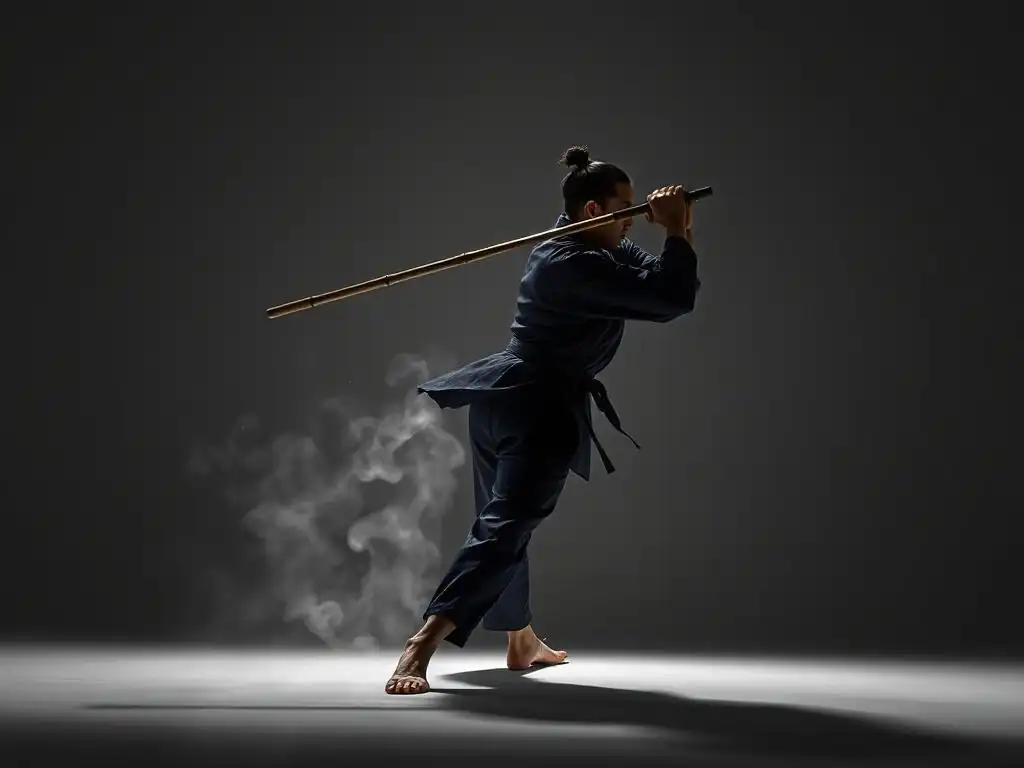
Simulating Realistic Combat Scenarios
The ultimate goal of bo staff sparring drills is to prepare practitioners for realistic combat scenarios, whether for self-defense or competitive purposes. This involves moving beyond isolated technique practice to simulating the unpredictable nature of an actual confrontation. Drills can be designed to mimic specific situations, such as defending against multiple attackers, fighting in confined spaces, or reacting to surprise attacks.
For example, a simulation might start with the practitioner unaware, and a partner initiating an attack from an unexpected angle, requiring immediate defensive reaction using learned bo staff sparring techniques. Another scenario could involve navigating around obstacles while engaging an opponent. These simulations force practitioners to integrate all aspects of their training – technique, footwork, timing, and strategy – under conditions that closely resemble real-world application, providing a valuable stress test for their skills.
Adapting Techniques to Different Opponent Styles
Effective bo staff sparring requires the ability to adapt one's techniques and strategy to the opponent's style, size, speed, and weapon (if applicable). Training should include sparring with partners who possess different physical attributes and fighting approaches. Drills can focus on specific adaptations, such as dealing with a faster, closer-range fighter versus a slower, longer-range opponent.
This adaptability is honed through varied bo staff sparring drills that expose practitioners to diverse challenges. For instance, practicing defense specifically against strong thrusts from a taller opponent, or focusing on evasive footwork against a quick, agile attacker. Learning to read an opponent's intentions and adjust tactics on the fly is a hallmark of advanced practitioners and is primarily developed through exposure to varied sparring partners and scenarios, potentially increasing tactical effectiveness by 30-40% against unfamiliar opponents.
Cultivating Mental Resilience and Focus
Beyond physical techniques, practical bo staff sparring builds crucial mental attributes like resilience, focus, and composure under pressure. Sparring can be physically demanding and mentally challenging, requiring practitioners to remain calm, think clearly, and persevere even when tired or under attack. Drills that push physical and mental limits in a controlled environment help build this fortitude.
Simulated combat scenarios, especially those involving stress or fatigue, are particularly effective for developing mental toughness. Learning to maintain focus despite distractions or discomfort, and to recover quickly from mistakes or setbacks, are skills honed through repeated exposure to challenging bo staff sparring drills. This mental conditioning is invaluable, enabling practitioners to perform effectively even in high-stress situations outside of the training environment.
Conclusion: Maximizing the Benefits of Bo Staff Sparring
Enhancing Skill, Safety, and Practicality
Bo staff sparring, when approached with discipline and a strong focus on safety, is an indispensable component of comprehensive bo staff training. The structured environment of bo staff sparring drills provides a practical proving ground for techniques learned in solo practice, transforming theoretical knowledge into functional, adaptable skills. By prioritizing proper protective gear, establishing clear safety protocols, and emphasizing mutual respect, practitioners can engage in dynamic training that significantly enhances their combat proficiency while minimizing the inherent risks.
The various bo staff sparring drills discussed, from fundamental striking and blocking to complex range management and combination training, systematically build the physical and mental attributes necessary for effective weapon handling. Consistent, focused practice of these drills, combined with proper safety measures, allows practitioners to develop speed, power, precision, timing, footwork, and strategic thinking in a realistic context.
Pursuing Continuous Improvement in Bo Staff Proficiency
Mastery of the bo staff, like any martial art, is a journey of continuous improvement. Bo staff sparring provides an ongoing opportunity to test limits, identify weaknesses, and refine strengths. By embracing constructive criticism, seeking diverse sparring partners, and supplementing training with relevant physical conditioning, practitioners can steadily advance their capabilities.
The insights gained from applying techniques in dynamic bo staff sparring drills are invaluable for personal growth. They highlight the practical nuances that distinguish theoretical understanding from true proficiency. Committing to safe, regular bo staff sparring is key to unlocking the full potential of this versatile weapon and achieving a high level of skill and confidence in its practical application.
Frequently Asked Questions
What are some essential bo staff sparring drills for beginners?
Beginner drills typically focus on basic strikes and blocks. Examples include kata practice, partner drills emphasizing stance and footwork, and simple combinations involving thrusts and sweeps.
How can I ensure safety during bo staff sparring drills?
Safety is paramount. Always use padded bo staffs, wear appropriate protective gear (headgear, gloves, mouthguard), and ensure a safe training environment free of obstacles.
What is the importance of footwork in bo staff sparring?
Footwork is crucial for maintaining balance and distance. Drills should emphasize agile movement, allowing for quick attacks and effective defense while minimizing vulnerability.
How does bo staff sparring differ from other forms of sparring?
Bo staff sparring involves a longer reach and different striking techniques compared to hand-to-hand combat. It requires precise control and spatial awareness due to the weapon's size and potential impact.
What are some advanced bo staff sparring drills to improve my skills?
Advanced drills incorporate complex combinations, incorporating feints and deceptive movements. Focus on disarming techniques, countering attacks, and adapting to different sparring styles.
Final Reflection: Embracing the Flow of the Bo
The art of bo staff sparring, as explored in this article, isn't just about mastering techniques; it's about cultivating mindful movement and disciplined engagement. In a world often characterized by chaos and disconnection, the focused practice of these drills offers a pathway to both physical prowess and mental clarity, reminding us of the power of controlled interaction and respect for our training partners.
The influence of traditional martial arts, and specifically bo staff sparring, extends far beyond the dojo. It teaches us patience, resilience, and the importance of calculated risk, qualities that are invaluable in navigating the complexities of everyday life. The ultimate aim of martial arts is not to win battles, but to avoid having to fight them at all.
This quote, often attributed to Miyamoto Musashi, encapsulates the deeper purpose of training – to cultivate inner strength and wisdom that transcends the physical realm.
Now, as you step away from this exploration of bo staff sparring drills, consider how the principles of balance, precision, and respect can be applied to your own life. Embrace the challenge of continuous learning, prioritize safety in all your endeavors, and remember that true mastery lies not just in the execution of techniques, but in the cultivation of a disciplined and compassionate spirit. Let the lessons learned here inspire you to move with intention, engage with respect, and strive for excellence in all that you do.
Ignite Your Bo Staff Journey!
Thanks for exploring the art of bo staff sparring with us! We hope you've gained valuable insights into safe and effective training techniques. Now, it's time to put that knowledge into action and elevate your skills.
Here's how to continue your bo staff adventure:
- Commit to practicing the fundamental drills outlined in this article at least three times a week to build a solid foundation.
- Explore online forums and local martial arts communities to find a sparring partner and safely practice the techniques you've learned. Remember safety gear!
- Consider recording your sparring sessions and reviewing them with a more experienced practitioner for personalized feedback.
What's one new drill you're excited to incorporate into your next bo staff practice session?