
Nunchaku Drills for Enhanced Reflexes and Ambidexterity

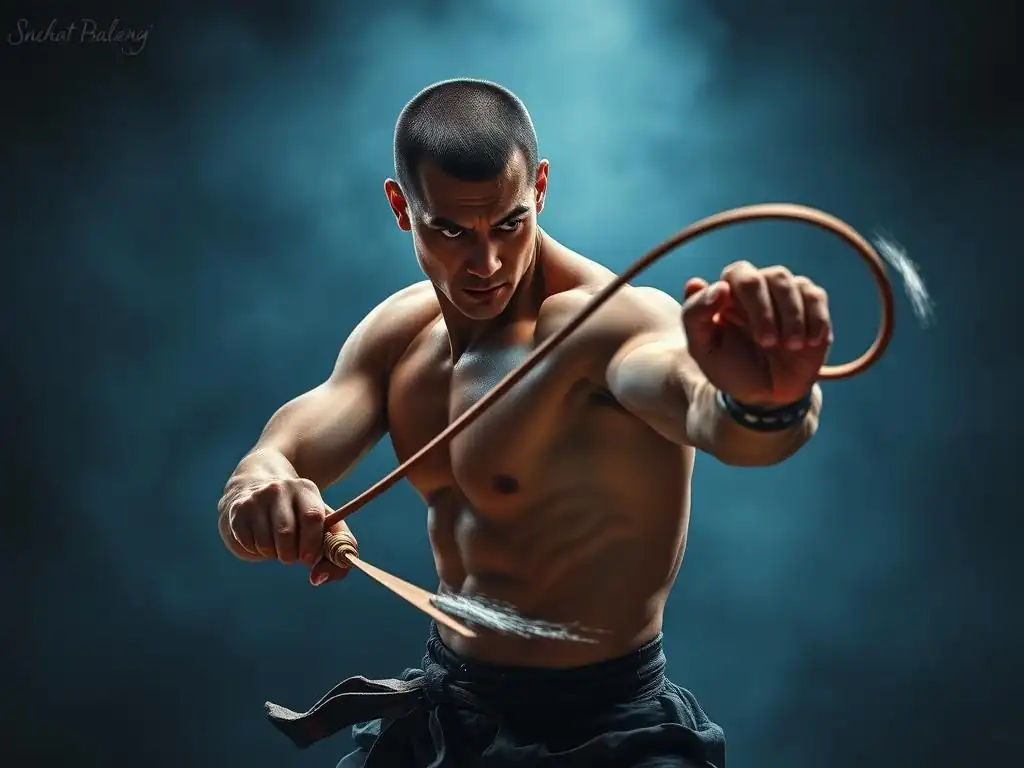
Welcome to Martial Arts Mastery, where we delve into the rich tapestry of combat traditions! Ever wondered how to sharpen your reflexes and unlock ambidextrous agility? This article explores precisely that, focusing on how nunchaku drills improve reflexes and coordination. Prepare to unlock ancient wisdom and practical techniques that will elevate your martial arts journey. Intrigued? Let's begin...
- Introduction to Nunchaku Training and Reflex Development
-
Essential Nunchaku Drills to Improve Reflexes
- Basic Nunchaku Grips and Stances for Optimal Control
- Drill 1: Figure Eight Reflex Drill for Wrist Dexterity
- Drill 2: Overhead Strike Defense Drill for Reaction Time
- Drill 3: Body Rotation and Nunchaku Flow Drill for Coordination
- Drill 4: Rapid Reversal Drill for Increased Hand Speed
- Drill 5: Blocking and Striking Combinations Drill for Reactive Defense
- Advanced Nunchaku Drills for Ambidextrous Proficiency
- Integrating Nunchaku Drills into Your Martial Arts Training
- The Benefits of Nunchaku Training Beyond Reflexes
- Conclusion: Mastering Reflexes and Ambidexterity Through Nunchaku Drills
-
Frequently Asked Questions
- What are nunchaku, and why are they used in martial arts?
- How do nunchaku drills specifically enhance reflexes?
- Besides reflexes, what other benefits can be gained from nunchaku training?
- Are there any safety precautions to consider before starting nunchaku drills?
- Where can I find reliable resources and guidance on nunchaku training?
- Final Reflection: Mastering Flow and Reflex
- Unleash Your Inner Ninja: Start Your Nunchaku Journey Today!
Introduction to Nunchaku Training and Reflex Development
Nunchaku, often recognized globally as a symbol of martial arts prowess and pop culture, is far more than just a flashy weapon. Its practice is a rigorous discipline that demands and cultivates exceptional physical and mental attributes. Engaging in Nunchaku drills is a dynamic way to challenge and improve fundamental martial arts skills, particularly in the areas of reaction time, hand-eye coordination, and the ability to use both sides of the body effectively.
The inherent nature of controlling two connected sticks moving at high speeds necessitates focused attention and quick adjustments. Whether for traditional Okinawan Kobudo, modern sport nunchaku, or practical self-defense applications, dedicated Nunchaku training offers a unique pathway to sharpening reflexes and developing balanced dexterity, skills that translate beneficially to empty-hand techniques and other weapons disciplines.
The History and Evolution of Nunchaku in Martial Arts
The nunchaku's origins are steeped in Okinawan history, believed to have evolved from a farming tool used for threshing rice or soybeans, known as a muigama. While its exact transition into a weapon is debated, it became a prominent part of Okinawan Kobudo, a system of weapon-based martial arts developed by the island's inhabitants for self-defense, particularly during periods when traditional weapons were restricted. Early nunchaku forms were often simple, functional tools adapted for combat.
Over centuries, the nunchaku's application within martial arts evolved from rudimentary strikes and blocks to complex patterns involving intricate twirling, trapping, and disarming techniques. Masters of Kobudo developed kata (forms) that preserved these sophisticated movements and strategies. For instance, the Saiha kata in some Kobudo lineages demonstrates advanced nunchaku manipulation, requiring precise timing and rapid transitions between defensive and offensive movements. This historical evolution highlights a continuous development towards techniques that inherently demand and, therefore, improve reaction speed and fine motor control, laying the groundwork for the Nunchaku drills improve reflexes focus seen today.
How Nunchaku Training Sharpens Reflexes and Coordination
Training with the nunchaku is an intense exercise in hand-eye coordination and predictive reflexes. The practitioner must constantly track the position and trajectory of both sticks, often moving at high velocity in complex patterns around their body. This constant visual tracking and prediction force the brain and nervous system to process information and initiate motor responses at an accelerated rate. Simple drills like the figure eight require the eyes to follow the stick's path and the hands to adjust grip and angle almost instantaneously to maintain control and prevent striking oneself.
Beyond visual tracking, nunchaku practice enhances proprioception – the body's awareness of its position in space. As practitioners become more adept, they develop an intuitive sense of where the nunchaku are without direct visual confirmation, relying on feel and muscle memory. This heightened spatial awareness, combined with the rapid reactions needed to control the weapon, significantly reduces overall reaction time.
Studies on martial artists often show superior reaction times compared to non-practitioners, and weapon disciplines like nunchaku training contribute substantially to this, as the penalty for slow reflexes (hitting oneself) is immediate and clear. Consistent Nunchaku drills improve reflexes by constantly pushing the limits of hand speed, timing, and spatial prediction.
Understanding Ambidexterity in Nunchaku Practice
Ambidexterity, the ability to use both hands equally well, is a crucial, though often overlooked, aspect of effective nunchaku mastery. While most individuals favor one dominant hand, proficient nunchaku practitioners must develop near-equal skill in both hands for balanced control, fluid transitions, and unpredictable techniques. Many traditional nunchaku kata, such as Shushi no Kon, while primarily a bo kata, influence nunchaku training by emphasizing symmetrical movements and stances that facilitate transitions between sides.
Developing ambidexterity with the nunchaku involves dedicated practice with the non-dominant hand, focusing on mirroring the techniques learned with the dominant hand. Initially, movements might feel awkward or less controlled, but consistent repetition builds new neural pathways and strengthens the muscles on the non-dominant side. For example, practicing basic twirls and strikes for an equal amount of time on both the left and right sides is fundamental.
This balanced approach not only makes the practitioner more versatile in combat or demonstration but also contributes to overall brain health and coordination, as it engages both hemispheres more equally. Dedicated Nunchaku drills improve reflexes and promote functional ambidexterity simultaneously.
Essential Nunchaku Drills to Improve Reflexes
Mastering the nunchaku requires dedication and systematic practice. The following drills are foundational and specifically designed to enhance reaction time, coordination, and control. Consistency in performing these Nunchaku drills improve reflexes measurably over time.
Basic Nunchaku Grips and Stances for Optimal Control
Before attempting dynamic drills, understanding fundamental grips and stances is paramount for safety and effectiveness. The primary grip is typically the hon-nigiri or basic grip, where the hand holds one stick firmly, allowing the other to swing freely. Variations include the gyaku-nigiri (reverse grip) and holding both sticks together. Proper stance, such as a natural fighting stance ( zenkutsu-dachi or similar), provides balance and stability, allowing for quick movement and generating power.
Maintaining a relaxed but firm grip is crucial. Too tight a grip causes tension and restricts fluid movement; too loose a grip results in loss of control. The ideal grip allows the stick to pivot slightly in the hand while maintaining secure control. Similarly, a stable stance with slightly bent knees and weight distributed evenly enables rapid shifts in position required for dynamic Nunchaku drills improve reflexes by providing a solid base for quick reactions and directional changes.
Drill 1: Figure Eight Reflex Drill for Wrist Dexterity
The figure eight drill is arguably the most fundamental and effective Nunchaku drill for developing wrist flexibility, control, and basic hand-eye coordination, which are essential for quick reflexes. Holding one stick, the practitioner moves the hand in a continuous figure-eight pattern, allowing the free stick to swing smoothly around the wrist and forearm.
This drill directly challenges hand-eye coordination and reaction time because the practitioner must constantly adjust the angle and speed of the hand movement to maintain the pattern and prevent the stick from hitting them. Starting slowly and gradually increasing speed is key. Practicing this drill for several minutes daily, focusing on smooth, controlled motion, significantly improves wrist dexterity and the predictive reflexes needed to handle the weapon safely at speed. Consistent practice of this basic Nunchaku drill improve reflexes by building foundational control.
Drill 2: Overhead Strike Defense Drill for Reaction Time
This drill focuses on reacting quickly to an incoming overhead attack (simulated) by using the nunchaku for defense. It requires a partner or a suspended target. The partner simulates an overhead strike with a padded weapon or hand, or the practitioner reacts to a target dropping from above. The goal is to quickly bring the nunchaku up to block or deflect the incoming force.
The drill can be varied by changing the speed and angle of the simulated attack. Practicing reacting to unpredictable cues (e.g., partner calls out "Left!" or "Right!" just before attacking) further enhances auditory and visual reaction time. This practical application of Nunchaku drills improve reflexes in a defensive context, training the body to respond instantly to perceived threats.
Drill 3: Body Rotation and Nunchaku Flow Drill for Coordination
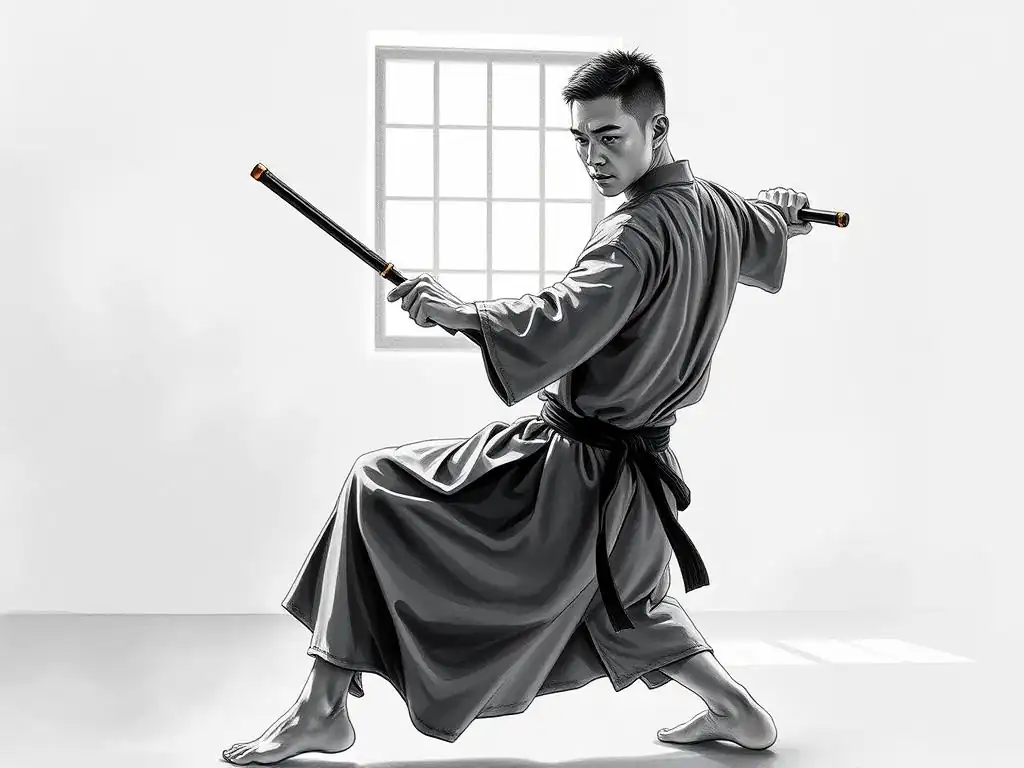
This drill integrates fundamental nunchaku manipulation with body movement, specifically rotations. While performing basic twirls or figure eights, the practitioner executes 180 or 360-degree turns. This requires coordinating the hand movements with the body's rotation, ensuring the nunchaku doesn't strike the body during the turn.
Initially, this drill highlights areas where coordination breaks down. Consistent practice forces the practitioner to refine timing and spatial awareness, improving the seamless integration of weapon handling and body mechanics. The ability to maintain fluid nunchaku control while moving and rotating is a significant step in developing advanced coordination and reflexive adaptability. This drill is a great way to integrate Nunchaku drills improve reflexes within dynamic movement patterns.
Drill 4: Rapid Reversal Drill for Increased Hand Speed
This drill focuses on quickly changing the direction of the nunchaku's swing, emphasizing speed and control in transitions. For example, practicing a forward vertical swing and then instantly reversing it into a backward vertical swing, or changing from a horizontal swing to a vertical one with minimal pause.
The key is the speed of the transition. This drill trains the small muscles in the hand and wrist for explosive, precise movements. Practicing rapid reversals sharpens the reflexes needed to switch techniques instantly during sparring or self-defense scenarios, making the practitioner's movements less predictable and more reactive. Consistent training with this Nunchaku drill improve reflexes specifically by increasing hand speed and transition time.
Drill 5: Blocking and Striking Combinations Drill for Reactive Defense
This drill combines defensive blocks with immediate offensive strikes. A partner simulates various attacks (e.g., a middle punch, a low kick, a side strike). The practitioner reacts by blocking the incoming attack with the nunchaku and immediately follows up with a predetermined or reactive strike (e.g., block a punch, strike to the head; block a kick, strike to the knee).
This drill is excellent for developing reactive sequences. It trains the brain to transition instantly from defense to offense. The unpredictability of the incoming attacks (when practiced with a partner varying the attacks) forces rapid identification and selection of appropriate defensive and offensive responses. Mastering this Nunchaku drill improve reflexes by linking perception, decision-making, and execution into a single, fluid action.
- Task List for Daily Reflex Training:
- [ ] 5 minutes: Figure Eight (both directions, both hands)
- [ ] 3 minutes: Rapid Reversal (vertical and horizontal)
- [ ] 5 minutes: Overhead Defense (with partner or target)
- [ ] 4 minutes: Body Rotation Flow (integrating turns)
- [ ] 5 minutes: Blocking & Striking (with partner or varying target points)
Advanced Nunchaku Drills for Ambidextrous Proficiency
Moving beyond basic control, advanced Nunchaku drills focus on refining technique, increasing speed, and developing true ambidexterity, allowing practitioners to wield the weapon effectively with either hand or even both simultaneously.
Developing Non-Dominant Hand Control with Nunchaku
Achieving proficiency with the non-dominant hand is critical for advanced nunchaku skill. This involves dedicating significant practice time solely to the weaker side. Initially, this will feel awkward and frustrating, as movements will be less fluid and control will be diminished compared to the dominant hand. However, persistence is key.
Start by mastering the basic drills (Figure Eight, simple strikes, etc.) with the non-dominant hand before attempting advanced techniques. Focus on mimicking the motion and feel of the dominant hand. Practicing in front of a mirror can be helpful for visual feedback. Over time, the muscle memory and neural connections will strengthen, leading to greater control and speed. Dedicated non-dominant hand Nunchaku drills improve reflexes on that side, balancing overall reaction capabilities.
Drill 6: Alternating Hand Twirls for Balanced Skill
This drill involves smoothly transitioning the nunchaku from one hand to the other while maintaining a continuous twirling motion (like a vertical or horizontal circle). The nunchaku passes from one hand's control to the other's, requiring precise timing and coordination between both hands.
This drill specifically targets the coordination between the two hands and the ability to transfer control seamlessly. It builds equal dexterity and timing in both hands. Practicing this drill continuously, focusing on smooth transitions without pauses or fumbles, is essential for developing balanced skill and ensuring Nunchaku drills improve reflexes equally on both sides of the body.
Drill 7: Weaving Patterns for Improved Hand-Eye Coordination and Reflexes
Weaving drills involve passing the nunchaku around and through the arms, legs, and body in complex patterns while maintaining a continuous flow. Examples include wrapping the stick around the forearm and catching it, passing it behind the back, or weaving it between the legs.
These drills demand exceptional hand-eye coordination and spatial awareness. They require the practitioner to accurately judge distances and timing in tight spaces, reacting instantly to guide the nunchaku around obstacles (their own body). The complexity and speed of weaving patterns significantly challenge and improve reactive capabilities and fine motor control. Mastering these Nunchaku drills improve reflexes by pushing the limits of precise, close-quarters weapon manipulation.
Drill 8: Switching Grips Mid-Flow for Adaptability
This drill focuses on changing hand grips (e.g., from basic grip to reverse grip, or from holding one stick to holding both) while the nunchaku is in motion, without stopping the flow. This requires high levels of control and dexterity.
The ability to switch grips seamlessly in the middle of a technique or combination makes the practitioner incredibly adaptable. It allows for rapid transitions between different types of strikes, blocks, or traps. Practicing grip switching trains the hands for quick, precise micro-adjustments under dynamic conditions, further sharpening responsive hand skills. This advanced Nunchaku drill improve reflexes related to tactical adaptation and control variation.
Drill 9: Dual Nunchaku Training (Optional - Requires Advanced Skill)
For highly advanced practitioners, training with two nunchaku simultaneously offers the ultimate challenge in coordination and ambidexterity. This involves performing different or synchronized patterns with a nunchaku in each hand.
Dual nunchaku training demands the brain process information and control movements from both sides of the body independently and coordinately. It exponentially increases the complexity and the demand on hand-eye coordination and peripheral vision. While not traditional in all styles, it is a modern training method that pushes the boundaries of reflexive control and ambidextrous capability to their absolute limit. Practicing with two nunchaku is an intense way to ensure Nunchaku drills improve reflexes across the entire body's motor system.
Integrating Nunchaku Drills into Your Martial Arts Training
Nunchaku practice should not be seen as separate from overall martial arts development. Properly integrated, Nunchaku drills improve reflexes, coordination, and focus in ways that benefit all aspects of training.
Warming Up and Stretching for Nunchaku Practice
Proper preparation is vital for safe and effective nunchaku training. A warm-up should include light cardio (e.g., jogging in place, jumping jacks) for 5-10 minutes to increase blood flow. This is followed by dynamic stretching focusing on the wrists, elbows, shoulders, and neck.
Wrist rotations, elbow circles, shoulder rolls, and gentle neck stretches are essential. Because nunchaku involves rapid, repetitive movements, particularly in the wrists and forearms, proper warm-up significantly reduces the risk of strains or sprains. Dedicated time for warm-up ensures the body is ready to handle the demands of fast-paced Nunchaku drills improve reflexes safely.
Combining Nunchaku Drills with Footwork and Body Movement
Effective nunchaku use in a dynamic situation (like sparring or self-defense) is never static. Drills should be integrated with fundamental martial arts footwork (e.g., stepping, shuffling, pivoting) and body movements (e.g., shifting weight, turning hips).
Practice performing drills while moving forward, backward, and laterally. Combine strikes or blocks with steps. Execute body rotations while maintaining nunchaku flow (as in Drill 3). This integration makes the training more realistic and enhances the reflexive connection between weapon manipulation and overall body control. Combining footwork with Nunchaku drills improve reflexes in a practical, applied context.
Progressing Your Nunchaku Training: From Beginner to Advanced
Training should follow a structured progression. Beginners should focus on mastering basic grips, stances, and fundamental drills like the Figure Eight and simple strikes (vertical, horizontal). Speed and complexity are gradually increased only after control and accuracy are established.
Intermediate practitioners can begin incorporating transitions, simple combinations (Block-Strike), body movement, and dedicated non-dominant hand practice. Advanced practitioners work on complex patterns, rapid reversals, grip changes, weaving, and potentially dual nunchaku. Regularly reviewing and refining basic drills remains important even at advanced levels, as they are the foundation upon which all complex techniques are built. A structured approach ensures Nunchaku drills improve reflexes progressively and safely.
Safety Precautions and Proper Equipment for Nunchaku Drills
Safety is paramount in nunchaku training. Always start with padded or foam training nunchaku, especially when learning new techniques or practicing at speed. Practice in an open area free from obstacles, furniture, or other people. Wear appropriate protective gear, such as hand wraps or light gloves to prevent chafing, and potentially head protection when practicing with a partner.
Pay close attention to your body and surroundings. Avoid practicing when fatigued or distracted. Learn proper stopping techniques to halt the nunchaku's motion safely. Never aim for yourself or others, even with padded equipment.
Safety is not a luxury; it is the foundation upon which effective and sustainable martial arts training is built. Without it, progress is limited by injury.
Using the right equipment, such as training nunchaku appropriate for your skill level and practicing in a safe environment, allows you to focus fully on the movements and the development of your reflexes without undue risk.
The Benefits of Nunchaku Training Beyond Reflexes
While Nunchaku drills improve reflexes significantly, the benefits of this training extend far beyond reaction time and physical coordination, impacting mental discipline and overall fitness.
Nunchaku Training and Mental Focus
Nunchaku practice demands intense concentration. The potential for self-injury if focus wavers provides immediate feedback and reinforces the need for present-moment awareness. Complex drills require the practitioner to sequence multiple movements, anticipate the nunchaku's path, and maintain control simultaneously – a demanding cognitive task.
This constant requirement for focused attention trains the mind to stay present and block out distractions. Over time, this enhanced ability to concentrate translates to other areas of martial arts training, such as kata performance or sparring, and even to daily life tasks. The mental discipline cultivated through focused Nunchaku drills improve reflexes and sharpen the mind.
Nunchaku Training and Self-Defense Applications
While often seen as a traditional weapon, the principles learned in nunchaku training have practical self-defense applications, even if the weapon itself is not carried. The enhanced hand speed, reaction time, and coordination are directly transferable to empty-hand techniques.
For example, the rapid hand movements and transitions developed through nunchaku drills improve the speed and fluidity of strikes, blocks, and joint manipulations. The spatial awareness gained helps in judging distances and positioning. The confidence and control developed in handling a dynamic object translate into greater confidence and control over one's own body in a confrontation. Nunchaku drills improve reflexes that are vital components of effective self-defense.
Nunchaku Training and Improved Overall Fitness
Nunchaku practice is a surprisingly good workout. Dynamic drills involve the entire upper body – wrists, forearms, shoulders, and back. Maintaining a stable stance engages the core and legs. Fast-paced sessions can elevate the heart rate, providing cardiovascular benefits.
Moreover, the constant adjustments and control required build muscular endurance and fine motor strength, particularly in the hands, wrists, and forearms. While perhaps not a primary method for building brute strength or endurance like running or weightlifting, consistent nunchaku training contributes positively to overall physical conditioning, complementing other aspects of martial arts fitness. The physical demands inherent in Nunchaku drills improve reflexes and contribute to better physical conditioning.
Conclusion: Mastering Reflexes and Ambidexterity Through Nunchaku Drills
The journey to mastering the nunchaku is a rewarding path that yields significant improvements in physical coordination, mental focus, and, crucially, reflexes and ambidexterity. From the historical context of its Okinawan origins to its modern application in diverse training regimens, the nunchaku stands out as a tool uniquely suited to developing these vital attributes. The structured practice of specific Nunchaku drills improve reflexes by demanding rapid hand-eye coordination, precise timing, and the ability to control dynamic, fast-moving objects around the body.
Dedication to practicing techniques with both the dominant and non-dominant hands ensures balanced development, leading to true ambidextrous skill. This not only makes the practitioner more versatile with the weapon but also enhances overall motor control and cognitive function. By integrating basic and advanced Nunchaku drills improve reflexes and ambidexterity becomes an achievable goal for any dedicated martial artist.
The Path to Nunchaku Mastery: Consistency and Dedication
Achieving mastery with the nunchaku, like any martial art skill, hinges on consistency and dedication. Short, focused practice sessions performed regularly are far more effective than infrequent, long ones. Aim for 15-30 minutes of dedicated nunchaku practice several times a week.
Progress can be tracked by setting specific, measurable goals, such as performing a certain drill for a set number of repetitions without error, increasing the speed of a technique, or successfully executing a combination. Patience is key; developing fluid control and razor-sharp reflexes takes time and persistent effort. Embracing the process, focusing on improvement rather than perfection, is the hallmark of a dedicated practitioner. Consistent Nunchaku drills improve reflexes gradually but significantly over time.
Further Resources for Nunchaku Training and Skill Development
To continue your development, seek instruction from qualified martial arts instructors experienced in nunchaku or Kobudo. Learning from a sensei provides invaluable feedback on technique, safety, and progression. Study traditional kata to understand the practical applications and flow of techniques.
Supplementing in-person training with reputable instructional materials, such as books or videos from respected masters, can also be beneficial for reviewing techniques and learning new drills. Participating in seminars or workshops focused on weapon training offers opportunities to learn from different perspectives and train with other practitioners. Continuously seeking knowledge and practice opportunities is essential for anyone serious about using Nunchaku drills improve reflexes and achieve mastery.
Frequently Asked Questions
What are nunchaku, and why are they used in martial arts?
Nunchaku are a traditional Okinawan weapon consisting of two sticks connected by a chain or rope. They are used to improve reflexes, coordination, and weapon manipulation skills in martial arts training.
How do nunchaku drills specifically enhance reflexes?
Nunchaku drills require rapid hand-eye coordination and precise movements. The unpredictable nature of the weapon forces the practitioner to react quickly and adapt, thus sharpening reflexes over time.
Besides reflexes, what other benefits can be gained from nunchaku training?
Beyond reflex enhancement, nunchaku training can improve ambidexterity, focus, and overall body control. It also develops spatial awareness and coordination.
Are there any safety precautions to consider before starting nunchaku drills?
Yes, safety is paramount. Start with padded nunchaku, practice in a safe environment, and learn from a qualified instructor. Proper warm-up and stretching are also crucial to prevent injuries.
Where can I find reliable resources and guidance on nunchaku training?
MartialArtsMastery.org offers a wealth of information on nunchaku drills, techniques, and safety guidelines. Look for qualified instructors and reputable training programs in your area for hands-on learning.
Final Reflection: Mastering Flow and Reflex
The journey through nunchaku drills, as explored in this article, transcends mere physical exercise; it's a pathway to cultivating heightened reflexes and ambidextrous coordination, skills increasingly valuable in our fast-paced, multifaceted world. Understanding the principles behind these drills allows us to not only improve our physical capabilities but also to sharpen our mental acuity, fostering a deeper connection between mind and body.
The impact of martial arts training, and specifically nunchaku practice, extends far beyond the dojo. It instills discipline, focus, and a profound sense of self-awareness that permeates all aspects of life. The rhythmic flow of the nunchaku becomes a metaphor for navigating the complexities of existence with grace and precision. The ultimate aim of martial arts is not to win battles, but to avoid having to fight them at all.
- Miyamoto Musashi. This quote underscores the true essence of training: cultivating inner strength and resilience.
Now, consider how you can apply the principles of nunchaku training – focus, coordination, and adaptability – to your own life. Embrace the challenge of mastering new skills, cultivate a deeper connection with your body, and strive for a state of flow in all that you do. The journey to enhanced reflexes and ambidexterity begins with a single step; take that step today and unlock your full potential.
Unleash Your Inner Ninja: Start Your Nunchaku Journey Today!
Thank you for exploring the art of nunchaku and discovering how these drills can sharpen your reflexes and enhance your ambidexterity. Now it's time to translate that knowledge into action!
Here's how to take your nunchaku skills to the next level:
- Commit to practicing one new drill from this article daily for the next week to solidify your technique.
- Record a short video of yourself performing your favorite drill and share it on social media using #MartialArtsMastery to connect with fellow enthusiasts.
- Explore related articles on MartialArtsMastery.org to dive deeper into weapon arts and discover complementary training methods.
What specific challenge are you most excited to overcome as you incorporate these nunchaku drills into your training?