
Secrets of Filipino Stick Grappling (Dumog with Baston)

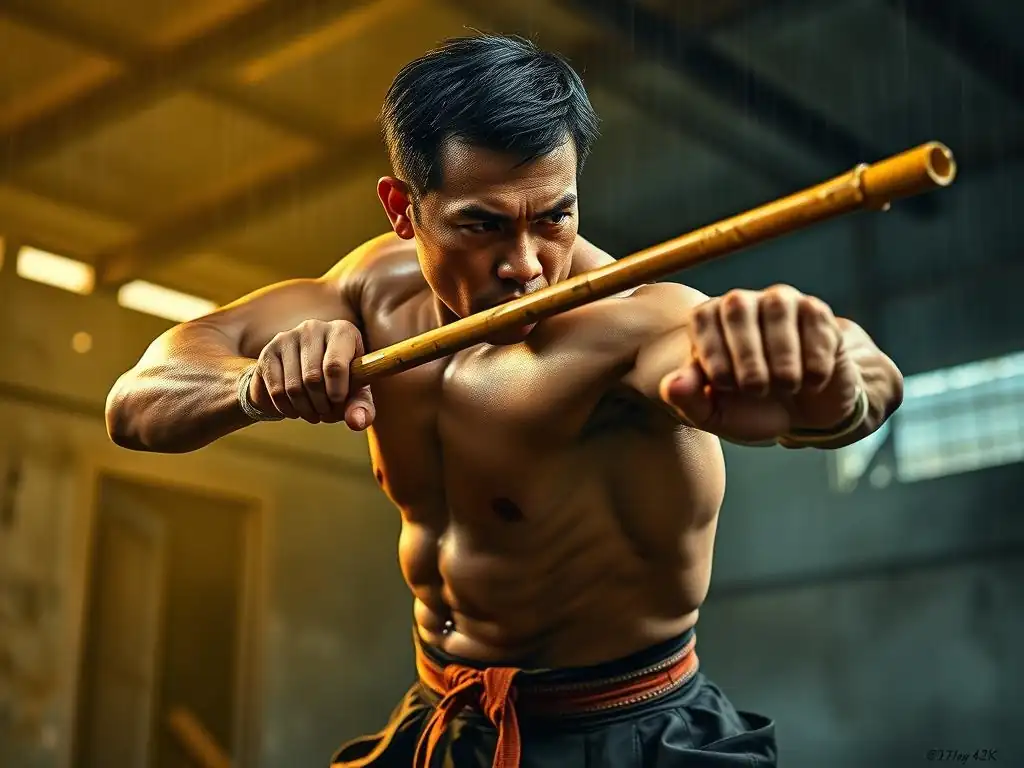
Welcome to Martial Arts Mastery, where we delve deep into the world's fighting arts. Are you ready to unlock the secrets of Dumog – Filipino stick grappling? This article unveils a comprehensive Filipino stick grappling techniques tutorial, exploring how to seamlessly integrate the baston into close-quarters grappling. Prepare to expand your martial arts arsenal and discover the devastating potential hidden within this ancient art. Ready to grip, lock, and control?
- Secrets of Filipino Stick Grappling (Dumog with Baston) - Martial Arts Mastery
- Introduction to Filipino Stick Grappling: Dumog Meets Baston
- Essential Filipino Stick Grappling Techniques Tutorial
- Advanced Concepts in Filipino Baston Dumog
- Training Methodology for Filipino Stick Grappling
- The History and Cultural Significance of Dumog with Baston
- Conclusion: Mastering the Art of Filipino Stick Grappling
-
Frequently Asked Questions
- What is Dumog and how does it relate to Filipino stick fighting?
- Why would I want to learn Dumog techniques with a stick?
- Are Dumog techniques with a stick effective in self-defense?
- Do I need a background in other martial arts to learn Dumog with a stick?
- Where can I find a reliable tutorial on Filipino stick grappling ( Dumog with baston)?
- Final Reflection: Embracing the Flow of Filipino Stick Grappling
- Ignite Your Inner Warrior: Embrace the Art of Dumog!
Secrets of Filipino Stick Grappling (Dumog with Baston) - Martial Arts Mastery
Introduction to Filipino Stick Grappling: Dumog Meets Baston
Understanding Dumog Principles in Filipino Martial Arts (FMA)
Dumog, the Filipino art of grappling and wrestling, forms a foundational component of many FMA systems. Unlike some Western grappling styles focused solely on ground fighting, traditional Dumog often emphasizes stand-up control, throws, joint manipulations, and takedowns, with a strong focus on leveraging the opponent's structure and balance. Principles such as pagpupusag (rooting and stability), pagdukot (grabbing or seizing), and pagbalibag (throwing or slamming) are central to its execution, often applied in close-quarters combat scenarios where weapons might have been lost or are impractical to use at that moment.
Historically, Dumog was not practiced in isolation but was intrinsically linked to weapon use. Warriors needed the ability to control an opponent at close range, disarm them, or create openings for strikes, even if they were armed. This close-range control was crucial in chaotic battlefields or self-defense situations, enabling survival and the effective application of other FMA skills. The focus on breaking posture, controlling limbs, and using leverage against the body's natural points of weakness are hallmarks that make Dumog adaptable to various situations, including those involving weapons.
The Baston: A Key Weapon in Filipino Martial Arts
The baston, typically a rattan stick ranging from 24 to 36 inches in length, is arguably the most iconic weapon in Filipino Martial Arts. Its versatility is unparalleled, serving as both a striking tool capable of generating tremendous force through velocity and a defensive instrument for blocking and parrying. Beyond striking, the baston is also used for checking limbs, applying pressure points, and controlling an opponent's movement at medium range. Its light weight and durability make it ideal for rapid, complex manipulations and transitions between offense and defense.
Furthermore, the baston's role extends into the realm of close-quarters combat and grappling. Its rigid structure allows it to function as an extension of the user's limb or a lever against the opponent's body. This utility is evident in techniques involving trapping, disarming, and applying joint locks or chokes using the stick itself or by using the stick to enhance empty-hand grappling principles. The baston is not merely a stick for hitting; it is a dynamic tool integrated into the complete spectrum of FMA combat ranges, making it indispensable for understanding Filipino stick grappling techniques.
Combining Dumog and Baston: An Overview of Stick Grappling
The fusion of Dumog principles with the use of the baston creates a unique and highly effective system known as Filipino stick grappling, or Dumog with Baston. This discipline focuses on controlling an opponent who is also potentially armed, using the stick not just for striking but as a tool for leverage, control, and disruption in close proximity. The objective is often to achieve a dominant position, apply a joint lock, secure a takedown, or create an opportunity for a decisive strike, all while managing the threat posed by the opponent's weapon or body.
Filipino stick grappling techniques tutorial often highlight how the baston can augment traditional Dumog. For instance, the stick can be used to hook a leg during a takedown, apply pressure to a joint during a control sequence, or trap an arm to prevent striking. This integration adds a layer of complexity and effectiveness, allowing practitioners to transition seamlessly between striking, trapping, and grappling ranges, making it a comprehensive approach to close-quarters combat with a weapon.
Essential Filipino Stick Grappling Techniques Tutorial
Grip Fighting and Control in Baston Dumog
Mastering the Filipino Grip: Key to Stick Grappling Success
Effective grip fighting is paramount in Filipino stick grappling techniques. The primary grip on the baston is typically a strong, yet flexible, hammer grip or a slightly modified grip allowing for quick transitions between striking and control. Maintaining a secure grip on your own stick is fundamental, preventing disarmament and ensuring you can apply leverage effectively. Mastery involves developing hand and forearm strength, along with the tactile sensitivity to know where your stick is relative to your opponent's body and weapon, even in tangled exchanges.
Beyond your own grip, controlling the opponent's grip on their weapon or their limbs is crucial. Techniques involve using your baston to check, trap, or pry at their hands and wrists. For example, using the shaft of your stick to pin their weapon-hand wrist against their own body or yours can severely limit their ability to strike or maintain control. Developing this sensitivity and control over grips is a core part of any Filipino stick grappling techniques tutorial.
Disrupting Your Opponent's Grip: Fundamental Techniques
Disrupting an opponent's grip is a primary objective in Baston Dumog. This often involves using your stick to apply pressure to sensitive points on their hand or wrist, or leveraging against their grip structure. A common method is using the tip or shaft of your baston to strike or check the back of their hand or fingers, aiming to cause pain or loosen their hold. Another technique involves inserting your stick between their hand and their weapon and twisting, leveraging their own stick against their grip.
More advanced disruption techniques involve using your stick in combination with your body to isolate and attack the opponent's grip. For instance, trapping their weapon arm with your body while simultaneously using your baston to apply pressure to their elbow or wrist joint can break their posture and force them to release their grip or suffer a joint lock. These methods require precise timing and control, developed through dedicated practice of Filipino stick grappling techniques.
Takedowns and Throws Using the Baston
Leverage and Momentum: Principles of Baston Takedowns
Takedowns in Filipino stick grappling heavily rely on principles of leverage and momentum, often using the baston as an aid. The stick can extend your reach and provide additional points of contact or leverage against the opponent's body. Instead of purely wrestling-based strength, the focus is on disrupting balance, controlling the opponent's base, and guiding their momentum to bring them down. For example, using the stick to sweep a leg or hook behind a knee while simultaneously pulling or pushing their upper body creates a powerful off-balancing effect.
Applying leverage with the baston can also involve using it to control the opponent's head or neck, or to pin a limb, preventing them from basing out or recovering their balance. The rigid nature of the stick allows for concentrated force application on specific points, amplifying the effect of your movements. Mastering these principles is key to executing effective takedowns in Filipino stick grappling techniques tutorial.
Sumbrada Takedown: Description and Execution
The Sumbrada takedown, often adapted from striking and defense drills, is a practical application in Filipino stick grappling. While traditionally a defensive counter-for-counter drill, in a grappling context, it can transition into a takedown. Imagine blocking or parrying an opponent's strike with your baston; as their arm is extended and slightly off-balance, you might use your stick to hook behind their neck or armpit while stepping in and controlling their base with your body or a leg check.
The execution involves using your baston to secure a point of control on the opponent's upper body (e.g., hooking the neck or arm). Simultaneously, your free hand might control their other arm or collar, and your lower body executes a trip or sweep. The stick acts as a lever, pulling their head or upper body forward or sideways, destroying their posture and balance, while your body provides the force for the actual trip or throw. This integration of stick control and body mechanics is characteristic of Filipino stick grappling techniques tutorial.
Hubud Takedown: Description and Execution
The Hubud-Lubud drill, a cornerstone of FMA flow training, can also transition into takedowns in Filipino stick grappling. The dynamic, continuous motion of Hubud involves checking, trapping, and passing the opponent's sticks and limbs. A takedown opportunity arises when you gain superior control over one or both of the opponent's arms or their stick(s) in the close-range flow. For example, if you trap both of their weapon arms close to their body using your stick and free hand, you have significantly compromised their ability to defend a takedown.
Executing a Hubud-based takedown might involve using your stick to secure one of their arms against your body or their own, while your free hand controls their head or other arm. With their upper body controlled and posture broken through the close-range entanglement characteristic of Hubud, a simple leg sweep or ankle pick becomes highly effective. The key is using the control gained during the Hubud exchange to set up the off-balancing mechanism. These fluid transitions are vital learning points in a Filipino stick grappling techniques tutorial.
Joint Locks and Submissions with the Stick
Utilizing the Baston for Arm Locks
The baston is an excellent tool for applying painful and effective arm locks in Filipino stick grappling. Its rigid structure can be used to target elbow, wrist, or shoulder joints. A common technique involves trapping the opponent's arm against your body or their own, and then using your stick as a lever across a joint, such as the elbow. By applying pressure with the stick and your body weight, you can hyper-extend or bend the joint in an unnatural direction.
Another application involves using the stick to isolate the wrist. For example, securing the opponent's hand and placing your stick across their wrist or forearm allows you to apply downward or twisting pressure, targeting the delicate wrist joint. The stick concentrates the force, making these locks very potent. Learning these specific applications is a crucial part of any comprehensive Filipino stick grappling techniques tutorial.
Applying Leg Locks and Ankle Locks with the Stick
While less common than arm locks, the baston can also be used to assist in applying leg and ankle locks, particularly in stand-up or transitional grappling scenarios. If you control an opponent's leg, perhaps after a failed takedown attempt or during a scramble, the stick can be used to apply pressure to knee or ankle joints. For instance, hooking the stick behind the opponent's knee and applying pressure while controlling their foot can create a painful knee bar-like effect.
Similarly, if you have access to the opponent's foot or ankle, the stick can be used as a lever across the ankle joint. By securing the foot and applying pressure with the stick across the top of the foot or the Achilles tendon area, you can hyperextend or twist the ankle. These techniques are often opportunistic and require precise timing and control, adding another dimension to Filipino stick grappling techniques.
Neck Control Techniques with the Baston
Controlling the opponent's neck is a powerful element in both empty-hand Dumog and Filipino stick grappling. The baston provides additional leverage and reach for these techniques. Using the stick to hook around the opponent's neck allows for significant control over their posture and movement. A simple application is using the stick to pull the opponent's head down, breaking their balance and setting them up for strikes or takedowns.
More direct neck control can involve using the stick to apply pressure to the side of the neck (carotid artery area) or the windpipe. While highly dangerous and typically reserved for self-defense or advanced training, techniques exist where the stick is used to apply a choke-like pressure, either by itself or in conjunction with arm control. Understanding the principles of using the stick for leverage and control around the neck is vital, even if full application is limited in training, making it a key component of a detailed Filipino stick grappling techniques tutorial.
Sweeps and Reversals in Filipino Stick Grappling
Creating Opportunities for Sweeps
Sweeps in Filipino stick grappling are designed to off-balance and take the opponent off their feet, often from a standing or kneeling position. Creating opportunities for sweeps involves disrupting the opponent's base and structure. This can be achieved by using your baston to control their upper body, pulling or pushing them off balance, while simultaneously attacking their lower body. For instance, using the stick to secure an arm or the neck can fix their upper body, making them vulnerable to a leg sweep.
Another approach is to use the stick defensively to check or block an opponent's leg as they step, immediately transitioning that check into a sweep. The stick acts as an extension of your leg or arm, allowing you to reach further and apply leverage directly to the opponent's base. Recognizing these moments of imbalance and capitalizing on them is crucial for effective sweeping within Filipino stick grappling techniques.
Executing Effective Sweeps with the Baston
Executing a sweep with the baston requires coordination between your stick work, body movement, and leg action. A common method involves using the shaft of your stick to hook behind the opponent's ankle or calf while simultaneously pulling or pushing their upper body with your free hand or even the other end of the stick. The stick provides the leverage to disrupt the base, while your body mechanics complete the sweep.
Consider a scenario where you've used your stick to block an incoming leg kick or step; you can immediately transition by sliding your stick down to hook the opponent's ankle or foot, then combine a sharp pull with the stick and a push on their upper body to execute the sweep. The power comes from the coordinated action, not just brute force. Learning these specific execution mechanics is a core part of any Filipino stick grappling techniques tutorial focusing on sweeps.
Reversing Opponent's Attacks: Defensive Strategies
Reversals in Filipino stick grappling involve turning an opponent's attack or attempt to control you into an opportunity to gain a dominant position or apply a counter-technique. This often starts with effective defense – blocking, checking, or parrying their strikes or grappling attempts with your baston and body. As the opponent commits their weight or structure to their attack, they create vulnerabilities.
For example, if an opponent attempts a takedown and you defend by sprawling or maintaining base, you can use your baston to control their arm or neck as they are low, leveraging their committed position against them. You might use the stick to apply a neck crank as they drive in or hook their arm to set up your own counter-takedown or sweep. The stick provides the means to secure control points and apply leverage precisely when the opponent is most vulnerable during their attack, highlighting the dynamic nature of Filipino stick grappling techniques.
Advanced Concepts in Filipino Baston Dumog
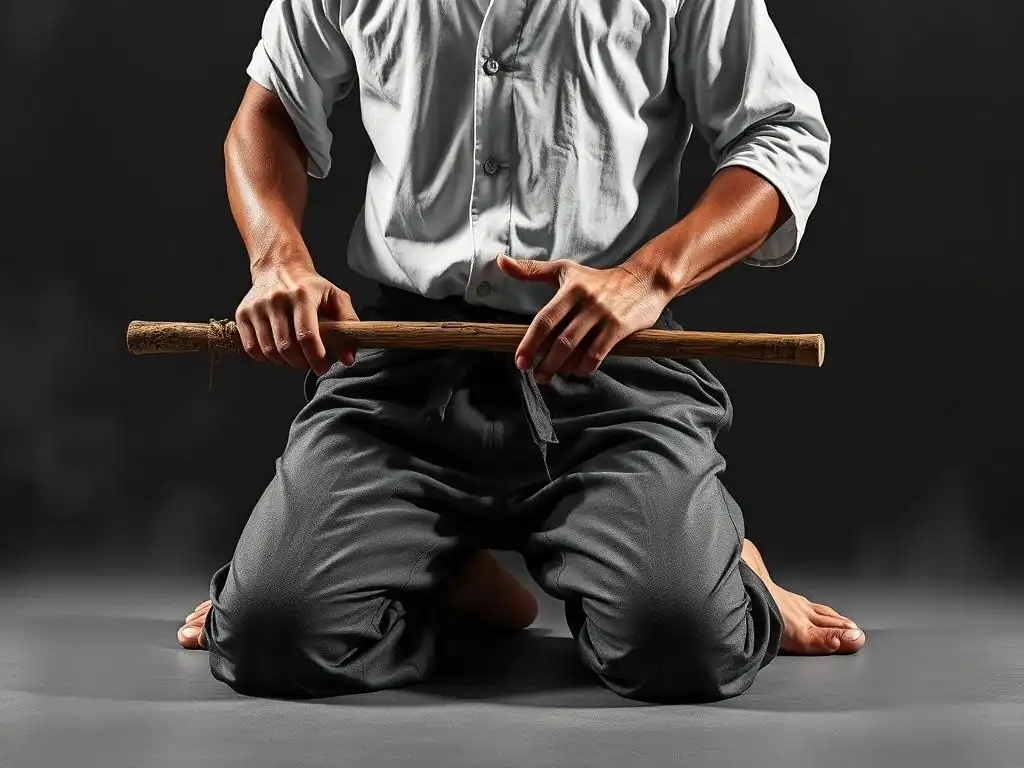
Flow Drills and Combinations for Stick Grappling
Developing Reflexes and Coordination
Flow drills are essential for developing the reflexes, coordination, and timing necessary for effective Filipino stick grappling. These drills involve continuous, pre-arranged or semi-freestyle sequences of attacks, defenses, transitions, and counter-movements, often involving both sticks and empty hands. Practicing these drills helps practitioners internalize the relationships between different techniques and ranges, allowing them to react instinctively in dynamic situations.
Regular practice of flow drills, such as Hubud-Lubud or Sumbrada applied with grappling transitions, builds muscle memory and improves proprioception – the awareness of your body and stick in space relative to your opponent. This allows for smoother transitions between striking, trapping, and grappling applications of the baston, which is critical in the chaotic environment of close-quarters combat. Mastery of these drills is a significant step in advancing one's Filipino stick grappling techniques.
Hubud Lubud Drill: Description and Steps
The Hubud-Lubud drill is a foundational FMA exercise that can be adapted for Filipino stick grappling. It typically involves partners exchanging pre-defined sequences of strikes, blocks, and checks, focusing on sensitivity and flow. To adapt it for grappling, transitions are added. For instance, after a block-and-check sequence, instead of just striking, one partner might transition to trapping the opponent's stick arm with their own stick and hand, while simultaneously using their free hand to control the opponent's head or collar.
Steps for a grappling-focused Hubud might involve:
- Partner A attacks with a forehand strike (Angle 1).
- Partner B blocks with their stick and checks A's weapon arm with their free hand.
- Instead of countering with a strike, B uses their stick to secure A's trapped arm against B's body.
- Partner B's free hand transitions to control A's neck or shoulder.
- From this controlled position, B practices applying pressure, setting up a takedown, or transitioning to a joint lock using the stick or body leverage.
This drill emphasizes maintaining control and sensing opportunities within the flow, enhancing understanding of Filipino stick grappling techniques.
Sinawali Grappling Drill: Description and Steps
Sinawali, known for its double-stick weaving patterns, can also be adapted to develop coordination applicable to Filipino stick grappling. While primarily a striking drill, the footwork, body mechanics, and hand coordination translate well. A grappling adaptation might involve partners using sticks to control each other's limbs in weaving patterns, focusing on maintaining contact and leverage.
For example, a Heaven and Earth Sinawali pattern (high-low strikes) could be modified:
- Partner A attacks high with Stick 1.
- Partner B blocks/checks with their stick, immediately flowing into using their Stick 2 to check or control A's lower body (e.g., knee or hip).
- As A attempts to recover or counter, B uses the continuous motion to transition between upper and lower body control using both sticks, preventing A from establishing a strong base or posture.
This drill emphasizes using both sticks simultaneously for control and disruption, improving the ambidexterity and coordination vital for complex Filipino stick grappling techniques.
Integrating Empty-Hand Techniques with the Baston
Bridging the Gap Between Stick and Empty-Hand Combat
True mastery in FMA, including Filipino stick grappling, involves seamless transitions between weapon and empty-hand techniques. The baston is not always the primary tool; sometimes, empty hands are needed to secure a grip, apply a palm strike, or clinch, creating an opening or enhancing the effectiveness of a stick technique. Conversely, the stick can be used to set up empty-hand strikes or grappling entries. This fluidity is essential for adapting to the dynamic distances and situations encountered in combat.
Training must actively bridge this gap. Drills should incorporate transitions where the stick is used for initial control or distraction, immediately followed by an empty-hand technique (like a clinch entry or a strike), which then might lead back to using the stick for a lock or takedown. This integrated approach ensures the practitioner is not limited to using only one tool at a time, maximizing their combat effectiveness and providing a holistic understanding of Filipino stick grappling techniques.
Using Empty-Hand Strikes and Grapples to Set Up Stick Techniques
Empty-hand techniques can serve as powerful setups for Filipino stick grappling applications. A quick palm strike or elbow to the head or body can momentarily stun or distract an opponent, creating a window to secure a grip with the baston for a lock or control position. Similarly, using empty-hand grappling entries, such as a clinch or a body lock, can restrict the opponent's movement and bring them into the ideal range for applying stick-assisted joint locks or takedowns.
For instance, entering into a close-range clinch using empty hands immediately neutralizes the opponent's ability to generate power with long-range stick strikes. From the clinch, with the opponent's posture compromised, you can then bring your baston to bear, using it to apply leverage against a trapped arm or the neck. Practicing these transitions ensures that empty-hand skills complement and enhance the application of Filipino stick grappling techniques.
Sparring and Application of Filipino Stick Grappling
Safe Sparring Practices with the Baston
Safe sparring is paramount when practicing Filipino stick grappling techniques, given the potential for injury with a weapon. Protective gear is essential, including padded sticks, headgear with face protection, gloves, and body armor. Sparring should start slowly and cooperatively, focusing on executing techniques with control rather than force. Resistance should be gradually increased as proficiency and trust between partners develop.
Emphasis during sparring should be on the principles of control, leverage, and positioning, rather than live striking power. Drills can focus specifically on the grappling range, starting from a controlled clinch or entanglement scenario to practice takedowns, joint locks, and sweeps safely. This controlled environment allows practitioners to test their Filipino stick grappling techniques tutorial knowledge under pressure without undue risk.
Applying Techniques in Realistic Scenarios
Applying Filipino stick grappling techniques in realistic scenarios requires understanding range management and threat assessment. While training drills build mechanics, scenario-based training helps practitioners apply techniques appropriately in unpredictable situations. This could involve starting from various distances, incorporating simulated environmental obstacles, or dealing with multiple opponents (in theory or light simulation).
Scenario training might involve:
- Starting at striking range and transitioning to close-quarters grappling when appropriate.
- Dealing with an opponent who is resisting fiercely or attempting their own grappling techniques.
- Practicing disarms within the grappling exchange.
- Transitioning from a standing grapple to ground survival (though FMA grappling often emphasizes standing).
These realistic applications refine the practitioner's timing, decision-making, and ability to execute Filipino stick grappling techniques under stress.
Training Methodology for Filipino Stick Grappling
Basic Drills for Developing Stick Grappling Skills
Grip Strengthening Exercises for Dumog
Strong hands and forearms are fundamental for maintaining control of the baston and applying effective grips in Filipino stick grappling. Specific exercises can target this. Dead hangs from a bar, farmer's walks holding weight plates or dumbbells, and using grip trainers are standard methods. For stick-specific strength, drills involving holding the baston at the very end and performing wrist rotations or levering motions can build the necessary stabilizing muscles.
Another effective exercise involves gripping a weighted object (like a bucket filled with sand or water) by the rim and performing wrist curls or extensions. Repetitions should focus on building both static hold strength (for maintaining grips) and dynamic strength (for applying pressure or disrupting grips). Consistent practice of these exercises significantly enhances a practitioner's ability to execute Filipino stick grappling techniques effectively.
Footwork Drills for Mobility and Balance
Effective footwork is crucial in Filipino stick grappling, allowing practitioners to maintain balance, generate power, close or manage distance, and position themselves advantageously. Drills should focus on lateral movement, forward and backward steps, and pivoting. The "triangle" or "diamond" footwork patterns common in FMA are vital, enabling movement to angles that disrupt the opponent's base while maintaining your own stability.
Specific drills might involve moving around cones or markers while holding the baston, practicing smooth weight transitions and foot placement. Partner drills can involve one person providing light resistance or pressure, forcing the other to use footwork to maintain position or escape. Good footwork ensures that even when entangled in grappling, you retain the ability to move, shift weight for leverage, and avoid being easily swept or taken down, supporting all Filipino stick grappling techniques.
Partner Drills for Practicing Techniques
Cooperative Drills for Learning Technique
Cooperative partner drills are the initial step in learning Filipino stick grappling techniques. In these drills, partners work together, providing minimal resistance, allowing each other to practice the mechanics and flow of specific techniques like stick-assisted takedowns, joint locks, or sweeps. The focus is on understanding the sequence of movements, the points of leverage, and the desired outcome without the pressure of active opposition.
Examples include:
- Partner A passively holds their stick while Partner B practices securing a specific stick-assisted arm lock.
- Partner A stands loosely, allowing Partner B to practice the footwork and stick placement for a sweep.
- Partners slowly work through the steps of transitioning from a stick block to a stick-assisted clinch entry.
These drills build muscle memory and confidence in executing the movements before adding resistance, forming the foundation for mastering Filipino stick grappling techniques.
Resistance Drills for Improving Pressure and Control
Once the mechanics are understood, resistance drills introduce increasing levels of opposition. Partners actively, but safely, resist the technique being applied, forcing the practitioner to work harder, find better leverage, and adapt to a non-compliant opponent. This is where timing and pressure application are refined.
Examples include:
- Partner A actively tries to pull their arm free while Partner B attempts to apply a stick-assisted joint lock, forcing B to adjust grip and leverage.
- Partner A maintains a strong base while Partner B attempts a stick-assisted takedown, requiring B to use proper body mechanics and timing to break A's balance.
- Partners engage in light, flow-based grappling exchanges with sticks, where the goal is to gain a dominant control position, with the opponent actively but safely preventing it.
These drills are crucial for developing the ability to apply Filipino stick grappling techniques against a resisting opponent.
Solo Training for Refining Skills
Shadow Grappling with the Baston
Solo training, often called shadow work, is vital for refining the physical mechanics and flow of Filipino stick grappling techniques. Shadow grappling with the baston involves practicing movements, transitions, and techniques as if an opponent were present. This allows practitioners to focus solely on their own body mechanics, footwork, stick manipulation, and the coordination between all elements.
Practitioners can visualize applying a takedown, transitioning into a joint lock, or defending against an imagined sweep, going through the motions smoothly and deliberately. This helps identify awkward movements, improve balance, and build stamina. Regular shadow grappling enhances muscle memory and allows for mental rehearsal of complex sequences, improving overall proficiency in Filipino stick grappling techniques.
Visualization and Mental Rehearsal
Beyond physical shadow work, mental rehearsal and visualization are powerful tools in training Filipino stick grappling. This involves mentally running through techniques, transitions, and sparring scenarios. Visualizing successful execution, anticipating opponent reactions, and mentally problem-solving common challenges can significantly improve performance.
Practitioners can sit quietly and visualize applying a specific stick-assisted takedown step-by-step, feeling the leverage and timing in their mind. They can also visualize themselves successfully defending against common attacks or escaping disadvantageous positions using their stick grappling skills. This mental practice reinforces learning, improves reaction time, and builds confidence, complementing the physical practice of Filipino stick grappling techniques tutorial content.
The History and Cultural Significance of Dumog with Baston
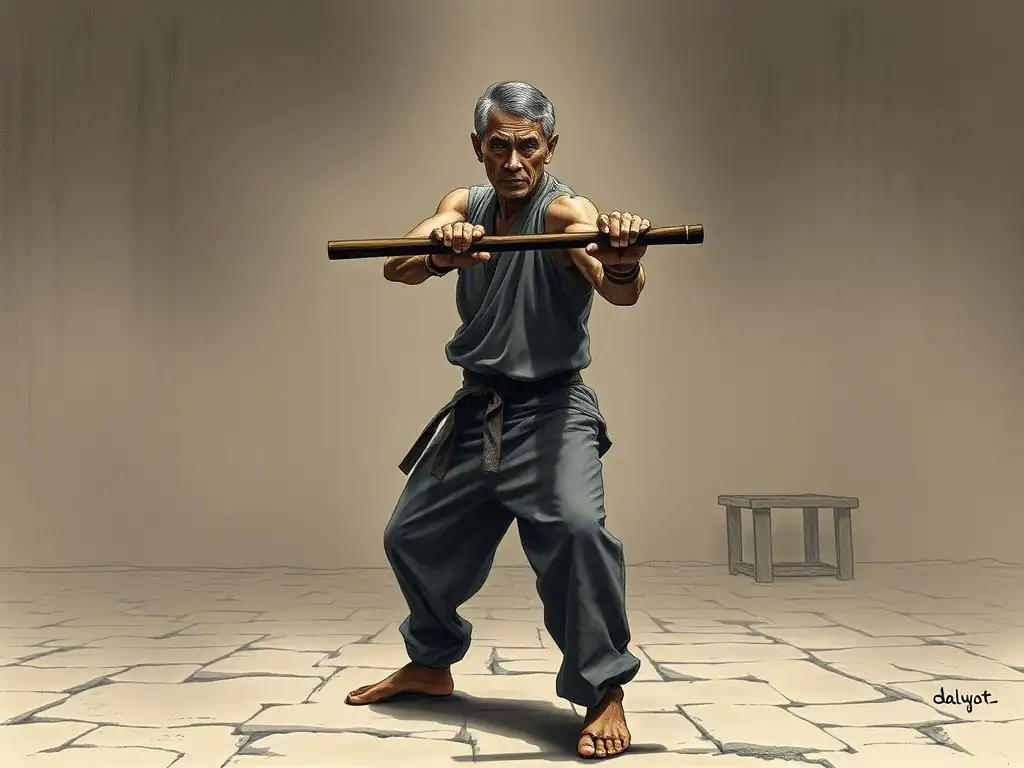
Origins of Filipino Grappling Arts
The grappling arts of the Philippines, collectively known as Dumog, have deep roots in the islands' history, predating colonial times. Developed out of necessity for close-quarters combat in tribal conflicts and self-defense against both human and animal threats, Dumog principles were integral to the fighting systems of various ethnic groups across the archipelago. These systems often incorporated throws, joint locks, and control tactics, reflecting the practical needs of warriors who might find themselves in hand-to-hand combat, sometimes after weapons were lost or broken.
Unlike organized sports wrestling, traditional Dumog was often brutal and focused on quickly incapacitating or killing an opponent. Techniques frequently targeted vital points, aimed to break joints, or resulted in slams designed to end the fight rapidly. The emphasis was on survival and effectiveness in chaotic, life-or-death situations, laying the groundwork for the close-range principles later integrated with weapon use, such as the Filipino stick grappling techniques that evolved.
The Role of the Baston in Filipino Culture and Warfare
The baston has been a ubiquitous tool and weapon throughout Filipino history. Made from readily available materials like rattan, kamagong, or bahi wood, it served as a walking stick, a farming implement, and a primary self-defense tool for common people. In warfare, particularly before the widespread availability of firearms, the stick was a core weapon, often used in conjunction with blades. Its simplicity belied its effectiveness, especially in the hands of a skilled practitioner.
The baston was central to the development of many FMA systems, serving as a training tool for blade work (as stick movements often mirror sword or knife techniques) and as a formidable weapon in its own right. Its role in close-quarters combat, including trapping, checking, and its eventual integration with grappling principles to form Filipino stick grappling, reflects its versatility and importance in the cultural and martial landscape of the Philippines. It symbolizes resilience and practicality in Filipino martial heritage.
Preserving and Promoting Filipino Martial Arts Heritage
Preserving and promoting arts like Dumog with Baston is crucial for maintaining the rich cultural heritage of the Philippines. Many traditional FMA systems faced suppression during colonial periods or declined as modern warfare evolved. Dedicated practitioners and organizations today work tirelessly to document, teach, and spread these arts globally. This involves researching historical texts (where they exist), learning from elders, and structuring the knowledge for modern instruction.
Efforts include establishing schools, hosting seminars, and creating resources like this Filipino stick grappling techniques tutorial. The goal is not just to teach fighting skills but also to pass on the history, philosophy, and cultural context embedded within these martial traditions. By attracting new students and making the knowledge accessible, practitioners ensure that the unique skills and history of Filipino stick grappling and other FMA disciplines are not lost to time.
Conclusion: Mastering the Art of Filipino Stick Grappling
The Benefits of Training in Dumog with Baston
Training in Filipino stick grappling offers a unique blend of physical and mental benefits. Physically, it develops coordination, balance, strength, and practical self-defense skills applicable in close quarters, especially when dealing with improvised weapons or potential threats. The dynamic nature of combining stick work with grappling improves reflexes and adaptability across different combat ranges.
Mentally, the study of Filipino stick grappling techniques enhances problem-solving abilities, strategic thinking, and the capacity to remain calm under pressure. Understanding how to use leverage and positioning against a resisting opponent, often armed, requires focus and tactical awareness. Furthermore, engaging with this art connects practitioners to a rich historical and cultural tradition, fostering discipline and respect.
Continuing Your Journey in Filipino Martial Arts
Mastering Filipino stick grappling is a lifelong journey within the broader scope of Filipino Martial Arts. Proficiency in Dumog with Baston naturally complements skills in other FMA areas, such as single stick (Solo Baston), double stick (Sinawali), knife fighting (Daga), and empty-hand combat (Sikaran, Panantukan). Continued training involves refining basic techniques, exploring more advanced applications, and integrating skills across different weapons and ranges.
Seeking instruction from experienced teachers, attending seminars, and consistent personal practice are key to progression. The FMA community worldwide offers opportunities for learning and sharing knowledge. By dedicating time and effort to consistent training, practitioners can deepen their understanding and skill in Filipino stick grappling techniques and the wider martial culture they represent.
Resources for Further Study of Filipino Stick Grappling Techniques
For those seeking to delve deeper into Filipino stick grappling techniques, various resources are available. While this tutorial provides an overview, finding qualified instructors is paramount. Many FMA schools and organizations offer specific training in Dumog and Baston applications. Look for instructors with verifiable lineage or extensive experience within established FMA systems known for their grappling components.
Additionally, books and instructional videos from reputable FMA masters can supplement in-person training, providing visual demonstrations and detailed explanations of techniques and principles. Historical texts or academic research on Filipino martial traditions can offer valuable context on the origins and evolution of Dumog and stick fighting. Engaging with the FMA community online or through events can also open doors to further learning opportunities and access to specialized knowledge on Filipino stick grappling techniques tutorial topics.
Frequently Asked Questions
What is Dumog and how does it relate to Filipino stick fighting?
Dumog is the Filipino term for grappling or wrestling. In the context of baston (stick) fighting, it refers to using the stick to control, unbalance, and takedown an opponent.
Why would I want to learn Dumog techniques with a stick?
Learning Dumog with a baston enhances your close-quarters combat skills, providing options beyond striking, such as disarming, controlling, and neutralizing an opponent's weapon.
Are Dumog techniques with a stick effective in self-defense?
Yes, Dumog techniques can be highly effective. They allow you to control the distance and manipulate an attacker's weapon, creating openings for disarms or further attacks.
Do I need a background in other martial arts to learn Dumog with a stick?
While prior martial arts experience is helpful, it's not mandatory. A good Dumog tutorial will teach you the fundamental principles and techniques from the ground up.
Where can I find a reliable tutorial on Filipino stick grappling ( Dumog with baston)?
Websites like MartialArtsMastery.org are dedicated to providing comprehensive resources on various martial arts, including tutorials on Filipino stick grappling techniques.
Final Reflection: Embracing the Flow of Filipino Stick Grappling
The exploration of Filipino stick grappling, or Dumog with Baston, reveals more than just a set of techniques; it unveils a profound connection to Filipino martial arts heritage. This fusion of striking and grappling, once a closely guarded secret, now offers a unique pathway to self-defense and cultural understanding, resonating deeply in a world seeking authentic and effective martial arts practices. The resurgence of interest in these techniques underscores their enduring relevance in modern combat and self-preservation scenarios.
The journey through Dumog with Baston has not only deepened my appreciation for its intricate mechanics but also illuminated its significant influence on the broader martial arts landscape. Witnessing the seamless integration of stick work and grappling principles highlights the ingenuity and adaptability inherent in Filipino martial arts. > As Guro Dan Inosanto wisely stated, "Empty your mind, be formless, shapeless - like water. Now you put water into a cup, it becomes the cup; You put it into a bottle it becomes the bottle; You put it in a teapot it becomes the teapot.
Now water can flow or it can crash. Be water, my friend." This philosophy perfectly encapsulates the fluid and adaptable nature of Dumog with Baston.
Now, as you've delved into the secrets of Filipino stick grappling, I invite you to consider how these principles of adaptability, leverage, and flow can be applied not only in martial arts but also in your daily life. Embrace the challenge of mastering these techniques, not just as a means of self-defense, but as a way to connect with a rich cultural heritage and cultivate a deeper understanding of yourself. Let the spirit of Dumog with Baston empower you to navigate life's challenges with grace, resilience, and unwavering determination.
Ignite Your Inner Warrior: Embrace the Art of Dumog!
Thank you for delving into the fascinating world of Filipino stick grappling! We hope you've gained a deeper appreciation for the effectiveness and artistry of Dumog with Baston. Now, it's time to translate that knowledge into action.
Here are a few steps you can take to further your journey:
- Find a qualified Dumog instructor in your area and begin your practical training – this is the most crucial step for real understanding.
- Explore related Filipino Martial Arts (FMA) like Eskrima or Kali to broaden your combat knowledge and discover the synergy between stick fighting and grappling.
- Share this article with your fellow martial arts enthusiasts – sparking conversations and expanding the community helps preserve and promote these incredible arts.
What's one small step you'll commit to taking today to begin your Dumog journey?