
The Symbolism of the Triangle in Filipino Weaponry Footwork and Strikes

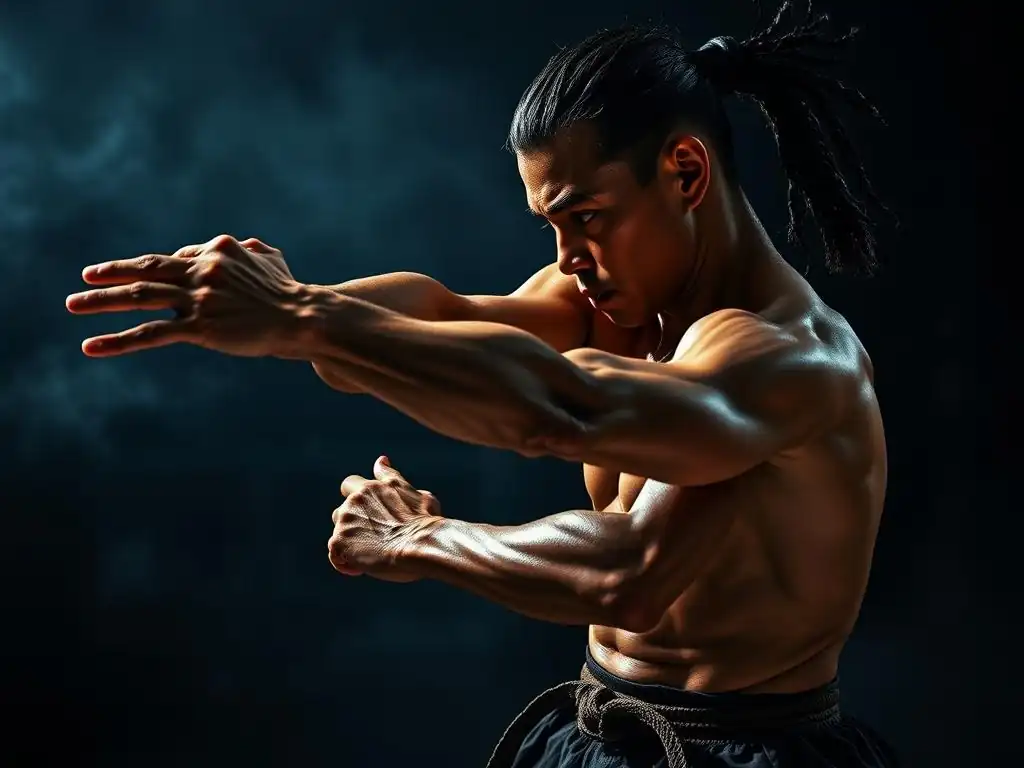
Welcome to Martial Arts Mastery, where we delve into the rich tapestry of fighting arts from around the world. Ever wondered about the hidden meanings woven into the very fabric of martial techniques? Today, we unlock a fascinating secret: the profound symbolism of the triangle in Filipino triangle symbolism martial arts. Prepare to discover how this fundamental shape influences weaponry, footwork, and striking, offering a deeper understanding of this dynamic discipline. What secrets will this geometric foundation reveal? Let's explore!
- The Significance of the Triangle in Filipino Weaponry Footwork and Strikes
- Introduction: Unveiling the Filipino Triangle in Filipino Martial Arts Weaponry
- Understanding the Triangular Stance in Filipino Weaponry
- Triangular Footwork: Evasion and Offensive Positioning
- Triangular Strikes: Angles for Maximum Impact
- Psychological and Strategic Implications
- The Triangle in Disarming Techniques
- Integrating Triangle Principles into Modern Filipino Martial Arts Training
- Conclusion: The Enduring Legacy in Martial Arts
-
Frequently Asked Questions
- What is the significance of the triangle shape in Filipino martial arts?
- How does triangle footwork enhance a martial artist's ability to move?
- How does the triangle influence striking techniques in Filipino martial arts?
- Can you provide an example of how the triangle is used defensively?
- Why is understanding triangle symbolism important for mastering Filipino martial arts?
- Final Reflection: Embracing the Triune Path
- Ignite Your Filipino Martial Arts Journey!
The Significance of the Triangle in Filipino Weaponry Footwork and Strikes
Introduction: Unveiling the Filipino Triangle in Filipino Martial Arts Weaponry
Exploring the Roots of Triangle Principles in Filipino Culture and Martial Arts
The triangle holds deep significance within Filipino culture, often appearing in traditional art, architecture, and even social structures. This geometric shape, with its inherent stability and dynamic potential, naturally translated into the practical applications found within the martial arts of the Philippines, collectively known as Filipino Martial Arts (FMA) or Kali, Arnis, and Eskrima. The triangle is not merely an abstract concept; it is a fundamental building block for movement, defense, and offense, reflecting a pragmatic approach to combat developed over centuries in diverse environments.
The principles of triangular movement and positioning are deeply ingrained in the historical context of Filipino self-defense. Facing multiple opponents, navigating challenging terrain like rice paddies or jungle, and adapting to varying weapon ranges demanded a system that prioritized efficiency, mobility, and defense. The triangular framework provided a solution, allowing practitioners to constantly shift their angle relative to an opponent, create openings, and maintain defensive integrity simultaneously. This practical application of the Filipino triangle symbolism martial arts is evident in countless historical accounts and modern training methodologies.
Importance of the Triangle: Its Significance in Filipino Weaponry Training
For practitioners of Filipino martial arts weaponry, understanding the triangle is paramount; it is arguably the single most critical concept taught from beginner to advanced levels. Mastery of triangular movement dictates a practitioner's ability to generate power, evade attacks, control distance, and create tactical advantages. Without a solid grasp of triangular principles, techniques often become linear and predictable, making the practitioner vulnerable. The triangle provides a dynamic framework for understanding spacing and angles, essential for survival in weapon-based combat.
Integrating the Filipino triangle symbolism martial arts into training involves dedicated drills focusing on footwork patterns, body mechanics, and strike angles. Beginner students might spend a significant portion of their initial training mastering basic triangular steps like the forward, backward, and lateral movements relative to a partner or target. Intermediate practitioners refine these movements, applying them in sparring scenarios and disarming drills. Advanced students explore complex variations, using the triangle to manipulate an opponent's balance or set up intricate combinations, demonstrating that the triangle is a concept that evolves with the practitioner's skill level.
Understanding the Triangular Stance in Filipino Weaponry
The Foundation: Establishing a Solid Triangular Stance
The triangular stance, often referred to as the "fighting stance" or a variation thereof in many FMA systems, is the fundamental ready position for weapon-based combat. It typically involves placing one foot slightly forward and to the side of the other, creating a stable base that resembles the shape of a triangle when viewed from above or in relation to the practitioner's center of gravity. The feet are generally shoulder-width apart or slightly wider, with knees bent and weight distributed evenly, allowing for quick movement in any direction while maintaining balance.
Establishing this stance correctly is crucial for both defense and offense. A properly aligned triangular stance provides maximum stability against pushes or pulls and allows for rapid changes in direction – forward, backward, or laterally – along the lines of the triangle. For instance, a practitioner might shift their weight back along one leg to evade a linear thrust or drive forward along the opposite leg for a powerful lunge. The angle of the feet and body in this stance also helps present a smaller target profile to an opponent holding a weapon.
Advantages of the Triangular Stance: Stability, Mobility, and Power
The primary advantages of the triangular stance lie in its exceptional balance of stability and mobility. Unlike a square stance (feet parallel), which is stable but less mobile, or a linear stance (feet in a line), which is mobile but unstable, the triangle offers the best of both worlds. The wide base resists being easily pushed off balance, while the angled positioning allows for explosive movement off either leg. This is vital in weapon combat where maintaining balance is paramount to survival and effective technique execution.
Furthermore, the triangular stance facilitates power generation. The structure allows for efficient transfer of energy from the ground up through the body into strikes. Rotational power, crucial for delivering forceful cuts or thrusts with sticks, knives, or swords, is easily generated from this coiled position. For example, a practitioner transitioning from a defensive triangular stance can rapidly pivot on the back foot and unleash a powerful diagonal strike (like an angle 1 or 2 in Arnis) using the torque generated by the body's rotation within the triangular framework.
Correcting Common Errors in Triangular Stance
Despite its apparent simplicity, mastering the triangular stance requires attention to detail, and several common errors can undermine its effectiveness. One frequent mistake is having the feet too close together or too far apart; both compromise stability and mobility. Feet that are too close create a narrow base, making the practitioner easily unbalanced, while feet too far apart restrict fluid movement. Another error is keeping the legs too straight, which reduces shock absorption and limits the ability to quickly lower the center of gravity for evasive maneuvers or powerful strikes.
Poor weight distribution is another significant issue. Shifting too much weight onto the front foot can make the practitioner vulnerable to being swept or pulled forward, while leaning too far back hinders forward movement and power generation. Additionally, many beginners fail to maintain the proper angle of the feet and body relative to the opponent, inadvertently presenting a larger target or limiting their angles of attack. Consistent practice and feedback are essential to identify and correct these errors, ensuring the practitioner builds a strong foundation based on the principles of the Filipino triangle symbolism martial arts.
Triangular Footwork: Evasion and Offensive Positioning
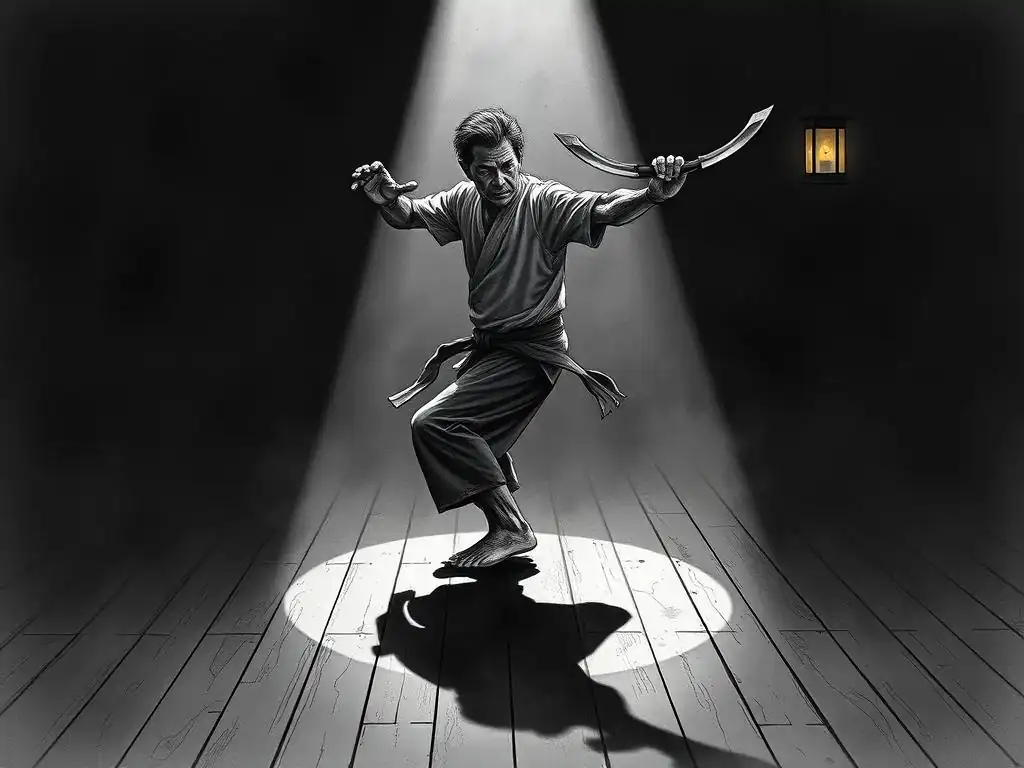
Mastering Basic Triangular Footwork Patterns
Basic triangular footwork patterns are the building blocks of movement in Filipino weaponry. These patterns involve stepping along the lines of an imaginary triangle relative to the opponent or a fixed point. The simplest patterns include the "forward triangle" (stepping forward and laterally, creating a new triangular base), the "backward triangle" (stepping backward and laterally), and lateral "passing steps" that shift the entire triangular base left or right. These movements allow the practitioner to change distance and angle relative to the opponent quickly and efficiently.
A core principle is the concept of "live hand, live foot," where movement is coordinated and purposeful. Mastering these basic steps allows a practitioner to move around an attack rather than simply blocking it head-on. For instance, facing a linear thrust to the body, a practitioner might execute a lateral triangular step to the outside, simultaneously evading the strike and gaining a superior angle for a counter-attack. These fundamental patterns are drilled repeatedly, often without a partner initially, to build muscle memory and comfort with the dynamic nature of triangular movement.
Applying Triangular Footwork for Evading Attacks
Triangular footwork is arguably the most effective method for evading attacks in FMA weaponry. Instead of relying solely on static blocks, which can be overwhelmed by powerful strikes or combinations, the practitioner uses triangular steps to move off the line of attack. By stepping to the side and slightly forward or backward, they create a new angle where the opponent's weapon passes harmlessly by. This not only avoids damage but also puts the practitioner in a position to launch their own counter-offensive.
Consider a scenario where an opponent delivers a powerful diagonal strike (Angle 1). A static block might absorb the force but still leave the practitioner vulnerable. Using triangular footwork, the practitioner could step laterally and slightly forward into the blind spot of the opponent's swing, placing themselves at an advantageous angle (perhaps 45 degrees off the opponent's center line) from which to deliver a follow-up strike to an exposed target. This demonstrates how triangular evasion is not just defensive but an integral part of setting up attacks, embodying the dynamic nature of the Filipino triangle symbolism martial arts.
Advanced Triangular Footwork Drills
Advanced triangular footwork drills build upon the basic patterns, incorporating speed, timing, and complex transitions against simulated or live attacks. Drills might involve navigating multiple "attackers" positioned in a circle, forcing the practitioner to constantly adjust their triangular base and angle. Another advanced drill involves reacting to unexpected angles of attack, requiring instantaneous decisions on which triangular step pattern is most appropriate for evasion and counter-positioning.
Furthermore, advanced training integrates weapon manipulation with footwork. Practitioners drill executing specific strikes or defensive movements while performing triangular steps, ensuring seamless coordination between body movement and weapon technique. For example, a drill might involve evading a series of thrusts with backward triangular steps while simultaneously delivering deflecting strikes with a baston. These drills are often performed at increasing speeds and with greater intensity, pushing the practitioner to react instinctively using the ingrained principles of triangular movement.
Triangular Strikes: Angles for Maximum Impact
The Geometry of Filipino Weaponry Strikes
The geometry of strikes in Filipino weaponry is inherently triangular. Attacks are typically delivered along specific angles relative to the defender, often visualized as points or lines on a clock face or a simple target diagram. FMA systems commonly teach a standard set of twelve or fewer basic angles of attack (e.g., Angle 1 is typically a diagonal slash from high right to low left across the body, Angle 2 is the mirror image, etc.). Understanding these angles allows practitioners to defend effectively and, more importantly, to identify and exploit vulnerable angles in an opponent's defense.
The triangular concept applies not just to the angle of the strike itself but also to the angle from which the strike is launched relative to the opponent. By using triangular footwork to step offline, a practitioner can deliver a strike from an angle that is difficult for the opponent to block or evade linearly. This creates a tactical advantage, forcing the opponent to adjust their defense or risk being hit. The combination of angular strikes and angular footwork is a hallmark of effective Filipino triangle symbolism martial arts.
Executing Triangular Strikes with Baston: Angles and Targets
With a baston (stick), triangular strikes focus on delivering force along specific trajectories to vulnerable targets. The twelve basic angles are often visualized as lines connecting points on the opponent's body or head. An Angle 1 strike, for example, targets the temple or collarbone. An Angle 7 targets the knee. Executing these strikes effectively involves not just the arm movement but also power generation from the core and lower body, often facilitated by the rotational potential of the triangular stance.
Drilling these angles involves striking specific points on a dummy, tire, or with a training partner wearing protective gear. The focus is on precision, power, and the ability to transition smoothly between different angles. For instance, a common drill involves executing a sequence of strikes covering multiple angles (e.g., 1, 2, 3, 4, 5, 6), often while moving with triangular footwork. This reinforces the connection between movement and striking, ensuring that attacks are delivered from advantageous positions along the lines of the Filipino triangle symbolism martial arts.
Knife Fighting and the Triangle: Cutting and Thrusting
In knife fighting (Daga), the triangle takes on even more critical importance due to the extreme close range and devastating potential of blades. Cutting and thrusting techniques are delivered along the same fundamental angles as stick strikes, but with a focus on vital targets. Triangular footwork is essential for closing distance safely, evading incoming blades, and creating angles for effective entry and attack. A small lateral triangular step can mean the difference between a minor cut and a fatal wound.
Thrusting attacks with a knife often target soft tissue like the abdomen, neck, or eyes. Triangular movement allows the practitioner to enter the opponent's space off-line, making their thrust harder to block or parry. Cutting attacks, delivered along arcs, benefit from the rotational power generated by the triangular stance and footwork. For example, a practitioner might use a forward and lateral triangular step to enter and deliver a powerful diagonal slash across the opponent's arm or body, utilizing the momentum generated by the step and the angle of the attack.
Espada y Daga: Combining Sword and Knife with Triangular Movement
Espada y Daga (sword and dagger) is a complex system that heavily relies on sophisticated triangular footwork and coordinated weapon use. The sword typically controls the long range and offensive pressure, while the dagger is used for close-range defense, trapping, and finishing techniques. The triangular movement is crucial for managing the distance between the two weapons and the opponent, ensuring the practitioner is optimally positioned for both sword and dagger actions.
In Espada y Daga, triangular steps are used to constantly shift the engagement angle, keeping the opponent off-balance and guessing whether the attack will come from the sword or the dagger. For example, a practitioner might use a backward triangular step to create distance and set up a sword thrust, or a forward and lateral step to close distance and employ the dagger for a trap and follow-up strike.
The dynamic interplay between the two weapons is facilitated by the practitioner's fluid movement within the triangular framework, embodying the sophisticated application of the Filipino triangle symbolism martial arts in multi-weapon scenarios.
Psychological and Strategic Implications
Dominating Space: Using the Triangle to Control Engagement
Beyond its physical applications, the triangle offers significant psychological and strategic advantages. By constantly moving along triangular lines, the practitioner effectively dominates the engagement space. They dictate the range and angle of interaction, preventing the opponent from establishing a comfortable base or predicting the next move. This constant pressure and unpredictability can be mentally taxing for the opponent, eroding their confidence and reaction time.
Using triangular footwork to circle an opponent or constantly shift angles creates a feeling of being surrounded or outmaneuvered, even in a one-on-one situation. This psychological pressure can force the opponent into reactive, rather than proactive, movements, making them more predictable and vulnerable. The ability to effortlessly move in and out of range and attack from unexpected angles is a powerful strategic tool derived directly from mastering the Filipino triangle symbolism martial arts.
Creating Angles of Attack: Exploiting Vulnerabilities
One of the core strategic uses of the triangle is the ability to consistently create and exploit advantageous angles of attack. Linear movement often leads to head-on clashes, which are risky. Triangular movement allows the practitioner to step off-line and attack from an angle where the opponent's primary defenses are less effective. This might involve stepping to the opponent's weak side, attacking an exposed back or side, or creating an angle that bypasses their guard entirely.
For example, an opponent relying on a strong linear guard with a stick can be countered by a practitioner using a lateral triangular step to the outside, creating an angle to strike the opponent's hand or arm from the side, where their guard is weakest. This ability to bypass the opponent's strongest defenses by attacking from an oblique angle is a key strategic advantage provided by the triangular framework. It highlights how the Filipino triangle symbolism martial arts is fundamentally about superior positioning.
Disrupting Opponent's Balance: Tactical Advantage
The dynamic nature of triangular movement is highly effective at disrupting an opponent's balance. By constantly changing angles and distance, the practitioner forces the opponent to continually adjust their own base. This can lead to momentary losses of balance, creating brief windows of opportunity that can be exploited for strikes or disarms. Furthermore, certain triangular movements, like cutting across an opponent's path with a forward lateral step, can directly interfere with their balance or intended movement.
Consider a drill where a practitioner feints a linear attack, drawing a forward reaction from the opponent, then immediately uses a backward and lateral triangular step to evade and simultaneously attack the opponent's now exposed side. This type of tactical maneuvering, facilitated by triangular footwork, keeps the opponent reacting to the practitioner's movements rather than executing their own plan. The ability to keep the opponent off-balance, both physically and mentally, is a significant tactical advantage provided by the principles of the Filipino triangle symbolism martial arts.
The Triangle in Disarming Techniques
Positioning for Weapon Disarms
Effective weapon disarms in FMA are heavily reliant on superior positioning, which is achieved through triangular movement. Attempting to disarm an opponent head-on is extremely dangerous. Instead, practitioners use triangular footwork to step off the line of the incoming attack and gain an angle that allows them to control the opponent's weapon arm and body safely. This often involves stepping to the outside of the opponent's weapon side, creating a position of leverage and control.
For instance, against a forehand stick strike (Angle 1), a disarm might involve a diagonal backward triangular step combined with a parry or check of the incoming weapon. This movement takes the practitioner out of the line of fire and positions them beside or slightly behind the opponent's weapon arm, providing a safer entry point for a disarm technique, such as a wrist lock or a strip. The initial triangular step is the critical element that creates the opportunity for the disarm.
Controlling the Opponent's Weapon with Triangular Footwork
Once an initial parry, check, or block is made, triangular footwork is used to maintain control over the opponent's weapon and body during the disarm sequence. By circling or moving laterally with triangular steps, the practitioner can follow the opponent's attempts to withdraw their weapon or resist the disarm. This constant adjustment using triangular movement prevents the opponent from regaining their base or pulling their weapon free.
A typical disarm sequence might involve stepping offline with a triangular step, controlling the weapon arm with one hand, and then using circular or lateral triangular steps to move around the opponent, applying pressure to a joint or leveraging the weapon away while keeping the opponent off-balance. The continuous, fluid movement along triangular paths ensures that the practitioner maintains control throughout the struggle, significantly increasing the success rate of the disarm. This emphasizes the dynamic control offered by the Filipino triangle symbolism martial arts.
Variations of Disarming Techniques Using Triangular Principles
Triangular principles are applied in numerous variations of disarming techniques across different FMA systems and weapons. Whether disarming a stick, knife, or even an empty hand grab, the core concept remains the same: use triangular movement to get offline, gain a superior angle, control the limb or weapon, and apply leverage. Some disarms might involve stepping into the opponent's space with a forward triangular step to jam their weapon arm, while others use backward or lateral steps to create space and leverage.
For example, a knife disarm might involve stepping laterally to avoid a thrust, trapping the wrist, and then using a small triangular step to pivot and apply a wrist lock that forces the opponent to drop the knife. A stick disarm might involve deflecting an angle 1 strike and then using a circular triangular step to circle behind the opponent's arm while applying a stripping technique. The specific technique varies, but the underlying principle of using triangular positioning to achieve and maintain control for the disarm is a constant in Filipino triangle symbolism martial arts.
Integrating Triangle Principles into Modern Filipino Martial Arts Training
Drills and Exercises to Reinforce Triangular Concepts
Modern FMA training heavily incorporates drills and exercises specifically designed to internalize triangular concepts. Solo drills often involve tracing triangular patterns on the floor while practicing stances and basic movements. Partner drills progress from walking through basic triangular footwork patterns with a partner to reacting to passive or active attacks using the appropriate triangular steps. Mirror drills, where practitioners mirror each other's triangular movements, help develop coordination and spatial awareness.
More advanced drills involve live sparring scenarios where practitioners are encouraged or required to use triangular movement for all evasions and entries. "Keep the triangle" drills might focus solely on maintaining a dynamic triangular base while defending against unpredictable attacks. Target drills involve hitting targets from various angles after executing specific triangular steps, reinforcing the connection between movement and striking efficiency. These varied training methods ensure that the Filipino triangle symbolism martial arts becomes an instinctive part of the practitioner's movement repertoire.
Importance of Understanding Underlying Principles
Simply mimicking triangular steps is insufficient for true mastery; understanding the underlying principles is crucial. Practitioners must grasp why the triangle is effective – its inherent stability, its ability to create angles, its efficiency in power generation. This conceptual understanding allows practitioners to adapt triangular principles to novel situations, different weapons, or even empty-hand scenarios where the specific techniques might vary but the geometric principles remain applicable.
Instructors often use analogies or visual aids to explain the principles, demonstrating how the triangle provides a dynamic framework for understanding spatial relationships in combat. Discussions might cover how triangular movement relates to concepts like "outside the fence" (staying outside the opponent's primary line of attack) or "cutting the pie" (moving to cover all angles of approach). This deeper understanding ensures that the Filipino triangle symbolism martial arts is not just a set of movements but a flexible strategic framework.
Panantukan and its use of the Triangle
While often associated with weaponry, the principles of the triangle are equally vital in the empty-hand boxing component of FMA, known as Panantukan or "dirty boxing." Panantukan emphasizes angles, body manipulation, and breaking structure, all of which are facilitated by triangular movement. Just as with weapons, triangular footwork is used to evade linear attacks (like jabs or crosses) and create angles for powerful counter-strikes (like hooks or uppercuts) or joint manipulations.
In Panantukan, a triangular step might be used to slip a punch and simultaneously gain an angle to strike the opponent's jaw or ribs. Lateral triangular movement is used to circle the opponent, setting up opportunities for limb destruction (strikes to arms or legs) or entries for close-range techniques like headbutts or biting. The dynamic, angular movement characteristic of Panantukan is a direct application of the triangular principles found throughout Filipino triangle symbolism martial arts, demonstrating its universality across different ranges and weapon categories.
Conclusion: The Enduring Legacy in Martial Arts
The Triangle as a Symbol of Balance, Harmony, and Strength
The triangle in Filipino martial arts is far more than just a geometric shape; it is a profound symbol representing balance, harmony, and strength. Its stable base and upward potential reflect the practitioner's groundedness and continuous growth. The interconnected lines symbolize the harmony between defense and offense, movement and stillness, technique and principle. Its inherent structural integrity represents the strength and resilience required in combat and in life. This deep Filipino triangle symbolism martial arts imbues the practical techniques with cultural and philosophical meaning.
Mastery of the triangle signifies a balance between mobility and stability, allowing the practitioner to flow seamlessly between defensive evasion and offensive aggression. It represents the harmony between mind, body, and weapon, working in concert through efficient, angular movement. Ultimately, the triangle is a symbol of the practitioner's strength – not just physical, but also strategic, psychological, and spiritual, embodying the core tenets of survival and mastery taught within FMA.
Advancing Skills Through Triangular Mastery
Advancing skills in Filipino martial arts is inextricably linked to deepening one's understanding and application of triangular principles. As practitioners progress, they don't learn entirely new shapes; rather, they refine their ability to perceive and move within the triangular framework in increasingly complex and dynamic situations. This involves developing greater speed, precision, and adaptability in their triangular footwork, striking angles, and defensive positioning.
True mastery is evident when the application of the triangle becomes intuitive – when the practitioner instinctively moves to the optimal angle or creates the most advantageous position without conscious thought. This level of proficiency allows for spontaneous adaptation to an opponent's actions, flowing with the unpredictable nature of combat. The journey of advancement in Filipino triangle symbolism martial arts is, in essence, a continuous process of refining one's relationship with this fundamental geometric principle.
Resources for Exploring Triangle Principles in Martial Arts
For those seeking to further explore the significance and application of the triangle in Filipino martial arts, a wealth of resources exists. These include instructional materials developed by various FMA systems and grandmasters, historical texts detailing the evolution of Filipino combat strategies, and training workshops led by experienced instructors. Many contemporary schools offer structured curricula that progressively introduce and deepen the understanding of triangular concepts through solo and partner drills, sparring, and theoretical study.
Engaging with these resources provides invaluable insights into the practical mechanics and deeper symbolism of the triangle. Studying the historical context reveals how these principles were developed out of necessity, while modern training methods show how they are applied in contemporary self-defense and competitive contexts. Whether through books, videos, or direct instruction, delving into these materials is essential for anyone serious about mastering the art and science behind the Filipino triangle symbolism martial arts.
Frequently Asked Questions
What is the significance of the triangle shape in Filipino martial arts?
The triangle represents stability and mobility in Filipino martial arts. It's a core principle for footwork, strikes, and defense, allowing for efficient power generation and quick changes in direction. It's a fundamental building block of the art.
How does triangle footwork enhance a martial artist's ability to move?
Triangle footwork provides a strong base that allows for agile movement and evasive maneuvers. By stepping in a triangular pattern, the martial artist can quickly change angles and create openings.
How does the triangle influence striking techniques in Filipino martial arts?
Many Filipino martial arts striking techniques utilize the triangle to generate power and precision. By creating a triangular pathway with the weapon or limb, practitioners can maximize impact and control.
Can you provide an example of how the triangle is used defensively?
Defensively, the triangle allows a practitioner to intercept attacks and create space to counter. Stepping off-line in a triangular motion moves you out of the path of an incoming blow.
Why is understanding triangle symbolism important for mastering Filipino martial arts?
Grasping the triangular concept is crucial for understanding the underlying principles of movement and strategy. This foundational knowledge is essential for developing proficiency in Filipino weaponry, footwork, and strikes.
Final Reflection: Embracing the Triune Path
The exploration of the triangle's symbolism within Filipino weaponry, footwork, and strikes reveals more than just geometric shapes; it unveils a profound connection to cultural heritage and strategic brilliance. This ancient symbol, deeply embedded in Filipino martial arts, continues to resonate today as a testament to ingenuity, adaptability, and the enduring spirit of the Filipino people. Its presence in both the physical techniques and the underlying philosophy speaks volumes about the holistic approach to combat and life itself.
The triangle's influence extends beyond the training hall, subtly shaping our understanding of balance, stability, and the interconnectedness of mind, body, and spirit. This exploration has personally reinforced the importance of understanding the cultural context behind martial arts techniques, moving beyond mere physical execution to appreciate the rich tapestry of history and philosophy. The triangle represents the past, present, and future, all converging at a single point – the moment of action.
This quote encapsulates the essence of the triangle's symbolism, reminding us that every movement is rooted in history and directed towards a desired outcome.
As we conclude this journey into the heart of Filipino triangle symbolism in martial arts, I invite you to reflect on the principles of balance, adaptability, and strategic thinking that it embodies. How can you apply these lessons to your own life, whether in your personal endeavors, professional pursuits, or even your own understanding of cultural heritage? Embrace the triune path, and discover the strength and wisdom that lies within.
Ignite Your Filipino Martial Arts Journey!
Thank you for exploring the intricate symbolism of the triangle within Filipino weaponry! Now, take this newfound understanding and transform it into tangible action.
- Master the Triangle Step: Begin practicing the core triangle footwork pattern daily. Dedicate 15 minutes to perfecting the base, ensuring fluidity and balance. This is the foundation!
- Explore Related Martial Arts: Delve into other martial arts that emphasize triangular movement, such as Aikido or Wing Chun, to broaden your perspective.
- Share Your Insights: Start a discussion online about the triangle's symbolism in FMA and invite others to share their interpretations and experiences.
What unique insights have you gained about the triangle's role, and how will you integrate them into your practice starting today?