
The Sound of Steel: Understanding the Auditory Cues in Weaponry Training


Welcome to Martial Arts Mastery, your gateway to unlocking the secrets of combat and self-discipline. Ever wondered how seasoned martial artists anticipate their opponent's moves, even in the heat of battle? In this article, we delve deep into the fascinating world of weaponry training auditory cues, revealing how the subtle "Sound of Steel" can be a vital key to mastery. Prepare to sharpen your senses and elevate your understanding of martial arts to a whole new level.
- Introduction: The Underrated Significance of Sound in Filipino Weaponry Training
- Decoding the Sounds: Identifying Key Auditory Cues in Filipino Weaponry
- Auditory Cues in Different Filipino Weaponry Styles
- Enhancing Auditory Awareness: Training Drills for Weaponry Mastery
- The Role of Environmental Sound in Weaponry Training
- Safety Considerations: Protecting Hearing During Weaponry Training
- Conclusion: Mastering Weaponry Through Sound
-
Frequently Asked Questions
- How important are auditory cues in weaponry training, according to Martial Arts Mastery?
- What types of sounds are considered important auditory cues in "The Sound of Steel"?
- How can training with auditory cues enhance practical self-defense strategies?
- Does "The Sound of Steel" offer specific drills or exercises to improve auditory awareness during weaponry training?
- What specific martial arts disciplines might benefit most from focusing on auditory cues in weaponry training, as discussed on Martial Arts Mastery?
- Final Reflection: Echoes of Mastery
- Elevate Your Training: Unlock the Sound of Mastery!
Introduction: The Underrated Significance of Sound in Filipino Weaponry Training
Why Auditory Perception Matters in Martial Arts Weaponry
While visual cues and tactile feedback are often emphasized in martial arts training, particularly in weaponry, the role of auditory perception is significantly underestimated. In the dynamic and often chaotic environment of weapon-based combat, the ability to accurately interpret sounds can provide critical, split-second information that sight alone might miss or be too slow to process.
The distinct sounds produced by weapons in motion or upon impact reveal details about speed, force, angle, and even the material properties of the weapon or target, offering a layer of awareness essential for effective defense and offense. Mastery of weaponry training auditory cues enhances reaction time and predictive capabilities.
For instance, in a fast-paced exchange involving steel blades, the precise timing of a parry might be signaled not just by the visual arc of the incoming weapon, but by the subtle change in the whoosh sound as the blade accelerates or cuts the air at a specific angle. This auditory information can sometimes reach the brain milliseconds faster than visual processing, providing a crucial edge.
Moreover, in low-light conditions or when vision is obscured, sound becomes an even more vital source of information, allowing practitioners to locate an opponent, track weapon movement, and anticipate attacks based purely on what they hear. Integrating auditory training into a comprehensive weaponry training program is therefore paramount.
The Unique Sounds of Steel: An Overview for Martial Arts Practitioners
Steel weapons, such as swords (espada) and knives (daga), produce a distinct range of sounds compared to wooden implements like sticks (baston). The metallic resonance of steel upon impact, whether against another steel weapon, wood, or even flesh, carries specific acoustic signatures. A sharp clash or ring often indicates a forceful parry or block, while a slicing shhhk suggests a cutting motion. The speed and angle of the blade significantly influence these sounds; a fast, clean cut through air can produce a high-pitched whistle, whereas a slower, heavier swing might generate a deeper swish.
Understanding these unique sounds is a fundamental aspect of advanced weaponry training. Filipino martial arts, with their diverse arsenal of steel and wood weapons, offer rich opportunities to study these auditory cues. The difference between the high-frequency ring of two tempered steel swords meeting and the lower-frequency thud of a steel blade striking a rattan stick is significant.
These acoustic distinctions provide practitioners with immediate feedback on the nature of the interaction, helping them refine techniques, gauge distance, and even assess the opponent's intent based on the sounds their weapon makes. Effective weaponry training auditory cues are learned through dedicated practice.
Decoding the Sounds: Identifying Key Auditory Cues in Filipino Weaponry
Recognizing the Distinct Sounds of Impact: Steel on Steel, Steel on Wood
The sound generated when weapons collide is a fundamental auditory cue in weaponry training. When steel meets steel, as in a sword-on-sword parry or block, the resulting sound is typically a sharp, often resonant ring or clash. The pitch and duration of this sound can indicate the force and angle of the impact.
A high-pitched, brief ping might suggest a glancing blow or a quick check, while a deeper, sustained clang could signal a strong, direct block absorbing significant force. For instance, a sinawali drill with metal sticks produces a rhythmic, percussive soundscape, but a sudden, loud crack within that rhythm indicates a deviation or excessive force.
Conversely, the sound of steel impacting wood, common when a blade meets a wooden staff (like a bo or jo) or a rattan baston, is markedly different. This collision typically produces a duller thud or a sharp crack, depending on the type of wood and the force. A steel blade striking a tough kamagong stick might result in a solid thwack, potentially damaging the wood over time, whereas hitting a lighter rattan stick might yield a sharper snap or crack.
Recognizing these differences in impact sounds is crucial for practitioners, as it provides immediate feedback on the effectiveness of a block or attack and helps differentiate between various defensive strategies employed by an opponent. Mastery of weaponry training auditory cues involves discerning these subtle differences.
The Sound of the Draw: Identifying Weapon Retrieval Cues
The act of drawing a weapon, whether from a scabbard, sheath, or even a concealed position, produces distinct auditory cues that can serve as crucial early warnings. The sound of steel sliding against the material of a scabbard – often a smooth shhhk or a slightly rougher scrape – indicates that a weapon is being brought into play.
The speed and intent behind the draw can sometimes be inferred from the sound; a slow, deliberate draw might produce a quiet, controlled sound, while a rapid, aggressive draw can result in a louder, faster zip or tear. In Filipino knife fighting (daga), the sound of a small blade being drawn from a belt sheath or pocket can be extremely subtle, requiring a highly attuned ear to detect.
These retrieval sounds are invaluable in both defensive and offensive contexts. Recognizing the sound of an opponent drawing their weapon allows for immediate reaction, providing a precious fraction of a second to prepare a defense or initiate a preemptive move. Conversely, practitioners must also be aware of the sound their own draw makes during training. Practicing drawing techniques quietly and efficiently is often part of advanced weaponry training, minimizing the auditory signature that could alert an adversary. Paying close attention to the sound of the draw is a key element in developing comprehensive weaponry training auditory cues awareness.
Analyzing the Sound of Movement: Blade Dynamics and Auditory Feedback
Beyond impact and retrieval, the movement of a weapon through the air generates its own set of informative sounds. The speed and shape of a blade or stick as it cuts through the air creates a distinct aerodynamic whoosh or swish. A fast, narrow cut with a sword might produce a high-pitched whistle, while a wide, powerful swing generates a deeper roar or swoosh.
The angle of the weapon relative to its movement also affects the sound; a flat cut will sound different from a thrusting motion. In stick fighting (baston), the rapid circular motions of sinawali create a continuous whirring sound, punctuated by the strikes.
Analyzing these movement sounds provides practitioners with continuous auditory feedback during training and potential combat. Listening to the sound of their own weapon's movement helps refine techniques, ensuring optimal speed and trajectory. Hearing the sound of an opponent's weapon moving through the air can reveal the type of strike being attempted (cut vs. thrust), its speed, and its general direction, even if the weapon itself is momentarily out of sight.
This auditory analysis is a sophisticated layer of perception in weaponry training, allowing for anticipation and reaction based on the subtle nuances of aerodynamic sound. Developing sensitivity to these sounds is crucial for mastering weaponry training auditory cues.
Auditory Cues in Different Filipino Weaponry Styles
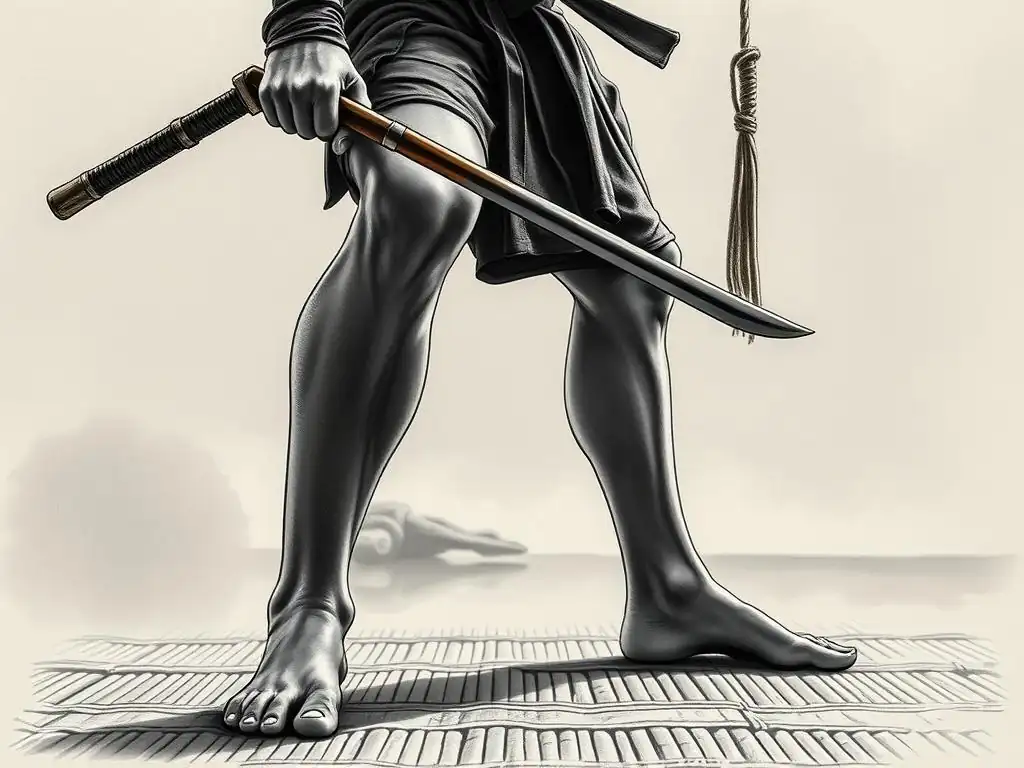
Espada y Daga: The Rhythms of Sword and Dagger Combat
Espada y Daga, the art of combining sword and dagger, presents a complex auditory landscape due to the simultaneous use of two different weapons. The larger sword (espada) typically produces deeper, louder sounds upon impact or movement, such as the resonant clang of a parry or the powerful whoosh of a cut. The smaller dagger (daga), used for close-quarters defense, trapping, and thrusting, generates more subtle, higher-pitched sounds.
A dagger block against a sword might result in a sharp crack or ping, while a quick dagger thrust produces a minimal zip or shhhk. The interplay of these two sound profiles creates a unique rhythm specific to Espada y Daga exchanges.
Training in Espada y Daga requires practitioners to simultaneously process the auditory cues from both weapons. During drills, the distinct sounds of the sword's large movements (e.g., a slash followed by a parry) are often punctuated by the quicker, sharper sounds of the dagger (e.g., a rapid thrust or a close-in check). Learning to differentiate these sounds allows the practitioner to understand the opponent's strategy—whether they are primarily attacking with the sword while using the dagger for defense, or vice versa.
This auditory awareness is key to anticipating combinations and reacting appropriately to the dual threats. Effective weaponry training auditory cues for Espada y Daga involve recognizing this dual sound profile.
Identifying Auditory Differences between Espada and Daga Techniques
The fundamental difference in size, weight, and typical use between the espada and daga results in distinct auditory signatures for their techniques. A sword cut, for example, involves a larger arc and higher momentum, generating a significant whoosh through the air and a substantial clang or thud upon impact. The sound of a sword parry against another sword is a definitive, often loud, ring.
In contrast, a dagger thrust is a more linear, faster movement with less air resistance, producing a quieter zip or shhhk. A dagger block, especially against a larger weapon, might create a sharp, high-pitched ping or crack due to the forced absorption of impact by a smaller mass.
Furthermore, techniques like disarms or traps often involve the dagger's steel coming into contact with the sword's steel at specific points, creating unique scraping or locking sounds. A successful dagger trap on a sword might produce a sustained grind or scrape as the blades bind.
Recognizing these specific auditory differences allows a practitioner to identify not just which weapon is being used, but also how it is being used and the type of technique being employed. This detailed auditory analysis is a sophisticated skill developed through extensive Espada y Daga weaponry training, enhancing the practitioner's ability to read the flow of combat purely through sound.
Baston (Stick Fighting): Recognizing the Impact Sounds of Rattan and Kamagong
Stick fighting, particularly with bastons made from materials like rattan or kamagong, offers a different set of auditory cues focused primarily on impact sounds. Rattan, being lighter and more flexible, tends to produce a sharp, whip-like crack or snap upon impact, especially when striking a hard surface or another stick forcefully.
The sound can vary depending on the thickness and density of the rattan, but it generally has a higher frequency and sharper transient than kamagong. For instance, a rapid series of strikes in sinawali with rattan sticks creates a distinct, fast-paced rat-a-tat-tat rhythm punctuated by the sharp cracks of impact.
Kamagong, a much harder and denser wood, produces a deeper, more solid thud or thwack upon impact. Compared to rattan, the sound is less sharp and more resonant, indicative of the greater mass and rigidity of the material. A block with a kamagong stick against a rattan stick will likely result in a combination of the rattan's crack and the kamagong's thud.
Recognizing the material and the force of impact purely by the sound is a key skill in baston training. This auditory discrimination helps practitioners gauge the opponent's power and the potential damage of strikes, refining their defensive and offensive strategies based on the acoustic feedback. This is a vital part of developing weaponry training auditory cues for stick combat.
Distinguishing between Single and Double Stick Sounds
Training with single baston versus double baston (doble baston) introduces distinct auditory patterns and complexities. Single stick training typically involves more pauses between strikes or combinations, resulting in a less continuous auditory flow. The sounds are primarily individual cracks or thuds interspersed with brief moments of silence or the swish of movement. The rhythm is often simpler, focusing on the timing of single impacts.
Double stick training, particularly in continuous flow drills like sinawali, creates a much more rapid and complex auditory environment. The sounds of two sticks moving and striking simultaneously or in quick succession generate a constant stream of cracks, thuds, and swishes. The rhythm is faster and more intricate, with the sounds of the two sticks often overlapping or occurring in rapid pairs.
Distinguishing between the sounds of a double block (two sticks hitting simultaneously), alternating strikes (rapid left-right sounds), and complex patterns requires a highly developed sense of auditory timing and pattern recognition. This ability to process the faster, denser soundscape of double stick combat is a specific aspect of advanced weaponry training auditory cues development.
Daga (Knife Fighting): Subtle Auditory Cues in Close-Quarters Combat
Knife fighting (daga) is typically characterized by much closer ranges and smaller, faster movements than sword or stick combat. Consequently, the auditory cues in daga are often more subtle and require a heightened sense of listening. The sounds might include the quiet shhhk of a blade moving through fabric, the slight scrape of steel against bone during a thrust, or the distinct zip of a quick retraction. Blade-on-blade contact in knife fighting tends to be less about resonant clashes and more about sharp pings or scrapes during parries or checks, given the smaller mass and shorter arcs involved.
Other subtle sounds become more important in daga, such as the sound of breath control, the shuffle of feet on the ground, or the rustle of clothing. In the extremely close confines of knife range, these non-weapon sounds can provide critical information about an opponent's position, movement, and even tension level.
Listening for the subtle click of a folding knife opening or the slight scrape as a fixed blade is drawn from a concealed sheath requires intense auditory focus. Mastering these subtle sounds is paramount for effective close-quarters weaponry training and is a key component of developing advanced weaponry training auditory cues for self-defense scenarios.
The Sound of Steel on Tatami Mats: Training for Knife Defense
While not a combat sound, the sound of training implements hitting the ground, such as a dropped training knife or a stick, is a crucial auditory cue in a training environment, particularly for defense against dropped weapons or ground fighting scenarios. In a dojo setting with tatami mats, a steel training knife dropped from waist height makes a distinct clink or thud as it lands. Recognizing this sound immediately allows practitioners to react appropriately, whether by avoiding the area or attempting to secure the weapon.
Training drills specifically focusing on reacting to the sound of a dropped weapon can significantly improve response time. For example, a partner might unexpectedly drop a training knife, and the practitioner must react only upon hearing the sound, simulating a sudden weapon loss or introduction during a struggle. Furthermore, the sounds of movement on the mat itself—foot shuffles, knee slides, body impacts—become important auditory cues during ground-based weaponry training or defense against weapons on the ground. These seemingly minor sounds contribute to overall situational awareness and are a practical application of weaponry training auditory cues in a controlled environment.
Enhancing Auditory Awareness: Training Drills for Weaponry Mastery
Blindfolded Training: Developing Sensitivity to Sound
Blindfolded training is an excellent method for isolating and enhancing auditory awareness in weaponry practice. By removing the dominant sense of sight, practitioners are forced to rely heavily on sound cues to navigate, locate their partner, and react to weapon movements and impacts. This type of drill typically involves a partner moving around the blindfolded individual, generating specific sounds like footsteps, the swish of a stick, or the whistle of a blade cutting the air. The blindfolded practitioner must then identify the source and nature of the sound and react defensively or offensively based on their training.
For example, in baston training, a blindfolded student might stand in a ready stance while a partner strikes padded targets or makes specific stick movements around them. The student must identify the direction and type of attack solely by the crack or swish of the stick and respond with a block or evasion.
This significantly hones the ability to interpret subtle acoustic information. While challenging and requiring careful safety protocols (using padded weapons and controlled movements), blindfolded drills are invaluable for developing a deep reliance on weaponry training auditory cues, preparing practitioners for low-visibility or chaotic situations where sight is compromised.
Partner Drills: Responding to Auditory Cues in Real-Time
Partner drills specifically designed to focus on auditory cues are fundamental for integrating sound into reactive training. These drills involve one partner generating a specific auditory signal, and the other partner reacting in real-time based only on that sound. This can range from simple "sound triggers" to more complex scenarios. For instance, a partner might make the sound of a specific strike (e.g., a forehand strike with a stick) without the visual cue of the weapon's movement, and the other practitioner must execute the correct defensive response based solely on the acoustic signature.
Another example involves using environmental sounds or improvised cues. A partner might clap their hands, tap the floor, or make a specific vocalization to signal a change in tempo, direction, or technique during a flow drill. The practitioner must listen intently and adjust their movements instantly. These drills train the brain to quickly process auditory information and translate it into physical action, refining reaction time and making the practitioner less reliant on visual input alone. Incorporating specific auditory prompts into regular partner drills is a practical way to enhance weaponry training auditory cues processing.
Sound-Based Sparring: Integrating Auditory Perception into Combat
While safety always dictates the use of padded weapons and controlled intensity in sparring, sound-based sparring takes auditory awareness to a more dynamic level. In this type of training, practitioners are encouraged to actively listen to the sounds generated during the exchange—the whoosh of movements, the clash of impacts, the footwork sounds, and even breathing patterns. The goal is not just to react visually, but to use the auditory information to anticipate the opponent's actions and inform one's own strategy.
For example, listening to the sound of an opponent's footwork can reveal changes in distance or stance. Hearing the specific ping of a glancing block might indicate an opening for a follow-up strike. Even subtle sounds like a sharp exhale can signal an impending powerful movement. Sound-based sparring encourages practitioners to move beyond simply seeing the fight and to actively hear it, integrating auditory perception into their overall combat awareness. This holistic approach, combining visual, tactile, and auditory input, is crucial for achieving true mastery in weaponry training and effectively utilizing weaponry training auditory cues.
The Role of Environmental Sound in Weaponry Training
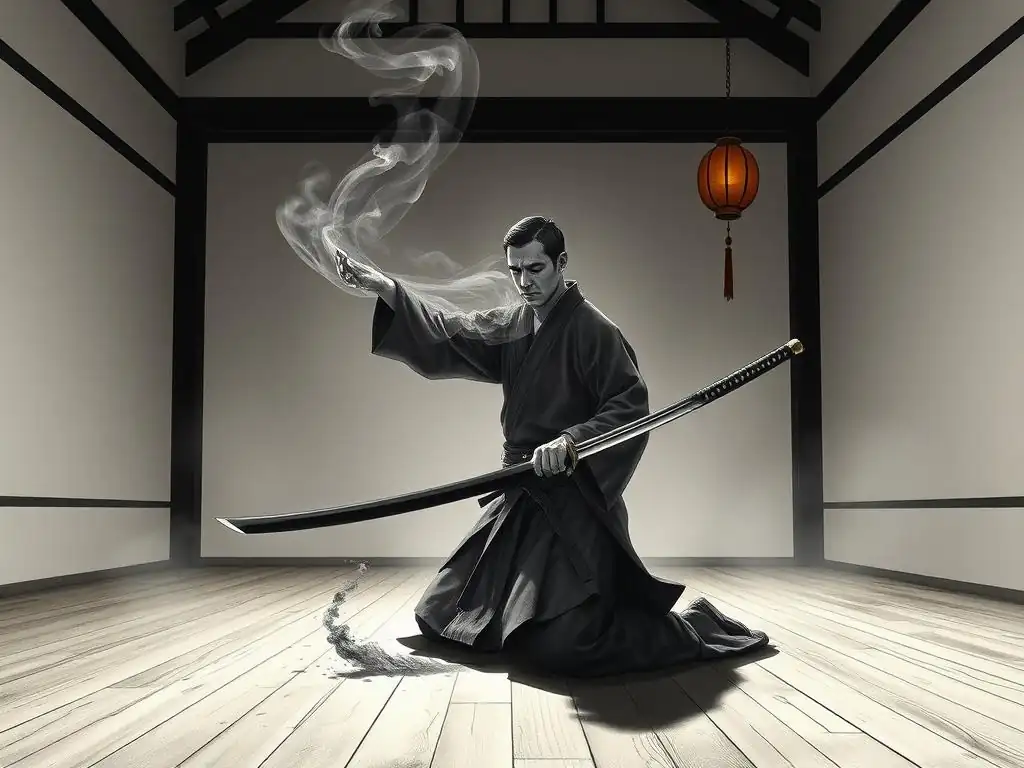
Adapting to Different Environments: Indoor vs. Outdoor Training Scenarios
The training environment significantly impacts the auditory landscape and thus the practitioner's ability to discern crucial weaponry training auditory cues. Indoor training spaces, such as dojos or gyms, typically have controlled acoustics. Sounds are often clearer, with less background noise and predictable reverberation. This allows practitioners to focus intensely on the sounds generated by the weapons and their own movements. However, it doesn't fully prepare them for the acoustic challenges of real-world scenarios.
Outdoor environments, conversely, present a much more complex auditory challenge. Training in a park, street, or forest means contending with a constantly changing backdrop of ambient noise: traffic, wind, birds, other people. These sounds can mask or distort the sounds of weapons and movement.
Adapting to different environments requires training the ear to filter out irrelevant noise and focus only on the critical auditory cues relevant to the encounter. Practitioners must learn how the same stick crack or blade whistle sounds different in an open field compared to a concrete alleyway. This adaptability is key for practical weaponry training auditory cues application outside the dojo.
Overcoming Auditory Obstacles: Training in Noisy Environments
Training in noisy environments is a deliberate strategy to build resilience and focus in the face of auditory distractions. This can involve training near busy streets, in areas with background music, or even deliberately introducing controlled noise (like white noise or crowd sounds) during drills. The objective is to train the brain to effectively process salient sounds (weapon impacts, movement sounds) while ignoring or filtering out irrelevant background noise.
This type of training directly addresses a critical challenge in self-defense: the likelihood that a real-world encounter will not occur in a quiet, controlled setting. By practicing techniques and sparring while actively contending with significant auditory distractions, practitioners improve their ability to maintain focus and extract vital acoustic information even when the signal-to-noise ratio is poor. This rigorous approach to weaponry training auditory cues prepares practitioners for the unpredictable soundscapes of real-life situations.
Utilizing Environmental Sounds: Enhancing Situational Awareness
Beyond filtering noise, advanced auditory training involves actively utilizing environmental sounds to enhance situational awareness. Footsteps approaching from behind, the rustle of clothing indicating movement, the opening or closing of a door, or even changes in ambient sounds can provide crucial information about the surrounding environment and potential threats. While not directly related to the weapon itself, these sounds contribute to the overall auditory picture of the situation.
In a self-defense context, hearing the distinct sound of someone shifting their weight, breathing heavily, or fumbling with an object in their pocket can provide early warning signs. Integrating awareness of these broader environmental auditory cues with the specific sounds of weaponry allows for a more complete understanding of the situation. This holistic approach to listening, encompassing both weapon-specific sounds and the general acoustic environment, is a hallmark of highly skilled practitioners and elevates the application of weaponry training auditory cues to a higher level of mastery.
Safety Considerations: Protecting Hearing During Weaponry Training
The Importance of Ear Protection: Minimizing Hearing Damage
While focusing on auditory cues is vital for mastery, protecting one's hearing during weaponry training is equally paramount. Repeated exposure to loud impact sounds, especially from steel-on-steel or forceful stick-on-stick collisions, can cause temporary or even permanent hearing damage. The sharp clash of sword parries or the crack of hard sticks can reach decibel levels comparable to loud machinery or gunfire, potentially exceeding 100-110 dB. Prolonged or frequent exposure to such sounds without protection poses a significant health risk.
Therefore, the use of appropriate ear protection is strongly recommended, particularly during drills involving full-contact weapon exchanges or high-intensity impact practice. Options include foam earplugs, which offer significant noise reduction (often 20-30 dB), or custom-molded earplugs for better comfort and fit. Earmuffs are also an option, providing excellent protection but potentially hindering mobility. Incorporating ear protection into safety protocols is a non-negotiable aspect of responsible weaponry training.
Understanding Sound Levels: Safe Practices for Weaponry Training
Understanding the potential sound levels generated during training is key to implementing safe practices. Instructors and practitioners should be aware that certain drills, like vigorous sinawali with hard sticks or full-speed steel sparring (using protective gear and controlled movements), can produce impulse noises that are damaging even over short periods. Limiting exposure time to the loudest drills is one strategy.
Another safe practice involves modifying drills to reduce peak sound levels where possible, without compromising the training objective. For example, using slightly softer materials for targets or practicing techniques at lower intensity when focusing purely on form rather than impact. However, for drills specifically focused on auditory impact cues, protection is the primary measure. Regular breaks from noisy activities also help prevent auditory fatigue and potential damage. Educating practitioners about the risks and necessary precautions is a critical part of weaponry training safety.
Recognizing the Signs of Hearing Fatigue: Taking Breaks and Resting
Practitioners should be trained to recognize the signs of auditory fatigue and potential hearing damage. Common symptoms include ringing in the ears (tinnitus), a feeling of fullness or pressure in the ears, or muffled hearing after a training session. These are signals that the auditory system has been stressed and requires rest. Ignoring these signs and continuing exposure to loud sounds can lead to more severe and permanent issues.
Encouraging practitioners to take breaks during intense, noisy drills is essential. If symptoms like tinnitus persist for more than a few hours after training, or if there is any perceived change in hearing ability, seeking medical advice from an audiologist is strongly recommended. Prioritizing hearing health ensures that practitioners can continue their training safely and maintain their ability to utilize weaponry training auditory cues effectively throughout their martial arts journey. Safety must always complement skill development.
Conclusion: Mastering Weaponry Through Sound
The Future of Auditory Training in Filipino Martial Arts
As martial arts training evolves, the integration of technology and specialized methodologies could further enhance auditory training in Filipino martial arts. Future developments might include using audio recording and analysis tools to provide practitioners with objective feedback on the sounds generated by their own techniques, helping them refine movements for optimal speed and efficiency based on acoustic output. Simulated sound environments could also be used in virtual or augmented reality training scenarios to expose practitioners to realistic auditory challenges without the physical risks.
Specialized auditory drills, perhaps incorporating biofeedback or neurological training techniques, could also be developed to improve the brain's capacity for processing complex auditory information under pressure. Research into how expert practitioners interpret auditory cues compared to novices could lead to more targeted and effective training protocols. The future of weaponry training auditory cues development lies in leveraging technology and scientific understanding to make auditory perception an even more integral and measurable component of martial arts mastery.
Integrating Auditory Cues into a Holistic Weaponry Training Approach
Ultimately, mastering weaponry, particularly in the rich traditions of Filipino martial arts, requires a holistic approach that integrates visual, tactile, and auditory perception. While sight provides the primary information stream, and tactile feedback informs body mechanics and impact, sound offers a vital, often instantaneous, layer of information about speed, force, distance, and intent that complements the other senses. Effective weaponry training auditory cues are not just an accessory; they are an essential component of complete awareness.
By actively training the ear alongside the eye and the body, practitioners develop a more robust and adaptable skill set. They become less reliant on a single sense and better equipped to handle the unpredictable nature of real-world encounters, where visibility might be poor or tactile feedback limited. Embracing the "sound of steel" and the myriad other acoustic signals in weaponry training elevates practice from mere technique execution to a deeply intuitive and highly reactive art form, leading to true mastery.
Frequently Asked Questions
How important are auditory cues in weaponry training, according to Martial Arts Mastery?
Auditory cues are crucial for developing timing, distance, and awareness. They offer immediate feedback on the quality and effectiveness of a technique. This is especially important when visual cues are limited.
What types of sounds are considered important auditory cues in "The Sound of Steel"?
The article emphasizes sounds related to weapon impact, the weapon's movement through the air (such as a "whoosh"), and sounds reflecting the opponent's actions or reactions.
How can training with auditory cues enhance practical self-defense strategies?
By focusing on sound, practitioners can react more quickly to unseen threats. This enhanced awareness improves reflexes and predictive capabilities in real-world self-defense situations.
Does "The Sound of Steel" offer specific drills or exercises to improve auditory awareness during weaponry training?
While the exact drills may vary depending on the specific martial art, the article likely provides guidelines on listening exercises and reactive training that emphasize auditory information.
What specific martial arts disciplines might benefit most from focusing on auditory cues in weaponry training, as discussed on Martial Arts Mastery?
Martial arts that heavily involve weapons, such as Kendo, Eskrima, and Kenjutsu, would particularly benefit. Any style where precise weapon control and timing are essential will find auditory training invaluable.
Final Reflection: Echoes of Mastery
The exploration of weaponry training auditory cues reveals more than just the sounds of steel; it unveils a profound connection between sound, skill, and the very essence of mastery. In a world increasingly reliant on visual and tactile feedback, recognizing the subtle symphony of combat – the clicks, scrapes, and resonant vibrations – offers a deeper, more intuitive understanding of weapon handling and tactical awareness, a skill that remains vital in both historical appreciation and modern applications.
The impact of auditory cues extends far beyond the training ground, influencing our perception of power, precision, and even the narrative of conflict itself. My own fascination with historical martial arts has been profoundly shaped by listening to the stories embedded within the sounds of practice, the echoes of dedication and discipline. The ear is the pathway to the mind, and the mind is the pathway to the soul.
This quote, though not directly related to weaponry, encapsulates the power of auditory input to shape our understanding and experience, reminding us that true mastery is not just seen, but heard and felt.
Now, consider the implications of this auditory awareness in your own life. Whether you are a martial artist, a historian, or simply someone seeking a deeper connection to the world around you, I encourage you to listen more attentively. Tune into the subtle cues, the hidden melodies within the everyday, and discover the profound knowledge that awaits those who truly listen. Let the echoes of mastery guide your path.
Elevate Your Training: Unlock the Sound of Mastery!
Thank you for delving into the world of auditory cues in weaponry training. Now that you understand the subtle sounds that can sharpen your skills, it’s time to translate that knowledge into action. Here’s how you can take your training to the next level:
- Record your next training session and focus intently on the sounds produced. Analyze these sounds against your established performance benchmarks to identify areas for immediate improvement.
- Share your newfound auditory awareness with your training partners! Discuss specific sounds and what they indicate, fostering a more collaborative and insightful training environment.
- Challenge yourself to identify specific sounds associated with different techniques. This fun "sound-matching" game can dramatically improve your reflexes and understanding.
What subtle auditory cue will you be listening for in your next training session to refine your technique?