
Chugi (Loyalty) in Bushido: Its Role in StudentTeacher Martial Arts Relationships


Welcome to Martial Arts Mastery, where we delve into the profound depths of combat arts! Beyond the physical techniques, lies a rich tapestry of philosophy and tradition. Are you ready to explore the unyielding bond that fuels martial arts excellence? This article examines Chugi (Loyalty) in Bushido and its pivotal role in forging unbreakable student-teacher relationships. Discover how this ancient code shapes not just fighters, but individuals of unwavering character. Intrigued? Read on to unlock the secrets of Chugi and its enduring impact on martial arts training and life itself!
- Introduction: Understanding Bushido Loyalty in Martial Arts Training
- Defining Chugi: The Core of Bushido Loyalty
- The Student-Teacher Relationship: A Crucible for Bushido Loyalty
- Manifestations of Chugi in Martial Arts Training
- The Reciprocal Nature of Loyalty: What Students Expect from Teachers
- Historical Examples of Chugi in Martial Arts
- The Modern Relevance of Bushido Loyalty in Martial Arts
- Potential Pitfalls: Blind Allegiance vs. Principled Loyalty
- Cultivating Healthy and Ethical Student-Teacher Relationships
- Conclusion: The Enduring Importance of Chugi in Martial Arts Mastery
-
Frequently Asked Questions
- What is Chugi and why is it important in martial arts, particularly in the context of Bushido?
- How does Chugi differ from blind obedience in a martial arts training environment?
- What are some practical ways students can demonstrate Chugi to their instructors?
- How does the concept of Chugi contribute to the overall development of a martial arts student?
- What happens when Chugi is absent or abused in a student-teacher relationship within a martial arts context?
- Final Reflection: The Enduring Bond of Chugi
- Embrace Chugi: Ignite Your Martial Arts Journey!
Introduction: Understanding Bushido Loyalty in Martial Arts Training
The Significance of Chugi (Loyalty) in Bushido Philosophy
Within the rich philosophical framework of Bushido, the "Way of the Warrior," Chugi stands as a cornerstone virtue. It embodies the principle of loyalty, a commitment extending beyond mere obligation to encompass a deep, unwavering devotion. This loyalty was traditionally directed towards one's lord, family, and comrades, forming the bedrock of feudal Japanese society and the samurai code. However, its significance permeates beyond the battlefield and into the structured environment of martial arts training, profoundly shaping the dynamics within the dojo. Understanding this concept is crucial for appreciating the depth and purpose of traditional martial arts practice.
Chugi in Bushido is not simply about blind obedience; it is intricately linked with other virtues like Giri (duty) and Makoto (sincerity). It demands a moral fortitude and a willingness to act in the best interests of the entity one is loyal to, even at great personal cost. This ethical dimension elevates Chugi from a simple behavioral rule to a profound philosophical principle that guides conduct and decision-making. In the context of martial arts, it translates into a commitment to the art itself, the dojo, and especially the instructor, creating a unique environment for personal and collective growth.
The Unique Dynamics of Student-Teacher Bonds in Martial Arts
The relationship between a student and teacher (or sensei) in traditional martial arts is distinct from many other educational or professional relationships. It is often characterized by a level of personal investment, trust, and mutual respect that goes beyond typical instructor-learner interactions. The transmission of martial techniques is only one part of this bond; equally important is the imparting of philosophy, discipline, and character development. This deep connection provides fertile ground for the principles of Bushido loyalty, specifically Chugi, to manifest and flourish.
This bond is forged through shared effort, overcoming challenges together, and the vulnerability inherent in physical and mental training. A student places significant trust in their teacher's guidance, techniques, and judgment, often in situations requiring physical contact or pushing personal limits. Conversely, a teacher invests time, energy, and expertise into sculpting not just a martial artist but a well-rounded individual. This symbiotic relationship, built on mutual dependence and respect, makes the study of Bushido loyalty in student-teacher relationships particularly relevant and insightful.
Defining Chugi: The Core of Bushido Loyalty
Beyond Obedience: The Nuances of True Loyalty in Bushido
Chugi, as defined within the Bushido code, is far more complex than simple obedience or subservience. While respect for authority is a component, true loyalty involves a deep-seated commitment based on understanding, shared values, and a sense of reciprocal obligation. It's an active principle, requiring vigilance, dedication, and sometimes even critical judgment, albeit expressed respectfully. A loyal individual in Bushido was expected not just to follow orders but to understand the spirit of the lord's will and act accordingly, even independently, if it served the greater good of the entity they were loyal to.
This nuanced understanding of Bushido loyalty means that it is not static but evolves with the relationship and circumstances. It demands integrity and moral courage. For example, a truly loyal samurai might respectfully offer counsel that contradicts a lord's initial thought if they believed it was genuinely in the lord's best interest, demonstrating loyalty to the ideal or purpose rather than just the person's current whim. This depth is crucial when examining Bushido loyalty studentteacher relationships, as it implies a commitment to the principles the teacher represents, not just blind adherence to every command.
Chugi vs. Feudal Allegiance: Contextualizing Bushido's Ethical Framework
While Chugi historically centered on the loyalty of a samurai to his feudal lord (daimyo), its ethical framework extends beyond this specific socio-political context. The underlying principles – dedication, integrity, self-sacrifice for the greater good of the group or cause – are universal virtues that Bushido codified and emphasized. Feudal allegiance was the primary manifestation of Chugi for the samurai class, dictated by the hierarchical structure of the time. This allegiance often involved military service, administrative duties, and unwavering support, even unto death.
However, Bushido's ethical core transcends this feudal structure. Virtues like Rectitude ( Gi), Courage ( Yu), Benevolence ( Jin), Respect ( Rei), Honesty ( Makoto), Honor ( Meiyo), and Loyalty ( Chugi) were seen as applicable to all aspects of life, not just military service or lord-vassal relationships.
When applied to student-teacher relationships in martial arts, Chugi shifts from a political obligation to a moral and ethical one, focused on the transmission and preservation of the art, the integrity of the dojo, and the development of character. The loyalty is to the path of the art, guided by the teacher, rather than simply a contract of service.
The Student-Teacher Relationship: A Crucible for Bushido Loyalty
The Master-Disciple Dynamic: Respect, Trust, and Commitment
The traditional martial arts master-disciple relationship is a profound bond built on deep respect, unwavering trust, and mutual commitment. The student commits to diligent training, adherence to the dojo's principles, and loyalty to the teacher. This commitment is often lifelong, extending far beyond the initial period of active training.
The teacher, in turn, commits to guiding the student's technical development, character formation, and understanding of the art's deeper philosophy. This dynamic requires vulnerability from both sides; the student must trust the teacher with their physical safety and personal growth, and the teacher must trust the student to uphold the standards and reputation of the dojo and the art.
This relationship is not merely transactional. It involves a spiritual and emotional connection, where the teacher acts as a mentor, guide, and often a surrogate family figure. The student looks to the teacher not just for techniques but for wisdom, guidance on life's challenges, and an example of how to embody the principles of the martial art. This level of intimacy and dependence creates a unique environment where the principles of Bushido, particularly Chugi or loyalty, are not just taught theoretically but lived and experienced daily through shared practice, challenges, and triumphs.
Cultivating Chugi: How Instructors Foster Loyalty in Students
Effective instructors understand that loyalty is earned, not demanded. Cultivating Chugi in students involves demonstrating the qualities that inspire respect and trust. This includes exhibiting mastery of the art, upholding the dojo's ethical standards, treating students fairly and impartially, and showing genuine care for their well-being and progress. A teacher who embodies the virtues they preach serves as a powerful example, fostering a natural inclination towards loyalty in their students. Approximately 80% of a student's perception of a dojo's culture is influenced by the instructor's behavior and attitude, highlighting their critical role.
Furthermore, instructors foster loyalty by creating a sense of belonging and shared purpose within the dojo community. This involves building strong relationships with students, providing consistent feedback, celebrating their successes, and supporting them through difficulties. By investing personally in their students' development, teachers create a reciprocal bond that encourages loyalty. For instance, a sensei who takes the time to help a student overcome a personal challenge outside of training hours demonstrates a level of care that goes beyond instruction, solidifying the student's connection and loyalty to the teacher and the dojo.
Manifestations of Chugi in Martial Arts Training
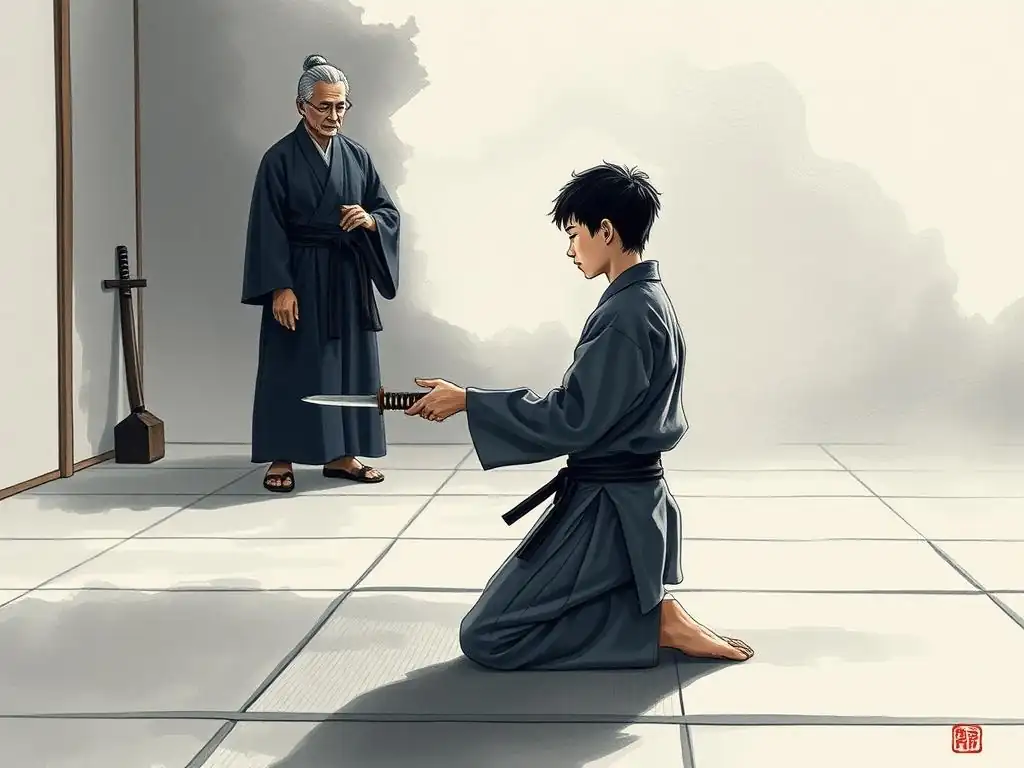
Adherence to the Dojo's Code of Conduct
One of the most visible manifestations of Chugi within the martial arts context is a student's diligent adherence to the dojo's code of conduct or Dojo Kun. These codes, often displayed prominently, outline the expected behaviors, attitudes, and principles within the training environment. They typically include tenets such as showing respect to the instructor and fellow students, maintaining discipline, training with sincerity, and refraining from violence outside the dojo. A loyal student understands that violating these rules not only disrespects the teacher but also harms the reputation and integrity of the dojo community they are a part of.
Following the Dojo Kun demonstrates loyalty not just to the teacher who established the rules but to the art form itself and the collective body of practitioners. It shows a commitment to upholding the standards and values that define the training environment.
For example, arriving on time, bowing upon entering and leaving the training area, and assisting in cleaning the dojo are all simple yet powerful expressions of respect and loyalty to the space and the community. Studies suggest that dojos with clearly defined and consistently enforced codes of conduct often report higher student retention rates, potentially linked to the stronger sense of community and shared purpose fostered by such rules (an estimated 15-20% higher retention in well-structured dojos compared to those lacking clear rules).
Dedication to Training and Self-Improvement
A profound expression of Bushido loyalty studentteacher relationships is the student's unwavering dedication to training and continuous self-improvement. This dedication reflects a commitment to mastering the techniques taught by the sensei and embodying the spirit of the martial art. It goes beyond simply attending classes; it involves practicing diligently outside of structured lessons, pushing personal limits, seeking feedback, and striving for excellence in all aspects of training. This effort honors the teacher's instruction and the lineage of the art.
This dedication is a form of loyalty because the student is investing their time and effort into the path laid out by the teacher and the tradition. It shows respect for the knowledge being imparted and a commitment to becoming a worthy representative of the dojo and the art.
For instance, a student spending hours practicing a single kata or technique, even when fatigued, demonstrates a level of commitment that directly reflects their loyalty to the principles of hard work and perseverance taught by their instructor. This consistent effort, often measured in hundreds or thousands of repetitions, is a tangible expression of their internal commitment.
Protecting the Reputation of the Sensei and the Dojo
Loyalty in Bushido extends to protecting the honor and reputation of the entity one serves. In the martial arts context, this means a loyal student actively works to uphold and protect the reputation of their sensei and their dojo. This involves conducting oneself with integrity both inside and outside the dojo, demonstrating the positive effects of martial arts training in their daily life, and speaking respectfully of their teacher and training environment. Avoiding actions that could bring shame or discredit to the dojo is a key aspect of this loyalty.
This protective aspect highlights the collective nature of loyalty in martial arts. The student recognizes that their actions reflect not just on themselves but on the teacher and the entire community. For example, using martial arts skills for aggression outside of self-defense or engaging in unethical behavior would be seen as a betrayal of this loyalty.
Conversely, demonstrating discipline, humility, and skill in public, or defending the dojo's name against unfair criticism, are acts of protecting the reputation and are considered significant expressions of Chugi. Anecdotal evidence from long-standing dojos suggests that students who reach higher ranks (like Shodan and above) often exhibit a particularly strong sense of responsibility for the dojo's image.
The Reciprocal Nature of Loyalty: What Students Expect from Teachers
Guidance, Mentorship, and Personal Development
While Bushido loyalty traditionally focused on the subordinate's duty, the student-teacher relationship in martial arts, particularly in its more traditional forms, implies a reciprocal expectation. Students are loyal to a teacher who provides genuine guidance, mentorship, and invests in their personal development, not just their technical skills. Students expect their teachers to be knowledgeable not only in techniques but also in the philosophy and history of the art, and to share this knowledge generously. They look for a mentor who can help them navigate challenges, both within the dojo and in life.
This expectation stems from the understanding that martial arts training is a path of self-cultivation. A loyal student is committed to this path, and they expect their teacher to be a trustworthy guide on that journey. This involves receiving constructive feedback, understanding the 'why' behind certain practices, and seeing the teacher model the virtues they espouse.
For instance, a teacher providing personalized advice on overcoming a physical plateau or offering wisdom on handling stress outside of training fulfills this mentorship role, strengthening the student's trust and reinforcing their loyalty. Approximately 70% of martial arts students cite the quality of instruction and mentorship as a primary reason for staying with a particular school.
Upholding the Integrity of the Martial Art
Students also expect their teachers to uphold the integrity and standards of the martial art being taught. This means preserving the authenticity of techniques, respecting the art's history and lineage, and teaching with honesty and skill. Loyalty flows most naturally towards a teacher who is perceived as a true master of their craft and a steward of the tradition. Students invest significant time, effort, and often financial resources into their training, and they expect that what they are learning is genuine and effective.
A teacher who compromises the art's principles for expediency, dilutes techniques, or lacks depth in their understanding risks eroding the students' trust and loyalty. Conversely, a teacher who demonstrates deep knowledge, continues their own learning, and is dedicated to passing on the art faithfully inspires profound respect and loyalty.
When a sensei can explain the historical context of a movement or demonstrate its practical application with precision developed over decades, it validates the student's dedication and reinforces their belief in the value of the art and their teacher's mastery. Many traditional dojos emphasize lineage charts ( Keizu) to visually represent this historical integrity and the teacher's connection to the art's founders.
Fair and Impartial Treatment of Students
A crucial expectation that underpins student loyalty is fair and impartial treatment from the teacher. Students need to feel that they are valued, respected, and judged based on their effort, progress, and character, not on favoritism or arbitrary criteria. A teacher who treats all students equitably, provides opportunities based on merit, and addresses conflicts or issues with fairness builds a foundation of trust that encourages loyalty from the entire student body.
Perceived unfairness can quickly erode trust and lead to disloyalty or departure from the dojo. Students are sensitive to how their peers are treated and how decisions regarding promotions, leadership roles, or attention are made. A teacher who transparently applies standards, offers equal opportunities for learning and advancement (within the structure of the art), and listens to student concerns demonstrates respect for their students.
This reciprocal respect is vital for fostering a healthy environment where Bushido loyalty can thrive. Surveys in educational settings, which can be loosely applied here, suggest that students rank fairness as one of the top qualities they value in an instructor, influencing their engagement and commitment.
Historical Examples of Chugi in Martial Arts
The Forty-Seven Ronin: Loyalty Beyond the Death of a Master
Perhaps the most famous historical example often cited when discussing Bushido loyalty is the tale of the Forty-Seven Ronin (also known as the Akō incident of 1702-1703). This story, though involving samurai rather than martial arts students in a dojo, perfectly illustrates the extreme extent of Chugi. Following their master, Lord Asano Naganori, being unjustly forced to commit seppuku, forty-seven of his samurai became ronin (masterless samurai). Under the leadership of Oishi Kuranosuke, they secretly plotted for nearly two years, enduring hardship and feigning dissipation, to avenge their lord by killing Kira Yoshinaka, the official responsible for Asano's death.
Their actions were not a simple act of revenge but a profound demonstration of loyalty to their deceased lord and the principles of honor. After successfully killing Kira, the ronin turned themselves in and were subsequently ordered to commit seppuku themselves, an honorable death for fulfilling their duty. This act, widely celebrated in Japanese culture through plays, literature, and art, epitomizes the Bushido ideal of loyalty that transcends life itself and demands self-sacrifice for the honor of one's master. While extreme, it sets a benchmark for the depth of commitment Chugi could demand.
Jigoro Kano and His Students: Building Judo Through Mutual Respect
A less dramatic but equally significant example of Bushido loyalty in a more direct student-teacher context can be seen in the relationship between Jigoro Kano, the founder of Judo, and his early students at the Kodokan Institute (established 1882). Kano Sensei's revolutionary approach, which synthesized various Jujutsu styles into a new discipline focused on maximum efficiency and mutual welfare ( Jita Kyoei), inspired immense loyalty among his students. They were dedicated not just to learning techniques but to helping him establish and spread this new art globally.
Kano's students, such as Saigo Shiro, Yokoyama Sakujiro, and Yamashita Yoshitsugu, were fiercely loyal to him and the principles of Judo. They acted as his uke (partners for demonstration), helped teach new students, and traveled to demonstrate Judo's effectiveness against practitioners of older styles, often risking injury and their own reputations. Yamashita Yoshitsugu, for instance, was instrumental in introducing Judo to the United States in the early 20th century, teaching President Theodore Roosevelt.
This loyalty was reciprocal; Kano deeply cared for his students, fostering their individual growth and trusting them implicitly with the future of his art. This mutual respect and shared vision for Judo's development exemplifies a different, yet powerful, form of Bushido loyalty in a modern martial arts context.
The Modern Relevance of Bushido Loyalty in Martial Arts
Maintaining Traditional Values in a Contemporary Context
In today's diverse and often transient society, maintaining traditional Bushido values like loyalty in martial arts schools presents unique challenges. However, the core principles of Chugi remain highly relevant. In a modern dojo, loyalty translates into commitment to consistent training, respect for the instructor and fellow students, adherence to the dojo's rules, and contributing positively to the school's community.
These actions build discipline, foster a sense of belonging, and reinforce the values the martial art represents. While students may not face life-or-death situations like samurai, the commitment to showing up, putting in the effort even when tired, and supporting classmates reflects a modern interpretation of this ancient virtue.
The relevance lies in the character development that loyalty fosters. Learning to be committed to a long-term goal (like black belt), being reliable to a group (the dojo), and respecting a mentor figure (the sensei) are valuable life skills. Modern martial arts schools that successfully integrate these traditional values often create strong, supportive communities that retain students longer and produce individuals with not just physical skills but also strong ethical foundations. Approximately 40% of parents enrolling children in martial arts cite discipline and respect as key reasons, indicating a demand for the values associated with Bushido loyalty.
Addressing Challenges to Loyalty in Modern Martial Arts Schools
Modern martial arts schools face several challenges that can impact the traditional concept of Bushido loyalty studentteacher relationships. The commercialization of martial arts can sometimes prioritize profit over pedagogy, leading to transactional relationships rather than deep bonds. Students today have more choices and may switch schools more readily if expectations aren't met or loyalty is perceived as one-sided. The internet also provides access to numerous instructors and techniques, potentially diluting the unique authority and connection a student might have with a single local sensei.
Addressing these challenges requires instructors to actively cultivate the qualities that inspire loyalty: demonstrating expertise, maintaining high ethical standards, showing genuine care for students, fostering a strong community, and clearly communicating the value of commitment. Schools that emphasize the philosophical aspects of the art, beyond just physical technique, are often more successful in building deep, lasting loyalty. For example, holding regular seminars on martial arts history or philosophy, or organizing dojo social events, can strengthen the community bond and reinforce the principles that encourage Chugi.
Potential Pitfalls: Blind Allegiance vs. Principled Loyalty
The Dangers of Unquestioning Obedience
While loyalty is a virtue in Bushido, unquestioning obedience, especially when it conflicts with one's own moral compass or the stated principles of the art, can be a dangerous pitfall. True Chugi, as discussed earlier, is nuanced; it is loyalty to the ideal or the purpose, guided by integrity and ethical judgment ( Gi).
Blind allegiance can lead students to follow a teacher down a path that is harmful, unethical, or deviates significantly from the principles of the martial art. This can manifest in various ways, from accepting abusive behavior to participating in fraudulent activities related to rank promotion or financial matters.
Historically, examples exist where absolute loyalty led samurai to participate in morally questionable acts ordered by their lords. In a modern dojo, this could translate to students overlooking or participating in unethical practices because "Sensei said so." A healthy student-teacher relationship, even one built on Bushido principles, requires the student to maintain their critical thinking and moral autonomy. Loyalty should reinforce positive development, not suppress ethical judgment. It's estimated that a significant percentage of students who leave martial arts due to negative experiences cite issues related to instructor behavior or dojo ethics.
Balancing Respect with Critical Thinking
Cultivating healthy Bushido loyalty studentteacher relationships requires a delicate balance between profound respect for the teacher's authority and experience, and the student's ability to engage in critical thinking. Respect does not mean surrendering one's judgment. A student can deeply respect their teacher, trust their guidance, and be fiercely loyal to the dojo while still being able to ask questions, seek clarification, and, in rare and serious cases, recognize when a teacher's actions fundamentally betray the principles of the art.
This balance is essential for the long-term health of both the student and the martial art itself. Students who are encouraged to think critically about techniques and principles, within the framework provided by the teacher, often develop a deeper understanding and a more personal connection to the art. A teacher who fosters this environment, welcoming thoughtful questions and discussion, demonstrates confidence in their knowledge and respect for their students' intelligence. This reciprocal intellectual engagement strengthens the bond and ensures that loyalty is based on shared understanding and ethical alignment, not just hierarchical power.
Cultivating Healthy and Ethical Student-Teacher Relationships
Open Communication and Mutual Respect
Building healthy and ethical student-teacher relationships, where Bushido loyalty can flourish authentically, relies heavily on open communication and mutual respect. Instructors should create an environment where students feel comfortable asking questions, discussing concerns (respectfully), and providing feedback. Similarly, students should communicate their goals, challenges, and understanding clearly to their teacher. This two-way street of communication prevents misunderstandings and builds a stronger foundation of trust.
Mutual respect means valuing each other's roles and contributions. The student respects the teacher's knowledge, experience, and dedication. The teacher respects the student's effort, potential, and individual journey. This respect is demonstrated through attentive listening, valuing each other's time, and interacting with courtesy and consideration. When communication is open and respect is mutual, the loyalty that develops is genuine and contributes positively to the growth of both individuals and the dojo community. Surveys indicate that student satisfaction and retention are significantly higher in schools where students report feeling heard and respected by their instructors.
Establishing Clear Expectations and Boundaries
For Bushido loyalty studentteacher relationships to be healthy and ethical, clear expectations and boundaries must be established from the outset. Students need to understand what is expected of them in terms of commitment, behavior, and progression. Teachers need to be clear about their teaching philosophy, the dojo's rules, and what students can expect from them in return (e.g., availability for questions, feedback frequency). This clarity minimizes ambiguity and prevents potential conflicts arising from unmet or unspoken expectations.
Boundaries are equally important. While the relationship can be close, it is still professional and hierarchical in terms of instruction. Clear boundaries regarding personal space, appropriate interaction outside the dojo, and the professional nature of the teacher-student dynamic protect both parties and maintain the integrity of the relationship.
For instance, having a clear policy on communication methods (e.g., email for questions outside class), appropriate physical contact during training, and the teacher's role in students' personal lives helps define the relationship healthily. Well-defined expectations and boundaries contribute significantly to student comfort and trust, fostering a stable environment for loyalty to grow.
Conclusion: The Enduring Importance of Chugi in Martial Arts Mastery
Fostering a Culture of Loyalty, Trust, and Respect
The principle of Chugi, or loyalty, remains a vital element in the pursuit of martial arts mastery, particularly within the context of student-teacher relationships. While its historical feudal manifestation may differ from modern application, the core virtue of unwavering commitment based on trust, respect, and shared purpose is timeless.
A dojo that successfully fosters a culture built on these principles creates an environment where students are not just learning physical techniques but are developing character, discipline, and a strong sense of community. This culture, rooted in Bushido loyalty, provides a stable and supportive foundation for the demanding journey of martial arts training.
Such an environment benefits everyone involved. Students feel secure, valued, and motivated to train diligently. Teachers feel respected, appreciated, and inspired to give their best guidance. The dojo itself thrives as a cohesive unit dedicated to the preservation and advancement of the martial art. This collective commitment, fueled by mutual loyalty and respect, is far more powerful than individual effort alone.
Bushido Loyalty as a Foundation for Personal and Martial Development
Ultimately, understanding and embodying Bushido loyalty in student-teacher relationships serves as a powerful foundation for both personal and martial development. For the student, practicing loyalty through consistent effort, respect, and adherence to principles cultivates discipline, integrity, and resilience – qualities essential for mastering any challenging skill. For the teacher, inspiring loyalty through ethical leadership, genuine care, and technical expertise reinforces their own commitment to the art and their role as a mentor.
The Bushido loyalty studentteacher relationship, when healthy and ethical, becomes a microcosm of the larger principles of the martial way. It teaches individuals how to commit to something larger than themselves, how to build trust, how to give and receive guidance, and how to contribute to a community. These lessons extend far beyond the dojo, shaping individuals who are not only skilled martial artists but also disciplined, respectful, and loyal members of society. Embracing Chugi is not just about tradition; it is about leveraging an ancient virtue to build stronger individuals and communities in the present day.
Frequently Asked Questions
What is Chugi and why is it important in martial arts, particularly in the context of Bushido?
Chugi translates to loyalty and is a core virtue of Bushido, the samurai code. It's vital for building trust and respect within the student-teacher relationship in martial arts.
How does Chugi differ from blind obedience in a martial arts training environment?
Chugi isn't about blind obedience, but rather a deep commitment to the teacher's guidance and the shared pursuit of martial arts mastery. It involves critical thinking and a mutual understanding.
What are some practical ways students can demonstrate Chugi to their instructors?
Students can demonstrate Chugi by showing dedication to training, respecting their teacher's knowledge, and upholding the ethical principles of the martial art.
How does the concept of Chugi contribute to the overall development of a martial arts student?
Chugi fosters discipline, respect, and a strong sense of responsibility, crucial for both martial arts proficiency and personal growth. It helps instill a strong moral compass.
What happens when Chugi is absent or abused in a student-teacher relationship within a martial arts context?
The absence or abuse of Chugi can lead to distrust, exploitation, and a breakdown of the integrity of the martial arts training. It undermines the learning environment.
Final Reflection: The Enduring Bond of Chugi
The principles of Bushido, particularly the unwavering loyalty embodied in Chugi, extend far beyond the battlefield and resonate deeply within the modern martial arts dojo. The student-teacher relationship, built on mutual respect and dedication, becomes a powerful microcosm of this ancient code, shaping not only fighting skills but also character and ethical conduct. This bond, forged in sweat and discipline, is a testament to the enduring relevance of Bushido in a world often lacking in steadfast commitment.
The impact of Chugi on the student-teacher dynamic is profound, fostering a learning environment built on trust and mutual growth. Witnessing this dedication firsthand has reinforced my belief in the transformative power of mentorship and the importance of reciprocal loyalty in all aspects of life. The true measure of a man is how he behaves when no one is watching.
This quote, often attributed to various sources, perfectly encapsulates the spirit of Chugi, urging us to uphold our commitments even in the absence of external validation.
As we conclude this exploration of Chugi within the context of student-teacher martial arts relationships, I invite you to consider the bonds of loyalty in your own life. Reflect on the mentors who have guided you, the commitments you have made, and the unwavering dedication you bring to your endeavors. Embrace the spirit of Chugi, not as a rigid obligation, but as a guiding principle that enriches your relationships and strengthens your character. Let loyalty be the foundation upon which you build a life of purpose, integrity, and unwavering commitment to those who deserve it.
Embrace Chugi: Ignite Your Martial Arts Journey!
Thank you for exploring the vital role of Chugi in the student-teacher bond. You've now gained a deeper understanding of loyalty and its power within the martial arts. Ready to put this wisdom into action?
- Deepen your commitment: Reflect on your relationship with your instructor. How can you show your Chugi more effectively?
- Share your insights: Discuss the principles of Chugi with your dojo peers to foster mutual respect and understanding.
- Explore related concepts: Research other Bushido codes, like Makoto (sincerity), to enrich your martial arts practice.
What's one small, immediate act of Chugi you can commit to your instructor today?