
The Tao Te Ching: A Martial Artist's Guide to Lao Tzu's Timeless Wisdom

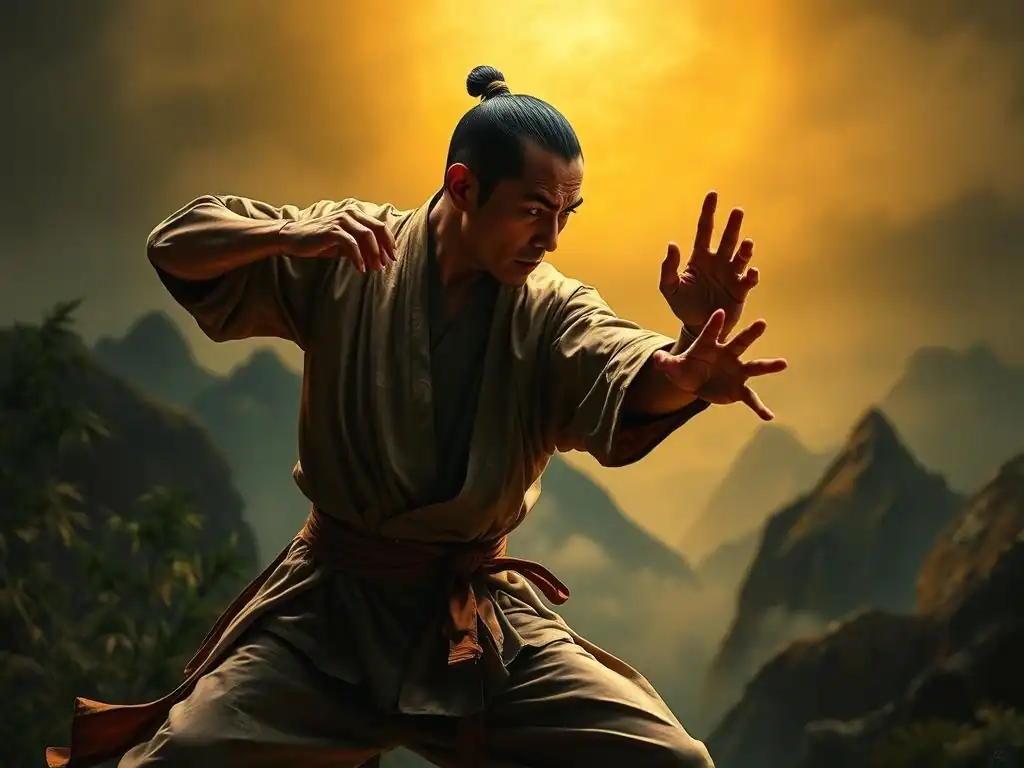
Welcome to Martial Arts Mastery, where we delve into the rich tapestry of combat disciplines worldwide. Ever wondered how ancient philosophy intertwines with the practical application of martial arts? Prepare to unlock a new dimension of understanding as we explore The Tao Te Ching: A Martial Artist's Guide to Lao Tzu's Timeless Wisdom. Discover how Lao Tzu's martial arts wisdom, often overlooked, provides profound insights into strategy, self-awareness, and the very essence of martial prowess. What secrets does the Tao hold for the modern martial artist? Read on and prepare to be enlightened...
- Introduction: Unlocking Martial Arts Mastery Through Taoism
- Understanding the Tao: The Foundation of Lao Tzu's Teachings
- Core Taoist Principles and Their Application in Martial Arts
- Key Verses from the Tao Te Ching and Their Martial Arts Interpretations
- Practical Applications of Lao Tzu's Wisdom in Martial Arts Training
- Case Studies: Martial Arts Masters Influenced by Taoist Philosophy
- Conclusion: The Enduring Legacy of Lao Tzu for Martial Arts Practitioners
-
Frequently Asked Questions
- What is the relevance of the Tao Te Ching to martial arts?
- How does Lao Tzu's philosophy influence martial arts training?
- What are some key concepts from the Tao Te Ching that martial artists can apply?
- How can understanding Lao Tzu's wisdom improve self-defense strategies?
- Where can I learn more about the connection between Lao Tzu and martial arts?
- Final Reflection: Embracing the Flow of Lao Tzu's Wisdom
- Unleash Your Inner Master: Embrace the Tao Now!
Introduction: Unlocking Martial Arts Mastery Through Taoism
The Relevance of Lao Tzu's Philosophy for Modern Martial Artists
In the often-demanding world of modern martial arts, practitioners focus heavily on physical conditioning, technique acquisition, and strategic application. While these elements are undoubtedly crucial, the enduring wisdom found within philosophical texts like the Tao Te Ching offers a profound, often overlooked, dimension to training and mastery.
Lao Tzu's ancient insights, compiled around the 4th century BCE, provide a framework not just for living harmoniously but also for approaching combat and self-improvement with a deeper understanding of natural principles. Exploring Lao Tzu martial arts wisdom can transform a practitioner's perspective from merely performing movements to embodying the underlying flow and efficiency of the universe.
Beyond the physical techniques, integrating philosophy can significantly impact a martial artist's longevity and mental fortitude. Studies in sports psychology indicate that athletes who incorporate mindfulness and philosophical principles often exhibit greater resilience under pressure and sustain a higher level of performance over time.
For instance, a dedicated martial artist who internalizes concepts like acceptance and adaptability from the Tao Te Ching might be better equipped to handle training plateaus, injuries, or competition losses, viewing them not as failures but as natural parts of the journey. This application of Lao Tzu martial arts wisdom fosters a more sustainable and fulfilling path towards true mastery.
Bridging Ancient Wisdom and Contemporary Combat
The principles articulated by Lao Tzu in the Tao Te Ching, though ancient, possess a remarkable relevance to contemporary combat scenarios, whether in competitive sport, self-defense, or traditional practice. Concepts such as yielding to overcome force, acting without striving, and understanding the interplay of opposites (like hard and soft, front and back) are directly applicable to strategic thinking and physical execution in a confrontation. Modern martial arts, despite their diverse origins and techniques, universally benefit from an underlying philosophical foundation that guides the practitioner's intent and application of force.
Applying Lao Tzu martial arts wisdom involves translating abstract philosophical ideas into concrete physical and mental practices. For example, the Taoist emphasis on naturalness and spontaneity challenges the martial artist to move beyond rigid, pre-programmed responses and cultivate intuitive action. This is seen in many modern systems that prioritize adaptability and flow, enabling practitioners to react effectively to unpredictable situations. Bridging ancient wisdom and contemporary combat techniques allows martial artists to develop not only formidable physical skills but also a calm, centered mind capable of navigating the complexities of conflict with grace and efficiency.
Understanding the Tao: The Foundation of Lao Tzu's Teachings
Defining the Tao: The Way of Nature and the Universe
At the heart of Lao Tzu's philosophy is the concept of the Tao, often translated as "The Way." It is described as the fundamental, ineffable principle that underlies the entire universe – the natural order, the flow of existence, the source from which all things arise. The Tao is not a deity or a set of rules, but rather the spontaneous, dynamic process of reality itself.
Understanding the Tao involves observing nature – the cycle of seasons, the flow of water, the growth of plants – and recognizing the effortless efficiency and harmony inherent in its processes. For a martial artist, grasping the Tao means recognizing the natural rhythms of combat, the path of least resistance, and the interconnectedness of attacker and defender.
Applying this understanding of the Tao to martial arts fosters a different kind of power – one rooted in alignment with natural forces rather than brute force alone. It encourages the practitioner to move in harmony with the opponent's energy, much like water flows around obstacles.
This perspective shifts the focus from imposing one's will through sheer strength to leveraging natural principles for maximum effect. Embracing the Tao in martial arts training means cultivating a sense of flow, spontaneity, and effortless power, aligning one's actions with the fundamental "Way" of the universe and unlocking deeper aspects of Lao Tzu martial arts wisdom.
Wu Wei: The Art of Non-Action in Martial Arts
Wu Wei, often translated as "non-action" or "effortless action," is a core Taoist principle that holds profound significance for martial artists. It does not mean doing nothing, but rather acting in accordance with the natural flow of things, without excessive effort, striving, or resistance. In martial arts, Wu Wei translates to responding spontaneously and appropriately to a situation without forcing a predetermined technique or outcome. It is the ability to act effectively from a state of calm awareness, allowing the body to move naturally in response to the opponent's actions, much like a skilled dancer moves with their partner.
Practicing Wu Wei in martial arts involves cultivating a state of relaxed readiness and heightened sensitivity. Instead of rigidly executing a technique, the practitioner learns to feel the opponent's energy, structure, and intent, and respond in the most efficient way possible, often by yielding or redirecting force. This principle is evident in arts like Aikido, where blending with and redirecting an attacker's energy is fundamental. Mastering Wu Wei allows the martial artist to conserve energy, remain calm under pressure, and utilize the opponent's momentum against them, embodying the profound practicality of Lao Tzu martial arts wisdom in motion.
Te: Cultivating Virtue and Inner Power for Martial Excellence
While Tao represents the universal principle, Te can be understood as the manifestation of the Tao within individuals and things – the inherent power, virtue, or character that arises from living in harmony with the Tao. For the martial artist, Te is the cultivation of inner power, moral character, and practical effectiveness that stems from aligning one's training and life with Taoist principles. It is not just about physical technique, but about developing resilience, integrity, discipline, and a calm, focused mind.
Cultivating Te in martial arts involves rigorous physical training coupled with dedicated self-reflection and ethical development. It means practicing with sincerity, respecting training partners, maintaining humility, and striving for continuous self-improvement not just physically, but also mentally and morally. This inner development enhances the martial artist's presence, focus, and ability to act effectively under duress. A practitioner strong in Te possesses not only physical prowess but also the inner calm and moral clarity to use their skills wisely and responsibly, demonstrating the deep connection between character and capability inherent in Lao Tzu martial arts wisdom.
Core Taoist Principles and Their Application in Martial Arts
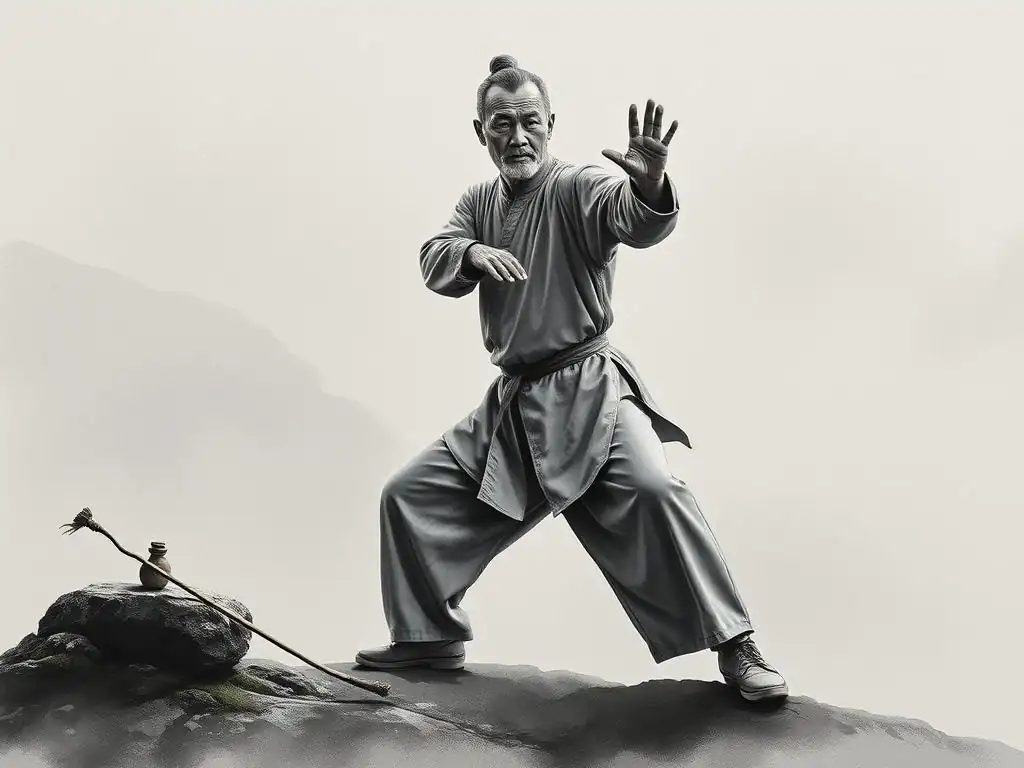
The Power of Yin and Yang in Combat Strategy
The concept of Yin and Yang describes the fundamental duality and interconnectedness of all things in the universe – opposing yet complementary forces that are constantly in dynamic balance. Yin represents qualities like softness, yielding, darkness, inwardness, and receptivity, while Yang represents hardness, assertiveness, light, outwardness, and activity. In martial arts, understanding Yin and Yang is crucial for developing effective combat strategy, recognizing that every action has an opposite reaction, and that strength lies not just in asserting one force but in mastering the interplay between the two.
A strategic application of Yin and Yang involves knowing when to be hard (Yang) and when to be soft (Yin), when to advance and when to retreat, when to attack and when to defend or evade. Effective techniques often involve a rapid transition between Yin and Yang states – yielding slightly (Yin) to absorb an impact before exploding with force (Yang), or using a seemingly soft movement (Yin) to set up a powerful strike (Yang).
This dynamic balance prevents predictability and allows the martial artist to adapt fluidly to the ever-changing flow of combat, embodying the essence of Lao Tzu martial arts wisdom in strategic action.
Balancing Offense and Defense: A Taoist Approach
A core application of Yin and Yang in combat strategy is the dynamic balance between offense (Yang) and defense (Yin). A purely offensive approach can leave one vulnerable, while a purely defensive stance can lead to being overwhelmed. The Taoist perspective emphasizes the interconnectedness of these two forces; defense is not merely blocking, but setting up offense, and offense is not just attacking, but creating defensive opportunities.
This balance is achieved by moving between offensive and defensive postures and actions seamlessly, using defensive movements to create openings for attack and offensive pressure to limit the opponent's defensive options. For example, a parry (Yin defense) might simultaneously redirect the opponent's force while positioning the practitioner for a counter-strike (Yang offense). This continuous interplay ensures that the martial artist is always both protected and prepared to capitalize on opportunities, reflecting the natural balance described in Lao Tzu martial arts wisdom.
Utilizing Opponent's Strength Against Them
Another key application of the Yin/Yang principle is the ability to utilize the opponent's strength (Yang) against them (Yin). Instead of meeting force with equal or greater force, which can be inefficient and draining, the Taoist approach often involves yielding or blending (Yin) to absorb or redirect the incoming energy.
This redirection allows the practitioner to leverage the opponent's momentum and power, turning their own strength into a disadvantage for them. Techniques like joint locks, throws, and sweeps often employ this principle, using the attacker's forward momentum or stability to facilitate their unbalancing or control. This embodies the Taoist idea that softness can overcome hardness, demonstrating a sophisticated understanding of force dynamics derived from Lao Tzu martial arts wisdom.
Simplicity and Naturalness in Martial Arts Technique
Lao Tzu often spoke of the power of simplicity and the wisdom of returning to a natural state. In martial arts, this translates to valuing efficient, unforced movements over complex, artificial ones. Naturalness means moving in accordance with the body's biomechanics and the principles of physics, avoiding unnecessary tension or convoluted techniques. Simplicity means stripping away the superfluous, focusing on the core principles that make techniques effective.
Training with simplicity and naturalness involves cultivating a deep understanding of fundamental movements and applying them directly and without embellishment. It emphasizes root strength, relaxed power, and fluid transitions. Techniques should feel organic and effortless, not strained or mechanical. This approach conserves energy, reduces the chance of injury, and allows for greater adaptability, as simple, natural movements can be easily modified to suit different situations, reflecting a core tenet of Lao Tzu martial arts wisdom.
Streamlining Movements for Efficiency and Power
Streamlining movements is a direct application of the principle of simplicity. This involves eliminating any wasted motion, unnecessary tension, or complex sequences that don't contribute directly to the technique's objective. Efficient movement travels the shortest distance, uses the least amount of energy, and generates maximum power through proper body mechanics and coordination.
Consider a simple punch: a streamlined movement involves rooting through the legs, rotating the hips and core, and extending the arm along the most direct line to the target, releasing tension until the point of impact. An unstreamlined punch might involve unnecessary winding up, excessive tension in the shoulders, or a circuitous path, reducing both speed and power while increasing fatigue. Focusing on streamlining allows the martial artist to perform techniques with greater speed, impact, and endurance, embodying the efficiency sought in Lao Tzu martial arts wisdom.
Avoiding Artificiality and Embracing Intuition
Naturalness in martial arts means avoiding artificial, rigid movements that are divorced from the body's inherent structure and flow. It encourages the practitioner to move intuitively, responding spontaneously to the unfolding situation rather than relying solely on pre-programmed patterns. While foundational techniques must be learned, true mastery involves internalizing them to the point where they can be expressed naturally and adaptively.
Embracing intuition means trusting one's trained instincts and responding to the subtle cues from the opponent and the environment. This is closely related to Wu Wei, allowing the body and mind to act in harmony without conscious deliberation hindering the response. Training should cultivate this intuitive capacity, moving beyond rote memorization to a state where effective action arises spontaneously from a centered and aware state, a practical application of the natural flow described in Lao Tzu martial arts wisdom.
Humility and Acceptance in the Martial Arts Journey
Taoist philosophy places great value on humility, often illustrating how the lowest places (like valleys and water) are the most powerful because they receive from all others. For the martial artist, humility is essential for continuous growth. It means recognizing that there is always more to learn, that mastery is a lifelong journey, and that ego can be a significant obstacle to progress. Acceptance involves acknowledging one's current limitations, learning from mistakes, and embracing the challenges inherent in the training process.
Cultivating humility and acceptance fosters a resilient and open mindset. Instead of becoming defensive when corrected or defeated, the humble practitioner sees these moments as valuable learning opportunities. Acceptance allows one to let go of frustration and self-criticism, focusing instead on persistent, dedicated practice. These qualities are not weaknesses but sources of strength, enabling the martial artist to remain teachable, adaptable, and grounded throughout their journey towards mastery, reflecting the inner strength found in Lao Tzu martial arts wisdom.
The Importance of Continuous Learning and Self-Improvement
Humility directly fuels the commitment to continuous learning and self-improvement. Acknowledging that one does not possess all the answers or perfect skill creates an openness to instruction, feedback, and exploration. Martial arts is a vast field, and even the most experienced practitioners can refine their techniques, deepen their understanding of principles, and learn new applications.
This ongoing process of learning involves seeking out knowledgeable instructors, training with diverse partners, studying the history and philosophy of their art, and critically analyzing their own performance. It's a commitment to being a perpetual student, always seeking marginal gains and deeper insights. This dedication to growth, rooted in humility, is fundamental to progressing along the path of martial arts mastery and embodying the lifelong pursuit of knowledge inherent in Lao Tzu martial arts wisdom.
Overcoming Ego and Embracing Vulnerability
Ego is a significant barrier to progress in martial arts. It can manifest as resistance to correction, fear of looking foolish, unwillingness to train with those perceived as weaker, or arrogance stemming from perceived strength. Taoism teaches the power of emptiness and yielding, concepts directly opposed to the rigidity of ego. Embracing vulnerability means being willing to fail, to be corrected, and to expose weaknesses in the pursuit of improvement.
Overcoming ego requires conscious effort and self-awareness. It involves listening actively, accepting constructive criticism graciously, and focusing on the process of learning rather than the outcome or external validation. Training partners and instructors serve as mirrors, reflecting areas for growth. By embracing vulnerability and letting go of the need to always be "right" or "strong," the martial artist opens themselves up to deeper learning and connection, aligning with the principles of humility and acceptance central to Lao Tzu martial arts wisdom.
Key Verses from the Tao Te Ching and Their Martial Arts Interpretations
Verse 17: The Best Leaders Are Those Who Are Barely Known
Verse 17 of the Tao Te Ching speaks about different levels of leadership, suggesting that the most effective leaders are those whose presence is so subtle that the people barely know they exist, yet their work is done and their aim fulfilled. This principle translates powerfully to martial arts strategy and application. It speaks to the effectiveness of techniques that are subtle, understated, and rely on minimal overt force, achieving maximum effect without the opponent fully understanding what happened or why.
Applying this verse in combat means cultivating techniques that are efficient and unassuming. Instead of telegraphing intentions or relying on flashy, elaborate movements, the martial artist seeks the most direct and unobtrusive path to achieving their objective, whether it's creating an opening, executing a throw, or applying a lock. The opponent is defeated not by overwhelming force they can easily perceive and resist, but by a subtle manipulation or redirection they might not even recognize until it's too late. This embodies a sophisticated level of Lao Tzu martial arts wisdom, where power lies in subtlety, not display.
Applying the Principle of Subtlety and Influence in Combat
Subtlety in combat involves using minimal movements and force to achieve significant effects. It's about influence rather than direct confrontation. This can include subtle shifts in weight or posture to disrupt an opponent's balance (Kuzushi in Judo), using slight pressure points to control movement, or employing feints and deceptive movements that are barely noticeable but create crucial openings.
Consider a grappler using subtle pressure on an opponent's head or neck to guide their body in a desired direction, rather than trying to muscle them into position. Or a striker using slight shifts in rhythm or angle to draw a reaction before attacking. These subtle actions, like the barely known leader, guide the interaction towards a desired outcome without overt resistance. This level of application requires refined skill and sensitivity, allowing the martial artist to exert influence without appearing to strive, a practical manifestation of Lao Tzu martial arts wisdom.
The Tactical Advantage of Deception and Unpredictability
Related to subtlety is the tactical advantage gained through deception and unpredictability. If an opponent cannot easily perceive your intentions or predict your actions, their ability to defend and counter is severely hampered. The "barely known" leader operates in a way that leaves others wondering how things were accomplished; similarly, the subtle martial artist leaves their opponent guessing.
Deception can involve making one movement appear to be another, using feints, or creating false reads. Unpredictability stems from a lack of rigidity and the ability to transition fluidly between different types of techniques and energies (Yin and Yang). By not adhering to obvious patterns, the martial artist keeps the opponent off-balance mentally as well as physically. This unpredictable flow, rooted in subtle action, is a powerful application of Lao Tzu martial arts wisdom in tactical engagement.
Verse 43: The Softest Thing in the Universe Overcomes the Hardest Thing
Verse 43 states, "The softest thing in the universe overcomes the hardest thing." This is one of the most iconic expressions of Lao Tzu's philosophy and has direct, tangible applications in martial arts. Water, often used as an analogy for the Tao, is soft and yielding, yet it can wear away stone and reshape landscapes. Similarly, in combat, yielding, flexibility, and adaptability (the "soft" qualities) can overcome rigid force and brute strength (the "hard" qualities).
This principle manifests physically in techniques that absorb impact by yielding, redirect force rather than blocking it directly, or use flexibility and leverage to control a rigid opponent. It also applies mentally, where a flexible and adaptable mind can navigate challenges that break a rigid, unyielding one. Embracing the power of softness is not about weakness, but about recognizing a different kind of strength – one that is resilient, pervasive, and ultimately irresistible, a central tenet of Lao Tzu martial arts wisdom.
Developing Resilience and Adaptability in Training and Combat
The ability of softness to overcome hardness speaks to the importance of resilience and adaptability. Resilience is the capacity to recover quickly from difficulties; adaptability is the ability to adjust to new conditions. Both are "soft" qualities compared to the rigid "hardness" of resistance or inflexibility. In training, this means being able to bounce back from setbacks, learn from injuries, and adjust training methods as needed.
In combat, resilience allows the martial artist to absorb strikes or withstand pressure without breaking, while adaptability enables them to change tactics and techniques on the fly in response to the opponent's actions. A rigid fighter is easily broken when their structure is compromised; a flexible and resilient fighter can absorb the shock and regain their composure or shift their approach. This cultivated resilience and adaptability is a practical outcome of applying Lao Tzu martial arts wisdom.
Cultivating Flexibility in Technique and Strategy
Flexibility, both physical and strategic, is key to embodying the principle that softness overcomes hardness. Physical flexibility allows the body to move freely, absorb impacts, and execute techniques from awkward positions. Strategic flexibility means not being locked into a single plan or technique, but being able to fluidly switch between different approaches based on what the situation demands.
Training should emphasize developing a relaxed body capable of generating power without tension and moving through a full range of motion. Strategically, practitioners should drill transitions between techniques, practice adapting to different opponents' styles, and learn to see opportunities in unexpected situations. This cultivated flexibility allows the martial artist to flow like water, finding the path of least resistance and overcoming rigid obstacles, a direct implementation of Lao Tzu martial arts wisdom.
Verse 67: I Have Three Treasures That I Hold and Guard
Verse 67 lists Lao Tzu's "three treasures" or jewels: compassion (or deep love), frugality (or simplicity/moderation), and humility (or not daring to be first in the world). While seemingly unrelated to combat, these virtues are presented as the foundation of strength and effective leadership, and they hold significant value for the martial artist seeking mastery beyond mere physical skill.
These treasures guide the martial artist's conduct both within and outside the training hall. Compassion fosters respect for training partners and opponents, and understanding the true purpose of martial arts (protection, not aggression). Frugality encourages efficiency in movement and conservation of energy, avoiding wasted effort. Humility reinforces the commitment to continuous learning and prevents the arrogance that leads to stagnation and recklessness. Cultivating these three treasures provides a strong ethical and mental foundation for the martial artist, integral to embodying Lao Tzu martial arts wisdom.
Applying Compassion, Frugality, and Humility to Martial Arts Practice
Applying compassion in martial arts practice means treating training partners with care and respect, recognizing that they are essential to your growth. It also extends to a broader understanding of conflict – seeking de-escalation when possible and using force only when necessary and proportionate. Frugality translates to efficiency in technique, using only the necessary amount of force and movement. It also applies to training habits – focusing on quality practice over excessive, exhausting effort. Humility means approaching every training session with a willingness to learn, being open to correction, and recognizing the contributions of others to your development.
These three treasures are not abstract ideals but practical guides for daily training. Compassion ensures safe and productive training environments. Frugality optimizes physical performance and endurance. Humility guarantees continuous improvement. Together, they shape a martial artist's character, making them not only more effective in technique but also more responsible and grounded individuals, demonstrating the holistic approach inherent in Lao Tzu martial arts wisdom.
Prioritizing Self-Discipline and Ethical Conduct
The three treasures inherently lead to prioritizing self-discipline and ethical conduct. Compassion provides the ethical compass, guiding the martial artist to use their skills responsibly and for the right reasons. Frugality encourages disciplined training and efficient use of resources (physical and mental). Humility fosters the self-discipline required for consistent, dedicated practice and continuous self-assessment.
Self-discipline is the bedrock of any martial art – the commitment to showing up, putting in the work, and pushing through challenges. Ethical conduct ensures that powerful skills are used constructively and morally. A martial artist who cultivates these treasures is not only physically capable but also possesses the moral strength and discipline to be a positive force, aligning their actions with the higher principles of their art and the profound ethical dimensions of Lao Tzu martial arts wisdom.
Practical Applications of Lao Tzu's Wisdom in Martial Arts Training
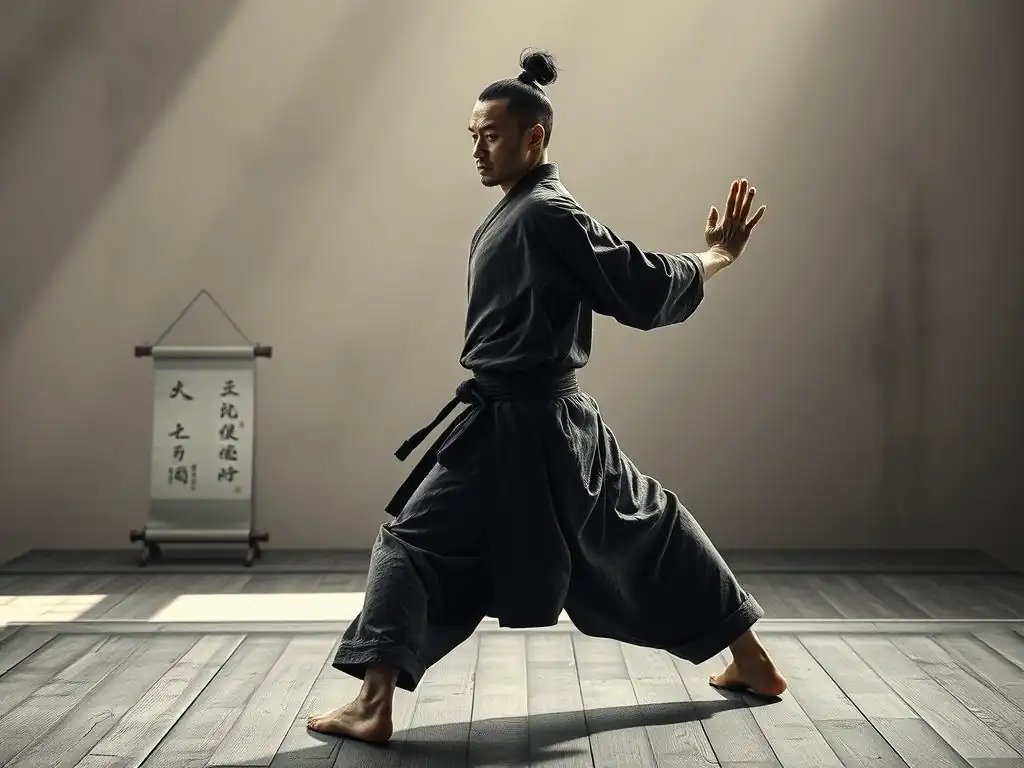
Integrating Taoist Principles into Daily Practice
Integrating Taoist principles into daily martial arts practice goes beyond merely understanding the concepts; it involves actively applying them in how one trains, thinks, and behaves. This means consciously seeking naturalness and efficiency in movements, practicing techniques with a focus on flow rather than rigidity, and cultivating a calm, centered mind even during strenuous activity. It's about making the principles of Wu Wei, Yin/Yang balance, and simplicity tangible in every punch, kick, throw, or block.
For example, during repetitive technique drills, a practitioner can focus on relaxing unnecessary muscles (Wu Wei), finding the most direct path for the movement (simplicity), and feeling the interplay of tension and release (Yin/Yang). In sparring, the focus shifts from winning to feeling the opponent's energy and responding appropriately (Wu Wei, Yin/Yang). This conscious integration transforms physical exercise into a moving meditation and a practical exploration of Lao Tzu martial arts wisdom.
Mindfulness Exercises for Enhanced Awareness
Mindfulness, a practice of paying attention to the present moment without judgment, is a powerful tool for integrating Taoist principles and enhancing awareness in martial arts. Increased awareness of one's own body, breath, and mental state, as well as the environment and the opponent, is crucial for effective technique and strategy.
Simple mindfulness exercises like focusing on the breath during warm-ups, paying close attention to the physical sensations of movement during drills, or observing thoughts and emotions without attachment can significantly improve a martial artist's presence and responsiveness. This heightened awareness allows for quicker reactions, better balance, and a deeper connection to the principles of naturalness and flow, embodying the present-moment focus inherent in Lao Tzu martial arts wisdom.
Cultivating Inner Peace Through Meditation
Cultivating inner peace through meditation is another practical way to embody Taoist principles. Meditation helps calm the mind, reduce mental clutter, and develop focus – all essential qualities for a martial artist facing the chaos of combat. A peaceful mind is not a passive one, but one that is clear, alert, and capable of responding effectively without being paralyzed by fear or clouded by anger.
Regular meditation practice, even just 5-10 minutes daily, can improve concentration, emotional regulation, and overall mental resilience. This inner calm translates directly to performance in martial arts, allowing the practitioner to remain centered under pressure, think clearly in dynamic situations, and access their skills without hesitation. Inner peace, cultivated through practices like meditation, is a powerful component of the inner power (Te) described in Lao Tzu martial arts wisdom.
Taoist Strategies for Conflict Resolution and Self-Defense
Taoist principles offer valuable strategies not only for physical combat but also for conflict resolution and self-defense in a broader sense. The emphasis on yielding, flexibility, and seeking the path of least resistance suggests approaches that prioritize de-escalation and avoiding confrontation when possible, using force only as a last resort.
Applying Taoist strategies means assessing a situation calmly, seeking non-violent solutions first, and if physical defense becomes necessary, using techniques that are efficient, natural, and aim to neutralize the threat with minimal harm. It encourages using awareness and positioning to avoid danger, employing verbal de-escalation techniques, and, if forced to defend, using the opponent's aggression against them rather than engaging in a brute-force battle. This approach aligns with the Taoist preference for harmony and the minimal use of force, showcasing practical Lao Tzu martial arts wisdom for real-world situations.
De-escalation Techniques Rooted in Non-Violence
The Taoist preference for harmony and avoiding unnecessary conflict translates directly into valuing de-escalation techniques. Before physical force is considered, a Taoist-influenced approach would prioritize remaining calm, using non-threatening body language, and employing calm, clear communication to attempt to defuse a situation.
This might involve acknowledging the other person's feelings, avoiding confrontational stances or language, and attempting to find a non-violent resolution. The goal is to prevent the situation from escalating to physical violence, embodying the principle of Wu Wei – resolving the conflict through "non-action" in the sense of not engaging in aggressive behavior, a powerful application of Lao Tzu martial arts wisdom.
Utilizing Natural Movements for Effective Self-Protection
Should physical self-defense become unavoidable, Taoist principles advocate for utilizing natural, efficient movements. This means relying on innate human biomechanics and reflexes rather than complex, artificial techniques that might fail under stress. Techniques should be simple, direct, and leverage natural body structure and movement patterns.
Examples include using body weight and structure for stability and power, employing natural reflexes like flinching or ducking defensively, and using movements like pushing, pulling, or turning that are fundamental to human locomotion. The focus is on effectiveness and adaptability in chaotic, high-stress situations, where complex motor skills can degrade. By rooting self-protection in natural movements, the martial artist can respond more reliably and powerfully, drawing upon the inherent efficiency described in Lao Tzu martial arts wisdom.
The Tao Te Ching as a Guide for Ethical Martial Arts Practice
Beyond physical technique and strategy, the Tao Te Ching serves as a profound guide for the ethical dimension of martial arts practice. It provides a philosophical basis for concepts like respect, humility, and the responsible use of power. Martial arts training develops formidable skills, and Taoist philosophy offers a moral compass to ensure these skills are used for positive purposes – self-improvement, defense, and promoting harmony – rather than for aggression, dominance, or ego gratification.
Ethical practice involves respecting training partners, instructors, and opponents, adhering to the rules of the dojo or competition, and understanding the potential impact of one's skills. The Taoist emphasis on humility and compassion counteracts the potential for arrogance and aggression that can arise from developing physical prowess. By internalizing the wisdom of the Tao Te Ching, martial artists can ensure their practice is not just about fighting ability, but about cultivating character and contributing positively to the world, reflecting the deep ethical core of Lao Tzu martial arts wisdom.
Respect for Opponents and the Pursuit of Self-Improvement
A key ethical principle rooted in Taoism is respect for opponents. In training or competition, the opponent is not an enemy but a partner in mutual improvement. They provide the resistance necessary for testing skills and discovering weaknesses. This perspective fosters a spirit of learning and growth rather than animosity.
Respect extends to fighting fairly, showing good sportsmanship, and recognizing the opponent's effort and skill. This is not about being weak, but about maintaining integrity and focus on one's own development. The ultimate goal is self-improvement – becoming a better martial artist and a better person – which is facilitated by treating others with respect, embodying a core aspect of ethical conduct derived from Lao Tzu martial arts wisdom.
Using Martial Arts for Protection, Not Aggression
The most fundamental ethical application of martial arts, aligned with Taoist principles, is using skills for protection rather than aggression. Martial arts provide the means to defend oneself and others, but this power comes with the responsibility to use it wisely and judiciously. The Taoist preference for harmony and minimizing conflict suggests that force should only be used as a last resort when non-violent options have been exhausted and a genuine threat exists.
This principle requires self-control and discernment. It means not using martial skills to bully, intimidate, or initiate violence. The focus shifts from asserting dominance to restoring balance and safety. By committing to using martial arts solely for protection, practitioners honor the spirit of the art and the ethical guidelines inherent in Lao Tzu martial arts wisdom, ensuring their formidable skills serve a constructive purpose.
Case Studies: Martial Arts Masters Influenced by Taoist Philosophy
Morihei Ueshiba: The Founder of Aikido and the Pursuit of Harmony
Morihei Ueshiba (1883-1969), the founder of Aikido, is a prime example of a martial artist deeply influenced by philosophical and spiritual principles, including those akin to Taoism and Shintoism. Ueshiba sought to create an art that was not about defeating others, but about cultivating peace and harmony. He envisioned Aikido as "the Art of Peace," where the practitioner blends with and redirects an attacker's energy, resolving conflict without causing severe injury.
Ueshiba's philosophy aligns strongly with Taoist concepts like blending with force (akin to Wu Wei and Yin/Yang), seeking harmony (Tao), and the power of yielding. Aikido techniques often involve circular movements that redirect linear force, throwing the attacker using their own momentum – a direct application of the "soft overcomes hard" principle. Ueshiba's life and teachings demonstrate how a martial art can be founded and practiced not just as a fighting method, but as a path towards spiritual growth and universal harmony, embodying the highest ideals of Lao Tzu martial arts wisdom.
Bruce Lee: Jeet Kune Do and the Embracing of Fluidity
Bruce Lee (1940-1973), the founder of Jeet Kune Do (JKD), though influenced by various philosophies, frequently echoed Taoist principles, particularly the concept of fluidity, adaptability, and "being like water." Lee rejected rigid styles and advocated for a pragmatic, adaptable approach to combat, taking what is useful from any discipline and discarding what is not. His famous quote, "Be water, my friend," is a direct reference to the Taoist idea of water's formlessness, adaptability, and ability to overcome obstacles by flowing around them.
JKD emphasizes moving with naturalness, efficiency, and unpredictability, principles deeply resonant with Taoism's Wu Wei and simplicity. Lee encouraged practitioners to empty their minds, be formless, and respond spontaneously to the opponent, much like water filling any container. His approach to combat was about understanding principles rather than memorizing techniques, enabling a fluid, intuitive response to any situation. Bruce Lee's philosophy and JKD represent a modern, dynamic application of Lao Tzu martial arts wisdom focused on individual expression and practical effectiveness.
Kano Jigoro: Judo and the Principle of Maximum Efficiency
Kano Jigoro (1860-1938), the founder of Judo, articulated two primary principles: Seiryoku Zen'yo (Maximum Efficiency, Minimum Effort) and Jita Kyoei (Mutual Welfare and Benefit). While deeply rooted in Japanese culture and drawing from traditional Jujutsu, the principle of Maximum Efficiency resonates strongly with Taoist ideas of naturalness, simplicity, and Wu Wei. Kano sought to create an art where a smaller, weaker person could overcome a larger, stronger opponent by utilizing leverage, balance disruption (Kuzushi), and efficient application of force.
Seiryoku Zen'yo is about using one's physical and mental energy most effectively, aligning with the Taoist concept of acting in harmony with natural forces rather than against them. Judo techniques exemplify this by using the opponent's weight and momentum to execute throws and grappling controls with minimal brute strength.
Jita Kyoei aligns with the Taoist idea of interconnectedness and harmony, promoting mutual respect and benefit through training. Kano's Judo, though developed within a different cultural context, demonstrates how core principles akin to Lao Tzu martial arts wisdom can form the basis of a highly effective and ethically grounded martial discipline.
Conclusion: The Enduring Legacy of Lao Tzu for Martial Arts Practitioners
Cultivating a Deeper Understanding of Martial Arts Through Taoism
The timeless wisdom of Lao Tzu, as presented in the Tao Te Ching, offers martial artists a profound path to cultivate a deeper understanding of their art. By exploring concepts like the Tao, Wu Wei, Te, and the interplay of Yin and Yang, practitioners can move beyond the superficial execution of techniques to grasp the underlying principles that govern effective movement, strategy, and self-mastery. This philosophical exploration provides context and meaning to the physical practice, revealing martial arts not just as a method of fighting, but as a comprehensive discipline for personal growth and understanding the natural world.
Integrating Lao Tzu martial arts wisdom encourages a holistic approach, recognizing that physical prowess is inseparable from mental clarity, emotional control, and ethical conduct. It shifts the focus from external victory to internal cultivation, where the true opponent is often oneself – one's ego, fear, or rigidity. This deeper understanding enriches the martial arts journey, making it a lifelong pursuit of balance, harmony, and self-discovery, perpetually guided by the insights of the ancient sage.
The Path to Mastery: Integrating Mind, Body, and Spirit
True mastery in martial arts, as illuminated by Lao Tzu's wisdom, lies in the complete integration of mind, body, and spirit. It is not enough to have a strong body if the mind is chaotic or the spirit is weak. The Tao Te Ching provides principles that address all three aspects: cultivating a calm, focused mind (mind), moving with naturalness and efficiency (body), and developing inner power and ethical character (spirit).
The path to mastery is therefore one of continuous integration. Physical training hones the body, meditation and mindfulness refine the mind, and the study and application of principles like compassion and humility strengthen the spirit. These elements are not separate but mutually reinforcing. As the martial artist aligns their actions with the Tao – the natural Way – they move towards a state of effortless power, spontaneous adaptability, and profound peace, embodying the integrated mastery described by Lao Tzu martial arts wisdom.
Further Exploration: Resources for Studying the Tao Te Ching and Its Martial Arts Applications
For martial artists interested in delving deeper into Lao Tzu martial arts wisdom, the journey begins with engaging directly with the source material. Numerous translations of the Tao Te Ching are available, each offering slightly different interpretations, and exploring various versions can provide a richer understanding of the text's nuances. Reading commentaries by scholars who have explored its applications in various fields, including strategy and self-cultivation, can also be highly beneficial.
Beyond the text itself, seeking out instructors or schools that incorporate philosophical principles into their teaching can provide practical guidance on applying these concepts in physical practice. Many traditional martial arts lineages have their own internal philosophies that resonate with Taoist ideas. Engaging in practices like meditation, Qigong, or Tai Chi can also offer experiential insights into the principles of natural movement, energy flow, and centeredness discussed in the Tao Te Ching. The exploration of Lao Tzu martial arts wisdom is a continuous process, yielding deeper insights the more one studies and practices.
Frequently Asked Questions
What is the relevance of the Tao Te Ching to martial arts?
The Tao Te Ching offers profound insights into principles applicable to martial arts, emphasizing concepts like yielding, balance, and inner strength over brute force. These principles can enhance a martial artist's understanding and technique.
How does Lao Tzu's philosophy influence martial arts training?
Lao Tzu's teachings encourage a non-aggressive approach, promoting wu wei or "non-action." This translates to efficient movement, adapting to an opponent's force, and conserving energy in training and combat.
What are some key concepts from the Tao Te Ching that martial artists can apply?
Key concepts include emptiness, which encourages openness to learning and adapting to different styles; simplicity, advocating for efficient movements; and naturalness, promoting techniques aligned with the body's mechanics.
How can understanding Lao Tzu's wisdom improve self-defense strategies?
By understanding the Tao, martial artists can develop strategies based on yielding and redirecting force, using an opponent's aggression against them, and emphasizing de-escalation over direct confrontation.
Where can I learn more about the connection between Lao Tzu and martial arts?
MartialArtsMastery.org provides resources exploring the historical context, philosophical underpinnings, and practical applications of Lao Tzu's wisdom in various martial arts disciplines.
Final Reflection: Embracing the Flow of Lao Tzu's Wisdom
The principles of the Tao Te Ching, once seemingly confined to philosophical circles, are now increasingly recognized as profoundly practical tools for navigating the complexities of modern life, particularly within the demanding discipline of martial arts. The enduring relevance of Lao Tzu's teachings lies in their ability to cultivate inner peace and strategic advantage, transforming conflict into opportunity and weakness into strength. This wisdom, far from being an ancient relic, offers a powerful framework for personal growth and mastery in any field.
The Tao Te Ching's influence extends far beyond the dojo, shaping our understanding of leadership, resilience, and the interconnectedness of all things. Personally, I've found that embracing the Tao's principles has not only enhanced my martial arts practice but also fostered a deeper sense of harmony and balance in my daily life. As Lao Tzu wisely stated: A journey of a thousand miles begins with a single step.
This simple truth reminds us that even the most ambitious goals can be achieved through consistent, mindful action, guided by the principles of non-resistance and effortless action.
Now, I invite you to consider how Lao Tzu's wisdom can be applied to your own journey. Reflect on the moments in your life where you might benefit from embracing the flow, yielding to overcome, and finding strength in stillness. Let the Tao Te Ching be your guide, illuminating the path towards a more balanced, purposeful, and ultimately, more powerful existence.
Unleash Your Inner Master: Embrace the Tao Now!
Thank you for exploring the ancient wisdom of the Tao Te Ching and its profound impact on martial arts. Now, it's time to integrate these principles into your training and life.
- Embrace Stillness: Dedicate 15 minutes each day to meditative practice, focusing on cultivating inner peace and stillness as a foundation for enhanced awareness and responsiveness in martial arts.
- Share Your Insights: Discuss the Tao Te Ching’s teachings with your dojo or martial arts community, fostering a deeper understanding and collaborative exploration.
- Consider exploring Tai Chi or Qigong, practices deeply rooted in Taoist philosophy, to complement your existing martial arts training.
What specific lesson from the Tao Te Ching will you apply to your next training session to unlock a new level of mastery?