
When Unarmed Isn't Enough: Integrating Improvised Weapons into Your Skills

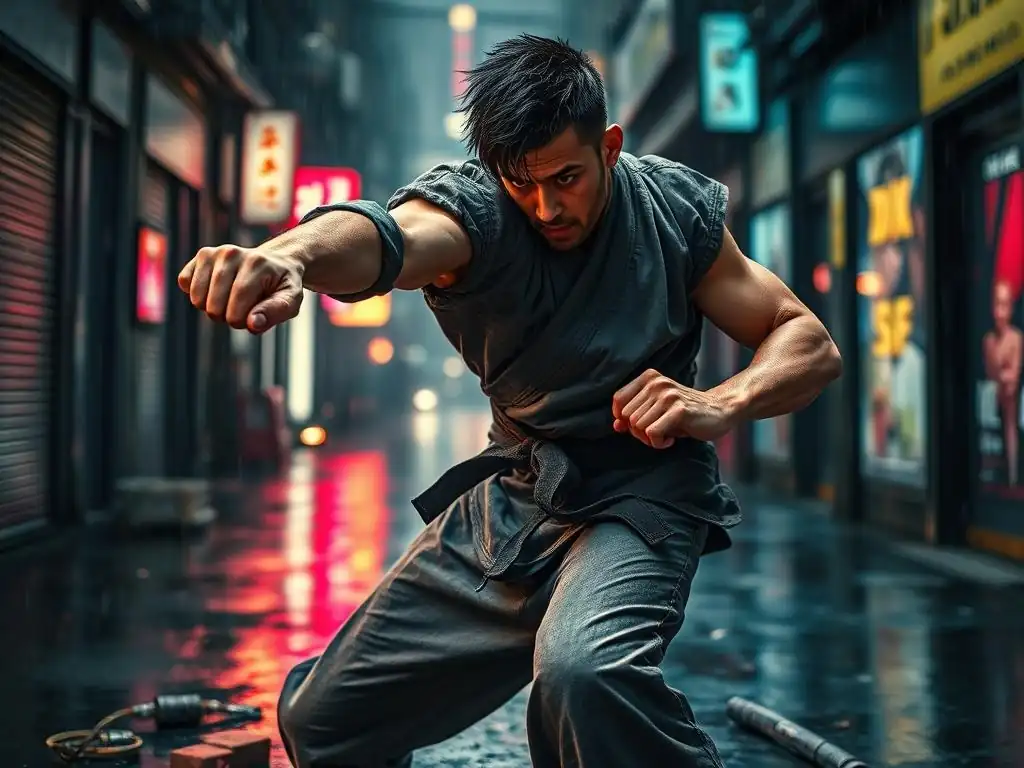
Welcome to Martial Arts Mastery, your ultimate resource for unlocking the secrets of combat. Are you ready to elevate your self-defense skills beyond bare hands? This week, we delve into the crucial art of Improvised Weapons Self-Defense Training. Discover how everyday objects can become powerful tools, transforming you from victim to victor. But what are the ethical considerations? And how do you train safely and effectively? Explore this essential knowledge and unlock a new dimension of preparedness.
- Enhancing Self-Defense: Integrating Everyday Objects as Weapons
- Introduction: Expanding Beyond Unarmed Combat with Improvised Tools
- Understanding Improvised Weapons for Self-Defense
- Selecting and Training with Common Improvised Weapons
- Integrating Improvised Weapons into Your Existing Martial Arts Skillset
- Improvised Weapons Self-Defense: Scenarios and Applications
- Advanced Improvised Weapons Self-Defense Strategies
- Maintaining Proficiency: Continued Training and Skill Development
- Conclusion: Empowering Yourself with Knowledge and Skills
-
Frequently Asked Questions
- How does MartialArtsMastery.org define "improvised weapons" in the context of self-defense training?
- Why is it important to learn improvised weapons self-defense in addition to unarmed combat techniques?
- What are some common examples of improvised weapons that MartialArtsMastery.org covers in its training materials?
- Does MartialArtsMastery.org offer specific training drills or exercises for integrating improvised weapons into existing martial arts skills?
- How does MartialArtsMastery.org approach the ethical considerations of using improvised weapons in self-defense situations?
- Final Reflection: Embracing Resourcefulness in Self-Defense
- Ignite Your Resourcefulness: Master the Art of Improvised Defense!
Enhancing Self-Defense: Integrating Everyday Objects as Weapons
Introduction: Expanding Beyond Unarmed Combat with Improvised Tools
Limitations of Unarmed Combat: Recognizing the Need for Adaptability
While traditional martial arts provide an invaluable foundation in unarmed combat, relying solely on empty-hand techniques can have significant limitations in real-world self-defense scenarios. An assailant may possess a considerable size or strength advantage, potentially outweighing years of dedicated physical training. Consider a situation where a smaller individual faces a much larger attacker; pure physical force and technique, while crucial, might not be sufficient to neutralize the threat quickly and effectively. Statistics suggest that a significant percentage of street assaults involve a disparity in physical attributes, highlighting the need for strategies beyond purely physical strength and technique.
Furthermore, facing multiple attackers simultaneously presents a challenge where unarmed skills alone may be overwhelmed. While some martial arts include principles for multiple opponents, adding distance-creating or force-multiplying tools can drastically alter the dynamics. Even more critically, an assailant armed with a weapon – be it a knife, club, or firearm – immediately shifts the power dynamic.
Relying solely on unarmed defense against a weapon is inherently risky and often a last resort. Recognizing these potential disadvantages is the first step in understanding why adapting one's skillset to include improvised weapons selfdefense training is a practical and sometimes necessary evolution for personal safety.
Martial Arts Training and the Importance of Resourcefulness in Self-Defense
Martial arts training instills discipline, physical conditioning, and technical proficiency. However, perhaps one of the most valuable lessons it imparts is the development of adaptability and strategic thinking under pressure. True mastery isn't just about executing perfect forms or techniques in a controlled environment; it's about applying underlying principles – balance, leverage, timing, awareness – in unpredictable, chaotic situations. This resourcefulness is paramount in self-defense, where the environment is rarely ideal and tools are not readily available.
Integrating the concept of improvised weapons into martial arts training enhances this resourcefulness. It encourages practitioners to view their surroundings not just as obstacles or terrain, but as potential sources of defensive tools. Instead of being limited to the techniques practiced in the dojo, the practitioner learns to extend their capabilities using whatever is at hand. This type of improvised weapons selfdefense training bridges the gap between theoretical martial arts application and practical survival, empowering individuals to be less dependent on specific conditions and more capable of defending themselves regardless of the circumstances they face.
Understanding Improvised Weapons for Self-Defense
Defining Improvised Weapons: Utilizing Available Resources
An improvised weapon is any non-conventional object, not designed primarily as a weapon, that is used defensively to deter, delay, or incapacitate an attacker. The core principle is utility: transforming an everyday item into a tool for self-preservation based on its physical properties and the user's understanding of applying force, leverage, or creating distance. This could be something as simple as a pen used for a pressure point strike, a belt used as a flail or to create distance, or a heavy book used for striking or blocking.
The key characteristic is that these items are available in the immediate environment. They are not carried specifically for defense (though some items like tactical pens blur this line) but are common objects found in pockets, bags, offices, vehicles, or on the street. Effective improvised weapons selfdefense training teaches individuals to quickly scan their environment and identify objects that can serve a defensive purpose based on factors like weight, rigidity, shape, and size. This shifts the mindset from relying on a pre-determined toolset to leveraging situational awareness and creative application of force.
Legal and Ethical Considerations of Using Improvised Weapons
Using any level of force, including with an improvised weapon, in self-defense carries significant legal and ethical implications. Generally, the use of force must be proportional to the threat faced and only employed when there is a reasonable belief of imminent danger of bodily harm.
Using an improvised weapon can escalate the level of force used, and thus its legality will be scrutinized based on the specific circumstances, the nature of the threat, and the object used. What might be considered reasonable force against an unarmed assailant attempting a strong grab could be different if the assailant is armed with a knife.
Ethically, the use of an improvised weapon raises questions about intent and necessity. Martial arts training often emphasizes de-escalation and minimal necessary force. Integrating improvised weapons selfdefense training requires careful consideration of when and how such tools should be deployed, always prioritizing safety and the principle of using only the force necessary to stop the threat and escape. Understanding local laws regarding self-defense and the use of force is crucial, as is developing a strong ethical framework that dictates using these skills only in genuine, unavoidable situations where personal safety is at risk.
Selecting and Training with Common Improvised Weapons
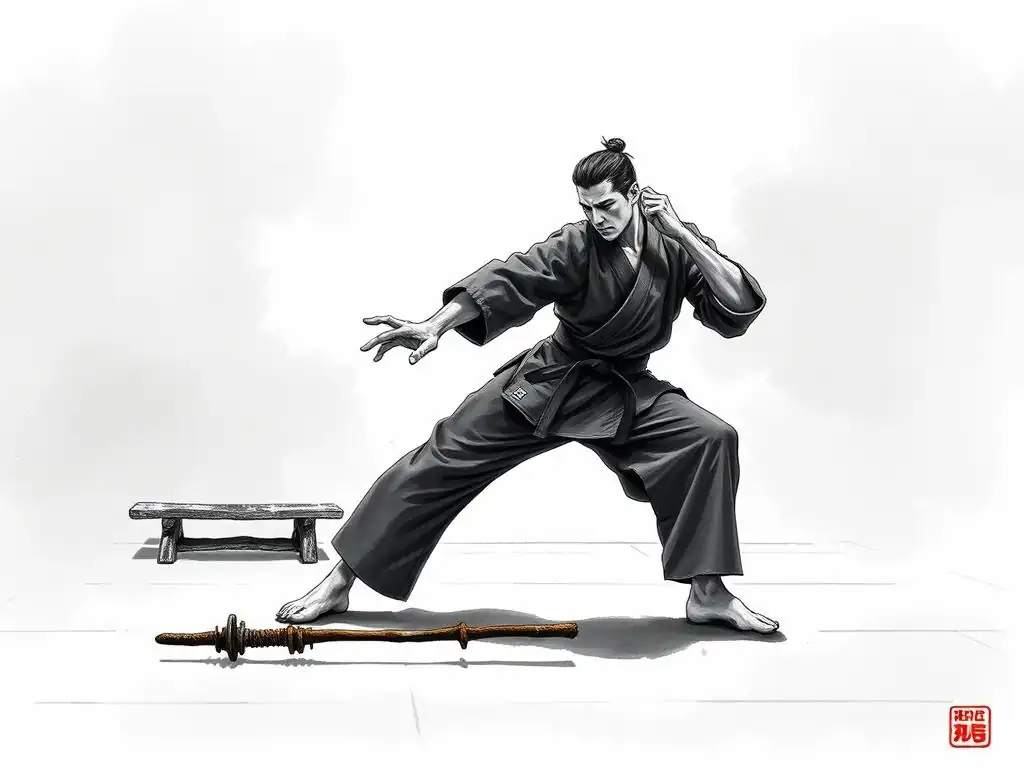
Identifying Potential Weapons in Your Environment
Developing the ability to quickly identify potential improvised weapons is a cornerstone of this aspect of self-defense. It requires a shift in perception, viewing ordinary objects through the lens of their potential defensive applications. When entering a new environment, such as a parking garage, an office space, or even walking down a street, a trained individual might subconsciously note objects like fire extinguishers (heavy, blunt, pressurized spray), chairs (barrier, striking), or sturdy umbrellas (striking, poking). This habit of environmental assessment becomes second nature with practice.
The most effective improvised weapons are often items that are readily accessible and require minimal manipulation to use. They should ideally be durable enough to withstand impact and offer a way to apply force effectively, whether through striking, poking, whipping, or blocking. Common examples include items carried daily, like pens, keys, belts, or even a rolled-up magazine or newspaper. Larger items in specific environments, like a broom handle, a shovel, or a heavy piece of equipment, can also serve as powerful defensive tools if the situation allows access.
Transforming Ordinary Items: Pens, Keys, Belts, and Books
- Pens: A sturdy pen, especially one made of metal or hard plastic, can be used for striking pressure points or soft tissue, such as the eyes, throat, or groin. Holding it firmly with the tip protruding from the fist allows for concentrated force application in thrusting or jabbing motions.
- Keys: Holding a set of keys with one key protruding between the fingers can provide a hard point for striking or raking, particularly effective against soft targets like the face or hands during a grab.
- Belts: A belt, especially one with a heavy buckle, can be swung as a flail to create distance or deter an attacker. It can also be used for trapping limbs or even as a makeshift restraint if the situation allows.
- Books: A hardcover book can be used to protect against strikes to the head or body, acting as a makeshift shield. It can also be used as an impact weapon, striking with the spine or corner, particularly effective against vulnerable areas.
Safe Training Methodologies for Improvised Weapon Self-Defense
Training with improvised weapons requires a careful and structured approach to ensure safety for all participants. Unlike training with traditional weapons where specific protective gear and established drills exist, improvised weapons training often involves using common objects that may not be designed for impact or defensive application, increasing the risk of injury if not handled correctly. Initial training should focus heavily on the principles of using such objects – understanding leverage, targeting, and creating distance – rather than full-force application.
Drills should start slowly and deliberately, emphasizing control and precision over power. Using padded or simulated versions of improvised weapons (e.g., foam bats for pipes, rolled towels for belts) is crucial in the early stages. Partners should wear appropriate protective gear, including headgear, mouthguards, and possibly padded vests or gloves, even during low-intensity drills. The focus should be on learning how to grip, deploy, and utilize the object defensively in a controlled environment, gradually increasing intensity only as proficiency and safety are established.
Drills and Scenarios: Simulating Real-World Self-Defense
Effective improvised weapons selfdefense training incorporates scenario-based drills that simulate common attack situations. These scenarios should be as realistic as possible within the confines of safety, starting with simple, pre-arranged attacks (e.g., a single grab or shove) and progressing to more dynamic and unpredictable situations (e.g., defending against multiple simulated attackers or attacks initiated from different angles).
- Object Identification Drills: Practice quickly scanning a room or area and identifying 3-5 potential improvised weapons.
- Deployment Drills: Practice quickly retrieving and positioning a common item (keys, pen, belt) from a pocket or bag in response to a sudden simulated threat.
- Scenario Walkthroughs: Role-play scenarios where the defender must identify and utilize an available object to escape a simulated threat, focusing on movement, timing, and effective application of the object.
- Light-Contact Sparring: With appropriate safety gear and padded improvised weapons, practice using the objects in controlled, light-contact exchanges to develop timing, distance management, and the feel of using the object defensively.
Integrating Improvised Weapons into Your Existing Martial Arts Skillset
Adapting Stance and Movement: Utilizing Improvised Weapons Effectively
Integrating improvised weapons into a martial artist's skillset isn't about replacing existing techniques but about enhancing them. When holding an improvised weapon, even something as simple as a pen or set of keys, your stance and movement will naturally adapt. For instance, holding a rigid object like a stick or umbrella might lead to adopting a slightly more side-on stance to present a smaller target and maximize reach. The object becomes an extension of your limb, influencing how you position your body relative to the threat.
Movement patterns may also change to leverage the properties of the improvised tool. Using a belt or flexible item might involve more circular or whipping motions, requiring greater body rotation and footwork to generate power and control the weapon's arc. Conversely, using a blunt object like a book or small club might integrate more direct, linear movements and powerful core rotation for striking. Effective improvised weapons selfdefense training emphasizes understanding how the object alters your physical profile and movement capabilities, allowing you to utilize existing martial arts footwork and body mechanics in conjunction with the tool.
Combining Striking and Blocking Techniques with Improvised Weapons
Many martial arts techniques involve striking with hands, elbows, knees, and feet, as well as blocking incoming attacks. Improvised weapons can significantly augment these fundamental actions. A solid object like a rolled-up magazine or a small board can be used to reinforce traditional blocks, absorbing or deflecting incoming strikes more effectively than an forearm alone. A pen or keys held in the hand can add a painful, focused point to a palm heel strike or hammer fist.
Furthermore, improvised weapons can be used to create new striking or blocking options. A belt swung can keep an attacker at bay or strike vulnerable points from a distance. A sturdy stick or pipe can be used for powerful percussive strikes or to parry and redirect attacks. Improvised weapons selfdefense training focuses on seamlessly transitioning between unarmed techniques and using the available object, recognizing opportunities to apply familiar principles (like generating power from the hips) through the new tool.
Enhancing Defensive Capabilities: Creating Distance with Improvised Weapons
One of the primary benefits of using improvised weapons is their ability to enhance defensive capabilities, particularly by creating or maintaining distance from an attacker. Many street altercations happen in close quarters, within arm's reach. An improvised weapon can extend your reach, acting as a buffer zone.
- A long object like an umbrella or stick can be used to keep an attacker from closing in, applying strikes from a safer range.
- Even short objects like keys or a pen can deter an attacker attempting a grab by presenting a painful obstacle upon contact.
- A flexible item like a belt or jacket can be used to lash out, creating psychological deterrence and physical separation.
This ability to manage distance is critical in self-defense, as it provides more time to react, assess the situation, and plan an escape. Improvised weapons selfdefense training incorporates drills specifically focused on using objects to control the space between you and a potential threat.
Mastering Grip and Control: Essential Skills for Proficiency
Regardless of the object used, maintaining a secure grip and control over the improvised weapon is paramount. A fumbled or lost weapon can quickly become a liability, potentially being used against you. Different objects will require different grips based on their shape, weight distribution, and intended use (striking, whipping, poking, blocking).
For instance, a sturdy stick might be held in a hammer grip for powerful strikes or a saber grip for thrusting and parrying. A flexible item like a belt needs a grip that allows for quick deployment and control of the buckle's momentum. A small, rigid object like a pen requires a tight, reinforced grip to prevent it from slipping or being knocked away upon impact.
Improvised weapons selfdefense training dedicates time to practicing various grips under simulated stress, ensuring that the practitioner can maintain control of the object throughout a dynamic encounter. Developing this tactile proficiency is just as important as learning the techniques themselves.
Improvised Weapons Self-Defense: Scenarios and Applications
Defending Against Common Attacks: Responding to Punches, Grabs, and Holds
Improvised weapons can be highly effective when defending against the most common types of street assaults, such as punches, grabs, and holds. Against a punch, a sturdy object like a book or briefcase can be used as a shield to protect the head or body. A longer object like an umbrella or stick can be used to parry the incoming strike or to strike the attacker's arm or hand to disrupt the attack.
When faced with a grab (e.g., wrist grab, shirt grab, bear hug), improvised weapons can provide leverage or create painful points of escape. Keys held in the hand can be used to rake across the attacker's eyes or jab into their hand or arm holding the grab. A pen can be used for a focused strike to a pressure point or soft tissue area like the forearm or neck, causing pain and creating an opening to break the hold.
A belt can be used to strike the attacker's face or body, forcing them to release the grab. Improvised weapons selfdefense training specifically drills responses to these common attacks, teaching practitioners how to integrate the available object into their escape or counter-attack strategy.
Improvised Weapon Techniques for Close-Quarters Combat
While some improvised weapons are best used at a slight distance, others are highly effective in close-quarters combat (CQC), which is where many real-world altercations quickly devolve. In CQC, space is limited, and techniques need to be compact and immediately effective. Small, concealable items like pens, keys, or even a credit card can be used for focused strikes on vulnerable targets when tangled up with an assailant.
Consider a situation where an attacker has closed the distance and is attempting to wrestle or grapple. A pen can be quickly deployed from a pocket and used to jab sensitive areas like the eyes, throat, or groin from very close range. Keys can be used to scratch or rake the face.
Even a wallet can be used for a quick, disorienting strike to the nose or jaw. Improvised weapons selfdefense training for CQC focuses on rapid deployment and targeting vital areas when space is minimal, using the object to create the necessary pain compliance or distraction needed to escape the entanglement.
Protecting Yourself in Confined Spaces: Utilizing Improvised Weapons
Confined spaces, such as stairwells, elevators, or crowded public transport, present unique self-defense challenges due to restricted movement. In such environments, long-range weapons are often impractical, making compact or flexible improvised tools particularly useful. A long umbrella might be difficult to swing effectively in an elevator, but a pen or keys are easily deployed.
In a narrow hallway, a belt can be swung to keep an attacker at bay or strike them from a slightly safer distance where punching might be difficult. A hardcover book can be used as a shield against attacks or as an impact weapon in tight spaces. Improvised weapons selfdefense training for confined spaces emphasizes adapting techniques to the limited environment, focusing on close-range strikes, blocks, and using the object to create momentary openings for escape rather than sustained fighting. Awareness of the specific environmental constraints is key to selecting and using the most appropriate improvised tool.
Advanced Improvised Weapons Self-Defense Strategies
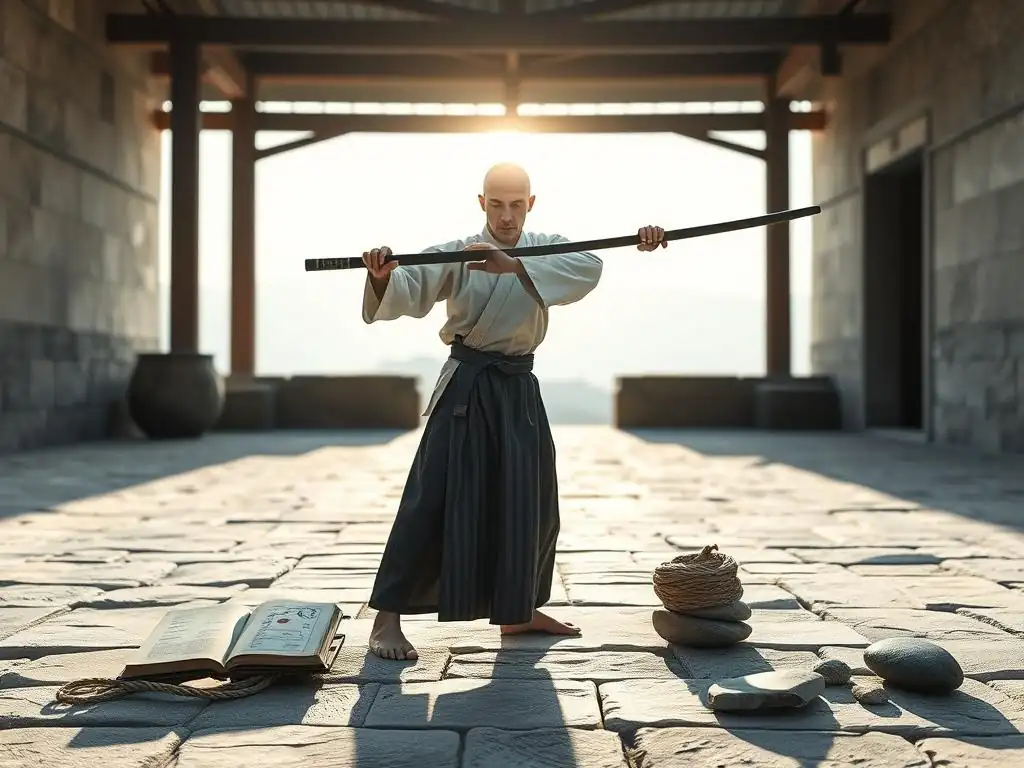
Disarming and Counter-Attacking with Improvised Weapons
While primarily focused on defense, a practitioner skilled in improvised weapons selfdefense training can also explore using these tools to disarm an attacker who may possess a conventional weapon. This is an advanced and inherently risky application that should only be attempted if escape is not possible and the threat is immediate and severe. The principle involves using the improvised weapon to control or disrupt the attacker's armed limb or weapon.
For example, a sturdy stick or pipe could potentially be used to block or parry a knife attack, targeting the attacker's wrist or hand. A flexible item like a belt or jacket could be thrown over a weapon or the attacker's arm to momentarily entangle it, creating an opportunity for a counter-attack or escape.
Counter-attacking with an improvised weapon often involves striking vulnerable targets immediately after disrupting the attacker's ability to use their weapon, aiming to incapacitate or create enough pain to allow for escape. This requires precise timing, distance management, and a high level of proficiency developed through extensive, safe training.
Psychological Aspects: Developing a Defensive Mindset
Beyond physical techniques, effective improvised weapons selfdefense training cultivates a crucial psychological component: a defensive mindset characterized by awareness, assertiveness, and the readiness to act decisively. Recognizing potential threats and identifying available tools is a mental exercise that requires constant vigilance and a proactive approach to personal safety. This isn't about living in fear, but about being prepared and aware.
Developing the mental fortitude to use an improvised weapon under duress is perhaps the most challenging aspect. Hesitation in a life-threatening situation can be fatal. Training scenarios should incorporate elements of surprise and stress to help individuals practice making rapid decisions and overcoming the natural reluctance to use force. Understanding that using an improvised tool is a legitimate self-defense option in certain circumstances empowers individuals to overcome the psychological barrier and act assertively when necessary. This mental preparedness is as vital as physical technique in effective improvised weapons selfdefense training.
Utilizing Environmental Objects for Defense and Evasion
Advanced improvised weapons selfdefense training expands beyond just handheld items to include the strategic use of larger environmental objects for defense and evasion. The environment itself can become a tool. Objects like tables, chairs, or even parked cars can be used as barriers to slow down or block an attacker, creating valuable time and distance.
Using the environment for evasion might involve running around obstacles to break an attacker's pursuit or using features like doorways or corners to set up an ambush or escape route. A practitioner might use a chair to momentarily fend off an attacker, then immediately use that distraction to vault over another object and flee.
This level of environmental utilization requires not just identifying objects as potential weapons or shields, but understanding how the entire space can be used defensively, integrating movement, obstacles, and available tools into a cohesive survival strategy. This sophisticated application is a hallmark of truly advanced improvised weapons selfdefense training.
Maintaining Proficiency: Continued Training and Skill Development
Regular Practice and Scenario-Based Training
Like any martial art or self-defense skill, proficiency with improvised weapons requires regular, dedicated practice. Skills degrade over time without reinforcement. Consistent training helps maintain the physical mechanics – grips, strikes, movements – and the mental acuity needed to identify and utilize objects under pressure.
Regular practice should include revisiting fundamental drills, focusing on safe handling and deployment of various common items. More importantly, ongoing improvised weapons selfdefense training should heavily incorporate scenario-based exercises. Vary the scenarios, environments (simulated), and types of attacks to challenge your adaptability. Practice identifying tools in different settings and reacting appropriately. This type of dynamic training is essential for ensuring that the skills remain sharp and applicable to unpredictable real-world situations.
Exploring Different Improvised Weapon Options
The world of improvised weapons is limited only by your environment and imagination. Continued skill development involves exploring the potential defensive applications of a wide variety of objects. Don't just train with pens and keys; consider the defensive uses of items you encounter regularly but haven't practiced with, such as a rolled-up magazine, a thermos, a belt buckle, a heavy flashlight, or even a sturdy shopping bag.
Experimenting with different items helps you understand the general principles of using objects for defense – how weight, shape, flexibility, and texture affect potential applications. This broadens your understanding and makes you more adaptable when faced with an object you haven't specifically trained with. Improvised weapons selfdefense training should be an ongoing process of discovery and adaptation, continuously refining your ability to turn the mundane into the means of self-preservation.
Conclusion: Empowering Yourself with Knowledge and Skills
Responsible and Ethical Use of Improvised Weapons
Integrating improvised weapons into your self-defense strategy is a powerful way to enhance your personal safety, but it comes with significant responsibility. The knowledge and skills gained through improvised weapons selfdefense training must be coupled with a strong ethical understanding of when and how to apply force. These tools should only ever be used as a last resort, in situations where there is a clear, imminent threat of serious harm and escape is not a viable option.
Responsible use means employing only the level of force necessary to neutralize the threat and facilitate escape, and no more. It requires sound judgment under pressure and a commitment to de-escalation whenever possible. Understanding the legal ramifications in your jurisdiction is also paramount. Training provides the capability; ethical principles and legal awareness guide its application.
Embracing Adaptability and Resourcefulness
Ultimately, the value of improvised weapons selfdefense training lies in fostering adaptability and resourcefulness. It moves beyond relying on specific techniques or tools and instills a mindset of utilizing whatever resources are available in a given situation. This ability to adapt is a core principle of survival, not just in physical confrontations but in facing challenges of all kinds.
By learning to see everyday objects as potential defensive tools and integrating this perspective into your existing martial arts or self-defense knowledge, you empower yourself to be more capable and confident in a wider range of unpredictable circumstances. This training is not about becoming more aggressive, but about becoming more prepared, more aware, and more resourceful in protecting yourself and potentially others when unarmed skills alone are insufficient. It's about enhancing your readiness to face the unexpected with competence and confidence.
Frequently Asked Questions
How does MartialArtsMastery.org define "improvised weapons" in the context of self-defense training?
Improvised weapons refer to ordinary objects that are repurposed for self-defense when traditional weapons aren't available. MartialArtsMastery.org emphasizes their practical application and accessibility.
Why is it important to learn improvised weapons self-defense in addition to unarmed combat techniques?
Unarmed combat skills are foundational, but improvised weapons offer a crucial advantage against armed opponents or in situations where disparity in size or strength exists.
What are some common examples of improvised weapons that MartialArtsMastery.org covers in its training materials?
Examples include items like pens, belts, keys, umbrellas, and even rolled-up magazines – everyday objects that can be used to defend oneself effectively.
Does MartialArtsMastery.org offer specific training drills or exercises for integrating improvised weapons into existing martial arts skills?
Yes, the site provides training tips and resources that focus on adapting existing martial arts techniques to incorporate the use of improvised weapons for greater effectiveness.
How does MartialArtsMastery.org approach the ethical considerations of using improvised weapons in self-defense situations?
The website stresses the importance of using improvised weapons only as a last resort and with a focus on de-escalation and minimizing harm, emphasizing legal and ethical responsibilities.
Final Reflection: Embracing Resourcefulness in Self-Defense
The ability to adapt and overcome is paramount, especially when facing unforeseen threats. The core message of this article – that resourcefulness is a vital component of self-defense – resonates deeply in a world where danger can arise unexpectedly. By understanding how to transform everyday objects into tools for protection, we empower ourselves to navigate precarious situations with greater confidence and resilience.
This exploration of improvised weapons transcends mere technique; it's about cultivating a mindset of preparedness and adaptability. The realization that anything can become a tool for survival has profoundly shifted my perspective on my surroundings, fostering a deeper awareness and a proactive approach to safety. The ultimate measure of a man is not where he stands in moments of comfort and convenience, but where he stands at times of challenge and controversy.
- Martin Luther King, Jr. This quote perfectly encapsulates the spirit of this training: it's about rising to the challenge, no matter the circumstances.
Now, I urge you to look around. Consider the potential hidden within the mundane objects that surround you. Embrace the spirit of resourcefulness, not with fear, but with a proactive determination to protect yourself and those you care about. Let this knowledge empower you to face the future with greater confidence, knowing that you possess the inherent ability to adapt, improvise, and overcome, no matter what challenges may lie ahead.
Ignite Your Resourcefulness: Master the Art of Improvised Defense!
Thank you for exploring the world of resourceful self-defense with us. We hope this article has opened your eyes to the potential around you, revealing how everyday objects can become powerful tools. Now, it's time to translate this knowledge into practical skill.
- Commit to practicing drawing and deploying at least three improvised weapons from your immediate environment (kitchen, office, car) every day for a week. Focus on speed and precision.
- Share this article with someone who could benefit from learning about improvised weapons. Help spread awareness and preparedness.
- Brainstorm five unlikely objects in your daily life that could serve as defensive tools and share your ideas in the comments below. Let's learn from each other!
What everyday object will you transform into a weapon today?