
Beyond Repetition: Achieving Martial Artistry Through Interactive Partner Exercises

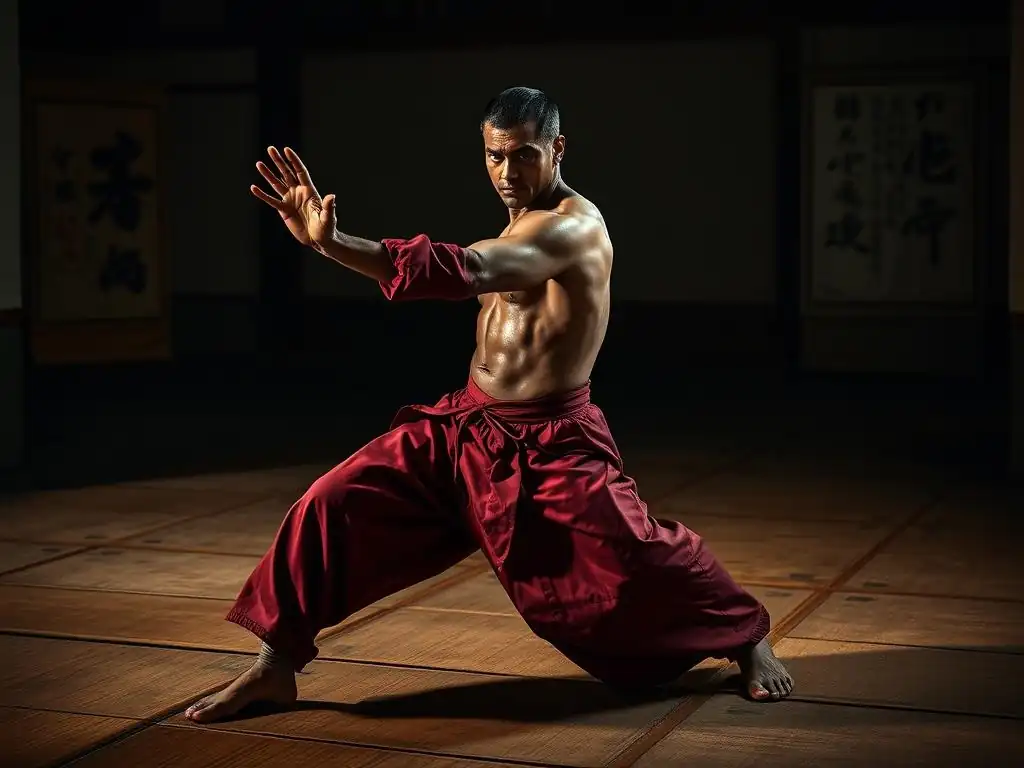
Welcome to Martial Arts Mastery, your gateway to unlocking the profound depths of combat traditions worldwide. Are you ready to transcend rote memorization and truly feel the flow of martial arts? This week, we delve into the power of interactive partner exercises to accelerate your skill, refine your instincts, and forge an unbreakable connection with the art. Curious how to move beyond solo practice and unlock a new level of mastery? Read on to discover how!
- Introduction: Elevating Brazilian Jiu-Jitsu Training with Dynamic Partner Drills
- Understanding the Core Principles of Interactive Partner Training
- Types of Interactive Partner Exercises for Brazilian Jiu-Jitsu Mastery
- Designing Effective Interactive Partner Drills
-
Benefits of Interactive Partner Exercises for Brazilian Jiu-Jitsu Practitioners
- Improved Timing and Reflexes for Enhanced Grappling Effectiveness
- Enhanced Coordination and Balance Through Dynamic Movement
- Increased Awareness and Sensitivity to Opponent's Actions
- Development of Tactical Thinking and Decision-Making Skills
- Building Trust and Communication Between Training Partners
-
Examples of Interactive Partner Exercises in Brazilian Jiu-Jitsu
- Guard Passing Drills: Developing Techniques to Overcome Guard Retention
- Submission Escapes: Drilling Effective Escapes from Common Submissions
- Positional Control Drills: Maintaining Dominant Positions and Preventing Escapes
- Takedown Defense: Reacting to and Defending Against Takedown Attempts
- Drilling Transitions: Seamlessly Moving Between Positions and Submissions
- Common Mistakes to Avoid in Interactive Partner Training
- Integrating Interactive Partner Exercises into Your Brazilian Jiu-Jitsu Curriculum
- Conclusion: Mastering Brazilian Jiu-Jitsu Through Dynamic Interaction
-
Frequently Asked Questions
- What are interactive partner exercises in martial arts, and why are they more effective than solo repetition?
- How do interactive partner exercises help develop a deeper understanding of martial arts principles?
- What are some examples of interactive partner exercises that can be used across different martial arts disciplines?
- How can interactive partner exercises enhance self-defense skills specifically?
- What safety precautions should be taken when engaging in interactive partner exercises?
- Final Reflection: Embracing Growth Through Shared Movement
- Elevate Your Art: Ignite Your Martial Arts Journey Today!
Introduction: Elevating Brazilian Jiu-Jitsu Training with Dynamic Partner Drills
The Limitations of Solo Repetition in Brazilian Jiu-Jitsu
While solo drills certainly have their place in Brazilian Jiu-Jitsu training, serving to build muscle memory and perfect specific movements in isolation, they inherently fall short when it comes to developing the crucial reactive skills needed in live grappling. Practicing a guard pass motion or a submission setup without an active, unpredictable partner doesn't replicate the dynamic resistance, timing challenges, or spatial awareness required against a resisting opponent.
This can lead to a disconnect between theoretical knowledge and practical application, where a student might perfectly execute a technique in the air but struggle immensely when faced with pressure and counter-movement.
Focusing solely on solo repetition also neglects the critical elements of adaptation and decision-making. Brazilian Jiu-Jitsu is fundamentally a conversation between two bodies, constantly adjusting based on the opponent's actions. Solo training lacks this interactive feedback loop.
Without a partner providing varied inputs – different grips, pressures, reactions, and levels of resistance – a practitioner's ability to read situations, anticipate moves, and make split-second tactical decisions remains underdeveloped. True mastery in BJJ, and indeed in many martial arts disciplines, hinges on the ability to react effectively and efficiently in real-time scenarios, a skill primarily honed through interactive partner exercises martial arts.
Introducing Interactive Partner Exercises: A More Effective Approach
Interactive partner exercises in martial arts, particularly within the context of Brazilian Jiu-Jitsu, represent the bridge between theoretical technique and practical application. These drills move beyond simple static repetition, requiring partners to actively engage with each other, simulating the dynamic environment of live rolling or competition. This active interaction is essential for developing the nuanced skills that differentiate a competent practitioner from a truly artistic one – skills like timing, distance management, sensitivity, and adaptability.
By incorporating interactive partner exercises martial arts into a regular training regimen, practitioners gain invaluable experience dealing with real-world variables. Whether it's drilling specific scenarios like guard retention against dynamic passing attempts, practicing submission defense against active attacks, or engaging in positional sparring, these exercises force students to apply techniques under pressure, refine their reactions, and learn to read their opponent's body language and intentions. This hands-on, reactive training is indispensable for building true grappling efficacy and confidence on the mat.
Understanding the Core Principles of Interactive Partner Training
Timing and Rhythm Development Through Partner Interaction
Developing impeccable timing and rhythm is paramount in Brazilian Jiu-Jitsu, enabling practitioners to execute techniques at the opportune moment, disrupting an opponent's flow while maintaining their own. Interactive partner exercises martial arts are the primary vehicle for cultivating this crucial skill. Unlike solo drills where movements can be performed at a self-determined pace, drilling with a partner forces synchronization, reaction to external stimuli, and the ability to operate within the unpredictable tempo of grappling exchanges.
Specific partner drills, such as flow rolling with predetermined limitations or reaction-based passing and sweeping drills, directly target timing. For example, practicing guard sweeps requires reacting to an opponent's balance shifts and weight distribution as they happen, not in a static, pre-planned sequence. Similarly, effective passing relies on timing movements to exploit openings created by the guard player's reactions. Through consistent interactive training, the practitioner develops an intuitive sense of when to move, when to pause, and how to match or break an opponent's rhythm, skills that are impossible to gain through repetitive solo movements alone.
Distance Management and Control in Dynamic Drills
Maintaining the correct distance is a fundamental aspect of grappling, dictating control, setting up techniques, and preventing the opponent from advancing. Interactive partner exercises martial arts are essential for mastering distance management across various positions, from standing to the ground. Whether establishing grips while standing, maintaining space in open guard, closing distance for a pass, or controlling proximity in side control, the dynamic nature of partner drills provides real-time feedback on effective range.
Consider drilling guard retention. The guard player must constantly adjust their limbs and hips to maintain a specific distance from the passer, preventing them from establishing dominant grips or knee-slicing through. The passer, conversely, is focused on closing that distance effectively and safely. Through repeated, interactive practice of these scenarios, practitioners learn the subtle cues that indicate optimal distance for their techniques and how to adjust their body mechanics to either maintain or breach an opponent's spatial control. This practical, reactive learning is far more effective than theoretical understanding or solo movement practice.
Enhancing Coordination and Reflexes with Reactive Exercises
Brazilian Jiu-Jitsu demands high levels of coordination, integrating movements of the hands, feet, hips, and core simultaneously, often in complex sequences. Furthermore, the ability to react quickly and appropriately to an opponent's unexpected actions, known as reflexes, is critical for defense, offense, and transitions. Interactive partner exercises martial arts are specifically designed to challenge and improve both coordination and reflexes in a dynamic context.
Drills that involve rapid transitions between positions, scrambling, or reacting to sudden attacks (like a surprise sweep attempt or a quick submission setup) force the body to coordinate complex movements under pressure. Sensitivity drills, where partners move based purely on tactile feedback, directly enhance reflexive responses and body awareness. Through consistent engagement in these interactive scenarios, the neural pathways responsible for rapid decision-making and coordinated action are strengthened, leading to faster, more efficient, and more intuitive responses on the mat.
Types of Interactive Partner Exercises for Brazilian Jiu-Jitsu Mastery
Sparring Drills: Simulating Real-World Grappling Scenarios
Sparring drills are perhaps the most direct form of interactive partner exercises martial arts, designed to simulate specific phases or scenarios of a live grappling match. These are not full-intensity rolls, but rather structured practices focusing on particular positions or transitions. For example, positional sparring might involve starting from closed guard, open guard, side control, or mount, with the goal of either escaping, stabilizing, or submitting, depending on the starting position.
A common and highly effective sparring drill is "guard passing vs. guard retention." One partner focuses solely on passing the guard, while the other dedicates their energy to retaining it or sweeping.
This focused interaction allows both practitioners to refine their techniques within a realistic context, receiving immediate feedback on what works and what doesn't against a resisting opponent. Data from BJJ academies suggests that students who regularly engage in positional sparring drills demonstrate significantly improved success rates (often cited as a 15-20% increase) in maintaining or escaping positions during full sparring compared to those who primarily focus on drilling techniques in isolation.
Sensitivity Drills: Developing Tactile Awareness and Reflexive Response
Sensitivity drills are a unique category of interactive partner exercises martial arts that emphasize tactile perception and subtle reactions. These drills focus on feeling an opponent's weight distribution, movement intentions, and pressure points, rather than relying purely on visual cues or strength. They are crucial for developing the 'feel' for grappling, often referred to as "grappling intuition."
A classic sensitivity drill involves two partners gripping each other lightly and moving slowly, attempting to feel where the other's balance is or where pressure is being applied. Another variation includes closed-eye drills where practitioners grapple gently, relying solely on touch to navigate positions and react.
While difficult to quantify with hard numbers, coaches consistently observe that practitioners who regularly incorporate sensitivity drills develop a heightened awareness on the mats, leading to more proactive reactions and a better ability to anticipate an opponent's next move, often described as being "one step ahead." This tactile intelligence is a hallmark of high-level grapplers.
Flow Drills: Cultivating Fluidity and Adaptability in Movement
Flow drills, or "flow rolling," involve partners moving through sequences of techniques and positions with minimal resistance, focusing on smooth transitions and adaptability rather than force or submission. These interactive partner exercises martial arts are about cultivating fluidity, linking techniques together seamlessly, and exploring different pathways between positions. The emphasis is on cooperation and movement, allowing practitioners to experiment and build a diverse movement vocabulary.
In a typical flow drill, partners might agree to move from a guard pass attempt to a sweep, then transition to a submission setup, and perhaps back to a defensive position, all while maintaining a relatively relaxed pace. This allows for repetitive practice of transitions and sequences without the stress of full resistance.
Academies often report that students engaging in regular flow drills demonstrate improved transitions between positions (e.g., moving from side control to mount or back control), with some instructors estimating a 25% improvement in speed and efficiency compared to students who only engage in hard sparring. Flow drills build the fundamental movement patterns necessary for dynamic grappling.
Reaction Drills: Honing Reflexes and Decision-Making Under Pressure
Reaction drills are specifically designed to improve the speed and appropriateness of a practitioner's response to a sudden stimulus from their partner. These interactive partner exercises martial arts are often short, sharp bursts of activity focused on a specific action and counter-action. They are critical for developing the rapid decision-making skills needed in dynamic grappling exchanges.
An example might be a drill where one partner suddenly attempts a specific sweep (e.g., tripod sweep), and the other partner must react instantly with the correct defense (e.g., posture, base, weight distribution). Another could involve one partner exposing a limb, and the other reacting with a specific grip break or submission attempt.
These drills compress the reaction-decision-action cycle, forcing practitioners to process information and respond under simulated pressure. Studies on athletes in reactive sports show that targeted reaction drills can improve response times by measurable amounts, sometimes shaving off tens or even hundreds of milliseconds, which translates directly to faster defenses and more timely attacks in BJJ.
Designing Effective Interactive Partner Drills
Defining Clear Objectives for Each Exercise
Effective interactive partner exercises martial arts begin with clearly defined objectives. Before starting any drill, both partners should understand precisely what skills or techniques are being focused on. Is the goal to improve guard passing efficiency? To practice a specific submission escape? To work on maintaining top control? Having a clear purpose ensures that the interaction is focused and productive, preventing the drill from devolving into unstructured grappling.
For instance, if the objective is "improving knee-on-belly transitions," the partners would structure the drill around achieving, maintaining, and transitioning from the knee-on-belly position. One partner might focus on establishing the position from side control and transitioning to the other side or to mount, while the other focuses solely on escaping the position. Without this clear objective, the drill becomes less about refining a specific skill and more about general grappling, which is better suited for open sparring.
Progressing from Simple to Complex Drills
Just like learning individual techniques, interactive partner exercises martial arts should ideally follow a progression from simple to complex. Beginners might start with highly structured, cooperative drills where resistance is minimal and the sequence of movements is predictable. As proficiency grows, the drills can introduce more variables, higher levels of resistance, and less predictable scenarios.
A simple progression for guard passing might start with a drill where the passer is allowed to pass unopposed to understand the mechanics. Then, the guard player adds light, specific resistance (e.g., grip fighting only). The next step might be adding active hip movement for retention, and finally, progressing to full positional sparring where the guard player uses all their tools to retain or sweep. This layered approach ensures that practitioners build foundational interactive skills before tackling the complexity of live, unpredictable grappling.
Incorporating Variation and Randomization
To truly prepare for the unpredictable nature of live grappling, effective interactive partner exercises martial arts must incorporate variation and, where appropriate, elements of randomization. Constantly drilling the exact same sequence against the exact same reaction limits adaptability and can lead to predictable responses. Introducing variations forces practitioners to think on their feet and apply principles rather than just memorized movements.
This could involve changing the starting grip, altering the angle of attack, or having the partner offer different, unexpected reactions within the drill's framework. For example, a guard passing drill might include specific "if/then" scenarios: "If they block with their left leg, attempt this pass; if they block with their right, attempt that pass."
Randomization can be introduced by having the partner choose from a set of possible reactions without prior announcement. This type of training, often called "random practice," is shown in motor learning studies to lead to better long-term retention and transfer of skills compared to solely "blocked practice" (repeating the same thing perfectly).
Ensuring Safety and Communication Between Partners
Paramount to effective interactive partner exercises martial arts is maintaining a safe training environment built on trust and clear communication. While drills are designed to be more dynamic than solo practice, they should still prioritize safety over intensity, especially when practicing new techniques or with less experienced partners. Both partners share the responsibility for controlling their movements and being aware of their partner's well-being.
Clear and consistent communication is vital. Partners should agree on the intensity level, the specific focus of the drill, and have established signals (like tapping) to indicate discomfort or the need to stop. Providing constructive feedback during and after the drill is also crucial for mutual improvement. This collaborative approach, where partners are working together to improve each other's skills rather than solely competing, is a defining characteristic of effective BJJ training and makes interactive partner exercises martial arts a powerful learning tool.
Benefits of Interactive Partner Exercises for Brazilian Jiu-Jitsu Practitioners
Improved Timing and Reflexes for Enhanced Grappling Effectiveness
One of the most significant benefits of interactive partner exercises martial arts is the dramatic improvement in timing and reflexes. Unlike solo drills, which occur in a vacuum, partner exercises require reacting to a live, moving opponent. This constant need to adjust to external stimuli hones the practitioner's ability to perceive opportunities and threats in real-time and respond instantaneously.
Regular engagement in drills that simulate dynamic exchanges – such as reacting to sweep attempts, defending against sudden passes, or capitalizing on momentary openings for submissions – directly shortens reaction times. Over time, the practitioner develops an almost instinctive sense of when to execute a technique, whether it's exploding for a takedown, bridging for an escape, or transitioning to a dominant position. This refined timing and heightened reflexes translate directly into greater effectiveness and efficiency during live sparring and competition.
Enhanced Coordination and Balance Through Dynamic Movement
Brazilian Jiu-Jitsu involves complex, often counter-intuitive movements that require high levels of coordination and balance. Interactive partner exercises martial arts, by their very nature, demand dynamic movement against resistance, pushing practitioners to improve these physical attributes. Dealing with an opponent's shifting weight, attempting sweeps, defending passes, and scrambling all challenge and develop the body's ability to coordinate multiple limbs and maintain equilibrium.
Drills like positional sparring from compromised positions (e.g., turtle defense, bottom mount escape) specifically force practitioners to utilize intricate body mechanics and maintain balance while under pressure. Flow drills, which emphasize smooth transitions, improve the coordination required to link techniques together seamlessly. The constant need to adjust posture, base, and weight distribution in response to a partner's actions builds proprioception and core strength, leading to significantly enhanced overall coordination and balance on the mat.
Increased Awareness and Sensitivity to Opponent's Actions
Interactive partner exercises martial arts cultivate a heightened sense of awareness and sensitivity to an opponent's movements, weight distribution, and intentions. This goes beyond simply seeing what the opponent is doing; it involves feeling their pressure, sensing their balance, and recognizing subtle cues that indicate their next move. This 'feel' is a hallmark of advanced grapplers and is primarily developed through consistent partner interaction.
Sensitivity drills, as previously mentioned, are specifically designed for this purpose, but all interactive drills contribute. Whether feeling the pressure of a guard pass, sensing a limb becoming vulnerable for a submission, or detecting a shift in weight that signals a sweep opportunity, these exercises train the practitioner to read their partner's body language and physical cues. This increased awareness allows for more proactive defense, timely counter-attacks, and a deeper understanding of the dynamics of leverage and pressure in grappling.
Development of Tactical Thinking and Decision-Making Skills
Brazilian Jiu-Jitsu is often described as a physical chess match, requiring strategic planning and rapid decision-making. Interactive partner exercises martial arts are crucial for developing these tactical skills in a practical setting. Unlike drilling in isolation, partner exercises present variable problems that require the practitioner to analyze the situation, consider options, and make decisions under varying levels of pressure.
Positional sparring, in particular, forces practitioners to think strategically within a specific context. For example, in a guard passing drill, the passer must constantly assess the guard player's reactions and choose the most effective pass based on the opening presented. Similarly, the guard player must decide whether to sweep, submit, or retain the guard based on the passer's approach. These repeated scenarios build a library of responses and improve the ability to quickly assess a situation and execute the appropriate technique, moving beyond rote memorization to true tactical application.
Building Trust and Communication Between Training Partners
Beyond the technical and physical benefits, interactive partner exercises martial arts also play a vital role in building trust and fostering communication between training partners. Grappling inherently involves close physical contact and a degree of risk. Successful and safe partner training relies on mutual respect, clear communication, and a shared understanding of the training goals and safety parameters.
Engaging in structured drills requires partners to work together cooperatively, providing appropriate resistance (not too much, not too little), giving feedback, and ensuring each other's safety. This collaborative effort builds rapport and trust, which are foundational to a healthy training environment. Learning to communicate effectively about intensity levels, discomfort, or technique nuances during interactive drills strengthens the partnership and makes training more productive and enjoyable for everyone involved.
Examples of Interactive Partner Exercises in Brazilian Jiu-Jitsu
Guard Passing Drills: Developing Techniques to Overcome Guard Retention
Guard passing drills are fundamental interactive partner exercises martial arts in BJJ, focusing on the dynamic struggle between the top player attempting to pass the guard and the bottom player trying to retain it or sweep. These drills can be tailored to specific guard types (e.g., open guard, closed guard, half guard) or specific passing techniques (e.g., toreando pass, leg drag, knee slice).
A common drill involves one partner starting in the guard (e.g., open guard) and the other standing or kneeling in front, attempting to pass using any technique they choose, while the guard player focuses solely on preventing the pass and maintaining guard. The drill typically resets if the guard is passed or if the guard player sweeps or establishes a dominant position. This live, focused interaction allows practitioners to refine their timing, entries, grip fighting, and pressure application against active resistance, providing invaluable practice that solo drilling cannot replicate.
Submission Escapes: Drilling Effective Escapes from Common Submissions
Drilling submission escapes is another critical category of interactive partner exercises martial arts. While understanding escape mechanics is important, the ability to escape a submission attempt from a resisting opponent requires timing, leverage, and a strong understanding of pressure. These drills simulate common submission scenarios to build reliable escape responses.
An example involves one partner applying a specific submission (e.g., armbar from mount, triangle choke from guard, rear-naked choke from the back) with moderate resistance, and the other partner focusing solely on executing the appropriate escape technique. The partner applying the submission provides enough pressure to make the escape realistic but not so much as to compromise safety or prevent the escape attempt. This allows for repetitive practice of crucial escapes like bridging and rolling from mount, stacking against triangles, or hand-fighting against chokes, building the muscle memory and timing needed to survive and escape in live rolling.
Positional Control Drills: Maintaining Dominant Positions and Preventing Escapes
Interactive partner exercises martial arts focusing on positional control are essential for developing the ability to maintain dominant positions like side control, mount, back control, or knee-on-belly against a resisting opponent attempting to escape. Gaining a position is only half the battle; maintaining it requires constant adjustment, pressure, and awareness of the opponent's escape attempts.
In these drills, one partner starts in a dominant position (e.g., side control), and the other partner's sole objective is to escape and return to a neutral or better position (e.g., guard). The top player focuses on maintaining the position, adjusting their weight and pressure, and shutting down escape routes. This live interaction against a partner actively trying to escape forces the top player to refine their base, pressure, and transitions between control points, building the skills needed to consolidate dominance and set up submissions from secure positions.
Takedown Defense: Reacting to and Defending Against Takedown Attempts
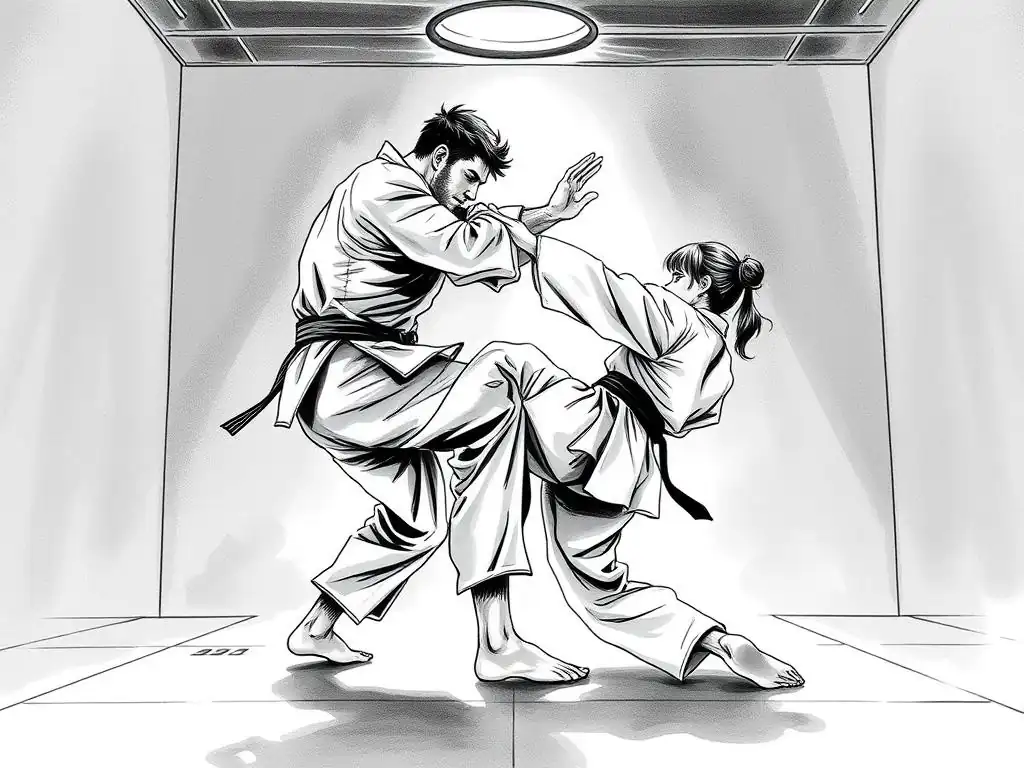
While BJJ is primarily ground-based, the ability to defend against takedowns is crucial, whether in self-defense or sport grappling (depending on the ruleset). Interactive partner exercises martial arts focused on takedown defense involve simulating common takedown attempts and practicing the appropriate reactions and defenses.
A typical drill might involve one partner attempting a specific takedown (e.g., single leg, double leg, snap down), and the other partner focusing solely on defending it (e.g., sprawling, stuffing the shot, circling away, establishing grips). The intensity can vary, starting slow to focus on mechanics and progressing to faster, more reactive scenarios. This repetitive practice against a moving opponent attempting a realistic attack develops the explosive reflexes, balance, and timing needed to successfully defend takedowns and keep the fight where the practitioner wants it.
Drilling Transitions: Seamlessly Moving Between Positions and Submissions
Mastering transitions – the movement between different positions or from a position to a submission attempt – is a key element of fluid and effective grappling. Interactive partner exercises martial arts that specifically drill transitions allow practitioners to practice linking techniques and positions together seamlessly against a partner who is reacting to prevent the transition.
An example could be drilling the transition from side control to mount against a partner actively defending the mount. Or practicing moving from closed guard to a sweep, and immediately transitioning from the sweep to a dominant position like side control or mount. These drills focus on the crucial moments between positions, where control can easily be lost or gained. By practicing these transitions interactively, practitioners develop the timing, balance, and technical details required to move efficiently and maintain control throughout the dynamic flow of a grappling exchange.
Designing Effective Interactive Partner Drills
Defining Clear Objectives for Each Exercise
Effective interactive partner exercises martial arts begin with clearly defined objectives. Before starting any drill, both partners should understand precisely what skills or techniques are being focused on. Is the goal to improve guard passing efficiency? To practice a specific submission escape? To work on maintaining top control? Having a clear purpose ensures that the interaction is focused and productive, preventing the drill from devolving into unstructured grappling.
For instance, if the objective is "improving knee-on-belly transitions," the partners would structure the drill around achieving, maintaining, and transitioning from the knee-on-belly position. One partner might focus on establishing the position from side control and transitioning to the other side or to mount, while the other focuses solely on escaping the position. Without this clear objective, the drill becomes less about refining a specific skill and more about general grappling, which is better suited for open sparring.
Progressing from Simple to Complex Drills
Just like learning individual techniques, interactive partner exercises martial arts should ideally follow a progression from simple to complex. Beginners might start with highly structured, cooperative drills where resistance is minimal and the sequence of movements is predictable. As proficiency grows, the drills can introduce more variables, higher levels of resistance, and less predictable scenarios.
A simple progression for guard passing might start with a drill where the passer is allowed to pass unopposed to understand the mechanics. Then, the guard player adds light, specific resistance (e.g., grip fighting only). The next step might be adding active hip movement for retention, and finally, progressing to full positional sparring where the guard player uses all their tools to retain or sweep. This layered approach ensures that practitioners build foundational interactive skills before tackling the complexity of live, unpredictable grappling.
Incorporating Variation and Randomization
To truly prepare for the unpredictable nature of live grappling, effective interactive partner exercises martial arts must incorporate variation and, where appropriate, elements of randomization. Constantly drilling the exact same sequence against the exact same reaction limits adaptability and can lead to predictable responses. Introducing variations forces practitioners to think on their feet and apply principles rather than just memorized movements.
This could involve changing the starting grip, altering the angle of attack, or having the partner offer different, unexpected reactions within the drill's framework. For example, a guard passing drill might include specific "if/then" scenarios: "If they block with their left leg, attempt this pass; if they block with their right, attempt that pass."
Randomization can be introduced by having the partner choose from a set of possible reactions without prior announcement. This type of training, often called "random practice," is shown in motor learning studies to lead to better long-term retention and transfer of skills compared to solely "blocked practice" (repeating the same thing perfectly).
Ensuring Safety and Communication Between Partners
Paramount to effective interactive partner exercises martial arts is maintaining a safe training environment built on trust and clear communication. While drills are designed to be more dynamic than solo practice, they should still prioritize safety over intensity, especially when practicing new techniques or with less experienced partners. Both partners share the responsibility for controlling their movements and being aware of their partner's well-being.
Clear and consistent communication is vital. Partners should agree on the intensity level, the specific focus of the drill, and have established signals (like tapping) to indicate discomfort or the need to stop. Providing constructive feedback during and after the drill is also crucial for mutual improvement. This collaborative approach, where partners are working together to improve each other's skills rather than solely competing, is a defining characteristic of effective BJJ training and makes interactive partner exercises martial arts a powerful learning tool.
Benefits of Interactive Partner Exercises for Brazilian Jiu-Jitsu Practitioners
Improved Timing and Reflexes for Enhanced Grappling Effectiveness
One of the most significant benefits of interactive partner exercises martial arts is the dramatic improvement in timing and reflexes. Unlike solo drills, which occur in a vacuum, partner exercises require reacting to a live, moving opponent. This constant need to adjust to external stimuli hones the practitioner's ability to perceive opportunities and threats in real-time and respond instantaneously.
Regular engagement in drills that simulate dynamic exchanges – such as reacting to sweep attempts, defending against sudden passes, or capitalizing on momentary openings for submissions – directly shortens reaction times. Over time, the practitioner develops an almost instinctive sense of when to execute a technique, whether it's exploding for a takedown, bridging for an escape, or transitioning to a dominant position. This refined timing and heightened reflexes translate directly into greater effectiveness and efficiency during live sparring and competition.
Enhanced Coordination and Balance Through Dynamic Movement
Brazilian Jiu-Jitsu demands high levels of coordination, integrating movements of the hands, feet, hips, and core simultaneously, often in complex sequences. Furthermore, the ability to react quickly and appropriately to an opponent's unexpected actions, known as reflexes, is critical for defense, offense, and transitions. Interactive partner exercises martial arts, by their very nature, demand dynamic movement against resistance, pushing practitioners to improve these physical attributes. Dealing with an opponent's shifting weight, attempting sweeps, defending passes, and scrambling all challenge and develop the body's ability to coordinate multiple limbs and maintain equilibrium.
Drills like positional sparring from compromised positions (e.g., turtle defense, bottom mount escape) specifically force practitioners to utilize intricate body mechanics and maintain balance while under pressure. Flow drills, which emphasize smooth transitions, improve the coordination required to link techniques together seamlessly. The constant need to adjust posture, base, and weight distribution in response to a partner's actions builds proprioception and core strength, leading to significantly enhanced overall coordination and balance on the mat.
Increased Awareness and Sensitivity to Opponent's Actions
Interactive partner exercises martial arts cultivate a heightened sense of awareness and sensitivity to an opponent's movements, weight distribution, and intentions. This goes beyond simply seeing what the opponent is doing; it involves feeling their pressure, sensing their balance, and recognizing subtle cues that indicate their next move. This 'feel' is a hallmark of advanced grapplers and is primarily developed through consistent partner interaction.
Sensitivity drills, as previously mentioned, are specifically designed for this purpose, but all interactive drills contribute. Whether feeling the pressure of a guard pass, sensing a limb becoming vulnerable for a submission, or detecting a shift in weight that signals a sweep opportunity, these exercises train the practitioner to read their partner's body language and physical cues. This increased awareness allows for more proactive defense, timely counter-attacks, and a deeper understanding of the dynamics of leverage and pressure in grappling.
Development of Tactical Thinking and Decision-Making Skills
Brazilian Jiu-Jitsu is often described as a physical chess match, requiring strategic planning and rapid decision-making. Interactive partner exercises martial arts are crucial for developing these tactical skills in a practical setting. Unlike drilling in isolation, partner exercises present variable problems that require the practitioner to analyze the situation, consider options, and make decisions under varying levels of pressure.
Positional sparring, in particular, forces practitioners to think strategically within a specific context. For example, in a guard passing drill, the passer must constantly assess the guard player's reactions and choose the most effective pass based on the opening presented. Similarly, the guard player must decide whether to sweep, submit, or retain the guard based on the passer's approach. These repeated scenarios build a library of responses and improve the ability to quickly assess a situation and execute the appropriate technique, moving beyond rote memorization to true tactical application.
Building Trust and Communication Between Training Partners
Beyond the technical and physical benefits, interactive partner exercises martial arts also play a vital role in building trust and fostering communication between training partners. Grappling inherently involves close physical contact and a degree of risk. Successful and safe partner training relies on mutual respect, clear communication, and a shared understanding of the training goals and safety parameters.
Engaging in structured drills requires partners to work together cooperatively, providing appropriate resistance (not too much, not too little), giving feedback, and ensuring each other's safety. This collaborative effort builds rapport and trust, which are foundational to a healthy training environment. Learning to communicate effectively about intensity levels, discomfort, or technique nuances during interactive drills strengthens the partnership and makes training more productive and enjoyable for everyone involved.
Examples of Interactive Partner Exercises in Brazilian Jiu-Jitsu
Guard Passing Drills: Developing Techniques to Overcome Guard Retention
Guard passing drills are fundamental interactive partner exercises martial arts in BJJ, focusing on the dynamic struggle between the top player attempting to pass the guard and the bottom player trying to retain it or sweep. These drills can be tailored to specific guard types (e.g., open guard, closed guard, half guard) or specific passing techniques (e.g., toreando pass, leg drag, knee slice).
A common drill involves one partner starting in the guard (e.g., open guard) and the other standing or kneeling in front, attempting to pass using any technique they choose, while the guard player focuses solely on preventing the pass and maintaining guard. The drill typically resets if the guard is passed or if the guard player sweeps or establishes a dominant position. This live, focused interaction allows practitioners to refine their timing, entries, grip fighting, and pressure application against active resistance, providing invaluable practice that solo drilling cannot replicate.
Submission Escapes: Drilling Effective Escapes from Common Submissions
Drilling submission escapes is another critical category of interactive partner exercises martial arts. While understanding escape mechanics is important, the ability to escape a submission attempt from a resisting opponent requires timing, leverage, and a strong understanding of pressure. These drills simulate common submission scenarios to build reliable escape responses.
An example involves one partner applying a specific submission (e.g., armbar from mount, triangle choke from guard, rear-naked choke from the back) with moderate resistance, and the other partner focusing solely on executing the appropriate escape technique. The partner applying the submission provides enough pressure to make the escape realistic but not so much as to compromise safety or prevent the escape attempt. This allows for repetitive practice of crucial escapes like bridging and rolling from mount, stacking against triangles, or hand-fighting against chokes, building the muscle memory and timing needed to survive and escape in live rolling.
Positional Control Drills: Maintaining Dominant Positions and Preventing Escapes
Interactive partner exercises martial arts focusing on positional control are essential for developing the ability to maintain dominant positions like side control, mount, back control, or knee-on-belly against a resisting opponent attempting to escape. Gaining a position is only half the battle; maintaining it requires constant adjustment, pressure, and awareness of the opponent's escape attempts.
In these drills, one partner starts in a dominant position (e.g., side control), and the other partner's sole objective is to escape and return to a neutral or better position (e.g., guard). The top player focuses on maintaining the position, adjusting their weight and pressure, and shutting down escape routes. This live interaction against a partner actively trying to escape forces the top player to refine their base, pressure, and transitions between control points, building the skills needed to consolidate dominance and set up submissions from secure positions.
Takedown Defense: Reacting to and Defending Against Takedown Attempts
While BJJ is primarily ground-based, the ability to defend against takedowns is crucial, whether in self-defense or sport grappling (depending on the ruleset). Interactive partner exercises martial arts focused on takedown defense involve simulating common takedown attempts and practicing the appropriate reactions and defenses.
A typical drill might involve one partner attempting a specific takedown (e.g., single leg, double leg, snap down), and the other partner focusing solely on defending it (e.g., sprawling, stuffing the shot, circling away, establishing grips). The intensity can vary, starting slow to focus on mechanics and progressing to faster, more reactive scenarios. This repetitive practice against a moving opponent attempting a realistic attack develops the explosive reflexes, balance, and timing needed to successfully defend takedowns and keep the fight where the practitioner wants it.
Drilling Transitions: Seamlessly Moving Between Positions and Submissions
Mastering transitions – the movement between different positions or from a position to a submission attempt – is a key element of fluid and effective grappling. Interactive partner exercises martial arts that specifically drill transitions allow practitioners to practice linking techniques and positions together seamlessly against a partner who is reacting to prevent the transition.
An example could be drilling the transition from side control to mount against a partner actively defending the mount. Or practicing moving from closed guard to a sweep, and immediately transitioning from the sweep to a dominant position like side control or mount. These drills focus on the crucial moments between positions, where control can easily be lost or gained. By practicing these transitions interactively, practitioners develop the timing, balance, and technical details required to move efficiently and maintain control throughout the dynamic flow of a grappling exchange.
Common Mistakes to Avoid in Interactive Partner Training
Excessive Force and Lack of Control
One of the most common and detrimental mistakes in interactive partner exercises martial arts is using excessive force or lacking control. Drills are for learning and refinement, not winning. Applying too much pressure, moving too quickly, or attempting submissions with full force bypasses the learning process and significantly increases the risk of injury. This defeats the purpose of controlled practice and can erode trust between partners.
Instructors frequently emphasize that the goal is technique and timing, not overpowering the partner. A drill performed with controlled, appropriate resistance allows both participants to focus on the mechanics, leverage, and timing of the movements. For instance, when drilling a sweep, the partner shouldn't resist with all their might initially; they should provide just enough resistance to make the sweep require proper technique, allowing the sweeping partner to feel the leverage points and timing.
Ignoring Safety Precautions and Proper Form
Neglecting fundamental safety precautions and abandoning proper technical form are serious errors in interactive partner exercises martial arts. Safety should always be the highest priority. This includes communicating about injuries, being mindful of the training space, and stopping immediately if a partner is in danger or discomfort (e.g., tapping quickly and clearly).
Furthermore, drilling should reinforce, not undermine, proper technique. Rushing through drills or using poor form to achieve a result (like a pass or escape) against resistance creates bad habits. Even in dynamic drills, the focus should remain on executing techniques correctly, maintaining proper posture, base, and body mechanics. Coaches often correct students who sacrifice form for speed or force during drills, as this hinders long-term development and increases injury risk.
Lack of Communication and Feedback Between Partners
Effective interactive partner exercises martial arts rely heavily on communication and feedback, yet this is often overlooked. Partners may silently go through the motions without discussing what they are feeling, what worked, what didn't, or how the resistance felt. This lack of dialogue limits the learning potential of the drill for both individuals.
Partners should actively communicate during and after drills. Questions like "Was that pressure too much? ", "Could you feel me setting up that sweep? ", or "What did you do there that made it hard for me to escape?" facilitate mutual learning. Constructive feedback helps identify areas for improvement and ensures the drill is serving its intended purpose for both participants. This collaborative feedback loop is a cornerstone of effective partner training.
Rushing Through Drills Without Focusing on Technique
Another prevalent mistake is rushing through interactive partner exercises martial arts, focusing solely on completing the sequence or achieving the outcome (like passing the guard) quickly, rather than focusing on the quality of the movement and the underlying principles. Speed is a result of efficiency and timing, not just moving fast without control.
When practitioners rush, they often rely on athleticism or force instead of precise technique, leverage, and timing. This inhibits the development of smooth, energy-efficient movements. A drill should be performed at a pace that allows for conscious application of technique and observation of the partner's reactions. Instructors often advise students to slow down, especially when learning new interactive drills, to ensure they are internalizing the correct mechanics and timing cues before attempting to increase speed or intensity.
Integrating Interactive Partner Exercises into Your Brazilian Jiu-Jitsu Curriculum
Structuring Training Sessions for Optimal Skill Development
Integrating interactive partner exercises martial arts effectively into a BJJ curriculum requires thoughtful structuring of training sessions. A common approach is to dedicate specific portions of a class to different types of partner drills after the warm-up and technical instruction. For example, a session might include:
- Warm-up: General physical preparation and solo movements.
- Technical Instruction: Learning 1-2 new techniques or variations.
- Structured Drilling: Cooperative or lightly resisting drills focusing on the techniques just taught.
- Interactive Drills: Positional sparring, flow drills, or reaction drills focusing on a specific theme (e.g., guard passing, escapes, transitions).
- Live Rolling: Free sparring to integrate all learned skills.
This structure allows students to first understand the mechanics in isolation, then apply them in a controlled interactive environment, and finally test them in the unpredictable setting of live sparring. Dedicating significant class time (e.g., 30-45 minutes in a 90-minute class) to interactive partner exercises martial arts is crucial for developing practical grappling skills.
Progressing Students Through Different Levels of Complexity
Effective integration also involves progressing students through different levels of complexity in interactive partner exercises martial arts as their skills develop. Beginner students should start with highly structured, cooperative drills with minimal resistance, focusing on understanding the basic timing and reactions. As they gain proficiency, the drills should gradually increase in complexity, resistance, and unpredictability.
This progression might look like:
- Level 1 (Beginner): Cooperative, pre-planned sequence drills (e.g., Partner A does sweep setup 1, Partner B reacts with specific defense 1). Low resistance.
- Level 2 (Intermediate): Positional sparring with limitations (e.g., Guard passing drill - passer can only use 2 specific passes, guard player can only use 2 specific retentions/sweeps). Moderate resistance.
- Level 3 (Advanced): Open positional sparring (e.g., Guard passing vs. Guard retention - any pass/retention allowed). Higher resistance. Flow rolling with specific objectives. Reaction drills.
This tiered approach ensures that students are consistently challenged but not overwhelmed, allowing them to build confidence and competence in interactive scenarios.
Providing Constructive Feedback and Encouragement
A critical, often overlooked, aspect of integrating interactive partner exercises martial arts is the role of the instructor and training partners in providing constructive feedback and encouragement. Simply having students perform drills is not enough; they need guidance to understand why certain reactions occur, how to adjust their technique based on partner feedback, and encouragement to keep experimenting and pushing their boundaries safely.
Instructors should circulate during interactive drills, offering specific corrections on posture, timing, pressure, and strategy. They can also provide feedback on the interaction itself – encouraging better communication, emphasizing control over speed, and ensuring safety protocols are followed. Training partners should also be encouraged to give specific, helpful feedback to each other. This supportive environment, coupled with targeted feedback during interactive partner exercises martial arts, significantly accelerates skill development and fosters a positive learning atmosphere.
Conclusion: Mastering Brazilian Jiu-Jitsu Through Dynamic Interaction
The Importance of Partner Training for Achieving True Brazilian Jiu-Jitsu Mastery
Brazilian Jiu-Jitsu is inherently an art of interaction. While solo drilling builds fundamental movement patterns, true mastery is forged in the dynamic exchange with a resisting partner. Interactive partner exercises martial arts are not merely supplementary; they are the crucible where timing, distance, sensitivity, reflexes, and tactical thinking are refined under pressure. Without consistent engagement in these dynamic drills and sparring scenarios, a practitioner's skills will remain theoretical, lacking the crucial adaptability and timing required for effective grappling against a live opponent.
Achieving high-level proficiency in BJJ demands moving beyond rote repetition to embrace the unpredictable nature of human interaction. It requires learning to read an opponent's body, feel their weight, anticipate their reactions, and respond instantaneously with appropriate technique. This complex interplay of physical, mental, and reactive skills is cultivated almost exclusively through dedicated interactive partner exercises martial arts.
Embracing Interactive Drills to Unlock Your Full Potential
To truly unlock your full potential in Brazilian Jiu-Jitsu, you must fully embrace the power of interactive partner exercises martial arts. Make them a non-negotiable part of your training routine. Seek out partners who are committed to cooperative learning and mutual improvement. Approach drills with clear objectives, focusing on the process of interaction and adaptation rather than just the outcome.
By consistently engaging in structured partner drills, positional sparring, flow rolling, and reaction exercises, you will develop the nuanced skills that elevate technique into artistry. You will become more sensitive to your opponent's movements, improve your reaction time, enhance your tactical decision-making, and build the physical attributes necessary for dynamic grappling. Interactive training is the path to transforming learned techniques into intuitive, effective, and fluid grappling, ultimately leading to true Brazilian Jiu-Jitsu mastery.
Frequently Asked Questions
What are interactive partner exercises in martial arts, and why are they more effective than solo repetition?
Interactive partner exercises involve real-time interaction with a training partner, forcing you to adapt and react. This is more effective than solo repetition because it simulates actual combat scenarios and improves timing and reflexes.
How do interactive partner exercises help develop a deeper understanding of martial arts principles?
These exercises force you to apply principles like balance, leverage, and distance in a dynamic environment. Your partner provides immediate feedback, revealing weaknesses and reinforcing correct technique much faster than solo practice.
What are some examples of interactive partner exercises that can be used across different martial arts disciplines?
Examples include sparring drills, grappling exchanges focusing on control and escapes, and striking combinations emphasizing timing and footwork. These can be adapted for various styles, from karate to jiu-jitsu.
How can interactive partner exercises enhance self-defense skills specifically?
They simulate the unpredictability of a real attack, teaching you to react instinctively and efficiently. Drills can focus on specific self-defense scenarios, like defending against grabs or strikes in close quarters.
What safety precautions should be taken when engaging in interactive partner exercises?
Communication is key; partners should agree on intensity levels and boundaries. Proper protective gear is essential, and exercises should be supervised by a qualified instructor to ensure safe and controlled training.
The journey through martial arts, as explored in this article, transcends mere rote memorization; it's about cultivating artistry through interactive partner exercises. This approach, far from being a simple training method, represents a fundamental shift in how we understand and achieve mastery, not just in martial arts, but in any discipline demanding both technical skill and intuitive understanding. The principles of collaboration, adaptation, and shared growth are more relevant than ever in a world increasingly reliant on teamwork and dynamic problem-solving.
The impact of interactive partner exercises extends beyond the dojo, influencing how we approach relationships and learning in all aspects of life. The ability to anticipate, react, and adapt to a partner's movements fosters empathy and communication skills that are invaluable in both personal and professional settings. The best way to learn is to teach, and the best way to teach is to learn.
This sentiment perfectly encapsulates the reciprocal nature of interactive training, where both partners simultaneously contribute to and benefit from the learning process.
Now, consider how you can apply the principles of interactive learning and shared growth in your own life. Are you truly engaging with others in your learning process, or are you relying solely on individual effort? Embrace the power of collaboration, seek out opportunities for reciprocal learning, and discover the artistry that emerges when you move beyond repetition and embrace the dynamic interplay of shared movement and understanding.
Elevate Your Art: Ignite Your Martial Arts Journey Today!
Thank you for exploring the power of interactive partner exercises with us! We hope you've gained valuable insights into unlocking a deeper level of martial artistry. Now, let's translate that knowledge into action.
Here are a few things you can do right now to continue your progress:
- Commit to incorporating at least one new partner drill into your next training session, focusing on adapting and responding to your partner.
- Share this article with a fellow martial artist who could benefit from these insights and spark a collaborative training session.
- Reflect on your experiences with partner drills and identify specific areas where you want to improve your responsiveness and adaptability.
What's one small adjustment you can make today to transform your partner training and unlock a new level of skill?