
Groundwork Transitions: Partner Drills for Coordinated Movement (General Application)

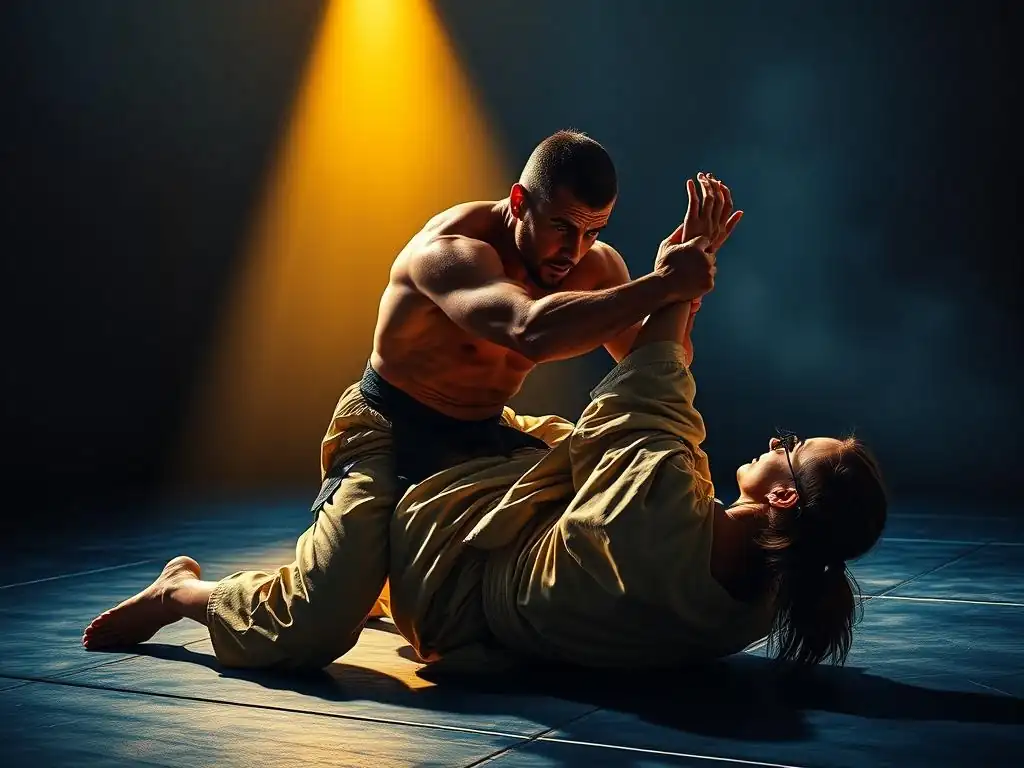
Welcome to Martial Arts Mastery, your gateway to understanding the depth and breadth of global martial arts. Ever wondered how to seamlessly shift from standing to grappling with a partner? Dive into Groundwork Transitions: Partner Drills for Coordinated Movement (General Application) and discover effective partner ground transition drills that will revolutionize your movement and control. Prepare to unlock a new level of fluidity and tactical prowess in your training!
- Mastering Ground Transitions: The Importance of Partner Drills
- Effective Partner Ground Transition Drills: A Progressive Approach
- Enhancing Coordination and Timing in Ground Transitions: Advanced Drills
- Optimizing Your Training: Tips for Effective Partner Ground Transition Drills
- The Benefits of Partner Drills for Ground Transition Mastery
- Conclusion: Elevating Your Ground Game with Effective Partner Training
-
Frequently Asked Questions
- What are partner ground transition drills and why are they important in martial arts?
- How do these drills differ from solo groundwork practice?
- What are some examples of effective partner ground transition drills?
- How often should I incorporate partner ground transition drills into my training?
- What kind of gear is recommended for partner ground transition drills?
- Final Reflection: Embracing the Flow of Connection
- Unlock Your Flow: Master Ground Transitions Now!
Mastering Ground Transitions: The Importance of Partner Drills
Why Train Ground Transitions with a Partner? Enhancing Coordination and Timing
Training ground transitions with a partner is fundamentally different from solo drills or static positional practice. While solo work builds muscle memory for individual movements like shrimping or bridging, it lacks the crucial element of a dynamic, reacting opponent. Ground fighting is a constantly shifting environment, requiring split-second decisions and precise adjustments based on your partner's movements. Effective partner ground transition drills introduce this essential variable, forcing practitioners to develop timing – knowing when to execute a movement – and coordination – ensuring their body parts move together efficiently in response to external force and pressure.
Moreover, working with a partner allows for the development of sensitivity and pressure management. You learn to feel your partner's weight distribution, their intentions, and the subtle cues that indicate an opening or a potential threat. This tactile feedback is impossible to replicate alone. Engaging in effective partner ground transition drills provides a realistic training environment where you can practice maintaining posture under pressure, creating space against resistance, and smoothly flowing between positions while adapting to your partner's reactions. This iterative process of action and reaction is key to building the intuitive coordination needed for high-level ground fighting.
Understanding the Fundamentals of Ground Transition Techniques
Ground transition techniques are the bridges between the core positions in Brazilian Jiu-Jitsu and other ground-based martial arts. They are not static holds or submissions but dynamic movements designed to improve your position, escape a bad one, or set up an attack. Key fundamental transitions include passing the guard to side control or mount, escaping mount or side control to guard or turtle, sweeping from guard to top position, and moving from side control to mount or knee-on-belly. Each of these transitions relies on a combination of posture, base, leverage, and pressure.
Mastering these fundamentals through effective partner ground transition drills is non-negotiable for developing a strong ground game. Understanding the mechanics of a hip escape isn't enough; you must practice it against someone trying to keep you pinned. Learning how to pass guard requires practicing against a partner actively trying to retain their guard and sweep you. These drills highlight the critical interplay between offensive and defensive movement, showing you how to capitalize on your partner's momentary loss of balance or structure while simultaneously protecting your own. Without live, reactive practice, these fundamental movements remain theoretical rather than practical skills.
Effective Partner Ground Transition Drills: A Progressive Approach
Drill 1: Hip Movement and Positional Awareness
Setting Up the Hip Movement and Positional Awareness Drill: Partner A in guard, Partner B standing.
This foundational drill starts with Partner A on their back, establishing a solid closed guard or open guard (like butterfly or spider guard). Partner B stands or kneels just outside Partner A's guard, maintaining a low base and good posture, ready to apply slight pressure or react to movements. The objective is for Partner A to practice creating space and changing angles using hip movement techniques like shrimping (hip escape), bridging, and scooting, while Partner B focuses on maintaining their position and applying gentle, consistent pressure without actively trying to pass the guard aggressively at this stage.
Executing the Drill: Partner A shrimping and hip escaping to create space, Partner B maintaining pressure.
Partner A initiates the drill by executing a hip escape, pivoting their hips to the side and pushing off their foot to create a few inches of space. They might then transition to the other side or use the space to reposition their legs for a potential sweep or submission setup (though the focus is on movement, not execution). Partner B's role is to follow Partner A's movements, maintaining a connection and applying light pressure to simulate resistance.
This isn't a race; the emphasis is on controlled, deliberate movement from Partner A and reactive positioning from Partner B. The drill might involve Partner A shrimping multiple times in a row, alternating sides, or combining shrimping with bridging to break Partner B's posture slightly.
Key Considerations for Hip Movement and Positional Awareness Drills: Maintaining base and balance.
For Partner A, the key is to execute hip movements fully, creating usable space, while keeping their base strong on the mat and their legs active. For Partner B, the primary consideration is maintaining their own base and balance while reacting to Partner A's hip movements. They should avoid getting pulled off balance but also allow Partner A to execute the movements, providing just enough resistance to make it realistic.
Communication is vital; partners should agree on the level of resistance and provide feedback. This drill, when performed consistently as part of effective partner ground transition drills, significantly improves a practitioner's ability to create and manage space from the guard.
Drill 2: Bridging and Shrimping for Mount Escape
The Importance of Bridging and Shrimping in Ground Transitions
Bridging and shrimping are arguably the most fundamental hip movements in ground fighting, particularly crucial for escaping disadvantageous positions like mount or side control. A strong bridge allows you to lift your partner's weight and disrupt their base, creating the necessary space and moment of unbalance needed for an escape.
Shrimping, or hip escaping, complements the bridge by allowing you to move your hips laterally away from your partner, creating distance and enabling you to bring your legs back into play to establish guard or recover a better position. Without proficiency in these two movements, escaping dominant positions becomes significantly more difficult, if not impossible.
Implementing the Bridging and Shrimping Drill with a Partner: Partner A in mount, Partner B bridging and shrimping to escape.
This drill begins with Partner A in a stable mount position on Partner B. Partner B's objective is to escape mount using the bridge and shrimp technique. Partner B starts by securing one of Partner A's arms or sleeves to control it, then executes a strong bridge, lifting their hips off the ground and driving into Partner A.
As Partner A's weight is momentarily lifted or shifted, Partner B quickly performs a shrimp, turning their hips to the side and pulling their knee and leg towards the space created. They repeat this process, bridging and shrimping, until they can recover guard or transition to a different position. Partner A provides realistic resistance by maintaining their mount base and posture, attempting to prevent the escape without applying excessive pressure or submitting their partner.
Common Mistakes and How to Correct Them in Bridging and Shrimping Drills: Not creating enough space, telegraphing the bridge.
A common mistake for Partner B is failing to create enough space with their bridge. They might lift their hips but not drive into their partner, or they might bridge without controlling an arm, allowing Partner A to easily stabilize. Correcting this involves emphasizing the direction and power of the bridge – driving towards the head or shoulder depending on the escape variation – and the importance of controlling a limb. Another frequent error is telegraphing the bridge, making it obvious before execution.
This allows Partner A to anticipate and shut down the movement. To correct this, Partner B should practice concealing their intentions, perhaps by initiating the movement subtly or using feints. Effective partner ground transition drills focusing on this escape are vital; practicing against a resisting partner immediately reveals these timing and execution flaws, allowing for targeted correction.
Drill 3: Guard Passing and Retention with Resistance
Developing Guard Passing Skills Through Partner Drills
Passing the guard is one of the most challenging aspects of ground fighting, requiring a blend of pressure, technique, timing, and physical endurance. Solo drills can teach the steps of a specific guard pass (e.g., knee cut, stack pass), but they cannot replicate the complexity of navigating, breaking, and getting past a partner's active legs.
Partner drills are essential for developing guard passing skills because they introduce the variable of active resistance. Your partner will be using their legs and hips to control distance, off-balance you, and attempt sweeps or submissions, forcing you to adapt your chosen pass, maintain posture under pressure, and react to their defenses in real-time.
Effective partner ground transition drills for guard passing often involve starting in a common guard position (like closed guard, open guard, or half guard) with Partner A attempting to pass and Partner B attempting to retain or sweep. The drill can focus on a specific pass or allow for open passing. Partner A practices breaking the guard, establishing grips, and applying pressure to move past Partner B's legs.
Partner B provides realistic resistance by using their hooks, frames, and hip movement to frustrate the pass attempt, maintain distance, and off-balance Partner A. This back-and-forth exchange hones the passer's ability to read their opponent's defense and choose the most effective path through the guard.
Maintaining Guard Retention Under Pressure: A Partner Drill: Partner A attempting to pass guard, Partner B actively retaining.
Guard retention is the flip side of guard passing and equally critical. It is the ability to keep your opponent in your guard, preventing them from achieving a dominant position. This requires constant movement, intelligent use of hooks and frames, and strong hip mobility.
Partner drills are indispensable for developing guard retention because they simulate the pressure and angles an opponent will use to pass. In the same drill described above, Partner B's role is to actively use their legs (hooks, spider grips, lasso grips, etc. ), arms (frames), and hip movement (shrimping, bridging, scooting) to keep Partner A's weight off them and prevent Partner A from getting around their legs.
The drill emphasizes Partner B's ability to recover guard if it's partially passed, circle their hips away from danger, and utilize techniques like the knee shield or essential open guard frames to maintain distance and control. Partner A provides the necessary stimulus by applying realistic passing pressure and attempting various passes.
A common scenario in these effective partner ground transition drills is Partner A attempting a knee cut pass while Partner B uses a knee shield and frames to block, shrimping away to recover full guard if Partner A gets past the initial defense. This constant battle for position under pressure rapidly improves Partner B's reactive guard retention skills.
Integrating Offense and Defense in Guard Passing and Retention Drills
The most effective partner ground transition drills for guard passing and retention seamlessly integrate both offensive and defensive actions. The guard passer (Partner A) must be prepared to defend against sweeps and submissions while attempting to pass, and the guard player (Partner B) must look for opportunities to sweep or submit while focusing on retention. This creates a more realistic training environment where practitioners learn to transition between roles and objectives fluidly.
For example, if Partner A is attempting a standing guard pass and Partner B attempts a sweep, Partner A must react defensively to kill the sweep before resuming their pass attempt. Conversely, if Partner A secures a strong passing grip, Partner B must use their retention techniques to prevent the pass but also be ready to transition to a sweep or submission attempt if Partner A makes a mistake or leaves an opening.
This dynamic interplay, facilitated by effective partner ground transition drills, teaches practitioners to think several steps ahead and execute complex sequences involving both passing/retention and opportunistic attacks/defenses.
Drill 4: Submission Entries and Escapes from Mount and Side Control
Drilling Submission Entries from Mount and Side Control: Armbar from mount, Americana from side control.
Dominant positions like mount and side control are prime locations for initiating submissions due to the control they offer over your partner's body. Drilling submission entries from these positions with a partner allows practitioners to practice the precise movements and weight distribution required to set up attacks like the armbar from mount, the Americana or Kimura from side control, or various chokeholds. These effective partner ground transition drills focus on the transition from the dominant position into the submission setup, ensuring the practitioner maintains control throughout the sequence.
For instance, drilling the armbar from mount involves Partner A in mount transitioning their weight and base to isolate Partner B's arm, step over their head, and sit back for the finish. Partner B provides realistic resistance by defending their arm and attempting to prevent Partner A from establishing the submission mechanics. Similarly, practicing the Americana (keylock) from side control involves Partner A securing Partner B's arm behind their back, establishing control grips, and applying leverage.
Partner B resists by defending their arm and trying to escape side control. These drills highlight the importance of maintaining positional control even as you transition to an attack.
Practicing Submission Escapes with a Partner: A Realistic Approach: Elbow escape from mount, hip escape from side control.
Equally important is the ability to escape submissions once they are initiated. Practicing submission escapes with a partner provides a realistic simulation of the pressure, pain compliance, and urgency involved in real submission attempts. These effective partner ground transition drills focus on the defensive transitions needed to break grips, create space, and recover a safe position before the submission is fully locked in.
For example, practicing the elbow escape from mount involves Partner A applying a realistic, but safe, mount position, and Partner B attempting to escape using bridging and shrimping to create space to insert their elbow and recover half guard or full guard. If Partner A attempts an armbar, Partner B drills the specific defensive sequence: tucking the arm, gripping their gi or belt, bridging, and turning into Partner A.
When drilling escapes from side control submissions like the Americana, Partner B focuses on bridging and turning towards the trapped arm to relieve pressure and create space to pull the arm free, often transitioning into a hip escape to recover guard. Partner A provides realistic resistance by maintaining the submission hold without applying excessive force that could cause injury, focusing instead on maintaining the structure of the hold.
Emphasizing Control and Safety in Submission Drilling
While drilling submission entries and escapes with a partner is crucial, safety and control must be paramount. These effective partner ground transition drills should always be performed with clear communication and a mutual understanding of tapping protocols. Partner A, applying the submission, should focus on executing the technique correctly and applying controlled pressure, ready to release immediately when Partner B taps. Partner B, drilling the escape, should resist realistically but tap early if the escape is not working or if they feel discomfort, prioritizing safety over ego.
Incorporating specific safety checks into the drill is beneficial. For instance, when drilling armbars, Partner A can pause just before applying full leverage to allow Partner B to feel the position and practice their initial defense before pressure is applied. When drilling chokes, Partner A should apply pressure slowly and release immediately upon a tap. This controlled environment allows practitioners to explore the mechanics of submissions and escapes without undue risk, making these effective partner ground transition drills a safe way to gain vital experience in high-stakes situations.
Enhancing Coordination and Timing in Ground Transitions: Advanced Drills
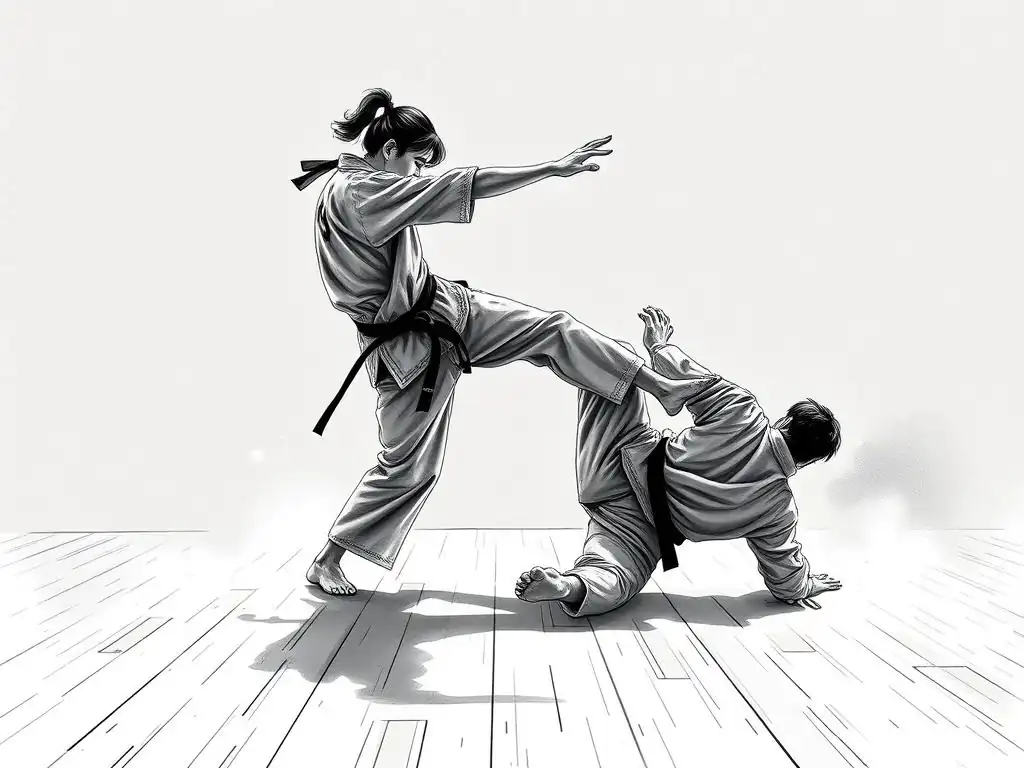
Drill 5: Dynamic Transitions: Integrating Takedowns and Guard Pulls
Combining Takedowns and Guard Pulls in Partner Drills: Partner A attempts a takedown, Partner B counters with a guard pull.
Advanced effective partner ground transition drills introduce more dynamic scenarios, blurring the lines between standing and ground fighting. One such drill involves Partner A initiating a standing sequence with a takedown attempt (e.g., a single leg or double leg), and Partner B reacting by countering the takedown and pulling guard. This simulates a very common situation in BJJ and judo where one person seeks to take the fight to the ground via a throw or takedown, and the other prefers to initiate ground fighting from their back by pulling guard.
The drill starts from a standing position with grips established. Partner A attempts a takedown. Partner B's goal is not necessarily to defend the takedown completely, but to react by transitioning into a guard pull – sitting to the ground and wrapping their legs around Partner A's hips or legs to establish a guard position like closed guard, butterfly guard, or spider guard.
Partner A must then immediately transition from their takedown attempt mindset to a guard passing mindset, reacting to being pulled into guard and beginning their passing efforts. This drill forces both partners to practice the critical transition point between standing and ground, which requires significant coordination and timing.
Developing Reaction Time and Adaptability in Dynamic Transitions
This type of dynamic drill is excellent for developing reaction time and adaptability because the outcome is not predetermined. Partner A doesn't know exactly how Partner B will counter the takedown, and Partner B doesn't know exactly how Partner A will react to the guard pull. This unpredictability forces both partners to think and react quickly, adjusting their bodies and techniques on the fly. Effective partner ground transition drills like this teach practitioners to manage distance and weight distribution during rapid changes in position and elevation.
For example, if Partner A attempts a double leg and Partner B counters by sitting to guard with butterfly hooks, Partner A must immediately adjust their posture and base to avoid being swept from the butterfly guard before even starting to pass. If Partner B pulls closed guard, Partner A must break posture and grips differently. This constant need to react and adapt makes this drill highly effective for improving overall ground transition fluidity and readiness for unexpected scenarios.
Ensuring Safety During Dynamic Transition Drills
Due to the inclusion of standing elements and rapid changes in position, safety is paramount in dynamic transition drills. Partners must agree on the intensity level and ensure they are executing techniques with control, especially during the transition from standing to the ground. Takedown attempts should be executed with care, focusing on technique rather than raw power, and the partner pulling guard should do so safely, avoiding falling directly onto their tailbone or pulling their partner down in a dangerous way.
Using sufficient mat space is essential to prevent collisions. Partners should communicate any discomfort or potential issues immediately. While these effective partner ground transition drills are designed to be dynamic, they are still training exercises, not live competition. Prioritizing safety allows practitioners to push their limits and improve their coordination and timing without risking injury, making these advanced drills a valuable, yet safe, component of training.
Drill 6: Flow Rolling: Unscripted Partner Drills for Improvisation
Understanding the Concept of Flow Rolling
Flow rolling is a type of partner drill that sits between structured drilling and full-intensity sparring. The concept is to engage in a continuous, smooth exchange of techniques and positions with a partner, focusing on fluidity, control, and exploration rather than applying maximal force or achieving submissions. The goal is to move seamlessly from one position or technique to another, reacting to your partner's movements in a relaxed, improvisational manner. It's like a conversation in motion, where both partners are contributing to the flow.
Unlike traditional sparring where practitioners often tense up and fight for every inch, flow rolling encourages relaxation and responsiveness. It's about exploring transitions – how to move from side control to mount, from guard to a sweep, from an attempted pass back to guard retention – without the pressure of "winning." This makes it an excellent method for practicing effective partner ground transition drills in a holistic way, allowing practitioners to link techniques together and develop a better understanding of the pathways between different positions.
Implementing Flow Rolling with a Partner: Establishing Guidelines: Start from neutral positions, focus on smooth transitions, and avoid stalling.
To implement flow rolling effectively, it's crucial to establish clear guidelines with your partner beforehand.
- Start from neutral or common positions: Begin from positions like closed guard, open guard, side control, or even standing (transitioning to the ground).
- Focus on smooth transitions: The primary objective is to move fluidly between positions. Avoid sudden bursts of strength or speed.
- Avoid stalling: Keep the movement going. If a position is reached where neither partner can easily transition, gently reset or agree on a new starting point.
- Light resistance: Provide just enough resistance to make the drill realistic, but not so much that it becomes a strength battle.
- No submissions (or light submissions): Submissions are typically avoided or applied with extreme gentleness, with the focus being on the entry and the transition to the submission position, not the finish. Tapping is always encouraged if any pressure is felt.
- Communicate: Talk to your partner about what feels right or wrong, what you're trying to work on, and the intensity level.
Maximizing Learning and Adaptability Through Flow Rolling
Flow rolling is incredibly effective for maximizing learning and adaptability in ground fighting. By removing the pressure of competition, practitioners are more willing to try new techniques and transitions. The continuous, unscripted nature of the drill forces constant reaction and improvisation, building a deep, intuitive understanding of body mechanics and positional relationships. It allows practitioners to feel how different techniques flow into each other and to discover their own unique transitional pathways.
These effective partner ground transition drills in a flow format help develop a sense of timing and distance that is difficult to replicate in more rigid drills. You learn to recognize opportunities for transition as they appear naturally in the movement exchange. This adaptability is crucial for live sparring and competition, where opponents rarely react exactly as planned. Flow rolling builds the ability to chain techniques together and transition smoothly between offense and defense, making it an invaluable tool for anyone seeking to master ground transitions.
Optimizing Your Training: Tips for Effective Partner Ground Transition Drills
Communication and Feedback: The Cornerstones of Partner Training
Effective partner ground transition drills rely heavily on clear and consistent communication between partners. Before starting a drill, discuss the objective, the desired level of resistance, and any specific techniques you want to focus on. During the drill, provide feedback to each other – is the resistance too much or too little? Are they executing the movement correctly? Is their pressure effective? Constructive feedback helps both partners improve faster and ensures the drill is beneficial.
After the drill, take a moment to debrief. What worked well? What was challenging? Did you encounter unexpected resistance or openings? This brief reflection period allows you to internalize the lessons from the drill and apply them in future training sessions. Open communication about comfort levels and safety is also paramount, especially in drills involving pressure or potential joint stress. Partners who communicate effectively build trust and create a safer, more productive training environment for effective partner ground transition drills.
Gradual Progression: Increasing Difficulty and Complexity
Just like any training regimen, effective partner ground transition drills should follow a principle of gradual progression. Start with fundamental movements and simple positional drills (like the hip escape or bridging drill) with minimal resistance. As proficiency increases, gradually add more complexity. This could involve linking two transitions together (e.g., mount escape followed by guard recovery), increasing the level of resistance from your partner, or introducing dynamic elements like starting from a less stable position.
Progression also involves moving from cooperative drills, where the partner offers minimal resistance and focuses on facilitating the movement, to resistive drills, where the partner actively tries to prevent the transition using realistic force. Finally, integrate these transitions into live sparring or flow rolling. This step-by-step approach ensures that practitioners build a solid foundation before attempting more challenging scenarios, preventing frustration and promoting consistent improvement in effective partner ground transition drills.
Realistic Resistance: Balancing Safety and Challenge
Finding the right balance of resistance is critical for effective partner ground transition drills. Too little resistance makes the drill unrealistic and prevents the development of strength, timing, and pressure management against a resisting opponent. Too much resistance turns the drill into a strength battle or premature sparring session, which can hinder technique development and increase the risk of injury. The ideal level of resistance is "realistic" – simulating the pressure and movement of a live opponent without being overly aggressive or focused on 'winning' the drill.
For foundational drills, resistance might be minimal, just enough to feel the pressure and angles. For more advanced drills like guard passing or mount escape, the resistance should be more significant, forcing the practitioner to use proper technique, leverage, and timing to succeed. Partners must communicate to adjust the resistance as needed, ensuring it provides a challenge that facilitates learning without becoming overwhelming or unsafe. Mastering this balance is key to optimizing effective partner ground transition drills.
The Benefits of Partner Drills for Ground Transition Mastery
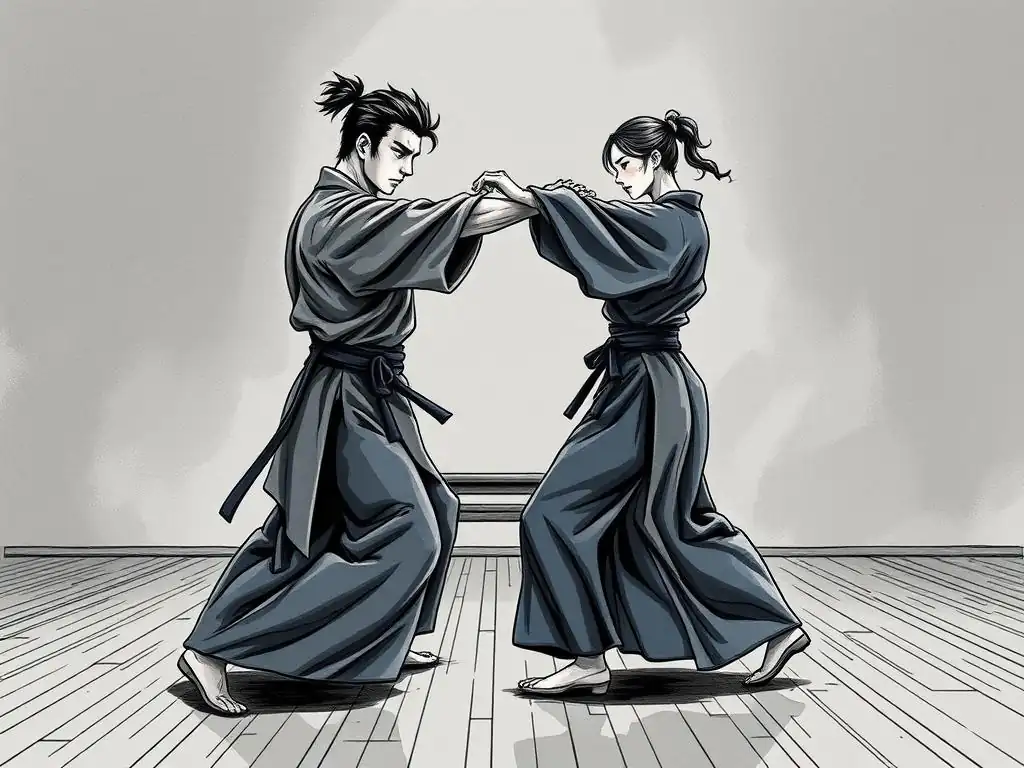
Improved Timing and Coordination for Seamless Transitions
Perhaps the most significant benefit of consistent effective partner ground transition drills is the dramatic improvement in timing and coordination. Unlike solo drills, partner work forces you to react to a dynamic variable – your partner's body weight, movement, and resistance. This constant adaptation hones your sense of timing, teaching you when the optimal moment is to initiate a hip escape, sweep, or pass. You learn to feel the subtle shifts in your partner's weight that signal an opportunity.
Coordination is also greatly enhanced as you learn to integrate multiple body movements (hips, legs, arms, core) to execute transitions smoothly under pressure. Effective partner ground transition drills build the muscle memory and proprioception needed to move efficiently and powerfully during transitions, ensuring that your body works as a cohesive unit rather than a collection of isolated parts. This leads to seamless, effortless-looking transitions that are highly effective in live grappling.
Enhanced Positional Awareness and Control on the Ground
Partner drills are indispensable for developing a deep understanding of positional awareness on the ground. By constantly working from different positions – guard, side control, mount, back control, etc. – and practicing transitions between them against a resisting partner, you gain a much clearer sense of your body's relationship to your partner's body in space. You learn where your weight needs to be, how to maintain base and structure, and how to feel your partner's attempts to disrupt your position.
Effective partner ground transition drills teach you how to control your partner's movement while executing your own. You learn how to use grips, pressure, and body mechanics to limit their options and dictate the flow of the exchange. This enhanced positional awareness and control translates directly to greater effectiveness in live rolling, allowing you to maintain dominant positions longer, escape disadvantageous positions more efficiently, and navigate complex ground exchanges with greater confidence.
Increased Confidence and Adaptability in Ground Fighting Scenarios
Regularly engaging in effective partner ground transition drills builds confidence by providing repeated exposure to realistic ground fighting scenarios in a controlled environment. Successfully executing transitions against a resisting partner, even in a drill setting, reinforces technique and builds self-belief. As you become more proficient at moving between positions and reacting to your partner's actions, you feel more comfortable and less overwhelmed during live sparring or competition.
Furthermore, the dynamic nature of many partner drills, especially flow rolling, fosters adaptability. You learn to improvise and chain techniques together based on your partner's reactions, rather than relying solely on pre-planned sequences. This makes you a less predictable and more versatile grappler. The ability to smoothly transition, react effectively, and adapt to changing circumstances, honed through effective partner ground transition drills, is a hallmark of a skilled ground fighter.
Conclusion: Elevating Your Ground Game with Effective Partner Training
Frequently Asked Questions
What are partner ground transition drills and why are they important in martial arts?
Partner ground transition drills are exercises performed with a training partner to improve smooth and effective movement from one grappling position to another on the ground. They are crucial for developing muscle memory and coordination, essential for real-world application.
How do these drills differ from solo groundwork practice?
While solo practice can build strength and technique, partner drills introduce the element of resistance and dynamic interaction. This allows you to adapt to a moving opponent and develop timing and sensitivity.
What are some examples of effective partner ground transition drills?
Examples include shrimping drills, guard passing drills, and mount escape drills. Each drill involves specific movements and responses to your partner's actions, fostering a better understanding of grappling dynamics and positional control.
How often should I incorporate partner ground transition drills into my training?
Ideally, you should include these drills in every grappling session to maintain and improve your ground game. Consistent practice is key to developing fluidity and confidence in your transitions.
What kind of gear is recommended for partner ground transition drills?
A mouthguard is essential for protecting your teeth. Depending on the intensity and techniques used, you might also consider using grappling gloves, knee pads, and a cup for added protection and safe training.
Final Reflection: Embracing the Flow of Connection
The exploration of partner ground transition drills, as detailed in this article, isn't merely about mastering techniques; it's about cultivating a deeper understanding of movement, connection, and responsiveness. In a world increasingly demanding adaptability and collaboration, the principles learned through these drills extend far beyond the mat, offering valuable insights into navigating the complexities of human interaction.
The beauty of these drills lies in their ability to foster a profound sense of empathy and anticipation. By learning to move in sync with another person, we develop a heightened awareness of their intentions and needs, both physical and metaphorical. The best way to find yourself is to lose yourself in the service of others.
- Mahatma Gandhi. This quote perfectly encapsulates the essence of partner drills, where individual growth is inextricably linked to the progress of the team.
Now, consider how these lessons translate into your own life. How can you apply the principles of coordinated movement and responsive connection to your relationships, your work, and your personal growth? Embrace the flow, anticipate the needs of those around you, and discover the power of moving in harmony with the world.
Unlock Your Flow: Master Ground Transitions Now!
Thank you for diving into the world of coordinated ground movement! We hope this article has provided you with valuable insights into improving your transitions through partner drills. Now, it's time to put that knowledge into action and elevate your grappling game.
Here are some actionable steps to help you continue your journey:
- Prioritize partner drill practice focusing on at least one new transition weekly to significantly improve your fluidity and awareness.
- Explore solo movement drills related to the transitions discussed to build a deeper understanding of body mechanics and spatial awareness.
- Share your favorite transition drills or variations in the comments below and help us expand our collective knowledge base!
What's one small adjustment you can make today to improve your ground transitions in your next training session?