
Nunchaku Control: Solo Drills for Beginners to Advanced Practitioners

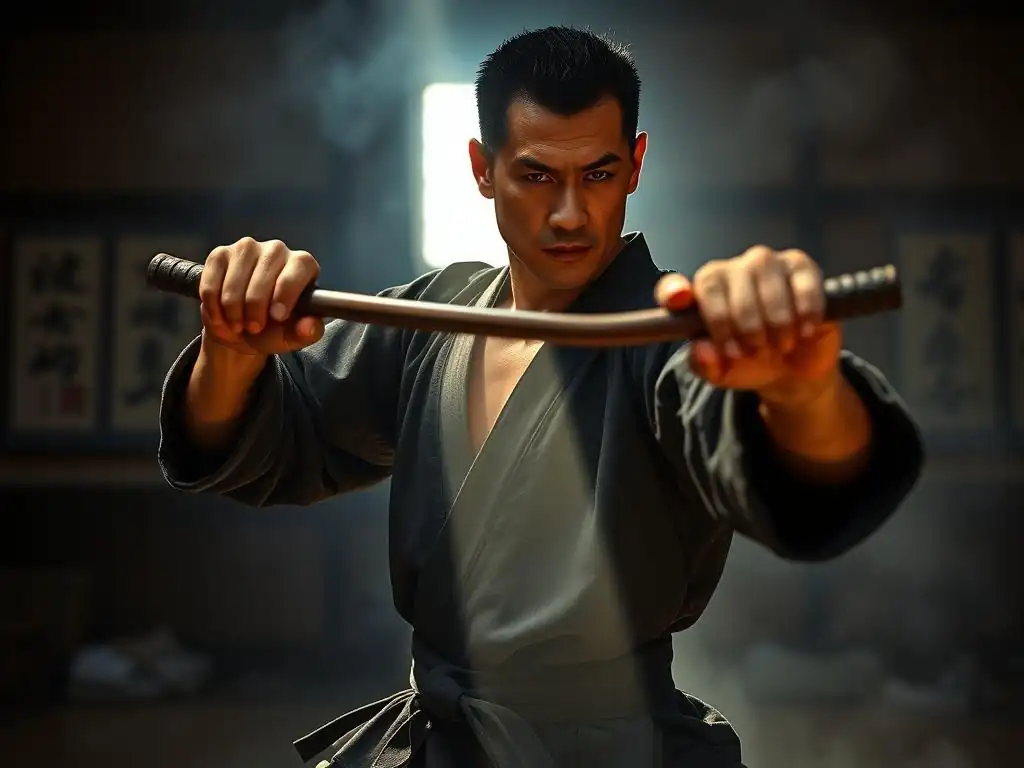
Welcome to Martial Arts Mastery, your ultimate resource for unlocking the secrets of combat and self-cultivation! Intrigued by the fluid power and precision of the nunchaku? Dive into our latest article, " Nunchaku Control: Solo Drills for Beginners to Advanced Practitioners," and begin your journey mastering this iconic weapon. Discover essential solo drills that will build your foundation, refine your technique, and elevate your nunchaku artistry.
- Introduction to Nunchaku Solo Training for Martial Arts Mastery
- Nunchaku Solo Drills Beginner: Foundational Techniques
- Intermediate Nunchaku Solo Practice: Developing Speed and Precision
- Advanced Nunchaku Solo Drills: Complex Combinations and Fluidity
- Nunchaku Solo Drills for Enhanced Coordination and Reflexes
- Safety Considerations and Best Practices for Nunchaku Solo Training
- Integrating Nunchaku Solo Drills into Your Overall Martial Arts Training
- Nunchaku Solo Practice: Progression and Continued Improvement
- Conclusion: Unleashing Your Potential Through Nunchaku Solo Drills
-
Frequently Asked Questions
- What are the fundamental benefits of practicing nunchaku solo drills?
- What are some beginner-friendly nunchaku solo drills?
- How can I progress from beginner to advanced nunchaku solo drills?
- What safety precautions should I take when practicing nunchaku solo drills?
- How often should I practice nunchaku solo drills to see improvement?
- Final Reflection: Mastering the Dance of Self-Discipline
- Ignite Your Nunchaku Mastery Today!
Introduction to Nunchaku Solo Training for Martial Arts Mastery
Why Focus on Nunchaku Solo Drills? Benefits and Applications
Focusing on nunchaku solo drills is fundamental for anyone serious about mastering this dynamic weapon. Unlike partner drills, solo practice allows practitioners to dedicate undivided attention to form, technique, and internalizing movement patterns without external distractions.
This intense focus on personal execution helps build a strong foundation in weapon manipulation, improving grip strength, wrist flexibility, and overall coordination. It's estimated that beginners practicing solo drills consistently for 30 minutes a day, three to four times a week, can see a significant improvement in basic control within just one to two months, far exceeding the progress made with infrequent partner work alone.
Furthermore, nunchaku solo drills are incredibly versatile. They can be practiced in relatively small spaces, making them accessible for home training. Beyond foundational skills, solo practice allows for the exploration of complex combinations and flow, essential for developing speed, precision, and creativity. Advanced practitioners often use solo drills to refine intricate techniques, simulate combat scenarios, and maintain muscle memory. For example, simulating a series of blocks followed by a strike requires precise timing and control, which can be honed effectively through repetitive solo execution before attempting it against a moving target or partner.
The Importance of Proper Nunchaku Handling and Safety
Proper handling is the absolute cornerstone of effective and safe nunchaku solo training. Before attempting any drills, especially for nunchaku solo drills beginners, understanding how to hold, balance, and control the momentum of the weapon is critical. Incorrect grip or a lack of awareness of the nunchaku's trajectory can easily lead to self-inflicted injuries, ranging from minor bruises to more serious impacts on the head or joints. Safety begins with selecting appropriate training gear, such as padded foam nunchaku, which significantly reduces the risk of injury during the initial learning phase.
Beyond equipment, cultivating a disciplined mindset focused on safety is paramount. This involves practicing in an open area free from obstacles and other people, wearing appropriate protective gear like hand wraps or even a headguard when first starting complex movements, and always maintaining awareness of where the nunchaku is relative to your body. Many instructors emphasize starting with very slow, controlled movements, prioritizing precision over speed.
A common mistake for nunchaku solo drills beginners is attempting advanced techniques too soon, leading to loss of control. Patience and a step-by-step approach are vital to prevent accidents and build a safe, effective training habit.
Nunchaku Solo Drills Beginner: Foundational Techniques
Grip Techniques for Nunchaku Beginners: Mastering the Hold
For nunchaku solo drills beginners, mastering the basic grip is the very first step. The most common and fundamental grip is the standard grip, where the practitioner holds one stick firmly in their hand, allowing the other stick to hang freely. The grip should be secure but not overly tight, allowing for wrist flexibility.
Typically, you hold the stick about one-third of the way down from the cord/chain end, providing a balance point for control. Practicing simply holding the nunchaku and feeling its weight and balance is a crucial preliminary drill before any movement begins, helping the beginner become comfortable with the weapon's feel.
Another essential beginner grip is the reverse grip, where the stick is held with the hand facing downwards. This grip is often used for specific strikes or transitions. Learning to smoothly switch between the standard and reverse grips is a key early skill. Beginners should practice holding the nunchaku in both grips for extended periods, focusing on maintaining a relaxed yet firm hold. This foundational understanding of how the nunchaku feels in different hand positions is indispensable for executing all subsequent nunchaku solo drills effectively and safely.
Basic Nunchaku Swings: Figure Eights and Overhead Motions
The figure eight is arguably the most iconic and fundamental nunchaku movement, making it essential for nunchaku solo drills beginners. This swing involves moving the nunchaku in a pattern resembling the number "8" on its side, passing the stick across the body from one side to the other, typically below the waist or at hip level. It requires coordinated wrist and forearm movement. Starting slowly, focusing on smooth, continuous motion and maintaining control of the stick's arc is crucial. Consistent practice of the figure eight helps build wrist strength and develops a feel for the nunchaku's momentum.
Overhead swings are another foundational movement for nunchaku solo drills beginners. These involve swinging the nunchaku in a circular motion above the head, either in a vertical or horizontal plane. The vertical overhead swing is often used for downward strikes, while horizontal swings can generate power for side strikes.
Practicing these swings helps beginners understand how to control the nunchaku's path when it's not directly in front of them and teaches them to manage the centrifugal force generated by the swinging stick. Combining slow, deliberate figure eights and overhead swings is a core component of early nunchaku solo drills beginner routines.
Beginner Drill 1: Forearm Rolls and Transitions
Forearm rolls are a fundamental technique for nunchaku solo drills beginners, focusing on smoothly transitioning the nunchaku from one side of the forearm to the other. The drill involves holding the nunchaku stick near the elbow and allowing the other stick to swing around the forearm, catching it with the hand. This is typically practiced with the arm extended. The key is to control the swing's momentum so the stick lands softly on the forearm before being caught.
This drill is excellent for improving hand-eye coordination and developing control over the nunchaku's movement close to the body. Practicing forearm rolls on both arms, transitioning from one roll to catching the stick, then rolling on the other arm, helps build ambidexterity and fluidity. It's a relatively low-impact drill that introduces the concept of using the body to redirect the nunchaku's motion, a skill that becomes vital in more advanced techniques. Consistent practice of this drill establishes comfort with the nunchaku moving around the limbs.
Beginner Drill 2: Hand-to-Hand Passing
Hand-to-hand passing is a crucial drill for nunchaku solo drills beginners that teaches seamless transitions between grips and hands. The simplest form involves holding one stick in one hand and passing the other stick directly into the opposite hand. This can be done in front of the body, behind the back, or under the leg. The focus is on a clean, controlled pass and catch, ensuring the nunchaku doesn't drop or hit the body.
Mastering hand-to-hand passing improves dexterity and prepares practitioners for more complex transitions used in combinations. As beginners progress, they can introduce a small swing before the pass, adding a dynamic element. Practicing sequences like a swing, pass, swing in the other hand, and pass back builds rhythm and coordination. This drill directly enhances the ability to use both hands effectively and is foundational for developing flow and continuous movement with the nunchaku.
Beginner Drill 3: Basic striking patterns
Introducing basic striking patterns early is important for nunchaku solo drills beginners to understand the practical application of the weapon. Simple patterns include a downward strike, followed by an upward strike, or alternating side strikes. These are performed in the air, focusing on the trajectory and power generation. The beginner learns to channel the momentum from a swing into a focused strike.
Practicing these basic strikes involves visualizing a target and executing the motion with intent. For instance, a simple drill might be: overhead swing into a downward strike, reset, then repeat. Or, a figure eight leading into a side strike. The emphasis is on control at the point of impact (imaginary) and the ability to stop or redirect the nunchaku's momentum after the strike. This builds muscle memory for practical movements and transitions beginners from simply swinging to using the nunchaku as a tool for striking.
Intermediate Nunchaku Solo Practice: Developing Speed and Precision
Intermediate Drill 1: Weaving Patterns Around the Body
Weaving patterns mark a step up from basic swings and passes for intermediate nunchaku solo practice. These drills involve moving the nunchaku around different parts of the body, such as under the arms, around the neck, or behind the back, without hitting oneself. The most common weaving drills involve passing the nunchaku stick from one hand to the other as it swings around the back or under an arm. This requires greater precision and body awareness than beginner drills.
Mastering weaving significantly improves dexterity, control in tight spaces, and the ability to redirect the nunchaku's momentum using the body as a pivot or guide. For example, a common drill involves swinging the nunchaku, passing it behind the back from one hand to the other, and continuing the swing. This adds complexity and fluidity to movements, essential for transitioning between offensive and defensive techniques. Consistent practice builds confidence in handling the nunchaku in close proximity to the body.
Intermediate Drill 2: Combining Swings and Strikes
Intermediate nunchaku solo practice focuses heavily on seamlessly combining basic swings with strikes. Instead of practicing swings and strikes as separate movements, this stage integrates them into fluid sequences. A typical drill might involve a figure eight swing transitioning directly into a side strike, followed by a withdrawal and another swing, perhaps an overhead swing leading to a downward strike. The goal is to link these actions without pauses or breaks in momentum.
This combination work enhances timing and power generation. Practitioners learn how the momentum from a swing can be channeled efficiently into a powerful strike and how to quickly recover or transition after hitting. For example, a drill might sequence: Figure 8 -> Side Strike -> Reverse Figure 8 -> Downward Strike. Practicing these combinations solo allows for repetition and refinement, ensuring smooth transitions and maximum effectiveness before applying them in dynamic situations.
Intermediate Drill 3: Introduction to Nunchaku Flow Drills
Introduction to nunchaku flow drills is a key development for intermediate practitioners. Flow drills involve creating continuous, non-stop sequences of movements that link swings, passes, strikes, and weaves together. The focus is not on individual techniques but on the smooth, uninterrupted transition from one movement to the next, maintaining momentum and control throughout the sequence. This is where the nunchaku begins to feel like an extension of the body.
A simple flow drill might start with figure eights, transition to a hand-to-hand pass, continue with figure eights in the other hand, perhaps weave behind the back, and then incorporate a strike before returning to swings. These drills are less about specific applications and more about developing fluidity, rhythm, and endurance. Practicing flow drills for several minutes at a time helps build stamina and enhances the practitioner's ability to improvise and link techniques spontaneously.
Advanced Nunchaku Solo Drills: Complex Combinations and Fluidity
Advanced Drill 1: Complex Figure Eights and Multi-Directional Swings
Advanced nunchaku solo drills push the boundaries of basic movements, starting with complex figure eights. This involves performing figure eights at different heights (low to the ground, chest level, overhead), changing the plane of the swing (horizontal, vertical, diagonal), and integrating twists or spins into the motion. For example, a drill might involve a standard figure eight followed by a vertical figure eight, then transitioning to a diagonal swing across the body.
Multi-directional swings involve rapidly changing the direction and angle of the nunchaku's path. This requires exceptional wrist control and spatial awareness. Advanced practitioners practice drills that involve swinging the nunchaku around obstacles (real or imaginary) or executing swings that rapidly switch from forward to backward momentum. These drills build advanced control, making the nunchaku highly unpredictable and versatile in application.
Advanced Drill 2: Integrating Footwork and Body Movement
True mastery in advanced nunchaku solo drills involves seamlessly integrating footwork and full-body movement. At this level, the nunchaku is not just manipulated by the hands; the entire body contributes to the power, evasion, and positioning. Drills include performing complex swing and strike combinations while stepping, pivoting, ducking, or weaving. This simulates dynamic combat scenarios and enhances the practical application of techniques.
For instance, an advanced drill might involve stepping forward with a downward strike, pivoting while executing a backhand strike, then stepping back into a defensive weave. This requires coordinating the movement of the feet and body with the nunchaku's trajectory. Integrating footwork adds power, allows for closing or creating distance, and makes the practitioner a harder target, significantly enhancing the effectiveness of the nunchaku in a dynamic environment.
Advanced Drill 3: Advanced Striking Combinations and Transitions
Advanced nunchaku solo drills feature intricate striking combinations that chain multiple strikes together with minimal recovery time and complex transitions. This goes beyond simple one-two strikes and involves rapid, unpredictable sequences from various angles. Drills might include combining strikes from overhead, side, and upward angles in quick succession, often incorporating spins or passes between strikes.
These combinations require high levels of speed, precision, and control. An example might be: spinning overhead strike -> low side strike -> upward strike -> transition behind the back -> strike from the other side. The focus is on fluidity and efficiency of movement, ensuring maximum power is generated while maintaining control and being ready for the next action. Practicing these complex sequences solo allows for the repetition needed to achieve muscle memory and effortless execution.
Nunchaku Solo Drills for Enhanced Coordination and Reflexes
Focusing on Precision and Control in Nunchaku Training
Developing precision and control is a continuous effort throughout all stages of nunchaku solo training, becoming increasingly critical at intermediate and advanced levels. Precision means consistently hitting intended points (even imaginary ones) with the correct angle and force. Control means being able to stop, redirect, or alter the nunchaku's movement instantly. Drills specifically designed for precision might involve targeting small marks on a wall or hitting a suspended object without excessive force.
Control drills often involve stopping the nunchaku's momentum abruptly after a swing or strike, or performing movements in extremely close proximity to the body without making contact. For example, practicing a rapid figure eight but being able to stop the stick dead at any point in the arc. This focus on minute control builds the fine motor skills necessary for advanced manipulation and reduces the risk of accidental self-injury during complex or fast movements.
Developing Reaction Time with Dynamic Drills
While solo drills inherently lack a reactive opponent, they can still be structured to improve reaction time and reflexes. This involves incorporating elements of unpredictability or rapid transitions into the practice. For example, a drill might involve performing a series of basic swings, then rapidly transitioning to a defensive block pattern on a verbal cue or a visual signal (like a hand gesture).
Another method is practicing rapid changes in direction or speed within a sequence. For instance, swinging the nunchaku slowly, then suddenly accelerating into a strike, or changing from a horizontal swing to a vertical one on impulse. While not replicating the complexity of reacting to an opponent, these drills train the brain and body to respond quickly and decisively to internal cues and unexpected shifts in movement, enhancing overall martial arts reflexes.
Safety Considerations and Best Practices for Nunchaku Solo Training
Choosing the Right Nunchaku for Your Skill Level
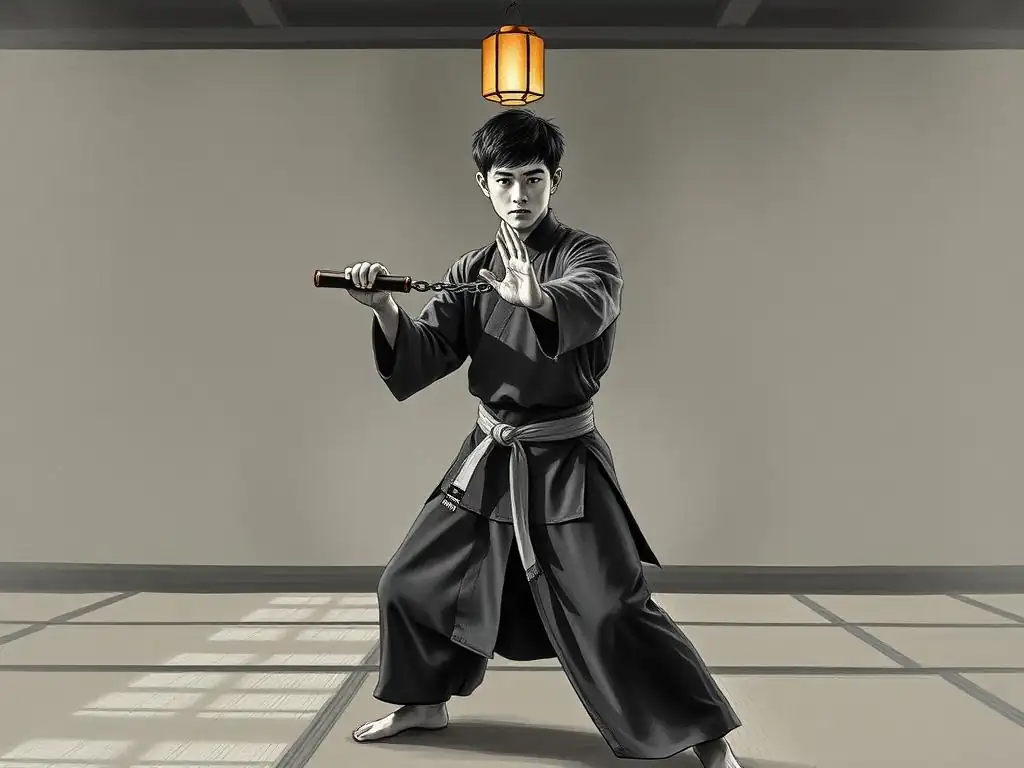
Selecting the appropriate nunchaku is a critical safety consideration, especially for nunchaku solo drills beginners. Starting with heavy, hard wooden nunchaku is generally ill-advised. Padded foam nunchaku are the safest option for learning basic techniques and movements, significantly cushioning accidental impacts. These are widely available and highly recommended for the initial few months of training.
As proficiency increases and the practitioner gains better control, they can transition to slightly heavier materials like plastic or lightweight wood. The length of the sticks and the connecting cord/chain also matter; a shorter cord is often easier to control for beginners, while longer cords allow for wider swings and more complex techniques later on. Always inspect your nunchaku for damage before practice, as a broken cord or stick can be dangerous.
Warm-up and Cool-down Exercises for Nunchaku Practitioners
Proper warm-up is essential before engaging in nunchaku solo drills to prepare the muscles and joints, particularly in the wrists, elbows, and shoulders, for the dynamic movements involved. A warm-up should include light cardio (like jogging in place for 5-10 minutes) followed by dynamic stretching focusing on the upper body. Wrist rotations, arm circles, shoulder rolls, and gentle stretches for the forearms are crucial.
Similarly, a cool-down after nunchaku practice helps prevent stiffness and aids recovery. This should involve static stretching, holding stretches for 20-30 seconds, focusing on the muscles used during the session. Stretching the forearms (flexors and extensors), biceps, triceps, and shoulders is recommended. Dedicating 10-15 minutes to warm-up and cool-down can significantly reduce the risk of muscle strains and improve overall performance and comfort during training.
Avoiding Injuries During Nunchaku Solo Practice
Avoiding injuries during nunchaku solo practice hinges on several key practices. Firstly, always practice in a spacious area free from furniture, walls, or other people. A minimum of 6-8 feet of clear space in all directions is advisable, especially when starting out. Secondly, wear appropriate clothing that doesn't restrict movement and avoid loose jewelry or items that could get tangled.
Crucially, listen to your body. If a movement feels awkward or painful, stop and re-evaluate your technique. Never force speed or complexity before you have mastered the basic control. Using protective gear, like padded nunchaku and potentially hand wraps or wrist supports, especially when practicing more dynamic or powerful movements, adds an extra layer of safety. Patience, gradual progression, and prioritizing control over flashiness are the best defenses against self-inflicted nunchaku injuries.
Integrating Nunchaku Solo Drills into Your Overall Martial Arts Training
Combining Nunchaku Skills with Other Martial Arts Disciplines
Nunchaku solo drills can significantly enhance skills applicable across various martial arts disciplines. The focus on hand-eye coordination, timing, rhythm, and body control developed through nunchaku practice translates well to empty-hand techniques and other weapons. For instance, the fluidity and power generation from nunchaku swings can improve striking mechanics in Karate or Taekwondo.
Furthermore, the spatial awareness and defensive applications learned through nunchaku solo training, such as blocking and weaving, can complement defensive strategies in arts like Aikido or Hapkido. Many traditional martial arts include weapon training as an extension of empty-hand principles. Integrating nunchaku solo practice provides a unique way to develop attributes like focus and discipline that benefit all aspects of martial arts mastery.
Using Nunchaku Drills for Self-Defense Applications
While nunchaku may not be a commonly carried self-defense tool today, the principles learned through nunchaku solo drills are highly applicable. The ability to manage distance, generate power with rapid movements, and use a tool for both striking and blocking are core self-defense concepts. Practicing nunchaku drills that simulate blocking incoming attacks or striking multiple targets enhances reaction time and the ability to use tools defensively.
For example, practicing a drill that involves rapidly bringing the nunchaku up to block a simulated overhead attack, followed by a quick counter-strike, builds muscle memory for defensive responses. Even without the nunchaku, the improved coordination, speed, and understanding of momentum gained from solo practice can enhance empty-hand self-defense techniques, making movements faster and more efficient.
Nunchaku Solo Practice: Progression and Continued Improvement
Setting Realistic Goals for Nunchaku Mastery
Setting realistic goals is vital for maintaining motivation and tracking progress in nunchaku solo practice. For nunchaku solo drills beginners, a realistic initial goal might be to consistently perform a clean figure eight for one minute without losing control or hitting oneself, within two weeks of starting. An intermediate goal could be linking three different techniques into a smooth, continuous flow within a month.
Advanced goals might involve mastering a complex combination of 10+ movements or being able to perform drills blindfolded (with extreme caution and using padded nunchaku). Goals should be specific, measurable, achievable, relevant, and time-bound (SMART). Regularly reviewing and adjusting goals based on progress helps ensure a steady, fulfilling journey towards nunchaku mastery.
The Role of Consistency and Patience in Nunchaku Training
Consistency and patience are arguably the most important factors for success in nunchaku solo training. Unlike arts where large gains can sometimes be seen quickly, nunchaku mastery involves developing fine motor skills, intricate timing, and a deep understanding of momentum. This requires dedicated, regular practice over an extended period. Even 15-20 minutes of focused solo practice daily is more effective than a single two-hour session once a week.
Beginners, in particular, must exercise patience. Dropping the nunchaku, hitting oneself, and feeling clumsy are all part of the initial learning process. Frustration is common, but perseverance is key. Celebrating small victories, like mastering a new transition or performing a drill slightly faster or more smoothly than before, helps maintain motivation during the long-term journey of developing true nunchaku proficiency.
Conclusion: Unleashing Your Potential Through Nunchaku Solo Drills
Frequently Asked Questions
What are the fundamental benefits of practicing nunchaku solo drills?
Solo drills help develop fundamental nunchaku control, improve your hand-eye coordination, and build muscle memory for fluid movements. They also allow you to practice safely without a partner.
What are some beginner-friendly nunchaku solo drills?
Beginner drills often involve basic strikes and figure-eight patterns. Start with the overhead strike, the side strike, and the downward strike, focusing on smooth transitions and controlled movements.
How can I progress from beginner to advanced nunchaku solo drills?
Gradually increase the complexity of your drills by incorporating more intricate patterns, faster movements, and combinations of strikes and blocks. Adding spins and catches also increases difficulty.
What safety precautions should I take when practicing nunchaku solo drills?
Always practice in a safe and open space, away from obstacles. Use padded nunchaku initially and wear eye protection until you have good control.
How often should I practice nunchaku solo drills to see improvement?
Consistency is key! Aim for at least 3-4 sessions per week, each lasting 20-30 minutes. Focus on quality over quantity, ensuring proper form and control.
Final Reflection: Mastering the Dance of Self-Discipline
The journey through nunchaku solo drills, from the tentative steps of a beginner to the fluid movements of an advanced practitioner, is more than just physical training; it’s a testament to the power of dedication and self-improvement. This exploration of nunchaku control highlights the enduring value of discipline and focused practice, principles that resonate deeply in a world often demanding instant gratification. The ability to master these drills, to transform a simple weapon into an extension of oneself, speaks volumes about the potential within each of us to achieve mastery in any field.
The impact of martial arts, and specifically the nunchaku, extends far beyond the dojo. It cultivates not only physical prowess but also mental fortitude, resilience, and respect. This journey of self-discovery, fueled by the rhythmic clicks and swishes of the nunchaku, has profoundly shaped my understanding of patience and perseverance. The journey of a thousand miles begins with a single step.
This ancient proverb perfectly encapsulates the spirit of nunchaku training, reminding us that even the most daunting goals are attainable through consistent effort and unwavering commitment.
Now, as you close this article, consider the lessons learned. The principles of focused practice, disciplined training, and unwavering dedication are not confined to the realm of martial arts. They are universal keys to unlocking your potential in any endeavor. Embrace the challenge, commit to the process, and discover the mastery that lies within you. Let the spirit of the nunchaku guide you, not as a weapon, but as a symbol of your own unwavering pursuit of excellence.
Ignite Your Nunchaku Mastery Today!
Thank you for exploring the art of nunchaku with us. We hope this article has sparked new insights and techniques to elevate your practice. Now, it's time to put that knowledge into action and truly unlock your potential.
Here’s how you can continue your journey:
- Dedicate 15 minutes each day to practicing the solo drills outlined in this article. Consistency is key to building muscle memory and mastering the nunchaku.
- Share your progress and favorite drill with fellow practitioners on the Martial Arts Mastery forums. Let’s build a community of learning and support!
- Try adapting one of the drills into a flow sequence set to music. Unleash your creativity and find your unique rhythm with the nunchaku.
What's the first new drill you'll be incorporating into your daily nunchaku routine? Let us know in the comments!