
The Solo Warrior's Path: Enhancing Your Skills Without a Partner

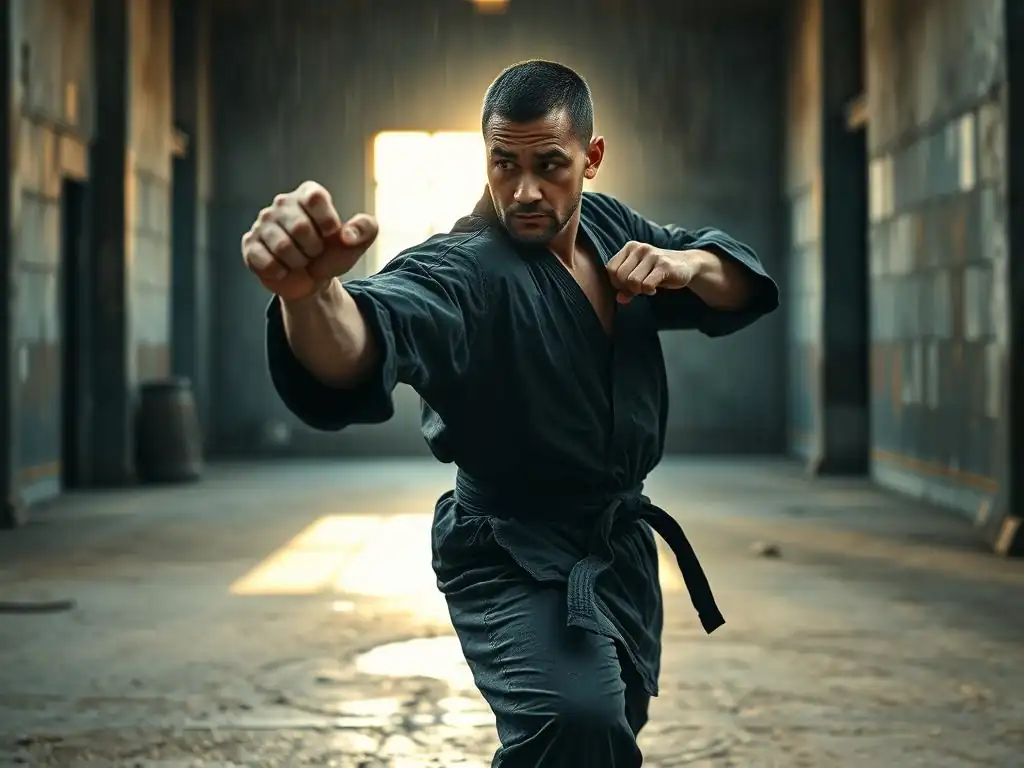
Welcome to Martial Arts Mastery, your ultimate guide to unlocking the power within! Ever wondered how to truly sharpen your skills when you're training alone? This article dives deep into effective solo martial arts training tips, revealing secrets that can transform your individual practice and elevate your mastery. Discover how to maximize your potential, even without a partner, and embark on a journey to refine your technique and build unwavering discipline. Ready to unlock the solo warrior within? Read on and explore!
- Introduction to Solo Martial Arts Training
- Mastering Fundamental Techniques Through Solo Drills
- Advanced Solo Training Techniques for Martial Artists
- Discipline-Specific Solo Training Drills
- Maximizing Your Solo Martial Arts Training Sessions
- Overcoming Challenges in Solo Martial Arts Training
- Solo Martial Arts Training Tips for Self-Defense
- Conclusion: The Power of Independent Martial Arts Practice
-
Frequently Asked Questions
- What are some benefits of solo martial arts training?
- How can I ensure I'm maintaining proper form when training alone?
- What are some effective solo drills I can incorporate into my routine?
- How can I stay motivated when training martial arts by myself?
- How can I improve my self-defense skills through solo practice?
- Final Reflection: Embracing the Solitary Journey
- Ignite Your Inner Warrior: Start Training Solo Today!
Introduction to Solo Martial Arts Training
Why Embrace Solo Practice in Martial Arts?
Solo martial arts training offers a unique opportunity for deep personal development, allowing practitioners to refine techniques without the immediate feedback or resistance of a partner. This independent practice is crucial for building muscle memory, improving coordination, and developing a profound understanding of one's own body mechanics. While partner drills are essential for learning application and timing, dedicated solo work provides the foundational strength, flexibility, and precision necessary for techniques to be effective when applied against an opponent. It allows for focused repetition on specific movements that might be overlooked in dynamic partner exchanges.
Furthermore, solo training provides flexibility and accessibility. Practitioners can train anytime, anywhere, adapting their schedule to their personal needs. This removes common barriers such as conflicting schedules with training partners or limited gym access. For many martial artists, especially those balancing work, family, and training, the ability to conduct effective solo martial arts training sessions at home or in a park is invaluable for consistent progress and maintaining skills. It fosters self-reliance and discipline, qualities that extend beyond the dojo or gym into everyday life.
The Importance of Individual Skill Development
Developing individual skills independently is the bedrock upon which effective martial arts proficiency is built. Before engaging in complex interactions with a partner, a martial artist must first master their own body's movements, balance, and power generation. Solo training drills allow for thousands of repetitions of fundamental movements – stances, footwork, strikes, blocks, and evasions – without the pressure or distraction of an opponent. This focused repetition etches techniques into muscle memory, making them instinctive and fluid when later applied in sparring or self-defense scenarios.
This individual skill development also encompasses physical conditioning tailored specifically for martial arts. Solo training allows practitioners to focus on enhancing attributes like explosive power for strikes, core strength for stability, flexibility for range of motion, and endurance for sustained effort. For example, a boxer practicing countless rounds of shadow boxing improves not just their punching form but also their shoulder endurance and footwork agility. A Karateka performing kata hones balance, coordination, and the precise timing of simultaneous movements. These individual attributes are cultivated most effectively through dedicated solo practice, forming the essential toolkit for any martial artist.
Setting Realistic Goals for Your Solo Martial Arts Journey
Setting realistic goals is paramount to maintaining motivation and achieving tangible progress in solo martial arts training. Without the external structure of a class or the immediate feedback of a partner, it's easy to feel adrift.
Goals should be specific, measurable, achievable, relevant, and time-bound (SMART). For instance, instead of a vague goal like "get better at kicks," a realistic solo training goal might be "improve flexibility for higher round kicks by practicing dynamic stretching for 15 minutes daily for the next four weeks" or "perform 50 perfect repetitions of the lead jab from three different angles each solo training session this month."
It's also important to align solo training goals with your overall martial arts objectives. If your primary focus is self-defense, your solo practice might heavily emphasize awareness drills and simulating responses to common threats. If your art is competition-focused, you might prioritize solo drills that enhance speed, power, and endurance specific to competition demands. Regularly reviewing and adjusting these goals – perhaps every 4-6 weeks – helps ensure your solo martial arts training remains purposeful and challenging, preventing stagnation and keeping your independent practice aligned with your progression.
Mastering Fundamental Techniques Through Solo Drills
Perfecting Stance and Footwork in Isolation
Perfecting stance and footwork is foundational to all martial arts disciplines, and solo training offers an ideal environment for this critical development. Stance provides the base for stability, power generation, and defense, while footwork dictates movement, distance management, and angle creation.
Practicing these in isolation allows the martial artist to focus solely on body alignment, weight distribution, balance, and the mechanics of movement without the added complexity of reacting to a partner. Drills can include holding a specific stance for extended periods to build leg strength and endurance, or practicing fundamental steps like shuffling, pivoting, and stepping in different directions, ensuring smooth transitions and maintaining a stable base throughout.
Specific solo martial arts training tips for stance and footwork include performing mirror work to visually check alignment, using floor markers (like tape or cones) to practice hitting specific positions accurately, and integrating footwork into shadow boxing or kata. For example, a boxer can practice shuffling back and forth across a marked line for several minutes, focusing on staying low and maintaining their guard.
A Taekwondo practitioner can practice various stepping patterns for kicks, ensuring their base is stable before and after the technique. Aiming for consistency and precision in every movement, rather than speed, is key in these foundational solo drills.
Shadow Boxing: Refining Striking Techniques Alone
Shadow boxing is perhaps the most widely recognized form of solo martial arts training for striking arts like boxing, kickboxing, Muay Thai, and Karate. It involves practicing techniques – punches, kicks, blocks, and evasions – against an imaginary opponent. This allows practitioners to focus entirely on form, speed, flow, and coordination. Without the impact of a bag or pads, the emphasis shifts to the mechanics of the movement itself: proper hip rotation, shoulder activation, core engagement, and full extension of techniques. It's also an excellent cardio workout and helps develop rhythm and timing.
Effective shadow boxing requires visualization. Imagine an opponent of a specific size and style, reacting to your movements and forcing you to adapt. Practice moving in and out of range, slipping punches, blocking kicks, and immediately countering.
Incorporate defensive movements like bobbing, weaving, and parrying into your combinations. A typical shadow boxing session might involve several rounds (e.g., three to five 3-minute rounds), focusing on different aspects in each round – perhaps footwork in the first, jab-centric combinations in the second, defensive movements in the third, and free-flowing sparring simulation in the last. Using a mirror can provide visual feedback on your form.
Kata and Forms: Honing Precision and Flow
Kata (in Japanese arts like Karate and Judo) and forms (in Chinese arts like Kung Fu and Tai Chi) are pre-arranged sequences of movements that simulate combat against multiple imaginary opponents. They are a cornerstone of traditional solo martial arts training, designed to preserve techniques, develop muscle memory, improve balance, coordination, and teach foundational principles like timing and power generation. Performing kata requires intense focus, precision in every stance and technique, and understanding the transitions between movements.
Understanding the Benefits of Kata Practice
The benefits of dedicated kata practice in solo martial arts training are numerous. Firstly, kata are living libraries of techniques and principles specific to a martial art. By practicing them, students learn and internalize the art's core curriculum.
Secondly, kata significantly enhance body control, balance, and coordination as practitioners must execute complex sequences of movements with precision and stability. Thirdly, kata develop breath control and internal energy management (often referred to as kime or fa jing depending on the art), teaching how to generate power efficiently and focus it at the point of impact. Finally, the repetitive, meditative nature of kata practice fosters mental discipline, focus, and patience.
Choosing the Right Kata for Your Martial Art
Choosing the "right" kata or form typically follows the curriculum of your specific martial art style. Beginners usually start with foundational kata that introduce basic stances, blocks, and strikes (e.g., Pinan/Heian kata in Karate). As a practitioner progresses, they learn more complex and advanced forms that introduce new techniques, principles, and strategic concepts.
The "right" kata for solo martial arts training is usually the one you are currently learning or refining according to your instructor's guidance. However, even advanced practitioners benefit from revisiting foundational kata to reinforce basics and maintain proficiency. Consistency in practice is far more important than the specific kata chosen at any given time.
Bag Work: Developing Power and Endurance Independently
Bag work, utilizing heavy bags, speed bags, or double-end bags, is an excellent method for developing power, speed, endurance, and timing in solo martial arts training. Unlike shadow boxing, the bag provides resistance and impact, allowing practitioners to practice hitting with full power and conditioning their striking surfaces (knuckles, shins, etc.). It's a physically demanding form of training that builds cardiovascular fitness and muscular endurance specific to striking.
Selecting the Right Punching Bag for Solo Training
Selecting the right punching bag depends on your martial art and training goals. A heavy bag is ideal for developing power and practicing full-force strikes like punches, kicks, knees, and elbows. They come in various weights; a heavier bag offers more resistance but swings less, while a lighter bag swings more, requiring better timing. A speed bag is excellent for developing hand speed, rhythm, and shoulder endurance.
A double-end bag (or reflex bag) is great for improving timing, accuracy, head movement, and practicing combinations against a moving target that reacts to your strikes. For general solo martial arts training tips covering striking, a heavy bag is often the most versatile starting point. Consider the available space and mounting options (hanging or free-standing) when making your choice.
Effective Bag Work Drills for Different Martial Arts
Effective bag work drills vary by discipline.
- Boxing: Focus on combinations, head movement while striking, and pivoting around the bag. Drill specific combos like Jab-Cross-Hook, or practice slipping and immediately countering. Aim for 3-minute rounds with 1-minute rest, simulating a fight.
- Kickboxing/Muay Thai: Incorporate low kicks, round kicks, knees, and elbows alongside punches. Practice checking kicks on the bag. Drills might involve alternating between punching combinations and kicking combinations, or integrating knees from a clinch position.
- Karate/Taekwondo: While less common than in boxing, bags can be used for power development on specific strikes like reverse punches, front kicks, or round kicks. Focus on generating kime or focused power upon impact. Practice chambering and retracting techniques correctly.
A simple but effective solo martial arts training tip for bag work is to structure your rounds with specific objectives: Round 1: Focus on jab and footwork; Round 2: Power punches; Round 3: Kicking techniques; Round 4: Combinations; Round 5: Freestyle, simulating a fight.
Advanced Solo Training Techniques for Martial Artists
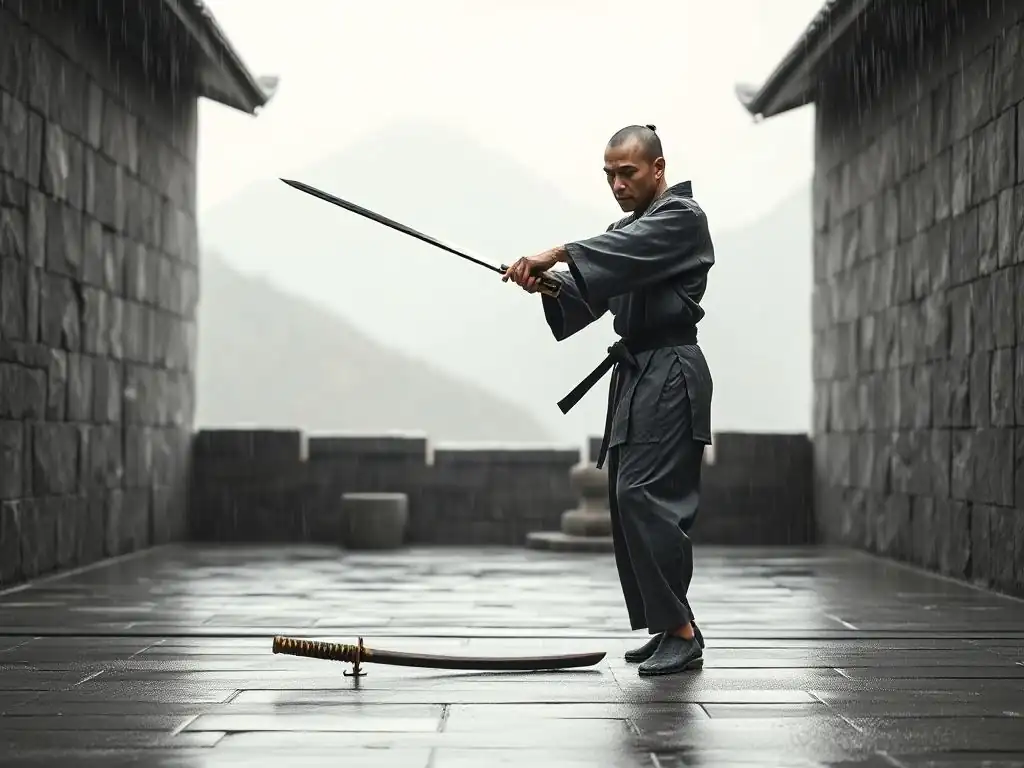
Visualization and Mental Rehearsal for Improved Performance
Visualization and mental rehearsal are powerful advanced solo martial arts training techniques that can significantly enhance physical performance. This involves mentally practicing techniques, combinations, kata, or even entire sparring scenarios without performing the physical movements. By vividly imagining the movements, feeling the muscles engage, seeing the technique executed perfectly, and visualizing the desired outcome, martial artists can refine timing, improve reaction speed, and build confidence. Elite athletes across various disciplines utilize visualization to prepare for competition and enhance skill acquisition.
This technique works by strengthening the neural pathways associated with the movements, much like physical practice does. During mental rehearsal, the brain activates similar areas as when the movement is actually performed. For effective visualization, find a quiet space, close your eyes, and focus intensely on the specific technique or scenario. Pay attention to detail: the feel of your stance, the trajectory of a strike, the timing of a block, the rhythm of your breath. Regularly incorporating 10-15 minutes of focused visualization into your solo martial arts training routine can lead to noticeable improvements in execution and strategic thinking.
Flexibility and Mobility Training for Solo Practitioners
Flexibility and mobility are critical components of martial arts proficiency, enabling a wider range of motion, preventing injuries, and enhancing the effectiveness of techniques. Solo training provides ample opportunity to dedicate time specifically to these areas. Flexibility refers to the ability of muscles and connective tissues to lengthen, while mobility is the ability of a joint to move through its full range of motion. Both are essential for executing techniques like high kicks, deep stances, evasive maneuvers, and grappling movements.
Incorporating a consistent routine of stretching and mobility exercises into your solo martial arts training schedule is non-negotiable for long-term progress and injury prevention. This training can be done as a warm-up, cool-down, or as dedicated separate sessions. Focusing on key areas for martial artists, such as hips, hamstrings, shoulders, and spine, is crucial.
Dynamic Stretching Routines for Martial Arts
Dynamic stretching involves moving your body through a range of motion in a controlled manner. It is ideal as part of a warm-up for solo martial arts training as it prepares the muscles and joints for activity, increases blood flow, and improves mobility without decreasing muscle power like static stretching might initially. Examples include leg swings (forward-backward and side-to-side), arm circles, torso twists, lunges with a twist, and high knees.
A typical dynamic stretching routine before solo practice might involve 10-15 repetitions of each movement. For instance: 15 leg swings forward/backward per leg, 15 leg swings side-to-side per leg, 20 arm circles forward/backward, 10 torso twists each side, 10 walking lunges per leg. Focus on smooth, controlled movements, gradually increasing the range of motion with each repetition. These solo martial arts training tips for warm-up ensure your body is ready to perform techniques safely and effectively.
Static Stretching for Injury Prevention
Static stretching involves holding a stretch for a period, typically 20-30 seconds, while the muscle is at rest. This type of stretching is best performed after your solo martial arts training session during the cool-down phase, as it helps improve long-term flexibility and aids in muscle recovery. Holding stretches for longer periods (up to 60 seconds) can be beneficial for increasing range of motion, particularly in areas known for tightness like the hamstrings or hip flexors.
Examples of static stretches beneficial for martial artists include hamstring stretches (seated or standing), quadriceps stretches, hip flexor stretches, shoulder and chest stretches, and triceps stretches. When performing static stretches during solo training, always stretch to the point of tension, not pain, and breathe deeply to help the muscles relax. Consistency is key; incorporating 10-15 minutes of static stretching after each session significantly contributes to injury prevention and improved flexibility over time.
Strength and Conditioning for the Solo Martial Artist
Strength and conditioning are vital for martial arts performance, providing the power, endurance, and resilience needed for techniques and physical encounters. Solo training offers flexibility in designing a strength and conditioning program tailored to specific martial arts demands, whether it's explosive power for striking, muscular endurance for grappling, or overall physical toughness.
Bodyweight Exercises for Martial Arts Strength
Bodyweight exercises are highly effective for building functional strength relevant to martial arts and require no equipment, making them perfect for solo training. These exercises often mimic movements used in combat, building strength in core muscle groups used for striking, grappling, and movement. Examples include push-ups (various hand positions target different muscles), squats (including pistol squats for advanced practitioners), lunges, planks (for core stability), burpees (for explosive power and cardio), and pull-ups (if a bar is available).
A sample solo martial arts training session focused on bodyweight strength might involve a circuit: 3 sets of 15-20 push-ups, 20-25 squats, 10-12 lunges per leg, and a 60-second plank. Incorporating exercises that work multiple muscle groups simultaneously, like burpees or squat jumps, is particularly beneficial for developing the integrated strength needed in martial arts.
Incorporating Weights into Your Solo Training Regimen
While bodyweight training is excellent, incorporating weights can further enhance strength and power, particularly for developing attributes like explosive force for strikes or the strength needed for throws and takedowns. Dumbbells, kettlebells, or resistance bands can be used in a solo training environment. Exercises like kettlebell swings build explosive hip power crucial for strikes. Dumbbell rows and presses build upper body strength relevant to grappling and striking. Weighted squats and deadlifts build lower body and core strength.
When incorporating weights into solo martial arts training, prioritize proper form over lifting heavy. Start with lighter weights to master the movement pattern. A simple program might involve 2-3 weight training sessions per week alongside your martial arts practice. For example, a session could include 3 sets of 8-12 repetitions of kettlebell swings, dumbbell squats, and dumbbell rows. Always warm up thoroughly before lifting and cool down with stretching afterward.
Discipline-Specific Solo Training Drills
Solo Drills for Karate
Karate solo training heavily emphasizes kihon (fundamentals), kata (forms), and bunkai (application of kata movements). These components are designed to be practiced extensively alone to build technical precision, power, and understanding. Dedicated solo martial arts training tips for Karate focus on the details within each movement – the snap of a punch, the rootedness of a stance, the precise timing of a block and counter.
Kihon Drills
Kihon involves practicing basic techniques – stances, blocks, punches, kicks – individually or in simple combinations, often moving back and forth along a line. Solo kihon practice allows for relentless repetition to perfect form, balance, and power generation. For example, a practitioner might spend 10 minutes solely practicing the stepping reverse punch (oi-zuki), focusing on hip rotation, forward momentum, and kime (focus). Another drill might involve practicing the transition between different stances, ensuring stability and smooth movement.
A structured kihon solo session might include: 5 minutes of stance holding (e.g., Kiba Dachi), 10 minutes of basic stepping (forward/backward in Zenkutsu Dachi), 15 minutes practicing fundamental blocks (Age Uke, Soto Uke, Uchi Uke, Gedan Barai) with proper body mechanics, and 20 minutes practicing basic strikes (Choku Zuki, Oi Zuki, Gyaku Zuki) and kicks (Mae Geri, Mawashi Geri) with emphasis on form and power. Using a mirror is highly recommended to check technique.
Kata Bunkai Practice
Kata bunkai is the analysis and practice of the practical applications of the movements within a kata. While bunkai is often practiced with a partner to simulate real-world scenarios, significant solo work can be done to understand the structure and principles embedded in the kata's movements. This involves mentally breaking down each sequence of the kata and exploring its potential defensive and offensive applications against imagined attacks.
Solo bunkai practice can involve performing a sequence from a kata very slowly, visualizing an opponent and the intended application of each block, strike, or joint lock. It's about understanding the why behind the movement. For instance, the first movements of many Pinan/Heian kata involve stepping back and performing a low block (Gedan Barai). Solo bunkai involves visualizing a front kick attack and practicing the precise angle and timing of the block while maintaining balance and preparing for the next movement. This enhances the practitioner's understanding and makes their kata performance more meaningful and effective.
Solo Drills for Brazilian Jiu-Jitsu
While BJJ is heavily partner-dependent, solo training is invaluable for developing fundamental body movements, conditioning, and understanding leverage. These solo martial arts training tips for BJJ focus on mobility, core strength, and mimicking common BJJ movements to build fluidity and endurance on the ground.
Shrimping and Bridging Drills
Shrimping (also known as hip escape) and bridging are two of the most fundamental and frequently used movements in BJJ. Shrimping is used to create space from an opponent and escape positions like side control or mount. Bridging is used to create space, off-balance an opponent, or initiate escapes from bottom positions. Both are crucial for ground survival and transitions.
Solo shrimping involves lying on your back, pushing off one foot while lifting your hips and moving them sideways, creating space. Repeat on the other side, moving back and forth. Aim for continuous, smooth movement across the mat. Bridging involves lying on your back, feet flat on the floor, and lifting your hips high off the ground, often turning the body to one side. Practicing these movements for several minutes continuously builds hip mobility, core strength, and endurance. A typical solo BJJ warm-up might include 5 minutes of continuous shrimping followed by 5 minutes of bridging and hip rotations.
Technical Stand-Up Practice
The technical stand-up is a critical movement in BJJ used to safely get back to your feet from the ground while maintaining distance from an opponent. Practicing this solo ensures you can perform it quickly and efficiently when needed, minimizing the risk of being immediately taken down or attacked as you stand.
Solo technical stand-up practice involves starting from a seated position on the ground, one leg bent with the foot flat, the other leg extended back. Use a hand on the ground for support (simulating a hand blocking an opponent or posting). Then, using the bent leg and supporting hand, lift your hips off the ground, bring the extended leg forward underneath you, and stand up while keeping your weight back and ready to defend.
Practice this movement repeatedly, alternating which leg is forward. Focus on balance, speed, and maintaining a defensive posture throughout the movement. Aim for 10-15 repetitions on each side during your solo BJJ training session.
Solo Drills for Boxing
Boxing solo training heavily relies on shadow boxing, footwork drills, and bag work, as discussed earlier. However, specific solo martial arts training tips for boxing can break down these elements further to focus on particular skills like combinations and defensive movements.
Footwork Drills
Precision and speed in footwork are paramount in boxing. Solo footwork drills allow boxers to practice moving in all directions – forward, backward, side-to-side, pivoting – while maintaining balance and their boxing stance. Using floor markers, like tape lines or small cones, can help visualize the ring and practice cutting angles or moving to specific positions.
Drills include shuffling forward and backward along a line, side-shuffling, pivoting on the lead or rear foot, and combining these movements. For example, a boxer might practice stepping forward with a jab, then immediately shuffling back, or pivoting off the lead foot to create an angle for a power shot. Practicing these movements for 2-3 minute rounds, focusing on staying light on the feet and maintaining guard, builds the agility and endurance needed to control distance and positioning in a fight.
Punching Combinations
Practicing punching combinations solo, whether through shadow boxing or on a bag, is crucial for developing rhythm, speed, and the ability to link techniques together fluidly. Solo practice allows boxers to drill specific sequences thousands of times until they become automatic.
Start with basic combinations like 1-2 (Jab-Cross) or 1-1-2 (Jab-Jab-Cross). Practice them slowly at first, focusing on proper mechanics, hip rotation, and snapping the punches. Gradually increase speed and power. Incorporate defensive movements within combinations, such as slipping after a jab or bobbing after a cross. Practice combinations while moving, integrating footwork. A solo boxing session might dedicate several rounds to drilling specific 3-4 punch combinations, perhaps throwing 50-100 repetitions of each combo per session on a heavy bag to build power and endurance.
Maximizing Your Solo Martial Arts Training Sessions
Creating a Structured Solo Training Plan
To maximize the effectiveness of your solo martial arts training, it is essential to create a structured plan. Randomly performing drills will yield limited results compared to a systematic approach. A well-designed plan ensures you cover all necessary aspects of your training – technique, conditioning, flexibility, and mental work – and allows for progressive overload, where you gradually increase the intensity, duration, or complexity of your training over time.
Your solo training plan should outline specific days and times for training, the duration of each session, and the specific drills or exercises you will perform. For example, a plan might allocate Monday to footwork and stance drills (30 mins), Wednesday to shadow boxing and bag work (45 mins), and Friday to flexibility and bodyweight strength (40 mins). Be realistic about the time you can commit and design a plan that is sustainable. Review and adjust your plan periodically based on your progress and evolving goals.
Tracking Progress and Identifying Areas for Improvement
Tracking your progress is vital for staying motivated and identifying areas that need more attention during solo martial arts training. Without a partner or instructor providing immediate feedback, you become your own coach. Keep a training journal or use a simple app to record what you did in each session, including the drills performed, repetitions, sets, duration, and how you felt. Note any specific observations about your technique or areas of difficulty.
Reviewing your training log regularly allows you to see how far you've come and pinpoint weaknesses. For example, if your log shows consistent difficulty maintaining balance during a specific kick in shadow boxing, you know to dedicate extra time to balance drills and core strengthening. If your bag work rounds aren't improving in duration or intensity, it might be time to adjust your conditioning plan. This objective tracking provides valuable solo martial arts training tips for self-correction and targeted improvement.
Injury Prevention and Recovery Strategies for Solo Training
Injury prevention and recovery are just as, if not more, important in solo martial arts training as they are in partnered training. Without immediate supervision, there's a risk of pushing too hard or performing techniques with incorrect form, leading to injury. Always start every solo session with a thorough warm-up (5-10 minutes of light cardio and dynamic stretching) to prepare your body. Pay close attention to your body during training; if something feels wrong, stop or modify the exercise.
Cooling down after solo practice is equally crucial. Dedicate 5-10 minutes to static stretching to improve flexibility and aid muscle recovery. Hydration and nutrition play a significant role in recovery; ensure you're drinking enough water and fueling your body properly. Don't underestimate the importance of rest; allow your body sufficient time to recover between intense training sessions. Listening to your body and prioritizing recovery are essential solo martial arts training tips for long-term, injury-free progress.
Staying Motivated and Engaged in Solo Practice
Maintaining motivation and engagement can be challenging when training alone. Set clear, personal goals that resonate with you – perhaps mastering a difficult kata, improving your speed bag timing, or achieving a specific fitness level. Celebrate small victories along the way. Vary your solo martial arts training routine to prevent boredom; don't just do the same drills every session. Introduce new exercises, change the order of your drills, or incorporate different types of training (e.g., add a session focusing purely on mobility or footwork).
Finding ways to make solo training enjoyable is also key. Train to music that energizes you. Visualize sparring or self-defense scenarios to make the practice more engaging. Consider recording yourself occasionally (using a phone or camera) to get objective feedback on your form – seeing your progress or identifying errors can be highly motivating. Remember why you started martial arts in the first place and let that passion fuel your solo efforts.
Overcoming Challenges in Solo Martial Arts Training
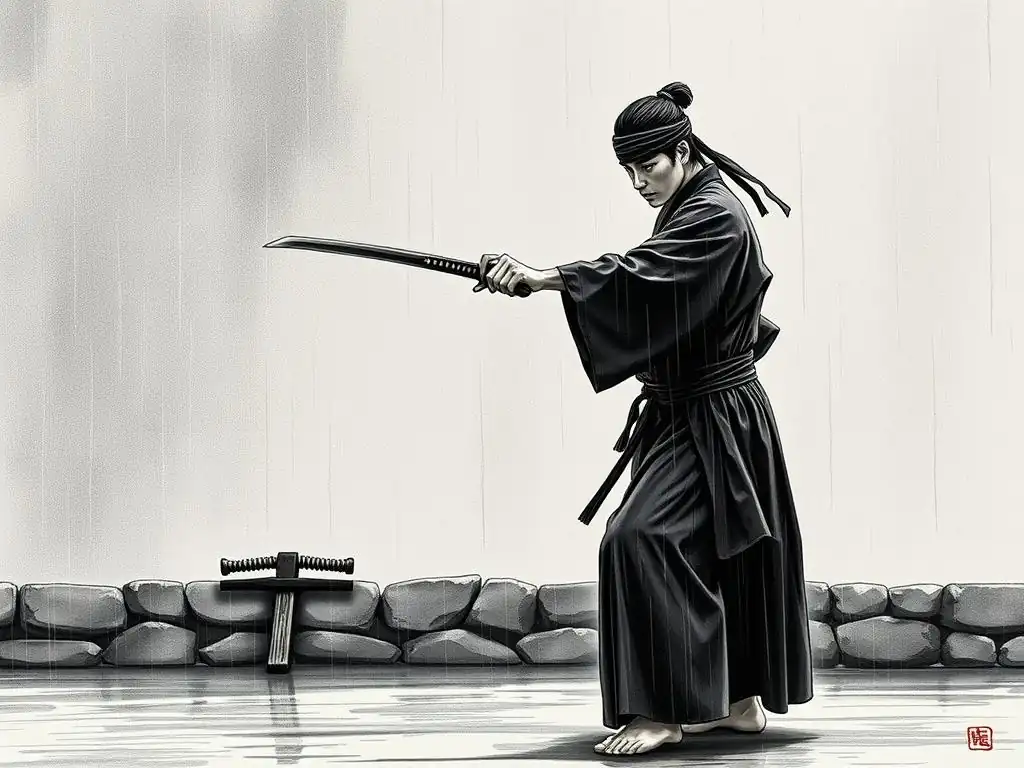
Dealing with Lack of Partner Feedback
One of the primary challenges in solo martial arts training is the absence of immediate partner feedback. A partner can tell you if your strike had power, if your balance was off during a kick, or if your grappling movement was effective. To mitigate this, become your own most critical observer. Use a mirror extensively, especially for striking arts and forms, to visually check your posture, alignment, and technique execution.
Record your solo training sessions, particularly when practicing complex techniques or kata. Review the recordings afterward with a critical eye. Compare your form to instructional videos or demonstrations by experienced practitioners. While not a perfect substitute for hands-on partner feedback, this self-analysis provides valuable insights into areas needing correction. Additionally, when you do have opportunities to train with a partner or instructor, actively seek their feedback on aspects you've been working on solo.
Maintaining Proper Form and Technique Without Supervision
Maintaining proper form and technique without direct instructor supervision requires discipline, self-awareness, and a commitment to quality over quantity. It's easy to develop bad habits when no one is watching. Counter this by focusing on performing each technique correctly, even if it means doing fewer repetitions or moving slower. Speed and power should only be added once the fundamental form is solid.
Utilize resources like instructional books, DVDs, or reputable online tutorials (when not actively training) to reinforce your understanding of correct technique. Break down complex movements into smaller, manageable steps and practice each step perfectly before linking them together. When practicing solo martial arts training drills, constantly check your body alignment, balance, and the sequence of movements. If unsure about a specific technique, revisit fundamental drills or seek guidance from your instructor during regular classes when possible.
Avoiding Plateaus and Stagnation in Solo Training
Plateaus and stagnation are common frustrations in any training regimen, including solo martial arts practice. When you stop seeing progress, it's easy to lose motivation. To avoid this, continuously challenge yourself. Increase the intensity or duration of your workouts. Introduce variations to your drills – try different footwork patterns in shadow boxing, perform kata at different speeds, or add resistance bands to bodyweight exercises.
Set new, more challenging goals as you achieve old ones. Focus on refining subtle details of techniques that you previously overlooked. Incorporate cross-training activities like running, swimming, or yoga to improve overall athleticism and introduce variety. Seek feedback from instructors or senior students when you attend regular classes to get a fresh perspective on your solo progress. A structured plan with built-in progression and variety is your best tool against stagnation in solo martial arts training.
Solo Martial Arts Training Tips for Self-Defense
Practicing Awareness and Evasion Techniques Alone
Solo training can be highly effective for developing crucial self-defense skills that don't necessarily require a partner, such as situational awareness and evasion. Awareness is the ability to perceive potential threats in your environment. While this is primarily a mental skill, solo practice can involve actively observing your surroundings during walks or runs, noting potential risks (exits, obstacles, suspicious individuals), and mentally rehearsing responses.
Evasion techniques, like creating distance or moving off the line of attack, can be practiced solo through footwork drills. Imagine a threat approaching and practice quickly moving away, changing direction, or finding cover. For instance, practice a sudden 180-degree turn and sprint, or simulate sidestepping a lunge. These solo martial arts training tips for awareness and evasion build the mental and physical readiness to avoid conflict altogether, which is the first and often best line of self-defense.
Simulating Real-World Self-Defense Scenarios
While full-contact scenario training requires partners, solo practice can involve mental and physical simulation of potential real-world self-defense situations. This helps bridge the gap between practicing isolated techniques and applying them under pressure. Think about common scenarios – someone grabbing your wrist, a push, a swing, or someone getting too close in a confined space.
Mentally walk through the scenario: what is the threat? What is your immediate reaction? What technique would you use? Then, physically practice the initial movement alone. For example, if simulating a wrist grab, practice the escape movement repeatedly, focusing on generating leverage and breaking the grip. If simulating a push, practice re-establishing your balance and creating distance. This solo rehearsal helps program appropriate responses and builds confidence in your ability to react under stress. Use visualization to make the scenarios feel as real as possible.
Incorporating Improvised Weapons into Solo Drills
Self-defense in the real world often involves using whatever is available as a tool or weapon. Solo martial arts training can include drills incorporating improvised weapons like keys, pens, rolled-up magazines, or water bottles. This isn't about learning weapon techniques in a formal sense, but rather understanding how to use common objects to create distance, distract, or inflict pain to facilitate escape.
Practice striking motions with a pen or keys, focusing on targeting vulnerable areas. Simulate using a bag or jacket as a shield or a distraction. Practice swinging a water bottle or umbrella to keep an attacker at bay. These solo drills help develop creativity and adaptability, training your mind to see everyday objects as potential aids in a self-defense situation. Remember, the goal is always escape and survival, not engaging in a prolonged fight.
Conclusion: The Power of Independent Martial Arts Practice
Embracing the Solo Warrior Mindset
Embracing the "solo warrior" mindset is about taking personal ownership of your martial arts journey. It means recognizing that while instructors and training partners are invaluable, the ultimate responsibility for your progress lies with you. Solo martial arts training is not just a supplement to class time; it is a fundamental pillar of dedicated practice that builds self-reliance, discipline, and a deeper connection to your art. It's in the solitude of solo training that you confront your weaknesses, build unwavering focus, and forge mental fortitude.
This mindset shift allows you to see empty space and quiet time not as obstacles, but as opportunities for growth. It's about finding the motivation within, pushing your own limits, and committing to the relentless pursuit of improvement outside the structured environment of the dojo. The solo warrior understands that mastery is built one repetition at a time, whether anyone is watching or not.
Continuing Your Martial Arts Journey Through Dedicated Solo Training
Dedicated solo training is not merely a phase but a lifelong practice that sustains and deepens your martial arts journey. It allows for continuous refinement of fundamentals, exploration of advanced concepts, and personalized physical conditioning. As you evolve as a martial artist, your solo practice will evolve with you, adapting to new goals, addressing emerging challenges, and reinforcing the vast knowledge gained from your chosen discipline.
By consistently applying solo martial arts training tips and techniques, you build a resilient foundation, enhance your technical precision, and cultivate the physical attributes necessary for effective application. Whether you are a beginner mastering basic stances or an advanced practitioner refining the subtle nuances of a complex form, independent practice is the constant companion that sharpens your skills, strengthens your resolve, and empowers you to walk the path of the martial artist with confidence and mastery.
Frequently Asked Questions
What are some benefits of solo martial arts training?
Solo training allows for focused self-improvement and the development of muscle memory without the pressure of a partner. It also provides flexibility in scheduling and location.
How can I ensure I'm maintaining proper form when training alone?
Use a mirror to visually check your technique, record videos of yourself for analysis, and consult with a qualified instructor for feedback when possible. Focusing on precise movements is crucial.
What are some effective solo drills I can incorporate into my routine?
Shadow boxing, practicing forms (kata), and using a heavy bag or training dummy are all excellent options. Focus on repetition and refinement of fundamental techniques.
How can I stay motivated when training martial arts by myself?
Set achievable goals, track your progress, and vary your training routine to prevent boredom. Consider joining an online community for support and encouragement.
How can I improve my self-defense skills through solo practice?
Visualize real-life scenarios, practice reaction drills, and focus on developing explosive power and speed. Incorporate improvised weapons training for added realism.
Final Reflection: Embracing the Solitary Journey
The journey of the solo warrior, as explored throughout this article, is not merely about physical prowess or technical skill; it's about cultivating unwavering self-reliance and disciplined self-improvement. In a world increasingly reliant on collaboration, the ability to hone one's craft independently remains a powerful and essential asset, not just in martial arts, but in all aspects of life.
The impact of solo training extends far beyond the dojo. It fosters a deep understanding of one's own limitations and strengths, promoting resilience and adaptability. This self-awareness is invaluable in navigating the complexities of modern life. The journey of a thousand miles begins with a single step.
This ancient proverb perfectly encapsulates the spirit of solo training – each individual session, each solitary drill, is a step towards mastery and self-discovery.
Now, as you step away from this article, consider the lessons learned. How can you apply the principles of solo martial arts training – discipline, self-assessment, and unwavering commitment – to your own personal and professional endeavors? Embrace the solitary journey, for within it lies the potential for profound growth and the realization of your fullest potential.
Ignite Your Inner Warrior: Start Training Solo Today!
Thank you for exploring the path of the solo warrior! You've gained valuable insights into enhancing your martial arts skills independently. Now, it's time to translate that knowledge into action and unlock your full potential.
Here's how you can take your solo training to the next level:
- Commit to a daily 15-minute focused practice session targeting a specific technique discussed in this article.
- Explore unconventional training methods like shadow boxing in different environments (park, office) to adapt your skills.
- Share your solo training journey with fellow martial artists on forums or social media using #MartialArtsMasterySolo, inspiring others and gaining valuable feedback.
What small, focused action will you commit to today to elevate your solo training?