
Ground Fighting in HEMA: Surviving and Dominating on the Floor

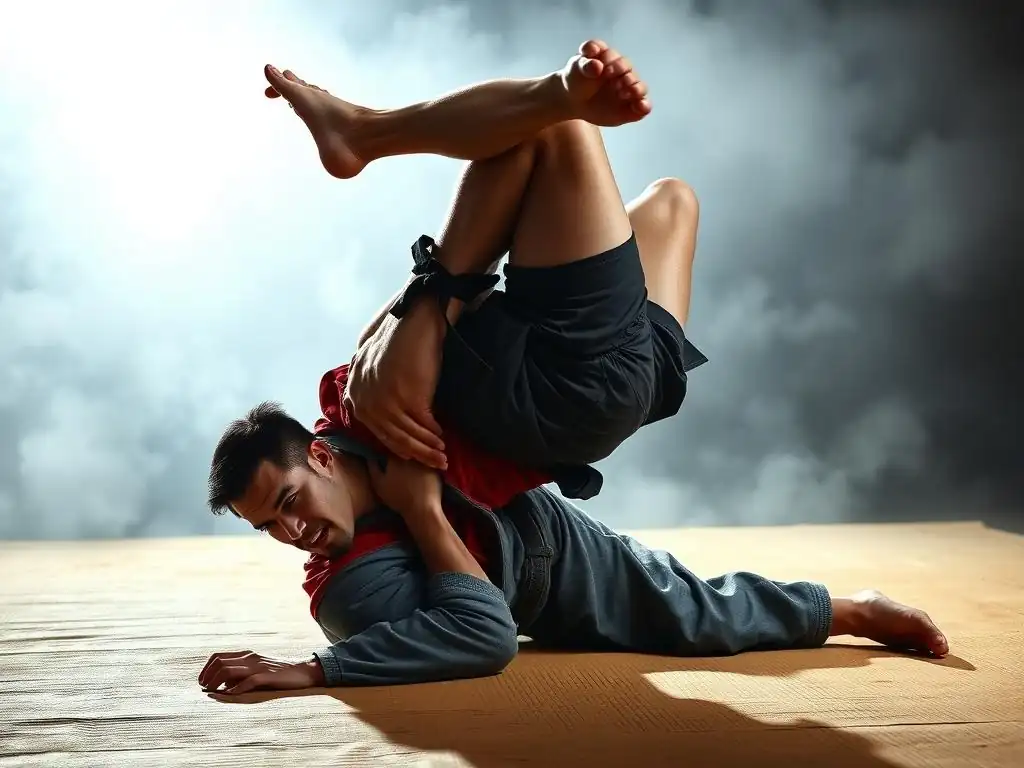
Welcome to Martial Arts Mastery, your gateway to unlocking the secrets and skills of combat traditions worldwide.
Ever wondered how Historical European Martial Arts (HEMA) warriors handled a fall to the ground? This article delves deep into HEMA ground fighting techniques, revealing the strategies and maneuvers used to not only survive but dominate when combat leaves its feet. Prepare to expand your understanding of historical combat and discover a surprisingly effective dimension of HEMA. Ready to grapple with the past?
- HEMA Ground Fighting: Surviving and Dominating on the Floor
- Foundational Principles of HEMA Ground Fighting
- Defensive Strategies: Surviving the Takedown
- Offensive Techniques: Dominating on the Floor
- Training Drills for Proficiency
- HEMA Ground Fighting with Dagger: A Deadly Combination
- Advanced Concepts
- The Importance of Safety
- Conclusion: Mastering HEMA Ground Fighting
-
Frequently Asked Questions
- What is HEMA and why is ground fighting relevant?
- What are some key differences between HEMA ground fighting and other grappling styles like BJJ or wrestling?
- What types of weapons might be used during ground fighting in HEMA?
- How can I effectively train HEMA ground fighting techniques?
- Is ground fighting a common or important aspect of all HEMA disciplines?
- Final Reflection: Embracing the Ground in HEMA
- Unleash Your Inner Grappler: Take Your HEMA Game to the Ground!
HEMA Ground Fighting: Surviving and Dominating on the Floor
Historical European Martial Arts (HEMA) encompasses a vast array of fighting systems, from swordsmanship to wrestling. While many associate HEMA primarily with standing weapon combat, a significant and often overlooked aspect is ground fighting. Historical treatises, particularly those dealing with dagger and grappling, demonstrate a clear understanding of combat when one or both practitioners are on the ground. Mastering HEMA ground fighting techniques is crucial for a complete understanding of these historical systems, as fights often ended up on the floor, especially when weapons were lost or grappling was initiated.
Understanding the principles of HEMA ground fighting is not merely an academic exercise; it is vital for practical application. In a chaotic melee or a self-defense scenario, maintaining balance and control is paramount. If a fighter is taken down, their ability to survive, recover, or even turn the situation to their advantage depends heavily on their proficiency in ground techniques. This historical knowledge provides a unique perspective on ground combat, complementing modern grappling arts while offering insights rooted in the contexts of period weapons and armor, making HEMA ground fighting techniques a valuable area of study.
The Importance of Ground Fighting in Liechtenauer's Longsword System
While Johannes Liechtenauer's primary focus in his Zettel (epitome) and the various glosses (commentaries) is on the Oberhau (over cut) and fighting at range with the longsword, ground fighting is implicitly and explicitly addressed within the broader system. The core principles of Liechtenauer's art, such as understanding distance ( Massen), timing ( Indes), and leverage ( Kreuz), are not confined to standing combat but are equally applicable when the fight goes to the ground.
Masters like Joachim Meyer, writing within the Liechtenauer tradition in the 16th century, dedicate significant sections of their works to wrestling ( Ringen) and fighting with the dagger ( Messer), often illustrating techniques that occur after a bind or when one or both combatants are on the ground.
The transition from standing combat to the ground is often initiated through wrestling techniques integrated into the sword fight, known as Ringen am Schwert. If a swordsman closes distance and enters grappling range, the ability to control the opponent's body becomes critical. A well-executed throw or takedown can end the fight or create a dominant position for finishing with a sword or dagger.
Conversely, understanding how to fall safely and recover from a takedown is essential for survival. Therefore, studying HEMA ground fighting techniques is not separate from Liechtenauer's longsword system but rather an integral part of its complete application, addressing the realities of combat when the initial long-range engagement fails or transitions.
Understanding the Historical Context of Ringen am Schwert (Wrestling at the Sword)
Ringen am Schwert, or wrestling at the sword, is a distinct phase of combat described in numerous historical HEMA treatises. It occurs when fighters close distance from the typical sword fighting range into grappling range, often while still holding their swords or having transitioned to using the weapon primarily for leverage or as a close-quarters tool.
This context is crucial for understanding historical HEMA ground fighting techniques, as many takedowns and ground transitions originate from these close-quarters standing exchanges. Treatises like those by Sigmund Ringeck, Peter von Danzig, and particularly Joachim Meyer, provide detailed instructions on throws, joint locks, and disarms that lead directly into ground scenarios.
The historical sources often depict scenarios where one fighter has been thrown or has fallen, and the other is attempting to maintain control or deliver a finishing blow. The techniques shown are highly practical, focusing on achieving dominant positions quickly, using body weight effectively, and exploiting vulnerabilities.
For example, Meyer describes specific throws from the bind that can land an opponent on their back, immediately followed by instructions on how to secure them or strike. Studying these historical descriptions provides invaluable insight into the specific HEMA ground fighting techniques and strategies deemed effective by masters of the period, demonstrating that ground work was a recognized and trained component of historical combat.
Foundational Principles of HEMA Ground Fighting
Mastering HEMA ground fighting techniques requires a solid understanding of fundamental principles that govern combat on the floor. These principles, while having parallels in modern grappling arts, are specifically applied within the historical context, often considering the presence of weapons or period clothing and armor. Adhering to these core concepts is essential for both surviving disadvantageous positions and effectively dominating an opponent once on the ground.
The foundational principles revolve around control – controlling your own body, controlling the opponent's body, and controlling the space between you. This involves a deep understanding of mechanics, leverage, and positional advantage. Historical sources, though sometimes sparse on ground details compared to standing techniques, consistently emphasize the importance of gaining and maintaining superior position and using body weight to immobilize or manipulate the opponent.
Core Concepts: Maintaining Balance and Disrupting Opponent's Balance
Maintaining your own balance is the absolute bedrock of HEMA ground fighting techniques. On the ground, balance is about maintaining a stable base and distributing your weight effectively to prevent being swept, rolled, or put into a disadvantageous position.
This involves keeping a low center of gravity, distributing weight across multiple points (like knees and hands in a kneeling position, or hips and shoulders when supine), and being constantly aware of your base relative to your opponent's movements. A stable base allows you to generate force effectively for strikes, submissions, or positional advancements, while preventing your opponent from doing the same.
Conversely, disrupting the opponent's balance is key to achieving dominance. This can be done through various means: pushing or pulling their limbs or torso to break their posture, using sweeps to take away their base, or applying pressure that forces them to shift their weight defensively, creating openings.
For instance, historical wrestling manuals often describe using leg trips or arm drags to off-balance an opponent before a throw; on the ground, similar principles apply to disrupting their ability to post or maintain a stable position. Understanding how to shift your weight and apply leverage to compromise their balance is a fundamental HEMA ground fighting technique that opens opportunities for strikes, submissions, or transitions to better positions.
Positional Hierarchy: Mount, Guard, Side Control, and Back Control
Just like in modern grappling, HEMA ground fighting techniques recognize a hierarchy of positions, though the terminology might differ. Dominant positions, such as being on top of an opponent (akin to mount or side control) or controlling their back, are highly advantageous. From these positions, a fighter has superior leverage, mobility, and striking opportunities, while the opponent is restricted. Historical illustrations often depict one fighter kneeling or standing over a prone opponent, clearly indicating the desirability of such a top position. The ability to achieve and maintain these positions is a primary goal in ground combat.
Conversely, positions like being on the bottom, particularly when pinned or under mount, are disadvantageous. The goal from these positions is survival and escape, aiming to transition to a neutral or dominant position.
The "guard" position, where the bottom fighter uses their legs to control the distance and posture of the top fighter, is a common defensive and offensive structure found in various grappling arts and implicitly present in historical depictions where a fighter is on their back but actively using their legs to push or hook. Understanding this positional hierarchy is fundamental to developing effective HEMA ground fighting techniques, guiding decisions on where to move and what techniques to apply based on the current situation.
Effective Body Mechanics: Leverage, Weight Distribution, and Posture
Effective body mechanics are the engine behind successful HEMA ground fighting techniques. Leverage is critical; it allows a smaller or weaker fighter to control a larger or stronger opponent by applying force at advantageous points and angles. Using skeletal structure rather than muscular strength to hold positions or apply pressure is a key aspect of leverage. For example, using your hip bone to apply pressure on an opponent's diaphragm from side control is a leverage-based technique.
Weight distribution is equally important. Knowing how to distribute your weight to maximize pressure when on top, or minimize the opponent's pressure when on the bottom, is essential. When in a dominant position, spreading your weight effectively can make it extremely difficult for the opponent to move or escape. When on the bottom, understanding how to shift your weight can help you create space or initiate escapes.
Finally, maintaining good posture, even on the ground, is vital. Good posture allows for better breathing, mobility, and the ability to generate force. A collapsed or twisted posture on the ground leaves you vulnerable and unable to execute HEMA ground fighting techniques effectively.
Defensive Strategies: Surviving the Takedown
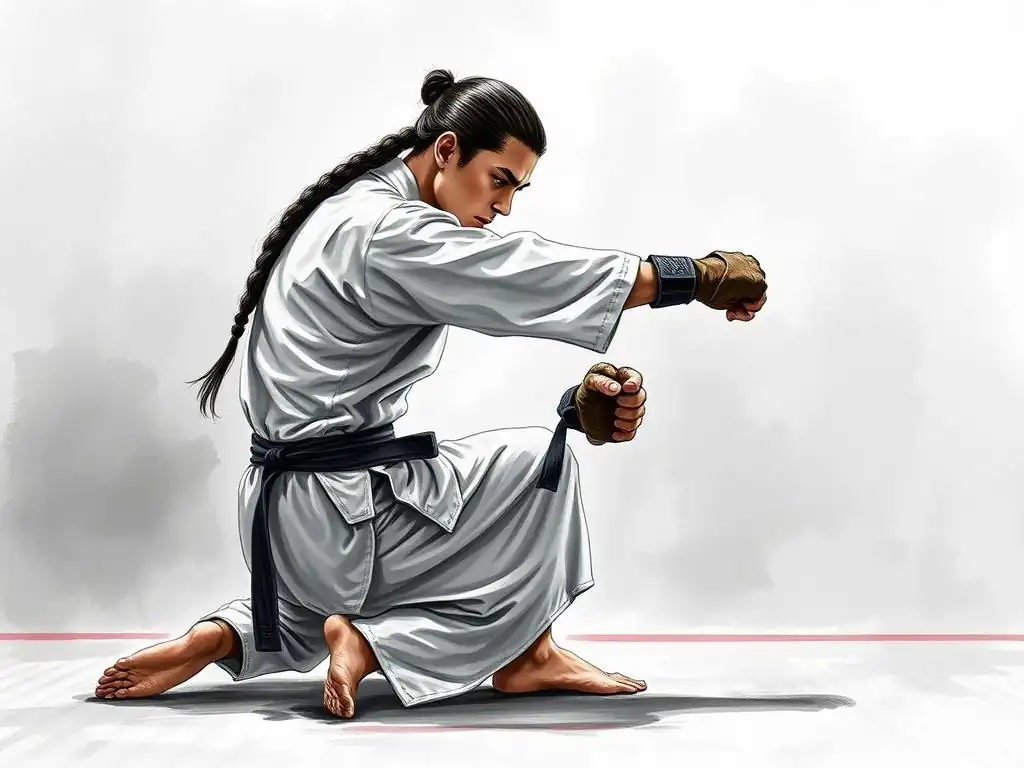
Being taken to the ground against your will is a significant disadvantage in combat. Therefore, effective defensive strategies in HEMA ground fighting begin with preventing the takedown entirely and, if that fails, knowing how to survive and escape from the resulting disadvantageous positions. These techniques focus on minimizing damage, creating space, and regaining a more neutral or advantageous position.
Historical sources, while not always explicitly detailing takedown defense as a separate category, show techniques for breaking grips, maintaining distance, and using footwork to avoid being thrown. Once on the ground, the emphasis shifts to preventing the opponent from securing a dominant pin or applying finishing techniques, highlighting the importance of resilient HEMA ground fighting techniques.
Avoiding the Ground: Footwork and Takedown Defense
The first line of defense in HEMA ground fighting is to avoid being taken down in the first place. This relies heavily on effective footwork and understanding common takedown entries. Maintaining appropriate distance ( Massen) in standing combat prevents the opponent from easily closing the gap to initiate grappling or throws. Light, mobile footwork allows you to react quickly to changes in distance and angle. Historical fencing manuals consistently emphasize the importance of dynamic footwork for controlling distance and creating openings or avoiding threats.
Specific takedown defenses involve recognizing common grips and entries and knowing how to counter them. For instance, if an opponent attempts a body lock, knowing how to create space with your hips, use an underhook, or break their grip are essential HEMA ground fighting techniques applied before hitting the floor. Similarly, defending against leg attacks requires understanding how to sprawl, crossface, or secure an underhook. While historical texts may not use modern terminology, the principles of preventing an opponent from controlling your base or torso are clearly present in their wrestling and close-quarters combat sections.
Escaping Pins and Mounts: Bridging, Shrimping, and Elbow Escapes
Once on the ground and pinned, escaping is paramount. Common pins include side control, mount, and knee-on-belly. Historical illustrations often show one fighter completely controlling another on the ground, indicating these positions existed. Escaping these pins requires explosive movement and understanding how to create space. The "bridge" is a fundamental escape movement, involving driving off your feet and arching your back to lift the opponent's weight and create instability. This is often combined with turning towards the opponent to attempt a roll or sweep.
"Shrimping" (also known as hip escape or snaking) is another crucial movement. It involves using your legs and hips to move your body laterally while keeping your shoulders relatively still, creating space between your body and the opponent's. This movement is vital for recovering guard, escaping side control, or improving your angle.
Elbow escapes involve using these movements to work your elbows and arms between your body and the opponent's, creating frames that disrupt their pressure and allow you to slide out or recover a better position. These movements, while named by modern grappling, represent fundamental body mechanics likely employed in historical HEMA ground fighting techniques when attempting to escape control.
Creating Space: Hip Movement and Regaining Guard
Creating space is the overarching goal of defensive HEMA ground fighting techniques when on the bottom. Without space, the opponent can apply pressure, strike effectively, or secure submissions. Hip movement, particularly shrimping and bridging, is the primary tool for creating this space. By moving your hips, you shift your body relative to the opponent's, disrupting their base and allowing you to insert your legs or arms as frames.
Regaining the guard is a common objective after creating space from a pin. The guard position allows the bottom fighter to use their legs to control the distance, prevent the opponent from posturing up to strike, and set up sweeps or submissions.
Historical depictions of wrestling often show fighters using their legs to control the opponent's posture, suggesting the concept of a guard was utilized. By shrimping and using your hands to push or frame, you can bring your knees up between you and the opponent, establishing a barrier and transitioning into a guard position, a key defensive and transitional HEMA ground fighting technique.
Offensive Techniques: Dominating on the Floor
Once a dominant position is achieved in HEMA ground fighting, or when fighting from the guard, the focus shifts from survival to offense. This involves applying strikes, securing submissions, or transitioning to even more advantageous positions to finish the fight. Historical manuals, particularly those dealing with Ringen and Messerfechten (dagger fighting), show a variety of offensive techniques employed on the ground, reflecting the brutal reality of combat where quickly incapacitating the opponent was paramount.
Dominating on the floor requires understanding how to maintain control while simultaneously applying offensive pressure. This balance is key; losing control while attempting a strike or submission can result in losing the dominant position or even being reversed. Effective HEMA ground fighting techniques in offense combine positional control with timely and effective attacks.
HEMA Ground Strikes: Closed-Fist Strikes, Elbows, and Knees
Striking is a direct and effective way to finish a fight on the ground, and historical sources show striking was absolutely part of ground combat. Treatises often depict fighters striking prone opponents with fists, elbows, or knees. For example, from a mounted position, closed-fist strikes to the head or body are powerful due to gravity and the inability of the bottom fighter to adequately defend. Meyer's wrestling section includes descriptions of striking an opponent who has been thrown.
Elbows and knees are particularly effective in close quarters on the ground. From side control or mount, elbows can be delivered with significant force to the head or ribs. From a kneeling position next to a downed opponent, knees can be used to strike the body or head. While specific instructions on ground striking mechanics might be less detailed than standing techniques, the principles of using body weight and leverage to generate force are universal. These HEMA ground fighting techniques were likely employed to quickly incapacitate a vulnerable opponent.
Submissions: Guillotine Chokes, Armbars, and Triangles
Submission holds were also part of historical European grappling, though perhaps not as codified or numerous as in modern grappling arts. Historical wrestling manuals show various joint locks and chokes. For example, techniques resembling armbars or shoulder locks appear in some treatises when controlling an opponent's arm on the ground or during standing wrestling that transitions to the floor. While the term "guillotine choke" is modern, techniques involving compressing the opponent's neck with an arm from a headlock position are depicted and described in wrestling manuals as a way to control or submit an opponent.
The "triangle choke," a leg-based choke, might seem a modern invention, but historical ground fighting techniques utilizing leg entanglement and pressure on the neck are plausible, although less explicitly documented than arm locks or headlocks. The general principle of using leverage and body mechanics to restrict blood flow or damage joints was understood. Applying submissions on the ground requires securing a position that isolates the target limb or neck and then applying pressure effectively while maintaining control, making them advanced HEMA ground fighting techniques.
Achieving and Maintaining Dominant Positions: Passing Guard and Securing Mount
Achieving a dominant position is often a prerequisite for effective ground offense. If the opponent is on their back in a guard position, the top fighter must "pass the guard" to reach a more dominant position like side control or mount. Historical wrestling and ground fighting scenarios implicitly involve overcoming the opponent's attempts to control with their legs. Guard passing involves neutralizing the opponent's leg control, often by controlling their legs or hips and using pressure and movement to bypass their guard.
Once a dominant position like side control, mount, or back control is achieved, maintaining it is crucial. This involves using your weight, limb placement, and base to prevent the opponent from escaping or reversing the position. For instance, from mount, distributing your weight across their chest and hips while keeping your base wide makes it difficult for them to bridge or shrimp. Securing a dominant position allows the fighter to apply strikes or submissions with greater safety and effectiveness, showcasing key HEMA ground fighting techniques for control.
Training Drills for Proficiency
Developing proficiency in HEMA ground fighting techniques requires dedicated practice through specific drills. These drills break down complex movements and techniques into manageable steps, allowing practitioners to build muscle memory, improve body mechanics, and understand the timing and leverage involved. Training should encompass both solo practice to develop fundamental movements and partner drills to practice application against resistance.
Regular drilling is essential for internalizing HEMA ground fighting techniques and making them instinctive. It allows practitioners to safely explore positions, transitions, and techniques in a controlled environment before attempting them in sparring or free play.
Partner Drills: Guard Passing, Submission Escapes, and Takedown Defense
Partner drills are fundamental for learning how to apply HEMA ground fighting techniques against a resisting opponent. Drills can focus on specific scenarios, such as starting in an opponent's guard and drilling various guard passing strategies (e.g., knee slice pass, over-under pass) against their resistance. Conversely, drilling submission escapes involves starting in common submission holds (like an armbar setup) and practicing the appropriate defensive movements and counters.
Takedown defense drills can range from practicing specific sprawl entries against shot attempts to drilling how to break grips and maintain balance when an opponent attempts a standing throw. These drills are often performed with increasing levels of resistance, starting slowly to learn the mechanics and gradually increasing intensity to simulate real-world pressure. Practicing these HEMA ground fighting techniques with a partner is indispensable for developing functional skill.
Solo Drills: Hip Escapes, Granby Rolls, and Technical Stand-Ups
Solo drills focus on developing fundamental body movements that are critical for HEMA ground fighting techniques, particularly for escapes and transitions. Hip escapes (shrimping) can be practiced repeatedly to develop fluidity and the ability to create space. Granby rolls, a wrestling movement involving rolling over the shoulder while shrimping, are excellent for developing body control and the ability to invert or change position rapidly, useful for recovering guard or sweeping.
The technical stand-up is a vital solo drill for safely getting back to your feet from the ground while protecting yourself from a standing opponent. It involves creating space, using a hand to post, bringing a leg under your body, and standing up while maintaining a defensive posture. Practicing these solo movements builds the core body mechanics needed for effective HEMA ground fighting techniques, improving mobility and resilience on the floor.
Sparring and Application: Controlled Free Sparring with Ground Fighting Focus
Once fundamental HEMA ground fighting techniques are understood and drilled, applying them in controlled sparring is the next step. Ground fighting sparring should be conducted with caution and clear rules, especially when integrating techniques from historical texts that can be quite brutal. Starting with positional sparring (e.g., starting from side control and trying to achieve mount, or starting in guard and trying to sweep) allows practitioners to focus on specific aspects of ground fighting.
Full ground sparring (often called rolling in modern grappling) allows practitioners to chain techniques together and react to unpredictable movements. When integrating HEMA ground fighting techniques derived from wrestling manuals, it's crucial to prioritize safety, using controlled force and stopping immediately upon tap. Incorporating elements of weapon retention or defense against a training weapon (like a padded dagger) during ground sparring adds the historical context and challenges specific to HEMA, making the training more relevant.
HEMA Ground Fighting with Dagger: A Deadly Combination
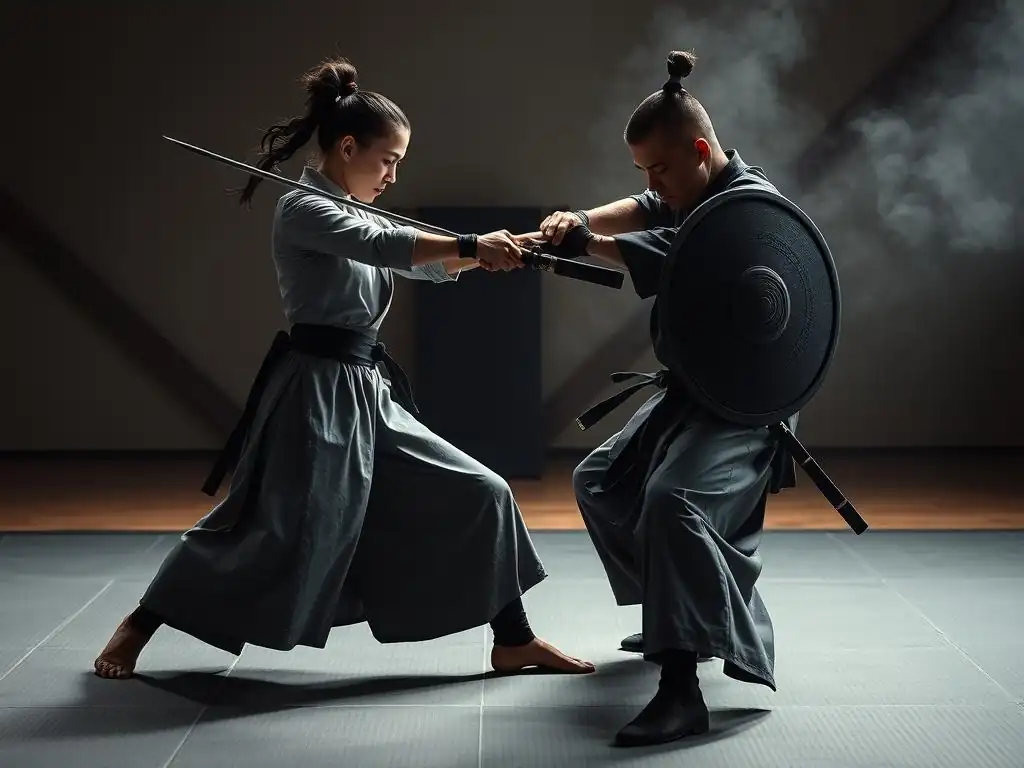
Historical European Martial Arts often involve weapons, and fighting on the ground with a dagger is a scenario frequently depicted and described in treatises, particularly those focusing on Messerfechten (dagger fighting). The presence of a weapon fundamentally changes the dynamics of HEMA ground fighting techniques, making positional control and weapon control paramount.
A dagger is a formidable weapon in close quarters, and the ground is the ultimate close-quarters environment. Understanding how to use the dagger offensively while on the ground, and equally importantly, how to defend against a dagger attack, is a critical component of realistic HEMA ground fighting.
Integrating the Dagger: Thrusting, Slicing, and Defanging
When fighting on the ground with a dagger, the primary offensive actions are thrusting and slicing. From a dominant position like mount or side control, a fighter with a dagger has excellent opportunities to deliver powerful thrusts to vulnerable areas like the torso or neck. Slicing can be used to attack limbs or create openings. Historical illustrations vividly show fighters thrusting daggers into opponents on the ground.
"Defanging the snake," or disarming the opponent of their weapon, is a crucial HEMA ground fighting technique when the opponent has a dagger. This involves controlling the opponent's weapon-bearing limb and applying leverage or force to make them drop or lose control of the weapon. Techniques often involve pinning the arm, twisting the wrist, or striking the arm to force a release. Successfully integrating the dagger into ground fighting requires understanding its effective range and target areas in various ground positions.
Defending Against Dagger Attacks: Evasion, Blocking, and Disarming
Defending against a dagger attack on the ground is incredibly challenging due to the close proximity and limited mobility. Evasion involves using hip movement and body shifts to avoid the line of attack. Blocking can be done using your own limbs, though this is risky and should ideally involve controlling the opponent's weapon-bearing arm. Historical sources on dagger fighting show defenses often involving grappling the opponent's arm immediately upon the attack to control the weapon.
Disarming, as mentioned, is a key defensive HEMA ground fighting technique against a dagger. If evasion or blocking fails, gaining control of the opponent's weapon arm and applying a disarm technique is often the best course of action. This requires precise timing and strong grip fighting. Practicing defense against a training dagger (rubber or padded) in ground scenarios is essential for developing the reflexes and techniques needed to survive this dangerous situation.
Offensive Dagger Techniques: Thrusting from Mount and Guard
From dominant positions like mount, offensive dagger techniques are highly effective. The fighter in mount has gravity on their side and can deliver downward thrusts with significant force. Controlling the opponent's arms from mount prevents them from blocking effectively, creating clear targets. Historical depictions often show a fighter mounted and about to deliver a dagger thrust.
Even from the bottom (guard) position, offensive dagger techniques are possible, though riskier. If the opponent is attempting to pass guard, a fighter with a dagger might attempt upward thrusts to the groin or underarm area, or use the dagger to control the opponent's limbs or create space by threatening a cut. While less common in depictions than thrusts from mount, using a dagger defensively or offensively from the guard position is a plausible HEMA ground fighting technique, emphasizing the constant threat a weapon poses in close combat.
Advanced Concepts
Once the foundational HEMA ground fighting techniques are understood and practiced, advanced concepts involve transitioning fluidly between positions, utilizing counter-grappling strategies, and even incorporating the environment into the fight. These concepts build upon the basics and require a deeper understanding of timing, momentum, and strategic thinking.
Advanced HEMA ground fighting techniques are about efficiency and adaptability. They involve recognizing opportunities for sweeps and reversals, exploiting the opponent's weaknesses or reactions, and using the physical space to your advantage.
Transitioning Between Positions: Sweeps and Reversals
Fluid transitions between positions are a hallmark of advanced HEMA ground fighting techniques. Sweeps are techniques performed from a bottom position (like guard) to off-balance and reverse the opponent, ending up in a top position yourself. Historical wrestling manuals show various techniques resembling sweeps, often involving leg hooks, pushes, and timing the opponent's weight distribution. For example, a simple sweep might involve hooking the opponent's leg and pushing their torso to knock them off balance.
Reversals are similar to sweeps but can occur from various disadvantaged positions, turning the tables on the opponent. This might involve escaping a pin and immediately transitioning to a dominant position, or using the opponent's momentum against them during their attack. Mastering transitions allows a fighter to constantly improve their position on the ground, moving from defense to offense seamlessly. These HEMA ground fighting techniques require good timing and control of the opponent's base.
Counter-Grappling: Utilizing Opponent's Momentum and Weaknesses
Counter-grappling involves reacting to the opponent's attempts at takedowns, sweeps, or submissions and turning their action into an advantage for yourself. This requires anticipating their movements and understanding how to disrupt their balance or leverage at the critical moment. For instance, if an opponent attempts a sweep from your guard, instead of simply defending, you might use their momentum to initiate your own sweep or transition to a different attack.
Identifying and exploiting an opponent's weaknesses is another advanced concept. This could be a tendency to favor one side, poor posture in a certain position, or a predictable reaction to pressure. By recognizing these tendencies, a fighter can set traps or apply pressure that forces the opponent into vulnerable positions. Effective counter-grappling and exploiting weaknesses are key HEMA ground fighting techniques that rely on experience and tactical awareness.
Using the Environment: Walls and Obstacles for Leverage and Escape
In a real combat scenario, the environment is rarely a flat, open mat. Walls, obstacles, and uneven terrain can all be used to a fighter's advantage or disadvantage in HEMA ground fighting. A wall can provide a base for pushing off to escape a pin or create space. It can also be used to trap an opponent, limiting their mobility and allowing for easier control or strikes. Historical combat likely occurred in varied environments, making adaptability crucial.
Obstacles on the ground could be used to hinder the opponent's movement or provide leverage for sweeps or submissions. For example, using a fallen object to block an opponent's escape route or pushing off it to gain momentum. While not explicitly detailed in treatises in the same way as techniques, the principle of using the environment is a practical consideration in historical ground fighting. Training HEMA ground fighting techniques should ideally include some consideration of how environmental factors might influence the application of techniques.
The Importance of Safety
While historical HEMA ground fighting techniques were developed for lethal combat, modern training prioritizes safety. Due to the inherent risks of grappling and the potential for injury, especially when simulating techniques that could involve weapons or significant force, strict safety protocols are essential. Responsible training allows practitioners to explore these historical arts effectively without unnecessary risk.
Safety in HEMA ground fighting relies on proper protective gear, clear communication, and a gradual, responsible approach to training intensity. These measures ensure that practitioners can learn and apply HEMA ground fighting techniques safely.
Proper Protective Gear: Mouthguards, Grappling Gloves, and Knee Pads
Wearing appropriate protective gear is non-negotiable for practicing HEMA ground fighting techniques. A mouthguard is essential to protect teeth and prevent concussions during accidental impacts. Grappling gloves, while not historically accurate, can provide some padding for hands and knuckles during ground striking drills, reducing the risk of minor injuries.
Knee pads are highly recommended, especially during drills involving kneeling, shooting for takedowns, or movements on hard surfaces. They protect the knees from bruising and abrasion. Depending on the intensity and type of drilling, other protective gear such as headgear (especially when practicing takedowns or throws) might also be advisable to mitigate risks associated with HEMA ground fighting techniques.
Partner Awareness and Communication: Tapping and Verbal Cues
Mutual partner awareness is perhaps the most critical safety element in HEMA ground fighting training. Both practitioners must be aware of their own body and their partner's, avoiding excessive force and recognizing when a technique is causing pain or is about to become dangerous. Open communication is vital.
The concept of "tapping" is universal in grappling and essential in HEMA ground fighting. Tapping signifies that a practitioner is in a dangerous position, in pain, or needs to stop the action immediately. This can be done by physically tapping the opponent or the mat, or via a verbal cue like "tap" or "stop." Partners must immediately release pressure or cease the technique upon receiving a tap. Clear verbal communication, such as checking if a partner is okay or communicating intentions before initiating a technique, further enhances safety.
Avoiding Injury and Promoting Responsible Training: Gradual Progression
Avoiding injury is the primary goal of safety protocols in HEMA ground fighting. This is achieved through a responsible approach to training, including gradual progression. Beginners should start with fundamental movements and positions, slowly introducing more complex techniques and increasing intensity only as proficiency and control improve. Drilling should precede sparring, and positional sparring should precede free ground sparring.
Warm-ups and cool-downs are also important for preventing muscle strains and other injuries. Instructors play a crucial role in promoting a safe training environment, enforcing safety rules, and ensuring techniques are practiced correctly to minimize risk. By prioritizing safety, practitioners can enjoy learning and applying HEMA ground fighting techniques for years to come.
Conclusion: Mastering HEMA Ground Fighting
Mastering HEMA ground fighting techniques is an essential part of a complete understanding of Historical European Martial Arts. It addresses the critical phase of combat that occurs when fighters transition from standing weapon exchanges to close-quarters grappling and ground work. From understanding the historical context in treatises like those within the Liechtenauer tradition and the works of masters like Meyer, to drilling fundamental movements and applying techniques in controlled sparring, proficiency on the ground significantly enhances a practitioner's overall martial skill.
HEMA ground fighting encompasses a range of skills, from defensive strategies like escaping pins and avoiding takedowns to offensive techniques involving strikes, submissions, and achieving dominant positions. The integration of weapons, particularly the dagger, adds a unique and dangerous dimension that requires specific training and safety considerations. By diligently studying historical sources, practicing foundational principles and advanced concepts, and prioritizing safety, practitioners can effectively learn to survive and even dominate on the floor in the context of historical European combat.
Continuing Your Journey: Studying Historical Sources and Modern Application
The journey to mastering HEMA ground fighting techniques involves continuous learning. Delving deeper into the historical treatises themselves is paramount. Consulting various manuscripts and interpretations provides a richer understanding of the techniques and principles described by the historical masters. Texts focusing specifically on Ringen (wrestling) and Messerfechten (dagger fighting), such as those from the MS 3227a (Döbringer's Fechtbuch) or the works of Fabian von Auerswald or Joachim Meyer, are invaluable resources. Comparing interpretations from different HEMA researchers and practitioners can also shed light on the nuances of these historical arts.
Furthermore, integrating insights from modern grappling arts, while maintaining the historical context, can be beneficial. Concepts like positional control, leverage, and body mechanics are universal. Understanding these principles from a modern perspective can sometimes illuminate the underlying mechanics of historical techniques. However, it's crucial to always filter these insights through the lens of the historical sources and the specific context of HEMA, including period clothing, armor, and weapon use. This combined approach allows for a deep and practical understanding of HEMA ground fighting techniques.
The Future of Ground Fighting: Integrating Modern Grappling and Expanding Research
The field of HEMA ground fighting is continuously evolving. As more practitioners explore these techniques, research into historical sources is expanding, leading to new interpretations and a deeper understanding of the historical methods. There is also an ongoing conversation within the HEMA community about the best ways to integrate relevant principles and techniques from modern grappling arts, such as Brazilian Jiu-Jitsu or wrestling, to enhance training and understanding while remaining true to the historical sources.
The future of HEMA ground fighting will likely see more structured curricula, specialized workshops, and dedicated research projects focusing on this vital aspect of historical combat. As the community grows, the collective knowledge and practical application of HEMA ground fighting techniques will undoubtedly advance, providing practitioners with increasingly effective and historically informed methods for combat on the ground. This continued exploration ensures that the rich heritage of European ground combat is preserved, understood, and practiced effectively.
Frequently Asked Questions
What is HEMA and why is ground fighting relevant?
HEMA stands for Historical European Martial Arts, and it's the reconstruction of fighting systems from historical manuals. Ground fighting is relevant because historical sources show that fights often ended up on the ground, making it a crucial skill for survival.
What are some key differences between HEMA ground fighting and other grappling styles like BJJ or wrestling?
While there's overlap, HEMA ground fighting typically involves weapon considerations like daggers or grappling with swords. Also, the rules of engagement were different, often focused on quickly ending the fight rather than prolonged control.
What types of weapons might be used during ground fighting in HEMA?
Historical sources show that daggers and short swords were commonly used on the ground. Fighters might also use their own body weight and positioning to gain an advantage.
How can I effectively train HEMA ground fighting techniques?
Training involves studying historical manuals, practicing with a partner under safe and controlled conditions, and focusing on techniques that are practical and efficient. Start with basic grappling and then introduce weapon considerations.
Is ground fighting a common or important aspect of all HEMA disciplines?
While not all HEMA disciplines emphasize ground fighting equally, it's a significant component in many. Understanding how to defend yourself and attack on the ground is vital for a well-rounded HEMA practitioner.
Final Reflection: Embracing the Ground in HEMA
The journey through HEMA ground fighting techniques reveals a crucial truth: the floor is not a failure, but an opportunity. What was once considered a last resort, a sign of defeat, is now recognized as a dynamic and potentially dominant arena within historical martial arts. This shift in perspective is not just about adding techniques to our repertoire; it's about fundamentally altering our understanding of combat itself.
The exploration of HEMA ground fighting has undeniably enriched the cultural landscape of our community. It's forced us to confront our biases, to re-evaluate historical sources, and to develop a more holistic approach to swordsmanship. The integration of grappling and wrestling principles has breathed new life into our interpretations, allowing us to connect with the past in a more profound and authentic way. The best defence is a good offense.
- While often attributed to sports, this sentiment rings true in HEMA ground fighting. Proactive engagement, not passive survival, is the key to victory.
Now, as you step back onto your feet, consider the lessons learned. How can you integrate these principles into your training? How can you challenge your assumptions and embrace the full spectrum of historical combat? The ground is waiting, not as a place of fear, but as a canvas for innovation and a testament to the enduring spirit of HEMA. Go forth, explore, and discover the power that lies beneath your feet.
Unleash Your Inner Grappler: Take Your HEMA Game to the Ground!
Thanks for diving into the world of HEMA ground fighting! Hopefully, you now feel more confident in your ability to survive and thrive when the fight goes to the floor. It's time to put that knowledge into action!
Here's how you can level up your HEMA grappling:
- Schedule 30 minutes this week to practice your breakfalls and getting back to your feet safely. This is the most crucial skill for ground survival!
- Explore different HEMA-legal grappling techniques. Try out a new guard pass, sweep, or submission you've never used before.
- Share your favorite ground-fighting tip or technique on our Martial Arts Mastery forum! Let's learn from each other.
What are you waiting for? What's one new thing you can add to your ground fighting game today?