
Mok Yan Jong: Mastering the Wooden Dummy in Ip Man Wing Chun

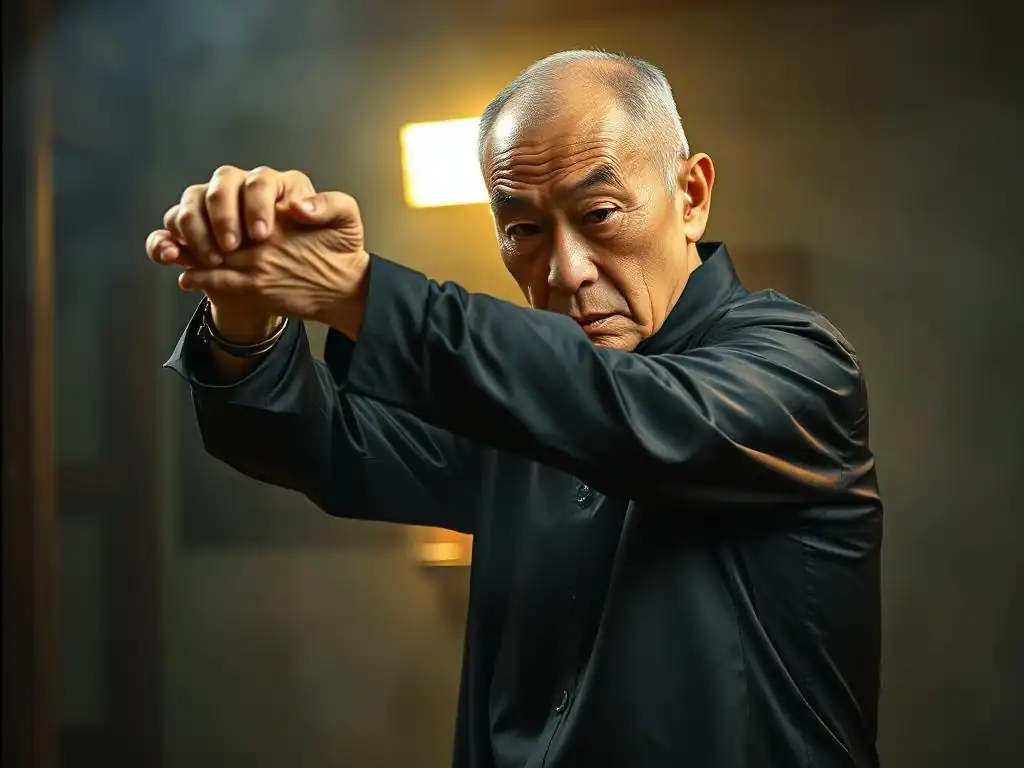
Welcome to Martial Arts Mastery, your gateway to unlocking the secrets of combat and self-cultivation. Prepare to delve into the rich tapestry of martial arts from around the world. This week, we explore a cornerstone of Wing Chun training, a tool that forges power and precision: the Ip Man Wing Chun dummy. Intrigued by how a seemingly simple wooden structure can unlock devastating skill? Read on to discover the history, techniques, and benefits of mastering the Mok Yan Jong, and begin your journey to unlocking the true potential of this legendary training method.
- Mok Yan Jong: Mastering the Wooden Dummy in Wing Chun
- Introduction to the Wing Chun Wooden Dummy (Mok Yan Jong)
- The History and Evolution of the Wing Chun Dummy
- Understanding the Structure of the Wing Chun Wooden Dummy
- Key Principles for Training with the Mok Yan Jong
- The Wing Chun Dummy Form: A Detailed Breakdown
- Benefits of Regular Wing Chun Dummy Practice
- Advanced Applications of the Mok Yan Jong Form
- Choosing the Right Wooden Dummy for Your Training
- Safety Precautions and Avoiding Injuries
- Integrating Mok Yan Jong Training into Your Wing Chun Curriculum
- Conclusion: The Enduring Legacy of the Wing Chun Wooden Dummy
-
Frequently Asked Questions
- What is a Mok Yan Jong, and how is it related to Ip Man Wing Chun?
- Why is the wooden dummy considered so important in Wing Chun training?
- What are some key benefits of training with the Ip Man Wing Chun dummy?
- How does practicing with the Mok Yan Jong translate to real-world self-defense?
- Where can I find resources to learn more about Ip Man Wing Chun dummy training?
- Final Reflection: The Enduring Legacy of the Wooden Dummy
- Unleash Your Wing Chun Potential Now!
Mok Yan Jong: Mastering the Wooden Dummy in Wing Chun
Introduction to the Wing Chun Wooden Dummy (Mok Yan Jong)
The Significance of the Mok Yan Jong in Wing Chun Training
The Mok Yan Jong, or Wooden Dummy, is arguably one of the most iconic training tools in Wing Chun Kung Fu, particularly within the Ip Man Wing Chun dummy lineage. Far more than just a stationary object, it serves as a silent, unyielding partner that allows practitioners to refine their structure, power generation, and technique application without the need for a human opponent. Its design, featuring three arms and one leg, is specifically calibrated to simulate the angles and positions of a human body, providing a realistic framework for practicing the intricate movements and principles of Wing Chun.
Training with the Mok Yan Jong is considered an advanced stage in the Wing Chun curriculum, typically introduced after a student has developed a solid foundation in the hand forms (Siu Lim Tao, Chum Kiu, Bil Gee) and basic sensitivity training (Chi Sao). It is here that the theoretical principles learned in the forms are tested and solidified against a physical structure.
The dummy's resistance forces the practitioner to use proper body mechanics and structure, revealing weaknesses in alignment or power transmission that might not be apparent during solo or partner drills. Mastery of the Mok Yan Jong form is often seen as a significant benchmark in a Wing Chun practitioner's journey.
Mok Yan Jong: Developing Structure and Power
One of the primary functions of the Mok Yan Jong is to build and test the practitioner's structure. Wing Chun emphasizes maintaining a strong, rooted, yet mobile structure (often referred to as 'Yee Gee Kim Yeung Ma' or the character two adduction stance) that allows force to be channeled efficiently from the ground through the body and out to the point of contact.
When executing techniques against the solid frame of the wooden dummy, any misalignment or structural weakness will be immediately apparent, often resulting in the practitioner being pushed off balance or feeling 'jammed'. Consistent practice teaches the body to automatically correct these issues, reinforcing proper skeletal alignment and muscular engagement.
Furthermore, the dummy is crucial for developing explosive, short-range power, known in Wing Chun as 'Fajing'. Unlike arts that rely on large, winding movements, Wing Chun power is generated through precise body mechanics, relaxation, and the coordinated release of energy at the moment of impact.
The dummy's unyielding nature provides the necessary resistance to practice hitting through a target and transmitting force effectively. Drills against the dummy, such as chain punching or palm strikes, allow practitioners to feel the result of their power generation and refine the subtle body movements required to maximize impact force from close quarters, a key component of effective Ip Man Wing Chun dummy training.
The History and Evolution of the Wing Chun Dummy
Origins of the Wooden Dummy in Southern Chinese Martial Arts
The concept of using a wooden dummy for martial arts training is not exclusive to Wing Chun but has roots in various Southern Chinese martial arts styles. Historical accounts, though often mixed with legend, suggest that wooden dummies were utilized within the Shaolin Temple itself as a means for monks to practice and refine techniques. These early dummies were likely less standardized than the modern Wing Chun version and might have varied significantly in design and complexity, potentially featuring multiple logs or moving parts to simulate different scenarios.
Specific legends link the origin of the Wing Chun Mok Yan Jong to the burning of the Shaolin Temple during the Qing Dynasty. It is said that the Nun Ng Mui, one of the legendary Five Elders who escaped the temple, adapted and refined the dummy concept based on her observations of temple training.
Another account attributes its development to Jee Sin Sim See, another of the Five Elders, within the Red Boat Opera Troupes, where Wing Chun techniques were further refined in secret. Regardless of the exact historical figure, the wooden dummy evolved within this context, becoming a specialized tool tailored to the unique principles and techniques of what would become Wing Chun.
Development of the Modern Wing Chun Dummy Form
The specific form practiced on the Wing Chun wooden dummy today, encompassing 116 (or sometimes 108, depending on the lineage) distinct movements, is largely attributed to Grandmaster Ip Man. While earlier versions of the dummy form existed, possibly passed down through figures like Leung Jan and Chan Wah Shun, Ip Man standardized and popularized the sequence that is now widely practiced globally. He integrated and refined techniques from the three hand forms and the Chum Kiu footwork principles into a cohesive sequence performed against the dummy's structure.
Ip Man's development of the dummy form was crucial in making Wing Chun accessible to a wider audience, particularly after he began teaching openly in Hong Kong in the mid-20th century. He systematized the movements, ensuring that the form comprehensively covered the core principles of Wing Chun application against a resisting force. This standardized form became a cornerstone of his teaching curriculum and is the basis for most modern Ip Man Wing Chun dummy training, providing a clear, progressive method for students to internalize the art's fighting concepts.
Variations in Wooden Dummy Design and Construction
While the general configuration of the Wing Chun wooden dummy (three arms and one leg) is standard, there are variations in design and construction materials depending on lineage, tradition, and practical considerations. Historically, dummies were often crafted from single pieces of durable hardwood like teak, rosewood, or even ironwood, making them incredibly robust but also very heavy and expensive. The arms and leg were typically inserted into mortises carved directly into the trunk.
Modern dummies may use laminated wood, different types of hardwood (like ash, oak, or elm), or even synthetic materials. The method of mounting also varies significantly. Traditional dummies were often set into the ground or mounted on heavy wooden frames.
More common today are wall-mounted dummies, which use flexible crossbars to absorb shock and allow for slight movement, simulating the give and take of a real opponent. Free-standing dummies, often with weighted bases, are also available, offering portability. These variations affect the dummy's feel, durability, and the type of feedback it provides during training, influencing the specific nuances of Ip Man Wing Chun dummy practice.
Understanding the Structure of the Wing Chun Wooden Dummy
The Arms: Upper, Middle, and Lower Sections
The three arms of the Wing Chun wooden dummy are strategically positioned to simulate the upper limbs of an opponent in various fighting scenarios. The two upper arms are set roughly shoulder-width apart and project slightly downwards. These represent the opponent's arms used for blocking, striking, or trapping. Training against these arms allows practitioners to practice techniques like Pak Sau (slapping hand), Lap Sau (pulling hand), Tan Sau (dispersing hand), and various blocks and deflections, focusing on controlling the opponent's upper gate and creating openings.
The single middle arm is positioned lower, typically around chest height. This arm often represents a central attack or a barrier to the centerline. Techniques practiced against the middle arm include direct strikes like the vertical fist punch (often aimed just above or below this arm), palm strikes ( Biu Sau), and various trapping and control techniques aimed at disrupting the opponent's structure and balance. The angles and spacing between the upper and middle arms are crucial for practicing the simultaneous blocking and attacking principles that are fundamental to Ip Man Wing Chun dummy application.
The Leg: Rooting and Stability
The single leg of the Wing Chun wooden dummy extends forward and slightly upwards from the main trunk. This leg serves multiple purposes in training. Firstly, it represents the opponent's front leg or a barrier to the lower gate. Practitioners use it to practice leg techniques such as sweeps, stomps, and kicks (though high kicks are not typical in Wing Chun). Techniques like Gwa Cheui (back fist) and Jat Sau (jerking hand) are often used in conjunction with movements around the dummy's leg to break the opponent's balance.
Secondly, and perhaps more importantly, the leg provides a structure against which to practice maintaining and testing one's own rooting and balance. As the practitioner moves around the dummy, the leg forces them to step correctly, adjust their distance, and maintain their structure while simultaneously executing hand techniques. It simulates the need to navigate around an opponent's lower body, ensuring that strikes and deflections are performed from a stable and rooted stance. Effective use of footwork around the dummy's leg is vital for developing the dynamic movement required in practical Ip Man Wing Chun dummy application.
Dummy Placement and Angles for Effective Training
The precise placement and angle of the wooden dummy are critical for effective training. The dummy is typically mounted so that the main trunk is vertical or slightly leaning forward. The arms and leg are inserted at specific angles designed to replicate realistic points of contact with a human body. The spacing between the upper arms and the middle arm is calibrated to simulate the width of a person's shoulders and chest.
When training, the practitioner positions themselves relative to the dummy to practice specific angles of attack and defense. The centerline principle is paramount; the practitioner constantly aims to control the central line between themselves and the dummy. Training involves moving laterally, forward, and backward around the dummy, always maintaining proper distance and angle to apply techniques effectively. The fixed structure of the dummy, despite variations in mounting (like flexible wall mounts), provides consistent angles that allow for repetitive, muscle-memory building practice crucial for mastering the Ip Man Wing Chun dummy form.
Key Principles for Training with the Mok Yan Jong
Centerline Theory and Application
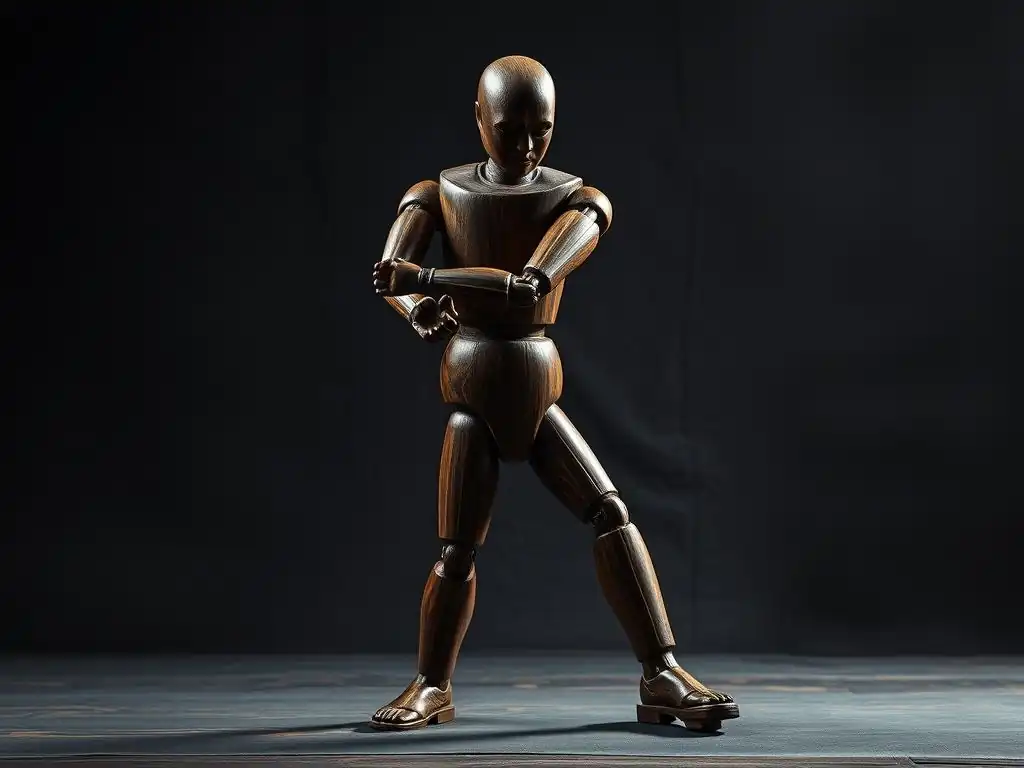
The centerline theory is a core concept in Wing Chun, postulating that the shortest distance between two points is a straight line, and this line (running vertically down the center of the body) is the most vulnerable target for attack and the primary line for defense. Training on the Mok Yan Jong reinforces this principle by providing a static representation of an opponent's centerline. All techniques performed on the dummy, whether strikes, blocks, or traps, are executed with the objective of controlling or attacking the dummy's central line while protecting one's own.
Practicing against the dummy helps develop the ability to simultaneously attack and defend along this crucial line. For example, a Tan Sau might be used to deflect an incoming force (represented by a dummy arm) away from the centerline, while the other hand simultaneously delivers a punch along the now-clear line. The dummy's rigid structure provides immediate feedback; techniques that stray from the centerline or fail to control the dummy's limbs effectively will feel awkward or ineffective. This constant feedback loop is essential for internalizing the centerline concept in Ip Man Wing Chun dummy practice.
Generating Power and Structure
Generating power in Wing Chun is not about brute force but about utilizing proper body mechanics, relaxation, and the coordinated movement of the entire structure. The Mok Yan Jong is an invaluable tool for developing this kind of power. When hitting the dummy, the practitioner learns to channel force from their stance, through their core, and out through their limbs, ensuring that the whole body contributes to the strike. Techniques like the vertical fist punch or the palm strike are practiced repeatedly, focusing on relaxation before impact and explosive release of energy upon contact.
Structure is equally important, providing the framework through which power is transmitted and received. The dummy forces the practitioner to maintain a stable, aligned structure under resistance. When blocking or deflecting the dummy's arms, the practitioner learns to use their skeletal structure to absorb and redirect force rather than relying solely on muscular strength. This structural integrity prevents the practitioner from being pushed off balance and allows for rapid, consecutive movements. Consistent Ip Man Wing Chun dummy training refines this interplay between power generation and structural stability.
Maintaining Proper Stance and Body Mechanics
Maintaining the correct stance ( Yee Gee Kim Yeung Ma) and utilizing proper body mechanics are foundational to all Wing Chun techniques and are rigorously tested on the Mok Yan Jong. The stance provides the base for power generation and stability, requiring the knees to be slightly bent and angled inwards, the feet rooted, and the spine aligned. As the practitioner moves around the dummy, they must transition between stances and step correctly while maintaining this structural integrity.
Body mechanics involve the coordinated movement of the hips, shoulders, elbows, and wrists to execute techniques efficiently. For example, executing a Pak Sau and punch requires precise timing and movement of the hips and shoulders to generate rotational force and deliver the strike effectively. The dummy provides a static reference point that allows the practitioner to focus intensely on these subtle body movements. Repeated practice on the Ip Man Wing Chun dummy helps automate these correct mechanics, making them instinctive during live application.
The Wing Chun Dummy Form: A Detailed Breakdown
Section 1: Tan Sau, Fook Sau, and Punching Techniques
The Mok Yan Jong form is traditionally broken down into sections, each focusing on specific principles and techniques. Section 1 often introduces fundamental movements like Tan Sau (dispersing hand), Fook Sau (controlling hand), and basic punching applications against the dummy's arms. The practitioner begins by facing the dummy, establishing proper distance and structure. They practice deflecting the upper arms using Tan Sau and Fook Sau, learning to control the dummy's 'limbs' while simultaneously executing vertical fist punches towards the dummy's trunk (representing the opponent's body).
This initial section emphasizes the core Wing Chun principle of simultaneous block-and-attack. For instance, a practitioner might use a Tan Sau on one of the upper arms to clear a line of attack while instantly following with a punch from the other hand. The dummy provides resistance, forcing the practitioner to apply these techniques with proper structure and power.
Common drills include repetitive Tan Sau / punch combinations, Fook Sau control into strikes, and navigating around the dummy while maintaining these actions. Mastery of this section builds the foundation for applying basic hand techniques against a solid structure, a key aspect of Ip Man Wing Chun dummy training.
Section 2: Bong Sau and Palm Strikes
Section 2 of the dummy form typically delves into techniques like Bong Sau (wing arm) and various palm strikes. Bong Sau is a deflecting technique used to redirect incoming force away from the practitioner's centerline. Against the dummy, Bong Sau is practiced against the upper arms, focusing on using the structure of the forearm to redirect the force while maintaining balance. This section also incorporates movements that transition from deflections into powerful palm strikes ( Biu Sau or Jing Jeung - pushing palm) aimed at the dummy's trunk.
The transition between techniques is crucial in this section, emphasizing fluidity and economy of motion. For example, a practitioner might use Bong Sau to deflect an arm, then immediately transition into a Biu Sau through the space created. Palm strikes are practiced to develop explosive, close-range power, utilizing the entire body's structure. Training in Section 2 on the Ip Man Wing Chun dummy refines defensive structures and integrates them seamlessly with offensive actions, preparing the practitioner for more complex exchanges.
Section 3: Kicks and Sweeps
Later sections of the dummy form, such as Section 3, introduce lower body techniques, including kicks and sweeps performed against the dummy's leg. While Wing Chun primarily focuses on close-range hand techniques, low kicks and sweeps are part of its arsenal, used to disrupt the opponent's balance and structure. Against the dummy, practitioners practice techniques like the Wang Geng Gerk (sweeping leg) or low front kicks aimed at the dummy's leg or base.
This section requires significant coordination between hand techniques and footwork. Practitioners must maintain their upper body structure and hand control while simultaneously executing a low-line attack with their leg. The dummy's fixed leg provides a stable target for practicing these techniques and refining the balance required to execute them without compromising one's own stability. Mastery of this section ensures that Ip Man Wing Chun dummy training covers the full spectrum of techniques, integrating upper and lower body movements.
Common Mistakes and Corrections in Each Section
Training on the Mok Yan Jong highlights common errors. In Section 1, mistakes often include using excessive muscular force instead of structure, failing to maintain the centerline, or not coordinating the deflection and punch simultaneously. Corrections involve relaxing the shoulders, sinking the elbows, and focusing on channeling power from the ground. In Section 2, practitioners might use Bong Sau too rigidly or fail to transition smoothly into strikes; correction focuses on maintaining a relaxed Bong Sau structure and practicing the linking movements repeatedly.
In Section 3, common errors include losing balance when executing kicks or sweeps, failing to maintain hand control while kicking, or lifting the knee too high. Corrections involve strengthening the supporting leg, improving hip mobility, and ensuring that the hands remain active and ready to defend or attack. Across all sections of Ip Man Wing Chun dummy training, general mistakes include improper distance (too close or too far), incorrect footwork transitions, and holding tension. Consistent, focused practice with attention to feedback from the dummy is the primary method of correction.
Benefits of Regular Wing Chun Dummy Practice
Developing Striking Power and Precision
Regular training on the Mok Yan Jong significantly enhances striking power and precision. The dummy's solid surface provides resistance that allows practitioners to practice hitting through a target, developing the ability to generate 'short power' from close range. Techniques like the vertical fist punch and palm strike, when repeatedly applied with proper structure and mechanics against the dummy, build explosive force generation.
Precision is developed through the dummy's fixed structure and the requirement to hit specific points or angles. The spaces between the arms, the trunk, and the leg provide targets that demand accuracy. Practicing the dummy form teaches the practitioner to instinctively find openings and deliver strikes precisely along the centerline or to vulnerable points, crucial skills honed through dedicated Ip Man Wing Chun dummy practice.
Improving Stance and Footwork
The Mok Yan Jong is an excellent tool for refining stance and footwork. The form requires constant movement around the dummy, necessitating smooth transitions between stances and precise stepping. Practicing against the dummy's leg, in particular, forces the practitioner to step correctly while maintaining balance and executing techniques. This dynamic movement builds strength and stability in the legs and hips.
Furthermore, the dummy provides immediate feedback on the practitioner's rooting. Any instability in the stance or poor weight distribution will result in being pushed off balance by the force of hitting or deflecting the dummy's limbs. This constant self-correction through Ip Man Wing Chun dummy training leads to a more stable, rooted, and mobile stance, essential for generating power and maintaining structure in application.
Enhancing Sensitivity and Reflexes
While the dummy is a static object, training with it paradoxically enhances sensitivity and reflexes. As the practitioner moves through the form, they develop a tactile understanding of applying force against a structure. They learn to feel the resistance of the dummy's arms and leg and adjust their techniques accordingly, refining their ability to 'listen' to the force.
The sequential nature of the form, requiring rapid transitions between techniques, also improves reflexes. Practicing the rapid-fire combinations and defensive/offensive sequences builds muscle memory and reaction time. Although it doesn't replicate the unpredictable nature of a live opponent, the structured repetition on the Ip Man Wing Chun dummy develops ingrained responses that can be applied instinctively in dynamic situations.
Building Internal Strength and Body Conditioning
Beyond external technique, Mok Yan Jong training contributes significantly to building internal strength and conditioning the body. The repetitive impact against the hard wooden surface, when done correctly with proper structure, conditions the forearms, wrists, and hands, making them more resilient and capable of delivering powerful strikes.
More subtly, the constant need to maintain a rooted stance, engage the core, and use coordinated body mechanics builds internal connection and strength. The isometric tension required in certain positions and the dynamic relaxation and tension cycles used in power generation strengthen the connective tissues and develop a more integrated body unit. This deep conditioning is a key, though often overlooked, benefit of dedicated Ip Man Wing Chun dummy practice.
Advanced Applications of the Mok Yan Jong Form
Integrating Chi Sao Principles
While Chi Sao (sticking hands) training focuses on sensitivity and reflexes against a live, moving opponent, the Mok Yan Jong can be used to integrate and reinforce some Chi Sao principles against a static structure. For example, the concept of 'listening' to force and yielding can be practiced by feeling the resistance of the dummy's arms and adjusting your technique slightly rather than meeting force with rigid force.
Specific Chi Sao techniques, such as Pak Sau and Lap Sau applications, are directly transferable to the dummy form. Practicing these movements against the dummy's fixed arms helps solidify the angles, structure, and transitions required. While it lacks the dynamic feedback of a human partner, using the Ip Man Wing Chun dummy allows for focused, repetitive practice of these core principles in isolation before applying them in the more complex environment of Chi Sao.
Refining Wing Chun Techniques
The Mok Yan Jong serves as a rigorous testing ground for refining all Wing Chun techniques learned in the hand forms. Every movement from Siu Lim Tao, Chum Kiu, and Bil Gee has an application or principle that can be practiced or reinforced on the dummy. The dummy's structure forces precision and correctness; incorrect angles, insufficient power, or poor structure will simply not work effectively against it.
Practitioners use the dummy to polish the details of their techniques – the exact angle of a Tan Sau, the precise timing of a Jat Sau, the coordination of footwork with hand movements. It allows for self-correction and deep internalization of the mechanics. Refining techniques on the Ip Man Wing Chun dummy ensures that they are not just theoretical movements but practical applications against a solid, unyielding force.
Adapting the Form for Practical Application
While the 116-movement dummy form is a traditional sequence, its true value lies in understanding the underlying principles and being able to adapt the movements for practical application. Advanced training on the Mok Yan Jong involves breaking down sections of the form and practicing them in isolation, focusing on specific scenarios the dummy represents.
This might involve practicing continuous chain punching while circling the dummy, repeatedly entering and controlling the centerline against the upper arms, or drilling specific transitions between hand techniques and low kicks against the leg. The goal is to move beyond simply performing the set sequence and instead use the dummy as a tool to simulate fragments of combat, applying the Wing Chun principles learned in the form in a more fluid and adaptable manner, ultimately making the Ip Man Wing Chun dummy training directly applicable to self-defense.
Choosing the Right Wooden Dummy for Your Training
Different Types of Wooden Dummies
There are several types of Wing Chun wooden dummies available, primarily distinguished by their mounting method and construction. The most traditional is the free-standing dummy, often set into the ground or mounted on a heavy base. These are very stable but require significant space and are not easily moved. Wall-mounted dummies are perhaps the most common for home training. They are attached to a wall using flexible crossbars that allow the dummy to absorb impact and move slightly, simulating the recoil of a human body.
Other variations include portable dummies, which are lighter and designed for easy transport, or dummies with adjustable arms and legs to accommodate practitioners of different heights or to simulate different opponent structures. Materials also vary, from expensive hardwoods like teak or purpleheart (known for their density and durability) to more affordable options like ash, oak, or even laminated wood. The choice depends on budget, available space, and desired training feel, all impacting the experience of training on an Ip Man Wing Chun dummy.
Considerations for Size, Material, and Construction
When choosing a wooden dummy, size is a critical factor. The height of the dummy should generally align with the practitioner's height, ensuring that the arms and leg are at appropriate levels for practicing techniques as they would be applied to a human opponent. Standard dummy heights are often around 5.5 to 6 feet for the trunk, with arms placed accordingly.
The material and construction quality significantly affect the dummy's durability and feel. Hardwoods are more traditional and long-lasting but can be very hard on the practitioner's limbs if proper technique and conditioning are not developed. Laminated wood or softer hardwoods might be more forgiving initially. The quality of the joinery, particularly where the arms and leg meet the trunk, is paramount for longevity. Flexible wall mounts, if chosen, should be robust and allow for appropriate movement without excessive wobbling. Investing in a well-constructed Ip Man Wing Chun dummy ensures a reliable training partner for years.
Setting Up Your Training Space
Properly setting up your training space is essential for safe and effective Mok Yan Jong practice. Ensure you have enough clear space around the dummy to perform the entire form and move freely without hitting walls or obstacles. For a wall-mounted dummy, this means having several feet of clearance in front and to the sides. For a free-standing dummy, even more space may be required to move completely around it.
The floor surface should be stable and non-slip. Avoid training on concrete without proper mats, as falls or slips can cause injury. Ensure the dummy is securely mounted or based, especially if using a wall mount, to prevent it from coming loose during vigorous training. Adequate lighting is also important. Creating a dedicated, safe training area is crucial for consistent and productive Ip Man Wing Chun dummy practice.
Safety Precautions and Avoiding Injuries
Proper Warm-up and Cool-down Exercises
As with any physical activity, proper warm-up and cool-down are essential when training on the Mok Yan Jong. A warm-up should include light cardio to increase blood flow and dynamic stretching to prepare the muscles and joints, particularly the wrists, elbows, shoulders, and hips, which are heavily used in dummy training. Spending 10-15 minutes warming up can significantly reduce the risk of sprains and strains.
A cool-down should include static stretching, focusing on the muscles used during the session. This helps improve flexibility and aids in recovery. Ignoring warm-up and cool-down can lead to injuries, especially to the wrists, elbows, and shoulders from repeated impact and structural stress against the unyielding Ip Man Wing Chun dummy.
Gradual Progression and Avoiding Overexertion
Training on the wooden dummy can be physically demanding, especially on the joints. It is crucial to progress gradually, particularly when first starting. Do not attempt to perform the entire form at full speed or power from day one. Begin by practicing movements slowly, focusing on structure and mechanics, and gradually increase intensity and duration as your body adapts.
Overexertion can lead to fatigue, poor form, and increased risk of injury. Pay attention to your body's signals. If you feel sharp pain, stop immediately. Pushing through significant pain can result in serious injuries like tendonitis, sprains, or even fractures over time. Consistent, moderate practice on the Ip Man Wing Chun dummy is more beneficial in the long run than sporadic, intense sessions that lead to burnout or injury.
Listening to Your Body and Preventing Strain
Perhaps the most important safety precaution is learning to listen to your body. The dummy provides immediate feedback; if a technique feels jarring, painful, or unstable, it indicates an issue with your structure, mechanics, or excessive tension. Instead of forcing the movement, pause, analyze what went wrong, and correct your form.
Common areas of strain include the wrists (from improper punching or striking), elbows (from incorrect Bong Sau or blocking), and shoulders (from tension or poor structure). Ensure your joints are aligned and relaxed before impact. Use padding initially if needed, especially for wrist conditioning. Preventing strain through mindful practice and proper technique is key to long-term, injury-free Ip Man Wing Chun dummy training.
Integrating Mok Yan Jong Training into Your Wing Chun Curriculum
Supplementing Partner Training
Mok Yan Jong training should be seen as a complement to, not a replacement for, partner training like Chi Sao and sparring. While the dummy allows for repetitive practice and structural refinement against a static force, partner training introduces the crucial elements of timing, distance, sensitivity to a moving opponent, and unpredictable resistance.
Integrating dummy practice means using it to reinforce the principles and techniques you are learning with a partner. For instance, if you are working on controlling the opponent's gate in Chi Sao, practice the corresponding Tan Sau and Fook Sau applications on the dummy to solidify your structure and angles. The dummy helps build the physical attributes and muscle memory that make partner training more effective, enhancing overall Ip Man Wing Chun dummy skill.
Reinforcing Key Concepts
All core Wing Chun concepts – the centerline, simultaneous attack and defense, economy of motion, structure, and relaxation – are woven into the Mok Yan Jong form. Regular dummy practice serves as a powerful method for reinforcing these concepts. Each movement provides an opportunity to apply and test these principles against a physical structure.
By repeatedly executing the form, practitioners internalize how these concepts manifest physically. For example, the transitions between movements reinforce the idea of continuous flow and economy of motion. The angles of the arms and leg force adherence to the centerline principle. This constant reinforcement through the physical repetition of the Ip Man Wing Chun dummy form helps embed the core philosophy of Wing Chun into the practitioner's body.
Progressing from Basic to Advanced Applications
The Mok Yan Jong curriculum typically progresses from learning the basic 116-movement form to understanding and applying its principles in more dynamic ways. Initial training focuses on executing the form correctly, understanding the sequence and the basic application of each movement. As proficiency grows, the focus shifts to generating power, refining structure, and practicing transitions with fluidity.
Advanced training involves breaking down the form, practicing specific sections repeatedly, and exploring variations and improvisations based on the dummy's structure. This might include practicing continuous entry techniques, specific trapping sequences, or rapid-fire combinations against the dummy. The progression in Ip Man Wing Chun dummy training moves from memorization to deep understanding and practical application of the underlying principles.
Conclusion: The Enduring Legacy of the Wing Chun Wooden Dummy
Mastering the Wing Chun Dummy: Enhancing Skill
Mastering the Wing Chun wooden dummy, or Mok Yan Jong, is a significant achievement in a practitioner's journey. It represents a deep understanding of Wing Chun principles and the ability to apply them effectively against a solid structure. Through dedicated practice on the dummy, practitioners develop enhanced striking power, refined structure, improved footwork, and a deeper internalization of the art's core concepts.
The dummy acts as an honest, unyielding teacher, providing immediate feedback on the correctness and effectiveness of every technique. Overcoming the challenges presented by the dummy's rigid resistance builds physical conditioning, mental discipline, and a profound connection to the art. Mastery of the Ip Man Wing Chun dummy form is not just about completing the sequence but about embodying the principles it represents.
The Mok Yan Jong: A Timeless Tool
The Mok Yan Jong has remained a central training tool in Wing Chun for centuries, a testament to its effectiveness and timeless design. Its simple yet ingenious structure provides a comprehensive framework for practicing the art's complex techniques and principles. In an era of diverse training methods, the wooden dummy continues to be an indispensable tool for developing the fundamental attributes required for effective Wing Chun.
From its historical origins to its modern variations, the Mok Yan Jong continues to challenge and develop practitioners worldwide. For anyone serious about the art, particularly within the Ip Man Wing Chun dummy lineage, dedicated practice on this iconic tool is essential for achieving a high level of proficiency and truly understanding the depth and practicality of Wing Chun Kung Fu.
Frequently Asked Questions
The Mok Yan Jong is a wooden dummy used extensively in Ip Man Wing Chun training. It helps practitioners develop correct structure, generate power, and refine techniques in the absence of a partner.
Why is the wooden dummy considered so important in Wing Chun training?
The wooden dummy allows for the solo practice of Wing Chun forms, reinforcing proper body mechanics, force generation, and sensitivity. It's a crucial tool for developing a strong foundation.
What are some key benefits of training with the Ip Man Wing Chun dummy?
Training with the dummy enhances structural integrity, improves timing and coordination, and develops close-range combat skills. It also builds resilience and conditions the body.
How does practicing with the Mok Yan Jong translate to real-world self-defense?
The dummy training reinforces muscle memory of Wing Chun techniques, allowing for faster and more instinctive reactions in a self-defense situation. It refines the practitioner's ability to apply principles under pressure.
Where can I find resources to learn more about Ip Man Wing Chun dummy training?
MartialArtsMastery.org provides historical overviews, training techniques, and philosophical underpinnings related to the art and science of martial arts, including valuable content on the Ip Man Wing Chun dummy.
Okay, here's a final reflection designed to close your article, "Mok Yan Jong: Mastering the Wooden Dummy in Ip Man Wing Chun," while keeping the keyword "Ip Man Wing Chun dummy" in mind and adhering to the structure you provided:
Final Reflection: The Enduring Legacy of the Wooden Dummy
The journey through the forms and principles of the Ip Man Wing Chun dummy reveals more than just a training tool; it unveils a pathway to self-discovery and martial mastery. Today, in a world increasingly reliant on instant gratification, the dedication required to master the Mok Yan Jong serves as a powerful reminder of the value of patience, perseverance, and the pursuit of excellence through disciplined practice.
The influence of the wooden dummy extends far beyond the dojo, shaping not only physical prowess but also mental fortitude and a deeper understanding of oneself. The countless hours spent refining technique against this silent teacher instill a resilience that permeates all aspects of life. I fear not the man who has practiced 10,000 kicks once, but I fear the man who has practiced one kick 10,000 times.
- Bruce Lee. This quote encapsulates the spirit of the Mok Yan Jong: consistent, dedicated practice leads to true mastery.
As you step away from this exploration of the Ip Man Wing Chun dummy, consider how its lessons can resonate within your own life. Embrace the challenge of consistent practice, cultivate patience in the face of adversity, and strive for mastery in all that you pursue. Let the spirit of the Mok Yan Jong guide you towards a path of continuous growth and unwavering self-improvement.
Unleash Your Wing Chun Potential Now!
Thank you for diving deep into the world of the Mok Yan Jong! You've gained valuable insights into this incredible training tool and its place in Ip Man Wing Chun. Now, it's time to translate that knowledge into action.
- Begin your journey by finding a qualified Wing Chun instructor near you to guide you on your Mok Yan Jong training.
- Share this article with fellow martial arts enthusiasts to spread the knowledge and inspire others to explore Wing Chun.
- Start a training log documenting your progress with the Mok Yan Jong to help you track your improvements and stay motivated.
What specific aspect of the Mok Yan Jong are you most eager to incorporate into your training regimen, and how do you plan to do it?