
Creating Space: How to Escape Pressure with Smart Boxing Footwork


Welcome to Martial Arts Mastery, your portal to unlocking the secrets of combat. Ever felt trapped in the ring, the pressure mounting? Dive in to discover how masterful boxing footwork can become your ultimate escape. Learn to create space, control the distance, and turn defense into a devastating offense. This article explores the nuances of escaping pressure, blending practical techniques with the underlying principles that elevate footwork from simple movement to a strategic art. Ready to master the dance of evasion?
- Understanding Pressure in Boxing and the Importance of Footwork
- Fundamental Boxing Footwork Techniques for Pressure Evasion
- Advanced Boxing Footwork Strategies for Escaping Pressure
- Drills to Improve Your Boxing Footwork for Pressure Situations
- Common Boxing Footwork Mistakes and How to Avoid Them
- Integrating Footwork into Your Overall Boxing Strategy
- Mastering the Art of Evasion: The Path to Superior Boxing
-
Frequently Asked Questions
- How does boxing footwork help in escaping pressure?
- What are some key footwork techniques for relieving pressure in boxing?
- Why is understanding your opponent's pressure style important for effective footwork escapes?
- How does the concept of "creating space" relate to boxing footwork and escaping pressure?
- What are some common mistakes boxers make when trying to escape pressure with footwork?
- Final Reflection: Dancing Out of the Corner
- Unleash Your Inner Agility: Start Moving Smarter Now!
Understanding Pressure in Boxing and the Importance of Footwork
In the dynamic and often chaotic environment of the boxing ring, fighters constantly navigate the challenges posed by their opponents. One of the most demanding situations is facing a relentless pressure fighter – someone who constantly advances, cutting off the ring and forcing exchanges. Mastering how to create space and escape this pressure is not just a defensive skill; it's a fundamental aspect of ring control and survival. Effective boxing footwork is the primary tool for achieving this crucial distance and regaining control of the fight's tempo.
Avoiding being pinned against the ropes or cornered is paramount. A fighter under constant pressure loses opportunities to set up their own offense, is more susceptible to powerful blows, and expends significantly more energy reacting to the opponent's advances. Learning to use the canvas to your advantage, moving intelligently rather than just reactively, is the hallmark of a seasoned boxer. This requires dedicated practice and a deep understanding of how different footwork techniques can be applied in real-time pressure situations.
The Pressuring Opponent: Recognizing the Threat
A pressuring opponent is characterized by their forward momentum and constant attempts to close distance. They often use aggressive head movement to slip jabs and come inside, aiming to fight at close range where their power or volume can overwhelm you. Recognizing this style early in a fight is crucial. Look for cues like consistent forward leans, attempts to cut off angles rather than moving side-to-side defensively, and a preference for fighting inside the pocket.
These fighters thrive on making you uncomfortable and limiting your space. They might throw probing jabs to gauge distance while stepping forward, or simply walk you down behind a high guard. Successfully navigating this threat requires not just defensive blocks and parries, but an active strategy of movement. According to many boxing trainers, a fighter facing a dedicated pressure fighter might spend upwards of 50-60% of a round actively moving their feet to avoid being stationary targets or trapped.
Why Boxing Footwork is Crucial for Evading Pressure
Footwork is the foundation of all movement in boxing, dictating distance, balance, and the ability to deliver or avoid punches. When facing pressure, effective boxing footwork becomes the primary means of survival and strategy implementation. It allows a fighter to dictate the range, create angles for counter-attack, and prevent the opponent from settling into their preferred fighting distance. Without agile and intelligent footwork, a boxer under pressure is effectively a stationary target, absorbing punishment and unable to mount effective offense.
Consider a scenario where a fighter is backed towards the ropes. A quick lateral shuffle or a well-timed pivot can instantly change the dynamic, moving the fighter out of danger and potentially into a position to counter. Statistics from professional bouts often show that fighters who successfully evade pressure by using superior footwork absorb significantly fewer power shots – perhaps 20-30% less on average compared to those who primarily rely on blocking or clinching when pressured. This highlights the preventative power of movement.
Benefits of Mastering Movement: Control, Stamina, and Opportunity
Mastering boxing footwork offers multifaceted advantages that extend beyond simple evasion. Firstly, it grants unparalleled control over the fighting distance and the pace of the bout. By moving effectively, you decide when and where exchanges happen, preventing the opponent from imposing their rhythm entirely. This control is vital against pressure fighters who want a chaotic, close-range brawl.
Secondly, efficient footwork conserves stamina. Instead of absorbing blows and engaging in energy-draining clinches, smart movement allows you to evade danger with minimal physical cost. A fighter who can fluidly move for three minutes without being trapped is far less likely to tire than one constantly fighting off the ropes. Finally, footwork creates offensive opportunities. By escaping pressure and creating space, you force the opponent to reset or pursue, often leaving them momentarily exposed for well-timed counter-attacks. A successful evasion isn't just escaping; it's often setting the stage for your own scoring punches.
Fundamental Boxing Footwork Techniques for Pressure Evasion
Effective boxing footwork relies on a repertoire of basic movements executed with precision and timing. When faced with a pressuring opponent, these fundamental techniques become your primary tools for survival and strategic repositioning. Each movement serves a distinct purpose in creating space, disrupting the opponent's attack, and maintaining balance.
Developing proficiency in these core movements requires countless hours of practice, focusing not just on speed, but on balance, coordination, and efficiency. A slight stumble or loss of balance during an evasion can turn a successful retreat into a vulnerable moment. Therefore, drilling these fundamentals until they are automatic is essential for any boxer serious about handling pressure.
The Pivot: Creating Angles and Space
The pivot is one of the most effective techniques for escaping immediate pressure and changing the angle of attack. It involves rotating your body around your lead foot (or sometimes rear foot), allowing you to quickly move off the line of the opponent's attack and create a new angle. A common scenario is when an opponent is stepping in aggressively; a quick pivot off the lead foot allows you to spin out to the side, putting you in a safer position and potentially behind them.
A successful pivot can instantly create 90 to 180 degrees of separation and change the relative positions of the fighters. For instance, if an opponent is directly in front, a pivot can put you to their side, making their forward momentum carry them past you. This not only evades their immediate attack but also sets you up for a counter, perhaps a hook or a step-out straight punch. Elite boxers like Vasyl Lomachenko are masters of using subtle and large pivots to constantly baffle opponents and escape pressure.
Lateral Movement: Shifting Away From the Attack
Lateral movement involves stepping side-to-side while maintaining your stance and balance. This is crucial for escaping pressure when an opponent is coming straight forward or trying to cut off the ring in a linear fashion. Instead of moving directly backwards (which can lead to being cornered), lateral steps allow you to move parallel to the ropes, using the width of the ring to your advantage.
Effective lateral movement requires keeping your feet relatively close to the ground and taking small, controlled steps – often described as a "shuffle" or "slide." This prevents you from becoming off-balance or crossing your feet. By consistently moving laterally, perhaps taking two or three shuffle steps to one side when an opponent lunges forward, you can force them to change direction, slowing their advance and providing you with opportunities to counter or simply reset the distance. Moving 4-8 feet laterally can often be enough to completely neutralize an opponent's forward charge.
Backpedaling: Maintaining Distance and Control
Backpedaling is the act of stepping backward while maintaining your stance. While over-reliance on backpedaling can be dangerous (leading to being cornered), it is a vital tool for creating immediate distance when facing pressure. It is particularly useful in the center of the ring or when you have ample space behind you.
Proper backpedaling involves pushing off the lead foot and stepping back with the rear foot, then quickly bringing the lead foot back to resume the stance. This should be done in controlled steps, not frantic leaps. A skilled boxer can backpedal smoothly, maintaining balance and keeping their eyes on the opponent, ready to stop or change direction. A quick, controlled backpedal of 5-10 feet can buy precious time to recover, assess the situation, and plan your next move, especially after landing a punch and wanting to avoid an immediate counter.
In-and-Out Footwork: Disrupting Rhythm and Creating Opportunities
In-and-out footwork involves quickly stepping into range to attack and then immediately stepping back out of range to avoid the counter-attack. While primarily an offensive tool, the "out" part of this movement is crucial for escaping pressure. It allows you to engage on your terms and then quickly remove yourself from the danger zone before the opponent can respond effectively.
This technique is excellent for disrupting the rhythm of a pressure fighter. By darting in with a quick combination (e.g., a jab-straight) and then immediately bouncing back 3-5 feet, you prevent the opponent from cornering you or settling into a close-range battle. It forces them to constantly adjust their distance, breaking their forward momentum and creating moments of hesitation that can be exploited. Boxers known for their elusiveness often master this "hit and not be hit" rhythm using precise in-and-out movements.
Advanced Boxing Footwork Strategies for Escaping Pressure
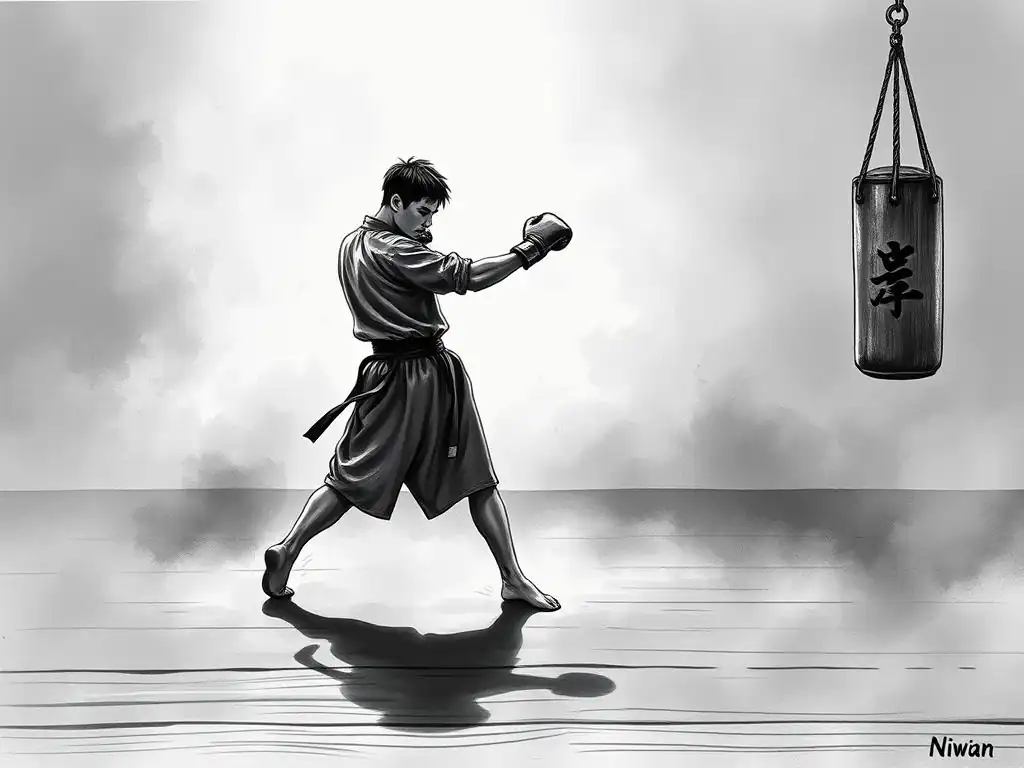
Beyond the fundamental techniques, applying boxing footwork effectively against pressure requires strategic thinking and the ability to combine movements seamlessly. Advanced strategies involve using the entire ring, linking different footwork techniques, and anticipating the opponent's actions.
These strategies are developed through experience and conscious effort in training. They turn footwork from a simple means of movement into a sophisticated tool for ring control and tactical advantage. Mastering these advanced concepts allows a fighter to not just survive pressure, but to turn the opponent's aggression against them.
Ring Generalship: Using the Ring to Your Advantage
Ring generalship is the art of controlling the space within the boxing ring. Against a pressure fighter, this means actively using the entire 16 to 24 feet width and length of the ring to avoid being trapped. It involves anticipating where the opponent wants to push you and proactively moving away from those areas (corners, ropes) towards open space.
Effective ring generalship involves cutting angles yourself, forcing the opponent to take the longer path to reach you. For example, if an opponent is pressuring you towards a corner, instead of backpedaling straight into it, you might use lateral movement combined with a slight angle step to move towards the center of the ring along a diagonal path. This forces the opponent to change direction and often covers more distance, buying you time and space. A fighter with superior ring generalship can make the ring feel twice its size to a pressuring opponent.
Footwork Combinations: Linking Movements for Seamless Evasion
Rarely does escaping pressure involve just one type of footwork. Advanced evasion relies on combining fundamental movements into fluid sequences. For example, a fighter might use a quick lateral step to avoid an initial rush, follow it with a pivot to change angle, and then backpedal a few steps to fully reset the distance.
Think of sequences like lateral shuffle -> pivot -> two back steps or in-and-out quick step -> pivot out. These combinations make you harder to predict and allow you to adapt to the specific nature of the opponent's pressure. Practicing transitions between movements, ensuring balance is maintained throughout, is key. A study of elite boxing matches might show fighters chaining 3-5 different footwork actions within a single sequence to escape a determined rush, covering 10-15 feet of canvas while avoiding significant damage.
Reading Your Opponent: Anticipating Pressure and Responding Accordingly
Anticipation is a critical component of advanced boxing footwork for pressure evasion. Learning to read your opponent's body language, foot placement, and head movement can give you a split-second warning of an impending rush. Do they shift their weight forward? Do their eyes fixate on your chest? Do they take a specific preparatory step?
By recognizing these tells, you can initiate your evasive footwork as they start their advance, rather than after they arrive. This pre-emptive movement makes your escape far more efficient and less reactive. Legendary defensive fighters often talk about feeling the opponent's intentions, allowing them to move before the punch is even fully committed. This level of anticipation comes from extensive sparring and careful observation.
Slip-Pivot-Step Back Combination: Evading and Repositioning
A classic advanced sequence for dealing with a straight punch or combination while under pressure is the slip-pivot-step back. As the opponent throws a straight punch (like a jab or cross) while stepping in, you first slip the punch (move your head to the side). Immediately after slipping, you use your lead foot to pivot out, changing the angle. Finally, you take a small step back with your rear foot to consolidate the distance and regain your balance, ready to counter or continue moving.
1.  `Slip` (Head movement off the line of attack)
2.  `Pivot` (Rotate body using lead foot to change angle)
3.  `Step Back` (Consolidate distance with rear foot)
This three-step sequence effectively neutralizes the incoming attack, removes you from the immediate danger zone, and repositions you in a safer, often advantageous, angle relative to the opponent. It's a highly efficient way to escape pressure and can be executed in less than a second by a skilled boxer.
Drills to Improve Your Boxing Footwork for Pressure Situations
Improving your boxing footwork for escaping pressure requires dedicated and varied training. Drills should focus on developing agility, speed, balance, and the ability to execute movements under simulated pressure. Consistent practice is key to making these movements instinctive responses rather than conscious decisions in the heat of a bout.
Incorporating specific footwork drills into your regular training regimen, perhaps spending 15-20 minutes per session solely on movement, can dramatically improve your ability to handle pressure fighters. These drills should progress from basic mechanics to more dynamic and reactive scenarios.
Shadow Boxing Drills: Focusing on Footwork Mechanics
Shadow boxing is a fundamental boxing exercise, and it's an excellent opportunity to focus purely on footwork mechanics without the distraction of an opponent's punches. Dedicate rounds of shadow boxing specifically to movement. Practice smooth transitions between forward, backward, and lateral steps. Work on pivots from different angles.
- Focus: Smoothness, balance, maintaining stance.
- Execution: Move around the ring or a designated area, practicing steps, shuffles, pivots, and in-and-out movements. Visualize an opponent pressuring you and execute the appropriate evasive footwork. Spend one round just on lateral movement, the next on pivots, the next on combining them. Aim for fluidity – your feet should glide, not stumble.
Cone Drills: Enhancing Agility and Foot Speed
Using cones or markers placed on the floor can help develop agility, change of direction, and foot speed. Set up a pattern of cones (e.g., a square, a triangle, or a line) and practice moving around them using specific footwork techniques.
- Focus: Quick changes of direction, acceleration/deceleration, precise steps.
- Execution:
- Run drills moving sideways between cones using lateral shuffles.
- Practice pivoting around a cone.
- Set up a line of cones and practice backpedaling from one to the next.
- Create a square and practice moving from corner to corner using combinations of lateral steps and pivots, simulating escaping a corner. Time yourself to track improvement in speed and efficiency.
Partner Drills: Practicing Footwork Under Pressure
Training with a partner is essential for simulating the presence and movement of an opponent. These drills allow you to practice your boxing footwork escape pressure techniques in a more realistic scenario.
- Focus: Reacting to an opponent's movement, maintaining distance, executing techniques while observed.
- Execution:
- Mirror Drill: Stand facing your partner, who acts as the "pressure fighter." Your partner slowly walks towards you, trying to cut off your space. Your job is to use footwork (lateral steps, backpedaling, pivots) to constantly maintain a comfortable distance (e.g., arm's length) without touching the ropes or leaving a designated area. The partner gradually increases speed and intensity.
- Chase Drill: One partner is the "chaser" (pressure fighter), the other is the "evader." The chaser tries to stay within a certain distance (e.g., 3-5 feet) of the evader, who uses footwork to constantly evade and create space within a defined area (e.g., half the ring). Switch roles after a set time (e.g., 2 minutes).
Mirror Drill: Developing Reflexes and Coordination
As mentioned above, the mirror drill is particularly effective. It hones your ability to react instantaneously to forward pressure. It's not about speed initially, but about precise, controlled adjustments to maintain optimal distance.
- Focus: Reactive footwork, distance management, balance under observation.
- Execution: Stand facing a partner. The partner slowly advances and moves side-to-side. You must mirror their movement by moving away while maintaining the same distance. If they step forward two feet, you step back two feet. If they shuffle left three feet, you shuffle right three feet, always keeping your lead foot pointing roughly towards them. This builds the reflexive habit of creating space as soon as the opponent closes it.
Common Boxing Footwork Mistakes and How to Avoid Them
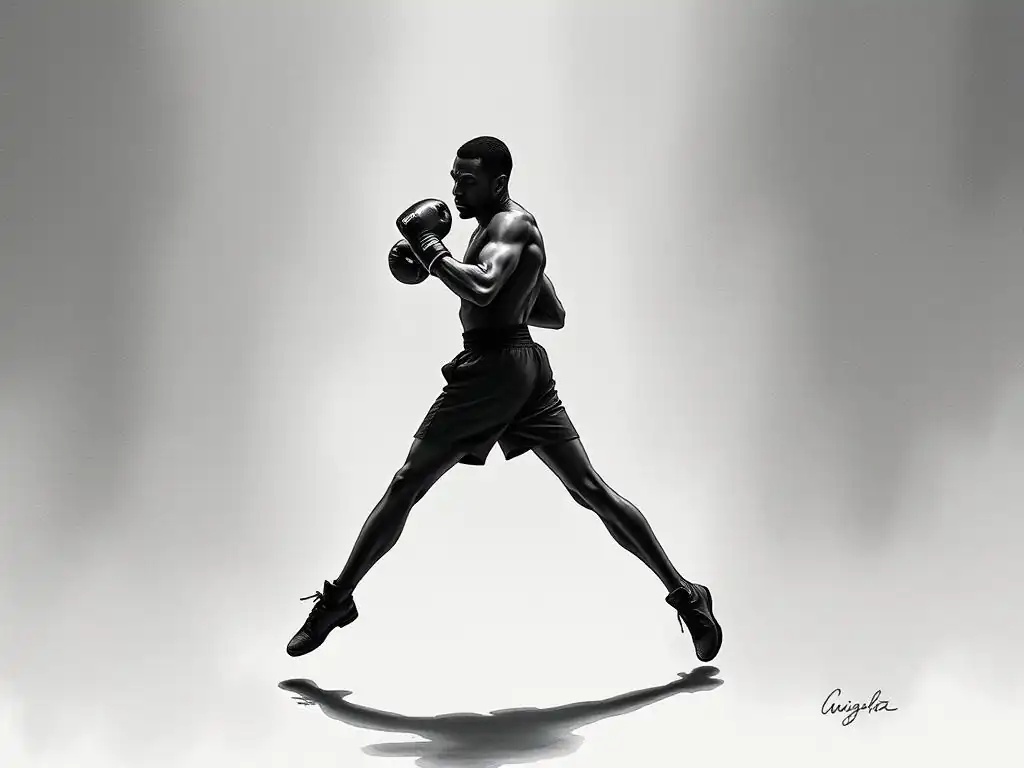
Even experienced boxers can fall into common footwork traps, especially when under pressure. Recognizing these mistakes is the first step to correcting them. Poor footwork can lead to loss of balance, getting trapped, and absorbing unnecessary punishment. Avoiding these pitfalls is as important as mastering the techniques themselves.
Dedicated practice and honest self-assessment (perhaps reviewing sparring footage) are crucial for identifying and correcting these common errors. It's often the subtle flaws in footwork that an intelligent pressure fighter will exploit.
Over-Reliance on Backpedaling: The Dangers of Retreating
While backpedaling is a necessary tool, relying on it exclusively when pressured is a major mistake. Constant straight-line retreat makes you predictable and eventually leads you to the ropes or a corner. Once your back hits the ropes, your movement options are severely limited, and the pressure fighter has achieved their goal – trapping you.
- Correction: Actively integrate lateral movement and pivots into your evasion strategy. Consciously practice moving sideways and changing angles when drilling your backpedal. In sparring, set a rule for yourself: for every three steps back, take at least one step laterally or execute a pivot. This forces you to use the ring and avoid becoming a linear target.
Crossing Your Feet: Maintaining Balance and Stability
Crossing your feet, either when stepping forward, backward, or laterally, is a cardinal sin in boxing footwork. It instantly compromises your balance, making you vulnerable to punches and unable to quickly change direction or counter. It's a common mistake when moving quickly or panicking under pressure.
- Correction: Focus on keeping your feet relatively parallel and maintaining your stance width during all movements. Drills like walking lines on the floor or using agility ladders can help reinforce proper foot placement. Slow down your footwork practice initially to ensure correct mechanics before increasing speed. If you find yourself crossing your feet during sparring, consciously pause your movement for a split second to reset your stance, even if it means taking a punch (in practice).
Telegraphing Your Movements: Masking Your Intentions
Telegraphing means making your intended movement obvious to your opponent before you execute it. This could be a large inhale before stepping, a dip of the shoulder, or taking a large, preparatory step. A smart pressure fighter will read these tells and cut you off before you can fully execute your escape.
- Correction: Practice moving with minimal wasted motion. Keep your upper body relaxed and avoid unnecessary dips or shifts in weight. Focus on moving your feet smoothly and quickly from your current stance, rather than making large, wind-up movements. Shadow boxing in front of a mirror can help you identify and eliminate subtle tells. Try to make your initial step for a lateral movement or backpedal look similar, keeping the opponent guessing.
Correction Techniques: Drills and Focused Practice
Correcting footwork mistakes requires targeted drills and mindful practice. It's not enough to know you're making a mistake; you must actively work to fix it.
- Video Analysis: Record your shadow boxing or sparring sessions. Watch specifically for instances of crossing feet, telegraphing, or getting trapped on the ropes due to excessive backpedaling.
- Slow-Motion Practice: Practice problematic movements very slowly, focusing purely on correct form. Gradually increase speed only when the movement is perfect in slow motion.
- Constraint Sparring: Engage in sparring rounds with specific rules, such as "no backpedaling allowed" or "must touch all four sides of the ring every minute." This forces you to rely on alternative footwork techniques when your usual (and potentially flawed) habits are restricted.
Integrating Footwork into Your Overall Boxing Strategy
Footwork is not an isolated skill; it's the engine that drives both defense and offense in boxing. Effectively escaping pressure using footwork is about more than just avoiding punches; it's about creating strategic advantages within the fight.
A fighter who seamlessly integrates intelligent footwork into their game plan is a significantly more difficult opponent to face, regardless of their power or speed. Footwork allows you to control the narrative of the fight, turning potential disadvantages (like facing a pressure fighter) into opportunities.
Footwork as a Defensive Tool: Minimizing Damage
The primary defensive benefit of skilled boxing footwork escape pressure is minimizing the damage absorbed. By creating distance and changing angles, you make yourself a moving target, harder to hit cleanly, especially with power punches. This conservation of physical energy and avoidance of head trauma are critical over the course of a multi-round bout.
Consider a fighter who uses lateral movement and pivots to escape the corner versus one who shells up and absorbs punches. The former preserves their energy and faculties, while the latter tires quickly and risks being stopped. Footwork is the first line of defense, allowing you to avoid the punch altogether, which is always better than blocking or absorbing it, even partially. This proactive defense is a hallmark of durable and long-lasting careers in boxing.
Footwork as an Offensive Tool: Creating Attacking Opportunities
While escaping pressure is defensive, the footwork used to do so often creates offensive opportunities. When you successfully evade a rush, the opponent is often left slightly off-balance, out of position, or momentarily frustrated. This is the perfect moment to counter-attack.
By pivoting out of danger, you might find yourself at an angle where the opponent's chin is exposed. By backpedaling effectively, you might create just enough space for your straight punches to land with maximum power as the opponent continues their forward momentum. In-and-out movement allows you to land quick shots and escape before the counter. Thus, mastering boxing footwork escape pressure is intrinsically linked to enhancing your offensive effectiveness. It's not just about running away; it's about moving to a better position to fight back.
Adapting Your Footwork to Different Opponents and Styles
No two pressure fighters are exactly alike. Some might cut off the ring systematically, others might rush in straight lines, some might throw constant jabs while others rely on looping power shots inside. Effective footwork needs to be adaptable.
Against a fighter who pressures linearly, lateral movement and backpedaling might be most effective. Against someone who cuts off the ring well, pivots and angled retreats become more important. A fighter who uses lots of head movement to close distance might require you to use footwork to create larger gaps, rather than relying solely on slipping. Analyzing your opponent during the first round or two and adjusting your primary footwork evasion strategies is crucial for long-term success in escaping their specific brand of pressure. This adaptability is a sign of high ring IQ.
Mastering the Art of Evasion: The Path to Superior Boxing
Mastering how to use boxing footwork escape pressure is an ongoing journey that significantly elevates a fighter's overall skill level. It transforms a boxer from someone who merely exchanges blows into someone who controls the canvas, dictates the terms of engagement, and minimizes risk while maximizing opportunity.
This mastery isn't achieved overnight. It requires dedication, consistent practice, and a willingness to focus on the often-underappreciated aspects of movement. However, the rewards – improved defense, enhanced offense, better stamina, and greater ring control – are invaluable.
Key Takeaways: Footwork, Strategy, and Adaptability
To effectively escape pressure in boxing:
- Understand the nature of a pressure fighter and the importance of creating space.
- Master fundamental footwork techniques: pivot, lateral movement, backpedaling, and in-and-out steps.
- Develop advanced strategies: ring generalship, combining movements, and reading your opponent.
- Drill your footwork consistently, using shadow boxing, cones, and partner exercises.
- Identify and correct common mistakes like crossing feet or over-relying on one type of movement.
- Integrate footwork into both your defensive and offensive game plans.
- Be adaptable – tailor your footwork evasion to the specific opponent you face.
Consistent Practice and Dedication: The Foundation of Mastery
Ultimately, the ability to use boxing footwork escape pressure effectively comes down to consistent, focused practice. Footwork is like a language; the more you practice speaking it, the more fluent you become. Spend time in every training session dedicated solely to movement. Don't just go through the motions; focus on precision, balance, and speed.
Shadow box with intent, visualizing scenarios. Use drills to challenge your agility and coordination. Spar with partners who emulate pressure fighters. Analyze your own movement. Over time, these dedicated efforts will build the muscle memory and instinctive reactions needed to navigate the toughest pressure fighters with grace and effectiveness, turning evasion into an art form.
Frequently Asked Questions
How does boxing footwork help in escaping pressure?
Boxing footwork allows you to create distance from an opponent, avoid incoming attacks, and reposition yourself for a counter-attack. It's crucial for staying out of range and controlling the fight's pace.
What are some key footwork techniques for relieving pressure in boxing?
Essential techniques include pivoting, lateral movement, and using angles to escape the opponent's direct line of attack. These maneuvers help you disrupt their rhythm and gain a tactical advantage.
Why is understanding your opponent's pressure style important for effective footwork escapes?
Knowing your opponent's tendencies enables you to anticipate their movements and react more effectively. This understanding allows you to choose the right footwork techniques to counter their pressure and create openings.
How does the concept of "creating space" relate to boxing footwork and escaping pressure?
"Creating space" is the fundamental goal of effective boxing footwork when under pressure. It means using your feet to establish distance, break free from clinches, and control the fight's geography.
What are some common mistakes boxers make when trying to escape pressure with footwork?
Common errors include moving backward in a straight line, crossing your feet, and failing to maintain balance. These mistakes make you vulnerable and easier to trap against the ropes.
Final Reflection: Dancing Out of the Corner
The ability to escape pressure through intelligent boxing footwork isn't just a technical skill confined to the ring; it's a metaphor for navigating the pressures of life itself. Just as a boxer uses footwork to create space and regain control, we too can learn to maneuver through challenging situations with grace and strategic thinking, avoiding being trapped in the corner.
This concept of creating space, both literally and figuratively, has profoundly influenced how I view resilience. The ability to adapt, to shift, and to find an opening when surrounded is a skill applicable far beyond the boxing gym. The best fighter is never angry.
- Miyamoto Musashi. This quote reminds us that maintaining composure and clarity of thought, facilitated by skillful movement, is key to overcoming adversity, whether in a fight or in life.
Now, I challenge you to consider the "footwork" you employ in your own life. Where are you feeling pressured? What small adjustments can you make – in your mindset, your habits, or your environment – to create the space you need to breathe, to think, and to move forward with confidence? Embrace the dance, find your rhythm, and remember that even in the tightest corners, there's always a way out.
Unleash Your Inner Agility: Start Moving Smarter Now!
Thank you for delving into the art of boxing footwork and discovering how it can liberate you from pressure in the ring. Now, it's time to translate that knowledge into action and experience the difference firsthand.
Here's how you can begin mastering agile movement today:
- Prioritize Your Next Training Session: Dedicate at least 15 minutes to practicing the footwork drills outlined in this article. Focus on fluidity and balance.
- Share Your Breakthroughs: Post a short video of your footwork improvements on social media using #MartialArtsMasteryFootwork and tag us! Let's inspire others together.
- Challenge a training partner to a footwork-only sparring session – no punches, just movement. Can you outmaneuver them and control the space?
Ready to redefine your agility and dominate the ring with your newfound footwork? What's one small change you'll implement in your next sparring session to create more space and avoid pressure?