
The Ongoing Evolution of Wing Chun: Contemporary Masters and Their Innovations

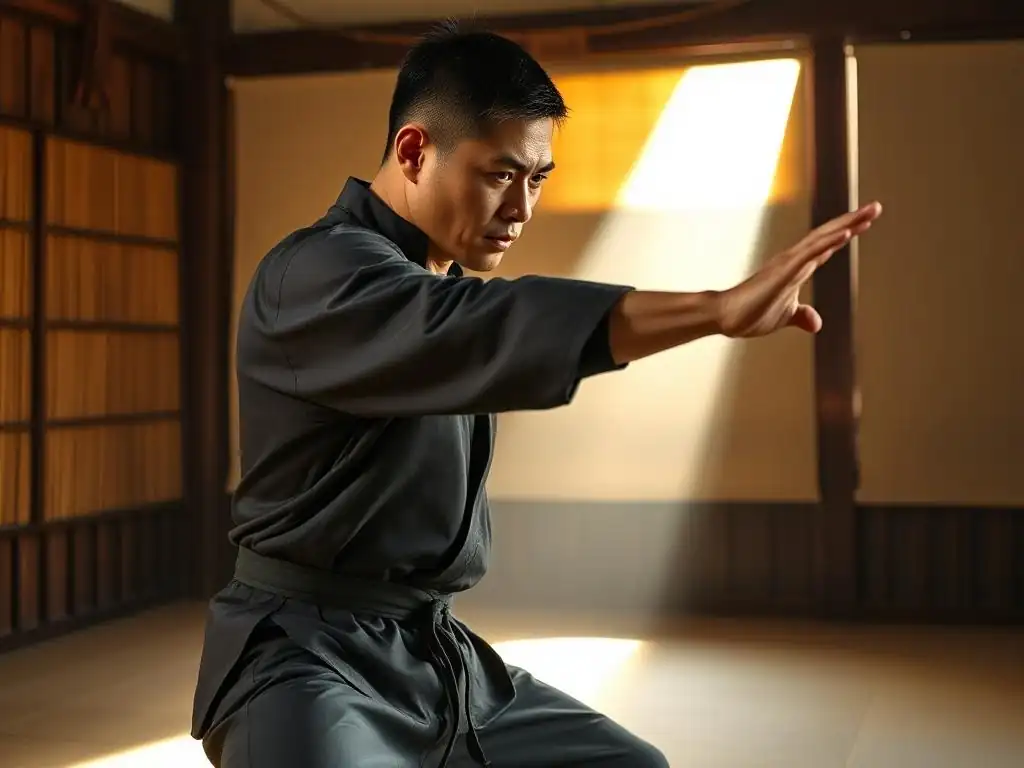
Welcome to Martial Arts Mastery, where we delve deep into the world's fighting arts. Are you ready to explore the ever-evolving landscape of martial arts? In this feature, we unravel the fascinating story of Wing Chun evolution techniques, examining how contemporary masters are shaping this dynamic art. Discover the innovative approaches and profound insights that are pushing Wing Chun to new heights. Intrigued? Let's begin your journey into the heart of Wing Chun's modern transformation...
Ip Ching's Background and Training Philosophy
Master Ip Ching, the second son of the legendary Grandmaster Ip Man, dedicated his life to preserving and disseminating the authentic principles of Wing Chun Kung Fu. Born in 1936 in Foshan, China, he began his formal training under his father's tutelage later in life compared to some senior students, receiving direct, personal instruction during a critical period of Wing Chun's development in Hong Kong.
Unlike some masters who sought widespread fame, Ip Ching maintained a relatively low profile, focusing intensely on teaching a smaller, dedicated group of students and refining his understanding of the art's intricacies. His philosophy was deeply rooted in his father's teachings but evolved through decades of personal practice and observation.
His training philosophy emphasized the internal aspects of Wing Chun, focusing on the correct structure, leverage, and the efficient generation and application of force. He believed that true power in Wing Chun came not from brute strength, but from understanding and utilizing the body's natural mechanics and alignment.
This deep dive into the how and why of each movement naturally led him towards principles that align closely with modern biomechanics, even if the terminology wasn't explicitly used in traditional settings. His approach was about stripping away superficial elements to get to the core effectiveness of the Wing Chun evolution techniques, ensuring the system remained practical and potent.
Biomechanics Explained: Benefits and Applications
Biomechanics is the study of the mechanical laws relating to the movement or structure of living organisms. In the context of martial arts, it involves analyzing how the human body produces, absorbs, and transmits forces during techniques. For Wing Chun, understanding biomechanics is crucial for optimizing structure, maximizing power output with minimal effort, and maintaining stability under pressure. It provides a scientific framework for explaining why certain postures, movements, and angles inherent in Wing Chun are so effective.
Applying biomechanical principles to Wing Chun training allows practitioners to move beyond simply mimicking forms and delve into the underlying physics. Benefits include improved structural integrity (making your stance and guard more resistant to force), increased efficiency in technique execution (generating more power with less physical strain), enhanced balance and stability, and a deeper understanding of force generation and redirection. This scientific lens on Wing Chun evolution techniques helps demystify some of the art's more subtle principles, making them more accessible and reproducible for modern practitioners.
Case Study: Application of Biomechanics in Structure and Force Generation
Consider the fundamental Wing Chun stance, Yee Gee Kim Yeung Ma (Adduction Stance). From a biomechanical perspective, this stance is designed to create a stable, balanced base with the feet angled slightly inward and knees bent, allowing the skeletal structure to support weight efficiently and the muscles to act as dynamic stabilizers. Master Ip Ching's emphasis on correct alignment within this stance highlights its biomechanical advantage: the structure allows force to travel efficiently through the legs into the ground, providing a solid foundation for striking and receiving force, rather than relying solely on muscular strength.
Furthermore, biomechanics explains the power generation in Wing Chun's chain punches. The rapid, short-range movements utilize kinetic chains, where energy is transferred sequentially through the body – from the ground reaction force through the legs, core rotation, and finally into the arm and fist. By understanding the optimal joint angles and timing for this kinetic transfer, practitioners can significantly enhance the speed and impact of their strikes, a key aspect of effective Wing Chun evolution techniques. This biomechanical analysis provides a scientific backing for the traditional emphasis on relaxation and efficient movement over brute force.
-
Frequently Asked Questions
- What are some key areas of evolution in contemporary Wing Chun practice?
- How have contemporary masters contributed to the evolution of Wing Chun techniques?
- Why is understanding the historical context of Wing Chun important when considering its evolution?
- What role does practical self-defense play in the evolution of Wing Chun training?
- Where can I find resources to learn more about the evolution of Wing Chun techniques and its historical background?
- Final Reflection: Embracing the Ever-Flowing Stream of Wing Chun
- Unleash Your Wing Chun Potential
Frequently Asked Questions
What are some key areas of evolution in contemporary Wing Chun practice?
Contemporary Wing Chun evolution often focuses on refining structure, optimizing power generation, and integrating modern fitness principles to enhance efficiency and effectiveness.
How have contemporary masters contributed to the evolution of Wing Chun techniques?
Contemporary masters have contributed through rigorous scientific analysis, adaptation to modern combat scenarios, and incorporating cross-training methodologies to improve Wing Chun.
Why is understanding the historical context of Wing Chun important when considering its evolution?
Understanding the historical context provides a foundation for assessing modern adaptations, ensuring that changes are rooted in the original principles and not arbitrary departures.
What role does practical self-defense play in the evolution of Wing Chun training?
Practical self-defense considerations drive the development of techniques applicable to real-world scenarios, leading to adaptations that prioritize efficiency and immediate effectiveness in confrontations.
Where can I find resources to learn more about the evolution of Wing Chun techniques and its historical background?
Websites like MartialArtsMastery.org offer historical overviews, training tips, and profiles of legendary practitioners, providing a comprehensive resource for understanding the evolution of Wing Chun.
Final Reflection: Embracing the Ever-Flowing Stream of Wing Chun
The journey through the ongoing evolution of Wing Chun, as explored in this article, underscores a vital truth: tradition thrives through adaptation. What began as a system rooted in specific historical circumstances continues to resonate today, not by remaining static, but by embracing the dynamic spirit of its practitioners and their innovative approaches. The techniques we've examined are not mere modifications; they are living testaments to Wing Chun's enduring relevance in a constantly changing world.
This evolution is not just an academic exercise; it's a deeply personal one. Witnessing the dedication of contemporary masters, their willingness to experiment while honoring the core principles, inspires a profound respect for the art and its potential. It reminds us that Wing Chun is not a museum piece, but a living, breathing system capable of addressing the challenges of modern self-defense and personal development. Absorb what is useful, discard what is not, add what is uniquely your own.
- Bruce Lee, a student of Wing Chun, perfectly encapsulates the spirit of innovation that drives this evolution.
Now, as you reflect on the Wing Chun evolution techniques discussed, consider how this principle of adaptation applies to your own life. Are you clinging to outdated methods, or are you open to embracing new perspectives and approaches? Just as Wing Chun masters continuously refine their art, so too can you cultivate a mindset of lifelong learning and growth. Embrace the ever-flowing stream of knowledge, and allow it to shape you into a more resilient, adaptable, and ultimately, more effective version of yourself.
Unleash Your Wing Chun Potential
Thank you for exploring the evolving world of Wing Chun with us! We hope this article has sparked a renewed appreciation for its dynamic nature and the masters who continue to shape it. Now, it's time to take action and deepen your understanding.
- Dive Deeper: Seek out workshops or seminars led by contemporary Wing Chun masters discussed in the article to experience their innovations firsthand.
- Share your insights: Engage with fellow martial artists in our community forum at MartialArtsMastery.org to share your perspectives on Wing Chun's evolution.
- Rediscover the Fundamentals: Revisit the basic forms and principles of Wing Chun, applying newfound awareness of modern interpretations to your practice.
What specific adaptation of Wing Chun, discussed in the article, resonates most with you, and how might you incorporate it into your own training regimen?