
Pyung Ahn Cho Dan: Deconstructing the First "Peaceful Mind" Form

Welcome to Martial Arts Mastery, your gateway to understanding the profound world of combat traditions! Delve into the heart of discipline and skill as we explore the art and science behind martial arts. Ever wondered about the origins and intricacies of the Pyung Ahn Cho Dan form, the "Peaceful Mind" foundation for many? This article deconstructs its fundamental principles, revealing the secrets behind its enduring legacy. Prepare to embark on a journey of knowledge and self-discovery – your mastery begins here.
- Introduction to Pyung Ahn Cho Dan in Tang Soo Do
- Historical Context of the Pyung Ahn Form Series
- Detailed Breakdown of the Pyung Ahn Cho Dan Technique
- Self-Defense Applications of Pyung Ahn Cho Dan Movements
- Common Mistakes and Corrections in Pyung Ahn Cho Dan
- Training Tips for Mastering Pyung Ahn Cho Dan
- The Importance of Pyung Ahn Cho Dan in Tang Soo Do Training
- Conclusion: The Enduring Legacy of Pyung Ahn Cho Dan
-
Frequently Asked Questions
- What is Pyung Ahn Cho Dan?
- What is the primary focus of the Pyung Ahn Cho Dan form?
- What are some key movements in Pyung Ahn Cho Dan?
- Why is understanding the history and philosophical underpinnings important when learning Pyung Ahn Cho Dan?
- How does Pyung Ahn Cho Dan contribute to practical self-defense strategies?
- Final Reflection: Finding Peace in Movement
- Ignite Your Inner Peace: Begin Your Pyung Ahn Journey!
Introduction to Pyung Ahn Cho Dan in Tang Soo Do
Understanding the Significance of Pyung Ahn Forms in Tang Soo Do
The Pyung Ahn (also known as Pinan in Okinawan Karate) forms hold a foundational position in the Tang Soo Do curriculum. These kata, typically five in number, serve as the initial structured patterns taught to students after they have grasped basic stances, blocks, and strikes. Their significance lies in their role as the bridge between individual techniques and practical application. They introduce students to fundamental concepts like sequential movement, timing, coordination, and the integration of defensive and offensive actions. Mastering the Pyung Ahn series is considered essential for developing the physical literacy required for more complex forms and sparring.
Furthermore, the Pyung Ahn forms are designed to build muscle memory and instill proper body mechanics. Consistent practice of these forms helps students internalize the correct execution of fundamental techniques, such as the low block (Ha Dan Makgi) followed by a punch (Jireugi), or the knife hand block (Soo Do Makgi).
This repetitive, structured training ensures that basic movements become instinctive, allowing practitioners to react more effectively in practical situations. The simplicity and repetitive nature of the Pyung Ahn Cho Dan technique, while seemingly basic, are precisely what make it a powerful tool for solidifying the core principles of Tang Soo Do.
The Meaning Behind "Pyung Ahn Cho Dan": Peaceful Confidence
The term "Pyung Ahn" translates roughly to "Peaceful Mind" or "Secure Peace." "Cho Dan" signifies "First Level" or "First Step." Thus, Pyung Ahn Cho Dan represents the "First Step Towards a Peaceful Mind" or the "First Form of Peaceful Security."
This name is deeply philosophical, suggesting that true martial arts mastery leads not just to physical prowess but also to inner calm and confidence. The form is designed to cultivate a sense of stability and control, both physically and mentally, within the practitioner. It teaches the student to face potential conflict with a calm, focused, and prepared mindset, embodying the idea that peace comes from strength and readiness, not avoidance.
The concept of "Peaceful Mind" embedded in Pyung Ahn Cho Dan is central to the ethical and philosophical underpinnings of Tang Soo Do. It emphasizes that the techniques learned are for self-defense and personal development, not aggression. By practicing the Pyung Ahn Cho Dan technique, students learn self-control and discipline, which are vital for achieving inner peace. The form itself, with its balanced structure of blocks and counter-attacks, represents the ability to defend oneself effectively, thereby fostering a sense of security that contributes to a peaceful state of mind.
Historical Context of the Pyung Ahn Form Series
Origins of the Pyung Ahn Forms: Influences and Adaptations
The Pyung Ahn forms trace their lineage back to Okinawan martial arts, specifically the Shuri-te tradition. These forms were developed during a period of significant evolution in martial arts, as techniques transitioned from secret family styles to more standardized systems taught openly.
While the exact origins are debated, it is widely accepted that they were influenced by older kata from various Okinawan systems, potentially incorporating elements from Chinese martial arts as well. The late 19th and early 20th centuries saw a push towards creating forms suitable for physical education in schools, leading to the simplification and standardization of existing techniques into sequences like the Pinan/Pyung Ahn series.
These forms were later introduced to mainland Japan, where they were adapted into the Pinan kata prominent in styles like Shotokan and Wado-ryu. Korean martial arts pioneers, many of whom trained in Japan or Okinawa during the early to mid-20th century, brought these forms back to Korea.
In Tang Soo Do, founded by Grandmaster Hwang Kee, these forms were adopted and adapted, retaining their core structure but often incorporating unique Tang Soo Do characteristics in technique execution and philosophy. The Pyung Ahn Cho Dan technique, as practiced in Tang Soo Do, reflects this history of adaptation and refinement, blending Okinawan structure with Korean martial principles.
Master Itosu Anko and the Creation of the Pinan/Pyung Ahn Kata
The creation of the original Pinan forms is primarily attributed to Master Itosu Anko (1831-1915), a prominent Okinawan martial artist and student of Sokon "Bushi" Matsumura. Master Itosu is renowned for his efforts to popularize and standardize karate, making it accessible for mass instruction, particularly within the Okinawan school system around 1901. He distilled techniques from older, more complex kata, such as Kanku Dai and Bassai Dai, into simpler, sequential patterns suitable for beginners. His goal was to create forms that were easier to learn, physically beneficial, and provided a solid foundation in basic techniques and principles.
Master Itosu's innovative approach led to the development of the five Pinan kata. These forms systematically introduced fundamental stances, blocks, strikes, and movements in a logical progression.
The first form, Pinan Shodan (which became Pyung Ahn Cho Dan), was designed to be the most basic, focusing on simple linear movements and core techniques like the basic block and punch. His work was instrumental in the transition of karate from a secretive combat art to a form of physical education and character development, laying the groundwork for the structured training methodologies seen in modern martial arts like Tang Soo Do, where the Pyung Ahn Cho Dan technique remains a cornerstone.
The Evolution of Pyung Ahn Cho Dan within Tang Soo Do
When Tang Soo Do was formally established in the mid-20th century, particularly by Grandmaster Hwang Kee, the Pyung Ahn forms were integrated into the curriculum. While derived from the Okinawan Pinan series, the Tang Soo Do versions, including Pyung Ahn Cho Dan, often exhibit subtle yet distinct differences.
These variations might include nuances in stance depth, the specific angle or timing of a block or strike, or the tension applied during movements. These adaptations reflect the specific emphasis and technical preferences of the Tang Soo Do style, which often draws from diverse influences, including traditional Korean martial arts like Soo Bahk.
The evolution of the Pyung Ahn Cho Dan technique within Tang Soo Do has also been influenced by the various Kwans (schools) that formed the basis of the art. Although efforts were made towards standardization, minor differences can still exist between different Tang Soo Do organizations.
However, the fundamental sequence of movements and the core principles taught through Pyung Ahn Cho Dan remain consistent: teaching basic stances, blocks, strikes, and transitions in a simple, repeatable pattern. This foundational form continues to be the first comprehensive kata taught to white belts, serving as the essential building block for their journey through the Tang Soo Do belt ranks.
Detailed Breakdown of the Pyung Ahn Cho Dan Technique
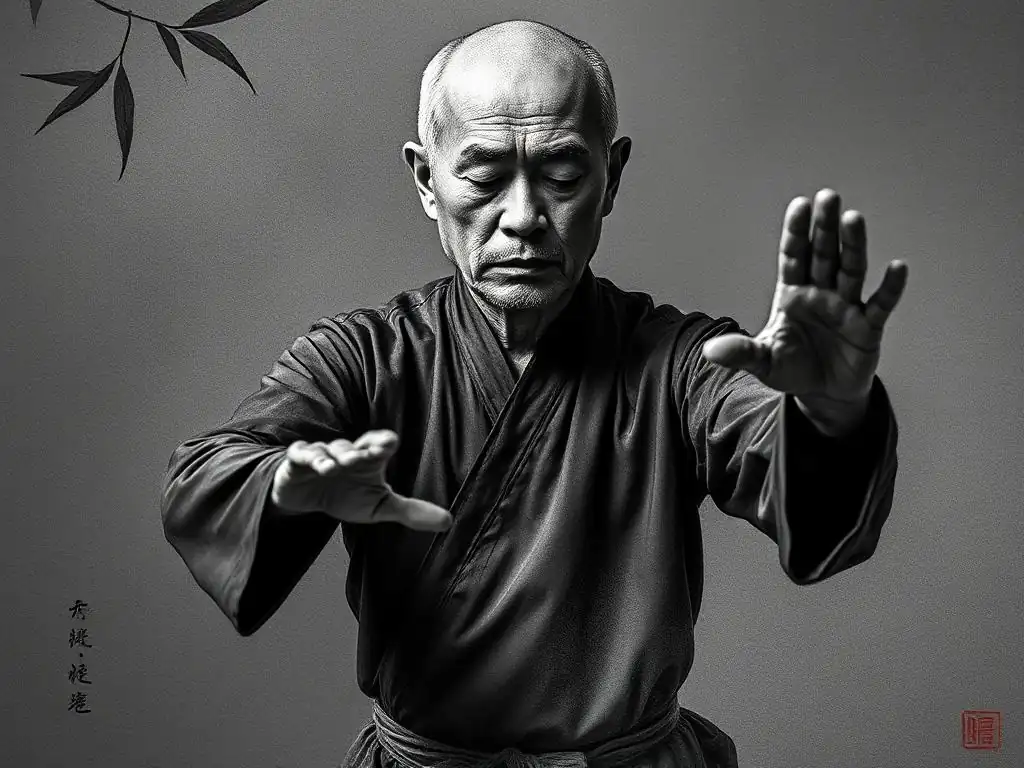
Stance Analysis in Pyung Ahn Cho Dan: Mastering the Foundations
Mastering the correct stances is paramount in executing the Pyung Ahn Cho Dan technique effectively. Stances provide the foundation for balance, power generation, and stability during movements. In Pyung Ahn Cho Dan, the primary stances introduced are the Front Stance (Ap Kubi), Horse Stance (Kima 자세), and the Ready Stance (Junbi 자세).
The Front Stance is characterized by a deep forward lean, with about 60-70% of the weight on the front leg, allowing for powerful forward movement and strikes. The rear leg is straight, providing stability. Executing the Front Stance correctly is crucial for techniques like the forward punch or low block.
The Horse Stance (Kima 자세) is a side-facing stance with feet wide apart, knees bent, and weight evenly distributed. This stance emphasizes stability and is often used for side blocks or strikes. It helps build leg strength and teaches proper hip rotation for generating power.
The Ready Stance (Junbi 자세) is the initial position, a relaxed yet alert stance, typically with feet shoulder-width apart and hands in front. The transitions between these stances, such as moving from a Front Stance to a Horse Stance, are as important as the stances themselves, requiring smooth weight distribution and body control. Proper execution of these fundamental stances within the Pyung Ahn Cho Dan technique lays the groundwork for all subsequent forms.
Key Stances: Front Stance (Ap Kubi), Horse Stance (Kima 자세), and Ready Stance (Junbi 자세)
- Ready Stance (Junbi 자세):
- Feet approximately shoulder-width apart.
- Body erect but relaxed.
- Hands typically together or slightly apart in front of the lower abdomen, symbolizing readiness and focus.
- Used at the beginning and end of the form.
- Front Stance (Ap Kubi):
- One foot forward, approximately one and a half shoulder-widths length.
- Front knee bent directly over the ankle, shin perpendicular to the floor.
- Rear leg straight, heel flat on the ground.
- Weight distribution: roughly 60-70% on the front leg.
- Body often squared or slightly angled depending on the specific movement. Essential for forward power in the Pyung Ahn Cho Dan technique.
- Horse Stance (Kima 자세):
- Feet wide apart, approximately two shoulder-widths length.
- Knees bent deeply, pushing outwards, so shins are perpendicular to the floor.
- Back straight, hips level.
- Weight distribution: 50/50 on both legs.
- Provides a strong, stable base for side-to-side techniques and is a core component of the Pyung Ahn Cho Dan technique.
Hand Techniques in Pyung Ahn Cho Dan: A Step-by-Step Guide
Pyung Ahn Cho Dan incorporates several fundamental hand techniques, primarily focusing on basic blocks and strikes. The most common techniques include the low block (Ha Dan Makgi), middle block (Choong Dan Makgi), high block (Sang Dan Makgi), knife hand block (Soo Do Makgi), and the middle punch (Choong Dan Jireugi). These techniques are performed in conjunction with specific stances and movements, emphasizing coordination and timing. For example, a low block is often executed simultaneously with stepping into a Front Stance, demonstrating the principle of simultaneous defense and movement.
Executing these techniques with proper form is vital. A middle punch (Jireugi) in Pyung Ahn Cho Dan requires a strong twist of the wrist just before impact, powered by hip rotation, to maximize force. A low block (Ha Dan Makgi) uses the forearm to deflect an incoming strike to the lower body, requiring a sharp, downward motion.
Practice involves focusing on the trajectory of the hand, the power generated from the core and hips, and the correct final position and tension. Consistent repetition of these fundamental hand movements within the Pyung Ahn Cho Dan technique builds the muscle memory necessary for rapid and powerful execution in practical applications.
Knife Hand Strike (Soo Do), Punch (Jireugi), and Block (Makgi) Applications
- Knife Hand Strike (Soo Do):
- Performed with the outer edge of the open hand, fingers held tightly together.
- Often delivered to the neck or collarbone area.
- Requires a strong, whipping motion originating from the shoulder and hip.
- In Pyung Ahn Cho Dan, a Knife Hand Block (Soo Do Makgi) is also prominent, using the same hand shape to deflect attacks, typically to the middle section.
- Punch (Jireugi):
- Most commonly a straight punch (Choong Dan Jireugi) to the middle section (solar plexus area).
- Executed with a closed fist, striking with the first two knuckles.
- Power comes from a forward drive of the hips and a sharp rotation of the fist.
- Essential offensive technique within the Pyung Ahn Cho Dan technique sequence.
- Block (Makgi):
- Includes Low Block (Ha Dan Makgi), Middle Block (Choong Dan Makgi), and High Block (Sang Dan Makgi).
- Purpose is to deflect or stop an opponent's attack.
- Requires strong forearm conditioning and precise timing.
- Blocks are often paired immediately with a counter-attack, demonstrating the principle of simultaneous action, a key element of the Pyung Ahn Cho Dan technique.
Footwork and Movement Drills for Pyung Ahn Cho Dan
Efficient footwork and smooth transitions are critical to the flow and effectiveness of the Pyung Ahn Cho Dan technique. The form involves stepping forward, backward, and turning 90 and 180 degrees. Each step must be deliberate, maintaining balance and stability throughout the movement.
Drills focusing solely on footwork, without hand techniques, can help students develop the necessary coordination and strength. Practicing stepping into and out of each stance, paying attention to weight transfer and hip rotation, improves fluidity and power generation. For instance, the transition from a Front Stance to a 180-degree turn into another Front Stance requires pivoting on the ball of the front foot while simultaneously moving the rear foot, a movement sequence practiced repeatedly in Pyung Ahn Cho Dan.
Maintaining balance and coordination during movement is a constant challenge and focus in Pyung Ahn Cho Dan training. As students move from one technique to the next, often involving shifts in direction and stance, instability can occur. Drills that emphasize slow, controlled movements, focusing on keeping the center of gravity low and stable, are highly beneficial.
Practicing the form on slightly uneven surfaces or incorporating balance exercises outside of the form can also help. The Pyung Ahn Cho Dan technique sequence, with its alternating movements and turns, provides a structured way to constantly test and improve these fundamental aspects of martial arts movement.
Transitioning Between Stances Efficiently
- Focus on smooth, controlled weight transfer. Avoid jerky movements.
- Keep the body's center of gravity low during transitions.
- Utilize hip rotation to power turns and steps.
- Ensure the feet land correctly in the intended stance, with proper spacing and angle.
- Practice individual transitions repeatedly before attempting the full Pyung Ahn Cho Dan technique sequence.
Maintaining Balance and Coordination during Movement
- Keep your eyes focused forward or towards the direction of the next movement.
- Engage your core muscles for stability.
- Distribute weight appropriately for each stance and transition.
- Avoid leaning too far in any direction.
- Practice the form slowly initially, prioritizing balance over speed, before gradually increasing tempo for the Pyung Ahn Cho Dan technique.
Self-Defense Applications of Pyung Ahn Cho Dan Movements
Practical Applications of Blocks and Strikes in Real-World Scenarios
The movements within the Pyung Ahn Cho Dan technique are not merely aesthetic gestures; they represent fundamental self-defense principles applicable in real-world situations. A low block, for instance, is a direct counter to a kick or a lunging attack towards the lower body. While performed formally in the kata, its practical application involves using the forearm with force and proper angle to deflect an incoming limb.
Similarly, the middle punch, often following a block, represents a basic counter-attack to an opponent's center mass after defending oneself. These simple block-and-strike combinations are the bedrock of practical self-defense, teaching students how to respond immediately after defending against an attack.
Consider a scenario where someone attempts to grab your shirt or push you. The principles demonstrated in Pyung Ahn Cho Dan's initial sequence – a low block followed by a middle punch – can be adapted. A slight adjustment of the low block motion could be used to break a grip or deflect an arm, immediately followed by a punch to create distance or incapacitate.
The knife hand block (Soo Do Makgi) can be used to parry strikes aimed at the head or neck. While the form is stylized, understanding the purpose behind each movement allows practitioners to see their relevance in spontaneous, non-stylized self-defense scenarios, making the Pyung Ahn Cho Dan technique highly practical.
Utilizing Pyung Ahn Cho Dan for Effective Self-Defense Techniques
Pyung Ahn Cho Dan provides a framework for understanding distance, timing, and sequential reaction in self-defense. The linear and angular movements teach students how to move relative to an opponent. For example, stepping forward with a block and punch (as seen multiple times in the form) teaches forward pressure and closing distance when appropriate. The turns teach pivoting and changing direction to evade or reposition oneself. By practicing the Pyung Ahn Cho Dan technique repeatedly, students internalize these spatial dynamics and reactive sequences.
Beyond individual techniques, the form teaches the importance of chaining movements together fluidly. A block is rarely the end of an encounter; it's typically followed by a counter-attack, control, or evasion. Pyung Ahn Cho Dan explicitly links defensive and offensive actions, demonstrating simple combinations. This trains the practitioner to think in terms of sequences rather than isolated moves. While the specific attacks defended against in the form are implied, the underlying principles – defense, counter, movement – are universal to effective self-defense, making the Pyung Ahn Cho Dan technique a foundational tool for personal protection.
Adapting the Pyung Ahn Cho Dan Form for Sparring and Combat
While Pyung Ahn Cho Dan is a solo form, its principles are directly applicable to sparring (Jayu Dae Ryun) and combat scenarios. The stances learned provide stability and mobility essential for sparring. The blocks taught are fundamental defensive actions used to protect vital areas. The strikes are basic offensive tools. However, direct, one-to-one application of the form's movements in sparring is rare. Instead, the form provides the building blocks that are then adapted and combined spontaneously.
For instance, the low block from Pyung Ahn Cho Dan might be used to defend against a low roundhouse kick in sparring. The middle punch might follow. But in a dynamic situation, the student might need to use a shorter, faster version of the movement, or combine it with footwork not explicitly shown in the form, such as a shuffle step.
The Pyung Ahn Cho Dan technique trains the body to perform these basic actions powerfully and efficiently, so that when faced with a live opponent, the student can access these fundamental skills and adapt them intuitively. Sparring allows practitioners to test the effectiveness of the principles learned in the form against resistance and unpredictability.
Common Mistakes and Corrections in Pyung Ahn Cho Dan
Identifying and Addressing Errors in Stance and Posture
Errors in stance and posture are perhaps the most common issues encountered when learning the Pyung Ahn Cho Dan technique. Beginners often fail to achieve sufficient depth in their Front Stance (Ap Kubi), resulting in a weak base and limited power. They might also have their rear leg bent or their heel lifted in the Front Stance, compromising stability.
In the Horse Stance (Kima 자세), knees may not be pushed out enough, or the back might be rounded, leading to poor alignment and potential knee strain. A simple correction involves having the instructor physically adjust the student's posture or using visual aids like lines on the floor to guide foot placement. Practicing holding stances for extended periods also helps build the necessary leg strength and body awareness.
Another frequent error is improper weight distribution. In Front Stance, too much weight might remain on the back leg, hindering forward momentum. In Horse Stance, uneven weight distribution can lead to imbalance. Correcting this involves conscious effort to shift weight fully into the intended stance, often guided by instructor feedback.
Poor posture, such as a hunched back or dropped shoulders, reduces efficiency and power. Students should be encouraged to maintain an erect spine and relaxed shoulders throughout the Pyung Ahn Cho Dan technique, visualizing a string pulling them upwards from the crown of the head. Regular feedback and focused repetition are key to correcting these foundational errors.
Refining Hand and Foot Techniques for Maximum Power
Achieving maximum power in techniques within the Pyung Ahn Cho Dan technique requires attention to detail in hand shape, trajectory, and the coordinated use of the body. A common mistake in punching (Jireugi) is failing to twist the fist fully at the point of impact or not driving power from the hips and core. This results in a weak, arm-only punch.
Correction involves drilling hip rotation exercises separately and focusing on the snapping motion of the wrist. For blocks (Makgi), errors include using only arm strength instead of body weight and torque, or failing to achieve the correct final position with proper tension.
Foot techniques, primarily stepping and turning, are also prone to errors that reduce power and speed. Dragging feet, taking steps that are too large or too small for the intended stance, or failing to pivot correctly during turns can disrupt rhythm and balance. Refining these involves breaking down the movement into smaller steps: first the weight shift, then the movement of the foot, then the landing and settling into the new stance.
Practicing these transitions slowly, focusing on precision, before increasing speed is crucial for executing the Pyung Ahn Cho Dan technique with both power and grace. Using visual cues and practicing in front of a mirror can also aid in self-correction.
Avoiding Common Pitfalls in Form Execution
Beyond individual technique errors, common pitfalls in executing the entire Pyung Ahn Cho Dan technique include rushing through movements, lack of focus, and inconsistent timing. Rushing often leads to sloppy techniques, poor balance, and failure to fully commit to each movement. Students should be encouraged to practice at a deliberate pace, emphasizing correct form over speed initially. A lack of focus results in wandering eyes, disconnected movements, and a loss of the "peaceful mind" intention of the form. Concentration drills and visualizing the application of each technique can help maintain focus.
Inconsistent timing refers to variations in the rhythm of the form, sometimes pausing too long between movements or executing sequences too quickly. While some variations exist between styles, a consistent, deliberate rhythm enhances the form's power and demonstrates control. Practicing with a partner who can provide feedback on timing or even counting out the movements can help.
Another pitfall is neglecting the kiai (shout), which should occur at specific points in the form, demonstrating spirit and focused energy. Incorporating a strong kiai at the designated times adds power and intensity to the Pyung Ahn Cho Dan technique and helps avoid a robotic execution.
Training Tips for Mastering Pyung Ahn Cho Dan
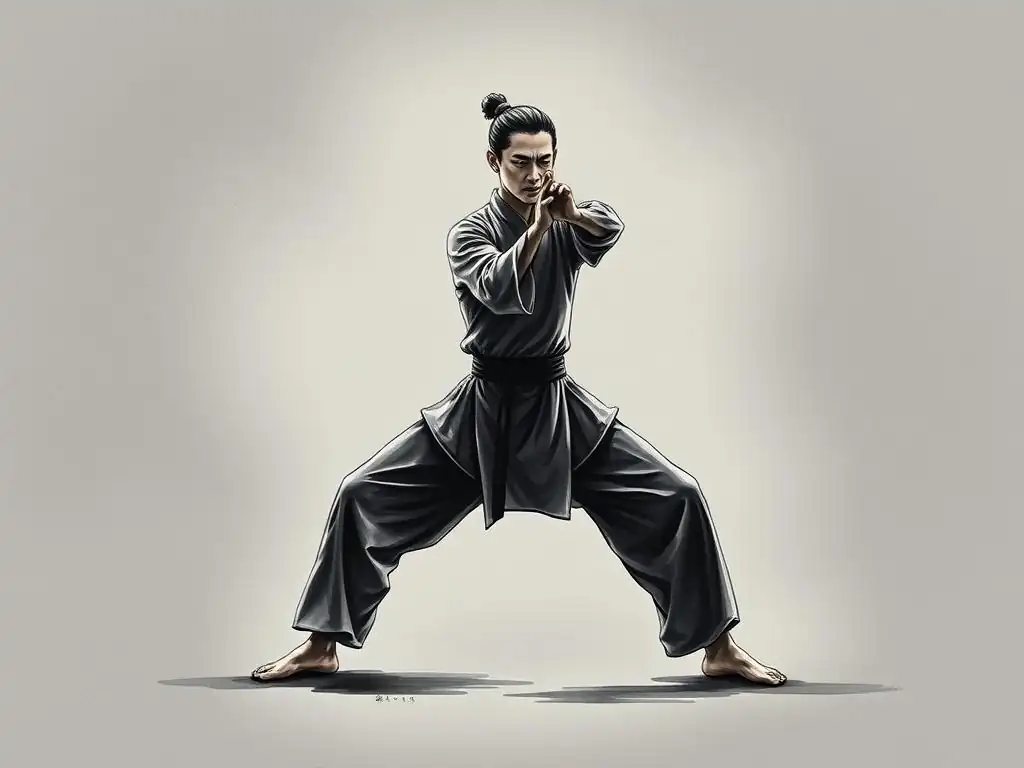
Developing Strength and Flexibility for Optimal Performance
Mastering the Pyung Ahn Cho Dan technique requires not just understanding the movements but also possessing the physical attributes to execute them effectively. Developing strength, particularly in the legs and core, is crucial for maintaining deep stances and generating power in strikes and blocks. Exercises like squats, lunges, and planks, performed regularly, can significantly improve stance stability and overall body strength. Flexibility is equally important, allowing for deeper stances, greater range of motion in techniques, and reducing the risk of injury. Stretching exercises targeting the hamstrings, quadriceps, hips, and shoulders should be incorporated into training routines.
Specific drills can target the muscle groups used most heavily in the Pyung Ahn Cho Dan technique. Holding Front Stance or Horse Stance for 30-60 seconds at a time builds isometric strength. Practicing individual techniques like the low block or middle punch with resistance bands can increase power.
Focusing on dynamic stretching before practice helps prepare the muscles for the movements in the form, while static stretching afterward helps improve long-term flexibility. A balanced approach to strength and flexibility training outside of form practice directly enhances a student's ability to perform the Pyung Ahn Cho Dan technique with precision and power.
Improving Focus and Concentration during Form Practice
The philosophical aspect of "Peaceful Mind" in Pyung Ahn Cho Dan underscores the importance of mental discipline. Improving focus and concentration during form practice allows practitioners to move beyond simply executing steps and truly inhabit the form. Distractions, both internal (wandering thoughts) and external (noise, other people), can detract from effective training. One tip is to practice the form in a quiet environment whenever possible. Mentally reviewing the sequence before starting can also help prepare the mind.
During the execution of the Pyung Ahn Cho Dan technique, focusing on breath control can significantly improve concentration. Matching breath with movement – often exhaling on the execution of a powerful technique – helps synchronize mind and body. Visualizing an opponent or the intended application of each movement can also make the practice more engaging and focused.
Setting small, achievable goals for each practice session, such as perfecting a specific transition or ensuring each block has maximum tension, can help maintain attention. Consistent, mindful practice is the key to developing the deep concentration required for mastering the Pyung Ahn Cho Dan technique.
Partner Drills to Enhance Understanding and Application of the Pyung Ahn Cho Dan technique
While Pyung Ahn Cho Dan is a solo form, practicing its techniques with a partner can significantly deepen understanding of their application and timing. Partner drills can simulate the context in which the form's movements would be used.
For example, a partner can throw a slow, controlled low kick, and the practitioner can practice executing the low block from the form to deflect it. The partner can then hold a focus mitt or striking shield for the practitioner to practice the middle punch that typically follows the block in the form, allowing them to feel the impact and practice generating power.
Another useful partner drill involves walking through the form's movements against simulated resistance. For instance, practicing the forward step into Front Stance with a partner gently resisting the forward movement helps the practitioner understand the power generation required for the step. Practicing the knife hand block against a partner's slow "attack" helps refine the angle and timing. These drills bridge the gap between the theoretical movements of the solo Pyung Ahn Cho Dan technique and its practical application, making the form's purpose clearer and enhancing the student's ability to use its techniques effectively in dynamic situations.
The Importance of Pyung Ahn Cho Dan in Tang Soo Do Training
Building a Solid Foundation for Advanced Forms and Techniques
Pyung Ahn Cho Dan serves as the bedrock upon which all subsequent Tang Soo Do forms and techniques are built. It introduces the fundamental stances, blocks, strikes, and transitions that reappear, often in more complex combinations, in higher-level kata such as Pyung Ahn Ee Dan, Pyung Ahn Sam Dan, and eventually forms like Bassai or Naihanchi. Without a strong grasp of the basic movements and principles taught in Pyung Ahn Cho Dan, students will struggle to execute more advanced sequences correctly and powerfully. It is like learning the alphabet before attempting to read complex literature.
The repetitive nature of practicing the Pyung Ahn Cho Dan technique instills essential muscle memory and body control. The coordination required to move, block, and strike simultaneously, or in rapid succession, is trained extensively in this first form. Students learn how to shift weight efficiently, rotate their hips for power, and maintain balance during dynamic movements. These fundamental physical skills, solidified through dedicated practice of Pyung Ahn Cho Dan, are indispensable for learning and performing the intricate techniques and longer sequences found in the black belt forms.
Developing Mental Discipline and Physical Proficiency Through Pyung Ahn Cho Dan
The practice of Pyung Ahn Cho Dan is as much a mental exercise as it is a physical one. Learning and memorizing the sequence requires concentration and discipline. Executing the form with power, precision, and focus, even when tired, builds mental fortitude. The concept of "Peaceful Mind" inherent in the name encourages students to cultivate calmness under pressure and maintain composure. This mental training is crucial not only for martial arts but also for navigating challenges in everyday life.
Physically, consistent practice of the Pyung Ahn Cho Dan technique develops fundamental martial arts proficiency. It improves flexibility, strength, balance, coordination, and spatial awareness. The specific movements target core muscle groups and improve cardiovascular health. The repetitive nature helps refine motor skills. Over time, a student who diligently practices Pyung Ahn Cho Dan will develop a strong, agile, and coordinated body, ready to take on more physically demanding techniques and forms. The synthesis of mental discipline and physical proficiency cultivated through this foundational form is a hallmark of true martial arts training.
The Role of Pyung Ahn Cho Dan in the Tang Soo Do Curriculum
Pyung Ahn Cho Dan holds a central and non-negotiable place in the Tang Soo Do curriculum across most organizations. It is typically the first form taught to white belt students, usually after they have spent some time learning individual basic techniques. Mastery of Pyung Ahn Cho Dan is a standard requirement for promotion to higher ranks, often tested rigorously during belt exams. It serves as a benchmark for assessing a student's understanding of fundamental principles and their ability to perform techniques within a structured sequence.
As students progress, they learn the subsequent Pyung Ahn forms (Ee Dan, Sam Dan, Sa Dan, Oh Dan), each building upon the last, introducing new techniques and more complex movements while reinforcing the core principles. However, Pyung Ahn Cho Dan remains relevant even for advanced practitioners.
Black belts often revisit the Pyung Ahn forms, including Cho Dan, to refine their basics, correct ingrained errors, and rediscover the fundamental power and simplicity of the techniques. The Pyung Ahn Cho Dan technique is not just a beginner's form; it is a lifelong reference point for the essential building blocks of Tang Soo Do.
Conclusion: The Enduring Legacy of Pyung Ahn Cho Dan
Reflecting on the Significance of the First "Peaceful Mind" Form
Pyung Ahn Cho Dan is far more than just the initial sequence of movements learned in Tang Soo Do. It is a distillation of fundamental martial principles, a historical link to the roots of modern martial arts, and a philosophical guide towards achieving inner peace through physical discipline. Its significance lies in its accessibility for beginners while containing layers of depth that reveal themselves through years of dedicated practice.
It teaches the essential balance between defense and offense, the importance of a strong foundation, and the value of consistent, mindful repetition. The "Peaceful Mind" it seeks to cultivate comes from the confidence gained through mastering its techniques and understanding its purpose.
This form introduces students to the structured practice of kata, a core element of traditional martial arts training. It builds the necessary physical attributes and mental focus required for the entire martial arts journey. Every block, strike, and movement in Pyung Ahn Cho Dan has a practical application and contributes to the overall development of the practitioner.
It is a testament to the genius of its creators who synthesized complex ideas into a simple, yet profound, training tool. The enduring legacy of the Pyung Ahn Cho Dan technique is evident in its continued prominence across numerous martial arts styles and its foundational role in shaping countless practitioners.
Continuing the Tradition of Excellence in Pyung Ahn Cho Dan Practice
To truly honor the legacy of Pyung Ahn Cho Dan, practitioners must commit to its continuous refinement. This means moving beyond mere memorization of the steps to a deep understanding of the 'why' behind each movement. It involves practicing with intention, focusing on the application of techniques, and striving for perfect form, power, and timing. Instructors play a crucial role in continuing this tradition by providing detailed guidance and emphasizing the principles embedded within the Pyung Ahn Cho Dan technique, not just the sequence itself.
Continuing the tradition also involves sharing the knowledge and philosophy of Pyung Ahn Cho Dan with new generations of students. By teaching this fundamental form with the depth and respect it deserves, martial arts schools ensure that the core values and techniques of Tang Soo Do are passed down faithfully.
Mastery of Pyung Ahn Cho Dan is not an endpoint, but a continuous process of learning, refinement, and application. Embracing this ongoing journey ensures that the powerful lessons and physical benefits contained within the first "Peaceful Mind" form continue to enrich the lives of martial artists for years to come.
Frequently Asked Questions
What is Pyung Ahn Cho Dan?
Pyung Ahn Cho Dan is the first form in a series of forms often called "Peaceful Mind" forms in various martial arts styles, particularly Tang Soo Do and Tae Kwon Do. It serves as a foundational training tool.
What is the primary focus of the Pyung Ahn Cho Dan form?
The primary focus is developing basic stances, fundamental blocks, and simple strikes. This form helps practitioners build a solid base for more advanced techniques.
What are some key movements in Pyung Ahn Cho Dan?
Key movements include front stance, low block, middle punch, and various hand techniques. These movements are repeated and refined throughout the form.
Why is understanding the history and philosophical underpinnings important when learning Pyung Ahn Cho Dan?
Understanding the history and philosophy provides context for the movements. It allows practitioners to appreciate the form's deeper meaning and cultural significance, enhancing their overall training.
How does Pyung Ahn Cho Dan contribute to practical self-defense strategies?
While basic, Pyung Ahn Cho Dan teaches fundamental movements that are the building blocks of self-defense. It reinforces proper body mechanics and awareness, crucial for effective self-defense.
Final Reflection: Finding Peace in Movement
The journey through Pyung Ahn Cho Dan's legacy reveals more than just a series of blocks and strikes; it unveils a pathway to inner peace and self-discovery that resonates profoundly even today. Understanding the historical context and technical nuances of this foundational form allows us to appreciate its enduring relevance in a world increasingly seeking mindfulness and groundedness.
This exploration has highlighted how Pyung Ahn Cho Dan transcends mere physical exercise, offering a framework for cultivating mental discipline and emotional resilience. It reminds us that the true power of martial arts lies not solely in combat prowess, but in the development of character. The ultimate aim of martial arts is not to win battles, but to avoid battles.
This quote encapsulates the spirit of Pyung Ahn Cho Dan, emphasizing the importance of inner harmony and conflict resolution.
As you continue your martial arts journey, or even simply navigate the challenges of daily life, remember the lessons embedded within Pyung Ahn Cho Dan. Embrace the principles of balance, focus, and self-awareness. Let the "peaceful mind" form be a constant reminder to cultivate inner strength and find tranquility amidst the storm. Strive to embody the spirit of Pyung Ahn, not just in your movements, but in every aspect of your being.
Ignite Your Inner Peace: Begin Your Pyung Ahn Journey!
Thank you for exploring the depths of Pyung Ahn Cho Dan with us. We hope this deep dive into the foundational principles of this form has sparked a new appreciation for its powerful simplicity. Now, it's time to translate that understanding into action and unlock the true "peaceful mind."
- Begin practicing the first three movements of Pyung Ahn Cho Dan daily for the next week, focusing on your breath and stance. This will ingrain the foundational principles and cultivate a deeper connection to the form.
- Share your insights! Record a short video of yourself practicing a section of the form and post it on social media using #MartialArtsMastery and #PyungAhn. Let's build a community of practitioners!
- Delve deeper! Research the history and variations of Pyung Ahn forms in different martial arts styles. Discover how this fundamental form has evolved and adapted across different traditions.
What specific aspect of Pyung Ahn Cho Dan's philosophy resonates most deeply with you, and how will you integrate it into your training and daily life?