
Beyond a Simple Stick: The History and Significance of the Bokken

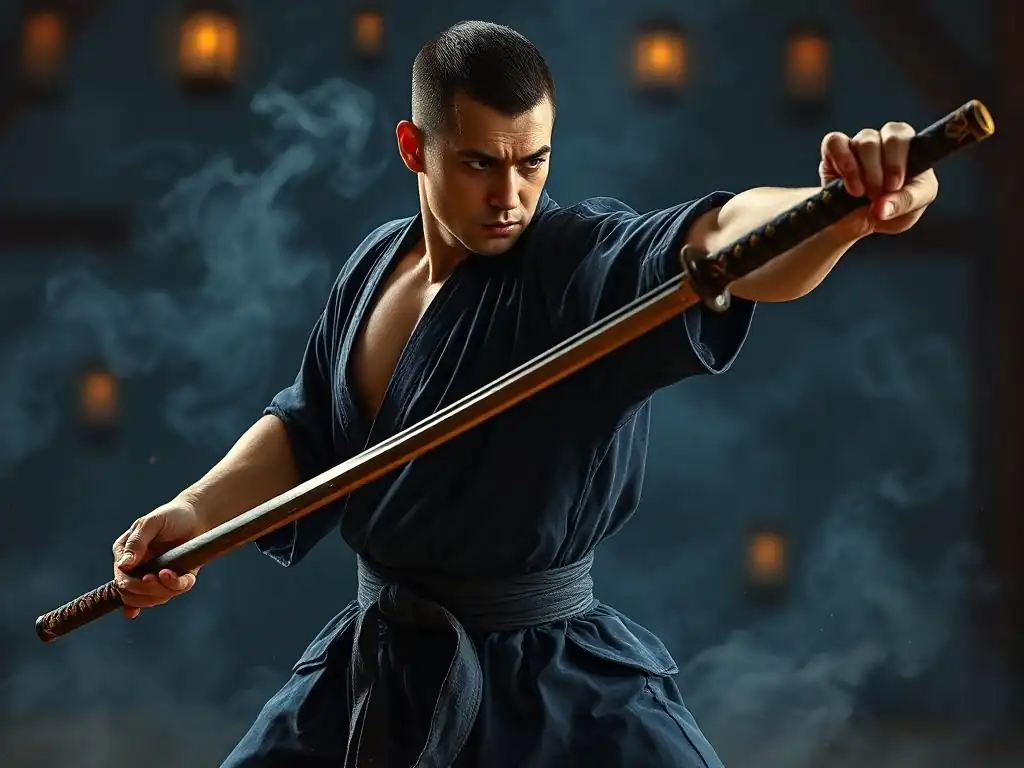
Welcome to Martial Arts Mastery, your gateway to the profound world of combat traditions!
Delve into the fascinating realm where discipline meets power, and history shapes technique. Ever wondered about the silent strength held within a seemingly simple wooden sword? Our exploration begins here, with a detailed look at Bokken history and techniques. Prepare to uncover the secrets behind this iconic training tool and its vital role in martial arts mastery, starting with Beyond a Simple Stick: The History and Significance of the Bokken. Are you ready to unlock its potential?
- Introduction to the Bokken: A Martial Arts Weapon
- A Journey Through Bokken History
- Bokken Techniques: Mastering the Wooden Sword
- Bokken vs. Katana: Understanding the Differences
- Bokken in Modern Martial Arts
- Choosing the Right Bokken: A Buyer's Guide
- Advanced Bokken Training: Beyond the Basics
- Choosing the Right Bokken: A Buyer's Guide
- Advanced Bokken Training: Beyond the Basics
- The Bokken's Enduring Legacy in Martial Arts Mastery
- Frequently Asked Questions
- Final Reflection: Honoring the Bokken's Enduring Legacy
- Unleash Your Inner Warrior: Continue the Journey!
Introduction to the Bokken: A Martial Arts Weapon
What is a Bokken? Defining the Wooden Sword
A bokken is a wooden sword used for training in Japanese martial arts. Its name translates simply as "wooden sword" (木刀, bokutō), derived from the Japanese words boku (木), meaning "wood," and tō (刀), meaning "sword."
While seemingly a basic piece of equipment, the bokken is meticulously crafted to replicate the size, shape, and feel of a sharpened Japanese sword, typically a katana, but variations exist to mimic other blades like the tachi or wakizashi. Unlike a sharp sword, the bokken allows practitioners to execute techniques with vigor and intent without the inherent danger of cutting oneself or a training partner, making it an indispensable tool for safely learning sword mechanics, footwork, and body positioning.
These wooden training swords are not simply lengths of wood; they are shaped with a handle ( tsuka), a blade section ( nagasa), and often include a small handguard ( tsuba) or the provision to add one. The curvature and balance are designed to simulate a live blade, helping students understand concepts like the monouchi (the cutting portion of the blade) and the kissaki (the tip). This careful design ensures that the skills developed with a bokken are directly transferable to using a sharp sword, forming the foundation for advanced sword techniques and understanding.
The Bokken's Role in Japanese Martial Arts Training
The bokken serves a fundamental role in various Japanese martial disciplines, acting as the primary tool for practicing sword forms ( kata), partnered drills ( kumitachi), and basic cutting exercises ( suburi). Its use allows students to internalize the principles of sword movement, distance management ( maai), timing ( hyoshi), and the proper application of force ( kime) in a safe environment. Without the bokken, much of the physical, high-intensity practice necessary to master sword arts would be impossible or prohibitively dangerous.
Beyond technical skill, training with a bokken also cultivates crucial mental attributes. The weight and balance require physical engagement, while the potential for injury in partner work, even with a wooden weapon, demands focus, control, and respect for one's partner. This fosters discipline, presence of mind, and a deeper understanding of the responsibility that comes with wielding a weapon. The bokken is not just a stand-in for a sword; it is a vital teaching aid that shapes both the physical and mental aspects of the martial artist.
A Journey Through Bokken History
Origins of the Bokken: From Practice Tool to Deadly Weapon
The precise origins of the bokken are somewhat obscured by history, likely evolving alongside the development of the Japanese sword itself. As early warriors and martial artists began formalizing sword techniques, they needed a safe way to practice without damaging expensive metal blades or causing severe injury during training duels.
Simple wooden clubs or staves were probably the earliest forms, gradually refined to mimic the shape and feel of the swords they were meant to represent. This evolution occurred over centuries, with the bokken becoming a standard piece of equipment in koryu, the traditional schools of Japanese martial arts that predate the Meiji Restoration (1868).
While primarily a training tool, the bokken was sometimes used as an actual weapon, particularly in situations where a sharp blade was unavailable or inappropriate. Its solid construction from dense hardwood meant it could inflict serious, even lethal, blunt-force trauma. Historical accounts occasionally mention duels or confrontations where a bokken was used effectively against opponents, sometimes even those armed with sharp swords, demonstrating its potential as a formidable weapon in the hands of a skilled practitioner.
The Bokken in Koryu Bujutsu: Ancient Martial Arts Traditions
Within the koryu schools, the bokken was, and remains, central to transmitting sword techniques passed down through generations. Schools like Kashima Shin-ryu, Katori Shinto-ryu, and many others relied heavily on bokken kata (prearranged forms) and kumitachi (paired drills) to teach the intricate footwork, body mechanics, and strategy inherent in their sword styles. These kata often simulate combat scenarios against various weapons or multiple opponents, preserving the practical applications of their respective traditions.
Training in these ancient traditions with the bokken is not merely about learning movements; it's about embodying the principles and spirit of the ryu. The specific dimensions and weight of the bokken might even vary slightly between koryu schools to match the characteristics of the swords they historically used. This deep integration of the bokken into the curriculum highlights its critical role in preserving the living history and practical efficacy of classical Japanese swordsmanship.
Miyamoto Musashi and the Bokken: Legends of Unarmed Combat
Perhaps the most famous historical figure associated with the bokken is Miyamoto Musashi (c. 1584–1645), the legendary swordsman and author of The Book of Five Rings. Musashi is renowned for fighting many duels, and famously, he often used a bokken, even when his opponent wielded a sharp katana. The most celebrated instance is his duel against Sasaki Kojiro on Ganryu Island in 1612. According to legend, Musashi arrived late and used a bokken he had supposedly carved from a boat oar on the way to the duel.
Musashi's choice of the bokken in such high-stakes encounters underscores its potential as a deadly weapon in the hands of a master. His preference for the bokken in duels, where most would use a sharp blade, might also reflect his strategic thinking, perhaps aiming to disarm or incapacitate without necessarily killing, or simply demonstrating his superior skill that transcended the type of weapon used. This aspect of Miyamoto Musashi's legacy significantly contributes to the mystique and perceived effectiveness of the bokken beyond just a training tool.
Bokken Techniques: Mastering the Wooden Sword
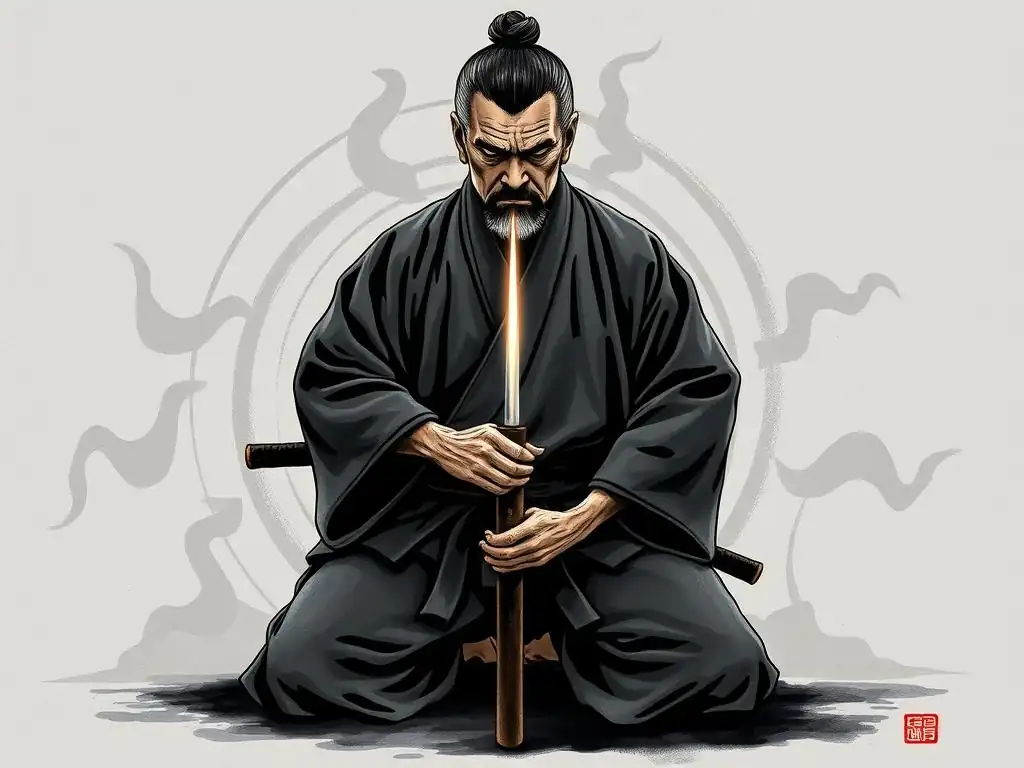
Basic Bokken Stances and Grips: Chudan-no-kamae, Jodan-no-kamae, and Grip Variations
Mastering the bokken begins with fundamental stances ( kamae) and grips. The most common stance across many sword arts is Chudan-no-kamae (middle-level stance), where the bokken is held pointing towards the opponent's eyes or throat, with the practitioner's weight balanced and ready to move in any direction. This stance is often considered the most versatile, offering equal opportunities for offense and defense.
Another crucial stance is Jodan-no-kamae (upper-level stance), where the bokken is held overhead, ready for a powerful downward cut. Other stances include Gedan-no-kamae (lower-level stance), Hasso-no-kamae (eight-direction stance, held beside the head), and Waki-gamae (side stance, hiding the length of the blade).
Proper grip is equally vital. The standard grip involves holding the bokken with both hands, the left hand near the end of the handle and the right hand closer to the guard ( tsuba). The grip should be firm but relaxed, often described as holding a bird – tight enough so it doesn't escape, but not so tight as to crush it.
The hands work together: the left hand primarily steers and provides power, while the right hand controls direction and fine movements. Grips can vary slightly depending on the technique or ryu, sometimes emphasizing one hand over the other or adjusting spacing for specific actions.
Suburi: Fundamental Bokken Cutting Drills
Suburi refers to repetitive cutting practice, a cornerstone of bokken training and essential for developing proper cutting mechanics, strength, and stamina. These drills involve performing basic cuts repeatedly, focusing on using the entire body – legs, hips, core, and arms – to generate power, not just the arms. Common suburi include shomen uchi (a vertical downward cut to the head), kiriage (an upward diagonal cut), and yoko men uchi (a horizontal or diagonal cut to the side of the head or body).
Performing hundreds or even thousands of suburi repetitions is common practice in many dojos. This rigorous training builds muscle memory, improves coordination, strengthens grip and forearms, and helps the practitioner understand the trajectory and power generation required for effective sword cuts. Different suburi drills might also incorporate footwork ( ashi sabaki) to practice moving while cutting, integrating movement and technique seamlessly.
Kata with the Bokken: Prearranged Forms for Solo Practice
Kata (型 or 形) are prearranged sequences of movements that simulate combat scenarios against imaginary opponents. Practicing kata with the bokken is a fundamental method for learning the techniques, strategy, and principles of a specific martial art style. Kata are often performed solo, allowing the practitioner to focus entirely on precision, timing, breath control, and the flow of movement without the variable factor of a partner.
Each kata tells a story, representing specific defensive and offensive actions against potential attacks. Through repeated practice of these forms, students internalize the ryu's distinct movements, transitions, and tactical concepts. The kata preserve the historical techniques and combative knowledge of a tradition, providing a structured path for students to understand complex sequences and develop the physical and mental discipline necessary for advanced bokken techniques.
Bokken vs. Katana: Understanding the Differences
Material and Construction: Wood vs. Steel
The most significant difference between a bokken and a katana lies in their material and construction. A katana is a finely crafted metal sword, traditionally made from high-carbon steel through a meticulous process of forging, folding, and differential hardening, resulting in an incredibly sharp edge and a strong, slightly flexible blade. A typical katana blade length might range from 60 to 80 cm (approx. 23 to 31 inches), with the overall sword length being around 90 to 110 cm. Its primary function is cutting.
In contrast, a bokken is made from a single piece of dense hardwood, such as Japanese Red Oak ( Akagashi) or White Oak ( Shiragashi), or occasionally other durable woods like hickory or ebony. While shaped to resemble a katana, it has no sharp edge. Its weight and balance are intended to approximate that of a live blade, but it functions as a blunt instrument. The bokken's purpose is training, allowing practitioners to safely practice the mechanics of sword fighting without the lethal danger or potential damage to a sharp blade.
Bokken Safety Considerations: Preventing Injuries During Training
Despite being made of wood, a bokken can cause significant injury if not used properly and safely. Strikes from a bokken, especially to the head, joints, or vital organs, can cause severe bruises, fractures, or internal damage. For example, a full-power strike with a heavy bokken can easily break bones. Therefore, safety is paramount in bokken training. This includes learning controlled movements, practicing proper distance ( maai), and maintaining focus during partnered drills.
Many dojos enforce strict rules regarding bokken use, often requiring protective gear, particularly during partnered practice or kumitachi. This gear can include padded gloves, headgear with a face mask (similar to kendo men), body protectors, and groin guards. Understanding the potential dangers and treating the bokken with the same respect as a live weapon is crucial for preventing accidents and ensuring a safe training environment for all participants.
Bokken as a Substitute for the Katana: Advantages and Limitations
The bokken serves as an excellent substitute for the katana in many training contexts, offering significant advantages. Its primary benefit is safety, allowing high-speed, full-power movements and partnered drills that would be impossible or extremely dangerous with a sharp blade. Bokken training also avoids the need for constant blade maintenance (cleaning, oiling) required by a metal sword and is considerably less expensive than purchasing a quality katana, which can cost thousands or tens of thousands of dollars.
However, the bokken has limitations as a katana substitute. It cannot replicate the feeling of a sharp cut, the specific dynamics of a live blade flexing or binding, or the psychological impact of wielding a truly lethal weapon. While it simulates weight and balance, slight differences are inevitable. Therefore, advanced practitioners who intend to use or understand the katana fully must eventually train with a sharp blade, often under strict supervision, to grasp these nuances, though the vast majority of sword training relies heavily on the bokken.
Bokken in Modern Martial Arts
Bokken Training in Kendo: Supplementing Sword Skills
While modern Kendo primarily utilizes the shinai (bamboo sword) for sparring ( jigeiko) due to its flexibility and safety, the bokken plays a significant role in learning fundamental techniques and kata. Kendo kata, a set of ten forms (seven with the odachi or long sword, three with the kodachi or short sword), are performed exclusively with the bokken. These kata encapsulate the core principles and techniques of Kendo, emphasizing proper cutting angles, timing, distance, and kiai (spirit shout).
Practicing Kendo kata with the bokken helps practitioners understand the underlying mechanics of the cuts and thrusts more clearly than with the flexible shinai. It reinforces the concept of cutting with a solid object and develops the necessary physical structure and mental focus. While shinai practice builds speed and reflexes in free sparring, bokken kata grounds the student in the classical forms and combative principles from which Kendo evolved.
Bokken in Aikido: Integrating Weapon Work
Aikido, a martial art founded by Morihei Ueshiba, incorporates weapon training, including the bokken, as an integral part of its curriculum. Aikido's weapon forms ( aiki-ken) are often studied alongside the empty-hand techniques ( aiki-jujutsu), with the belief that understanding weapon dynamics enhances the practitioner's understanding of body movement, distance, and timing in unarmed combat. The bokken techniques in Aikido are distinct from those in Kenjutsu or Kendo, emphasizing flowing movements, blending with an opponent's energy, and disarming techniques.
Training with the bokken in Aikido helps practitioners develop a stronger center ( hara), improve their footwork, and learn to extend their energy through a weapon. Paired bokken drills ( kumitachi) in Aikido focus on learning specific sequences that illustrate principles of entry ( irimi) and turning ( tenkan), and how to control an opponent's line of attack. This weapon training is seen not as a separate discipline but as a way to deepen the understanding of Aikido's core principles through a different medium.
Bokken in Kenjutsu: Preserving Classical Sword Arts
Kenjutsu, which translates to "the art of the sword," encompasses the classical Japanese sword fighting styles that predate the modern sport of Kendo. In Kenjutsu koryu (old schools), the bokken is often the primary training tool used for practicing kata and kumitachi. These schools focus on preserving the historical techniques and strategies developed on the battlefields and in the dueling grounds of feudal Japan.
The bokken is essential for Kenjutsu practitioners to safely learn complex sequences involving precise timing, distance, and angles, often simulating encounters against opponents armed with various weapons. The weight and balance of the bokken allow students to develop the strength and control needed for wielding a live blade, while the safety aspect enables the high volume of practice required to master the intricate forms. The bokken is not merely a substitute; it is the medium through which the ancient bokken history and techniques of these traditions are kept alive and passed down.
Choosing the Right Bokken: A Buyer's Guide
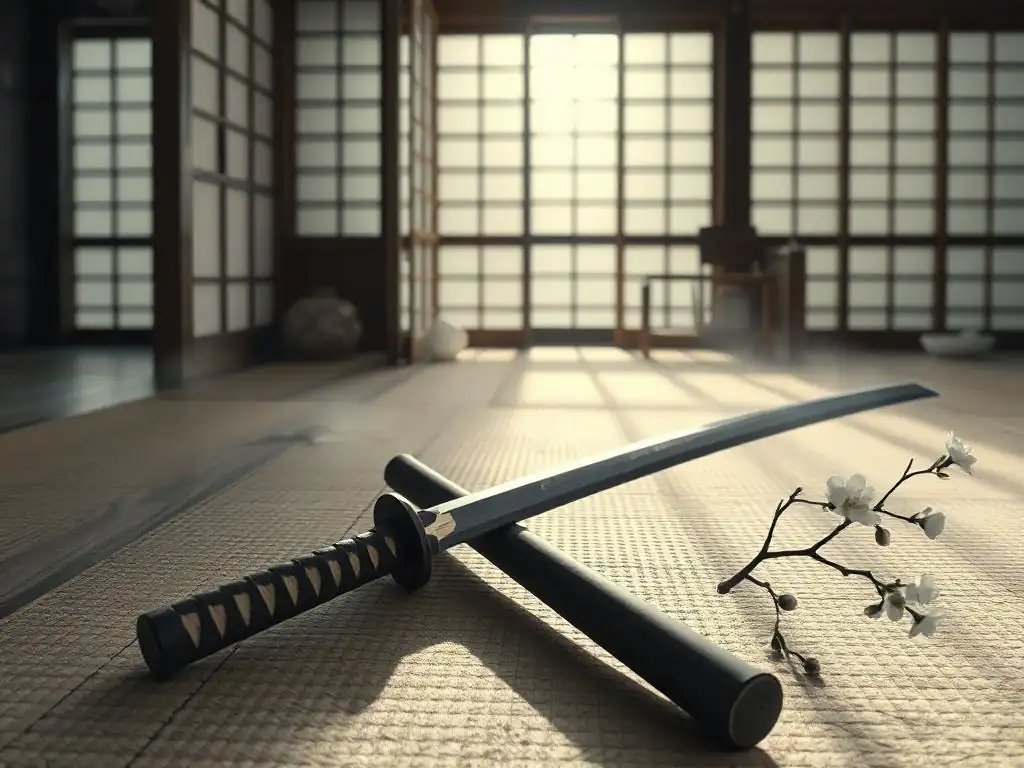
Bokken Materials: Hardwood Options and Durability
The material from which a bokken is made significantly impacts its durability, weight, and feel. Traditional and highly regarded materials include Japanese Red Oak ( Akagashi) and Japanese White Oak ( Shiragashi). White Oak is generally denser and harder than Red Oak, making it more durable and slightly heavier, often preferred for contact drills and heavier practice. Red Oak is still very durable and widely used, offering a good balance of weight and resilience for general practice and suburi.
Other hardwoods are also used, such as hickory, typically found in American-made bokken, known for its strength and shock absorption. Exotic woods like ebony, ironwood, or Brazilian cherry are sometimes used for decorative or high-end bokken, offering exceptional hardness but often at a higher cost. For general training, a quality Japanese White Oak or Red Oak bokken is an excellent choice, known for its balance of durability and traditional feel.
Bokken Length and Weight: Finding the Perfect Fit
Bokken come in various lengths and weights, typically designed to mimic specific types of Japanese swords. The most common length is approximately 102 cm (around 40 inches), simulating a standard katana. However, shorter bokken (around 55 cm) mimic the wakizashi (short sword), and longer ones (over 120 cm) can represent the nodachi or suburito (a heavy training bokken used solely for suburi to build strength).
Choosing the right length and weight depends on the practitioner's size, strength, and the specific martial art being studied. A bokken that is too long or heavy can impede proper technique, while one that is too light might not build the necessary strength or accurately simulate a live blade. Beginners often start with a standard-length bokken made from a common hardwood like Red Oak. Trying different bokken or consulting with an instructor is recommended to find the best fit.
Bokken Maintenance and Care: Extending its Lifespan
While much more robust than a sharp sword, a bokken still requires basic maintenance to ensure its longevity and prevent damage. The primary care involves keeping the wood clean and protected. After training, wipe down the bokken to remove sweat and dirt. Periodically, depending on the climate and frequency of use, the wood can benefit from a light application of wood oil (like linseed oil or tung oil) to prevent drying, cracking, and warping. Apply sparingly and wipe off any excess.
Store the bokken properly, ideally in a temperate environment, away from extreme heat, cold, or humidity, which can cause the wood to expand, contract, or warp. Avoid leaning it against walls for long periods, as this can cause it to bow. Inspect the bokken regularly for cracks, splinters, or signs of wear. A damaged bokken should be repaired or replaced immediately, especially if used for partnered practice, as it could break unexpectedly and cause injury. Proper care ensures the bokken remains a reliable training partner for years.
Advanced Bokken Training: Beyond the Basics
Partner Drills with the Bokken: Developing Timing and Distance
Once basic stances, grips, and cutting mechanics are understood through solo practice, advanced bokken training progresses to partnered drills, known as kumitachi in many Japanese arts. These drills involve two practitioners working together, often following prearranged sequences, to practice timing, distance ( maai), and the dynamic interaction between opponents. Unlike free sparring, kumitachi focuses on learning specific principles, entries, and counters in a controlled environment.
Partnered bokken drills are invaluable for developing reactive skills. They teach practitioners how to judge the correct distance to strike or evade, how to time their movements with an opponent's actions, and how to blend or clash energy effectively. Examples range from simple one-step attacks and defenses to complex sequences involving multiple exchanges. This type of training is crucial for bridging the gap between theoretical knowledge and practical application.
Bokken Sparring (Kumitachi): Controlled Combat Practice
Moving beyond prearranged drills, some martial arts incorporate more dynamic forms of bokken sparring, which can range from semi-free practice to more structured combat simulations, sometimes also referred to as kumitachi or randori depending on the style. This involves a higher level of unpredictability than strict kata or fixed drills. Participants practice applying techniques spontaneously while maintaining control and safety.
This type of training usually necessitates protective gear, including headgear, body armor, and gloves, to mitigate the risk of injury from strikes. The focus remains on controlled execution, aiming to "tag" or indicate a successful technique rather than delivering full-force blows. Bokken sparring hones a practitioner's ability to read an opponent, adapt to changing situations, and apply learned techniques under pressure, providing a valuable step towards understanding live combat dynamics without the extreme danger of sharp weapons.
Bokken Applications in Self-Defense: Practical Scenarios
While the bokken is primarily a training tool for traditional sword arts, the principles learned through its use have applications in self-defense, particularly when considering improvised weapons or understanding weapon dynamics. The focus on distance management, timing, body structure, and generating power applies to using any long, solid object for defense if necessary.
Understanding how a sword (or a bokken simulating one) is wielded provides insight into defending against such threats, whether armed or unarmed. Furthermore, the physical conditioning and mental discipline developed through rigorous bokken training enhance overall self-defense capabilities. While one is unlikely to carry a bokken for self-defense, the core skills and awareness cultivated during training are transferable to various real-world situations.
Choosing the Right Bokken: A Buyer's Guide
Bokken Materials: Hardwood Options and Durability
The choice of material is paramount when selecting a bokken, directly impacting its feel, weight, and ability to withstand impact. As mentioned, Japanese White Oak ( Shiragashi) is often considered the gold standard for its exceptional hardness (ranking high on the Janka scale for wood hardness) and durability, making it suitable for contact drills and heavy use. Japanese Red Oak ( Akagashi) is slightly less dense but still very robust and widely used, offering a good balance for general practice.
Outside of traditional Japanese woods, materials like Hickory are popular, particularly in Western markets, known for their toughness and shock absorption. Other hardwoods like Beech, Ash, or even exotics like Ironwood or Cocobolo are sometimes used, each possessing different properties regarding weight, hardness, and grain structure. For beginners or general suburi and kata, a good quality Red or White Oak bokken is highly recommended for its proven performance and traditional feel.
Bokken Length and Weight: Finding the Perfect Fit
Selecting the correct length and weight for a bokken is a personal choice influenced by body size, strength, and the specific art being practiced. A standard length of around 102 cm is typical for mimicking a katana, suitable for average-sized adults. Shorter lengths (e.g., 55-60 cm) are available for wakizashi practice, and longer, heavier suburito (often 115-125 cm and significantly heavier than a standard bokken) are used specifically for strength and conditioning through solo cutting drills.
The weight of a bokken varies with material and dimensions; a standard oak bokken might weigh between 500g and 700g. A heavier bokken builds more strength but can be more challenging to control, potentially leading to bad habits if not used properly. A lighter bokken is faster but provides less resistance for strength training. It's best to consult with an instructor in your specific martial art style for recommendations tailored to your training goals and physical build.
Bokken Maintenance and Care: Extending its Lifespan
Proper care ensures your bokken remains a reliable and safe training tool for years. Wood is susceptible to environmental changes, so storing your bokken correctly is vital. Avoid leaving it in hot cars, direct sunlight, or damp environments, as this can cause warping, cracking, or splitting. Store it horizontally or leaning upright in a stable position.
Periodically, especially if the wood feels dry, apply a small amount of wood finish or oil, such as linseed oil or tung oil, rubbing it in thoroughly and wiping off any excess. This helps nourish the wood and protect it from moisture fluctuations. Regularly inspect your bokken for any signs of damage, particularly cracks near the tip or handle, which could indicate it's unsafe for practice, especially partnered drills. A well-maintained bokken from quality hardwood can last for decades.
Advanced Bokken Training: Beyond the Basics
Partner Drills with the Bokken: Developing Timing and Distance
Transitioning from solo practice, partner drills are fundamental to advanced bokken training. These exercises, often called kumitachi or similar terms depending on the style, involve two practitioners working together to execute techniques in a controlled, interactive environment. The primary goal is to develop crucial combative attributes like timing, distance ( maai), and the ability to read an opponent's intentions. Unlike free sparring, these drills are often prearranged or follow specific patterns to focus on particular principles or sequences.
For example, a basic kumitachi might involve one partner attacking with a specific cut (e.g., shomen uchi), and the other responding with a predetermined block, parry, or evasion followed by a counter-attack. These drills are repeated countless times, allowing practitioners to refine their movements, synchronize with a partner, and understand the critical moments for action and reaction. This structured interaction is key to internalizing the dynamic nature of sword combat safely.
Bokken Sparring (Kumitachi): Controlled Combat Practice
Beyond fixed partner drills, some advanced bokken training involves more free-form sparring, sometimes referred to as kumitachi or randori depending on the dojo's terminology and the level of structure. This allows practitioners to apply their techniques more spontaneously against a non-compliant opponent. The focus remains on control and learning, not winning, and typically involves protective gear such as padded headgear, gloves, and body protection to minimize the risk of injury.
Controlled bokken sparring simulates the unpredictability of actual combat, forcing practitioners to make split-second decisions regarding distance, timing, and technique selection. It hones reflexes, improves tactical understanding, and builds the mental fortitude required to perform effectively under pressure. While not identical to sparring with live blades or even shinai, it provides a valuable bridge in developing practical sword fighting skills safely.
Bokken Applications in Self-Defense: Practical Scenarios
While the bokken is a training tool for traditional Japanese sword arts, the principles and physical skills developed through dedicated bokken history and techniques study have practical relevance in broader self-defense contexts. The core lessons in managing distance, understanding angles of attack and defense, developing powerful body mechanics, and maintaining situational awareness are universally applicable.
For instance, understanding how a sword is wielded gives insight into how to evade or defend against attacks from long, bladed weapons or even other improvised objects. The ability to generate power efficiently from the core and hips, honed through suburi and kata, is useful in striking or defensive movements. Furthermore, the mental discipline, focus, and composure cultivated during rigorous bokken training are invaluable assets in any high-stress self-defense situation.
The Bokken's Enduring Legacy in Martial Arts Mastery
The Bokken as a Symbol of Discipline and Tradition
The bokken is far more than just a piece of wood; it stands as a powerful symbol within the world of martial arts. It represents the dedication to rigorous training, the patience required for mastery, and the respect for the historical traditions from which many modern arts have sprung. For practitioners, merely holding a bokken connects them to centuries of swordsmen who trained with similar tools, striving for perfection in their art.
Its simplicity belies its profound importance. The bokken demands focus and precision; mistakes in handling or technique are immediately apparent. This forces the practitioner to cultivate self-awareness and discipline. It embodies the principle that true skill comes not from the weapon itself, but from the spirit, technique, and tireless effort of the person wielding it. It is a constant reminder that the path to mastery is paved with consistent, fundamental practice.
Bokken in Modern Pop Culture: Influence in Media
The bokken has also found its way into modern pop culture, appearing in various forms of media, further cementing its recognition beyond traditional dojos. It is often depicted in manga, anime, films, and video games, sometimes as a training tool, other times as a weapon used by skilled characters. Its distinctive shape is instantly recognizable to fans of samurai epics or martial arts narratives.
Examples include characters who prefer a bokken even when others use sharp swords, highlighting their skill or unique philosophy, or training montages where the bokken is central to a character's development. While these depictions can sometimes be stylized or exaggerated, they introduce the concept of the bokken to a wider audience and underscore its cultural significance as an iconic representation of Japanese swordsmanship training.
Conclusion: Appreciating the Bokken's Importance
From its humble origins as a practical training substitute for expensive and dangerous metal swords, the bokken has evolved into a fundamental and deeply respected tool in Japanese martial arts. Its history is intertwined with the development of swordsmanship itself, used by legendary figures and forming the backbone of traditional koryu training. The study of bokken history and techniques reveals a rich tradition of developing both physical skill and mental fortitude.
Today, the bokken remains essential in disciplines like Kendo, Aikido, and Kenjutsu, allowing practitioners to safely explore complex movements, develop power, and understand combative principles. Choosing the right bokken and caring for it properly ensures a long and fruitful training journey. Ultimately, the bokken is far more than a simple stick; it is a gateway to understanding the profound depth, discipline, and enduring legacy of Japanese martial arts mastery.
Frequently Asked Questions
What is a Bokken, and what is it primarily used for?
A Bokken is a wooden sword primarily used for training in various Japanese martial arts like Kendo and Aikido. It serves as a safe substitute for a live katana.
What is the history and origin of the Bokken?
The Bokken's history is tied to the samurai of Japan. It evolved as a practice weapon to improve swordsmanship skills without the danger of using a sharpened blade in training.
Are there different types or styles of Bokken?
Yes, Bokken vary in shape, weight, and length, often mirroring different styles of Japanese swords. Some are designed to emulate a katana, while others represent other weapons.
How should I care for my Bokken to ensure its longevity?
Regularly inspect your Bokken for cracks or splinters. Lightly oiling the wood can help prevent drying and splitting, extending its lifespan.
Where can I learn Bokken techniques and forms?
Bokken techniques are typically taught in martial arts schools specializing in Kendo, Aikido, or other Japanese sword arts. Look for qualified instructors with experience in these disciplines.
Okay, here's a final reflection designed to fit your article "Beyond a Simple Stick: The History and Significance of the Bokken," aiming to rank for "Bokken history and techniques," and following the structure you provided:
Final Reflection: Honoring the Bokken's Enduring Legacy
The journey through the history and techniques of the bokken reveals more than just the evolution of a wooden sword; it illuminates the very spirit of martial arts. The bokken, far from being a mere practice tool, stands as a powerful symbol of discipline, respect, and the pursuit of perfection. Its continued relevance in modern training underscores its timeless value in fostering not only physical prowess but also mental fortitude and ethical conduct.
The bokken's influence extends beyond the dojo, shaping our understanding of Japanese martial traditions and the samurai ethos. Its presence resonates deeply, reminding us that true strength lies not just in physical power but in the cultivation of character and unwavering commitment to self-improvement. The way of the warrior is found decisively in death. When faced with the choice of life or death, one should choose death. There is no other reasoning.
- Yamamoto Tsunetomo, Hagakure. This quote, though stark, highlights the dedication and mental preparation embodied by the bokken's practice.
Now, as you lay down this article, I invite you to reflect on the lessons the bokken imparts. Consider how the principles of discipline, respect, and continuous improvement can be applied to your own life, both within and beyond the martial arts. Embrace the spirit of the bokken, and let it guide you on your own path to self-discovery and personal growth.
Unleash Your Inner Warrior: Continue the Journey!
Thank you for exploring the fascinating history and significance of the bokken with us. We hope you've gained a deeper appreciation for this iconic training tool. Now, let's put that knowledge into action!
- Embark on your bokken journey by researching local dojos or martial arts schools offering instruction in kenjutsu or kendo. Take the leap and schedule a trial class!
- Delve further into the history of the bokken by exploring historical texts and artistic depictions featuring the weapon; Uncover unexpected stories and cultural nuances!
- Share your newfound knowledge! Discuss the bokken's history and significance with fellow martial arts enthusiasts. Spark insightful conversations and enrich our community.
What aspect of the bokken's history resonated with you the most, and how will you integrate it into your training or practice?