
Solo Drills for SelfCorrection: Becoming Your Own Best Coach

Welcome to Martial Arts Mastery, your ultimate resource for unlocking the secrets of combat and self-improvement. Have you ever wondered how to refine your technique without constant instructor feedback? Our deep dive into self-correction martial arts drills offers a revolutionary approach to solo training. Discover how to become your own best coach and accelerate your journey to mastery...
- Solo Drills for Self-Correction: Becoming Your Own Best Coach in Martial Arts
- Introduction: The Power of Self-Correction in Martial Arts Training
- Understanding the Principles of Self-Correction in Martial Arts
- Essential Solo Drills for Self-Correction in Martial Arts
- Implementing a Self-Correction Training Plan
- Advanced Self-Correction Techniques for Martial Artists
- The Benefits of Mastering Self-Correction in Martial Arts
- Conclusion: Embracing Self-Correction on Your Martial Arts Journey
-
Frequently Asked Questions
- What are self-correction martial arts drills, and why are they important?
- How do solo drills differ from partner drills in achieving self-correction?
- What are some examples of solo drills that promote self-correction in martial arts?
- How can video recording aid in self-correction during solo martial arts drills?
- What are the key elements to consider when designing self-correction martial arts drills?
- Final Reflection: Embracing the Path of Self-Mastery
- Unlock Your Inner Master: Begin Your Solo Training Today!
Solo Drills for Self-Correction: Becoming Your Own Best Coach in Martial Arts
Introduction: The Power of Self-Correction in Martial Arts Training
Why Self-Correction is Crucial for Martial Arts Mastery
Mastery in any martial art is not simply about learning techniques; it's about refining them to a level of unconscious competence and efficiency. While instruction from experienced teachers is fundamental, the journey towards true proficiency necessitates the development of a strong internal feedback loop. Self-correction is the ability to identify flaws in one's own execution of a technique or movement and make immediate adjustments without external prompting.
This capacity is paramount because a coach or partner cannot be present for every single repetition or training session. Developing the skill of self-correction allows practitioners to make the most of their solo training time, ensuring that repetitions reinforce correct habits rather than ingraining errors. It transforms passive practice into active, analytical improvement.
Consider the sheer volume of repetitions required to master a complex movement like a roundhouse kick or a specific grappling transition. A student might perform thousands of repetitions in solo practice over months or years.
Without the ability to self-correct, even subtle misalignments in the hip, knee, or ankle could be repeated thousands of times, leading to inefficient technique, reduced power, or worse, increased risk of injury. For example, a common error in a forward punch (like a jab) is failing to engage the hips and core fully; instead of generating power from the ground up, the energy might only come from the shoulder and arm.
A practitioner with good self-correction skills can feel this lack of integrated power, recognize the missing hip rotation, and adjust their movement during the repetition or immediately afterward. This iterative process of execution, assessment, and adjustment is the engine of accelerated skill development in martial arts, making selfcorrection martial arts drills indispensable.
The Role of Solo Drills in Developing Self-Awareness
Solo drills provide a unique environment for cultivating self-awareness, a critical component of self-correction. Unlike partner drills or sparring, where the focus is often on reaction to an opponent or the dynamics of interaction, solo practice allows the practitioner to direct their full attention inward. This is an opportunity to feel the mechanics of their own body: the tension in muscles, the alignment of joints, the flow of energy through a movement, and the subtle shifts in balance.
Without the distraction of an external force or target, the practitioner can concentrate purely on the how of the technique. This heightened internal focus is the bedrock upon which effective self-correction is built.
Through dedicated solo training, martial artists learn to recognize the somatic cues that indicate correct or incorrect execution. For instance, performing a front kick solo allows a practitioner to feel if their standing leg is stable, if their hip is extending properly, if their chamber is tight, and if the recoil is controlled. They can experiment with slight variations in posture or movement and immediately feel the difference in balance, power generation, or stability.
This direct, immediate feedback loop between action and sensation is far more difficult to isolate and analyze during dynamic partner work. Solo drills, therefore, act as a laboratory for self-discovery, enabling the martial artist to become intimately familiar with their own physical patterns and tendencies, paving the way for effective selfcorrection martial arts drills.
Understanding the Principles of Self-Correction in Martial Arts
Developing Kinesthetic Awareness for Enhanced Performance
Kinesthetic awareness, often referred to as proprioception, is the body's ability to sense its own position, movement, and effort. It's the internal sense that tells you where your limbs are in space, how much tension is in your muscles, and how your joints are aligned, even without looking. Developing a high level of kinesthetic awareness is absolutely foundational for effective self-correction in martial arts. Without this internal sensing capability, a practitioner cannot accurately assess whether a technique is being performed correctly from a mechanical standpoint. They might look right in a mirror, but feel disconnected or unstable internally.
Training kinesthetic awareness involves paying deliberate attention to bodily sensations during movement. This can be achieved through slow, deliberate repetitions of techniques, focusing on the feeling of muscle engagement, joint alignment, and weight distribution. For example, practicing a simple block, a martial artist might focus on feeling the rotation of the forearm, the tension in the shoulder, the grounding through the feet, and the subtle bracing of the core.
Over time, this focused attention builds a detailed internal map of correct movement patterns. When a deviation occurs – perhaps the shoulder is too tense, or the foot isn't rooted – the practitioner's heightened kinesthetic sense flags this discrepancy, providing the internal feedback necessary to initiate self-correction. This internal sensing is a critical aspect cultivated through selfcorrection martial arts drills.
Identifying Common Mistakes in Solo Martial Arts Practice
While the specific errors vary depending on the martial art and technique, several common mistakes plague solo practitioners, often due to a lack of immediate external feedback. One frequent issue is insufficient hip rotation or core engagement, which significantly diminishes power in strikes and throws. For example, a karate punch thrown without snapping the hips forward lacks the kinetic chain efficiency needed for maximum impact.
Another common error is poor balance and weight distribution, leading to instability during techniques, making follow-up movements slow or impossible. Think of a taekwondo kick where the standing leg wobbles, indicating the weight isn't centered or the ankle isn't properly braced.
Furthermore, practitioners often rush through repetitions, sacrificing form for speed, or they allow their posture to collapse, losing structural integrity. In many styles, maintaining a strong, upright posture with shoulders relaxed and core engaged is vital for both power generation and injury prevention. Failing to maintain this structure during solo forms or shadow boxing is a pervasive problem.
Another subtle but significant error is neglecting the "other" part of the body – for instance, letting the non-striking hand drop or leaving a side exposed during a defensive movement. Identifying these types of common flaws in isolation is a primary goal of selfcorrection martial arts drills, allowing the practitioner to focus on refining these specific areas without the pressure of a partner or opponent.
Using Visual Cues and Feedback for Self-Assessment
While internal kinesthetic awareness is vital, external visual cues provide invaluable complementary feedback for self-correction. The most accessible visual tool for solo practice is a mirror. Working in front of a large mirror allows a martial artist to see their posture, alignment, and movement patterns in real-time.
They can compare their physical execution to the ideal form they are striving for, instantly identifying discrepancies that their internal sense might miss, especially in the early stages of learning. For example, when practicing a wrestling stance, looking in a mirror can immediately show if the back is rounded, if the head is too far forward, or if the feet are spaced incorrectly – visual cues that are hard to feel accurately without significant experience.
Another powerful visual tool is video recording. Using a smartphone or camera to film solo drills provides a record that can be reviewed critically after the practice session. This allows for a detached, objective analysis of performance, enabling the practitioner to spot errors in timing, rhythm, coordination, and overall structure that might be invisible during the act of performing.
A martial artist might feel like their technique is fluid, but reviewing a video might reveal jerky movements or pauses. Filming from different angles can highlight specific issues; a side view might reveal a dropped elbow in a punch, while a front view could show a tendency to lean off-center during a kick. Combining kinesthetic feedback with visual analysis significantly enhances the effectiveness of selfcorrection martial arts drills.
The Importance of Slow Repetition for Self-Correction
Rapid, powerful execution is the goal in martial arts, but attempting to perform techniques at full speed and power prematurely hinders self-correction. Slow repetition, often referred to as "tai chi speed" or simply deliberate practice, is essential for building precise motor control and developing the acute kinesthetic awareness needed for self-assessment. When movements are performed slowly, the practitioner has time to consciously feel each part of the technique, from initiation to completion. They can focus on the sequential engagement of muscles, the trajectory of limbs, and the maintenance of balance and structure throughout the movement.
Practicing a technique like a complex joint lock or a series of strikes in slow motion allows the martial artist to isolate and analyze each micro-movement. Is the wrist bent correctly? Is the pressure applied at the right angle? Is the body weight shifting appropriately? These questions can be pondered and adjusted during the slow repetition.
This deliberate pace reduces the cognitive load, freeing up mental resources to focus on the quality and mechanics of the movement rather than just the outcome or speed. By mastering the technique slowly and correctly first, the practitioner builds a strong foundation of proper form. As speed is gradually increased, the body learns to maintain this correct form, and the subtle deviations that occur at higher speeds become easier to identify and correct, thanks to the sensitivity developed during slow practice. This methodical approach is fundamental to effective selfcorrection martial arts drills.
Essential Solo Drills for Self-Correction in Martial Arts
Stance and Posture Drills for Balance and Stability
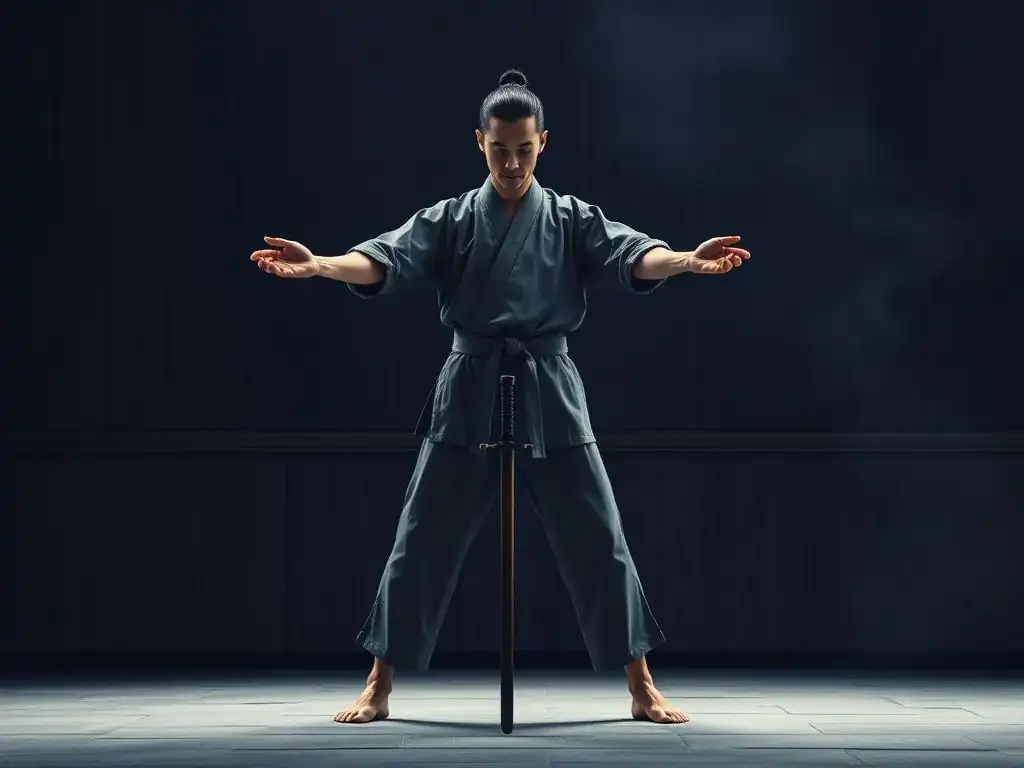
Maintaining a solid stance and correct posture is the bedrock of all martial arts techniques. Without a stable base, power generation is compromised, balance is precarious, and vulnerability increases. Solo drills focused on stance and posture help practitioners build strength, endurance, and awareness in foundational positions.
Simple exercises like holding a horse stance (Kiba Dachi in karate or similar in other styles) for extended periods, focusing on keeping the back straight, knees bent, and feet rooted, build physical endurance and highlight postural weaknesses. Variations, such as shifting weight slowly from side to side or forward and back within the stance, improve balance and control.
Beyond static holds, dynamic stance drills involve moving between different stances smoothly and efficiently. Practicing transitions like moving from a front stance (Zenkutsu Dachi) to a back stance (Kokutsu Dachi) requires coordination and balance. The practitioner can focus on keeping their center of gravity low, avoiding unnecessary bobbing up and down, and ensuring their feet land silently and precisely.
Using visual cues like lines on the floor can help check foot placement accuracy. These drills, performed slowly at first, allow for self-correction of alignment and weight transfer, ensuring that stances are not just held, but are functional platforms for executing techniques.
Self-Correcting Stance Alignment: Horse Stance with Mirror Feedback
The horse stance is a fundamental position in many martial arts, emphasizing leg strength and a low center of gravity. Practicing the horse stance in front of a mirror is an excellent self-correction drill. Stand facing a mirror and assume your horse stance. Pay attention to specific alignment points: Are your feet parallel or angled correctly for your style? Are your knees bent deeply enough, typically over your ankles, not extending past your toes? Is your back straight and vertical, or are you leaning forward or backward? Are your shoulders relaxed and down?
As you hold the stance, observe your reflection and compare it to the ideal form you've been taught. You might notice one knee drifting inward, or your hips tilting slightly. Use this visual feedback to make immediate adjustments. Feel the difference in muscle engagement and balance as you correct your alignment.
For example, if your knees are drifting inward, consciously push them outwards using your hip muscles, and feel the engagement in your glutes. Hold this corrected position, focusing on the sensation. Regularly performing this drill allows you to quickly identify and fix common stance errors, building muscle memory for correct alignment even without the mirror. This is a practical application of selfcorrection martial arts drills.
Identifying and Fixing Posture Imbalances
Posture imbalances can significantly impact martial arts performance and lead to injuries. Solo drills can help identify and begin to correct these issues. A simple wall test can reveal common imbalances: Stand with your back against a wall, heels about six inches away. Your buttocks, upper back, and the back of your head should ideally touch the wall.
If there's a large gap at your lower back, it might indicate an excessive anterior pelvic tilt. If your head doesn't touch without straining, you might have a forward head posture. Practicing simply standing tall against the wall, gently pulling your chin back and engaging your core to reduce the lower back gap, can help reset postural awareness.
Another drill involves standing naturally and performing basic movements like raising your arms or turning your torso, paying attention to how your body feels and moves. Does one shoulder feel tighter? Does one side rotate less freely than the other? These observations, combined with mirror work or filming, can highlight asymmetries.
To fix identified imbalances, targeted solo exercises are needed. For example, if one shoulder is consistently higher, gentle stretching and strengthening exercises for the opposing muscles can help. If weight tends to shift to one side, balance drills focusing on the weaker leg or side are beneficial. Consistency in these corrective selfcorrection martial arts drills is key to gradually re-educating the body towards better symmetry and alignment.
Basic Technique Drills for Precision and Power
Mastering basic techniques is fundamental. Solo drills allow practitioners to isolate techniques and focus purely on their mechanics, ensuring precision and developing foundational power generation. This is where the principles of slow practice, kinesthetic awareness, and visual feedback converge to refine the building blocks of a martial art. Techniques like punches, strikes, blocks, and basic footwork patterns can be drilled endlessly in isolation, providing the perfect environment for self-correction.
The goal of these drills isn't just repetition, but mindful repetition. Each movement is an opportunity to check alignment, muscle engagement, breath control, and the flow of energy. For instance, practicing a simple front kick involves a sequence: chambering the leg, extending the kick, recoiling the leg, and returning to a stable stance. A solo practitioner can pause at each stage, checking their balance, the angle of their foot, and the tension in their supporting leg. This deliberate practice ensures that when the technique is performed at speed, the underlying mechanics are sound, maximizing both precision and power.
Perfecting Punches and Strikes Through Solo Practice: Jab-Cross Shadow Boxing with Focus on Rotation
Shadow boxing is perhaps the most common solo drill for striking, but to use it for self-correction, it must be done with conscious intent beyond just throwing combinations. Take the fundamental jab-cross combination. Instead of just moving and punching, focus intently on the mechanics of each strike.
For the jab: Feel the lead foot push off the ground, the slight rotation of the hips and torso, the extension of the arm, the snap of the fist, and the rapid recoil. For the cross: Feel the back foot pivot, the powerful rotation of the hips and shoulders, the transfer of weight, and the full extension and recoil of the rear arm.
Perform the combo slowly at first, feeling the kinetic chain from the ground up. Use a mirror to check your posture – are you leaning too far forward? Is your non-punching hand protecting your face? Are your shoulders relaxed? A common self-correction needed is ensuring full hip and torso rotation; practitioners often throw punches with just arm and shoulder strength.
Focus on feeling the rotation originate from the lower body. As you increase speed, pay attention to maintaining balance and structure. If you feel yourself losing balance or your posture collapsing, slow down and focus on the core mechanics again. This analytical approach turns simple shadow boxing into a powerful selfcorrection martial arts drill.
Refining Kicks and Footwork with Self-Analysis
Kicking and footwork require dynamic balance and precise timing. Solo practice allows for detailed analysis of these complex movements. When practicing a roundhouse kick, for example, focus on the sequence: the pivot of the standing foot, the chambering of the kicking leg, the extension through the target area (imaginary), and the controlled recoil and return to stance. Use a mirror to check your pivot – is the standing foot rotating enough? Is your supporting leg bent slightly for balance? Is your body leaning back too much or too little?
For footwork drills, such as stepping forward and back, side-shuffling, or pivoting, focus on maintaining a consistent distance between your feet and keeping your center of gravity stable and low. Are your steps smooth or choppy? Are you lifting your feet too high? Are you ending in a balanced stance?
Film yourself performing footwork patterns and analyze your movement efficiency. You might notice a tendency to cross your feet, which is a major balance vulnerability. Or you might see that your head is bouncing excessively, indicating poor control of your center. Identifying these issues through self-analysis allows you to target specific areas for improvement in your solo selfcorrection martial arts drills.
Kata and Form Practice for Flow and Coordination
Kata (in Japanese martial arts) or forms (in Chinese and other styles) are pre-arranged sequences of movements that encapsulate the techniques, principles, and strategies of a martial art. Practicing kata solo is a holistic self-correction drill that integrates stance, posture, techniques, transitions, and breathing into a single flow. It provides a framework for identifying flaws in coordination, timing, and the seamless execution of complex sequences.
When practicing kata for self-correction, move deliberately through each technique and transition. Don't just go through the motions; analyze why each movement is performed and how it connects to the next. Are your transitions smooth and powerful, or are they jerky? Is your breathing synchronized with your movements? Are you maintaining proper tension and relaxation at the appropriate times? Kata practice, when approached analytically, forces the practitioner to confront weaknesses in their overall coordination and understanding of the art's principles.
Using Kata to Identify and Correct Technical Flaws
Kata is a mirror reflecting your understanding and execution of fundamental techniques. As you perform a kata solo, pay close attention to the details of each individual movement within the sequence. Is the block strong and properly angled? Is the strike delivered with full body integration?
Is the stance correct at the end of each movement? For example, in the karate kata Heian Shodan, the very first technique is a low block followed by a step forward and a punch. A practitioner might notice during solo practice that their low block lacks tension or that their step forward causes them to lose balance before the punch.
By identifying these specific points of failure within the kata, the practitioner can then isolate those individual techniques or transitions for separate solo selfcorrection drills. If the low block is weak, they can practice the low block repeatedly in place, focusing on proper muscle engagement and form. If the step forward is unstable, they can practice that specific footwork transition slowly, perhaps using lines on the floor to check alignment. The kata reveals the weaknesses, and focused solo drills provide the means to correct them, making the next kata performance stronger and more cohesive.
Focusing on Transitions and Smoothness in Form Practice
Beyond the individual techniques, the transitions between movements are where many practitioners struggle in kata. A form should ideally flow seamlessly from one technique to the next, with energy and intention carried throughout the sequence. Practicing kata with a specific focus on the transitions highlights areas where coordination breaks down or power is lost. Are you pausing unnecessarily between movements? Is your balance compromised during a shift from one stance to another? Is there a moment of vulnerability as you move from defense to offense?
To improve transitions, practice linking just two or three movements from the kata repeatedly, focusing solely on the smoothness and efficiency of the shift. For example, practice just the step and punch from Heian Shodan, ensuring the weight transfer is fluid and the punch arrives exactly as the stance is finalized. Use slow motion practice to analyze the mechanics of the transition itself.
The goal is to eliminate wasted motion and maintain structural integrity throughout the form. By dedicating solo practice to refining these links, the entire kata becomes more powerful, fluid, and functional, embodying the continuous nature of combat or self-defense – a key outcome of effective selfcorrection martial arts drills.
Movement Drills for Agility and Speed
Martial arts are inherently dynamic, requiring agility, speed, and efficient movement. Solo drills focused on movement patterns help practitioners improve their ability to move quickly and effectively while maintaining balance and readiness. These drills train the body to execute footwork and spatial adjustments necessary for both offensive and defensive maneuvers.
Shadow boxing, footwork patterns, and agility exercises like cone drills allow the practitioner to practice moving in all directions – forward, backward, laterally, and diagonally – while keeping their base stable and their body aligned. The focus is on the quality of the movement, not just the speed. Are the steps small and controlled, or large and telegraphed? Is the weight distributed properly to allow for immediate changes in direction? These solo movement drills build the physical literacy required for effective martial arts application.
Shadow Boxing for Self-Correcting Movement Patterns
Shadow boxing isn't just about throwing techniques; it's also a primary solo drill for practicing footwork and movement patterns in a simulated combat scenario. As you shadow box, don't just stand in one place. Move around your training area as if engaging an imaginary opponent. Practice advancing, retreating, circling, and cutting angles. Pay attention to how your feet are moving. Are you shuffling efficiently, or are you crossing your feet? Are you maintaining a balanced stance while moving?
Use this drill to identify and correct inefficient or vulnerable movement habits. For example, you might notice that you tend to step with the wrong foot first when circling, which leaves you momentarily off-balance. Consciously practice initiating the circle with the correct lead foot. Or perhaps you find yourself standing too upright when moving backward.
Focus on staying low and maintaining a defensive posture. Filming your shadow boxing sessions can reveal these subtle movement flaws that are hard to notice in the moment. This analytical approach to shadow boxing makes it a powerful selfcorrection martial arts drill for improving dynamic movement.
Cone Drills for Enhancing Agility and Footwork
Cone drills, borrowed from sports like basketball or soccer, are simple yet highly effective solo exercises for improving agility and footwork specific to martial arts movements. Set up cones (or other markers) in various patterns – a line, a square, a zig-zag, a triangle. Practice moving around and between the cones using martial arts specific footwork: shuffling, sliding, pivoting, or specific advance/retreat steps. The goal is to navigate the pattern quickly and efficiently, maintaining a low center of gravity and readiness to execute techniques.
Focus on making sharp turns, quick stops, and explosive starts. For self-correction, pay attention to your body mechanics at the transition points. Are you stumbling when you change direction? Are you planting your feet firmly before pushing off?
Are your knees bent and ready? For example, practicing a zig-zag pattern using a side-shuffle, focus on keeping your hips low and leading with the correct foot at each turn. If you find yourself losing balance or taking extra steps, slow down and focus on the precise foot placement and weight transfer needed for a clean change of direction. These drills directly train the agility and responsive footwork crucial for effective selfcorrection martial arts drills in live situations.
Implementing a Self-Correction Training Plan
Setting Realistic Goals for Solo Practice
Effective self-correction requires focus and discipline, which are best supported by setting clear, realistic goals for your solo training sessions. Simply deciding to "practice techniques" is too vague. Instead, define specific objectives. For example, a goal might be: "Spend 15 minutes focusing solely on hip rotation during jab-cross combinations in shadow boxing," or "Perform Kata X three times, paying close attention to the transition between the third and fourth movements." These specific goals provide direction and a metric for success within the session.
Realistic goal-setting also involves considering your current level and available time. Don't aim to fix every single flaw in one session. Choose one or two specific areas for improvement per week or even per month. For a beginner, a realistic goal might be simply holding a proper stance for a longer duration.
For an intermediate practitioner, it could be increasing the fluidity of a specific transition in their form. For an advanced student, it might involve refining the subtle weight shifts in a complex technique. Breaking down the vastness of martial arts into manageable, focused solo practice goals makes the process of self-correction less overwhelming and more effective.
Filming Your Drills for Detailed Analysis
As mentioned earlier, video recording is a powerful tool for self-correction. To implement it effectively, make filming a regular part of your solo training plan, perhaps once or twice a week. Set up your camera (a smartphone on a tripod works perfectly) in a position that captures your full body and allows you to perform your chosen drill. Film specific techniques, forms, or movement patterns that you are working on. Don't just film randomly; film the drills you have specific self-correction goals for.
After the training session, review the footage critically. Watch it multiple times, first at normal speed, then in slow motion. Compare what you see to the ideal technique you are striving for. Look for common errors like poor alignment, lack of hip rotation, dropped hands, or loss of balance. It can be helpful to watch instructional videos of the technique alongside your own footage for comparison. Make notes of the specific flaws you identify. This objective visual feedback is often eye-opening and provides concrete areas for improvement in your next solo selfcorrection martial arts drills.
Utilizing Mirrors for Real-Time Feedback
While video provides post-practice analysis, training in front of a mirror offers immediate, real-time visual feedback. Incorporate mirror work into your regular solo practice, especially when focusing on static positions, basic techniques, or transitions where precise alignment is critical. Position yourself so you can clearly see your entire body. As you perform a technique or hold a stance, constantly check your reflection against the correct form.
Use the mirror to make instant adjustments. If you see your shoulder creeping up during a block, consciously relax it and pull it down. If you notice your weight shifting too far back in a front stance, adjust your posture and feel the difference in your legs.
The mirror allows for this immediate feedback loop between seeing, feeling, and correcting. It trains your visual perception of correct form and helps you associate that visual with the internal kinesthetic feeling. While you shouldn't become dependent on the mirror, using it strategically in your selfcorrection martial arts drills accelerates the process of embedding correct visual and kinesthetic cues.
Tracking Progress and Adjusting Your Training Plan
Self-correction is an ongoing process, and tracking your progress is important for staying motivated and ensuring your efforts are paying off. Keep a training journal, either physical or digital, to record your solo practice sessions. Note the date, the drills you performed, the specific self-correction goals you focused on, and the observations you made (from feeling, mirror work, or video analysis). For example, an entry might read: "October 26th. Solo Practice: 30 mins.
Focused on hip rotation in jab-cross. Felt better engagement after 10 mins. Mirror showed I still lean forward slightly on the cross. Next session: Film jab-cross from side angle."
Review your journal periodically (e.g., monthly) to see how you've progressed in addressing specific issues. Have you successfully reduced that forward lean? Is your horse stance deeper and more stable? Use this progress tracking to inform and adjust your training plan. If a certain drill isn't yielding results, try a different approach or break the problem down further. If you've successfully corrected one flaw, identify the next area for improvement. This systematic approach ensures your solo selfcorrection martial arts drills remain focused, productive, and aligned with your long-term development goals.
Advanced Self-Correction Techniques for Martial Artists
Developing Proprioception for Intuitive Correction
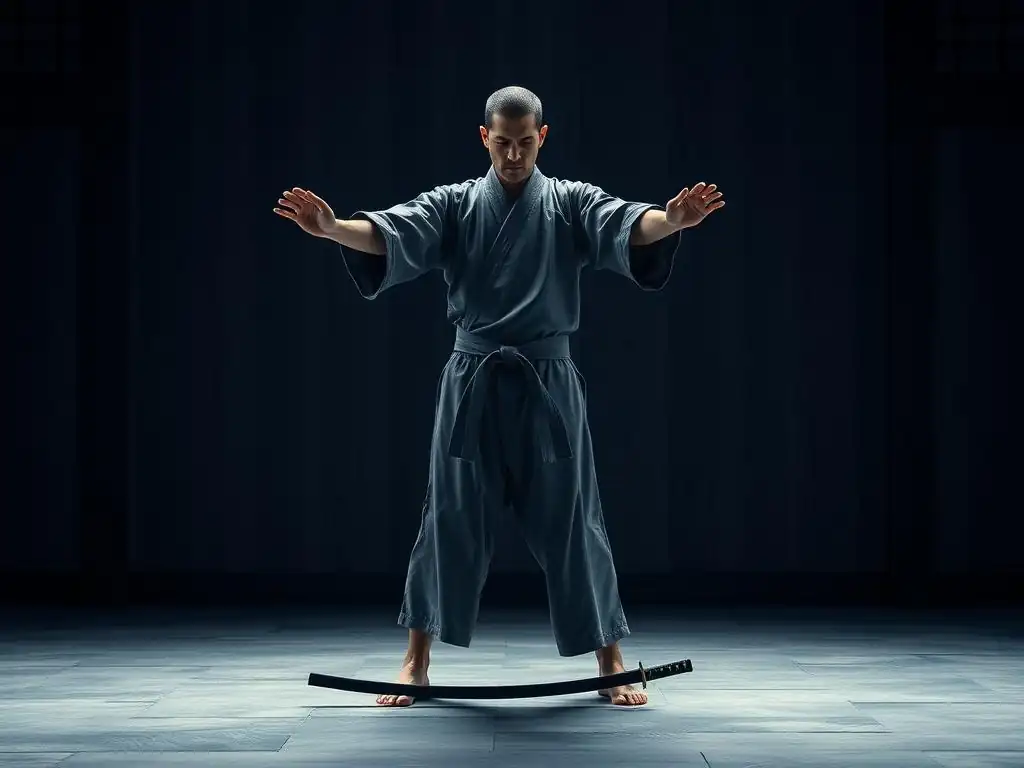
For advanced practitioners, self-correction moves beyond conscious analysis to a more intuitive level, heavily reliant on highly developed proprioception. This involves refining the body's internal sense to detect even subtle deviations from optimal movement as they happen, allowing for near-instantaneous, often unconscious, adjustments. It's the feeling of a technique being "right" or "wrong" deep within the body, enabling corrections before a visible error occurs.
Advanced proprioceptive training involves performing techniques with eyes closed, relying solely on kinesthetic feedback. For example, practicing forms or shadow boxing blindfolded forces the practitioner to feel their balance, alignment, and movement through space without visual input. This heightens the sensitivity of the proprioceptors in muscles, tendons, and joints.
Another technique is performing techniques slowly and deliberately, focusing intensely on the sequence of internal sensations – the stretch, the tension, the relaxation, the joint angles. Over time, this practice builds an incredibly detailed internal map of correct movement, making deviations immediately noticeable at a visceral level, leading to intuitive selfcorrection martial arts drills.
Using Mental Imagery to Improve Technique
Mental imagery, or visualization, is a powerful technique used by elite athletes across disciplines, including martial arts. It involves mentally rehearsing techniques and movements with vivid detail, engaging as many senses as possible. For self-correction, mental imagery is used to reinforce correct patterns and identify potential flaws before physical execution.
An advanced practitioner might spend time visualizing a perfect execution of a complex technique or sequence. They imagine the feeling of their muscles engaging correctly, the sensation of balance, the trajectory of their limbs, and the flow of energy. They might visualize the technique from different perspectives, including an internal view from within their own body. This mental rehearsal strengthens the neural pathways associated with the correct movement.
Crucially, they can also use imagery to identify and mentally correct potential errors. If they visualize a specific transition in their form and feel a mental "hitch" or see a moment of imbalance, they can then mentally rehearse the corrected version repeatedly. This mental fine-tuning translates into improved physical performance and enhances the effectiveness of solo selfcorrection martial arts drills.
Integrating Self-Correction into Sparring and Partner Drills
While solo drills are the primary laboratory for developing self-correction skills, the ultimate test is applying this ability in dynamic, interactive environments like sparring or partner drills. For advanced practitioners, self-correction becomes less about stopping and analyzing, and more about making micro-adjustments in real-time, often subconsciously, based on internal and external feedback.
During partner drills or light sparring, the advanced martial artist is not just reacting to their partner, but also simultaneously monitoring their own body mechanics. Did that block feel solid? Was my base stable when I threw that strike? Was my recovery fast enough?
They use the immediate outcome of the interaction – the effectiveness of a technique, the maintenance of balance, the successful defense against an attack – as feedback on their own execution. If a technique felt weak or left them vulnerable, their highly trained self-correction mechanism triggers an immediate, often subtle, adjustment in subsequent repetitions or exchanges. This integration of self-awareness and real-time adjustment under pressure is the hallmark of advanced selfcorrection martial arts drills in practical application.
The Benefits of Mastering Self-Correction in Martial Arts
Improved Technique and Power
The most direct benefit of mastering self-correction is a significant improvement in technique and power. By consistently identifying and eliminating subtle flaws in movement patterns, practitioners refine the mechanics of their techniques. This leads to more efficient use of the body, ensuring that force is generated from the optimal sources (e.g., hips and core, not just arms) and channeled effectively. For example, a punch thrown with proper hip rotation and weight transfer is exponentially more powerful than one thrown with just upper body strength.
Self-correction ensures that repetitions are productive. Instead of mindlessly repeating errors, each practice session becomes an opportunity to fine-tune movements. Over time, this focused refinement leads to techniques that are not only more powerful but also more precise, faster, and less likely to cause injury. It's the difference between hitting hard versus hitting hard and correctly, a distinction that separates competent practitioners from truly skilled martial artists. Dedicated selfcorrection martial arts drills directly contribute to this technical mastery.
Increased Self-Awareness and Confidence
The journey of self-correction inherently builds profound self-awareness. By regularly analyzing their own performance, practitioners become intimately familiar with their physical capabilities, tendencies, and limitations. They learn to recognize the subtle internal cues that indicate correct execution and the warning signs of potential errors or imbalances. This deep understanding of one's own body is empowering.
As practitioners successfully identify and correct flaws through their solo selfcorrection martial arts drills, they gain a tangible sense of progress and agency over their own development. This leads to increased confidence in their ability to learn, adapt, and improve independently. They become less reliant on external validation and trust their own judgment and internal feedback more. This boosted self-awareness and confidence extends beyond the dojo, positively impacting other areas of life.
Accelerated Learning and Skill Development
Self-correction acts as a powerful catalyst for accelerated learning. Traditionally, identifying and correcting flaws heavily relies on feedback from an instructor or senior student, which is often intermittent. By developing the ability to become their own coach, practitioners create a continuous feedback loop. They don't have to wait for the next class to get corrections; they can identify and begin to address issues immediately during solo practice.
This constant process of self-assessment and adjustment allows for a much higher rate of learning and skill acquisition. Errors are identified and corrected sooner, preventing the ingraining of bad habits. Complex techniques are broken down and refined more efficiently. The time spent in solo practice becomes significantly more productive. This accelerated development is a major advantage for anyone serious about achieving a high level of proficiency in their chosen martial art, directly fueled by consistent selfcorrection martial arts drills.
Enhanced Performance in Competition and Self-Defense
Ultimately, the goal of martial arts training is effective application, whether in competition or self-defense situations. Mastering self-correction directly enhances performance in these high-pressure environments. In the heat of sparring or a real-life encounter, there is no time to stop and analyze. The ability to make instantaneous, intuitive adjustments based on internal feedback – "My balance feels off," "My guard is dropping," "That strike didn't land with full power" – is critical for success and safety.
A martial artist with strong self-correction skills can adapt their techniques on the fly, recover quickly from mistakes, and maintain structural integrity even when under pressure. They can feel when a technique is working effectively and when it isn't, making necessary micro-adjustments without conscious thought. This intuitive adaptability, honed through dedicated solo selfcorrection martial arts drills and refined through partner work, is what allows practitioners to perform at their peak when it matters most.
Conclusion: Embracing Self-Correction on Your Martial Arts Journey
The Ongoing Process of Refinement
Mastery in martial arts is not a destination but a continuous journey of refinement. Techniques learned initially are merely the starting point. True proficiency comes from countless repetitions, each one an opportunity to polish, strengthen, and perfect the movement. Self-correction is the engine that drives this ongoing process. There is no point at which a technique becomes "perfect" and requires no further attention; there is always a subtle improvement to be made, a deeper understanding to be gained, or a slight adjustment needed based on changing physical condition or context.
Embracing self-correction means adopting a mindset of perpetual learning and improvement. It requires humility to acknowledge flaws and the discipline to work on them consistently. It transforms practice from a static repetition of movements into a dynamic process of continuous optimization. This commitment to ongoing refinement, powered by effective selfcorrection martial arts drills, is what distinguishes dedicated martial artists.
Becoming a Lifelong Learner in Martial Arts
The ability to self-correct fosters the attitude of a lifelong learner. It empowers practitioners to take ownership of their training and continue growing regardless of their rank, age, or access to instructors. Even without a teacher present, a martial artist with strong self-correction skills can analyze their own practice, identify areas for improvement, and design their own drills to address those weaknesses.
This independence and self-reliance are invaluable assets on the martial arts path. It means that training doesn't stop when class ends; it continues in the practitioner's personal time, tailored specifically to their individual needs. This proactive approach to learning ensures continuous growth and deepens the practitioner's understanding of their art far beyond what can be achieved through class time alone. Becoming adept at selfcorrection martial arts drills is key to this lifelong learning process.
The Path to Martial Arts Mastery Through Self-Correction
Ultimately, the path to martial arts mastery is paved with deliberate practice and insightful self-correction. While guidance from experienced teachers provides the map, the ability to navigate the terrain and adjust course independently is what allows the practitioner to reach higher levels of skill. Solo drills for self-correction are not just supplementary exercises; they are fundamental tools for internalizing the principles of the art and developing the acute self-awareness necessary for true mastery.
By consistently applying the principles of self-correction – developing kinesthetic awareness, using visual feedback, practicing slowly, identifying flaws, and tracking progress – martial artists transform their solo training from simple repetition into powerful, targeted development. This dedicated effort leads to improved technique, increased confidence, accelerated learning, and enhanced performance. Embracing the role of your own best coach through effective selfcorrection martial arts drills is not just a method for improvement; it is an essential component of the martial arts journey itself.
Frequently Asked Questions
What are self-correction martial arts drills, and why are they important?
They are solo exercises designed to help practitioners identify and correct their own mistakes without constant instructor feedback, fostering autonomy and accelerated skill development.
How do solo drills differ from partner drills in achieving self-correction?
Solo drills allow for focused repetition and self-assessment of technique. Partner drills, while valuable, can sometimes mask individual flaws or lead to dependence on external cues.
What are some examples of solo drills that promote self-correction in martial arts?
Practicing forms (kata or poomsae) in front of a mirror to analyze stance and technique alignment, or using target practice with feedback (e.g., recording videos) for striking accuracy.
How can video recording aid in self-correction during solo martial arts drills?
Video provides objective feedback, allowing you to compare your movements to established standards and identify areas for improvement in your form and power.
What are the key elements to consider when designing self-correction martial arts drills?
Focus on specific techniques, establish clear performance criteria, and utilize methods for objective self-assessment, such as video analysis or targeted feedback mechanisms.
Final Reflection: Embracing the Path of Self-Mastery
The journey of martial arts, as explored in this article, is not merely about physical prowess, but about the profound art of self-correction and continuous improvement. In a world often demanding external validation, the ability to independently analyze, adjust, and refine one's skills becomes an invaluable asset, extending far beyond the dojo and into all aspects of life. This principle, central to the practice of self-correction martial arts drills, resonates deeply in our current era of self-directed learning and personal growth.
The impact of cultivating self-awareness and independent learning through these drills is truly transformative. It fosters a sense of agency and resilience, empowering individuals to take ownership of their development and overcome challenges with confidence. The journey of a thousand miles begins with a single step.
This ancient proverb perfectly encapsulates the spirit of self-correction: each drill, each adjustment, each moment of self-reflection contributes to a larger, more meaningful journey of personal mastery.
As you step off the mat and back into the world, consider how you can apply the principles of self-correction to your own endeavors. Embrace the power of observation, analysis, and adaptation. Cultivate the discipline to identify your weaknesses and the courage to address them head-on. The path of self-improvement is a lifelong pursuit, and with the right tools and mindset, you can become your own best coach, unlocking your full potential and achieving remarkable things.
Unlock Your Inner Master: Begin Your Solo Training Today!
Thanks for diving into the world of solo drills and self-correction. We hope you've found new ways to refine your technique and elevate your martial arts practice. Now, it's time to put that knowledge into action!
Here are a few things you can do right now:
- Dedicate 15 minutes to a focused solo drill session, concentrating on the specific areas you identified needing improvement.
- Share this article with a training partner and challenge each other to implement one new self-correction technique each week.
- Explore our forum and share your most effective solo drill, helping others on their journey to self-mastery.
What's the first self-correction technique you're going to implement in your next training session? Let us know in the comments!