
The Modernization of Taekwondo: From Military Art to Olympic Sport

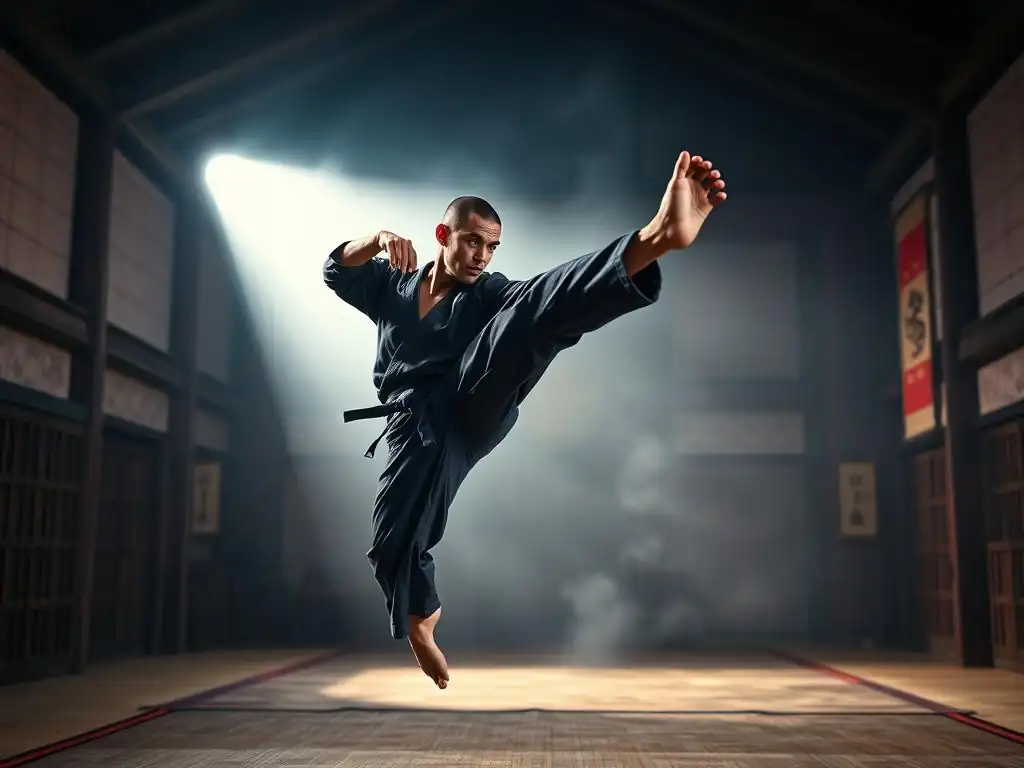
Welcome to Martial Arts Mastery, where the ancient paths of combat meet modern understanding. Ever wondered how a Korean military art transformed into a globally recognized Olympic sport? Delve into the fascinating Taekwondo modernization history techniques that shaped its evolution. Discover the pivotal moments and key figures that propelled Taekwondo from the battlefield to the world stage, and unlock the secrets behind its enduring appeal. Curious to learn more?
- Introduction: Tracing Taekwondo's Journey to Modernity
- The Roots of Taekwondo: Pre-Modern Martial Arts in Korea
- Post-War Korea: Unifying and Standardizing Taekwondo
- The Impact of Sportification on Taekwondo Techniques
- The Olympic Dream: Taekwondo's Path to the Games
- Taekwondo Today: A Global Phenomenon
- Preserving the Martial Art: Balancing Tradition and Modernity
- Conclusion: Taekwondo's Enduring Legacy
-
Frequently Asked Questions
- What are the key differences between traditional and modern Taekwondo?
- How did the Korean War influence the development of modern Taekwondo?
- What role did the Olympics play in the modernization of Taekwondo?
- What are some of the core techniques emphasized in Taekwondo today?
- How can someone learn more about the historical roots of Taekwondo before its modernization?
- Final Reflection: Embracing Evolution, Honoring Tradition
- Embrace the Evolution: Begin Your Taekwondo Journey Today!
Introduction: Tracing Taekwondo's Journey to Modernity
Taekwondo: More Than Just Kicks - A Historical Overview
Taekwondo, a martial art renowned for its dynamic kicking techniques, holds a history far richer and more complex than often perceived. Originating in Korea, its roots are deeply intertwined with the nation's turbulent past, drawing upon ancient fighting traditions while being significantly shaped by modern geopolitical forces. It is not merely a system of physical combat but also incorporates philosophical principles emphasizing discipline, respect, and perseverance, reflecting a holistic approach to personal development.
The journey from a collection of disparate martial styles practiced in post-WWII Korea to a unified national art and eventually a global Olympic sport is a testament to its adaptability and the dedication of its proponents. This transformation involved significant standardization efforts, political maneuvering, and strategic promotion on the international stage. Understanding this evolution is key to appreciating the multifaceted nature of Taekwondo as it exists today, balancing traditional values with the demands of competitive sport.
The Transformation: Military Origins to Global Sport
The initial push towards unifying Korean martial arts in the mid-20th century was heavily influenced by military needs. Following the liberation from Japanese rule in 1945 and during the Korean War (1950-1953), there was a strong desire to develop a distinct Korean martial art for military training and national identity. Early masters, many with backgrounds in Japanese Karate and Chinese martial arts, began establishing schools and developing their own styles, leading to a diverse and sometimes conflicting landscape of techniques and philosophies.
This period laid the groundwork for the eventual consolidation and standardization that would propel Taekwondo onto the world stage. The drive to create a single, unified Korean martial art, initially named "Taekwon-Do" in 1955 by General Choi Hong Hi, was a crucial step. This unification process, though fraught with internal disagreements and political divisions, ultimately led to the establishment of major organizations like the International Taekwon-Do Federation (ITF) and World Taekwondo (WT), each charting its own path and contributing significantly to the global spread and Taekwondo modernization history techniques.
The Roots of Taekwondo: Pre-Modern Martial Arts in Korea
Ancient Korean Martial Traditions: Subak and Taekkyon
Korea boasts a long history of indigenous martial arts, predating the modern era by centuries. Two prominent examples are Subak and Taekkyon. Subak, a term often used generically for various hand-to-hand combat methods, was practiced during the Goryeo Dynasty (918-1392) and Joseon Dynasty (1392-1897). Historical records, such as the Goryeosa (History of Goryeo), mention Subak contests being held, sometimes even attended by the king, indicating its social significance, potentially as a form of military training or entertainment. While the exact techniques of ancient Subak are not fully known, it is believed to have involved striking, grappling, and throwing.
Taekkyon, on the other hand, is a more identifiable art with documented continuity, particularly surviving in certain regions until the 20th century. Known for its fluid, dance-like movements, sweeping kicks, and leg techniques aimed at tripping or unbalancing opponents, Taekkyon was designated as Korea's first Important Intangible Cultural Property (No. 76) in 1983. Unlike the potentially more direct combat focus of Subak, Taekkyon often emphasized dynamic leg movements and strategic footwork, elements that are sometimes cited as potential influences on modern Taekwondo's emphasis on kicking, though the direct lineage is debated among historians.
Japanese Influence During Colonial Era: Karate's Impact on Early Taekwondo
During the Japanese occupation of Korea (1910-1945), traditional Korean martial practices were suppressed. Simultaneously, many Koreans who traveled or lived in Japan were exposed to Japanese martial arts, most notably Karate. Masters like Gichin Funakoshi's Shotokan Karate gained popularity, and its structured training methods, kata (forms), and belt ranking system provided a framework that significantly influenced the development of martial arts in post-liberation Korea.
Upon returning to Korea after 1945, these individuals opened their own martial arts schools (Kwans), often incorporating elements of Karate they had learned. This exposure to Japanese systems provided a structured methodology for teaching and organizing martial arts that was readily adopted. While Korean masters sought to create a distinctly Korean art, the influence of Karate techniques, stances, and organizational structures from this period is undeniable and forms a critical part of the early Taekwondo modernization history techniques development.
The Formation of the "Kwan": The Five Original Taekwondo Schools
Following Korea's liberation in 1945, several martial arts schools, or Kwans, emerged in Seoul. These schools were founded by masters who had trained in various styles, including Japanese Karate and potentially older Korean arts. Initially, there was no single, unified "Taekwondo"; practitioners belonged to different Kwans with distinct names and slight variations in techniques and philosophy. The five original and most prominent Kwans established between 1944 and 1955 were:
- Chung Do Kwan (청도관): Founded by Lee Won Kuk, who trained in Shotokan Karate.
- Song Moo Kwan (송무관): Founded by Ro Byung Jik, also a Shotokan student.
- Moo Duk Kwan (무덕관): Founded by Hwang Kee, who claimed influences from Chinese martial arts and Subak, in addition to Karate.
- Chang Moo Kwan (창무관): Founded by Yoon Byung In, who studied Karate and Chinese martial arts (specifically Quanfa).
- Ji Do Kwan (지도관): Founded by Chun Sang Sup (later led by Yoon Kwei Byung), with roots in Karate.
These Kwans were the foundational pillars upon which modern Taekwondo was built. Each contributed unique technical aspects and trained many of the masters who would later play key roles in the unification and internationalization efforts, shaping the diverse origins of the art.
Post-War Korea: Unifying and Standardizing Taekwondo
The Birth of Taekwondo as a Unified Art: Unification Efforts in the 1950s and 1960s
The post-Korean War era saw a strong nationalistic push to unify the disparate martial arts Kwans under a single banner. The goal was to create a unique Korean martial art that could serve as a symbol of national pride and be taught uniformly across the military and civilian sectors. In 1955, a conference of Kwan masters, historians, and politicians was convened. During this meeting, the name "Taekwon-Do" was proposed by General Choi Hong Hi and accepted, though not universally adopted by all Kwan leaders immediately.
This period was marked by intense political maneuvering and rivalry between the Kwan leaders, each vying for influence and control over the direction of the new art. Despite the disagreements, steps were taken towards standardization. The Korea Taekwondo Association (KTA) was formed in 1959, initially as the Korea Tang Soo Do Association, later renamed, with the explicit aim of unifying the Kwans and standardizing techniques, terminology, and ranking systems, a crucial step in the Taekwondo modernization history techniques.
General Choi Hong Hi and the International Taekwondo Federation (ITF)
General Choi Hong Hi, a key figure in the unification movement and the naming of Taekwon-Do, played a pivotal role in its early international spread. A military general with a background in Karate and a founder of the Oh Do Kwan (a military-focused branch of Chung Do Kwan), Choi was instrumental in introducing the art to the Korean military and promoting it abroad. His vision for Taekwon-Do included a strong emphasis on self-defense, patterns (hyung/tul), and a distinct philosophy.
Due to political disagreements within Korea, particularly with the government-backed KTA leadership, General Choi left South Korea and founded the International Taekwon-Do Federation (ITF) in Seoul on March 22, 1966. He later moved the ITF headquarters to Vienna, Austria, and then to Toronto, Canada. The ITF developed its own set of patterns (Tul), terminology, and technical specifications, differing significantly from the style that would develop under the KTA, leading to a major split in the global Taekwondo community that persists to this day.
The Korea Taekwondo Association (KTA) and World Taekwondo (WT)
While General Choi focused on the ITF, the Korea Taekwondo Association (KTA) continued its efforts to unify and promote Taekwondo within South Korea and internationally, often with government backing. The KTA standardized its curriculum, developing a set of patterns known as Palgwae and later Taegeuk forms, which became central to its technical syllabus. The KTA also focused on developing sparring rules that would emphasize dynamic kicking and potentially pave the way for sport competition.
In 1972, the Kukkiwon was established in Seoul, serving as the KTA's central gymnasium and later becoming the World Taekwondo Headquarters and the primary source for Dan/Poom (black belt) certification recognized by the KTA and its international federation. Following the split with General Choi's ITF, the KTA founded the World Taekwondo Federation (WTF) on May 28, 1973, with Kim Un-yong as its first president. The WTF, later rebranded as World Taekwondo (WT) in 2017, focused heavily on developing Taekwondo as a sport, standardizing competition rules, and pursuing Olympic recognition, becoming the dominant force in sport Taekwondo globally.
The Impact of Sportification on Taekwondo Techniques
Taekwondo Modernization History Techniques: The Shift from Combat to Competition
The drive to become an Olympic sport fundamentally reshaped the technical landscape of Taekwondo, particularly within the World Taekwondo (WT) style. While traditional Taekwondo, including the ITF branch and older KTA forms, retained a focus on self-defense scenarios, hand techniques, and linear movements, the sport-oriented WT style evolved to prioritize techniques effective under specific competition rules. This shift is a critical aspect of the Taekwondo modernization history techniques narrative. Techniques that score points in a ring became paramount, often at the expense of those designed for practical self-defense or breaking power.
This evolution led to a divergence in training methodologies. Sport Taekwondo training emphasizes agility, speed, flexibility, and explosive power, particularly in kicking. Drills focus on specific scoring techniques like the dollyo chagi (roundhouse kick) to the body or head, and defensive movements optimized for avoiding or countering such attacks within the ring's boundaries and scoring criteria. This contrasts with traditional training, which might place more emphasis on fundamental stances, hand strikes, joint locks, and forms interpretation.
Evolution of Kicking Techniques: From Practicality to Spectacle
Perhaps the most visible change in Taekwondo modernization history techniques is the evolution of its kicking repertoire in the sport context. Traditional kicks, while powerful, were often more grounded and focused on delivering maximum impact or targeting vulnerable points. In sport Taekwondo, kicks have become higher, faster, and more acrobatic. The dollyo chagi (roundhouse kick) to the trunk and head became the primary scoring weapon, leading to specialized training focusing on hip flexibility and rotational speed.
Techniques like the neryeo chagi (axe kick) and various jumping and spinning kicks ( tora yop chagi, mondollyo chagi) gained prominence not just for their scoring potential but also for their visual appeal. While these techniques existed in traditional forms, their execution and strategic application in sport differ significantly. For instance, a spinning hook kick in a sport context is often used to score points to the head, while a similar technique in a traditional application might target a different area or be part of a combination involving hand strikes.
Changes in Stances and Movements for Competitive Advantage
Sport Taekwondo's emphasis on dynamic movement and quick reactions within a defined ring led to significant changes in stances and footwork compared to traditional styles. Traditional stances like the ap kubi (front stance) or dwit kubi (back stance) are deep and stable, designed for generating power or maintaining balance during static defense. In contrast, sport Taekwondo sparring often utilizes a more upright, narrow, and mobile stance, sometimes referred to as a "fighting stance" or "sport stance."
This sport stance allows for faster forward and backward movement, easier pivoting, and quicker execution of high kicks. Footwork patterns like bouncing, shuffling, and circular movements are prioritized to manage distance, create openings, and avoid opponent attacks within the competition space. This adaptation of stances and movements highlights how the specific demands of competitive sparring have directly shaped the physical execution and strategic approach within modern World Taekwondo, illustrating another facet of the Taekwondo modernization history techniques.
The Olympic Dream: Taekwondo's Path to the Games
Lobbying and Recognition: The Long Road to Olympic Inclusion
The push for Taekwondo's inclusion in the Olympic Games was a strategic and lengthy process, primarily spearheaded by World Taekwondo (WT), formerly the WTF. Recognition by the International Olympic Committee (IOC) was a crucial first step. The WTF achieved provisional IOC recognition in 1980 and full recognition in 1984. This milestone opened the door for potential inclusion in the Games program.
Considerable effort was invested in standardizing rules, ensuring fair judging, and promoting the sport's international appeal. Demonstration sport status was a key stepping stone, allowing the sport to be showcased to a global audience and assessed for its suitability as a full medal event. This period involved extensive lobbying, participation in international multi-sport events, and continuous refinement of competition formats and safety measures.
Sydney 2000: Taekwondo's Debut on the World Stage
After years of preparation and demonstration appearances, Taekwondo finally made its debut as a full medal sport at the Sydney 2000 Olympic Games. This was a monumental achievement, marking the culmination of decades of effort by the WT and the global Taekwondo community. The Sydney Games featured 8 medal events, 4 for men and 4 for women, contested across different weight categories.
The inclusion in the Olympics provided an unparalleled platform for Taekwondo, significantly boosting its global popularity and participation rates. It legitimized the sport on an international level and inspired millions worldwide to take up the art. The success of the Sydney debut cemented Taekwondo's place in the Olympic program for future games.
Olympic Rules and Regulations: Shaping Modern Taekwondo
The specific rules implemented for Olympic Taekwondo competition have profoundly shaped the techniques and strategies employed in the sport. Key rules include scoring points for kicks to the body (1 point, later 2 points for turning kicks) and head (3 points, later 4 points for turning kicks), and punches to the body (1 point in early rules, later removed). Points are awarded by judges (initially manual, later electronic scoring systems were introduced).
The introduction of electronic body protectors (PSS - Protector and Scoring System) in 2007 and electronic headgear later further standardized scoring but also influenced technique, requiring a certain level of force to register a point. Fouls, penalties (like kyonggo - warning, and gamjeom - deduction), and the structure of rounds (typically three rounds of two minutes) all dictate the pace and nature of Olympic sparring, emphasizing speed, accuracy, and strategic point-scoring over knockout power or traditional self-defense applications, which is a major component of the Taekwondo modernization history techniques development.
Taekwondo Today: A Global Phenomenon
The Spread of Taekwondo Worldwide: Global Reach and Participation
Taekwondo is now practiced in virtually every country around the world. World Taekwondo (WT) boasts 213 member national associations, making it one of the most widespread martial arts globally. While exact numbers are difficult to ascertain, estimates suggest tens of millions, potentially even approaching 100 million people worldwide, practice Taekwondo in some form, whether WT, ITF, or independent styles.
This global spread is a result of dedicated promotion efforts, the establishment of international federations, the role of Korean masters traveling abroad, and the immense visibility gained from its Olympic status. Taekwondo schools are found in major cities and small towns alike, contributing to its accessibility and popularity across diverse cultures and demographics.
The Role of Kukkiwon: Maintaining Standards and Certification
The Kukkiwon, or World Taekwondo Headquarters, located in Seoul, South Korea, plays a crucial role in maintaining standards and serving as a central certifying body, primarily for the WT style. Established in 1972, it is responsible for promoting Taekwondo as a traditional martial art and establishing a unified Poomse (forms) system (the Taegeuk and Black Belt forms).
The Kukkiwon is also the primary institution for issuing internationally recognized Dan (black belt) and Poom (junior black belt) certifications. While other organizations like the ITF have their own certification systems, Kukkiwon Dan certificates are widely accepted globally, particularly within the WT community and by national Taekwondo associations aligned with WT. This role is vital in standardizing rank recognition and ensuring a baseline level of technical proficiency across the world.
The Future of Taekwondo: Challenges and Opportunities
The future of Taekwondo presents both challenges and opportunities. Maintaining its place in the Olympic program requires continuous adaptation and demonstration of global appeal. The sport faces challenges related to judging fairness, athlete safety, and evolving viewer expectations. There's also the ongoing challenge of balancing the demands of competitive sport with the preservation of its rich martial art heritage and philosophical underpinnings, a key aspect of the Taekwondo modernization history techniques discussion.
Opportunities lie in leveraging its global reach for social good, promoting its self-defense applications, and fostering greater unity or understanding between different Taekwondo styles (WT, ITF, and others). Continued innovation in training methods, coaching, and sports science can enhance athlete performance, while efforts to make the art accessible to people of all ages and abilities can ensure its continued growth and relevance in the 21st century.
Preserving the Martial Art: Balancing Tradition and Modernity
The Debate: Sport vs. Martial Art - Maintaining the Essence of Taekwondo
A significant ongoing debate within the Taekwondo community revolves around the balance between its identity as a competitive sport and its origins as a martial art. Critics argue that the focus on point-scoring in sport Taekwondo has led to a neglect of fundamental techniques, hand strikes, self-defense applications, and the deeper philosophical aspects. They contend that sport training can produce excellent athletes but may not necessarily produce well-rounded martial artists capable of practical self-defense.
Conversely, proponents of sport Taekwondo highlight the benefits of competition, including discipline, physical fitness, character building, and the global visibility provided by the Olympics. They argue that the competitive arena is a valid test of skill and spirit, and that the sport aspect is a natural evolution for any dynamic martial art seeking broad appeal. This tension between the two perspectives is a core part of the Taekwondo modernization history techniques discussion.
Efforts to Preserve Traditional Taekwondo Techniques: Forms and Self-Defense Applications
Despite the dominance of sport Taekwondo on the international stage, significant efforts are made globally to preserve the traditional aspects of the art. The study of Poomse (forms - in WT) and Tul (patterns - in ITF) remains central to ranking requirements and traditional training. These pre-arranged sequences contain a wide array of techniques, including blocks, strikes, and traditional stances, that are often not utilized in sport sparring.
Many schools and organizations dedicate specific training time to self-defense techniques ( hosinsul), breaking ( kyokpa), and fundamental movements ( gibon dongjak) that are crucial for practical application but hold little direct relevance in a sport match. Competitions focused on forms and breaking also exist, providing platforms to showcase proficiency in these traditional areas and encouraging practitioners to explore the breadth of Taekwondo beyond just sparring.
The Enduring Philosophy: Taekwondo's Moral Code and Values
Beyond the physical techniques, Taekwondo is underpinned by a strong moral and philosophical code. Principles such as courtesy ( ye ui), integrity ( yom chi), perseverance ( in nae), self-control ( guk gi), and indomitable spirit ( baekjul boolgool) are integral to the art's teachings. These values are often emphasized in traditional dojangs (training halls) and are seen as essential components of a true martial artist's development.
Even in highly sport-focused environments, many instructors strive to impart these principles to their students, recognizing that the physical training is a vehicle for mental and ethical growth. The enduring philosophy serves as a reminder of Taekwondo's origins as more than just a fighting system – it is a path for self-improvement and character development, linking the modern sport back to its historical roots.
Conclusion: Taekwondo's Enduring Legacy
Taekwondo's Transformation: A Successful Modernization?
Taekwondo's journey from disparate post-war Korean martial arts to a globally recognized Olympic sport is undeniably a story of successful modernization and internationalization. The unification efforts, standardization of techniques and forms (albeit along different organizational lines), and strategic pursuit of Olympic inclusion transformed a collection of regional styles into a global phenomenon practiced by millions. This Taekwondo modernization history techniques process has brought the art unprecedented visibility and participation.
However, this success is not without its complexities. The focus required for Olympic sport status has undeniably altered the technical and philosophical emphasis for a large segment of practitioners, leading to ongoing debates about the preservation of its traditional martial art roots. The split between WT and ITF, while creating two distinct global movements, also represents a lack of complete unity foreseen by early masters.
Lessons Learned: The Future of Martial Arts in a Globalized World
The experience of Taekwondo offers valuable lessons for other martial arts navigating the modern world. Its success demonstrates the power of standardization, strong organizational structures, and strategic international promotion, particularly through major sporting events. However, it also highlights the potential pitfalls of prioritizing sport to the extent that it overshadows traditional techniques and philosophical depth.
The future of Taekwondo, and indeed many martial arts, lies in finding a sustainable balance. This involves celebrating the achievements in sport while actively preserving and promoting the broader martial art aspects – self-defense, forms, breaking, and the underlying philosophy. Ensuring that practitioners understand the full Taekwondo modernization history techniques, from ancient roots to modern sport, is crucial for maintaining the art's integrity and ensuring its continued relevance and appeal in a rapidly changing globalized world.
Frequently Asked Questions
What are the key differences between traditional and modern Taekwondo?
Modern Taekwondo emphasizes sport competition and standardized forms, while traditional Taekwondo often focuses more on self-defense and practical application of techniques. The rules and scoring systems also differ significantly.
How did the Korean War influence the development of modern Taekwondo?
The Korean War accelerated the development of unified martial arts styles, with various kwans (schools) later merging to form the foundation of modern Taekwondo, partly due to military integration and standardization efforts.
What role did the Olympics play in the modernization of Taekwondo?
Inclusion in the Olympics pushed for standardized rules, scoring systems, and competition formats. This prioritized athletic performance and spectator appeal over some aspects of traditional martial arts.
What are some of the core techniques emphasized in Taekwondo today?
Modern Taekwondo techniques focus on powerful kicks, precise strikes, and agile footwork. Poomsae (forms) are also a critical component, demonstrating a sequence of techniques.
How can someone learn more about the historical roots of Taekwondo before its modernization?
Researching the different kwans (schools) like Chung Do Kwan, Moo Duk Kwan, and others provides insight into the diverse origins and philosophical underpinnings of pre-modern Taekwondo. Many books and resources are available on these topics.
Final Reflection: Embracing Evolution, Honoring Tradition
The journey of Taekwondo, as explored throughout this article, highlights the dynamic tension between preserving tradition and embracing progress. This delicate balance is not just relevant to martial arts, but echoes across all aspects of modern life, demanding we thoughtfully adapt to change while safeguarding the essence of what makes us who we are. The modernization of Taekwondo, from its roots as a military art to its current status as an Olympic sport, serves as a powerful case study in navigating this complex landscape.
The influence of Taekwondo's evolution extends far beyond the dojang. It underscores the importance of adaptability in a rapidly changing world, reminding us that progress doesn't necessitate abandoning our core values. My own journey with Taekwondo has instilled in me a deep appreciation for discipline, respect, and perseverance, qualities that are invaluable regardless of the specific art form. To be a martial artist means to be a student for life. It means to constantly seek improvement, both in technique and in character.
This quote perfectly encapsulates the spirit of Taekwondo and its enduring relevance in shaping individuals and communities.
As we reflect on the modernization of Taekwondo, let us consider how we can apply these lessons to our own lives. How can we embrace innovation without sacrificing the principles that ground us? How can we honor the past while building a better future? The answer lies in mindful adaptation, in understanding that true progress is not about discarding tradition, but about evolving it to meet the challenges of a new era. Let the spirit of Taekwondo inspire you to find that balance, to grow stronger, and to contribute to a world where tradition and progress can coexist harmoniously.
Embrace the Evolution: Begin Your Taekwondo Journey Today!
Thank you for diving into the fascinating evolution of Taekwondo with us. Now that you understand its rich history and modern appeal, it's time to take your interest to the next level!
Here are a few ways to deepen your connection with Taekwondo:
- Find a Local Taekwondo School: Take the leap and attend an introductory class. Discover the dynamic techniques and discipline firsthand.
- Explore Online Resources: Watch videos of Olympic-level matches, delve into the philosophy of Taekwondo, or connect with online communities to expand your knowledge.
- Share the Passion: Introduce a friend or family member to the art of Taekwondo and experience the journey together!
Ready to step onto the mat and begin your own Taekwondo story?