
Demystifying Chan Si Jin: Understanding Spiraling Energy in Chen Tai Chi

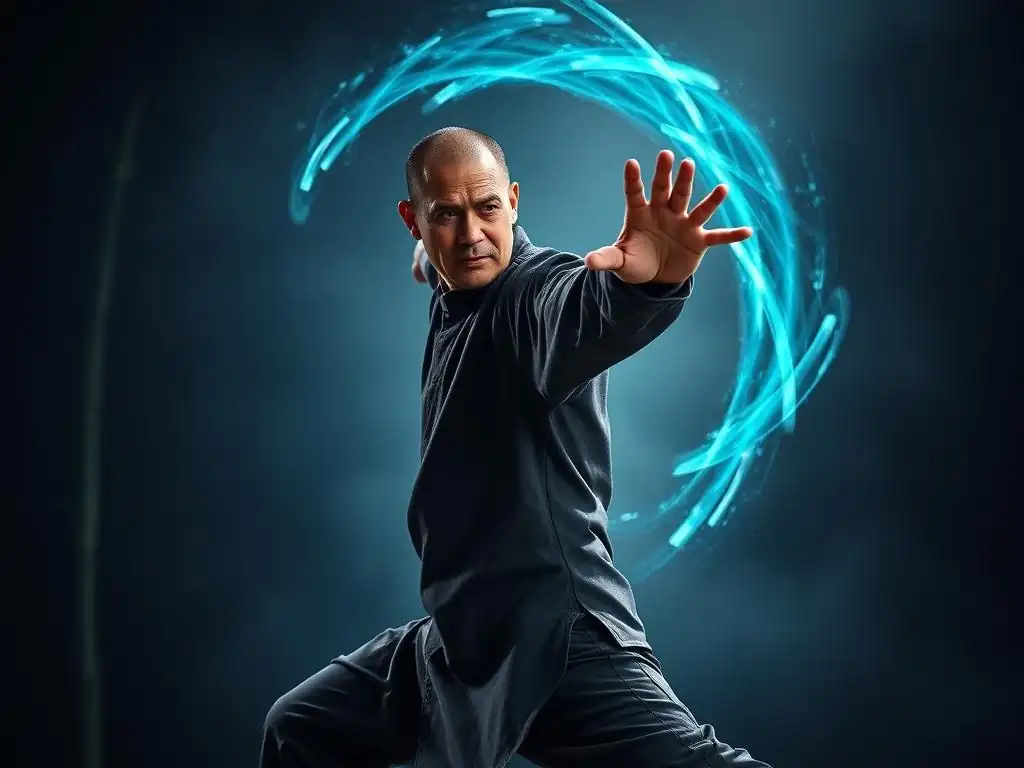
Welcome to Martial Arts Mastery, your gateway to the world's fighting arts! Ever wondered about the seemingly effortless power behind Chen Tai Chi? Dive in and unlock the secrets of Chan Si Jin, the spiraling energy principle that sets this style apart. Prepare to unravel its mysteries and discover how this unique force can transform your understanding of movement, power generation, and internal strength within this captivating martial art.
- Introduction to Chen Tai Chi and Chan Si Jin
- The Principles of Chan Si Jin: Unveiling the Spirals
- How Chan Si Jin Works: Mechanisms and Applications
- Training Methods for Developing Chan Si Jin
- Benefits of Mastering Chan Si Jin in Chen Tai Chi
- Chan Si Jin and Fajin: The Explosive Connection
- Common Mistakes in Chan Si Jin Training and How to Avoid Them
- Advanced Concepts in Chan Si Jin
- Conclusion: Embracing the Power of Spiraling Energy in Chen Tai Chi
-
Frequently Asked Questions
- What is Chan Si Jin and why is it important in Chen Tai Chi?
- How does Chan Si Jin differ from other types of power generation in martial arts?
- Can beginners learn Chan Si Jin or is it an advanced technique?
- What are some practical applications of Chan Si Jin in self-defense?
- Where can I find resources to learn more about Chan Si Jin and Chen Tai Chi?
- Final Reflection: Embracing the Spiral Within
- Ignite Your Inner Spiral: Unlock the Secrets of Chan Si Jin!
Introduction to Chen Tai Chi and Chan Si Jin
What is Chen Tai Chi Chuan? A Brief Overview
Chen Tai Chi Chuan, often simply called Chen Style, is the oldest form of Tai Chi, tracing its origins back to Chenjiagou (Chen Village) in Henan province, China, during the 17th century. Developed by Chen Wangting, a retired military officer, it uniquely blends martial arts techniques with traditional Chinese philosophical principles, particularly those of Yin and Yang, and the Five Elements.
Unlike some later styles of Tai Chi that emphasize slow, gentle movements primarily for health, Chen Style retains dynamic elements, including rapid bursts of power (fajin), jumping, and stamping, alongside its characteristic slow, fluid, and spiraling movements. It is renowned for its complex footwork, intricate hand techniques, and sophisticated body mechanics, serving both as a potent martial art and a profound system for cultivating internal health and vitality.
The practice of Chen Tai Chi involves learning specific forms (taolu), which are sequences of movements that embody martial applications and physical conditioning. Key components of training also include push hands (tui shou) for developing sensitivity and application skills with a partner, and foundational exercises (gongfa) designed to build the necessary body structure and energetic principles.
The style is known for its emphasis on integrating mind, body, and breath, leading to improved balance, flexibility, strength, and coordination. Mastering Chen Style involves delving deep into its foundational concepts, with Chen Tai Chi spiraling energy, known as Chan Si Jin, being one of the most distinctive and crucial elements that sets it apart and defines its unique power generation.
The Importance of Chan Si Jin in Chen Style Tai Chi
Chan Si Jin, translated as "Silk Reeling Energy" or "Silk Reeling Force," is not merely a technique but the fundamental energetic principle that permeates all movements in Chen Tai Chi. It describes the spiraling, coiling, and uncoiling motion that originates from the core (dantian) and extends through the limbs, connecting every part of the body in a unified, continuous flow. Without Chan Si Jin, Chen Style movements would be disjointed, lacking the internal connection and integrated power that characterize the art. It is the engine that drives transitions, generates force, and allows for sophisticated martial applications.
Mastering Chan Si Jin is considered essential for progressing in Chen Style. It's the key to unlocking the body's potential for efficient movement and powerful expression, including the ability to issue explosive force (fajin). Training in Chan Si Jin develops internal strength, improves circulation, and cultivates a deep understanding of body mechanics and energy flow. This Chen Tai Chi spiraling energy practice transforms ordinary movements into sophisticated, integrated actions, making the body resilient, adaptable, and powerful. Neglecting this principle results in a superficial practice that misses the essence of Chen Tai Chi's unique internal power and martial effectiveness.
Understanding Spiraling Energy: The Core of Chan Si Jin
At its heart, Chan Si Jin is about understanding and utilizing spiraling mechanics throughout the entire body. Imagine the movement of reeling silk from a cocoon – it's continuous, even, and involves a gentle, consistent tension that winds or unwinds. Similarly, Chan Si Jin involves motions that are circular, rotational, and wave-like, originating from the central axis and propagating outwards or inwards. This isn't just about moving the limbs in circles; it's about the internal tissues, muscles, tendons, and fascia coiling and uncoiling in a coordinated manner, driven by the rotation of the waist and hips.
This concept of Chen Tai Chi spiraling energy allows for the generation of significant power without relying solely on brute muscular strength. By coordinating the spiraling action from the ground through the legs, torso, and out to the hands or feet, the practitioner can unify the body's force. This integrated power is far greater and more efficient than isolated limb strength.
Furthermore, the continuous, fluid nature of Chan Si Jin makes movements resilient and adaptable, allowing the practitioner to absorb incoming forces and redirect them, or to change direction and application instantaneously. It's the constant, dynamic interplay of Yin and Yang within each movement, where extension contains contraction, and opening holds the potential for closing.
The Principles of Chan Si Jin: Unveiling the Spirals
Silk Reeling Energy: The Foundation of Chan Si Jin
Silk Reeling Energy, or Chan Si Jin, is the fundamental principle underlying all movement in Chen Style Tai Chi. It describes the unique method of body movement that involves continuous, smooth, spiraling motions driven from the core. This isn't random circling; it's a highly specific, coordinated action where every part of the body is connected and moves in harmony.
The spiral originates from the rotation of the waist (dantian area) and extends outwards through the limbs, creating a unified, integrated force. Think of a whip cracking: the power originates from the handle (the core), travels through the length of the whip (the limbs), and culminates in an explosive release at the tip. Chan Si Jin provides that connected, flowing transmission of energy throughout the body.
This foundational principle ensures that movements are never isolated or purely linear. Even seemingly straightforward actions, like punching or stepping, contain intricate spiraling components. The winding and unwinding action stretches and compresses the internal tissues, promoting circulation and developing internal strength.
It's this continuous, fluid spiraling that allows Chen Style practitioners to generate power efficiently, maintain balance while moving, and absorb or redirect incoming forces. Without a grasp of this core principle, the physical movements of Chen Tai Chi remain just external forms, lacking the internal connection and energetic vitality that define the art. It is the essence of Chen Tai Chi spiraling energy.
The Eight Gates and Five Steps: Applying Chan Si Jin Principles
The Eight Gates (Ba Men) and Five Steps (Wu Bu) are fundamental concepts in Tai Chi that are deeply integrated with the application of Chan Si Jin. The Eight Gates represent the eight primary forces or energies used in push hands and applications: Peng (Ward Off), Lu (Rollback), Ji (Press), An (Push), Cai (Pluck), Lie (Split), Zhou (Elbow), and Kao (Shoulder). Each of these energies is generated and expressed through the coordinated, spiraling movements of the body, powered by Chan Si Jin.
For example, Peng energy, the outward expansive force, is not just a static push but a dynamic, spiraling tension that maintains structure and resilience. Lu involves a spiraling motion to absorb and redirect force, while Ji and An utilize spiraling to consolidate and issue power.
The Five Steps refer to the primary directions and stances: Jin (Advance), Tui (Retreat), Zuo Gu (Look Left), You Pan (Gaze Right), and Zhong Ding (Central Equilibrium). Effective stepping in Chen Style is not just about moving the feet; it involves the entire body, with the legs and waist coordinating through spiraling action to shift weight smoothly, maintain balance, and generate power for transitions or applications.
The spiraling motion ensures that the body remains connected and rooted even during complex footwork, allowing for agile and powerful movement in any direction. Thus, the application of Chan Si Jin is inseparable from the mastery of both the Eight Gates' forces and the Five Steps' spatial dynamics, forming the complete system of Chen Tai Chi spiraling energy in practice.
Whole-Body Movement and Coordination in Spiraling Energy
A hallmark of effective Chan Si Jin is the concept of "Yi Shen Sui Jing" (the whole body follows the central axis), which signifies that every movement originates from or is coordinated by the rotation of the waist and spine. This principle dictates that the limbs do not move in isolation but are extensions of the core's spiraling action. When the waist turns, the shoulders, elbows, wrists, and hands follow in a connected, wave-like manner.
Similarly, the movement of the legs and feet is integrated with the torso's rotation, ensuring that the entire body moves as a single, unified unit. This integrated movement is crucial for generating maximum power and maintaining balance.
This whole-body coordination, driven by Chen Tai Chi spiraling energy, allows for efficient force transmission. Instead of relying on the strength of individual muscles, the practitioner leverages the cumulative force generated by the coiled and uncoiled movement originating from the powerful muscles of the core and legs.
This principle is evident in the fluid, continuous transitions seen in Chen Style forms, where one movement seamlessly flows into the next, powered by the underlying spiraling mechanism. It also enables the practitioner to absorb and neutralize force by "reeling it in" along the spiraling pathways of the body, dispersing impact and maintaining structural integrity.
How Chan Si Jin Works: Mechanisms and Applications
The Role of the Dantian in Generating Spiraling Force
The Dantian, located roughly two inches below the navel and deep inside the abdomen, is considered the body's energetic and physical center of gravity in Chinese internal arts. In Chen Tai Chi, the Dantian plays a pivotal role in generating and coordinating Chan Si Jin. All spiraling movements are initiated or driven by the rotation of the waist and pelvis around this central point.
This rotation acts as the engine, winding and unwinding the body's structure, much like a coil or spring. The power generated by the legs rooted to the ground is transmitted upwards through the spine and coordinated by the Dantian's rotation, propagating outwards through the limbs via the spiraling pathways.
This core-driven movement ensures that force is generated efficiently and can be directed to any part of the body. The Dantian's rotation also facilitates the connection between the upper and lower body, integrating the power from the ground with the actions of the torso and arms. Without the Dantian leading the movement, the spiraling would be fragmented or superficial, limited to the limbs rather than involving the entire body.
Cultivating awareness and control of the Dantian's rotation is therefore fundamental to mastering Chen Tai Chi spiraling energy and unlocking its potential for both health and martial applications. It is the central pivot around which all the intricate coiling and uncoiling revolves.
Internal and External Spirals: Distinguishing the Differences
Chan Si Jin manifests as both internal and external spirals, which are interconnected aspects of the same principle. External spirals are the visible, circular, or arcing movements of the limbs and torso. These are the paths the hands, feet, elbows, and knees trace through space.
While these external movements are important, they are merely the outward expression of the internal spiraling. Internal spirals refer to the coiling and uncoiling of the body's internal structure – the muscles, tendons, fascia, and even the flow of energy (Qi) and blood within the body. This internal winding and unwinding creates tension and elasticity, storing and releasing power.
The difference is crucial for understanding Chan Si Jin. Simply moving the limbs in circles (external spiral) without the corresponding internal coiling and uncoiling, driven by the Dantian, is just waving the arms and legs. True Chen Tai Chi spiraling energy involves the coordinated internal action that gives the external movement its power, resilience, and efficiency.
For instance, in a movement like "Lazy About Tying Coat," the external spiral of the arm is powered by the internal coiling of the torso and legs, creating a unified, powerful turning and striking action. Developing awareness of and control over these internal spirals is a key focus of advanced Chan Si Jin training, leading to deeper internal connection and more potent force generation.
Applying Chan Si Jin in Chen Tai Chi Forms (Taolu)
Chen Tai Chi forms (taolu) are essentially sequences of movements designed to embody and train the principles of Chan Si Jin and their martial applications. Every movement within a form, from the largest circle to the smallest transition, contains underlying spiraling mechanics.
For example, in the movement "Buddha's Warrior Attendant Pounds Mortar," the initial winding action of the arms and body is a clear manifestation of coiling Chan Si Jin, gathering energy before the explosive unwinding and stamping (fajin). Similarly, defensive movements often involve spiraling actions to redirect incoming force, like the yielding and turning motions in "Six Sealing Four Closing."
Practicing the forms diligently with attention to the principles of Chen Tai Chi spiraling energy is the primary method for internalizing Chan Si Jin. The practitioner learns to coordinate the Dantian's rotation with the spiraling of the limbs, ensuring that movements are continuous, connected, and rooted.
This systematic application of Chan Si Jin throughout the complex sequences of movements builds whole-body integration, improves balance, and develops the ability to generate and control power. Over time, the spiraling becomes natural and effortless, allowing the practitioner to express the full potential of Chen Style Tai Chi, whether for health, self-defense, or internal cultivation.
Training Methods for Developing Chan Si Jin
Silk Reeling Exercises (Chan Si Gong): A Step-by-Step Guide
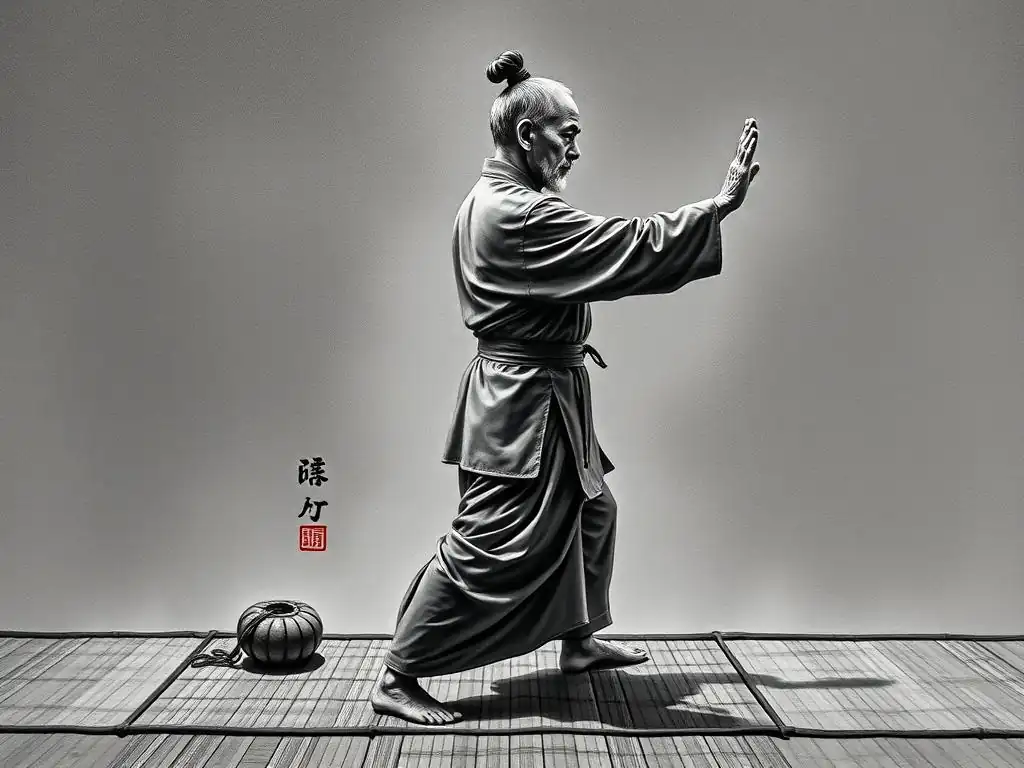
Silk Reeling Exercises, or Chan Si Gong, are foundational drills specifically designed to isolate and cultivate the spiraling movements characteristic of Chan Si Jin. These exercises break down the complex whole-body spiraling into simpler, repeatable patterns focusing on specific body parts or types of motion. Examples include single-arm or double-arm spirals, torso rotations, leg coiling, and combined movements. A common starting point is the single-arm silk reeling, where the practitioner stands with proper posture and slowly rotates the waist, allowing the arm to spiral outwards and inwards, leading the movement from the core, not the shoulder or elbow.
Progression typically involves moving to double-arm exercises, then incorporating leg and torso movements, and finally practicing more complex, integrated spirals that involve the entire body. The focus throughout these exercises is on maintaining continuity, smoothness, and coordination, ensuring that the movement originates from the Dantian and propagates through the limbs.
Practicing Chan Si Gong helps the student develop kinesthetic awareness of the spiraling pathways in their own body and learn how to initiate and control the coiling and uncoiling action. Consistent daily practice, even for short periods like 10-15 minutes, is crucial for developing the muscle memory and internal connection required for mastering Chen Tai Chi spiraling energy.
Partner Drills for Cultivating Sensing and Response
While solo practice of forms and Silk Reeling Exercises builds the internal mechanics of Chan Si Jin, partner drills, particularly push hands (tui shou), are essential for developing the ability to apply and respond to external forces using spiraling energy. In push hands, practitioners gently contact each other, typically at the wrists or forearms, and practice sensing their partner's force, direction, and intention. They then use principles like yielding, neutralizing, and issuing force, all powered by Chan Si Jin, to maintain balance, disrupt the partner's structure, or create openings.
These drills teach practitioners how to maintain their own Chan Si Jin while interacting with another person's energy. They learn to "listen" with their body (ting jin) and sense the partner's incoming force, then use spiraling movements to absorb and redirect it rather than meeting force with force. For instance, if a partner pushes, the practitioner doesn't stiffen but uses a yielding, spiraling motion to guide the force away, simultaneously maintaining their own connection and readiness to counter.
Partner drills provide invaluable feedback, highlighting areas where the Chan Si Jin is broken or ineffective and pushing the practitioner to apply the principle under dynamic, unpredictable conditions. This develops the practical application of Chen Tai Chi spiraling energy.
Correct Posture and Alignment: Essential for Effective Spiraling
Effective Chan Si Jin relies heavily on correct body structure and alignment. Without proper posture, the body's frame cannot efficiently transmit the spiraling force generated from the Dantian and legs. Key postural requirements include keeping the head suspended as if pulled from above (bai hui), relaxing the shoulders and sinking the elbows, keeping the chest slightly sunken and the back rounded (han xiong ba bei), relaxing the waist and sinking the hips (song yao song kua), and ensuring the knees are bent and aligned over the feet. The spine should be erect but relaxed, allowing for smooth rotation.
Poor posture, such as a stiff back, raised shoulders, or locked knees, disrupts the continuous chain of movement required for Chan Si Jin. It creates blockages that prevent the spiraling energy from flowing smoothly throughout the body. For example, a stiff waist prevents the Dantian from leading the movement, forcing the limbs to move in isolation.
Likewise, collapsed shoulders prevent the force from reaching the hands effectively. Therefore, constant attention to maintaining correct posture and alignment, guided by a qualified instructor, is non-negotiable for developing genuine Chen Tai Chi spiraling energy and ensuring that the body can function as a unified, powerful unit.
Benefits of Mastering Chan Si Jin in Chen Tai Chi
Enhanced Power Generation (Fajin) Through Spiraling
One of the most significant benefits of mastering Chan Si Jin is the dramatic enhancement of power generation, particularly explosive force (fajin). Fajin in Chen Tai Chi is not just a sudden muscular contraction; it is the rapid release of stored elastic energy built up through the spiraling, coiling action of Chan Si Jin.
The winding phase of a movement stores tension throughout the interconnected tissues, much like winding a spring. The sudden, coordinated unwinding action, driven by the Dantian and propagated through the spiraling pathways, releases this stored energy in a unified burst, resulting in a powerful, penetrating force.
This means that Fajin is a direct consequence of effective Chan Si Jin. Without the underlying spiraling mechanics to build and transmit the force, any attempt at fajin will be merely a weak, disconnected push or punch relying on isolated muscle power.
For instance, a Chen Style punch (like in the "Cannon Fist" forms) isn't a linear jab but involves a complex spiraling rotation of the arm, torso, and legs, culminating in a sudden unwinding that generates significant impact. Mastering Chen Tai Chi spiraling energy is thus the key to unlocking the signature explosive power that characterizes Chen Style Tai Chi.
Improved Balance and Coordination
The continuous, integrated nature of Chan Si Jin practice inherently leads to significant improvements in balance and coordination. Because every movement involves the entire body moving as a connected unit, the practitioner develops a deep awareness of their center of gravity and how to maintain it while in motion. The spiraling action itself requires constant subtle adjustments throughout the body to remain stable, especially during transitions between movements or stances. For example, shifting weight from one leg to another while maintaining the spiraling flow demands precise coordination between the waist, hips, legs, and feet.
Furthermore, the intricate coordination required to execute complex spiraling patterns improves neuromuscular control and proprioception (the body's sense of its position in space). This enhanced body awareness translates directly into better static and dynamic balance. Whether performing forms, practicing push hands, or navigating daily life, the practitioner who has cultivated Chen Tai Chi spiraling energy moves with greater stability, fluidity, and grace, significantly reducing the risk of falls and improving overall physical control.
Increased Internal Strength and Health
Beyond martial applications, consistent practice of Chan Si Jin offers profound health benefits. The continuous, gentle coiling and uncoiling movements massage the internal organs, improve circulation of blood and Qi (vital energy), and enhance the flexibility and strength of tendons, ligaments, and fascia. Unlike static exercises that build muscular bulk, Chan Si Jin develops resilient, elastic strength throughout the connective tissues, often referred to as "silk strength." This type of strength is functional and contributes to overall bodily integrity and vitality.
The coordinated, relaxed movement facilitated by Chen Tai Chi spiraling energy also helps to release tension in the body, particularly in areas prone to stiffness like the shoulders, hips, and lower back. The focus on smooth, uninterrupted flow calms the nervous system and promotes mental relaxation. Over time, consistent Chan Si Jin practice can lead to improved posture, increased flexibility, enhanced immune function, and a greater sense of well-being. It is a holistic practice that strengthens the body from the inside out, fostering not just physical capability but also internal health and longevity.
Chan Si Jin and Fajin: The Explosive Connection
Understanding Fajin in Chen Style Tai Chi
Fajin, meaning "issuing power" or "explosive force," is a characteristic feature of Chen Style Tai Chi. It refers to the ability to release a burst of power instantaneously, typically at the end of a movement, for striking or disrupting an opponent.
Unlike brute muscular force, which is often slow and requires significant physical tension, Fajin is generated through the coordinated, unified action of the entire body, channeling internal energy and physical momentum into a concentrated point of impact. It is often described as being like a whip cracking, where the power originates from the base and culminates in a sharp, sudden release at the tip.
Effective Fajin requires the body to be properly aligned, relaxed yet connected, and capable of rapid acceleration and deceleration. It utilizes principles like rooting to the ground, using the waist as the pivot, and coordinating the opening and closing of the body.
While Fajin is the explosive outcome, it is deeply dependent on the preparatory phase of movement, which in Chen Style, is intrinsically linked to the principles of Chan Si Jin. Without the proper internal mechanics built through spiraling, genuine Fajin cannot be achieved; one might produce a strong hit, but it won't have the same penetrating, internal quality of true Tai Chi Fajin.
How Chan Si Jin Amplifies Fajin Power
Chan Si Jin is the fundamental mechanism that enables and amplifies Fajin in Chen Tai Chi. The spiraling movements act like coiling a spring or winding a rubber band, building up potential energy throughout the body's interconnected tissues. The winding phase involves a degree of controlled tension and rotation, drawing energy inwards and downwards.
The subsequent Fajin is the rapid, coordinated unwinding or uncoiling of this stored energy, propelled by the rotation of the Dantian and the grounded force from the legs. This sudden release of elastic energy, synchronized across the entire body via the spiraling pathways, generates a far greater and more penetrating force than muscular strength alone could produce.
Consider a movement like "Cover Hand and Punch." The initial setup involves spiraling the body to gather force and position the limbs. The actual punch is not just extending the arm; it's a rapid unwinding of the torso, hip, and shoulder, with the arm acting as the end of the whip.
The Chen Tai Chi spiraling energy ensures that the force generated by the powerful core and legs is efficiently transferred through the arm to the target. Without the coiling and unwinding action of Chan Si Jin, the Fajin would lack the necessary foundation and integrated power, resulting in a weak or disconnected strike. Thus, mastering Chan Si Jin is synonymous with developing the capacity for powerful Fajin.
Examples of Fajin Applications in Chen Tai Chi Forms
Chen Tai Chi forms, particularly the older and more martial-oriented ones like Lao Jia Yi Lu (Old Frame First Form) and Er Lu (Cannon Fist), are replete with examples of Fajin applications generated through Chan Si Jin. Movements such as "Buddha's Warrior Attendant Pounds Mortar," "Punch Over Heart," "Elbow Under Ribs," and various stamping actions are classic instances of Fajin.
In "Pounds Mortar," the winding motion of the body and arms gathers energy before a sudden, downward spiraling release culminating in a stamp and a fist strike. The power for the stamp comes from the rapid, coordinated unwinding of the legs and torso.
In "Punch Over Heart," the spiraling of the waist and arm is evident as the practitioner coils before rapidly unwinding to deliver the punch. The spiraling path of the arm allows for both evasion and powerful penetration.
The Er Lu forms, specifically designed to train explosive power, emphasize rapid, continuous Fajin expressions, all driven by sophisticated Chan Si Jin. Every Fajin movement in these forms showcases how the preliminary spiraling action loads the body like a spring, and the subsequent rapid unwinding releases that stored Chen Tai Chi spiraling energy as explosive power, illustrating the inseparable connection between Chan Si Jin and Fajin.
Common Mistakes in Chan Si Jin Training and How to Avoid Them
Misconceptions About Spiraling Energy
A common mistake in training Chen Tai Chi spiraling energy is misunderstanding what spiraling actually is. Some practitioners might simply move their limbs in circles, believing this constitutes Chan Si Jin. However, as discussed earlier, true spiraling originates from the Dantian and involves the coordinated coiling and uncoiling of the entire body's internal structure, not just external circular motions.
Another misconception is that spiraling means being overly floppy or lacking structure. While relaxation is key, Chan Si Jin requires a specific type of integrated tension and connection that maintains structural integrity even during yielding or circular movements. It's not about being loose like a rag doll, but connected and resilient like a spring or a whip.
Avoiding these misconceptions requires careful attention to the principles taught by experienced instructors and focusing on the internal feeling of connection and rotation originating from the core. It involves understanding that the external movement is merely the result of the internal mechanics. Practitioners should strive for smooth, continuous movements where every part is linked, and resist the urge to just "make circles" with their hands or feet in isolation. Feeling the connection from the ground up through the Dantian's rotation and out to the extremities is key to correcting this misunderstanding.
Over-Reliance on Muscular Force vs. Internal Energy
Another prevalent error is relying on brute muscular force instead of cultivating internal energy (Qi) and utilizing the body's natural structure and momentum through Chan Si Jin. Many beginners, accustomed to Western physical training, instinctively tense up and use isolated muscle power to execute movements or generate force. This approach is counterproductive in Tai Chi, which emphasizes relaxation, integrated body mechanics, and the cultivation of internal strength. Using muscle force breaks the continuous, fluid flow of Chan Si Jin and prevents the development of true internal power and elasticity.
Overcoming this requires conscious effort to relax the muscles and allow the movement to be driven by the rotation of the waist and the grounding through the legs. It involves learning to sink the weight, loosen the joints, and feel the connection throughout the body.
Focusing on the smooth, even quality of the spiraling motion rather than the strength of individual muscles helps shift the reliance from external force to internal coordination. Partner drills can be particularly helpful here, as resisting force with tension is immediately felt as stiffness, whereas yielding and redirecting with Chen Tai Chi spiraling energy proves more effective and less tiring.
Importance of Qualified Instruction and Guidance
Given the subtle and intricate nature of Chan Si Jin, learning from a qualified and experienced instructor is paramount. Without proper guidance, students can easily develop incorrect habits, such as the misconceptions and over-reliance on muscular force mentioned above. An experienced teacher can provide personalized feedback, correct posture and alignment issues, demonstrate the internal mechanics, and guide the student through the progressive stages of training. They can help the student feel the correct internal connections and understand how the Dantian drives the movement.
Learning solely from books or videos, while potentially helpful as supplementary resources, is insufficient for grasping the depth of Chen Tai Chi spiraling energy. The teacher's hands-on correction and ability to transmit the "feel" of the energy are invaluable. A good instructor can identify where the spiraling is broken, where tension is inhibiting flow, and how to refine the movements for greater efficiency and power. Seeking out a lineage holder or a teacher with significant experience in Chen Style is crucial for anyone serious about truly understanding and mastering Chan Si Jin.
Advanced Concepts in Chan Si Jin
Integrating Yin and Yang in Spiraling Movements
At a more advanced level, Chan Si Jin is understood not just as physical spiraling but as the dynamic interplay of Yin and Yang within every movement. Each spiraling motion contains both opening (Yang) and closing (Yin), expanding and contracting, rising and falling, coiling and uncoiling. These opposing forces are not separate but mutually dependent and continuously transforming into each other within the flow of the movement. For example, as an arm spirals outwards (Yang), there is simultaneously an internal coiling or gathering (Yin) happening elsewhere in the body to maintain balance and prepare for the next phase.
Mastering this integration means the practitioner's movements become truly holistic and resilient. They can transition seamlessly between yielding (Yin) and issuing force (Yang), absorbing incoming energy by spiraling inwards (Yin) and redirecting or countering by spiraling outwards (Yang). This constant, fluid balance of Yin and Yang within the Chen Tai Chi spiraling energy makes the practitioner adaptable to any situation, capable of responding effectively to force from any direction. It moves beyond mere physical technique to embody the philosophical principles that underpin Tai Chi.
The Relationship Between Chan Si Jin and Intent (Yi)
In internal martial arts like Tai Chi, the mind or intent (Yi) is considered the leader of the Qi (vital energy), and the Qi is the leader of the body's movement. This principle is deeply connected to advanced Chan Si Jin. It is not enough for the body to perform the spiraling motions physically; the practitioner's intent must guide the energy and the movement.
The mind visualizes the spiraling pathways and directs the Qi to flow smoothly and powerfully through the body, initiated by the Dantian. This conscious use of Yi enhances the quality and effectiveness of the Chan Si Jin.
At an advanced stage, the spiraling is no longer just a physical exercise but is driven by a focused intention. The practitioner uses their mind to connect the movement internally, ensuring that the spiraling is continuous and unified. This cultivation of the relationship between Yi, Qi, and Chan Si Jin leads to a deeper level of internal skill, where the movements are not just physically correct but are imbued with internal energy and purpose. The Chen Tai Chi spiraling energy becomes a manifestation of the practitioner's focused intent, making the movements more potent and alive.
Developing Peng Jin (Ward Off Energy) Through Spiraling
Peng Jin, often translated as "Ward Off Energy," is considered the mother of all energies in Tai Chi. It is an expansive, resilient force that maintains the body's structure, allows it to absorb impact without collapsing, and provides the foundation for generating other forces. While often described as an outward expansion, Peng Jin in Chen Style is fundamentally developed and maintained through Chan Si Jin. The continuous, subtle spiraling throughout the body creates an internal tension or elasticity that gives the structure its resilience.
Think of a pressurized hose: it maintains its shape and can redirect force because of the internal pressure. Similarly, the subtle coiling and uncoiling of Chan Si Jin creates an internal "pressure" or dynamic tension throughout the fascial lines and connective tissues, allowing the body to maintain its structural integrity against external forces.
This spiraling Peng Jin allows the practitioner to stay connected to an opponent, sense their intentions, and neutralize force while remaining rooted and ready to counter. It is the underlying energetic state fostered by constant Chen Tai Chi spiraling energy that makes the body resilient and responsive in applications.
Conclusion: Embracing the Power of Spiraling Energy in Chen Tai Chi
The Ongoing Journey of Chan Si Jin Mastery
Mastering Chan Si Jin is not a destination but a continuous, lifelong journey. It is a principle that deepens with every year of dedicated practice. Initially, students focus on the external mechanics and basic coordination of the spiraling movements. With time and consistent effort, the focus shifts inwards, developing a deeper awareness of the internal coiling and uncoiling, the connection from the Dantian, and the subtle interplay of Yin and Yang. The Chen Tai Chi spiraling energy becomes more refined, integrated, and effortless.
As practitioners advance, they learn to apply Chan Si Jin with greater sensitivity and efficiency in push hands and applications, adapting the spiraling to different forces and situations. The journey involves constant self-correction, refinement of posture and alignment, and deepening the connection between mind, body, and energy. There are always new layers of understanding and subtlety to discover within the principle of spiraling energy, making the practice perpetually engaging and rewarding.
The Benefits of Consistent Practice and Dedication
Consistent practice of Chan Si Jin, integrated within the broader framework of Chen Tai Chi training, yields profound and lasting benefits. Physically, it builds unique internal strength, improves flexibility, enhances balance and coordination, and contributes significantly to overall health and vitality. Mentally, it cultivates focus, patience, and a calm, centered mind. Energetically, it promotes the smooth flow of Qi, leading to increased energy levels and a sense of internal harmony.
Beyond the individual benefits, dedicated practice connects the practitioner to a rich tradition and a community of fellow enthusiasts. The discipline required to consistently train Chan Si Jin builds character, perseverance, and humility. The rewards – enhanced physical capability, improved health, and deeper self-awareness – make the dedication worthwhile. Embracing the principles of Chen Tai Chi spiraling energy through consistent practice is an investment in one's physical, mental, and spiritual well-being.
Finding a Qualified Teacher for Chen Style Tai Chi
Given the complexity and subtlety of Chan Si Jin, finding a qualified teacher is perhaps the most critical step in the journey of mastering this art. A good teacher provides essential guidance, corrects mistakes that are difficult to identify on one's own, and transmits the deeper nuances of the practice that cannot be learned from books or videos alone. They can demonstrate the internal feeling of the spiraling energy and help students connect their movements to the Dantian and the ground.
When seeking a teacher, look for someone with a clear lineage, significant experience in Chen Style, and the ability to articulate the principles of Chan Si Jin effectively. Observe their students to gauge the quality of their instruction. A good teacher is patient, encouraging, and able to adapt their teaching to the individual student's needs. Learning Chen Tai Chi spiraling energy under the guidance of an experienced master accelerates progress, prevents the development of bad habits, and ensures that the practitioner is truly grasping the essence of this powerful and sophisticated martial art.
Frequently Asked Questions
What is Chan Si Jin and why is it important in Chen Tai Chi?
Chan Si Jin, often translated as spiraling energy or silk reeling energy, is the fundamental internal force development method in Chen Tai Chi. It's crucial for generating power and fluidity in movements.
How does Chan Si Jin differ from other types of power generation in martial arts?
Unlike linear force, Chan Si Jin utilizes spiraling and coiling movements to generate power. This method emphasizes whole-body coordination and internal connection, rather than relying solely on muscular strength.
Can beginners learn Chan Si Jin or is it an advanced technique?
While Chan Si Jin requires dedication, it can be introduced to beginners through basic foundational drills. The key is to focus on correct body alignment and relaxed movement from the start.
What are some practical applications of Chan Si Jin in self-defense?
Chan Si Jin allows for efficient power transfer in strikes and grappling. Its spiraling nature can disrupt an opponent's balance and control, making it effective for deflecting attacks.
Where can I find resources to learn more about Chan Si Jin and Chen Tai Chi?
MartialArtsMastery.org offers articles, videos, and potentially courses dedicated to Chen Tai Chi. You can also seek out qualified instructors to guide you through the process.
Final Reflection: Embracing the Spiral Within
The essence of Chen Tai Chi, particularly its spiraling energy (Chan Si Jin), isn't just an ancient martial art technique; it's a profound metaphor for life itself. In a world often characterized by linear thinking and rigid structures, understanding and embodying the spiraling energy of Chen Tai Chi offers a powerful antidote, a way to navigate challenges with fluidity, resilience, and grace.
The practice of Chan Si Jin has deeply influenced my understanding of movement and energy, revealing that true strength lies not in brute force, but in the ability to yield, redirect, and transform. This principle extends far beyond the physical realm, impacting how we approach relationships, problem-solving, and personal growth. As Bruce Lee wisely stated: Be like water making its way through cracks. Do not be assertive, but adjust to the object, and you shall find a way around or through it. If nothing within you stays rigid, outward things will disclose themselves.
Now, I invite you to consider how the spiraling energy of Chen Tai Chi can resonate within your own life. Can you find ways to embrace fluidity and adaptability in your daily interactions? Can you cultivate a deeper awareness of the subtle energies that flow through your body and mind? By embracing the spiral, you unlock a path towards greater balance, resilience, and a more profound connection to the world around you. Let the spiraling energy guide you towards a more harmonious and fulfilling existence.
Ignite Your Inner Spiral: Unlock the Secrets of Chan Si Jin!
Thank you for exploring the fascinating world of Chan Si Jin with us. We hope this article has provided valuable insights into the spiraling energy at the heart of Chen Tai Chi. Now, it's time to put that knowledge into action!
- Dedicate 15 minutes today to practicing a spiraling movement from your Tai Chi form, focusing on the feeling of continuous, unbroken energy.
- Share this article with a fellow Tai Chi enthusiast and spark a conversation about their experience with Chan Si Jin.
- Try visualizing the spiraling force of Chan Si Jin in your daily activities, like reaching for an object or walking, to deepen your understanding.
What subtle shifts did you notice when focusing on spiraling energy in your Tai Chi practice today?