
Muay Thai in the Ayutthaya Period: Flourishing in the Heart of a Golden Kingdom

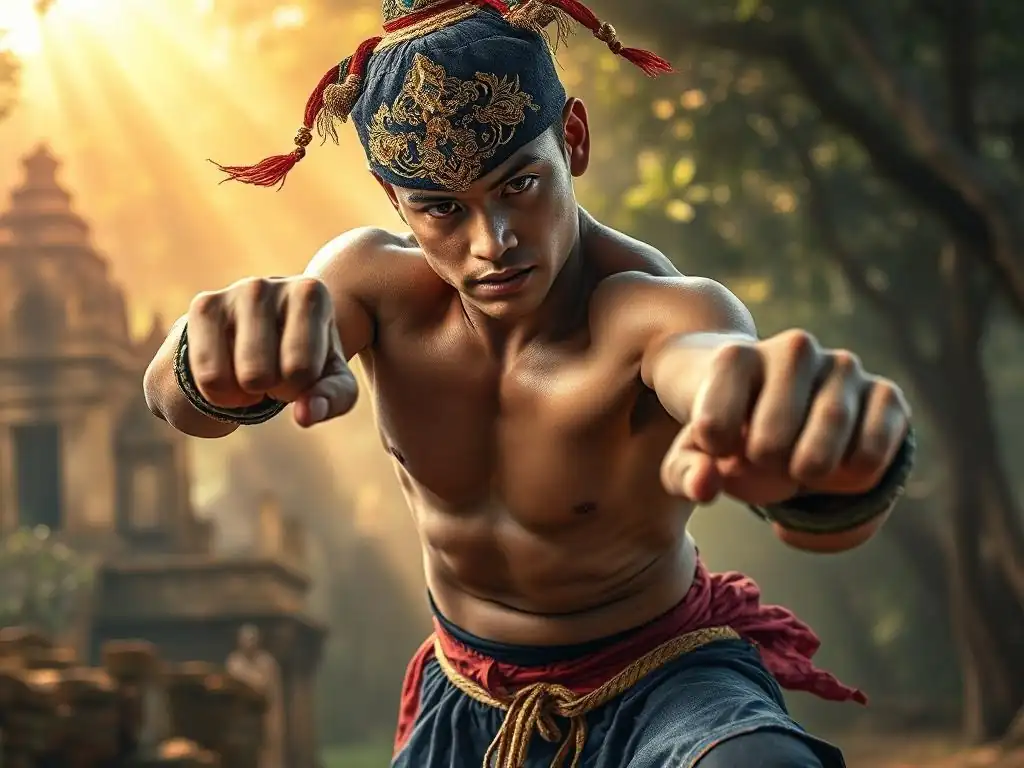
Welcome to Martial Arts Mastery, your gateway to the world's fighting traditions!
Delve into the rich tapestry of combat sports as we explore their history, techniques, and philosophies. Prepare to be transported back in time as we uncover the captivating history of Muay Thai, specifically focusing on its vibrant origins in the Ayutthaya period. But how did this "Art of Eight Limbs" become so deeply intertwined with the rise and fall of a Golden Kingdom? Read on to discover the secrets and legends that shaped this iconic martial art!
- The Rise of Muay Thai: Context of the Ayutthaya Era (1351-1767)
- Muay Thai's Evolution During the Ayutthaya Kingdom
- Key Characteristics of Ayutthaya-Era Muay Thai
- Royal Patronage and the Promotion of Muay Thai
- Muay Thai Camps (Gyms) in Ayutthaya: Centers of Excellence
- Cultural Significance of Muay Thai in Ayutthaya Society
- The Decline of Ayutthaya and the Impact on Muay Thai
- Legacy of Ayutthaya Muay Thai: Foundations of Modern Muay Thai
-
Frequently Asked Questions
- What was the significance of the Ayutthaya Period for Muay Thai?
- How did Muay Thai training differ during the Ayutthaya Period compared to modern times?
- Was Muay Thai practiced by all levels of society during the Ayutthaya Period?
- What role did Muay Thai play in the military during the Ayutthaya Period?
- Are there any specific legendary Muay Thai figures from the Ayutthaya Period?
- Final Reflection: Echoes of Ayutthaya's Warriors
- Unleash Your Inner Nak Muay!
The Rise of Muay Thai: Context of the Ayutthaya Era (1351-1767)
Ayutthaya's Golden Age: A Fertile Ground for Martial Arts Development
The Ayutthaya Kingdom, established in 1351, presided over a period of immense growth and prosperity for Siam, spanning over four centuries. This era, often considered a golden age, was characterized by significant advancements in architecture, art, and culture, fueled by robust trade networks that connected Ayutthaya with kingdoms across Asia and Europe. The burgeoning wealth and stability provided fertile ground for the development and refinement of various cultural practices, including martial arts.
It was within this dynamic and flourishing kingdom that the foundations of what we now recognize as Muay Thai were deeply laid and significantly developed, marking a crucial chapter in the Muay Thai Ayutthaya history. The relative peace during certain periods allowed for the codification and formalization of fighting techniques beyond immediate battlefield needs.
During its peak, Ayutthaya was one of the largest and most cosmopolitan cities of its time, attracting merchants, diplomats, and scholars. This cosmopolitan environment, while fostering cultural exchange, also necessitated a strong defense. The kingdom's prosperity inevitably made it a target for neighboring powers, particularly the Burmese.
Consequently, martial prowess was not merely a military requirement but also a societal value, integrated into education and culture. The structured environment of a stable kingdom facilitated the establishment of training centers and the transmission of knowledge from generation to generation, ensuring that fighting skills were not lost but rather enhanced and adapted, contributing profoundly to the rich history of Muay Thai in Ayutthaya.
Socio-Political Landscape and the Need for Skilled Warriors
The socio-political structure of the Ayutthaya Kingdom was hierarchical, with the King at the apex, supported by a complex system of nobles, officials, and a military class. The kingdom's survival and expansion were intrinsically linked to its military strength. Frequent conflicts, particularly with the Burmese, Khmer, and other regional powers, demanded a constant supply of highly skilled warriors.
Martial arts, specifically the unarmed combat style that would evolve into Muay Thai, was an essential component of military training, complementing weaponry like swords, spears, and bows. Every able-bodied man was expected to possess basic fighting skills, but specialized training was crucial for the elite military units and royal guards.
Beyond formal military needs, personal protection was also a significant concern in a vast kingdom with varying degrees of local control. Travel between cities and villages could be perilous, making self-defense skills vital for ordinary citizens as well as officials.
Furthermore, martial arts served as a means of social mobility; exceptional fighters could gain recognition, patronage, and positions within the military or royal court. This societal emphasis on martial skill, driven by both external threats and internal structure, created a pervasive culture where the development and mastery of fighting techniques like those found in Ayutthaya period Muay Thai were highly valued and widely practiced.
Muay Thai's Evolution During the Ayutthaya Kingdom
From Battlefield Prowess to Royal Sport: The Transformation of Muay Thai
Initially, the fighting techniques that formed the basis of Muay Thai were primarily developed for battlefield use, focusing on practical, devastating strikes designed to incapacitate an opponent quickly, often as a last resort when weapons were lost. However, as the Ayutthaya Kingdom solidified its power and experienced periods of relative peace, these techniques began to evolve beyond purely military applications.
Royal courts and noble households started sponsoring fighters and organizing contests, transforming battlefield prowess into a form of entertainment and competitive sport. This shift marked a significant phase in the history of Muay Thai Ayutthaya, demonstrating its growing cultural importance.
These early forms of sport fighting, while still brutal, introduced elements of structure and rules, albeit minimal by modern standards. Competitions were held during festivals and important state occasions, attracting large crowds. The best fighters gained fame and often received royal patronage, elevating their status.
This dual existence – as a vital military skill and a popular sport – allowed Muay Thai to flourish, ensuring its techniques were constantly tested and refined, not just in the crucible of war but also in the arena of public display. This period laid the groundwork for the competitive aspect that remains central to modern Muay Thai.
Muay Thai as a Crucial Military Skill in Ayutthaya's Defense
Throughout the Ayutthaya period, Muay Thai remained an indispensable part of military training. Soldiers were drilled in its techniques to enhance their close-quarters combat abilities, providing a critical advantage in melees or when disarmed. The focus was on powerful strikes using fists, elbows, knees, and feet, maximizing damage against an opponent, potentially wearing armor. This emphasis on using the body as a weapon was particularly effective in the chaotic environment of ancient warfare. Royal guards and elite units were often the most highly trained, serving as personal protectors to the King and playing crucial roles in battles.
Historical accounts, though sometimes fragmented, describe the integration of Muay Thai into military strategy. Fighters were trained to fight individually and as part of formations, using their unarmed skills to break enemy lines or defend strategic positions.
The legendary King Naresuan the Great (reigned 1590-1605), a revered figure in Thai history, is often associated with exceptional martial skill, including unarmed combat, highlighting the importance of such abilities even at the highest levels of leadership. The continuous need for a strong military to defend against invasions ensured that the practical, combative aspects of Ayutthaya period Muay Thai were constantly maintained and prioritized alongside its development as a sport.
Key Characteristics of Ayutthaya-Era Muay Thai
Bare-Knuckle Combat: The Original Style of Muay Thai
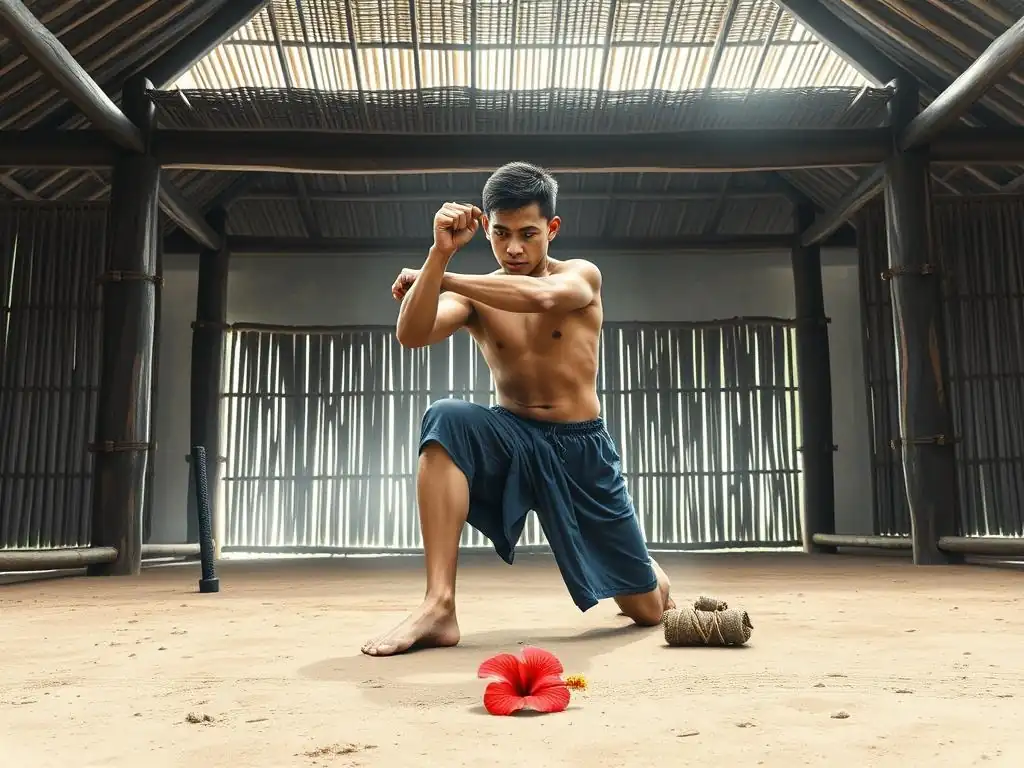
One of the defining characteristics of early Ayutthaya-era Muay Thai was its emphasis on bare-knuckle combat. Fighters engaged without gloves, relying on the toughness of their fists and the power of their strikes. This raw, unadorned form of fighting demanded incredible physical conditioning and mental fortitude. The impact of bare fists on bone and muscle was significant, leading to contests that were often brutal and short-lived. Injuries were common, ranging from broken hands and noses to severe lacerations.
The lack of hand protection meant that techniques emphasized bone-on-bone impact and leveraging the body's natural weapons directly. This included hard punches, slaps, and chops delivered with the knuckles, palms, or edges of the hand. The development of calluses and toughening of the hands through rigorous training was a crucial part of preparation. This bare-knuckle approach underscores the practical, no-nonsense origins of Muay Thai Ayutthaya history, where effectiveness in combat was paramount over safety or sporting rules.
The Importance of Clinching and Knee Strikes in Ancient Muay Thai
While striking with fists and feet was integral, the clinch and the use of knee strikes were particularly prominent and devastating techniques in Ayutthaya period Muay Thai. The clinch involved grappling at close range, controlling the opponent's posture, and setting them up for powerful attacks. This was not merely a holding position but an active, dynamic phase of combat used to dominate, unbalance, and deliver strikes.
Knee strikes, delivered to the body, legs, or head from the clinch or at close range, were incredibly effective in ancient combat. They could penetrate defenses, inflict significant internal damage, and were difficult to block effectively without modern padding. The ability to maintain control in the clinch and land multiple forceful knee strikes was a hallmark of a skilled Ayutthaya fighter. This emphasis on close-range fighting and powerful knee techniques highlights the tactical depth of the ancient style and remains a core element passed down through the history of Muay Thai in Ayutthaya.
The Use of Cord-Wrapped Fists and Minimal Rules
As Muay Thai evolved, a form of hand-wrapping emerged, though vastly different from modern boxing gloves. Fighters would wrap their hands and forearms with lengths of cotton or hemp cord (Kard Chuek). While sometimes described as protection, the primary purpose of Kard Chuek was often to make the fists harder and more abrasive, increasing the potential for cuts and damage upon impact. Some accounts even suggest the cord was occasionally dipped in resin or ground glass before wrapping, further enhancing its destructive potential, though this practice's prevalence is debated.
Competitions in the Ayutthaya era operated with very few formal rules. There were no rounds, weight classes, or points systems. A fight typically continued until one fighter was unable to continue, surrendered, or was knocked out. There were sometimes basic prohibitions against groin strikes or eye gouging, but enforcement was often loose. Matches were frequently held in open spaces or simple dirt rings, sometimes circled by spectators who formed the boundary. This minimal-rule environment reflects the close connection to battlefield combat and distinguishes Ayutthaya period Muay Thai from its later, more regulated forms.
Royal Patronage and the Promotion of Muay Thai
Ayutthaya Kings and their Support for Muay Thai Training
Royal patronage played a critical role in the development and promotion of Muay Thai throughout the Ayutthaya period. Many kings were skilled martial artists themselves or recognized the vital importance of unarmed combat for their military and national defense. They actively supported the training of fighters, often establishing royal training camps within the palace grounds or providing resources for prominent camps elsewhere. The King's personal interest elevated the status of Muay Thai, encouraging nobles and commoners alike to pursue its mastery.
Historical records and legends speak of kings observing training, sponsoring elite fighters, and even participating in demonstrations or challenges. This direct involvement from the monarchy not only ensured financial support but also conferred prestige upon the art and its practitioners. The royal court became a center for the highest level of training and competition, attracting the most talented fighters from across the kingdom. This consistent royal backing was instrumental in solidifying Muay Thai's place at the heart of Ayutthaya society and military culture, a key aspect of Muay Thai Ayutthaya history.
Legendary Muay Thai Warriors of the Ayutthaya Period
The Ayutthaya era produced numerous legendary fighters whose exploits became part of Thai folklore. While specific, verifiable records of individual fighters from centuries ago can be scarce, their stories were passed down through generations. These warriors were celebrated for their skill, bravery, and often their service to the King or the kingdom. They served as inspirations for aspiring fighters and embodiments of the martial spirit valued in Ayutthaya.
One of the most famous tales is that of Nai Khanom Tom, often hailed as the "Father of Muay Thai." While the exact details are debated by historians, the legend recounts that in 1774, after the fall of Ayutthaya, Nai Khanom Tom was among the Siamese captives taken to Burma.
Given a chance to earn his freedom, he fought and defeated ten consecutive Burmese boxing champions in a contest, showcasing the superiority of Siamese fighting techniques. Though occurring shortly after Ayutthaya's fall, this story is deeply rooted in the tradition and skill developed during the Ayutthaya period and serves as a powerful symbol of Thai resilience and martial prowess forged in that era.
Royal Sponsorship of Village Competitions During Festivals
Beyond the elite level of royal courts, the Ayutthaya kings and local lords also sponsored Muay Thai competitions held in villages and towns, particularly during traditional festivals and celebrations. These events served multiple purposes: they entertained the populace, provided a platform for local fighters to gain recognition, and fostered a sense of community and shared cultural identity centered around martial arts.
These village contests were often less formal than those at the royal court but were fiercely competitive. They allowed young men to test their skills and prove their mettle. Successful fighters could attract the attention of patrons, leading to opportunities for more advanced training or military service. The widespread nature of these sponsored events ensured that Muay Thai remained a living tradition, practiced and appreciated at all levels of society, further cementing its integral role in the cultural fabric and contributing to the enduring history of Muay Thai in Ayutthaya.
Muay Thai Camps (Gyms) in Ayutthaya: Centers of Excellence
The Role of Muay Thai Camps in Training and Preserving Knowledge
During the Ayutthaya period, Muay Thai training was primarily conducted in specialized camps or "khai Muay." These camps were the centers of excellence, serving as schools where knowledge was passed down from Kru Muay (master teachers) to their students. Camps varied in size and reputation, ranging from small, local training grounds to large, prestigious institutions associated with the royal court or prominent military figures. These camps were crucial for the systematic teaching, practice, and preservation of techniques.
Training within these camps was rigorous and disciplined. Students lived at the camp, dedicating themselves entirely to mastering the art. The curriculum included not only fighting techniques but often also physical conditioning, mental discipline, and sometimes elements of traditional medicine or spirituality. The Kru Muay held immense authority and respect, and their lineage and teaching style were often closely guarded secrets. These camps were the true custodians of the Ayutthaya period Muay Thai heritage, ensuring that skills and traditions were transmitted accurately across generations.
Camps Focused on Specific Weaponry and Battlefield Tactics
While Muay Thai refers specifically to unarmed combat, many camps in Ayutthaya offered a broader martial education. Recognizing that unarmed skills were often used in conjunction with weapons on the battlefield, some camps specialized in integrating Muay Thai techniques with the use of traditional Siamese weaponry like the Daab (sword), Krabi Krabong (sword and staff), or spears. Training would involve transitioning seamlessly between armed and unarmed combat.
These specialized camps often had close ties to the military, focusing on battlefield tactics and strategies that incorporated unarmed skills. Fighters trained to use Muay Thai to close distance on armed opponents, defend themselves if disarmed, or fight effectively in tight formations. This integrated approach highlights that, for much of the Ayutthaya period, Muay Thai was viewed not in isolation but as a component of a larger martial system necessary for survival and victory in war. The history of Muay Thai in Ayutthaya is thus intertwined with the broader history of Siamese warfare.
Cultural Significance of Muay Thai in Ayutthaya Society
Muay Thai and its Connection to Thai Spirituality and Rituals
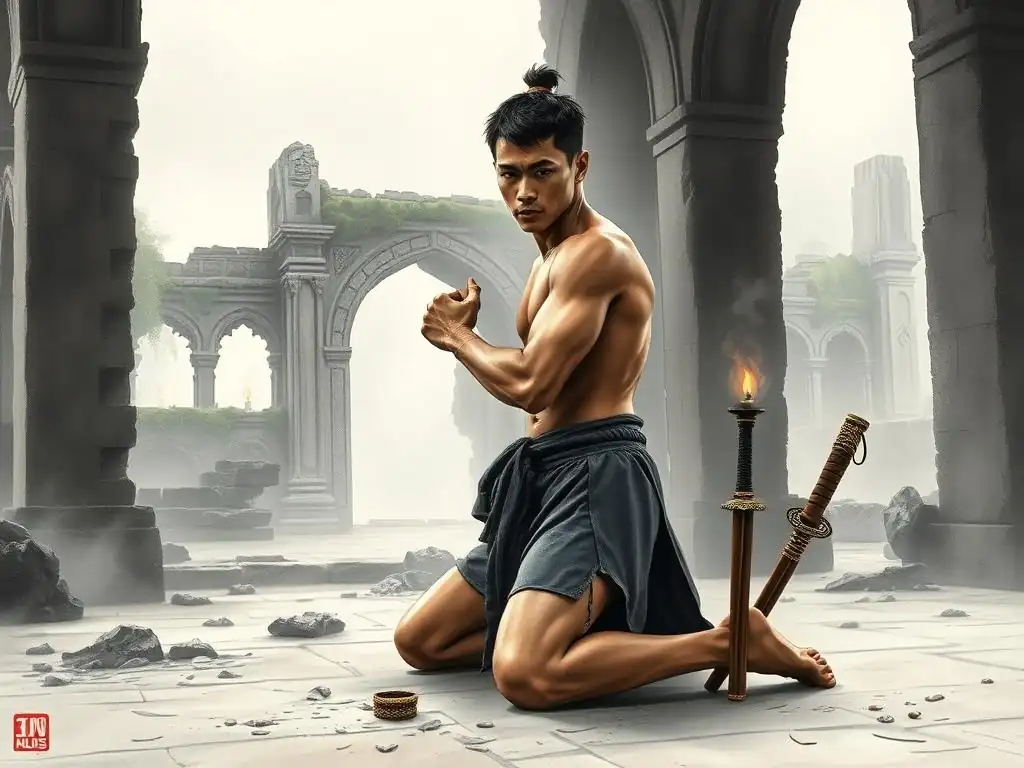
Muay Thai in the Ayutthaya period was deeply intertwined with Thai spirituality and belief systems. Fighters and Kru Muay often adhered to specific rituals and practices aimed at gaining spiritual protection, enhancing their power, or ensuring victory. This connection is evident in the pre-fight rituals, the use of sacred objects, and the respect shown to teachers and the art itself.
Before a fight or training session, it was common for fighters to perform a ritualistic dance, a precursor to the modern Wai Kru Ram Muay. This performance paid respect to the teacher, the lineage, the art, and sometimes spirits or deities. It also served as a warm-up and a demonstration of skill.
Many fighters also wore sacred amulets or Sak Yant (sacred tattoos) believed to offer protection from harm, enhance strength, or grant other spiritual advantages. These practices underscore that Ayutthaya period Muay Thai was not just a physical discipline but also a spiritual one, embedded within the broader cultural and religious context of the kingdom.
The Use of Amulets and Tattoos in Muay Thai Practice
As mentioned, amulets (Phra Kreuang) and sacred tattoos (Sak Yant) were highly significant in the practice of Muay Thai during the Ayutthaya era. Fighters sought out monks or spiritual masters to bless them with protective items or ink powerful Yantra designs onto their skin. These were believed to make the fighter invulnerable to weapons, increase their physical power, or ward off evil spirits.
Specific Yant designs were associated with different blessings, such as Metta Mahaniyom (charm and popularity, useful for gaining favor or attracting spectators) or Kongkrapan Chatri (invulnerability). The belief in the power of these spiritual aids was strong and influenced the mindset and confidence of the fighters. The widespread use of amulets and Sak Yant reflects the animistic and Buddhist beliefs prevalent in Ayutthaya society and demonstrates how these spiritual dimensions were seamlessly integrated into the physical and mental preparation of a Muay Thai practitioner, adding a unique layer to Muay Thai Ayutthaya history.
Muay Thai as a Symbol of National Identity and Pride
Over its long history, particularly during times of conflict, Muay Thai became more than just a fighting style; it evolved into a potent symbol of Siamese national identity and pride. Its effectiveness in both military defense and competitive sport demonstrated the strength, resilience, and unique cultural heritage of the Ayutthaya people. Victories in battle or the prowess of Siamese fighters in contests against foreigners were sources of immense national pride.
The legend of Nai Khanom Tom, while perhaps embellished over time, powerfully illustrates this symbolic role. His victory over Burmese fighters in captivity became a tale celebrating the inherent strength and skill of the Siamese people, embodied by their unique fighting art. This deep connection between Muay Thai and national identity, forged during the challenges and triumphs of the Ayutthaya Kingdom, has persisted through subsequent periods of Thai history and remains a cornerstone of modern Thai culture.
The Decline of Ayutthaya and the Impact on Muay Thai
The Burmese Invasions and their Effect on Muay Thai Traditions
The later period of the Ayutthaya Kingdom was marked by escalating conflict with Burma, culminating in devastating invasions. The final, catastrophic invasion in 1767 led to the sacking and destruction of the city of Ayutthaya. This period of intense warfare and the eventual fall of the kingdom had a profound, albeit complex, impact on Muay Thai traditions.
The constant need for fighters meant that training continued, often focused heavily on practical combat for survival. However, the disruption caused by war, the destruction of cities and camps, and the dispersal of populations led to the loss of some lineages, techniques, and historical records. Many Kru Muay and skilled fighters perished or were taken captive.
While the core principles of Muay Thai were resilient and adapted, the systematic structure of training camps and royal patronage that had flourished in earlier, more peaceful times was severely disrupted. This turbulent period tested the resilience of Muay Thai's traditions, forcing them to survive in a fragmented environment.
The Transition of Muay Thai into the Rattanakosin Period
Following the fall of Ayutthaya, Siam regrouped under a new capital, Thonburi, and later Bangkok, establishing the Rattanakosin Kingdom (beginning in 1782). Muay Thai, having survived the turmoil, transitioned into this new era. While the formal structures of Ayutthaya had collapsed, the knowledge and skills were carried forward by surviving fighters, Kru Muay, and scattered communities.
In the early Rattanakosin period, Muay Thai continued to be vital for national defense during conflicts and gradually re-emerged as a popular sport under the new monarchy. King Rama I (reigned 1782-1809), the first king of the Rattanakosin Kingdom, was a patron of the arts, including martial arts, and helped revive some of the traditions.
While the art continued to evolve, adapting to changing societal needs and influences, the fundamental techniques and cultural significance developed during the Ayutthaya period formed the bedrock upon which modern Muay Thai was built. The transition highlights the resilience and adaptability inherent in the history of Muay Thai in Ayutthaya.
Legacy of Ayutthaya Muay Thai: Foundations of Modern Muay Thai
Enduring Elements of Ayutthaya Muay Thai in Contemporary Practice
Despite centuries of evolution, many core elements of Ayutthaya period Muay Thai remain visible and integral to contemporary practice. The fundamental strikes using fists, elbows, knees, and feet, delivered with full body power, are direct descendants of the techniques refined during the Ayutthaya era. The emphasis on the clinch as a dominant fighting position and the devastating effectiveness of knee strikes are also legacies of this ancient style.
While modern Muay Thai incorporates elements like padded gloves, timed rounds, and detailed rules, the underlying principles of generating maximum power through efficient body mechanics and utilizing all eight limbs (fists, elbows, knees, feet) can be traced directly back to its origins in the Ayutthaya Kingdom. The toughness, resilience, and aggressive forward pressure often associated with Thai fighters today are reflections of the survival-oriented mindset forged in the historical context of Ayutthaya period Muay Thai.
Preserving the Historical Significance of Muay Thai's Ayutthaya Roots
Preserving the historical significance of Muay Thai's Ayutthaya roots is crucial for understanding the art's depth and cultural importance. Modern practitioners, historians, and cultural institutions in Thailand actively work to research, document, and promote the history of Muay Thai in Ayutthaya. This includes studying ancient texts, analyzing historical accounts, and preserving traditional training methods.
Efforts are made to distinguish between the ancient "Muay Boran" (ancient boxing), which encompasses various regional styles including the Ayutthaya style, and modern competitive Muay Thai. While distinct, they are intrinsically linked, with Muay Boran representing the ancestral forms from which modern Muay Thai evolved. Understanding this lineage provides context for the art's techniques, philosophy, and enduring connection to Thai identity.
Influence on Rituals and Pre-Fight Wai Kru Ram Muay
Perhaps the most visible and enduring legacy of Ayutthaya period Muay Thai in contemporary practice is the Wai Kru Ram Muay ritual performed before every fight. This graceful yet powerful dance is a direct continuation of the pre-fight rituals performed by fighters centuries ago. It serves as a tribute to the fighter's teacher (Kru), their lineage, the art itself, and often includes elements paying respect to the gym, family, and country.
The specific movements and patterns of the Wai Kru Ram Muay often contain symbolic representations of ancient fighting techniques or journeys. While the exact forms may vary slightly between gyms and regions, the core purpose and significance remain the same: demonstrating respect, focusing the mind, and honoring the traditions passed down through generations, reaching back to the training camps and royal courts of the Ayutthaya Kingdom. This ritual is a living link to the rich Muay Thai Ayutthaya history.
Frequently Asked Questions
What was the significance of the Ayutthaya Period for Muay Thai?
The Ayutthaya Period is considered a golden age for Muay Thai. It was during this time that Muay Thai became highly formalized and deeply ingrained in Thai culture, moving beyond simple combat to a respected martial art.
How did Muay Thai training differ during the Ayutthaya Period compared to modern times?
Training in the Ayutthaya Period was often more brutal and less regulated, focusing on practical application in warfare. Modern training emphasizes safety and technique alongside conditioning and sparring.
Was Muay Thai practiced by all levels of society during the Ayutthaya Period?
While often associated with warriors and soldiers, Muay Thai was practiced by people from all social classes, including royalty. It was a popular form of entertainment and self-defense.
What role did Muay Thai play in the military during the Ayutthaya Period?
Muay Thai was a crucial part of military training, providing soldiers with unarmed combat skills for close-quarters fighting. It was seen as an essential element of national defense.
Are there any specific legendary Muay Thai figures from the Ayutthaya Period?
Yes, while historical records are often fragmented, stories of legendary fighters like Nai Khanom Tom are central to Muay Thai history. He is revered for his skill and bravery against Burmese captors.
Final Reflection: Echoes of Ayutthaya's Warriors
The narrative of Muay Thai in the Ayutthaya period isn't just a historical account; it's a vibrant testament to the enduring spirit of a nation. The techniques, rituals, and values forged in the crucible of ancient Siam continue to resonate within the modern martial art, shaping its identity and inspiring practitioners worldwide. Understanding this historical foundation provides a crucial lens through which to appreciate the depth and significance of Muay Thai today.
The legacy of Ayutthaya's warriors profoundly influences our understanding of Muay Thai, transforming it from a mere sport into a cultural touchstone. Witnessing the dedication and discipline inherent in Muay Thai training, one can't help but feel a connection to the past, a lineage of strength and resilience. The art of eight limbs is more than just fighting; it's a way of life, a discipline that shapes the mind and body, a tradition passed down through generations.
This quote encapsulates the enduring spirit of Muay Thai, a spirit deeply rooted in the historical context of Ayutthaya.
As we reflect on the rich tapestry of Muay Thai Ayutthaya history, let us carry forward the lessons of courage, discipline, and respect. Embrace the spirit of the ancient warriors in your own endeavors, whether in the ring or in the challenges of everyday life. Let the echoes of Ayutthaya inspire you to strive for excellence, to honor tradition, and to embody the true essence of Muay Thai.
Unleash Your Inner Nak Muay!
Thank you for diving into the rich history of Muay Thai in Ayutthaya. Now that you've journeyed through the golden age of this martial art, it's time to bring that inspiration to life.
Here's how you can take the next step:
- Find a local Muay Thai gym and try a class. Feel the power and discipline firsthand!
- Research Ayutthaya-era training techniques and discuss them with your instructor to understand their historical context.
- Share this article with fellow martial arts enthusiasts to spark a conversation about Muay Thai's fascinating origins.
What aspects of Ayutthaya-era Muay Thai inspire you most to improve your training today?