
The Story Behind the Form: Exploring the Narrative of Lian Huan Quan

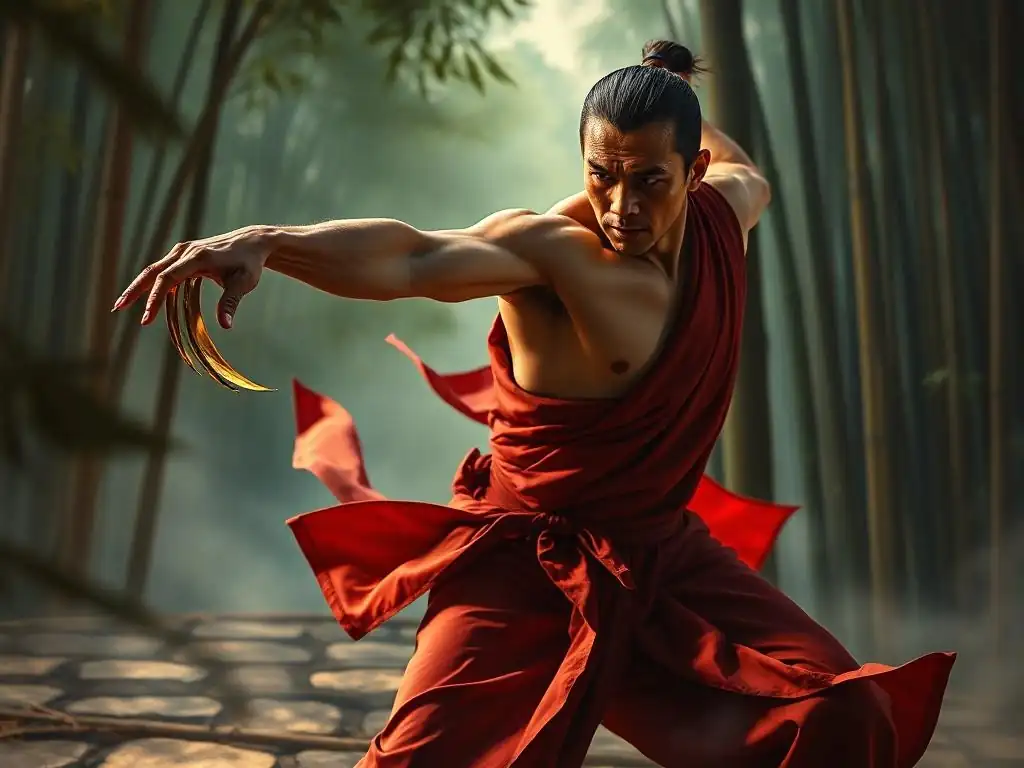
Welcome to Martial Arts Mastery, your gateway to the captivating world of combat disciplines! Delve into the rich tapestry of martial arts history, techniques, and philosophies. Ever wondered about the origins of specific forms? Our latest deep dive unveils the intriguing history of Lian Huan Quan, a style steeped in tradition and effectiveness. Prepare to embark on a journey through its narrative, uncovering the secrets that have shaped this unique martial art. What makes Lian Huan Quan so compelling? Find out more below and unlock the story behind the form!
- Unveiling Lian Huan Quan: A Deep Dive into its Origins
- Tracing the Lian Huan Quan History: From Legend to Lineage
- The Evolution of Lian Huan Quan: Different Styles and Variations
- Key Principles and Techniques in Lian Huan Quan Practice
- The Narrative Woven into Lian Huan Quan: Symbolism and Meaning
- Lian Huan Quan Training: A Guide for Practitioners
- The Legacy of Lian Huan Quan: Its Influence on Modern Martial Arts
- Lian Huan Quan: A Martial Art for Self-Defense and Personal Growth
-
Frequently Asked Questions
- What is Lian Huan Quan and what is its significance in martial arts?
- Where does Lian Huan Quan originate and what is its general historical timeline?
- What are the key characteristics and training methods associated with Lian Huan Quan?
- How does Lian Huan Quan differ from other well-known Chinese martial arts styles like Tai Chi or Wing Chun?
- Why is understanding the history of Lian Huan Quan important for practitioners?
- Final Reflection: The Enduring Dance of Lian Huan Quan
- Unleash Your Inner Warrior: Start Your Lian Huan Quan Journey Now!
Unveiling Lian Huan Quan: A Deep Dive into its Origins
What is Lian Huan Quan? An Introduction to this Kung Fu Form
Lian Huan Quan, often translated as "Linking Fist" or "Chain Boxing," is a foundational form within many traditional Northern Chinese martial arts systems, particularly those associated with Shaolin Long Fist (Changquan). It is characterized by its continuous, flowing movements where one technique seamlessly transitions into the next, creating a 'chain' of strikes and defenses.
The form emphasizes long-range techniques, dynamic footwork, and powerful, extended strikes, embodying the vigorous and expansive spirit typical of Northern Kung Fu styles. Unlike some forms that focus on isolated techniques, the core principle of Lian Huan Quan is the unbroken sequence of actions, designed to overwhelm an opponent with a relentless assault or defense.
This form serves multiple purposes in traditional training. For beginners, it acts as an essential introduction to fundamental stances, footwork patterns, and the principle of continuous motion. For more advanced practitioners, it refines coordination, stamina, and the ability to link complex sequences under pressure. The structure of Lian Huan Quan typically involves a series of forward advancements, retreats, and lateral movements, integrating punches, strikes, blocks, and kicks. Its historical significance lies in its role as a bridge form, often taught early in a student's journey to build a solid foundation before progressing to more intricate and specialized forms.
Lian Huan Quan's Place Within Shaolin Long Fist Styles
Lian Huan Quan holds a prominent position within the broader family of Shaolin Long Fist (Changquan) styles. Shaolin Long Fist itself is not a single monolithic style but rather a collection of forms and techniques developed over centuries, emphasizing fully extended techniques, agility, and powerful movements.
Lian Huan Quan is often considered one of the si lu (four roads or paths) forms, representing a set of fundamental sequences that build core skills necessary for more advanced Shaolin training. While specific forms might vary slightly between different Shaolin lineages or associated Northern styles, a form bearing the name or principles of Lian Huan Quan is commonly found early in the curriculum.
Its integration into Shaolin Long Fist highlights its foundational importance. Long Fist styles, known for their wide stances, deep postures, and emphasis on movement across significant space, rely heavily on the principles of continuous motion and linking techniques.
Lian Huan Quan embodies these principles directly, training practitioners to maintain balance and power while transitioning rapidly between stances and techniques. The form prepares students for the explosive power generation and extensive reach characteristic of advanced Long Fist applications, making it an indispensable part of the Shaolin Long Fist training methodology and contributing significantly to the overall Lian Huan Quan history within this tradition.
Tracing the Lian Huan Quan History: From Legend to Lineage
Early Influences on Lian Huan Quan Development
The early influences on the development of forms like Lian Huan Quan are deeply rooted in the martial landscape of Northern China, a region known for its vast plains and cavalry traditions, which favored long-range techniques and dynamic movement. Martial arts in this region evolved to suit warfare and self-defense in relatively open spaces, leading to the emphasis on extended strikes, kicks, and agile footwork.
The development of linking forms can be seen as a natural progression from isolated techniques to combinations, driven by the need for more effective combat sequences. Historical records, though sometimes fragmented, indicate that military training manuals and civilian martial arts practices in dynasties like the Song (960–1279 AD) and Yuan (1271–1368 AD) periods already featured principles of continuous action and linking movements.
Furthermore, the exchange of martial knowledge between different regions and military camps contributed significantly. As practitioners traveled or served in various capacities, techniques and training methodologies were shared and adapted.
Early martial arts forms were often practical compilations of effective fighting techniques, and the idea of linking these techniques into a seamless flow likely emerged from combat experience and the need for efficient training methods. While a specific, single origin point for the Lian Huan Quan form is difficult to pinpoint definitively, its structure reflects the broader evolution of Northern Chinese martial arts towards integrated, dynamic sequences designed for effectiveness in a range of confrontational scenarios.
The Role of Shaolin Temple in Shaping Lian Huan Quan's History
The Shaolin Temple, located in Henan province, has played a pivotal, albeit complex, role in the history of many Chinese martial arts, including those from which Lian Huan Quan likely emerged. While the temple's martial fame grew significantly during the Ming Dynasty (1368–1644 AD), particularly after monks participated in military campaigns, its martial practices date back centuries.
The temple served as a melting pot for various martial traditions, adapting and integrating techniques from different sources, including military exercises, folk practices, and internal cultivation methods. The Shaolin monks developed systematic training curricula, often codifying techniques into forms for preservation and transmission.
Forms like Lian Huan Quan, emphasizing fundamental movements and continuous flow, fit well within the Shaolin training philosophy, which prioritized building a strong foundation before advancing to more complex skills. The disciplined environment of the monastery facilitated the refinement and standardization of these forms.
Although attributing the creation of Lian Huan Quan solely to the Shaolin Temple is challenging due to the widespread nature of similar linking forms across Northern China, the temple's influence in popularizing, preserving, and disseminating variations of such forms cannot be overstated. The Shaolin connection has cemented Lian Huan Quan's status as a core traditional form in many modern Kung Fu lineages, linking its history firmly with the temple's legacy.
General Qi Jiguang's Influence on Northern Long Fist Styles
General Qi Jiguang (1528–1588 AD), a renowned military strategist and general during the Ming Dynasty, had a significant, indirect influence on the development and documentation of Chinese martial arts, including the Northern Long Fist styles that encompass forms like Lian Huan Quan. In his military treatise, Jixiao Xinshu (紀效新書 - New Treatise on Military Efficiency), General Qi compiled a chapter on martial arts, documenting various techniques and forms prevalent during his time.
He recognized the importance of individual soldier training and sought to standardize effective combat methods. While he did not invent Lian Huan Quan, his work provided a valuable snapshot of the martial arts landscape and influenced how techniques were systematized.
General Qi described a "set of 32 postures" (三十二勢 - Sānshí'èr Shì) in his book, drawing from various contemporary styles, including movements associated with "Long Fist" and other Northern practices. This compilation demonstrated the principle of linking techniques together for practical application. His emphasis on combining movements into sequences for effective combat resonated with the principles found in Lian Huan Quan.
The Jixiao Xinshu became an important reference point for later martial artists and historians, helping to preserve the knowledge of techniques and training methods that formed the basis of many subsequent forms. Thus, while not the creator, General Qi's documentation played a crucial role in the historical lineage and understanding of the principles underlying forms like Lian Huan Quan, solidifying its place within the documented history of Chinese martial arts.
The Evolution of Lian Huan Quan: Different Styles and Variations
Regional Adaptations of Lian Huan Quan Techniques
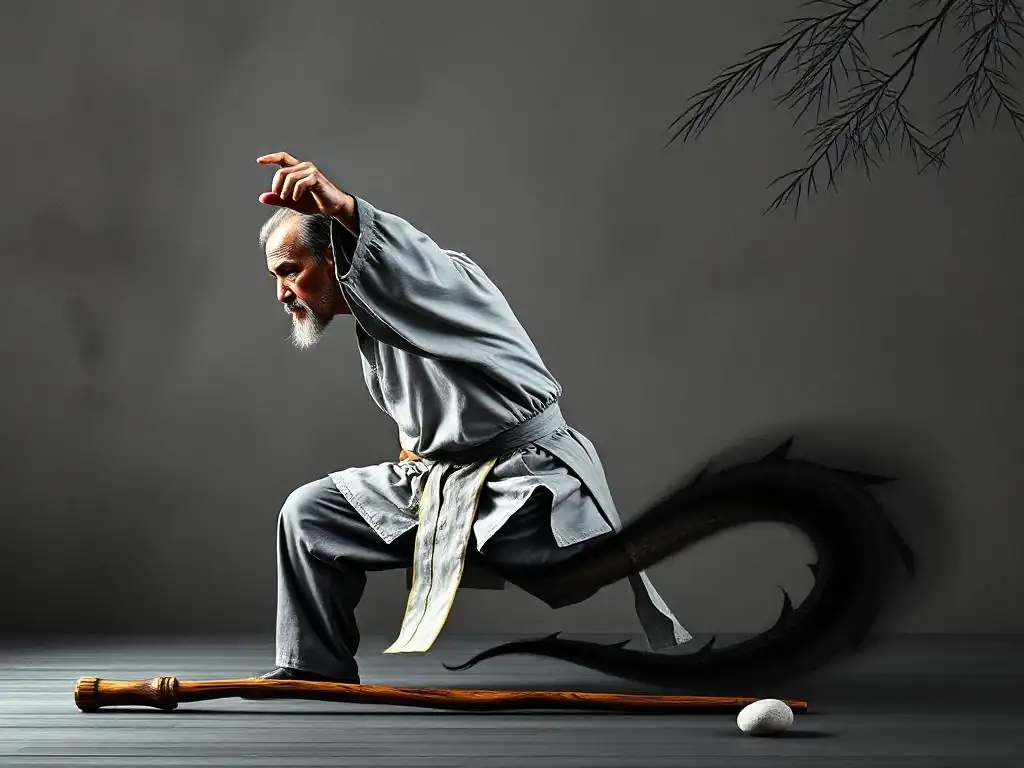
Like many traditional martial arts forms passed down through generations and across various regions, Lian Huan Quan has seen significant regional adaptations. While the core principle of linking movements remains constant, the specific techniques, stances, and overall emphasis can vary depending on the geographic location and the specific lineage that preserved and taught the form.
In some Northern regions, the form might emphasize deeper, wider stances and more pronounced, expansive movements, reflecting the open terrain and martial traditions of areas like Shandong or Hebei provinces. These variations often feature powerful, sweeping leg techniques and long-range hand strikes, typical of Northern Long Fist generally.
Conversely, versions found closer to transitional zones or influenced by different local styles might incorporate slightly higher stances, quicker transitions, or a greater integration of closer-range techniques. For instance, some variations might show influences from Baji Quan or other local boxing styles, subtly altering the angle or power generation method of certain strikes.
These adaptations are not arbitrary; they often reflect the practical needs, physical characteristics of the practitioners in a specific area, or the cross-pollination with other martial arts traditions present in that locality. Understanding these regional nuances is key to appreciating the rich and diverse history of Lian Huan Quan and its continued evolution across China.
Modern Interpretations of Lian Huan Quan
In the modern era, Lian Huan Quan is practiced in various contexts, leading to different interpretations and applications of the form. One prominent modern interpretation is within the framework of contemporary Wushu, particularly the competitive sport format. In Wushu, traditional forms are often adapted for performance, emphasizing aesthetic appeal, flexibility, speed, and acrobatic elements.
While the sequence of movements might be based on traditional Lian Huan Quan, the execution is often stylized, with higher jumps, flashier kicks, and more dramatic postures designed to score points in competition rather than for direct combat application. This interpretation highlights the form's physical demands and artistic potential.
Another modern interpretation focuses on preserving the form's traditional combat applications and health benefits. Many traditional Kung Fu schools continue to teach Lian Huan Quan emphasizing its practical self-defense techniques, body mechanics, and internal cultivation aspects. Practitioners in these schools focus on generating power through proper structure, linking movements for practical combinations, and developing internal energy (Qi).
Furthermore, some modern martial artists analyze the form through the lens of biomechanics and sports science, seeking to optimize performance and reduce injury risk. These diverse modern interpretations demonstrate the enduring versatility and appeal of Lian Huan Quan, allowing it to thrive as both a traditional martial art and a contemporary physical discipline.
Key Principles and Techniques in Lian Huan Quan Practice
Understanding the Core Movements of Lian Huan Quan
The core movements of Lian Huan Quan are designed around the principle of continuous, flowing action, preventing the practitioner from pausing and creating openings for an opponent. This is achieved through a series of linked techniques, where the end of one movement sets up the beginning of the next. Key movements often include rapid-fire punches (like the 'chain punch'), sweeping blocks, and forward-advancing kicks.
For example, a common sequence might involve a low block followed immediately by a forward punch, transitioning without hesitation into a step and another strike. The power in these movements comes not just from individual strikes but from the momentum generated by the preceding action.
Another fundamental aspect is the coordination of the entire body. In Lian Huan Quan, the hands, feet, torso, and hips must move in unison to generate maximum power and maintain balance during rapid transitions. The form trains practitioners to utilize ground reaction forces effectively, channeling energy from the legs through the core and out to the extremities.
Specific movements often involve circular or spiraling motions within the linear advancement, adding complexity and defensive capabilities. Mastering these core movements requires significant practice to develop fluidity, coordination, and the ability to execute techniques with speed and precision while maintaining the 'chain' of actions.
Lian Huan Quan Stances: Foundation of the Form
Stances are the foundational elements upon which the dynamic movements of Lian Huan Quan are built. The form typically utilizes a variety of Northern Kung Fu stances, emphasizing stability, balance, and the ability to generate power and move quickly.
Common stances include the Bow Stance ( Gong Bu), characterized by a deep lunge forward with the front knee bent and the rear leg straight, providing a stable base for forward power generation and reach. The Horse Stance ( Mabu), with feet wide apart and knees bent, is used for developing leg strength and providing a solid, versatile base for strikes and transitions.
Other stances frequently seen include the Empty Stance ( Xubu), where most weight is on the rear leg, allowing the front leg to be used for quick kicks or steps, and the Drop Stance ( Pu Bu), a very low squatting stance used for low attacks or evasions. The transitions between these stances are as crucial as the stances themselves.
Lian Huan Quan emphasizes smooth, powerful shifts from one stance to another, often incorporating stepping patterns like the 'follow step' ( Gen Bu) or 'cross step' ( Cha Bu) to maintain momentum and positioning. Proper execution of these stances and transitions is vital for embodying the continuous flow and power inherent in the form.
Offensive and Defensive Strategies in Lian Huan Quan
Lian Huan Quan is inherently designed to integrate offensive and defensive strategies seamlessly within its continuous flow. The primary offensive strategy is overwhelming the opponent through a relentless, chained sequence of attacks. Instead of single strikes, the form teaches how to follow up immediately with subsequent techniques, exploiting any opening created by the initial action. This 'chain' prevents the opponent from recovering or launching their own counter-attack effectively. Techniques often include rapid hand strikes aimed at multiple targets, combined with forward-driving kicks designed to breach the opponent's defense or control distance.
Defensively, the form incorporates blocks, parries, and evasive footwork that are integrated into the offensive sequences. A block is not just a static deflection but often a transitional movement that immediately leads into a strike or a controlling technique. For example, a defensive parry might be followed instantly by a counter-strike using the same hand or a different limb.
The dynamic footwork allows the practitioner to evade attacks while simultaneously repositioning for a counter-attack. The core principle is that defense and offense are not separate actions but two sides of the same continuous motion, making Lian Huan Quan a highly practical form for developing reactive and proactive combat skills.
The Narrative Woven into Lian Huan Quan: Symbolism and Meaning
Interpreting the Movements: A Story Told Through Lian Huan Quan
While not a literal story with characters and plot, Lian Huan Quan can be interpreted as a narrative of continuous engagement and resilience in combat. The form's structure, moving predominantly forward with occasional retreats and lateral shifts, can symbolize the ebb and flow of a confrontation – advancing when possible, yielding when necessary, but always maintaining pressure.
The 'linking' aspect itself tells a story of unwavering determination; like an unbreakable chain, the practitioner's spirit and technique remain connected, refusing to falter or break under pressure. Each sequence of movements can be seen as a 'chapter' in this narrative, illustrating different facets of combat, from initial engagement to intense close-quarters exchange and strategic repositioning.
For instance, a section with rapid forward steps and multiple hand strikes might represent a determined push or assault, while a sequence involving a low stance and an upward block followed by a quick step back could depict defending against a low attack and creating distance. The transitions between stances and techniques are the 'sentences' connecting these chapters, ensuring the narrative flows without interruption.
Practitioners are encouraged to understand the combat application and underlying intent behind each movement, not just perform the physical actions. By doing so, they embody the 'story' of Lian Huan Quan, learning not just techniques but the strategic mindset and fighting spirit embedded within the form's structure and history.
The Philosophical Underpinnings of Lian Huan Quan
Beyond its practical application, Lian Huan Quan embodies several philosophical principles central to Chinese martial arts and traditional thought. The concept of continuous flow reflects principles of fluidity and adaptability, akin to water, which can be soft and yielding yet powerful enough to erode stone. This emphasizes the importance of adapting to changing circumstances in combat rather than rigidly adhering to a fixed plan. The interconnectedness of movements mirrors the concept of Yin and Yang, where seemingly opposing forces (like defense and offense, or yielding and advancing) are interdependent and constantly transforming into one another.
The form also cultivates discipline, perseverance, and focus. Mastering the intricate sequences and maintaining the continuous flow requires significant mental and physical effort. The repetitive practice instills patience and builds mental fortitude.
Furthermore, the emphasis on whole-body coordination and the integration of mind and body aligns with traditional Chinese philosophies that view the individual as a holistic system. Practicing Lian Huan Quan is not just about learning to fight; it is a method of self-cultivation, teaching valuable lessons about continuity, adaptability, discipline, and the interconnectedness of action, principles that resonate deeply with the philosophical underpinnings found throughout the history of Chinese martial arts.
Lian Huan Quan Training: A Guide for Practitioners
Essential Drills for Mastering Lian Huan Quan
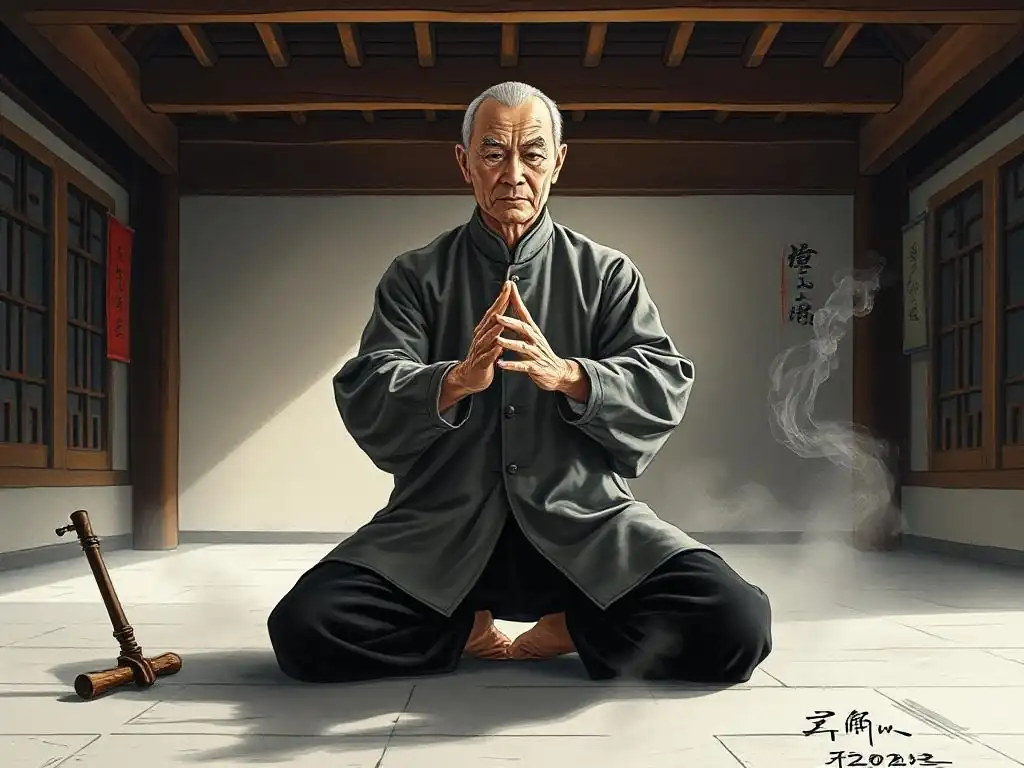
Mastering Lian Huan Quan requires dedicated practice focusing on specific drills that build the necessary foundational skills. One essential drill is basic stance training, such as holding the Bow Stance and Horse Stance for extended periods to build leg strength and stability, crucial for the form's low postures and dynamic movements. Another vital drill involves practicing the fundamental stepping patterns, like the 'follow step' ( Gen Bu), independently to develop balance and speed during transitions. This ensures smooth and powerful movement between techniques without losing structure.
Linking drills are also paramount. These involve isolating specific sequences of two or three techniques from the form and practicing them repeatedly to achieve fluidity and speed. For example, practicing the transition from a low block to a forward punch, or from a high block to a step and kick, focusing on minimizing hesitation between movements.
Partner drills, while requiring careful control, can help practitioners understand the application of the linked movements against a moving target. Common partner drills might involve one person providing a passive defense while the other practices a short offensive sequence from the form, or practicing coordinated blocking and counter-attacking based on Lian Huan Quan principles.
Common Mistakes and How to Avoid Them in Lian Huan Quan Training
Practitioners learning Lian Huan Quan often encounter common pitfalls that hinder their progress and effectiveness. One frequent mistake is breaking the 'chain' of movements by pausing between techniques. This disrupts the flow, reduces momentum, and creates openings. To avoid this, focus on smooth transitions, ensuring the end of one movement immediately initiates the next, like gears meshing together.
Drill specific transitions repeatedly until they become seamless. Another common error is neglecting the lower body; weak stances or poor footwork lead to instability, reduced power, and a lack of mobility. Correct this by dedicating significant time to stance training and practicing stepping drills independently, ensuring the legs and feet are actively involved in every movement.
Lack of whole-body coordination is another significant issue. Some practitioners rely solely on arm strength, neglecting the power generated from the legs and core. This results in weak, disconnected techniques. To improve, practice movements slowly initially, focusing on coordinating the hips, torso, and limbs. Visualize channeling energy from the ground up. Finally, focusing only on speed without proper structure or power generation is counterproductive. While speed is important, it must be built upon a solid foundation of correct form and mechanics. Practice sequences slowly first to establish proper body alignment and power generation before gradually increasing speed.
Integrating Qinna (Joint Locking) Principles in Lian Huan Quan Training
While Lian Huan Quan is primarily known for its striking and kicking techniques, integrating principles of Qinna (擒拿 - joint locking and grappling) can significantly enhance a practitioner's understanding and application of the form. Although explicit Qinna techniques might not be overtly present in the basic Lian Huan Quan sequence, the principles of leverage, control, and applying pressure to joints are highly relevant.
Many striking or blocking movements in the form can transition into controlling or locking techniques with minor adjustments. For instance, a block might redirect an opponent's limb in a way that sets it up for a joint lock, or a hand strike could simultaneously grab and control.
Training to integrate Qinna involves analyzing the movements within Lian Huan Quan not just as strikes or blocks, but also as potential controls or setups for joint manipulation. This requires developing sensitivity to an opponent's structure and balance.
Drills might involve practicing how to transition from a parry or block into a wrist or elbow lock, or how to use a stepping pattern to gain a positional advantage for a takedown or joint control. While Lian Huan Quan's history is rooted in long-range combat, understanding Qinna principles adds a crucial layer of close-quarters effectiveness, making the practitioner more versatile and highlighting the interconnectedness of different martial skills within a comprehensive system.
The Legacy of Lian Huan Quan: Its Influence on Modern Martial Arts
Lian Huan Quan's Impact on Other Kung Fu Styles
Lian Huan Quan, as a foundational form emphasizing continuous movement and linked techniques, has exerted a notable influence on the development and training methodologies of various other Kung Fu styles, particularly within the Northern Chinese martial arts family. Its core principles of seamless transitions and generating power through momentum are not unique to this specific form but are fundamental concepts disseminated through its practice.
Many later or more specialized Long Fist forms built upon the basic mechanics and movement patterns introduced in Lian Huan Quan. For example, the emphasis on fluid footwork and rapid-fire hand techniques found in advanced Changquan forms often trace their roots back to the fundamental training provided by forms like Lian Huan Quan.
Beyond direct lineage, the concept of a 'linking' or 'chain' form as a fundamental training tool has been adopted in various systems. Even styles not directly descended from Shaolin Long Fist might incorporate similar basic sequences designed to teach coordination and continuous motion early in a student's training.
The pedagogical value of Lian Huan Quan – its ability to build a strong foundation in stances, footwork, and linking techniques – has made its structure and principles influential across a broader spectrum of Northern Chinese martial arts training curricula. Its historical significance lies not just in its own preservation but in its role as a fundamental building block that shaped subsequent martial development.
Preserving and Promoting Lian Huan Quan for Future Generations
Preserving and promoting Lian Huan Quan for future generations is a crucial task for the martial arts community. This involves several key efforts. Firstly, meticulous documentation of the form's various sequences, applications, and historical context is essential. This includes written records, diagrams, and increasingly, high-quality video recordings of skilled practitioners performing the form. Documenting regional variations and lineage-specific interpretations helps maintain the richness and diversity of Lian Huan Quan history. Secondly, dedicated teaching by experienced masters and instructors is vital. Passing down the form requires not just demonstrating movements but explaining the underlying principles, applications, and cultural context.
Promotional efforts include organizing workshops, seminars, and public demonstrations to raise awareness and attract new practitioners. Integrating Lian Huan Quan into school curricula or community programs can also introduce it to a wider audience. Furthermore, leveraging digital platforms, such as online tutorials, forums, and social media, can connect practitioners globally and facilitate the sharing of knowledge and training tips. By actively preserving the historical information and promoting its practice through accessible and engaging methods, the legacy of Lian Huan Quan as a valuable martial art and cultural heritage can be secured for practitioners worldwide.
Lian Huan Quan: A Martial Art for Self-Defense and Personal Growth
The Practical Applications of Lian Huan Quan Techniques
While often practiced as a traditional form, Lian Huan Quan contains numerous practical applications for self-defense. The core principle of continuous attack is highly effective in overwhelming an opponent and preventing them from mounting a strong defense. The rapid-fire hand strikes, such as the 'chain punch', are designed to land multiple hits quickly, targeting vulnerable areas.
The dynamic footwork allows practitioners to close distance rapidly for attack or create space for evasion, crucial skills in a real confrontation. For example, a quick forward step combined with a simultaneous strike can bridge the gap and initiate an attack before an opponent is ready.
Furthermore, the emphasis on whole-body power generation ensures that even seemingly simple techniques can be devastatingly effective when applied correctly. The low stances provide a strong base for generating power and make the practitioner a harder target. The integration of blocks and parries within the offensive flow means that defensive actions transition immediately into counter-attacks, maximizing efficiency. While sparring and application drills are necessary to translate the form's movements into practical skills, the foundational techniques and principles taught in Lian Huan Quan provide a solid framework for developing effective self-defense capabilities against common threats.
Cultivating Discipline and Focus Through Lian Huan Quan
Beyond its physical and combative aspects, the practice of Lian Huan Quan is a powerful tool for cultivating discipline and focus, essential qualities for personal growth. The demanding nature of learning and perfecting the form requires consistent, dedicated practice over extended periods. Practitioners must commit to showing up, putting in the effort even when tired, and working through challenging sequences. This process inherently builds discipline and perseverance, teaching the value of sustained effort towards achieving a goal. The repetitive nature of drilling techniques reinforces the importance of diligence and attention to detail.
Performing the form itself demands intense focus. Practitioners must concentrate on the sequence of movements, coordinating their entire body, controlling their breath, and maintaining the continuous flow. Any lapse in concentration can lead to errors or a breakdown in the form.
This training in sustained attention translates well into other areas of life, improving concentration in academic, professional, or personal pursuits. The mental challenge of memorizing the form and executing it with precision also enhances cognitive skills. Thus, the journey of mastering Lian Huan Quan is not just about physical proficiency but is a profound exercise in self-mastery, fostering mental discipline and unwavering focus.
Frequently Asked Questions
What is Lian Huan Quan and what is its significance in martial arts?
Lian Huan Quan, often translated as "Linked Fists" or "Continuous Fists", is a traditional Chinese martial arts form. Its significance lies in its emphasis on fluidity, continuity, and practical application of techniques.
Where does Lian Huan Quan originate and what is its general historical timeline?
Lian Huan Quan's exact origins are debated, but it is generally associated with Northern Shaolin traditions. Historical timelines place its development over several centuries, with roots possibly tracing back to the Ming Dynasty.
What are the key characteristics and training methods associated with Lian Huan Quan?
Key characteristics include linked sequences, close-range combat techniques, and emphasis on speed and agility. Training involves mastering forms, partner drills, and conditioning to develop the necessary power and coordination.
How does Lian Huan Quan differ from other well-known Chinese martial arts styles like Tai Chi or Wing Chun?
Unlike Tai Chi's focus on slow, deliberate movements, Lian Huan Quan emphasizes dynamic and rapid transitions. While Wing Chun focuses on close-range trapping, Lian Huan Quan incorporates a wider range of striking and grappling techniques.
Why is understanding the history of Lian Huan Quan important for practitioners?
Understanding the history provides context and deeper appreciation for the form. It allows practitioners to connect with the tradition, philosophical underpinnings, and practical applications intended by its creators.
Final Reflection: The Enduring Dance of Lian Huan Quan
The exploration of Lian Huan Quan's history reveals more than just a martial art; it unveils a tapestry of cultural resilience and adaptation. This journey through its origins and evolution underscores its continued relevance as a living embodiment of Chinese philosophy and physical prowess. In a world increasingly disconnected from its roots, understanding the narrative behind Lian Huan Quan offers a powerful connection to tradition and a deeper appreciation for the art's enduring spirit.
The cyclical nature of Lian Huan Quan, its continuous flow and interconnected movements, mirrors the ebb and flow of history itself. Witnessing its survival and adaptation through various eras highlights its profound influence on the cultural landscape, shaping not only physical discipline but also mental fortitude and spiritual awareness. The form is emptiness, emptiness is form. Lian Huan Quan is not just about fighting; it is about understanding the universe within yourself.
This quote encapsulates the essence of Lian Huan Quan, reminding us that its true power lies not just in its techniques but in its ability to cultivate inner harmony.
Now, as you reflect on the history of Lian Huan Quan, consider how its principles of adaptability and resilience can be applied to your own life. Embrace the continuous flow of change, find strength in interconnectedness, and strive for harmony in all your endeavors. Let the enduring dance of Lian Huan Quan inspire you to move forward with grace, power, and a deep connection to your own inner strength.
Unleash Your Inner Warrior: Start Your Lian Huan Quan Journey Now!
Thank you for diving into the captivating history of Lian Huan Quan. We hope you've gained a deeper appreciation for this dynamic martial art. Ready to translate this knowledge into action?
Here's how you can deepen your connection with Lian Huan Quan:
- Find a local Lian Huan Quan school or instructor: Begin your practical training and experience the form firsthand.
- Explore historical texts and resources: Delve further into the lineage and cultural significance of Lian Huan Quan.
- Share this article with fellow martial arts enthusiasts: Spark a conversation and inspire others to discover Lian Huan Quan.
What's one thing you'll implement in your martial arts practice after learning about Lian Huan Quan’s rich history?