
The Solo Advantage: Gaining a Competitive Edge Through Independent Practice

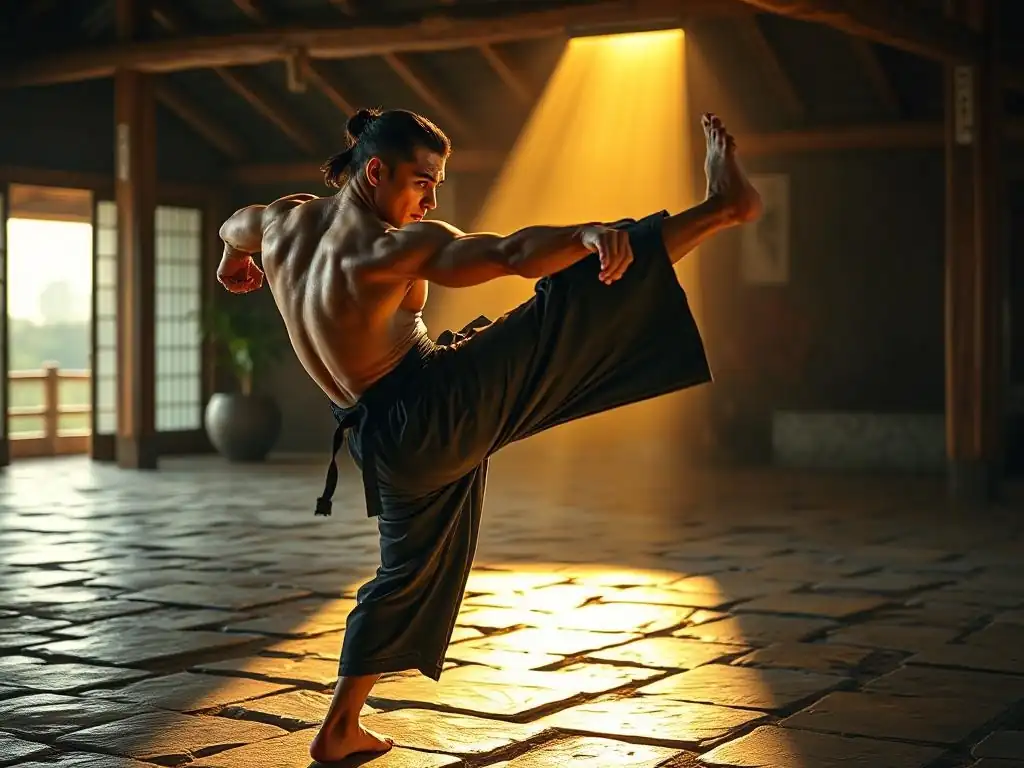
Welcome to Martial Arts Mastery, your definitive resource for unlocking the secrets of combat and self-improvement. Ever wonder how legendary martial artists honed their skills to achieve unparalleled mastery? This week, we delve into the powerful world of solo martial arts training benefits. Discover how independent practice can forge a competitive edge, sharpen your technique, and cultivate unwavering discipline – all without a partner. Intrigued? Read on to discover the advantages that await you on your solitary path to martial arts excellence...
- Mastering Martial Arts Through Solo Practice: An Introduction
- Unveiling the Benefits of Solo Martial Arts Training
- Solo Martial Arts Training Benefits: Specific Drills and Techniques
- Optimizing Your Solo Martial Arts Training Regimen
- Solo Martial Arts Training vs. Group Training: A Complementary Approach
- Advanced Solo Training Methods for Experienced Martial Artists
- Conclusion: The Enduring Value of Solo Martial Arts Training
-
Frequently Asked Questions
- How can solo martial arts training improve my competitive edge?
- What are the key benefits of practicing martial arts techniques alone?
- What specific martial arts disciplines lend themselves well to solo practice?
- How does solo martial arts training enhance self-defense strategies?
- What training tips can maximize the effectiveness of my solo martial arts practice?
- Final Reflection: Embracing the Power of Self-Reliance
- Ignite Your Inner Champion: Unleash Your Potential Now!
Mastering Martial Arts Through Solo Practice: An Introduction
Why Embrace Solo Training in Martial Arts?
Embarking on the journey of martial arts mastery often involves dedicated group classes, sparring partners, and instructor guidance. However, overlooking the significant advantages of independent practice is a common oversight. Solo martial arts training offers a unique pathway to refine techniques, build physical conditioning, and cultivate mental fortitude in a focused environment free from external distractions. It provides an opportunity for deep introspection into one's movements and understanding of principles, allowing practitioners to identify and address personal weaknesses without the pressure of performance in front of others.
The benefits of solo martial arts training extend beyond simple repetition; they build a foundation of self-sufficiency critical for real-world application. While group classes teach interaction and timing with a partner, solo sessions allow for meticulous attention to detail – the angle of a wrist, the tension in a core, the subtle shift of weight. This self-directed attention to form and mechanics is paramount. Studies in motor learning indicate that deliberate practice, often performed in isolation, is a key driver of expert performance, suggesting that dedicated solo time can accelerate skill acquisition significantly.
Understanding the Scope of Solo Martial Arts Training
Solo martial arts training encompasses a wide array of exercises and methodologies, adaptable to virtually any discipline, from striking arts like Karate and Boxing to grappling arts like Judo and Jiu-Jitsu, and even weapon-based systems. It's not merely about performing techniques in isolation but about using that time to analyze, correct, and perfect every facet of one's art. This can involve everything from structured forms (kata, taolu) and shadow boxing to intensive conditioning drills, flexibility work, and even mental exercises like visualization.
The scope is limited only by a practitioner's understanding and creativity. For instance, a Judo player might use resistance bands to simulate gripping and pulling actions, while a Taekwondo practitioner perfects complex aerial kicks by breaking them down into isolated movements. These solo martial arts training benefits accumulate over time, building layers of proficiency that complement group training. It's about creating a comprehensive training regimen where independent work reinforces and expands upon what is learned with others, ensuring continuous growth and deeper understanding.
Unveiling the Benefits of Solo Martial Arts Training
Improved Technique and Form Through Repetition
One of the most profound solo martial arts training benefits is the ability to dedicate extensive time to perfecting technique and form through focused repetition. Without the variable factor of a partner's reaction or the need to spar, practitioners can execute movements slowly, deliberately, and repeatedly, paying close attention to alignment, balance, and the kinetic chain.
This deliberate practice is crucial for hardwiring correct movement patterns into muscle memory. For example, a Karateka can spend hours refining a single punch, ensuring the hip rotation is correct, the stance is stable, and the extension is precise, repeating it hundreds or even thousands of times in a single session.
This isolated repetition allows for immediate self-correction. If a movement feels awkward or unbalanced, the practitioner can stop, analyze, and adjust without interruption. This level of detailed self-assessment is often difficult to achieve in a dynamic group setting. Research in skill acquisition highlights that high-quality, deliberate practice, characterized by focused repetition and immediate feedback (even if self-provided), leads to superior performance outcomes. Solo training provides the ideal environment for this kind of intensive technical refinement, significantly enhancing the efficiency and power of techniques.
Enhanced Muscle Memory and Motor Skills
Consistent solo practice is a powerful catalyst for developing robust muscle memory and refining complex motor skills. By performing techniques repeatedly in isolation, the nervous system lays down stronger neural pathways associated with those movements. This means that over time, techniques become more automatic, requiring less conscious thought to execute efficiently. Consider a boxer practicing punch combinations on a heavy bag or in shadow boxing; the more they repeat specific sequences, the more fluid and instinctive those combinations become, even under pressure.
The physical solo martial arts training benefits here are tangible. The body learns to coordinate complex sequences of movements – like a spinning back kick or a transition in grappling – with greater precision and speed. This enhanced motor control translates directly to improved performance in sparring or self-defense situations, where reaction time and ingrained technique are critical. It's estimated that achieving true mastery in a skill requires thousands of hours of deliberate practice; solo training provides a structured way to accumulate these essential repetitions, accelerating the development of ingrained, highly efficient movement patterns.
Boosting Stamina and Cardiovascular Health
Solo martial arts training is an excellent way to significantly boost cardiovascular health and overall physical stamina. Many solo drills, such as continuous shadow boxing, bag work, or performing forms back-to-back, elevate the heart rate and maintain it at an aerobic or even anaerobic level for extended periods. A typical 30-minute session of intense solo drills can be as demanding as a high-intensity interval training (HIIT) workout, burning substantial calories (potentially 300-600+ depending on intensity and body weight) and improving the body's ability to utilize oxygen efficiently.
Unlike partner drills which might involve waiting turns or varied intensity, solo training allows for sustained, high-output effort tailored precisely to the practitioner's current fitness level and goals. Performing multiple rounds of bag work with minimal rest, or continuously moving through a series of conditioning exercises, builds endurance specific to the demands of martial arts. This improved stamina means practitioners can maintain technical proficiency and effectiveness for longer durations during sparring, competition, or prolonged physical encounters, making it a vital solo martial arts training benefit for competitive readiness.
Developing Mental Focus and Discipline
Beyond the physical, a significant solo martial arts training benefit lies in the cultivation of mental focus and unwavering discipline. Training alone requires intrinsic motivation; there's no instructor pushing you or partners to keep pace with. This environment fosters self-discipline as you must choose to start, continue, and push through fatigue solely based on your commitment to improvement. It teaches you to rely on your internal drive rather than external accountability.
Moreover, the isolated nature of solo practice demands intense concentration. Whether meticulously analyzing a form, visualizing an opponent during shadow boxing, or focusing on the precise impact point during bag work, the mind must be fully engaged. This trains the ability to block out distractions and maintain a high level of focus for extended periods, a skill invaluable both within martial arts and in other aspects of life. This mental fortitude, honed through consistent solo effort, is a cornerstone of progression and resilience in any challenging endeavor.
Solo Training: Cultivating Self-Reliance and Adaptability
A key solo martial arts training benefit is the cultivation of self-reliance and adaptability. When training alone, you are responsible for your own learning and improvement. You must identify your own flaws, devise methods to correct them, and push yourself through plateaus. This process builds a strong sense of independence and problem-solving skills that are directly applicable to dynamic, unpredictable situations, whether in sparring or self-defense. You learn to trust your own judgment and capabilities.
Furthermore, solo training often requires adapting standard techniques or drills to work without a partner. This encourages creative thinking about movement, leverage, and application. A practitioner might use a wall for resistance, a chair to practice angles, or visualize scenarios to practice timing and distance. This necessity to adapt fosters a deeper, more conceptual understanding of techniques and principles, making the practitioner more resourceful and less dependent on specific conditions or partners to practice and apply their skills effectively.
Solo Martial Arts Training Benefits: Specific Drills and Techniques
Shadow Boxing: Refining Striking Techniques Alone
Shadow boxing is perhaps the most widely recognized form of solo martial arts training for strikers, and for good reason. It involves practicing strikes, footwork, head movement, and defensive maneuvers against an imaginary opponent. This allows for high-volume repetition of techniques, focusing purely on form, balance, speed, and fluidity without the impact or resistance of a bag or partner. Boxers, kickboxers, and martial artists across striking disciplines utilize shadow boxing to perfect their stance, refine punch and kick mechanics, work on defensive slips and rolls, and practice complex combinations.
A typical shadow boxing session might involve multiple rounds (e.g., three to five 3-minute rounds with 1 minute rest), focusing on different aspects in each round – perhaps footwork in the first, straight punches in the second, defensive movements in the third, and combinations in the fourth. Elite fighters often spend significant portions of their training camp on shadow boxing, sometimes for 10-15 minutes straight, to build muscle memory for movement patterns and combinations. The solo martial arts training benefits here are immense for developing rhythm, timing, and effortless execution of strikes and defensive actions.
Kata and Forms: Perfecting Movement and Sequencing
Forms, known as Kata in Karate, Taolu in Wushu, Poomsae in Taekwondo, and similar structured sequences in other arts, are foundational solo martial arts training methods. These pre-arranged sequences of movements, strikes, blocks, stances, and sometimes throws or joint locks, are designed to encapsulate the core techniques, principles, and strategies of a style. Practicing forms allows practitioners to work on their technique, balance, coordination, focus, and power generation in a systematic way, even when training alone.
The solo martial arts training benefits derived from forms practice are multifaceted. Repeatedly performing a kata helps to engrain the correct sequence of movements and transitions, improving muscle memory. More importantly, it allows for deep introspection on the meaning and application of each movement. A practitioner can pause during a form to analyze their stance stability, the tension in their core during a block, or the precise angle of a strike. Mastering forms builds a strong technical base and a deeper understanding of the art's underlying principles, often revealing subtle details missed in partner work.
Bag Work: Developing Power and Precision
Bag work, utilizing heavy bags, speed bags, double-end bags, or focus mitts (though often held by a partner, solo use on certain types is common), is a crucial solo martial arts training component for developing power, speed, timing, and precision in striking. Unlike shadow boxing which focuses on form and flow, bag work provides resistance, allowing practitioners to apply full power and feel the impact. This is essential for conditioning the striking limbs and building explosive power.
Hitting the heavy bag allows for high-intensity interval training, simulating the bursts of energy required in a fight. Rounds on the bag (e.g., 2-3 minute rounds) can focus on specific types of strikes (jabs, hooks, kicks), combinations, or power development. The solo martial arts training benefits of bag work include improved punching/kicking power (often measured in pounds per square inch or joules, though precise personal data is hard to track without equipment, improvements of 10-20% are feasible with dedicated practice), hand/foot conditioning, timing, and endurance. Speed bags and double-end bags further refine timing, rhythm, and hand-eye coordination.
Strength and Conditioning Exercises for Martial Artists
Effective solo martial arts training must incorporate general strength and conditioning. While not always martial arts techniques themselves, exercises like push-ups, pull-ups, squats, lunges, planks, and various core exercises build the physical foundation necessary for executing techniques powerfully and maintaining stamina. Bodyweight exercises are particularly valuable as they can be done anywhere and often mimic the functional movements required in martial arts.
Dedicated solo conditioning sessions (e.g., 2-3 times per week for 30-60 minutes) can focus on building explosive power (plyometrics like jump squats), muscular endurance (high-repetition bodyweight circuits), and core strength (various plank and crunch variations). Improvements in these areas directly translate to martial arts performance. For example, increased leg strength improves kicking power and stance stability, while a stronger core enhances power transfer in strikes and improves balance in grappling. These physical solo martial arts training benefits are indispensable for peak performance.
Flexibility and Mobility Training for Improved Performance
Flexibility and mobility are often overlooked yet critical components of solo martial arts training. Adequate flexibility allows for a greater range of motion, essential for executing techniques like high kicks or deep stances without strain. Mobility, the ability to move a joint through its full range of motion with control, is vital for fluidity, power generation, and injury prevention. Solo time is perfect for dedicated stretching and mobility routines.
This can include dynamic stretches (leg swings, arm circles) as a warm-up and static stretches (holding stretches for 30+ seconds) as a cool-down or dedicated session. Yoga and Pilates are also excellent forms of solo practice that build flexibility, core strength, and body control. Improved flexibility can lead to higher kicks (potentially increasing kicking height by several inches over time) and deeper, more stable stances, while enhanced mobility improves transitions and reduces the risk of sprains or tears. These solo martial arts training benefits contribute significantly to longevity and performance.
Optimizing Your Solo Martial Arts Training Regimen
Setting Realistic Goals and Tracking Progress
To maximize the solo martial arts training benefits, it is essential to set clear, realistic goals and establish a system for tracking progress. Without specific objectives, solo sessions can lack focus. Goals might be technique-based (e.g., "perfect the hip rotation on my roundhouse kick," "perform Kata X without mistakes"), conditioning-based ("hold a plank for 3 minutes," "complete 10 rounds of shadow boxing"), or flexibility-based ("touch my toes," "improve my side split by 2 inches").
- Define specific, measurable goals.
- Write them down.
- Keep a training journal (physical or digital).
- Record what you practiced, for how long, and any observations.
- Note improvements or challenges.
- Review goals periodically (e.g., weekly or monthly) and adjust as needed.
This structured approach turns solo practice from random exercise into deliberate training with a purpose. Tracking progress provides motivation, shows what's working, and helps identify areas needing more attention, ensuring consistent accumulation of solo martial arts training benefits.
Creating a Dedicated Training Space
Having a dedicated space, however small, significantly enhances the effectiveness and consistency of solo martial arts training. While some drills require minimal room, having a designated area helps create a training mindset and ensures safety. This space doesn't need to be elaborate; it could be a corner of a garage, a clear area in a living room, or a backyard patch.
Ideally, the space should be large enough to perform basic movements without hitting obstacles. Good flooring (mats are ideal but not always necessary) is a plus for safety and comfort. Access to a wall can be useful for balance drills or resistance exercises. Even having a mirror can be invaluable for checking form during shadow boxing or forms. A dedicated space removes the friction of having to set up and clear away every time you want to train, making it easier to stick to your solo regimen and consistently reap the solo martial arts training benefits.
Structuring Your Solo Training Sessions
Structuring your solo martial arts training sessions is key to making them productive and varied. A well-structured session typically includes a warm-up, the main training focus, and a cool-down/stretching period. The main focus can vary each day or week, cycling through different aspects like technique, conditioning, forms, or flexibility.
A sample structure might look like this:
- Warm-up (10-15 minutes): Light cardio, dynamic stretching.
- Main Session (30-60 minutes):
- Day 1: Technique focus (e.g., 30 mins shadow boxing, 15 mins bag work).
- Day 2: Forms focus (e.g., 45 mins practicing specific kata/taolu).
- Day 3: Conditioning focus (e.g., 40 mins bodyweight circuit + core).
- Day 4: Flexibility/Mobility (e.g., 50 mins deep stretching or yoga).
- Cool-down (5-10 minutes): Static stretching, deep breathing.
Varying the focus prevents boredom and ensures a balanced development across all necessary areas. This structured approach ensures that solo time is spent effectively, contributing meaningfully to overall skill development and maximizing the solo martial arts training benefits.
Utilizing Resources and Technology for Guidance
Even when training solo, you don't have to train in isolation from knowledge. Utilizing available resources and technology can provide guidance, inspiration, and structure. This includes instructional books, reputable online video tutorials (from qualified instructors, not just random clips), training apps, and even using mirrors or recording yourself to review form.
For example, a practitioner might follow along with a video breaking down a complex technique, then pause and practice it repeatedly. They could use a training timer app for rounds of bag work or shadow boxing. Recording a forms performance and watching it back can reveal subtle errors in posture or timing that are hard to feel in the moment.
While not a substitute for live instruction, these tools provide valuable external input and structure for solo sessions, helping to refine technique and stay motivated. Leveraging these resources amplifies the solo martial arts training benefits by providing access to expert knowledge and objective feedback.
Avoiding Common Pitfalls in Solo Practice
While solo training offers many benefits, it's also susceptible to common pitfalls that can hinder progress or lead to injury. One major pitfall is developing bad habits without an instructor to provide corrections. This can be mitigated by focusing on fundamental techniques, using mirrors or recording yourself, and occasionally asking a qualified instructor to review your solo practice methods or form.
Another pitfall is lack of intensity or consistency due to the absence of external pressure. Setting goals, tracking progress, and using timers can help maintain discipline and intensity. Overtraining or repetitive stress injuries are also risks if not balanced with rest and proper form; listening to your body and incorporating recovery is crucial. Finally, relying solely on solo training is a mistake; it is a complement to, not a replacement for, partner and instructor-led training. Being aware of these potential issues allows practitioners to implement strategies to avoid them, ensuring that solo martial arts training benefits are fully realized.
Solo Martial Arts Training vs. Group Training: A Complementary Approach
Integrating Solo Practice into Your Overall Training Plan
Understanding that solo martial arts training and group training are complementary, rather than opposing, is crucial for holistic development. Group classes provide essential elements like sparring, partner drills, timing, and direct instructor feedback – aspects solo training cannot fully replicate. However, solo practice provides the dedicated time needed for deep technical refinement, personalized conditioning, and mental preparation that is often limited in a group setting due to time constraints and the need to accommodate multiple students.
Effective integration means using solo time to work on areas identified in group classes as needing improvement. For instance, if sparring reveals a weakness in defending a particular type of kick, solo training can focus on footwork and defensive movements against an imaginary opponent delivering that kick. If an instructor points out a flaw in a specific technique within a form, solo practice is the ideal time for high-repetition correction of that specific detail.
Aim for a balance, perhaps dedicating 30-50% of your total training time to solo work, depending on your goals and available resources. This integrated approach maximizes the solo martial arts training benefits by making them directly applicable to real-time interaction.
Leveraging the Strengths of Both Solo and Group Sessions
Leveraging the unique strengths of both training environments creates a powerful synergy. Group sessions excel at teaching reaction, timing, distance management, and adaptation to a live, unpredictable opponent or partner. They build camaraderie and expose practitioners to different body types and fighting styles. Solo sessions, on the other hand, are unparalleled for deliberate technical practice, building foundational strength and conditioning, cultivating mental focus, and exploring movement patterns without external pressure or variables.
By consciously using solo time to reinforce what's learned in group class (e.g., practicing a throw entry repeatedly alone after learning it with a partner) and using group class to test and refine what's been practiced solo (e.g., seeing if your solo-perfected punch lands effectively in sparring), practitioners create a feedback loop that accelerates learning. This dual approach ensures both the technical precision honed in solo training and the practical application skills developed in group interaction are advanced simultaneously, leading to more well-rounded and effective martial artists.
The solo martial arts training benefits are amplified when applied and tested in a dynamic, interactive environment.
Solo Training for Sparring: Developing Reflexes and Tactical Awareness
While sparring requires a partner, solo training can significantly enhance readiness for it, developing reflexes and tactical awareness indirectly. Shadow boxing with intense visualization, for example, involves reacting to imaginary attacks and practicing counters, improving response time and the ability to string combinations together under pressure. Practicing footwork drills alone builds the agility and balance needed to move effectively in the ring or on the mat.
Specific solo drills can mimic sparring scenarios. Using a tennis ball on a string for head movement practice, or reacting to randomized audio cues for striking combinations, builds reactive skills. Even bag work, when approached strategically (e.g., practicing hitting moving targets represented by tape on the bag, or simulating defense after each offensive combination), develops tactical thinking and reflexive action. These solo martial arts training benefits prepare the body and mind for the dynamic demands of sparring, making practitioners more confident and effective when facing an opponent.
Advanced Solo Training Methods for Experienced Martial Artists
Visualization Techniques for Skill Enhancement
For experienced martial artists, solo training can evolve to incorporate sophisticated mental practices like visualization. This involves vividly imagining oneself performing techniques, forms, or sparring scenarios with perfect execution. Studies in sports psychology have shown that mental rehearsal can activate the same neural pathways as physical practice, leading to improvements in skill and performance. Elite athletes across disciplines utilize visualization to refine complex movements and prepare for competition.
An experienced practitioner might spend 10-15 minutes daily visualizing a specific kata, focusing on the feel of each movement, the breath control, and the intended application. Or they might visualize a sparring match, mentally rehearsing strategies, reactions to opponent's moves, and successful technique execution. This level of mental solo martial arts training benefits the practitioner by improving focus, confidence, and the ability to perform under pressure, effectively "practicing" without expending physical energy, making it a powerful tool for refinement.
Integrating Mindfulness and Meditation into Training
Integrating mindfulness and meditation into solo martial arts training offers profound mental and physical benefits for advanced practitioners. Mindfulness involves paying deliberate attention to the present moment – focusing on the sensations in the body during a technique, the rhythm of breathing during intense exercise, or the thoughts and emotions that arise during challenging drills. Meditation, a more structured practice, can improve concentration, reduce stress, and enhance self-awareness.
Practicing mindfulness during solo drills helps refine technique by increasing proprioception – the body's awareness of its position in space. Feeling the subtle shifts in weight or the tension in a muscle allows for more precise adjustments. Meditation can improve the mental fortitude needed to push through fatigue and maintain focus during demanding solo sessions or stressful competitive situations. These mental solo martial arts training benefits contribute to a deeper connection with one's practice and improved performance under pressure.
Advanced Grappling Drills: Developing Transitions and Escapes
While full grappling requires a partner, advanced solo martial arts training for grapplers can focus on developing transitions, body mechanics, and escapes using creative methods. This might involve using a grappling dummy for practicing submissions, positional control, or transitions between positions. However, even without a dummy, practitioners can utilize floor space and bodyweight exercises to simulate movements.
Drills like "shrimping," "bridging," and "sprawling" are fundamental solo exercises that build essential grappling movements and hip escape ability. More advanced solo drills might involve simulating guard passes by moving around an imaginary opponent, practicing technical stand-ups repeatedly, or using resistance bands attached to a stable object to simulate breaking grips or executing throws.
Focusing on the intricate body mechanics and weight distribution required for transitions and escapes in isolation allows for high-repetition practice, building the muscle memory and efficiency crucial for success in live grappling exchanges. These specific solo martial arts training benefits are vital for grapplers looking to refine their ground game independently.
Conclusion: The Enduring Value of Solo Martial Arts Training
Embracing the Solo Advantage for Martial Arts Mastery
While group classes and partner work are indispensable components of martial arts training, the value of dedicated solo practice cannot be overstated. The solo advantage lies in the unique opportunity it provides for deep introspection, meticulous technical refinement, personalized physical conditioning, and the cultivation of unwavering mental discipline and self-reliance. The solo martial arts training benefits, ranging from improved technique and enhanced muscle memory to boosted stamina and increased focus, build a robust foundation that complements and elevates performance in any martial art.
Embracing solo training means taking ownership of your development, actively seeking to perfect your craft in the quiet solitude of independent practice. It's where the subtle nuances of a technique are felt and corrected, where physical limits are pushed through sheer willpower, and where the mental game is strengthened.
By integrating structured solo sessions into an overall training regimen, martial artists unlock a powerful pathway to accelerate their progress, deepen their understanding, and ultimately, move closer to achieving true mastery in their chosen discipline. The benefits of solo martial arts training are not just supplementary; they are fundamental to unlocking your full potential.
Frequently Asked Questions
How can solo martial arts training improve my competitive edge?
Solo training allows for focused repetition and skill refinement, enabling faster progress in areas needing improvement without distractions or external pressures. This leads to a stronger foundation for partnered practice.
What are the key benefits of practicing martial arts techniques alone?
The advantages include improved self-discipline, the ability to customize your training to your specific needs, and a deeper understanding of body mechanics and movement.
What specific martial arts disciplines lend themselves well to solo practice?
Forms-based arts like Tai Chi, Kata-focused styles such as Karate, and disciplines emphasizing shadow boxing are all highly conducive to effective solo training.
How does solo martial arts training enhance self-defense strategies?
Practicing techniques repeatedly alone builds muscle memory and improves reaction time, making your self-defense responses more instinctive and effective in real-world situations.
What training tips can maximize the effectiveness of my solo martial arts practice?
Focus on proper form, utilize mirrors for feedback, incorporate visualization techniques, and set realistic goals to maintain motivation and track progress.
Final Reflection: Embracing the Power of Self-Reliance
The journey through the benefits of solo martial arts training reveals a truth that resonates far beyond the dojo: self-reliance is a powerful catalyst for growth and achievement. In a world often emphasizing teamwork and collaboration, recognizing the value of independent practice is more crucial than ever. It's about fostering discipline, honing skills, and cultivating a deep understanding of oneself, all of which translate into a significant competitive edge, not just in martial arts, but in life itself.
This exploration has underscored how solo training cultivates a unique form of self-awareness and resilience. The ability to push oneself, to identify and correct weaknesses without external guidance, is a skill that transcends any specific discipline. It fosters a mindset of continuous improvement and self-mastery. As Bruce Lee famously said: I fear not the man who has practiced 10,000 kicks once, but I fear the man who has practiced one kick 10,000 times.
This sentiment perfectly encapsulates the power of dedicated, independent practice in achieving mastery.
Now, consider how you can apply the principles of solo martial arts training to your own life. What areas could benefit from dedicated, independent practice? Where can you cultivate greater self-reliance and discipline? Embrace the challenge of self-improvement, and discover the transformative power of investing in yourself. The benefits, like those gained through solo martial arts training, are profound and enduring.
Ignite Your Inner Champion: Unleash Your Potential Now!
Thank you for diving deep into the world of solo martial arts practice. We hope you've discovered valuable insights into honing your skills and gaining a competitive edge through independent training. Now, let's put that knowledge into action!
- Commit to a dedicated solo practice session this week, focusing on a technique or form you want to master.
- Share your biggest takeaway from this article with a fellow martial artist and inspire them to embrace solo training.
- Explore a new drill or exercise that you can incorporate into your solo practice routine to keep things fresh and challenging.
What specific adjustment will you make to your training routine this week based on what you've learned?